Introduction
Magento 2 is a robust e-commerce platform designed to meet the complex needs of modern B2B and B2C businesses. Its scalable architecture supports expanding enterprises, while delivering flexibility essential for seamless integration with existing systems. At Gate-Software, our UiR (Utrzymanie i Rozwój) methodology focuses on maintaining and evolving Magento 2 installations to assure uninterrupted, high-performance operations.
Our approach emphasizes deep understanding of Magento’s modular structure and optimization potential. We implement proactive monitoring, swift incident resolution, and continuous adaptation to platform updates and security patches. This reduces downtime and limits revenue loss associated with technical issues. Adhering closely to WCAG accessibility standards and enhancing UX/UI elements ensure inclusive, user-friendly interfaces that meet regulatory and customer experience demands.
Choosing Magento 2 with Gate-Software’s UiR services translates to sustained competitive advantage. We tailor solutions for key technical and business stakeholders, including CTOs, CDOs, and eCommerce Managers, facilitating data-driven decisions and efficient resource allocation. Our strategic maintenance plans also consider cost optimization, performance tuning, and scalability to support future growth seamlessly. This holistic perspective enables clients to create exceptional online commerce experiences that align with evolving digital landscapes.
TABLE OF CONTENTS
- Magento 2 – A Powerful E-commerce Solution
- Magento Open Source vs. Adobe Commerce
- Magento Open Source and Adobe Commerce Compared
- Choosing the Right E-commerce Solution
- What is Open Source E-commerce?
- Differences Between Magento and Adobe Commerce
- Magento Open Source vs. Magento Commerce
- What is Magento Open Source?
- What is Adobe Commerce?
- Magento Open Source and Adobe Commerce Compared
- Choosing the Right E-commerce Solution
- What is Open Source E-commerce?
- Differences Between Magento and Adobe Commerce
- Magento Open Source vs. Magento Commerce
- Data and Performance Metrics – Efficiency
- SLA
- TCO
- Summary
- FAQ
Magento Open Source vs. Adobe Commerce
Magento Open Source and Adobe Commerce are two fundamental platforms within the Magento ecosystem, each tailored to different enterprise needs but sharing a base designed to support complex e-commerce operations.
Magento Open Source is a highly flexible and customizable platform favored among businesses seeking cost-efficient solutions without compromising on robustness. Its popularity stems from being one of the popular open source e-commerce platforms, offering significant benefits in open source e-commerce hosting benefits. Due to its open nature, Magento Open Source enables developers to deeply modify and extend functionalities according to specific business requirements. This platform suits organizations focusing on essential features with the advantage of minimal licensing costs, making it ideal for initial or growing online stores. Magento implementation in an online store leveraging the Open Source version can gain strategic control over development, hosting, and upgrades, which is critical for operational agility and security management.
On the other hand, Adobe Commerce builds upon Magento Open Source by incorporating advanced out-of-the-box features aimed at enterprise-level B2B and B2C requirements. Adobe Commerce enhances the platform with comprehensive tools for personalized customer experiences, scalable architecture, and robust integrations that support high-demand environments. This version addresses critical factors such as security enhancements and advanced performance optimization that larger businesses demand. Because Adobe Commerce is a licensed product, it involves higher licensing costs but compensates with richer functionality and dedicated vendor support. It also embodies why Magento B2B stores are so popular, providing capabilities to manage complex pricing, customer roles, and extensive catalogues seamlessly.
For decision-makers like CTOs and Heads of Applications, choosing between Magento Open Source and Adobe Commerce entails balancing licensing costs against the scope and scale of the business’s e-commerce activities. Both platforms demand careful consideration of security protocols, performance metrics, and integration capabilities to safeguard business continuity. This comparison is essential when planning your Magento implementation in an online store, as success depends on matching platform capabilities with organizational goals, ensuring the chosen solution aligns with both technology and business strategy.
In summary, Magento Open Source offers cost-effective entry into e-commerce with broad customizability and lower licensing costs, while Adobe Commerce delivers a robust, scalable solution supporting advanced business requirements and integrated security at a licensed level. Both platforms stand as leaders in the domain of popular open source e-commerce platforms, providing choices that suit varying stages and complexity of digital commerce initiatives.
Differences Between Magento and Adobe Commerce
Magento Open Source and Adobe Commerce Compared
Magento Open Source and Adobe Commerce each bring distinct features, scalability, and performance capabilities tailored to different organizational needs within the UiR service context. Magento Open Source offers essential e-commerce functionalities suitable for companies starting or operating at a moderate scale. Its features include flexible product management, customizable templates, and a foundational marketing toolkit. Crucially, Magento Open Source benefits from being free—is Magento free? Yes, it is free to use, though expenses related to hosting, development, and maintenance apply.
In contrast, Adobe Commerce provides a richer feature set designed for larger enterprises. It excels in B2B sales support, offering advanced capabilities such as custom pricing, bulk orders, and quote management, which are indispensable for organizations with complex sales processes. Both platforms support integration with e-Procurement or ERP of another organization, but Adobe Commerce offers stronger out-of-the-box integration options, reducing the need for extensive custom development.
When considering how much does Magento cost?, Adobe Commerce operates on a subscription basis, reflecting the enhanced functionalities and dedicated support services it delivers. This higher investment aligns with its superior scalability and performance, capable of managing large product catalogs and high user traffic, whereas Magento Open Source demands more technical effort to optimize at scale.
Both ecosystems boast a vast array of extensions and a highly active community, providing flexibility to enhance platform capabilities. However, Magento Open Source users must navigate known open source e-commerce challenges such as increased complexity in customization, security responsibility, and maintenance overhead. Adobe Commerce addresses many of these challenges through integrated support and feature-rich enhancements.
Selecting between these platforms hinges on strategic priorities: Magento Open Source serves well for businesses seeking cost-effective, customizable solutions with control over technical implementation. Adobe Commerce suits enterprises requiring robust B2B features, seamless integrations, and scalable performance supported by professional services.

Choosing the Right E-commerce Solution
Choosing the right e-commerce solution is a critical decision for any organization aiming to establish or enhance its online presence. For decision-makers such as CTOs, Heads of Applications, and eCommerce Managers, it is essential to evaluate options with a clear understanding of technical capabilities and business objectives. Magento e-commerce, widely recognized among popular open source e-commerce platforms, offers robust features but also involves considerations like licensing costs and implementation complexity.
When comparing e-commerce platforms – comparison should focus on key aspects such as scalability, flexibility, integration capabilities, and compliance with standards like WCAG to ensure accessibility. Magento 2, for example, excels in customization and supports complex business processes, making it suitable for enterprises with specific needs. However, understanding how to install Magento? correctly and manage ongoing operations is vital to leverage its full potential.
Online store implementation involves not only platform selection but also addressing UX/UI challenges to deliver intuitive and engaging experiences for users. Licensing costs must be planned carefully, balancing between initial setup investments and long-term maintenance expenses. Selecting a solution that aligns with strategic goals while minimizing operational risks ensures a sustainable e-commerce environment, particularly under UiR service conditions where stability and compliance are prioritized.
Overall, decision-makers should prioritize platforms that offer both technical rigor and business agility, supported by expert partnerships to navigate complexities such as licensing, implementation, and platform upgrades. This strategic approach to e-commerce platforms – comparison enables informed choices that enhance competitive advantage and drive growth.

What is Open Source E-commerce?
Open Source E-commerce refers to online retail platforms whose underlying source code is openly available for modification and customization by users and developers. This accessibility allows businesses to tailor their digital commerce environments precisely to their needs, driving innovation and flexibility in creating unique user experiences.
From the UiR perspective, leveraging open source e-commerce hosting benefits is pivotal. These benefits include cost efficiency, as licensing fees are typically absent or minimal, and significant flexibility in platform customization, allowing deeper alignment with business processes and branding. Additionally, the open-source model fosters a dynamic ecosystem backed by large communities contributing plugins, integrations, and continuous improvements. Hosting such platforms demands attention to infrastructure stability and scalability to ensure optimal site performance.
However, open source e-commerce challenges must also be recognized. The necessity for technical expertise is higher compared to SaaS solutions. Organizations often need dedicated development teams to implement custom features, manage integrations, and maintain the codebase. Security is an ongoing concern; without vendor-managed patches, businesses must be proactive in regular updates, vulnerability scanning, and compliance with industry standards. The decentralized nature of open source requires rigorous governance to mitigate risks related to data breaches and system downtime.
Features of open source platforms include complete control over the software stack, extensive customization options for UI/UX, and the ability to implement advanced functionalities such as multi-store management and complex inventory systems. These are essential for businesses with specific requirements that SaaS or dedicated platforms may not fully address.
Understanding e-commerce platforms – differences between open source, SaaS, and dedicated solutions is fundamental for CTOs and Head of Applications. SaaS platforms offer quick deployment and reduced operational overhead but may limit customization and control. Dedicated platforms provide infrastructure exclusivity and high performance but can be cost-prohibitive and complex. In contrast, open source e-commerce strikes a balance by offering unparalleled customization but requiring greater management effort.
Lastly, the Magento and Adobe Commerce evolution illustrates this landscape transformation. Magento began as a dominant open source e-commerce platform, prized for its flexibility and community support. Adobe’s acquisition integrated this openness with enterprise capabilities, enhancing features, security, and cloud services. This evolution signifies the ongoing convergence of open source adaptability with the demanding needs of large-scale, secure e-commerce hosting environments.
In sum, open source e-commerce, with its hosting benefits, inherent challenges, security requirements, and distinct features compared to SaaS and dedicated platforms, represents a strategic choice for organizations aiming for tailored, scalable solutions aligned with their business ambitions.
Differences Between Magento and Adobe Commerce
Magento and Adobe Commerce, while closely related, offer distinct advantages and challenges that significantly influence their application in online retail environments, particularly under the UiR service focus.
Magento is an open-source platform known for its flexibility and extensibility, making it a popular choice among businesses aiming for custom Magento implementation in an online store. Its open architecture supports comprehensive integration with external systems such as e-Procurement or ERP of another organization, facilitating streamlined workflows and data consistency. This integration capability is crucial for enterprises seeking to optimize back-end operations and enhance frontend UX/UI, aligning with WCAG standards. Magento’s scalability and performance have been proven effective in handling growing catalog sizes and traffic, which is vital for sustaining user experience during peak times.
Adobe Commerce, built on Magento’s core, incorporates additional enterprise-grade features, enhanced security, and dedicated support from Adobe. It is tailored for larger organizations requiring advanced capabilities such as customer segmentation, sophisticated marketing tools, and enhanced performance optimization out-of-the-box. Adobe Commerce’s feature set addresses the complexities of B2B commerce, making it a preferred platform where why Magento B2B stores are so popular becomes evident due to Magento’s foundational flexibility combined with Adobe’s enterprise enhancements.
Regarding installation, an often-asked question is how to install Magento?, which typically involves setting up hosting environments aligned with Magento™ standards and ensuring compatibility with integrated services. Both platforms demand strategic planning for implementation to leverage their full capabilities while maintaining high availability and reliability.
In summary, the choice between Magento and Adobe Commerce hinges on the scale, feature needs, and integration requirements of the business. Both deliver robust, scalable e-commerce solutions, but Adobe Commerce provides an expanded toolset and support tailored for complex, enterprise-level demands. This distinction shapes not only the technical implementation but also the business outcomes in e-commerce ecosystems.
Choosing the Right E-commerce Solution
Magento Open Source vs. Magento Commerce
Magento Open Source and Magento Commerce represent two distinct offerings within the Magento ecosystem, each tailored to different business scales and technical requirements, notably impacting UiR-focused enterprises.
Magento Open Source is a robust starting point for businesses looking to launch or scale e-commerce operations with full control over customization. It provides foundational capabilities like product management, catalog organization, and checkout processes, aligned with the needs of SMEs or new ventures. However, with Magento Open Source, businesses must manage hosting, security, and ongoing maintenance independently or via third parties, which can introduce complexities in achieving seamless performance and maintenance standards in a UiR context.
On the other hand, Magento Commerce (the premium solution) suits enterprises with more advanced needs, including enhanced security, performance optimization, and scalability. It integrates cloud hosting and comprehensive support, paired with enterprise-grade features such as advanced marketing automation, customer segmentation, and built-in B2B sales support. This version enables firms to leverage sophisticated extensions and a highly active community to streamline complex operations while ensuring compliance with UiR standards, including accessibility and UX/UI guidelines.
From a strategic standpoint, choosing Magento Commerce can reduce operational burdens, ensuring reliable platform uptime and security frameworks essential for regulated environments. Meanwhile, Magento Open Source demands more hands-on architectural oversight but offers flexibility and cost control, making it suitable for businesses prioritizing customization and incremental growth.
Both versions capitalize on the strengths of Magento’s ecosystem—extensions and a highly active community—providing pathways to implement specific UiR requirements effectively. Despite differences in scope and cost, each platform can support the intricate demands of e-commerce architecture, making the decision contingent on the organization’s maturity, resource availability, and long-term strategic goals in 2025 and beyond.
Magento Commerce
Tip: Magento Commerce stands out with its robust, out-of-the-box features designed for complex B2B environments, including advanced sales workflows and customer segmentation. This platform is especially suited for larger enterprises that value scalability, continuous innovation from the Adobe Commerce community, and a comprehensive support infrastructure that lowers total cost of ownership through guaranteed SLAs and proactive monitoring.
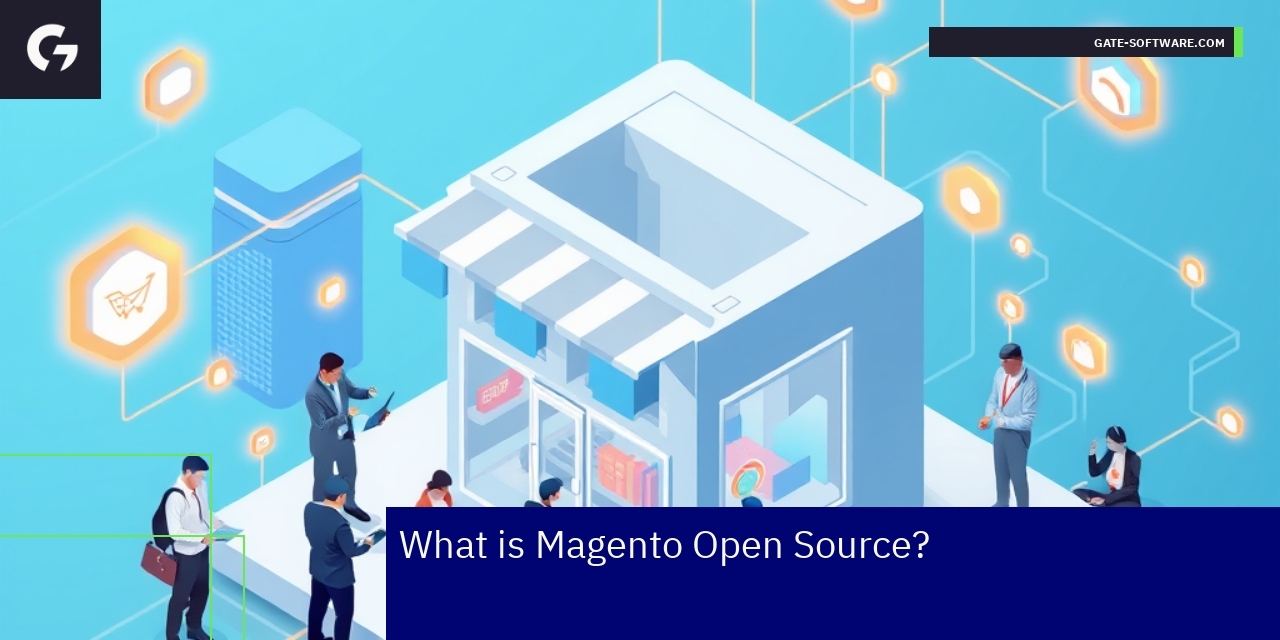
What is Magento Open Source?
Magento Open Source is one of the most popular open source e-commerce platforms widely recognized for its flexibility and scalability. Its open architecture allows businesses to customize and tailor their e-commerce environment precisely to their requirements, an essential feature when addressing complex hosting needs and scalability challenges in ever-evolving digital commerce landscapes. This customization capability ensures that vendors can develop scalable, robust e-commerce solutions aligned with their unique business models, making Magento Open Source highly valuable for companies pursuing growth and digital transformation.
From a technical perspective, Magento Open Source supports advanced product management, intricate catalog structures, and comprehensive customer engagement features. This allows decision-makers such as CTOs, Heads of Applications, and eCommerce Managers to implement efficient workflows that improve user experience while maintaining performance standards. The platform’s extensible nature also supports integrations with third-party systems, improving operational efficiency in hosting environments that demand high uptime and precise monitoring.
In terms of strategic value, Magento Open Source is integral to companies focusing on the evolution of e-commerce, particularly as they transition towards Magento 2. Its ability to accommodate extensive customizations without vendor lock-in makes it a preferred choice for enterprises targeting long-term platform sustainability and cost optimization. Gate-Software leverages these advantages by offering tailored solutions that address specific business challenges related to UX/UI audits, WCAG compliance, and hosting stability—all critical components in delivering seamless and accessible digital experiences.
Moreover, Magento Open Source resonates well with the digital strategy frameworks of organizations focused on business-to-business (B2B) and business-to-consumer (B2C) e-commerce models. Its modular design supports the implementation of user-centric strategies, aligning with personas such as Architects, CDOs, and CIOs, who prioritize both innovation and performance. This ensures smooth migration paths, scalable hosting arrangements, and reliable SLA commitments, which are essential in managing complex e-commerce platforms successfully.
Overall, Magento Open Source provides a comprehensive base that supports ongoing digital commerce innovation, enhanced by Gate-Software’s expertise in hosting, monitoring, and supporting e-commerce platforms that prioritize user experience, accessibility standards (WCAG), and operational excellence. This makes it an indispensable tool for businesses aiming to strengthen their market position through advanced e-commerce capabilities and forward-thinking platform management.

What is Adobe Commerce?
Adobe Commerce is a cloud-based eCommerce platform designed to help businesses create, scale, and manage online stores efficiently. It integrates a broad set of tools for product management, customer experience optimization, and seamless third-party service integrations. As part of the Adobe Experience Cloud, Adobe Commerce delivers advanced capabilities, including personalized content delivery, robust analytics, and comprehensive marketing solutions tailored to enhance customer engagement and drive online sales.
The platform comes as a licensed solution, providing enterprise-grade security features essential for meeting the increasingly complex digital commerce challenges projected for 2025. Licensing costs are an important consideration for businesses, but they bring the advantage of a fully integrated environment that simplifies operations across multiple storefronts, while maintaining strong compliance and data protection standards.
For decision-makers such as CTOs, eCommerce Managers, and Heads of Applications, Adobe Commerce represents a strategic foundation for building adaptable, scalable commerce ecosystems. It supports complex B2B and B2C use cases, enabling businesses to deliver customized experiences that meet diverse customer needs. Its architecture facilitates efficient upgrades, integrations, and extensions, aligning with UiR service priorities related to platform maintenance, security, and user experience optimization.
Within the context of Gate-Software’s expertise and services, leveraging Adobe Commerce ensures robust support for eCommerce growth, combining technical soundness with tailored business strategies. This alignment guarantees a future-proof platform that addresses key challenges such as performance, security compliance, and UX/UI standards, crucial for effective digital transformation initiatives.
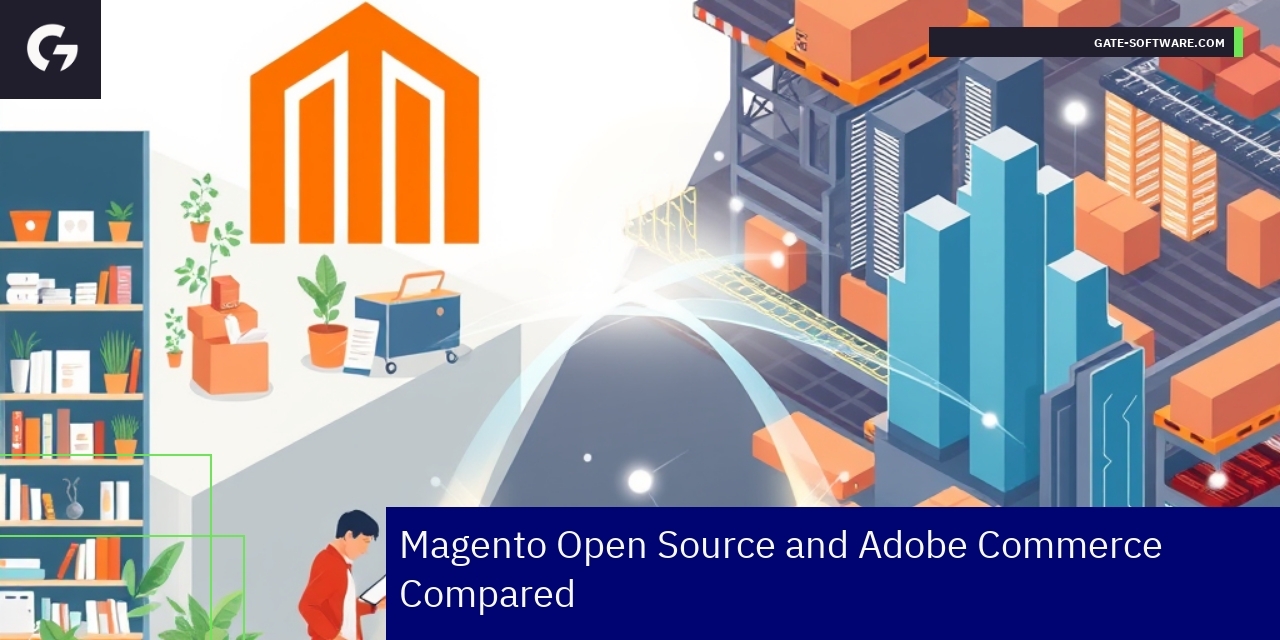
Magento Open Source and Adobe Commerce Compared
Magento Open Source and Adobe Commerce differ in terms of features, scalability, and performance. Both platforms support a wide range of e-commerce needs, but Adobe Commerce provides advanced capabilities geared towards larger enterprises and complex B2B operations.
When Adobe Commerce Excels
Adobe Commerce shines when handling B2B sales support, seamlessly integrating with e-Procurement systems and ERP from different organizations. For startups seeking to build strong B2B platforms, Adobe Commerce’s integration ecosystem and extensibility in 2025 make it a compelling solution. This is especially crucial in optimizing UiR elements, ensuring smooth user interfaces that accommodate complex B2B processes. With Adobe Commerce, UX/UI design benefits from advanced customization, enabling tailored user journeys that meet WCAG standards. In essence, Adobe Commerce empowers teams to build secure, scalable, and seamless digital storefronts while maintaining optimal usability and accessibility.
Why Choose Magento Open Source?
Magento Open Source is an excellent choice if you ask, “Is Magento free?” While the platform is free to use, hosting and development costs apply. The flexibility and control it offers make it ideal for startups with varying budgets. Understanding “how much does Magento cost?” helps in making an informed decision, especially when considering ongoing UI/UX adjustments and the need for compliance with WCAG guidelines. Magento Open Source allows teams to implement custom UX/UI solutions that fit specific business needs without the overhead of licensing fees. This freedom proves invaluable to smaller teams aiming to establish strong e-commerce platforms with clear control over user experience design elements.
Why Choose Adobe Commerce?
Choosing Adobe Commerce brings the advantage of numerous extensions and a highly active community, which supports rapid problem-solving and innovation. Despite open source e-commerce challenges, Adobe Commerce helps businesses tackle complex needs with ease. From a UiR perspective, its advanced framework offers superior tools for creating user-centric interfaces that enhance customer retention and conversion rates. The platform’s scalability supports seamless integration with WCAG 1.1 guidelines, contributing to more accessible and user-friendly e-commerce experiences. For organizations aiming for a robust and compliance-focused UX/UI strategy, Adobe Commerce provides a rich foundation that aligns with modern e-commerce demands.

Choosing the Right E-commerce Solution
Magento 2 System – Advantages
Magento 2 offers a robust foundation for e-commerce platforms, with its installation process designed for efficiency and ease, enabling quicker go-to-market strategies. Its extensive feature set addresses the diverse needs of online retail, including advanced catalog management, flexible promotions, and comprehensive order processing. In 2025, Magento 2 remains a leader in delivering high performance and secure transactions, crucial for maintaining trust and compliance in digital commerce. The platform’s UX/UI capabilities enhance user engagement and customer satisfaction, aligning with contemporary standards and consumer expectations. For startups and scaling enterprises alike, Magento 2 supports scalability and customization, allowing technical teams to tailor the system to business-specific workflows and integrations. Leveraging Magento 2 can optimize operational efficiency and support long-term growth ambitions, particularly for businesses emphasizing a seamless and secure customer journey.
Magento 2 Disadvantages
While Magento 2 brings substantial benefits, there are limitations to consider that impact overall project economics and resource planning. Licensing fees and hosting costs can be significant, necessitating a clear understanding of total cost of ownership from the outset. This financial aspect can constrain startups or companies with limited budgets. Moreover, the platform’s complexity requires skilled development and maintenance teams, which may increase operational overhead and extend timelines if the right expertise is not engaged. Careful vendor and partner selection, along with strategic project management, are essential to mitigate these risks. Awareness of these factors ensures that decision-makers can balanceMagento 2’s advanced capabilities against cost and resource demands, aligning with business goals and technical capacity. This holistic view supports informed choices when evaluating e-commerce platforms and implementation strategies for online store projects.

What is Open Source E-commerce?
Open source e-commerce refers to online retail platforms whose underlying software code is freely available for anyone to use, modify, and distribute. This approach offers significant flexibility in terms of customization, allowing businesses to tailor the platform precisely to their unique needs, including UX/UI enhancements and integration with existing systems. For decision-makers such as CTOs and Heads of Applications, the ability to host open source solutions on preferred infrastructure—whether on-premise or in private cloud environments—enables control over security measures and compliance standards, addressing critical concerns in enterprise environments.
However, with this flexibility comes challenges in security and ongoing maintenance. Unlike SaaS solutions, where providers manage updates and patches, open source e-commerce platforms require dedicated technical expertise to ensure the system remains secure and performant. This can increase operational costs and the need for continuous monitoring and responsive support. Balancing these trade-offs demands a clear strategy aligned with business goals—whether prioritizing control and customization or operational simplicity.
Open source e-commerce allows leveraging extensive community resources and modules, fostering innovation and adaptability especially important for companies aiming to optimize cost structures while maintaining high standards of service availability and scalability. Incorporating open source platforms within an enterprise architecture must also consider compliance with accessibility standards such as WCAG 1.1, which Gate-Software consistently integrates into its UI/UX audits and migrations, ensuring the solution meets both regulatory and user experience demands.
Decision-makers should evaluate open source e-commerce solutions against SaaS and dedicated platforms based on criteria like security, scalability, ease of maintenance, and cost optimization, to determine the best fit for their specific business contexts. Gate-Software’s expertise in Magento™ and tailored SLA agreements ensures that open source implementations are supported with enterprise-grade reliability, making open source e-commerce a viable, strategic choice for companies focused on innovation and control in the digital commerce space.
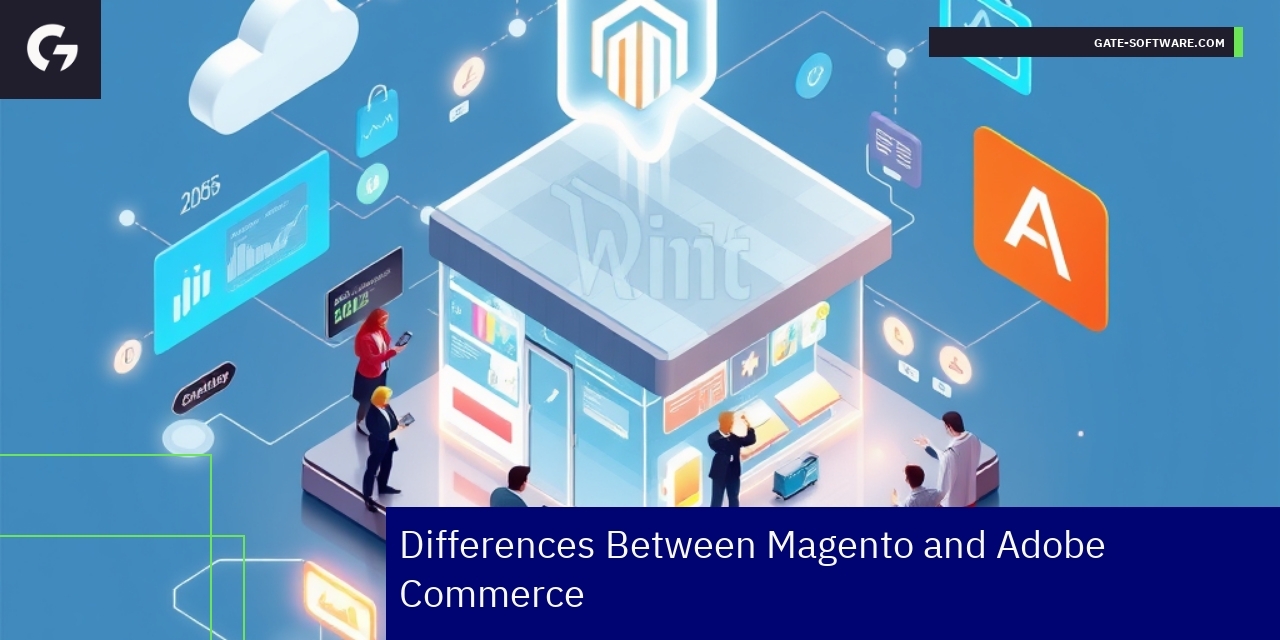
Differences Between Magento and Adobe Commerce
Adobe Commerce represents an enhanced and more advanced evolution of Magento, integrated within the Adobe Experience Cloud ecosystem, particularly impacting the UI/UX aspects in the UiR service context.
1. User Interface: Adobe Commerce features a modernized and more cohesive user interface tailored specifically for enterprise needs and sellers. This leads to improved navigation and overall better user experience, addressing challenges related to scalability and complexity in large B2B environments.
2. UI Functionality: Adobe Commerce includes additional UI components and advanced personalization options. These capabilities support flexibility in platform customization, allowing businesses to better align their e-commerce storefronts with diverse customer requirements and improve UX/UI audits outcomes focusing on responsiveness and accessibility.
3. Integration with Adobe Tools: A significant advantage of Adobe Commerce is its seamless integration with other Adobe products such as Adobe Analytics and Adobe Experience Manager. This interoperability helps create a unified customer experience, supporting data-driven decisions and enhancing marketing communication strategies aligned with Gate-Software solutions.
4. Mobile Support and Accessibility: Adobe Commerce places greater emphasis on mobile responsiveness and adherence to accessibility standards like WCAG 1.1, essential for compliance and inclusive user experiences, directly impacting the Magento™ SLA and ongoing platform maintenance.
5. Ongoing Development and Updates: Adobe Commerce receives continual updates, incorporating the latest UI trends and technology advancements, contrasting with Magento’s more traditional release cycle. This proactive evolution supports operational stability, platform security, and integration capabilities critical for managing complex B2B and e-commerce platforms.
In summary, the differences between Magento and Adobe Commerce reflect a shift towards a more integrated, scalable, and user-centric platform. Adobe Commerce better addresses the technical and business challenges faced by decision-makers such as CTOs and Heads of Applications within the UiR scope, enabling enhanced platform management and superior user experience.
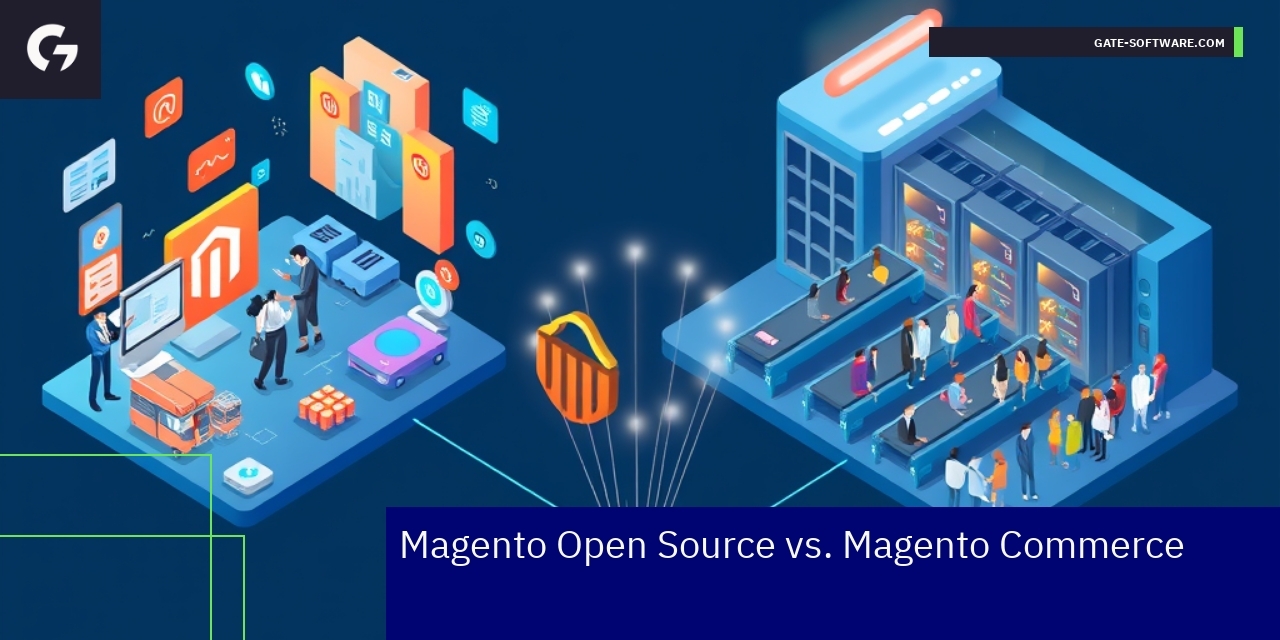
Magento Open Source vs. Magento Commerce
Magento Open Source and Magento Commerce represent two distinct paths for enterprises aiming to build or enhance their e-commerce platforms, especially within the UiR (User Interface and Responsiveness) context. For CTOs and eCommerce Managers evaluating their options, understanding the differences is critical to selecting the right solution aligned with business goals and technical requirements.
Magento Open Source offers a flexible, cost-effective entry point with a strong foundation for building tailored e-commerce ecosystems. Its extensibility allows organizations to customize functionality and design, enabling them to meet their specific UX/UI requirements and maintain compliance with WCAG standards. However, it requires in-house expertise or external support for hosting, maintenance, and advanced customizations.
Magento Commerce, on the other hand, brings robust out-of-the-box capabilities tailored for complex B2B scenarios, including advanced sales workflows and customer segmentation. It integrates a wider range of extensions and features that enhance personalization and streamline operational processes, making it suitable for larger enterprises seeking scalability and comprehensive technical support. The active Adobe Commerce community drives continuous innovation, which benefits ambitious projects requiring frequent updates and improvements.
From a strategic standpoint, both platforms offer strong security and performance, but Magento Commerce provides a more turnkey experience with enhanced SLA guarantees, monitoring, and support services that can reduce total cost of ownership over time. Gate-Software’s expertise in Magento migrations and optimizations ensures businesses can leverage either platform effectively, focusing on seamless UX/UI and adherence to accessibility guidelines.
Summary and Strategic Considerations
In summary, the decision between Magento Open Source vs. Magento Commerce hinges on your business complexity, budget constraints, and growth trajectory. Gate-Software’s advisory and implementation capabilities empower businesses to harness Magento’s ecosystem efficiently, aligning technological choices with strategic e-commerce goals in 2025.
Data and Performance Metrics – Efficiency, SLA, TCO
Operational Effectiveness in UiR Projects
In the context of Gate-Software’s UiR (Utrzymanie i Rozwój) services, the following numerical and measurable data illustrate operational effectiveness and support decision-making processes for stakeholders:
1. Project Takeover Time: The average time to take over a project is approximately 2 weeks, allowing clients to quickly transition to Gate-Software’s maintenance and development services without significant downtime.
2. On-Time Delivery Rate: Gate-Software boasts an impressive 95% of projects delivered on or ahead of schedule, reflecting a strong commitment to timelines and project management.
3. Total Cost of Ownership (TCO) Reduction: Clients experience an average TCO reduction of 25% within the first year of partnering with Gate-Software due to optimized maintenance processes and strategic resource allocation.
4. Implementations Count: Over the last year, Gate-Software successfully implemented 30+ new Magento projects, showcasing the company’s ability to handle high volumes while maintaining quality standards.
5. Uptime SLA: The uptime service level agreement (SLA) stands at 99.9%, ensuring that clients’ platforms remain operational and accessible, crucial for revenue generation and customer satisfaction.
6. Average Client Relationship Duration: Clients maintain partnerships with Gate-Software for an average of 4 years, highlighting the company’s ability to foster long-term relationships through effective service delivery and client support.
7. Incident Response Time: The average response time for critical incidents is 1 hour, indicating that Gate-Software prioritizes quick resolutions to minimize impact on client operations.
These metrics not only underline the operational efficiency of Gate-Software’s UiR services but also provide substantial data for potential clients to consider when choosing a strategic partner for their Magento platform needs.

Summary
In today’s competitive digital landscape, choosing the right e-commerce platform is crucial for your business’s success. Gate-Software’s UiR (Utrzymanie i Rozwój) service for Magento 2 is tailored to ensure that your platform operates at optimal performance while adapting to the evolving demands of your customers and the market. With our deep expertise in Magento’s modular architecture, we provide proactive monitoring and swift incident resolution, minimizing downtime and potential revenue loss. Furthermore, our focus on WCAG accessibility standards and enhanced UX/UI means that your online store not only meets compliance requirements but also delivers an engaging, user-friendly experience. By partnering with Gate-Software, you gain a strategic ally committed to optimizing your e-commerce operations, enabling you to make data-driven decisions and navigate the complexities of digital commerce with confidence. We invite you to explore the myriad of benefits that our UiR services can bring to your organization, ensuring a seamless and successful e-commerce journey.
Magento Open Source vs. Adobe Commerce
FAQ
What is Magento Open Source?
Magento Open Source is a flexible and customizable e-commerce platform that allows businesses to tailor their online stores according to their specific needs. It is widely recognized for its cost-efficiency, enabling organizations to manage their e-commerce environments without significant licensing fees.
Why should I choose Adobe Commerce?
Adobe Commerce offers advanced features and enterprise-grade security tailored for larger organizations. It excels in managing complex B2B transactions, provides robust integration capabilities, and supports enhanced user experiences that align with modern e-commerce demands.
How does Gate-Software’s UiR methodology support Magento installations?
Gate-Software’s UiR methodology focuses on maintaining and evolving Magento installations to ensure uninterrupted operations. It includes proactive monitoring, swift incident resolution, and continuous adaptation to platform updates, ultimately reducing downtime and enhancing performance.
What are the key advantages of using Magento 2?
Magento 2 boasts a robust system designed for high performance, scalability, and the capability to manage extensive product catalogs. It supports complex workflows, advanced marketing functionalities, and ensures compliance with accessibility standards like WCAG.
How does open source e-commerce differ from SaaS solutions?
Open source e-commerce platforms provide users complete control over customization and hosting, which offers flexibility but requires technical expertise for maintenance. In contrast, SaaS solutions simplify operational overhead as the service provider manages updates and hosting, though they may limit customization options.
.
.
Zamów bezpłatną konsultację
.
Z nami rozwój Twojego biznesu nabierze tempa! Zapraszamy do kontaktu średnie i duże firmy generujące min. 7 mln PLN obrotu rocznie – tam nasza ekspertyza sprawdza się najlepiej.
.
Kliknij w poniższy przycisk i skontaktuj się z jednym z naszych konsultantów e-commerce
.