Introduction
Starting with Magento 2 requires a clear understanding of its architecture, capabilities, and strategic implementation aligned with business goals. Magento 2 is a robust, scalable platform designed to support complex eCommerce operations, particularly in B2B and B2C sectors. It enables extensive customization, efficient product management, and integration with diverse payment and shipping systems.
To begin, assess your current IT infrastructure to ensure it meets Magento 2’s system requirements, including compatible PHP versions and database setups. Installation options include Magento Open Source or Magento Commerce, each tailored to different business scales and needs. Post-installation, configuring essential settings such as payment gateways, shipping rules, and tax calculations is critical to deliver a seamless purchasing experience.
Selecting the appropriate theme should reflect your brand identity while prioritizing usability and performance. Magento 2 supports advanced UX/UI standards, which Gate-Software emphasizes to meet WCAG guidelines for accessibility. Adding products involves structuring catalogs with configurable attributes optimized for search and navigation.
Extending platform capabilities through vetted Magento Marketplace extensions enables marketing automation, SEO enhancements, and analytics integration — all key to driving business growth. Rigorous testing of all functionalities including checkout and payment flows ensures stability and customer trust.
Ultimately, successful Magento 2 adoption demands ongoing management and optimization, supported by Gate-Software’s UiR services, which focus on maintenance, performance monitoring, and continuous platform evolution to align with emerging market and technology trends. This structured approach ensures Magento 2 serves as a foundation for scalable, efficient, and user-centric eCommerce operations.
TABLE OF CONTENTS
-
-
- Magento 2 – How to Start with This Powerful eCommerce Platform?
- What is Magento?
- Magento 1 vs Magento 2
- Magento 2 Platform – History and Development
- Is Magento Free?
- Magento 2 Drawbacks
- How to Choose Hosting?
- Magento Server Resource Needs
- Data and Performance Metrics – Efficiency, SLA, TCO
- Summary
- FAQ
-
What is Magento?
Magento is a leading eCommerce platform designed to empower online businesses by providing robust solutions for building, managing, and scaling digital stores. Understanding Magento – what is it and how to start? – is crucial for businesses aiming to leverage this powerful tool to create responsive and scalable online stores. Proper Magento 2 Hosting plays a vital role in ensuring your store runs efficiently, offering high performance and reliability that underpin successful eCommerce operations.
Magento supports advanced technologies such as progressive web apps (PWA) and cross-platform applications. Knowing how PWA and cross-platform apps work? as well as the tools needed to create a cross-platform or PWA Magento store? allows businesses to enhance user experience by enabling seamless access across devices. This flexibility also enables an alternative to developers’ environments, streamlining development processes while maintaining consistency.
Common elements in building Magento stores across platforms include modular architecture, scalability, and customization capabilities that allow merchants to tailor their online presence to their specific needs. Everything You Need to Know About Magento 2 encompasses these aspects, highlighting how Magento can adapt to diverse business requirements while maintaining optimal operational efficiency.
Magento 1 vs Magento 2
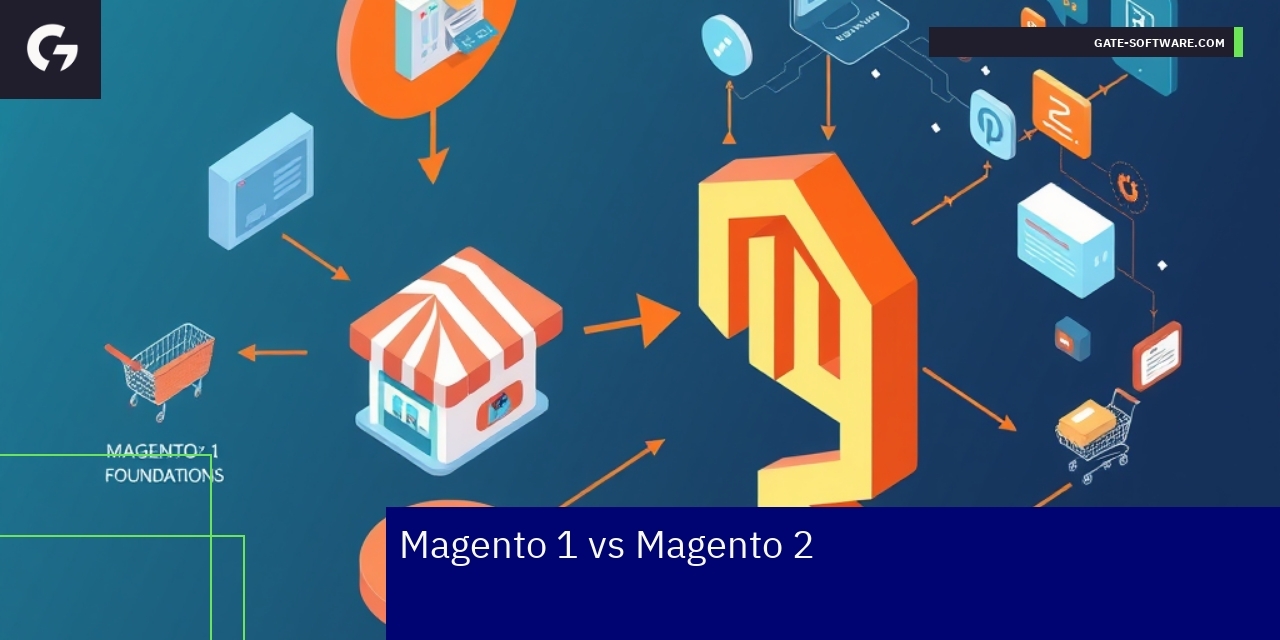
Open Source vs Commerce Editions
Magento offers distinct editions including Open Source and Commerce (Adobe Commerce), each tailored to different business needs. Open Source provides the fundamental capabilities required for online retail, supporting core functions such as product catalog management and customer management. Commerce editions extend these with enhanced features and services optimized for enterprise-level operations, including advanced promotion handling and robust integration capabilities with e-Procurement or ERP systems. These integrations are central to streamlining backend operations and achieving seamless order management. Both editions enable companies to leverage Magento multistore feature, scaling their eCommerce footprint across markets and brands. Full database control and source code access ensure that organisations can customize and optimize their platforms in alignment with specific business strategies, facilitating technology support that drives continuous eCommerce growth.
How to Install Magento 2?
Setting up Magento 2 is a foundational step towards leveraging its comprehensive capabilities. The installation process begins with system requirement verification to ensure compatibility with Magento’s technology stack. Afterward, the installation wizard or command-line interface guides through setting up databases and configuring essential services. Once installed, Magento 2’s architecture supports sophisticated order management and promotion handling out-of-the-box. The platform’s Magento multistore feature allows businesses to operate multiple storefronts from a unified backend, simplifying customer management and product catalog management across diverse markets. Importantly, Magento 2 offers full database control and source code access, empowering IT teams to optimize performance and security. By supporting integrations with e-Procurement or ERP systems, Magento 2 enables businesses to streamline workflows and accelerate eCommerce growth securely and efficiently. This installation foundation is critical to unlocking Magento’s full potential for advanced technology support.
Magento 2 Platform – History and Development
Magento 2’s platform evolution brought advanced SEO and online marketing tools designed to enhance the visibility and reach of eCommerce businesses. From the beginning, Magento positioned itself as a secure platform, implementing robust Magento security features such as protection against XSS and CSRF attacks and support for SSL certificates. This focus on security is critical for companies handling sensitive customer data and transactions.
A key strength of Magento 2 is its flexibility and customization capabilities. The platform allows for extensive tailoring of both the frontend user experience and backend functionalities through modular architecture, themes, and plugins. This adaptability supports diverse business models and enables precise alignment with business goals.
Understanding what Magento deployment looks like involves recognizing the complexity of installation, configuration, and integration needed to launch a store. It demands technical expertise to harness its full potential but rewards with a highly scalable, customizable eCommerce solution.
What Magento 2 offers extends beyond basic store management—it includes comprehensive product, order, and payment management, plus a range of extensions for enhanced marketing and operational functions. However, users should be aware of Magento 2 drawbacks, such as the resource-intensive nature of the platform and the need for ongoing maintenance and updates.
When comparing Open Source vs Adobe Commerce differences, Open Source provides a cost-effective, flexible foundation, while Adobe Commerce offers premium features, official support, and cloud hosting options tailored for enterprise needs.
Addressing Magento 2 FAQ often involves clarifying hosting requirements. Choosing hosting wisely is essential for optimal performance and security; hosting must offer sufficient resources like CPU, RAM, and compatibility with Magento’s demands.
This deep understanding is vital for CTOs, Heads of Applications, and eCommerce Managers focused on delivering scalable, secure, and SEO-optimized digital commerce solutions within the UiR service context.

Is Magento Free?
Many wonder: is Magento free? While Magento Open Source has no license fee, costs arise during deployment and hosting. Learn about typical costs, how to build a Magento store without Expo, and what server resources your Magento store will require.
Is Magento a CMS?
Magento is often confused with a CMS, but it is a comprehensive eCommerce solution. Whether you’re using Adobe Commerce or Open Source, Magento implementations provide various features beyond typical CMS capabilities. These features include advanced product management, integrated payment gateways, multi-store capabilities, and scalable infrastructure support. Unlike traditional CMS platforms focused primarily on content, Magento eCommerce platforms deliver robust solutions for online store deployment that cover inventory, customer management, promotional tools, and analytics. This makes Magento uniquely suited to complex business environments requiring flexible and powerful storefronts with high configurability and integration options.
What Can Magento 2 Do?
Magento 2 offers extensive eCommerce features that enable powerful online store deployments. The platform supports critical Adobe Commerce features such as advanced marketing tools, customer segmentation, and performance enhancements that meet demanding Magento server resource needs. Building a Magento store without Expo or relying on expensive third-party dependencies is feasible and often preferred for better control and customization. With Magento 2, businesses can optimize Magento deployment costs by leveraging its modular architecture and scalability to match growing demands. These implementations allow for customized workflows and integrations that streamline operations and enhance user experience, driving greater ROI for online stores designed to compete effectively in dynamic markets.
Additional resources for Adobe Commerce functionality

Magento 2 Drawbacks
While Magento 2 offers robust features for building scalable eCommerce platforms, it presents several drawbacks that impact the complexity of implementations and the demands of ongoing operations, especially within the UiR context. The platform’s modular architecture and flexibility often lead to extended implementation timelines and require specialized expertise to optimize performance and security. Implementations must navigate challenges such as resource-intensive customization, PHP and MySQL tuning, and the need for rigorous testing to ensure seamless Online store deployment. These factors increase initial investment and operational overhead, making careful planning essential.
Open Source vs Adobe Commerce Differences
Understanding the distinctions between Magento Open Source and Adobe Commerce is critical for eCommerce Managers and CTOs when planning Online store deployment. Adobe Commerce includes enhanced features like built-in B2B capabilities, advanced security, and cloud hosting support, which simplify certain Implementations but come with higher licensing and operational costs. Conversely, Magento Open Source offers more customization freedom but requires more hands-on development and maintenance effort. This balance affects project timelines, budget allocations, and future scalability, factors that must be weighed against business needs and technical capacity in the context of UiR.
Magento 2 – FAQ
Frequently asked questions around Magento 2 reflect common concerns with Magento eCommerce implementations. Queries often focus on optimizing performance, managing complexity during Online store deployment, and choosing between Adobe Commerce and Open Source models. Additionally, teams seek guidance on adhering to best practices for security, UX/UI compliance, and integration with third-party systems. Understanding these FAQs helps decision-makers set realistic expectations, allocate resources wisely, and leverage Gate-Software’s expertise to navigate the inherent trade-offs in Magento 2 projects.

How to Choose Hosting?
Choosing the right hosting is a critical decision for ensuring the success and stability of Magento eCommerce platforms, especially when dealing with complex implementations such as Adobe Commerce. The hosting environment must be capable of supporting the specific demands of Magento implementations, including high traffic loads, processing large catalogs, and ensuring rapid page load times. A well-chosen hosting solution directly impacts the performance, scalability, and security of your online store, making it a foundational element in your Magento eCommerce strategy.
Magento Deployment Costs
Understanding the various cost components is crucial for effective budgeting and planning. Deployment costs for Magento eCommerce include licensing fees, but also encompass development expenses and hosting fees. Hosting fees can vary widely based on the type of hosting service chosen—shared, VPS, dedicated servers, or cloud solutions—and the level of performance and support required. Selecting a hosting provider that specializes in Magento and Adobe Commerce implementations can help optimize these costs by aligning infrastructure capabilities with your operational needs.
Building a Magento Store Without Expo
Building a Magento store without relying on Expo frameworks requires a detailed focus on Magento-specific development best practices. This approach allows for greater control over the hosting environment and performance optimizations. When paired with a hosting solution optimized for Magento, this strategy maximizes efficiency, reduces potential compatibility issues, and enables tailored performance enhancements. Reliable infrastructure and expert hosting support are essential for maintaining the seamless functionality of such bespoke Magento eCommerce implementations.
Magento Server Resource Needs
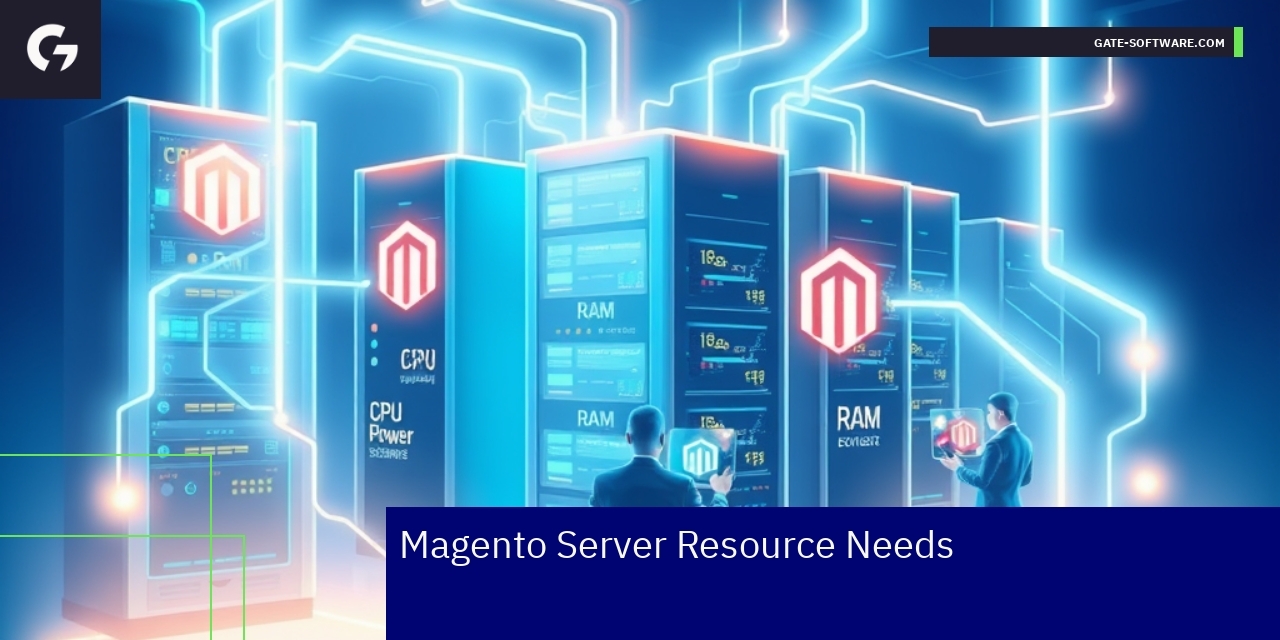
A Magento eCommerce platform’s performance heavily relies on the adequacy and optimization of server resources. Properly provisioned servers ensure the seamless operation of Magento stores, supporting critical processes such as high traffic handling, data processing, and integration with other systems. Implementations of Magento require careful consideration of CPU power, RAM allocation, storage speed, and network bandwidth to meet the demands of both frontend customer interactions and backend administrative tasks.
When planning server resources for Adobe Commerce, it is essential to factor in the extra functionalities and heavier resource usage generated by its advanced features. Adobe Commerce includes capabilities such as customer segmentation, advanced marketing tools, and complex checkout flows that elevate server load. Choosing reliable, scalable hosting infrastructure allows enterprises to maintain optimal performance under peak conditions and avoid downtime that could impact customer satisfaction and sales.
Effective Magento Server Resource Needs management integrates scalable hardware with performance monitoring tools and proactive maintenance to optimize resource utilization. Ensuring that implementations use the latest server technologies can reduce latency, accelerate page loads, and improve the responsiveness of Adobe Commerce platforms. By addressing these elements, eCommerce managers and CTOs can achieve a robust infrastructure that supports growth and enhances the Magento eCommerce experience overall.
Optimizing resource utilization through monitoring and maintenance

Data and Performance Metrics – Efficiency, SLA, TCO
Operational Effectiveness in UiR Projects
In the context of Gate-Software’s UiR services, several key performance metrics highlight the operational efficiency and effectiveness of implemented Magento solutions. First, the average time for project takeovers is approximately 3 weeks, which allows for a seamless transition and minimal disruption to ongoing operations. Furthermore, 95% of projects are reported to be delivered on time, ensuring that client expectations are consistently met.
Another crucial metric is the average Total Cost of Ownership (TCO) reduction observed across projects, which stands at an impressive 30%. This reduction is primarily attributed to optimized resource allocation and efficient use of technology. In terms of implementations, Gate-Software has successfully completed over 150 Magento implementations, showcasing its extensive experience and capability in handling diverse eCommerce projects.
Uptime is a critical aspect of eCommerce platforms, and Gate-Software ensures a service level agreement (SLA) that guarantees 99.9% uptime, which is vital for maintaining customer trust and sales continuity. Lastly, the average duration of client relationships extends beyond 5 years, indicating strong partnerships and continued collaboration, which further enhances the adaptability and enhancement of their eCommerce solutions.
These measurable results underline Gate-Software’s commitment to delivering high-quality eCommerce solutions through its UiR services, providing clients with the assurance that they are making informed purchasing decisions based on solid data.
Summary
In conclusion, choosing Magento 2 as your eCommerce platform can be a transformative decision for your business, especially when supported by Gate-Software’s UiR services. With its powerful capabilities for customization, scalability, and seamless integration with various systems, Magento 2 stands out as an ideal solution for both B2B and B2C sectors. Gate-Software’s expertise in managing ongoing performance monitoring, maintenance, and evolving your platform ensures that your eCommerce operations remain competitive and agile in a fast-paced digital marketplace. We encourage you to explore how our tailored services can enhance your Magento 2 experience and help you achieve your strategic business goals. Reach out to us for more information or to start a collaboration that will propel your online business to new heights.
Summary

FAQ
What is Magento?
Magento is a leading eCommerce platform designed to provide robust solutions for building, managing, and scaling digital stores, particularly for B2B and B2C operations. It supports extensive customization, product management, and integration with various payment and shipping systems.
How to install Magento 2?
To install Magento 2, first verify that your system meets its requirements, including compatible PHP versions. Next, you can use the installation wizard or command-line interface to set up databases and configure essential services, enabling a fully operational eCommerce platform.
Why choose Magento Open Source over Adobe Commerce?
Magento Open Source is a cost-effective solution that provides fundamental eCommerce capabilities, allowing businesses to customize extensively. In contrast, Adobe Commerce includes enhanced features and premium support designed for enterprise-level operations but comes with higher licensing costs.
How does Gate-Software support Magento 2 implementation?
Gate-Software offers UiR services that focus on maintenance, performance monitoring, and continuous optimization of the Magento 2 platform, ensuring it aligns with emerging market trends and operates at peak efficiency for scalable eCommerce solutions.
What are the server resource needs for a Magento 2 implementation?
A Magento 2 implementation requires careful provisioning of server resources, including CPU power, RAM, storage speed, and network bandwidth, to effectively handle high traffic, data processing, and system integrations for optimal performance and user experience.
.
.
Zamów bezpłatną konsultację
.
Z nami rozwój Twojego biznesu nabierze tempa! Zapraszamy do kontaktu średnie i duże firmy generujące min. 7 mln PLN obrotu rocznie – tam nasza ekspertyza sprawdza się najlepiej.
.
Kliknij w poniższy przycisk i skontaktuj się z jednym z naszych konsultantów e-commerce
.