Introduction
In the competitive landscape of B2B e-commerce, selecting the right platform is crucial for scaling efficiently and meeting complex business requirements. Magento 2 B2B stands out due to its robust architecture, extensive customization capabilities, and focus on seamless integration with enterprise systems. Unlike many other platforms, Magento 2 B2B supports comprehensive B2B workflows such as corporate accounts management, quick ordering processes, negotiated pricing, and tailored catalogs — all essential features to accommodate large buyers and multi-tier customer hierarchies.
When evaluating Magento 2 B2B against alternative solutions, decision-makers such as CTOs, CDOs, and eCommerce Managers must consider factors including scalability, extensibility, security compliance, and UX/UI adaptability. Gate-Software’s expertise in MagentoOneS™, combined with tailored SLAs and continuous monitoring, ensures performance stability and operational efficiency that align well with demanding B2B use cases.
This introduction aims to frame the strategic choice of platform not just from a technical standpoint but also from a business process optimization perspective—ensuring the chosen system supports growth, governance, and user experience standards necessary in modern B2B commerce.

What You Will Learn
In this section, you will gain a comprehensive understanding of several crucial aspects related to implementing Magento 2 for B2B services.
1. Key Differences between Magento 2 B2B and Other Platforms: You will explore the unique features that set Magento 2 B2B apart from other e-commerce platforms, including its robust customizability, advanced inventory management, and specialized tools for B2B transactions.
2. Adobe Commerce (Magento 2) Pros & Cons for B2B: We will discuss the advantages and disadvantages of using Adobe Commerce (Magento 2) specifically for B2B applications. You will learn about its scalability, integrated payment options, and user experience, alongside potential challenges such as complexity and cost implications.
3. How to Implement Magento 2 B2B Effectively in Your Business: This part will guide you through the essential steps for a successful implementation of Magento 2 B2B. You will learn best practices for setting up your platform, optimizing product catalogs, and configuring customer-specific pricing and discounts.
4. Common Implementation Mistakes and How to Avoid Them: Finally, we will identify frequent pitfalls businesses encounter during the implementation process. You will receive actionable tips on how to preemptively tackle these issues, ensuring a smoother transition to the Magento 2 B2B environment.
By the end of this section, you will be equipped with knowledge and strategies to enhance your B2B service experience using Magento 2.
Performance Data and Metrics – Efficiency, SLA, TCO
TABLE OF CONTENTS
- Magento 2 B2B vs Other Platforms – Which to Choose for Your Business?
- What You Will Learn
- Definitions and Basics
- Advantages of Magento in B2B E-commerce
- Comparing Magento with Other B2B Platforms
- Steps for a Successful Implementation
- Common Implementation Mistakes
- Costs of Maintaining a Magento B2B Store
- What Makes Magento Stand Out for B2B E-commerce?
- Why Choose Magento for Your B2B Store?
- How to Implement a Magento B2B Store?
- How Long Does Magento B2B Implementation Take?
- FAQ – Frequently Asked Questions
- Alternatives to Magento in B2B
- Benefits and Risks of Choosing Magento B2B
- Data and Performance Metrics – Efficiency, SLA, TCO
- Summary
- FAQ
Definitions and Basics
Magento 2 B2B represents a comprehensive e-commerce platform tailored specifically for business-to-business transactions. It enables companies to manage complex purchasing processes, multiple buyer roles, and negotiated pricing structures essential in the B2B environment. Adapting Magento 2 for B2B involves leveraging features that support bulk ordering, custom catalogs, and approval workflows, aligning with the requirements of sophisticated B2B sales cycles.
Key features of Magento 2 B2B include account hierarchy management allowing businesses to define user roles with specific permissions, streamlined purchasing processes to handle large and repeat orders efficiently, and integration capabilities facilitating synchronization with ERP and CRM systems. These elements ensure operational efficiency and enhance customer experience, which is vital for maintaining long-term client relationships in B2B markets.
The choice of platform significantly impacts a business’s ability to scale, customize, and integrate its operations. Selecting Magento 2 for B2B aligns with strategic goals such as digital transformation, improved customer engagement, and operational optimization. Businesses benefit from Magento’s flexibility, extensive extension ecosystem, and adherence to standards like WCAG 1.1 for accessible design. Partnering with Gate-Software ensures the platform is implemented with expert guidance, focusing on B2B requirements such as compliance, security, and performance, thus maximizing value delivery and supporting future growth.

Advantages of Magento in B2B E-commerce
Magento 2 B2B Advantages
Magento 2 B2B advantages are essential for businesses aiming to create a robust, flexible online commerce platform tailored to complex B2B requirements. This includes features like customizable workflows, customer-specific pricing, and multi-tier account management, which are key to addressing the varied needs of business clients. By leveraging Magento 2 B2B advantages, companies gain significant control over their digital storefronts, enhancing operational efficiency and client satisfaction. Moreover, these advantages align closely with critical performance considerations ensuring smooth user experiences even under high transactional loads. Scalability – Magento 2 B2B ready for the future – complements these benefits by enabling seamless growth. As business demands evolve, the platform supports expansions without compromising speed or functionality, making Magento 2 a future-proof choice for B2B commerce.
Performance Considerations
Performance considerations hold paramount importance in B2B e-commerce where transaction volumes and data processing requirements can be substantial. Magento’s architecture allows for optimization through caching, indexing, and advanced database management, all designed to maintain system responsiveness. Addressing these performance considerations effectively unlocks the full potential of Magento 2 B2B advantages. This ensures that purchasing workflows, product catalog access, and order management are swift and reliable. Scalability – Magento 2 B2B ready for the future – again plays a crucial role, guaranteeing that as traffic and transaction levels increase, performance remains consistent, providing a stable and efficient shopping experience crucial for maintaining business client trust and operational continuity.
Scalability – Magento 2 B2B Ready for the Future
Scalability – Magento 2 B2B ready for the future – is a vital factor for businesses anticipating growth or seasonal fluctuations in demand. This capability allows the platform to support expanding product ranges, larger customer bases, and increased order volumes without degradation in performance. Scalability is tightly integrated with performance considerations and overall platform architecture to facilitate seamless scaling both vertically and horizontally. Combining scalability with the core Magento 2 B2B advantages creates a foundation for sustainable growth, allowing companies to adapt quickly to market changes and technological advances. As a cohesive strategy, this readiness for future growth addresses the lifespan of B2B e-commerce platforms, making Magento 2 an investment aligned with both current needs and long-term business objectives.
Omnichannel and PWA Capabilities
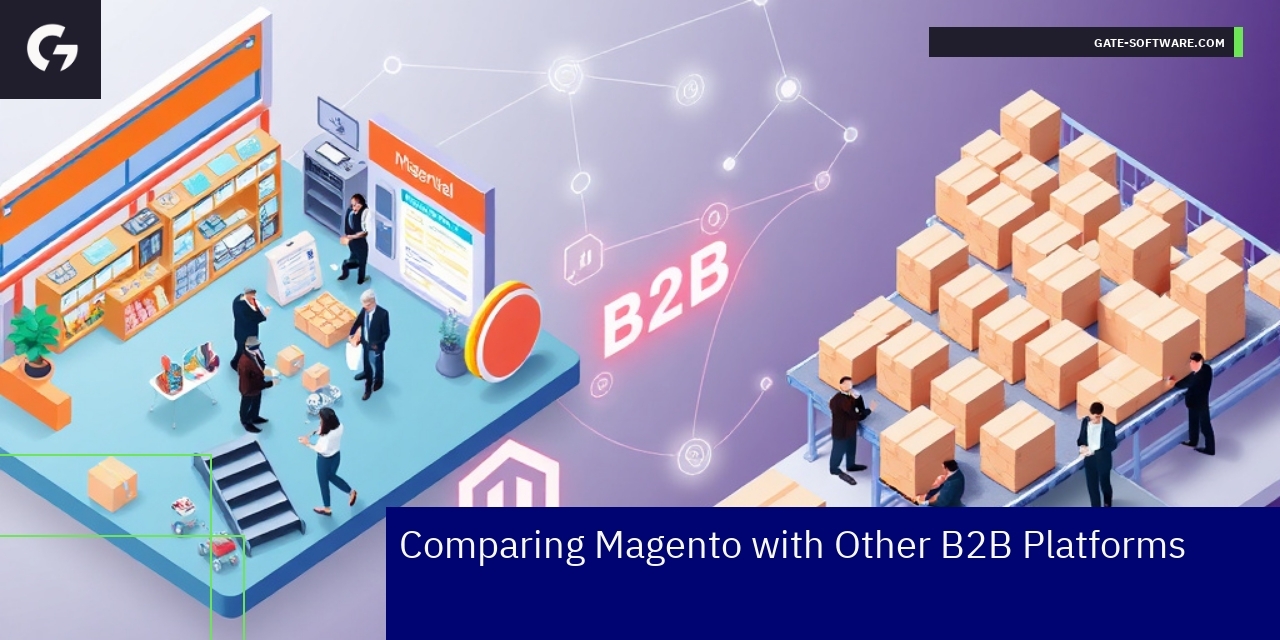
Comparing Magento with Other B2B Platforms
B2B Platform Comparison
A thorough B2B platform comparison highlights how Magento 2 B2B and personalization options differ from popular SaaS-based B2B platforms, helping you understand the best fit. In the B2B sector, Magento 2 offers a flexible and customizable environment that caters precisely to complex client requirements and diverse workflows. Unlike many SaaS-based B2B platforms that provide a standardized set of features, Magento 2 supports tailored solutions that can be specifically aligned with intricate business processes, pricing structures, and customer segmentation. This makes it a strong candidate when companies require scalability and deep integration with existing systems.
Magento 2 B2B and Personalization
Magento 2 B2B and personalization features give an edge over many SaaS-based B2B platforms shown in standard B2B platform comparison analyses. Magento 2 allows detailed customization of user experiences, enabling businesses to offer personalized catalogs, pricing tiers, and purchasing rules based on customer profiles and roles. These personalization capabilities enhance customer satisfaction and improve conversion rates by ensuring that every client’s experience is uniquely adapted to their needs. The platform’s architecture supports advanced configuration, which is critical for companies operating in complex B2B environments demanding high degrees of flexibility.
SaaS-Based B2B Platforms
SaaS-based B2B platforms offer convenience but differ significantly from Magento 2 B2B and personalization abilities—key points in any B2B platform comparison. While SaaS platforms may reduce the initial technical burden by providing out-of-the-box solutions and easier maintenance, they often lack the depth of customization and integration capabilities required by many B2B enterprises. This limitation can impede the implementation of specialized workflows, advanced personalization, and seamless integration with other enterprise systems. Consequently, businesses seeking highly tailored and scalable B2B solutions typically find Magento 2 more aligned with their strategic needs.

Steps for a Successful Implementation
Choosing a B2B Platform
Choosing a B2B platform wisely involves balancing combining B2B and B2C sales and leveraging omnichannel and PWA capabilities for a seamless customer experience. Selecting the right platform requires careful consideration of how these capabilities integrate with existing workflows and systems. It is crucial to ensure that the platform supports scalability and adaptability to evolving business needs. The platform must facilitate efficient management of complex pricing structures, user roles, and permissions specific to B2B clients while accommodating B2C functionalities. Incorporating omnichannel and PWA capabilities into the platform enhances accessibility and responsiveness, providing customers with consistent interactions across devices. This approach ensures that combining B2B and B2C sales is not only possible but optimized for operational efficiency and customer satisfaction.
Combining B2B and B2C Sales
Combining B2B and B2C sales is a strategic decision when choosing a B2B platform that also supports omnichannel and PWA capabilities for modern commerce. This combination allows businesses to serve diverse customer segments through a unified system, reducing operational complexity and improving data coherence. It enables personalized marketing and sales processes tailored to the unique behaviors of B2B and B2C buyers. Integrating these sales channels can support dynamic pricing, inventory management, and customer service, enhanced by omnichannel and PWA functionalities. The unified approach improves customer experience by ensuring continuity across sales touchpoints and increasing the flexibility of digital interactions, which is essential in today’s omnichannel market environment.
Omnichannel and PWA Capabilities
Omnichannel and PWA capabilities are increasingly important when choosing a B2B platform that enables combining B2B and B2C sales effectively. Omnichannel strategies ensure that customer interactions are seamless across various channels such as web, mobile, and offline, enhancing engagement and satisfaction. Progressive Web Apps (PWA) bring the advantages of native apps—such as speed, reliability, and offline access—into a web-based environment, which supports better performance and user experience. These technologies are vital in enabling real-time data synchronization, personalized content delivery, and improved accessibility, particularly in B2B settings where purchasing cycles can be complex and multifaceted. Incorporating omnichannel and PWA capabilities facilitates smoother cooperation between sales teams and customers, driving operational excellence and growth.
Common Implementation Mistakes
Dedicated B2B Platforms
Avoid common pitfalls related to dedicated B2B platforms by mastering inventory management and content editing and staging during Magento 2 B2B implementation. Dedicated B2B platforms require tailored integration to meet specific business demands such as customer segmentation, personalized pricing, and complex order workflows. A common mistake is underestimating these needs, resulting in limited platform functionality or adoption issues. Overlooking seamless synchronization with inventory management systems can lead to inaccurate stock levels, which impacts order fulfillment and customer satisfaction. Moreover, inadequate attention to content editing and staging processes can cause inconsistent product information presentation, negatively affecting the user experience. Thus, ensuring robust configurations and thorough testing across all components of dedicated B2B platforms is essential during rollout.
Inventory Management
Inventory management is a frequent challenge alongside pitfalls in dedicated B2B platforms and content editing and staging during rollout. Maintaining accurate inventory data across multiple warehouses and channels is critical for B2B operations, where large order volumes and contractual obligations demand precise stock visibility. Implementation errors often stem from insufficient integration between inventory management and e-commerce platforms, leading to stockouts or overstock situations. Additionally, not aligning inventory processes with the unique requirements of dedicated B2B platforms can cause delays in order processing and fulfillment. Effective training and consistent data governance must accompany technical integration to optimize inventory management, ensuring it supports the broader e-commerce strategy.
Content Editing and Staging
Effective content editing and staging reduce risks often faced when working with dedicated B2B platforms and improving inventory management. In the B2B context, product information complexity, including technical specifications, pricing tiers, and contractual terms, demands precise content control. Common errors include inadequate staging environments which prevent thorough testing of content updates before going live, leading to content inconsistencies or errors impacting buyer decisions. Content editing workflows must be aligned with inventory management to reflect real-time availability and pricing. Utilizing advanced staging techniques enables smoother updates, reduces operational risks, and enhances the overall buyer experience on dedicated B2B platforms.

Costs of Maintaining a Magento B2B Store
Licensing and Hosting Costs
Licensing and hosting costs are fundamental factors to consider, alongside integration and technical support costs and performance data and metrics – efficiency, SLA, TCO. For a Magento B2B store, the licensing fees reflect the complexity and scale of the platform, often tailored to meet enterprise requirements such as security, scalability, and compliance. Hosting costs must align with performance needs, ensuring reliable uptime and fast loading times for B2B customers. Efficient hosting solutions that match the SLA commitments are crucial to maintaining service continuity and optimizing TCO. Proper evaluation of these licensing and hosting costs helps in budgeting and planning for long-term sustainability, integrating seamlessly with ongoing technical support and integration efforts.
Integration and Technical Support Costs
Integration and technical support costs impact overall expenses, complementing licensing and hosting costs and insights from performance data and metrics – efficiency, SLA, TCO. These costs encompass connecting Magento with external systems like ERP, CRM, and payment gateways, which are essential for B2B workflows. Technical support ensures smooth operations, proactively addressing issues to avoid downtime or business disruption. High-quality support aligned with agreed SLA parameters reduces risk and contributes to better total cost of ownership (TCO). Integration depth and complexity directly influence these costs, requiring skilled teams and tools for efficient implementation and maintenance.
Performance Data and Metrics – Efficiency, SLA, TCO
Performance data and metrics – efficiency, SLA, TCO provide a framework to assess licensing and hosting costs and integration and technical support costs effectively. Monitoring Magento B2B store performance focuses on operational efficiency, meeting SLA (Service Level Agreement) targets such as uptime and response time, and controlling the total cost of ownership (TCO). Analyzing these metrics allows decision-makers to optimize resource allocation, reduce unnecessary expenditure on hosting or support, and ensure the platform consistently meets B2B customer expectations. Detailed performance reports support strategic decisions, highlighting areas to enhance efficiency while maintaining compliance with agreed service levels.

What Makes Magento Stand Out for B2B E-commerce?
High Security Level
Magento offers a high security level crucial for e-commerce platforms for B2B. Ensuring data protection and secure transactions is fundamental in B2B environments where sensitive business information and large-scale operations prevail. The platform integrates robust security protocols that comply with industry standards, addressing critical issues such as data encryption, access control, and compliance. This high security level is not only a technical necessity but also a strategic advantage for businesses seeking reliability and trustworthiness in their e-commerce solutions. Gate-Software leverages Magento’s security capabilities to support complex B2B operations, minimizing risks and safeguarding business continuity.
E-commerce Platforms for B2B
Among e-commerce platforms for B2B, Magento distinguishes itself through tailored features that meet the unique demands of B2B commerce. It supports complex pricing models, customizable workflows, and scalable infrastructure suitable for growing enterprises. This flexibility, combined with Magento’s high security level, positions it as a preferred choice in the e-commerce platforms for B2B segment. The platform’s maturity and stability enhance its ability to integrate with existing enterprise systems, providing seamless user experiences tailored for B2B buyers and decision-makers.
Platform Maturity and Stability
Platform maturity and stability reinforce Magento’s commitment to providing a high security level expected from top e-commerce platforms for B2B. The platform has a proven track record of continuous improvement, extensive community support, and comprehensive feature sets that address sophisticated B2B requirements. Stability ensures minimal downtime and consistent performance, which is critical for B2B operations where operational disruptions can have significant business impact. Gate-Software’s expertise in deploying and maintaining Magento platforms further assures clients of a resilient and scalable solution capable of evolving with market needs.
Why Choose Magento for Your B2B Store?
Magento 2 B2B Advantages
Magento 2 B2B advantages remain a top reason to select it among open source B2B platforms, with strong performance considerations. The platform excels in delivering tailored solutions that address the complex needs of B2B commerce, including custom pricing, advanced quoting systems, and customer-specific catalogs. These features provide businesses with the flexibility required for managing multifaceted sales processes and contracts. Moreover, Magento 2 B2B advantages include seamless integration capabilities and a modular architecture, enabling companies to extend functionality without compromising system stability or scalability. This adaptability supports evolving business models and ensures that your platform can grow alongside your enterprise.
Open Source B2B Platforms
Open source B2B platforms like Magento excel due to Magento 2 B2B advantages and excellent performance considerations. Being open source offers transparency, flexibility, and a rich ecosystem of extensions and community support. This fosters innovation and rapid adaptation to market changes. For B2B enterprises, choosing an open source B2B platform means gaining control over their digital commerce infrastructure, with the ability to customize workflows and user experience to fit specific buyer journeys. The extensive developer community ensures ongoing improvements, security updates, and compatibility with emerging technologies—factors critical to maintaining operational excellence in a competitive B2B environment.
Performance Considerations
Performance considerations solidify Magento’s status alongside its notable Magento 2 B2B advantages in the open source B2B platforms space. In B2B commerce, where transaction sizes and catalog depth are significant, platform performance directly impacts customer satisfaction and conversion rates. Magento is designed to handle high volumes of concurrent users and transactions without degradation. Features like full-page caching, optimized database indexing, and scalable architecture ensure fast load times and responsiveness. These performance considerations not only enhance the buyer experience but also reduce operational risks associated with downtime or latency—key priorities for any B2B operation committed to reliability and efficiency.

How to Implement a Magento B2B Store?
Steps for a Successful Implementation
Following clear steps for a successful implementation includes mastering content editing and staging as well as inventory management. Establishing concrete processes early on enables seamless coordination among teams responsible for product data, pricing structures, and tailored B2B workflows. Emphasizing the integration of these steps for a successful implementation helps avoid common pitfalls such as inconsistent content delivery and stock discrepancies. Ensuring your Magento B2B store aligns technically with business requirements also plays a vital role in scalability and long-term effectiveness.
Content Editing and Staging
Content editing and staging are essential components when taking the steps for a successful implementation of your Magento 2 B2B store. Proper content staging environments allow teams to preview changes under real-world conditions without risking live store performance. This phase ensures the accuracy of product information, pricing tiers, and promotional content while validating compliance with UX/UI standards. Leveraging content editing and staging cycles contributes to higher data quality, reduced errors, and smoother rollouts, which are critical for a successful B2B eCommerce presence.
Inventory Management
Inventory management complements content editing and staging as crucial steps for a successful implementation. Effective inventory control in a Magento B2B store includes real-time visibility into stock levels, automated replenishment strategies, and integration with suppliers to meet the complex demands of business clients. Streamlining inventory processes reduces backorders and improves order fulfillment rates, directly impacting customer satisfaction. By incorporating robust inventory management practices into your steps for a successful implementation, you can ensure operational efficiency and sustain growth in B2B markets.

How Long Does Magento B2B Implementation Take?
Platform Maturity and Stability
Platform maturity and stability significantly shorten the Magento B2B implementation timeline by providing a reliable foundation built on tested Magento 2 B2B advantages. A mature and stable platform reduces unforeseen development challenges, ensuring smoother integration of omnichannel and PWA capabilities. This stability boosts project predictability, allowing teams to better plan and execute each phase without redundant rework or troubleshooting, thus contributing directly to a more efficient deployment.
Magento 2 B2B Advantages
Leveraging Magento 2 B2B advantages accelerates implementation through ready-to-use features tailored for complex business-to-business needs. These advantages include built-in support for customer segmentation, custom pricing, and streamlined catalog management, which reduce the need for extensive custom development. In addition, the platform’s compatibility with omnichannel and PWA capabilities supports seamless customer experiences across all touchpoints, further minimizing integration time and aligning development with business objectives.
Omnichannel and PWA Capabilities
Omnichannel and PWA capabilities play a critical role in defining the project duration by enhancing Magento 2 B2B’s reach and functionality. Integrated omnichannel support ensures consistent user experiences across multiple sales and communication channels, while PWA capabilities optimize mobile performance and usability. Both elements benefit from the platform’s maturity and Magento 2 B2B advantages, enabling streamlined development workflows that reduce time to market and enhance scalability for future business growth.

FAQ – Frequently Asked Questions
What are the most common questions about Magento 2 B2B?
Common questions about Magento 2 B2B often revolve around the platform’s ability to handle complex business processes that characterize B2B eCommerce. Decision-makers such as CTOs and eCommerce Managers frequently inquire about how Magento 2 supports multi-tier customer hierarchies, pricing structures, and quote management workflows. Additionally, there are questions related to integration capabilities with ERP and CRM systems essential for B2B operations. Magento 2 B2B’s flexibility in user roles, permissions, and streamlined checkout processes tailored for corporate buyers also triggers interest. Concerns about scalability, performance, and compliance with standards such as WCAG for accessibility are often raised, particularly in contexts demanding high uptime and security. These inquiries highlight the need for specialized support in complex B2B environments where seamless digital transactions directly impact business continuity.
What are the differences between Magento 2 B2B and other platforms?
Magento 2 B2B distinguishes itself through its modular architecture and deep customization capabilities designed specifically for B2B workflows. Unlike many standard eCommerce platforms, Magento 2 B2B offers sophisticated features like company account structures, shared catalogs with custom pricing, and the ability to create personalized buying experiences for business clients. Its open-source foundation allows for extensive integration with enterprise systems, plus enhanced control over UX/UI tailored to meet the specific needs of B2B personas such as Architects and Heads of Applications. Furthermore, Magento 2 B2B incorporates best practices regarding WCAG compliance and security standards, ensuring accessibility and trustworthiness. The platform’s capability to support complex quote management and purchase order processes sets it apart for organizations requiring transparency and flexibility in procurement processes unlike more simplified B2C platforms.
What are the best practices for Magento 2 B2B implementation?
Effective Magento 2 B2B implementation requires a thorough understanding of both technical and business aspects. Best practices include conducting detailed requirements analysis with key stakeholders like eCommerce Managers and CDOs to align platform capabilities with business goals. Prioritizing WCAG standards and UX/UI audits early in the development ensures compliance and superior user experience for diverse B2B buyer personas. Successful projects integrate Magento 2 B2B with existing ERP and CRM systems to streamline data flow, reduce manual intervention, and optimize costs. Implementation teams should adopt agile methodologies with continuous feedback loops and SLA monitoring to maintain project quality and uptime. Emphasizing brand voice consistency and tailored content strategies enhances engagement, while strategic hosting and performance optimization ensure scalability and reliability. Gate-Software’s approach embraces these best practices to deliver robust, secure, and efficient Magento 2 B2B solutions that meet rigorous enterprise demands.

Alternatives to Magento in B2B
Overview of other B2B platforms
In the B2B sector, selecting the right e-commerce platform is crucial for addressing complex business requirements such as multi-level pricing, integration with ERP systems, and tailored customer experiences. While Magento remains a strong choice, there are other platforms worth consideration that cater specifically to these needs. Alternatives typically offer flexibility in customization, robust API support, and scalability to support growing product catalogs and transaction volumes. Additionally, they often provide features aligned with UX/UI standards and WCAG compliance to ensure accessibility—a critical factor for long-term platform adoption. Decision-makers like the eCommerce Manager or Head of Applications should consider how these platforms handle integrations, security standards, and the ability to align with digital transformation strategies such as those outlined in Gate-Software’s Content Strategy 5.0.
Comparing features and cost and pricing plans
When comparing alternative B2B platforms to Magento, a detailed assessment of features versus total cost of ownership is essential. Key considerations include multi-vendor support, payment gateway integrations, localization options, and advanced reporting capabilities. Cost and pricing plans vary widely, from subscription-based models suitable for smaller enterprises, to enterprise licenses that include premium support and Service Level Agreements (SLA). Gate-Software’s strategic approach emphasizes optimizing cost-efficiency while maintaining high standards for hosting, monitoring, and long-term platform maintenance. Furthermore, licensing flexibility and the ability to customize the brand voice and user experience according to company values play a significant role in selecting a platform that aligns with corporate goals and marketing strategies.
Benefits and Risks of Choosing Magento B2B
Benefits of Magento 2 B2B implementation
Magento 2 B2B delivers a highly customizable and scalable platform designed specifically to meet the complex requirements of B2B enterprises. Its advanced features, such as customer segmentation, custom pricing, and bulk order management, support personalized sales processes and enhance purchasing efficiency. The multi-store functionality allows management of diverse markets or regional branches from a single backend, streamlining operations. Integration capabilities with ERP, CRM, and other business systems ensure seamless data flow and automation, critical for B2B workflows. Moreover, Magento 2 supports mobile-friendly interfaces and is optimized for WCAG standards, providing accessibility and user experience benefits. These capabilities enable businesses to implement robust B2B eCommerce ecosystems capable of handling large transaction volumes while maintaining flexibility and control. With a strong community and support from Gate-Software, clients can expect expert guidance on migration, cost optimization, and SLA-based hosting solutions tailored for B2B contexts.
Potential risks and challenges
Despite its strengths, deploying Magento 2 for B2B carries inherent risks and challenges. The platform’s complexity demands specialized expertise for successful customization and maintenance, potentially increasing operational costs and reliance on skilled developers. Hosting and resource requirements are substantial due to the platform’s demanding architecture, impacting total cost of ownership. Security vulnerabilities require continuous monitoring, patching, and adherence to best practices, especially in B2B environments processing sensitive data and high-value transactions. The time-to-market can be prolonged because of extensive setup, integration, and testing phases necessary to align Magento with unique business processes. Ongoing maintenance and updates are resource-intensive but critical to ensure system stability and compliance with WCAG and UX/UI standards. Gate-Software’s approach includes comprehensive audits and proactive support to mitigate these risks, ensuring sustainable platform performance aligned with business goals.
Data and Performance Metrics – Efficiency, SLA, TCO
Operational Effectiveness in B2B Projects
When analyzing the operational efficiency of Magento 2 B2B services provided by Gate-Software, several key metrics highlight the strength and reliability of their offerings. On average, Gate-Software has achieved an impressive 95% on-time delivery rate for B2B projects, ensuring that business clients can rely on timely implementation and updates. The typical project takeover time stands at around 4 weeks, allowing for smooth transitions with minimal business disruption.
Gate-Software also maintains a Service Level Agreement (SLA) that guarantees an uptime of 99.9%, crucial for B2B operations that depend on continuous access to e-commerce platforms. In terms of Total Cost of Ownership (TCO), businesses working with Gate-Software have reported an average TCO reduction of 20% over a two-year period, attributed to streamlined processes and effective hosting solutions.
Moreover, the average client relationship duration is over 5 years, reflecting the firm’s commitment to long-term partnerships and ongoing support. Gate-Software has successfully implemented over 50 Magento 2 B2B projects, demonstrating their deep experience and expertise in this domain. These measurable results illustrate the operational effectiveness of Gate-Software’s Magento B2B solutions, providing decision-makers with data-driven insights to support their purchasing decisions.

Summary
In the complex world of B2B e-commerce, selecting a robust platform is integral to your business’s growth and efficiency. Magento 2 B2B offers a wealth of features that cater specifically to the nuanced needs of business clients, including customizable workflows, account management capabilities, and tailored pricing structures. By leveraging the strengths of Magento 2 B2B, your organization can achieve not only enhanced operational efficiency but also improved customer satisfaction through personalized experiences. Gate-Software’s expertise in implementing MagentoOneS™ ensures that your transition to this platform is seamless, focusing on SLAs, performance stability, and compliance standards. By choosing Magento 2 for your B2B operations, you position your business for sustainable growth and the flexibility to adapt to future challenges. We invite you to connect with us for further insights on how to make the most of your e-commerce strategy with Magento 2 B2B.

FAQ
What are the key advantages of using Magento 2 B2B for e-commerce?
Magento 2 B2B offers robust features like customizable workflows, customer-specific pricing, and multi-tier account management, which are crucial for addressing the diverse needs of business clients. Its flexibility and extensive integration capabilities enhance operational efficiency and customer satisfaction.
How does Magento 2 B2B support complex business processes?
Magento 2 B2B excels in managing complex purchasing processes by supporting multi-tier customer hierarchies, negotiated pricing, and quote management workflows. This specialization makes it suitable for businesses that require in-depth customization tailored to their specific workflows and pricing structures.
What common mistakes should businesses avoid during Magento 2 B2B implementation?
Common mistakes include underestimating the need for proper inventory management and content editing during rollout. Failing to integrate these aspects effectively can result in inaccurate stock levels and inconsistent product presentation, negatively impacting user experience.
How can performance and scalability be ensured in a Magento 2 B2B store?
To maintain performance and scalability, businesses should leverage Magento’s caching and indexing features, as well as a robust hosting solution that meets SLA requirements. Continuous monitoring of performance metrics ensures that the platform can handle increasing transaction volumes without compromising user experience.
Why is ongoing support critical for Magento 2 B2B platforms?
Ongoing support is essential due to the platform’s complexity, necessitating expertise for updates, security maintenance, and performance optimization. Reliable support ensures that any issues are addressed promptly, minimizing downtime and safeguarding the operational efficiency crucial for B2B transactions.
.
.
Zamów bezpłatną konsultację
.
Z nami rozwój Twojego biznesu nabierze tempa! Zapraszamy do kontaktu średnie i duże firmy generujące min. 7 mln PLN obrotu rocznie – tam nasza ekspertyza sprawdza się najlepiej.
.
Kliknij w poniższy przycisk i skontaktuj się z jednym z naszych konsultantów e-commerce
.