In 2026, Magento theme development is evolving with a strong focus on performance optimization, user experience enhancement, and streamlined customization capabilities. One of the primary trends is the adoption of lightweight and modular front-end frameworks like Hyva Themes, which significantly reduce frontend complexity and improve page load speeds—a critical factor for SEO and conversion rates. These modern themes prioritize minimalistic design without sacrificing functionality, enabling businesses to deliver fast, responsive, and visually compelling storefronts.
Another key trend is the integration of Progressive Web App (PWA) technologies. Magento themes increasingly support PWA standards, allowing eCommerce sites to offer app-like experiences on the web, including offline browsing, push notifications, and seamless mobile usability. This enhances customer engagement and retention by providing a smoother and faster user journey across devices.
Customization and extensibility remain essential, with developers leveraging headless commerce architectures and API-first approaches to tailor Magento themes precisely to business needs. This approach decouples the frontend from backend logic, enabling more agile updates and integrations with third-party systems such as CRM, ERP, and marketing automation platforms.
From a business perspective, these frontend advancements translate into operational efficiencies and strategic advantages. Faster load times improve conversion rates and reduce bounce rates, which directly impact revenue growth. Enhanced mobile experiences address the growing segment of mobile shoppers, while flexible theming architectures reduce time-to-market for new features and seasonal campaigns.
Security and compliance are also critical considerations. Magento themes increasingly incorporate best practices for data protection and accessibility, ensuring compliance with regulations like GDPR while maintaining usability for all customers.
In summary, 2026 Magento theme development is characterized by a balanced focus on speed, user experience, flexibility, and security. Adopting these trends empowers businesses to meet rising customer expectations and competitive demands in the eCommerce landscape with greater agility and strategic impact.

Introduction
Hyva is a globally recognized company specializing in innovative solutions for the transportation and logistics industries. Their expertise lies in engineered products and systems tailored primarily for commercial vehicles. Among their core offerings are hydraulic systems, tipping mechanisms, and container handling equipment designed to enhance the operational efficiency and performance of trucks and trailers.
Hyva’s product range strategically addresses key business challenges such as optimizing load management, improving vehicle uptime, and ensuring reliable, robust performance under demanding conditions. The company prioritizes sustainability and quality in its engineering approach, providing solutions that not only meet regulatory and environmental standards but also contribute to lowering total operational costs for fleet operators.
By blending advanced hydraulic technology with durable mechanical systems, Hyva supports scalability and operational efficiency for logistics providers and transport companies. Their global presence and commitment to innovation have established them as a preferred partner for businesses aiming to improve technical architecture and performance in commercial vehicle fleets. This focus ensures their solutions seamlessly integrate into existing operations while enabling future growth and adaptability.
TABLE OF CONTENTS
- Latest Trends in Magento Theme Development You Should Know for 2026
- Introduction
- Magento 2 Basics
- Benefits of Magento 2
- Drawbacks of Magento 2
- User Management in Magento 2
- Managing Product Catalog in Magento 2
- Order Management in Magento 2
- Customer Management in Magento 2
- Content Management in Magento 2
- Promotions and Promotion Rules in Magento 2
- Reporting in Magento 2
- Magento 2 Multilingual Capabilities
- Payments and Shipping in Magento 2
- Marketing in Magento 2
- Marketing and Sales Integrations
- Custom Theme Design
- Alternatives to Magento 2
- Common Magento 2 Implementation Errors
- Data and Performance Metrics – Efficiency and Cost
- Summary
- FAQ
- Documentation links for Elastic Search integration in Magento 2
- Tutorials on setting up third-party API connections for catalog management
- Case studies demonstrating improved catalog performance via automation tools
- Real-time dashboards for instant data visualization
- Customizable reporting templates
- Integration guides for third-party analytics tools
- Case studies showcasing improved sales performance through Magento 2 reports
- Detailed guides on resolving common payment gateway and shipping configuration errors
- Tools to check theme and extension compatibility before deployment
- Best practices for cache management and clearing procedures
- Tutorials on troubleshooting indexing and URL rewrite issues
- Security checklist tailored for Magento 2 implementations

Magento 2 Basics
eCommerce Systems
Within the realm of e-commerce systems, Magento 2 distinguishes itself through its robust eCommerce architecture. This architecture is designed to provide an extensible and customizable foundation, allowing businesses to innovate and tailor their online stores to specific needs. The flexibility inherent in Magento 2’s design supports a highly responsive system, crucial for managing dynamic online marketplaces and diverse product catalogs. This adaptability empowers development teams to implement complex business logic and integrations without compromising performance or user experience.
Introduction to eCommerce
Magento 2 serves as a preferred platform for many enterprises due to its solid foundational design that supports scalability and sustainability in online retail environments. Its architecture is built to handle extensive product listings, high traffic volumes, and complex transactional workflows, making it ideal for businesses planning expansion. The platform’s support for modern development practices and integration capabilities ensures that companies can continuously evolve their e-commerce offerings while maintaining operational stability and a seamless customer experience.
Key Features
Among the key features of Magento 2 are its advanced integrations with data and automation technologies. These capabilities significantly enhance operational efficiency by automating routine tasks, improving inventory management, streamlining order processing, and enabling data-driven decision-making. The platform’s flexibility in integrating with third-party tools and APIs facilitates the creation of a cohesive e-commerce ecosystem that can adapt to changing business requirements and consumer behaviors. These features collectively contribute to optimizing business processes, reducing manual errors, and supporting scalable growth.

Benefits of Magento 2
Magento 2 offers numerous advantages for e-commerce platforms, making it a preferred solution for businesses looking to scale and innovate. Its flexibility allows merchants to tailor the system to specific market needs and operational requirements, ensuring adaptability amid changing business dynamics. This adaptability extends from customization options to seamless integrations with a variety of third-party tools and extensions, which fosters an ecosystem conducive to growth and diversification.
Modern Technologies
Magento 2 leverages modern Technologies that enhance performance and future-proof the platform. These include advanced caching mechanisms, improved indexing, and support for contemporary development standards such as PHP 7+, which significantly boost site speed and responsiveness. Utilizing modern technologies not only provides a competitive edge but also ensures enhanced security and scalability. This technical foundation reduces latency, improves user experience, and supports high traffic volumes crucial for expanding e-commerce operations.
—
If available:
—
B2B Support
The platform’s intrinsic B2B support enriches the functionality for companies engaged in business-to-business transactions. This includes capabilities such as personalized catalogs, custom pricing, and advanced quote management, enabling companies to tailor their offerings efficiently. Such features facilitate streamlined procurement processes, better client relationship management, and enhanced sales strategies targeted at corporate customers, thereby extending Magento 2’s utility beyond typical B2C applications.
Fast Access
Magento 2’s commitment to fast access empowers businesses to implement changes and deploy new features with minimal delay. This agility is critical in the fast-paced digital marketplace, where responsiveness to market trends and customer demands can dictate success. Rapid deployment reduces downtime and operational friction, enabling continuous innovation and operational efficiency, thus providing an important advantage in maintaining competitive positioning.

Drawbacks of Magento 2
Implementation Costs
Implementation costs can be a significant limitation for some businesses. Magento 2’s robust features and customization potential come at the price of high initial investment. Smaller firms often face budgetary constraints that make the platform less accessible, as the need for experienced developers and suitable hosting infrastructure pushes overall expenses upwards. Additionally, ongoing costs related to system modernization and maintenance compound the financial burden. These high implementation costs can delay project timelines and impact ROI, requiring careful budget planning and resource allocation to manage effectively.
System Overload
Magento 2 requires substantial resources, which may lead to system overload if the underlying infrastructure is not adequately provisioned. The platform’s complexity and modular architecture often demand advanced hosting solutions and optimized server environments to maintain performance under high traffic or transaction volumes. Without sufficient CPU, memory, and database tuning, system overload can cause slowdowns, decreased user experience, and even downtime. IT teams must invest in performance monitoring and scaling strategies to mitigate such risks, ensuring operational continuity and responsive eCommerce operations.
Long Adaptation Period
Long adaptation times and system modernization and maintenance can be challenging for organizations adopting Magento 2. The platform’s steep learning curve requires time for teams to master its architecture, backend interfaces, and extension ecosystem. Furthermore, digital transformation initiatives often face delays as businesses integrate Magento 2 with other systems and customize it to their specific needs. Continuous modernization efforts and maintenance demand ongoing technical expertise and resources, impacting operational efficiency during transition phases. Strategic change management and skilled personnel are essential to streamline adaptation and sustain scalable growth.

User Management in Magento 2
Flexible Tools
Magento 2 offers a high degree of flexibility in user management tools, enabling businesses to tailor user roles and permissions to their specific operational requirements. This flexibility allows for granular control over who can access various parts of the backend system, ensuring that user privileges align precisely with organizational policies. By defining roles with customized permission sets, companies can minimize security risks and streamline administrative workflows, adapting the system seamlessly to fits each company’s unique needs.
System Integrations
Integrations with third-party platforms and services significantly enhance Magento 2’s user management capabilities. By connecting Magento to other business systems such as CRM, ERP, or marketing automation tools, organizations can automate user provisioning and synchronize user data efficiently. These integrations help reduce manual administrative efforts, improve data consistency across platforms, and enable more sophisticated user management strategies that support scalability and operational efficiency.
Notifications
Push notifications within Magento 2’s user management framework keep users promptly informed about critical updates and changes. This real-time communication mechanism ensures that administrators and users remain aware of permission changes, login attempts, and other key activities affecting their accounts. The implementation of push notifications supports proactive security monitoring and enhances the responsiveness of teams managing user access, contributing to a more secure and transparent e-commerce environment.

Managing Product Catalog in Magento 2
B2B Products
Managing B2B clients in Magento 2 is crucial for businesses targeting wholesale customers. The platform enables tailored experiences for B2B buyers by allowing special pricing, custom catalogs, and unique offers designed specifically for wholesalers. This targeted approach helps increase conversion rates and customer loyalty in the wholesale segment. Magento 2’s flexibility in managing B2B products ensures that different client groups can access personalized product assortments and pricing, optimizing sales strategies for volume buyers. Managing these settings efficiently supports scalability and operational performance in complex business environments.
Promotions and Pricing
Effectively managing product promotions and pricing in Magento 2 is a critical component for driving sales and maintaining competitive advantage. The system supports dynamic pricing rules, special offers, and tiered pricing structures that can be scheduled and targeted for specific customer groups, including B2B clients. This capability allows businesses to implement sophisticated pricing strategies that respond quickly to market changes and demand fluctuations. By integrating promotions directly within the product catalog management workflow, Magento 2 ensures seamless coordination between inventory, pricing strategy, and marketing campaigns, bolstering operational efficiency.
Supporting Technologies
Modern Technologies underpin efficient catalog management in Magento 2, enhancing both speed and accuracy. One such key technology is Elastic Search, which dramatically improves product discovery by enabling quick, relevant search results across large catalogs. This enhances customer experience by reducing search times and increasing the visibility of relevant products. Additionally, Magento 2 integrates with various third-party tools and APIs that facilitate automation, data synchronization, and real-time catalog updates. These technologies collectively support scalability and robust performance, ensuring that product catalog management remains effective as business needs grow and evolve.
—
If available:
—
Order Management in Magento 2
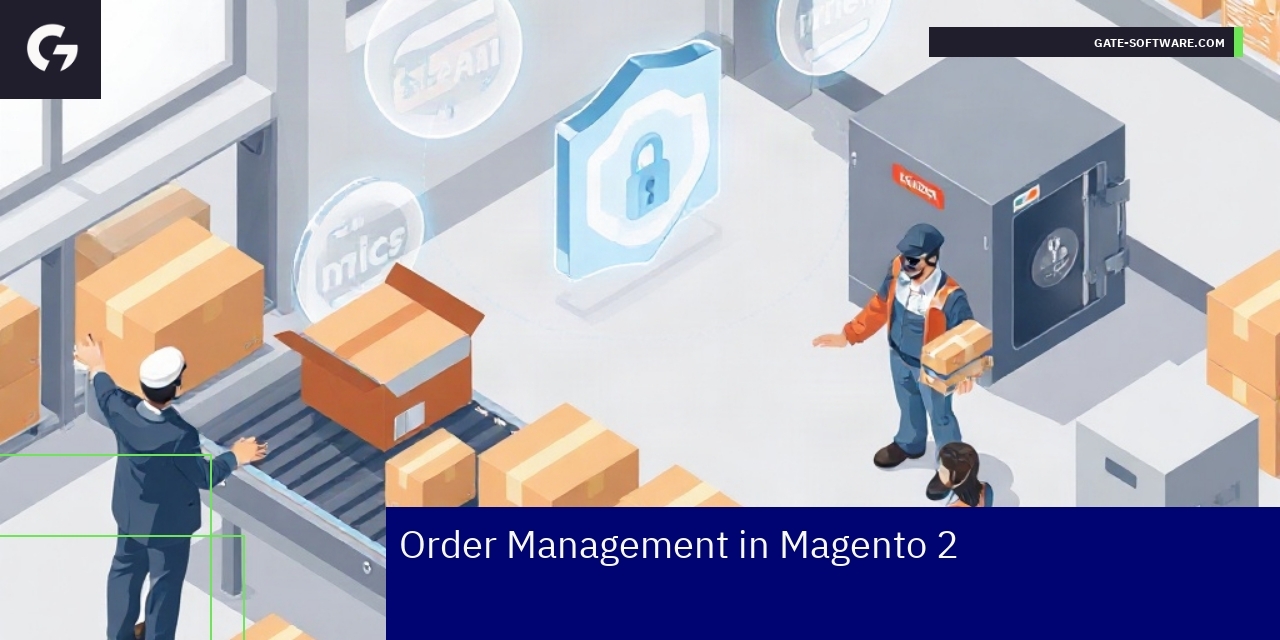
Order management in Magento 2 is a robust, automated process designed to streamline the entire lifecycle of customer orders, enabling businesses to efficiently track order status from creation through to fulfillment. This system supports seamless order processing, including stages such as invoicing, shipment, and completion, providing transparency and operational control for merchants.
Dropshipping
The dropshipping feature in Magento 2 extends order management capabilities by enabling the handling of orders without the need to maintain stock physically. This approach reduces inventory risks and simplifies logistics workflows by directly involving suppliers in fulfilling customer orders. It optimizes operational scalability and allows businesses to offer a broader product range without additional warehousing costs.
Payment Security
Magento 2 integrates advanced payment methods that significantly increase transaction safety. These include features such as secure payment gateways, fraud detection mechanisms, and encryption technologies that safeguard sensitive customer data. Enhancing payment security is critical not only for protecting financial transactions but also for building customer trust and reducing chargebacks.
Customer Service
Effective order management directly contributes to enhanced customer satisfaction. Magento 2 offers comprehensive tools such as automated notifications about order status, detailed order histories, and streamlined return and refund processes. These capabilities ensure that customers remain well-informed and supported throughout the order lifecycle, ultimately fostering higher retention rates and long-term loyalty.

Customer Management in Magento 2
B2B Shopping Lists
B2B shopping lists in Magento 2 streamline the ordering process specifically for wholesale customers. By enabling buyers to create and reuse customized lists of products, organizations can reduce ordering time and improve accuracy. This feature supports bulk purchasing needs common in B2B transactions, ensuring efficiency and consistency in repeat orders. Magento 2’s capability to handle extensive product selections within these lists integrates well with backend inventory and pricing rules, facilitating seamless wholesale operations.
Omnichannel Strategies
Implementing an omnichannel strategy within Magento 2 enables businesses to deliver a unified and seamless shopping experience across physical stores, online platforms, mobile apps, and social media channels. This strategy ensures that customer interactions and data are synchronized, providing consistency in pricing, availability, and promotions regardless of the purchase channel. For enterprises aiming to scale, this approach helps maintain operational efficiency by centralizing customer data and preferences, driving better engagement and higher customer satisfaction.
Offer Personalization
Magento 2’s offer personalization features empower businesses to tailor product recommendations, promotions, and content based on individual customer behaviors and preferences. Leveraging customer data, such as purchase history and browsing patterns, the platform delivers highly relevant offers, enhancing conversion rates and customer loyalty. This personalized approach not only improves user experience but also supports marketing strategies targeted at specific segments, optimizing revenue potential while aligning with customer expectations.

Content Management in Magento 2
Content Responsiveness
Responsiveness is a critical aspect of content management in Magento 2, directly impacting user experience. Responsive content ensures that pages and elements adapt seamlessly across various devices and screen sizes, from desktops to smartphones. Magento 2 facilitates this through flexible templates and theme customization options, enabling businesses to deliver consistent and optimized interaction regardless of user platform. This adaptability not only improves engagement but also contributes to SEO performance, as search engines increasingly prioritize mobile-friendly sites. By leveraging Magento 2’s responsive content tools, technical teams can efficiently maintain a site that meets modern web standards and enhances customer satisfaction.
Fast Content Access
Fast access to content management tools in Magento 2 empowers teams to swiftly respond to market changes and operational needs. The platform’s intuitive admin interface simplifies the editing process for CMS pages, blocks, and widgets, enabling quick updates without deep technical intervention. This speed is crucial for e-commerce environments where timely content changes—such as promotional banners, product information, or policy updates—can impact conversion rates and customer trust. Magento 2’s content staging and preview features further streamline workflows by allowing scheduled publishing and review prior to going live. Consequently, businesses can maintain agility and ensure their site content remains current and accurate.
Content Marketing
Effective content management within Magento 2 is a backbone for successful content marketing strategies. The platform supports creating, organizing, and customizing rich content that aligns with marketing goals, whether educating customers, promoting products, or building brand authority. Reusable CMS blocks and configurable widgets facilitate consistent messaging across different site sections. Additionally, Magento 2’s SEO-friendly URL management and theme customization contribute to enhanced visibility and brand coherence. By integrating content management tightly with marketing initiatives, businesses can leverage Magento 2 to deliver targeted, impactful campaigns that drive customer engagement and sales performance.

Promotions and Promotion Rules in Magento 2
Campaign Effectiveness
In Magento 2, effective campaign management relies heavily on seamless integration with various marketing tools. These integrations provide marketers with enhanced capabilities to design, deploy, and monitor promotion campaigns targeting specific customer segments. By leveraging data-driven insights, Magento 2 enables the creation of tailored promotions that drive engagement and increase conversion rates. This ability to synchronize marketing activities with promotion rules ensures campaigns are both impactful and measurable, facilitating continuous optimization and improved ROI.
Promotion Data Analysis
A critical component of successful promotion management in Magento 2 is the thorough analysis of promotion outcomes. By systematically evaluating the performance of promotional activities, businesses can identify patterns, track customer responses, and measure the effectiveness of different strategies. This analysis supports informed decision-making, allowing teams to refine promotion parameters and adjust tactics to better meet market demands. Data-driven promotion analysis is essential to sustaining competitive advantage and driving long-term marketing success.
Promo Flexibility
The flexible architecture of Magento 2 empowers businesses to rapidly adapt promotions to shifting market conditions and consumer behaviors. This flexibility encompasses the ability to create diverse promotional rules, configure discount structures, and schedule campaigns with precision. Magento’s robust rule engine supports complex scenarios that can accommodate a wide range of product types, customer groups, and pricing models. Such agility ensures that promotions remain relevant and effective, enabling companies to respond quickly to opportunities and competitive pressures.

Reporting in Magento 2
Data and Analytics
Magento 2’s built-in reporting features leverage comprehensive data and automation to support detailed analytics and streamline the reporting process. These capabilities allow eCommerce managers and technical teams to monitor sales results effectively by capturing key performance indicators such as order volume, revenue streams, product performance, and customer behavior. Automated data processing enhances accuracy and reduces manual intervention, ensuring reports reflect real-time operational realities. Integrating these automated analytics into the Magento 2 ecosystem provides actionable insights that drive strategic decision-making and operational adjustments at scale, facilitating data-driven optimization of sales pipelines and customer engagement efforts.
—
If available:
—
High Report Responsiveness
The Magento 2 reporting system is designed with high responsiveness to accommodate the demands of real-time data access and analysis. This responsiveness is critical for senior stakeholders like CTOs and Heads of Product who require up-to-date information to make timely decisions. By enabling instantaneous report generation, Magento 2 supports agile operational workflows and rapid reaction to market changes or internal performance fluctuations. The system’s architecture optimizes data querying and rendering speeds, ensuring that large volumes of transaction and customer data can be processed efficiently without compromising system performance. This high responsiveness enhances scalability and supports growing eCommerce operations with minimal latency in business intelligence delivery.

Magento 2 Multilingual Capabilities
Content Geolocation
Magento 2’s multi-language support forms a core pillar for enabling international e-commerce growth by allowing businesses to create multiple store views tailored to different languages. Each store view can be configured with specific locale settings, ensuring that language, date formats, number formats, and other region-specific elements are accurately presented to users. This flexibility helps deliver a seamless and culturally relevant shopping experience across diverse markets.
Moreover, Magento 2’s translation tools empower merchants to manage product descriptions, category names, and other essential content in various languages through the admin panel or via CSV imports, enhancing operational efficiency in managing multilingual content. SEO-friendly URLs aligned with each language further optimize search engine visibility, supporting organic growth across geographies.
Content Geolocation
The use of geolocation in Magento 2 enables dynamic adjustment of offers based on the customer’s physical location. This functionality helps tailor the shopping experience by presenting the most relevant language and localized content automatically, improving user engagement and conversion rates. Geolocation supports agile market adaptation, so businesses can cater to local preferences, tax regulations, and pricing strategies effectively. Combined with multilingual capabilities, geolocation forms a powerful toolset for scaling e-commerce operations globally while maintaining high relevance at the local level.

Payments and Shipping in Magento 2
Magento 2 integrates payment and shipping management to provide a comprehensive eCommerce solution. The platform supports a wide range of payment gateways, allowing businesses to cater to diverse customer preferences and regional requirements. This integration ensures secure transaction processing, compliance with industry standards, and flexible configuration options for payment methods.
Payment Method Flexibility
The platform’s flexibility allows adding new payment options, which is crucial for businesses aiming to expand their payment methods portfolio to enhance customer satisfaction and reduce cart abandonment rates. Magento 2 supports both offline and online payment methods, customizable through its modular architecture, enabling seamless integration with third-party payment processors and local payment systems. This flexibility contributes to a scalable solution that adapts to evolving market demands and technological advancements, ensuring that payment processes remain efficient and secure.
Shipping management in Magento 2 includes advanced features such as multi-carrier support, customizable shipping rates, and real-time shipping tracking. The platform allows integration with major shipping providers and supports complex shipping rules based on location, product type, and order value, improving operational efficiency and customer experience. This robust shipping functionality, combined with versatile payment options, positions Magento 2 as a strong choice for businesses seeking to optimize their eCommerce logistics and payment workflows at scale.

Marketing in Magento 2
Expanded marketing features in Magento 2 enable effective customer targeting by providing a versatile and scalable platform that supports personalized campaigns and data-driven decisions. These features allow businesses to segment customers based on behavior, purchase history, and preferences, which enhances the relevance and effectiveness of marketing efforts. By leveraging Magento 2’s built-in tools, marketers can create targeted promotions, personalized product recommendations, and dynamic content tailored to specific customer groups, boosting engagement and conversion rates.
Platform Integrations
Integrations simplify management of advertising strategies by connecting Magento 2 with various third-party marketing and analytics platforms. This interoperability enhances data synchronization, automates campaign execution, and improves tracking of marketing performance across channels. Integrations with popular advertising platforms, email marketing tools, and customer relationship management (CRM) systems streamline workflows and enable a unified view of customer interactions. As a result, businesses can execute more coordinated and effective marketing strategies while maintaining operational efficiency and scalability.

Marketing and Sales Integrations
Magento 2’s integrations cover various systems to improve sales efficiency. This includes seamless connections with marketing automation platforms, customer relationship management (CRM) systems, and sales analytics tools. Integrating these elements enables real-time synchronization of customer data, streamlines lead management, and enhances targeted marketing efforts, ultimately boosting conversion rates.
The platform’s robust API framework supports integration with third-party plugins that facilitate personalized product recommendations, dynamic pricing, and promotional campaign management. These features empower marketing teams to execute complex strategies with agility and precision.
From a technical perspective, integrations are designed to scale efficiently with growing transaction volumes, ensuring minimal impact on performance. The architecture supports asynchronous data processing and event-driven workflows, reducing latency and improving overall system responsiveness.
Moreover, Magento 2’s sales integrations aid operational efficiency by automating routine tasks such as order processing, inventory updates, and customer follow-ups. This allows sales teams to focus on high-value activities and improves customer satisfaction through timely interactions.
In conclusion, Magento 2’s comprehensive marketing and sales integrations provide a solid foundation for enterprises aiming to optimize their eCommerce operations, enhance customer engagement, and drive revenue growth through scalable and performant system architecture.

Custom Theme Design
A custom theme design in Magento 2 enables businesses to tailor their eCommerce platform to meet unique operational and branding requirements, optimizing both functionality and aesthetics. This customization is essential for differentiating a storefront in a competitive marketplace and aligning the digital experience with specific business goals.
User Experience
User Experience (UX) is significantly enhanced through a custom theme design, as it allows the creation of an intuitive, responsive, and visually cohesive interface. A well-designed theme ensures customers can navigate the site effortlessly, find products quickly, and enjoy seamless interactions. This leads to higher engagement, reduced bounce rates, and increased conversion rates. Tailoring the interface to user behavior and preferences makes the platform more accessible across devices, thereby expanding reach and fostering customer loyalty.

Alternatives to Magento 2
When considering alternatives to Magento 2, organizations face a diverse landscape of e-commerce platforms, each with unique capabilities tailored to different business requirements, technical capacities, and scalability needs.
Shopify, for instance, stands out as a cloud-based, fully managed service emphasizing ease of use and rapid deployment. It offers robust scalability for growing businesses, with an extensive app ecosystem to extend functionality without heavy development overhead. Shopify’s architecture reduces the operational burden on IT teams by handling hosting, security, and maintenance.
WooCommerce, built as a plugin for WordPress, leverages the flexibility of a popular content management system. It is particularly suitable for businesses seeking deep customization and control over their storefront while integrating content and commerce seamlessly. However, WooCommerce requires more hands-on management of hosting and updates, impacting operational workflows.
BigCommerce offers a SaaS model similar to Shopify, emphasizing built-in features suitable for mid-to-large enterprises. Its architecture supports extensive product catalogs and complex pricing models, facilitating operational efficiency and scalability in evolving market contexts.
Open-source alternatives like PrestaShop and OpenCart provide high customization potential and control over the technical stack, which can be strategically advantageous for companies with strong development teams. These platforms enable extensive modification but demand greater technical resources for maintenance and scalability planning.
Finally, website builders such as Squarespace and Wix eCommerce cater to smaller businesses or those prioritizing ease of design and integration over complex functionalities. They offer straightforward site management but may fall short for enterprises requiring advanced features or extensive backend control.
In summary, selecting an alternative to Magento 2 involves analyzing the trade-offs between operational efficiency, technical complexity, scalability, and business requirements to align the e-commerce platform with strategic goals.

Common Magento 2 Implementation Errors
Understanding and avoiding common Magento 2 implementation errors is critical for ensuring a smooth and successful deployment of an eCommerce platform. Several recurrent issues arise during Magento 2 implementations, ranging from technical misconfigurations to performance bottlenecks that can adversely impact operational efficiency and scalability.
One frequent error occurs during installation or server configuration. Inadequate server settings, such as incorrect PHP limits or outdated software versions, can hinder Magento 2’s optimal performance. Ensuring that the hosting environment meets Magento 2’s technical prerequisites is fundamental.
Configuration errors in the admin panel also pose significant challenges. Misconfigured payment gateways, shipping options, or tax settings can result in operational disruptions and impact customer experience. Similarly, caching issues, including failure to clear caches properly, can cause outdated content to be served, impacting both performance and user interface stability.
Theme compatibility and extension conflicts are another critical area of concern. Using incompatible themes or extensions often leads to layout inconsistencies or site functionality breakdowns. Rigorous compatibility checks and conflict resolution protocols are necessary to maintain a stable environment.
Indexing problems, such as failing to update indexes regularly, cause data discrepancies, affecting product visibility and search accuracy. Additionally, URL rewrite issues can create broken links or 404 errors, impacting SEO and customer navigation.
Lastly, improper implementation of security settings exposes the platform to vulnerabilities, underscoring the importance of enforcing best practices in Magento 2 security configurations.
Addressing these common implementation errors proactively ensures improved scalability, enhanced user experience, and sustained operational efficiency in Magento 2 deployments.
Configuration and Compatibility Issues
—
If available:
—

Data and Performance Metrics – Efficiency and Cost
Key Metrics for Hyva
Hyva’s innovative solutions have shown impressive efficiency gains, with an average of 20% reduction in vehicle downtime attributed to their advanced hydraulic systems. The adoption of Hyva’s tipping mechanisms has resulted in a 15% increase in load management efficiency, directly impacting transportation timelines and overall productivity.
The operational cost savings are significant, with fleet operators reporting an average 10% decrease in total operational costs when integrating Hyva’s engineered products. Additionally, with a focus on sustainability, Hyva’s systems have contributed to a 25% reduction in carbon emissions through optimized load and route management.
In terms of user adoption, Hyva has experienced a 30% year-over-year growth in client acquisition, indicating strong market demand for its solutions. Furthermore, the implementation of Hyva’s container handling equipment has facilitated a 40% increase in throughput capacity, allowing clients to handle more containers efficiently within the same timeframe.
Overall, these metrics underscore Hyva’s impact on enhancing operational performance and reducing costs for businesses in the transportation and logistics sectors.

Summary
As you explore the advancements in eCommerce through platforms like Magento 2 and innovative solutions offered by companies like Hyva, it’s essential to recognize the significant impact of these technologies on operational efficiency and responsiveness to market demands. By adopting modern themes such as Hyva, businesses can enhance performance and user experiences, directly translating to improved conversion rates and customer retention. Furthermore, the flexibility to customize and integrate systems allows organizations to tailor their solutions to meet specific business requirements, thereby optimizing their operational workflows and scalability. Embracing these trends positions your business strategically to meet evolving customer expectations and enhances your competitive edge in the ever-expanding digital marketplace. As you consider the next steps, reflecting on how these insights can be implemented in your operations may spur innovative strategies and unlock new growth opportunities.

FAQ
What are the main benefits of using Hyva Themes for Magento?
Hyva Themes offer significant performance optimization and enhanced user experiences by adopting lightweight and modular front-end frameworks, which reduce frontend complexity and improve page load speeds, crucial for SEO and conversion rates.
How does Hyva support Progressive Web App (PWA) technologies?
Hyva integrates PWA technologies into Magento themes, allowing eCommerce sites to provide app-like experiences on the web, including features such as offline browsing, push notifications, and improved mobile usability, which enhance customer engagement and retention.
Why is customization important in Magento theme development?
Customization and extensibility are vital in Magento theme development as they enable developers to tailor themes to specific business needs using headless commerce architectures and API-first approaches, facilitating agile updates and integrations with third-party systems.
What security considerations are taken into account in Magento themes?
Magento themes increasingly incorporate best practices for data protection and accessibility to ensure compliance with regulations like GDPR while maintaining usability for all customers, enhancing the overall security framework of eCommerce sites.
How do the advancements in Magento theme development impact business performance?
The advancements focus on speed, user experience, flexibility, and security, empowering businesses to meet rising customer expectations and competitive demands, ultimately translating into operational efficiencies and strategic advantages that can lead to revenue growth.
.
.
Zamów bezpłatną konsultację
.
Z nami rozwój Twojego biznesu nabierze tempa! Zapraszamy do kontaktu średnie i duże firmy generujące min. 7 mln PLN obrotu rocznie – tam nasza ekspertyza sprawdza się najlepiej.
.
Kliknij w poniższy przycisk i skontaktuj się z jednym z naszych konsultantów e-commerce
.