Artificial intelligence (AI) personalization in Magento 2 represents a strategic opportunity to enhance e-commerce platforms by delivering uniquely tailored shopping experiences. Utilizing AI within Magento 2 enables businesses to leverage data-driven insights for predictive customer behavior, customized product recommendations, and dynamic content adaptation, thereby addressing real-world challenges such as user engagement, conversion optimization, and customer retention.
From a technical standpoint, AI personalization integrates with Magento 2 through modular extensions or APIs that analyze diverse datasets—including browsing history, purchase patterns, and demographic profiles—in real time. These AI models continuously refine recommendations and user interfaces, ensuring that content remains relevant and timely. Operationally, this automation reduces manual intervention in marketing campaigns and catalog management, freeing resources while maintaining consistency and scalability.
Strategically, AI-driven personalization positions e-commerce businesses to compete effectively in markets dominated by customer expectations for individualized experiences. By embedding AI capabilities into Magento 2, companies enhance customer lifetime value through higher average order values and repeat purchases. Furthermore, AI personalization supports advanced segmentation and lifecycle marketing tactics, enabling more efficient budget allocation and better ROI tracking.
Implementing AI personalization within Magento 2 also has implications for UX and performance. Solutions must be optimized to minimize latency, preserve seamless navigation, and uphold security standards, ensuring that AI enhancements do not disrupt the user journey. This technical balance requires a comprehensive understanding of Magento architecture and AI model deployment.
Overall, adopting AI personalization in Magento 2 delivers measurable business impact by aligning technical innovation with strategic commerce goals, improving both customer experience and operational efficiency.
Introduction
Hyva is a globally recognized company specializing in advanced hydraulic systems and equipment tailored for the transport and logistics industries. Established in the 1970s, Hyva has since evolved into a leading manufacturer and supplier of hydraulic cylinders, tipping solutions, and other specialized products specifically designed for commercial vehicles across multiple sectors such as construction, waste management, and transportation.
At the core of Hyva’s business is a dedication to delivering high-quality, reliable products engineered to endure demanding work environments while maximizing vehicle performance and operational productivity. Their solutions are crafted to improve the efficiency and durability of commercial transport vehicles, addressing critical real-world business challenges faced by fleet operators.
With a strong international footprint, Hyva supports a diverse global customer base through continuous innovation and a strategic focus on sustainability. This positions Hyva not only as a provider of durable hydraulic solutions but also as a partner invested in enhancing operational efficiency, scalability, and long-term value in transport and logistics operations.
TABLE OF CONTENTS
- AI Personalization in Magento 2 – How to Use Artificial Intelligence in E-commerce
- Introduction
- Definitions and Basics of AI Personalization in Magento 2
- How AI Works in E-commerce
- Benefits of AI Personalization in Magento 2
- Key AI Features in Magento 2
- AI Chatbots: What They Are and How They Work
- AI-Based Product Recommendations
- Contextual Search
- Fraud Prevention with AI
- Personalizing Shopping Experiences
- Key AI Marketing Strategies
- Retargeting Marketing Essentials
- Automated Inventory Management in Magento 2
- Sales Analysis and Trend Forecasting
- AI Workflow Automation for Magento 2
- Magento 2 AI Content Generator Extension Features
- Multilingual Support in Magento 2
- AI Use Cases in E-commerce (Case Studies)
- Common AI Implementation Mistakes
- Data and Performance Metrics – Efficiency and Cost
- Summary
- FAQ
- Examples of AI personalization tools compatible with Magento 2
- Case studies demonstrating AI personalization impact on Magento stores
- Best practices for implementing AI personalization in Magento 2
- Case studies showcasing conversion rate improvements after AI personalization implementation
- Statistics on customer retention linked to AI-driven recommendations
- Examples of AI tools compatible with Magento 2 for personalization
- User testimonials highlighting improvements in shopping experience due to AI personalization
- Examples of popular AI chatbot platforms include Google Dialogflow, Microsoft Bot Framework, and IBM Watson Assistant.
- Emerging trends in AI chatbots include the integration of emotion recognition and multimodal inputs such as images and videos.
- Case studies demonstrating successful AI chatbot deployment often highlight measurable improvements in customer satisfaction and operational cost reduction.
- Case studies highlighting AI implementation failures and lessons learned
- Industry best practices for aligning AI with e-commerce workflows
- Tools and frameworks for robust data integration and governance
- Checklists for AI testing, validation, and monitoring processes
- Expert interviews or insights on overcoming common AI challenges in online retail
Definitions and Basics of AI Personalization in Magento 2
AI personalization in Magento 2 refers to the use of artificial intelligence technologies to tailor the online shopping experience to individual customer preferences and behaviors. This personalization is achieved through data-driven algorithms that analyze customer data such as browsing history, purchase patterns, and engagement metrics to deliver customized product recommendations, dynamic content, and personalized promotions.
For Magento retailers, AI personalization is crucial as it directly impacts conversion rates, customer satisfaction, and lifetime value. By presenting relevant products and offers, it reduces decision fatigue for shoppers and increases the likelihood of purchase. Moreover, AI-driven personalization enhances operational efficiency by automating marketing segmentation and campaign targeting, allowing retailers to scale their efforts effectively.
Within Magento 2, AI personalization integrates seamlessly with the platform’s modular architecture, leveraging its robust API and extensibility features. This enables retailers to implement scalable personalization solutions that can adapt to changing customer behaviors and business needs without disrupting the core eCommerce infrastructure. Additionally, Magento 2’s support for third-party AI tools and its own AI capabilities facilitate continuous improvement through machine learning, ensuring recommendations evolve as customer data grows.
In summary, AI personalization in Magento 2 empowers retailers to deliver highly relevant, data-driven shopping experiences that drive engagement and business growth while maintaining scalability and performance within the eCommerce ecosystem.
If available:

How AI Works in E-commerce
Artificial intelligence in e-commerce operates by leveraging advanced data analysis algorithms to optimize various aspects of online retail. Central to these processes is the ability of AI to analyze vast amounts of customer data, including browsing behavior, purchase history, and interaction patterns. Through this analysis, AI generates personalized product recommendations, tailoring the shopping experience to individual consumer preferences, which directly impacts customer engagement and conversion rates.
Beyond personalization, AI supports e-commerce operations through intelligent chatbots that provide real-time customer assistance, resolving queries and guiding purchasers seamlessly through transaction processes. These systems reduce operational costs by automating customer service tasks.
Inventory and supply chain management are also enhanced by AI-driven demand forecasting models, which utilize historical sales data and market trends to maintain optimal stock levels, preventing overstocking or stockouts. Pricing strategies benefit from dynamic AI algorithms that adjust prices based on competitor activity, demand fluctuations, and seasonality to maximize profitability.
Additionally, AI incorporates visual search capabilities through image recognition technologies, enabling customers to search for products using pictures, thereby enhancing user experience with more intuitive interfaces.
Fraud detection and prevention are fortified with AI’s pattern recognition skills, identifying anomalous transactions swiftly to secure the platform. Finally, deep insights derived from comprehensive data analysis allow e-commerce managers to make data-driven strategic decisions, improving scalability, operational efficiency, and long-term business growth.
Understanding these processes is crucial for how to implement AI in 4 simple steps and for why Magento merchants can’t afford to ignore AI, as integrating AI effectively can transform business operations and customer experiences.
Benefits of AI Personalization in Magento 2
AI personalization in Magento 2 offers significant advantages that directly impact key business metrics such as conversion rates and customer satisfaction. By leveraging AI-driven insights, Magento retailers can create highly tailored shopping experiences that align with individual customer preferences and behavior patterns. This level of personalization fosters deeper engagement, increases the likelihood of purchase, and ultimately drives higher conversion rates.
From a technical perspective, integrating AI personalization within Magento 2 utilizes advanced algorithms that analyze real-time data to deliver relevant product recommendations, dynamic content, and personalized offers. These AI capabilities enable retailers to optimize the customer journey at scale without compromising performance or operational efficiency. Furthermore, AI-powered personalization supports improved decision-making in merchandising and marketing strategies by uncovering trends and customer intent that were previously opaque.
Operationally, AI enhances customer experience by minimizing friction and providing intuitive interactions that resonate with users. This results in improved customer loyalty and repeat business, critical to sustaining growth in competitive eCommerce markets. For Magento retailers, adopting AI personalization is no longer optional but a strategic imperative to create differentiated, scalable shopping experiences that meet evolving consumer expectations.
Benefits of AI Personalization in Magento 2
—
If available:
—
Key AI Features in Magento 2
Magento 2 integrates several AI-driven functionalities that significantly enhance operational efficiency for online stores. These capabilities primarily focus on automating routine tasks, personalizing customer experiences, and optimizing backend processes to scale effectively.
One of the notable uses of AI in Magento 2 is through extensions and platforms that facilitate product recommendations and customer segmentation. AI algorithms analyze customer behavior and transaction history to deliver targeted product suggestions, boosting conversion rates and average order values. These AI-powered recommendation engines can be sourced from third-party extensions or custom-developed solutions tailored to specific business needs.
Another critical AI feature involves inventory management optimization. AI tools leverage predictive analytics to forecast demand, streamline stock levels, and reduce overstock or stockouts, ensuring the store maintains the right inventory mix to meet customer demand without excess capital tied up.
Magento AI tools also include intelligent search functionalities that improve product findability. AI-enhanced search employs natural language processing and semantic search capabilities to understand user intent better, leading to more accurate and relevant search results that enhance the shopper’s journey.
Additionally, AI-driven chatbots and virtual assistants integrated within Magento 2 stores enable real-time customer support and personalized assistance, reducing the workload on human agents and speeding up resolution times.
Custom AI development further allows enterprises to build tailored functionalities such as dynamic pricing models or fraud detection systems, providing a deeper layer of operational intelligence.
Overall, these AI features—acquired via extensions, platforms, or custom development—work in concert to optimize Magento stores by improving efficiency, boosting sales, and enhancing user experiences. Leveraging these technologies is crucial for businesses aiming to remain competitive and scalable in today’s rapidly evolving e-commerce landscape.

AI Chatbots: What They Are and How They Work
AI chatbots are sophisticated software applications designed to simulate human-like conversations by leveraging natural language processing (NLP) and machine learning technologies. These systems enable real-time interaction with users through text or voice interfaces, commonly deployed in customer service, virtual assistance, and information retrieval tasks.
At their core, AI chatbots process user input by utilizing NLP techniques that parse and understand language structures, identify intent, extract keywords, and gauge sentiment. This linguistic comprehension allows chatbots to interpret queries accurately. Machine learning algorithms further enhance chatbot functionality by enabling continuous improvement; chatbots learn from historical conversations, adapting their responses to increase accuracy and relevance over time.
There are primarily two operational approaches. Rule-based chatbots rely on a predefined set of triggers and responses, functioning well for straightforward, predictable interactions. In contrast, more advanced chatbots access extensive databases and utilize contextual memory, enabling nuanced, context-aware responses that provide a personalized user experience.
Integration flexibility is a key strength of AI chatbots, as they can be embedded within websites, mobile applications, messaging platforms, and voice-enabled devices, supporting omnichannel user engagement strategies. Furthermore, sophisticated chatbots implement feedback loops to iteratively refine their conversational abilities, optimizing performance and scalability.
While AI chatbots significantly enhance user interaction and operational efficiency, common implementation pitfalls include inadequate training data, poor understanding of user intent, and lack of seamless escalation paths to human agents. Avoiding these pitfalls requires a strategic approach encompassing thorough dataset preparation, robust intent recognition models, and hybrid architectures that balance automation with human oversight. This ensures AI chatbots not only streamline interactions but also maintain high accuracy and customer satisfaction.
If available:

AI-Based Product Recommendations
AI-based product recommendation systems leverage advanced machine learning algorithms and data analytics to personalize the shopping experience in e-commerce stores. These systems analyze customer behavior, preferences, purchase history, and browsing patterns to deliver highly relevant product suggestions in real time. In Magento 2, integrating AI-powered personalization tools enables merchants to dynamically tailor product displays, enhancing customer engagement and driving increased conversion rates.
The core operation of such systems involves collecting and processing vast amounts of user interaction data, applying collaborative and content-based filtering methods, and generating recommendation models that continuously evolve with incoming data. By using Magento AI tools, stores can implement sophisticated recommendation engines that not only predict what a customer is likely to purchase next but also optimize upselling and cross-selling opportunities across the storefront.
The benefits of embedding AI-powered personalization in Magento 2 extend beyond improved sales. They include enhanced user experience through relevant content delivery, increased average order value via personalized suggestions, and streamlined operational efficiency from automated recommendation management. Additionally, these AI systems support scalability by efficiently processing complex datasets at scale without degrading site performance.
Implementing AI-based product recommendations in Magento 2 involves configuring AI modules or integrating third-party AI services compatible with Magento’s architecture. This integration must consider data privacy, latency, and the seamless synchronization of AI outputs with the Magento catalog and checkout processes. Ultimately, leveraging AI in Magento empowers e-commerce stores to offer a uniquely tailored shopping journey that significantly boosts customer satisfaction and business outcomes.

Contextual Search
In the Hyva ecosystem for Magento 2, contextual search is significantly enhanced by the integration of AI algorithms that refine search quality and bolster user experience. AI-driven search mechanisms analyze user intent and behavioral patterns to deliver more relevant and personalized search results, thereby reducing friction in the customer’s journey.
One critical aspect of this enhanced search capability is dynamic pricing powered by AI. This approach allows Magento 2 stores to adjust prices in real-time based on various factors such as demand, competitor pricing, inventory levels, and user behavior. The synergy of dynamic pricing with smart search functions creates a seamless and adaptive shopping environment, increasing the likelihood of conversion and customer satisfaction.
Smart search technologies process vast amounts of data to understand context—going beyond keyword matching to semantic analysis. This results in more accurate predictions of shopper needs and preferences, which improves discoverability of products and reduces bounce rates. For business stakeholders like CTOs and Digital Directors, implementing AI-enhanced contextual search within Hyva offers operational efficiency and scalability, enabling Magento stores to stay agile in competitive markets while maintaining high performance standards.

Fraud Prevention with AI
In the context of Hyva e-commerce stores, AI plays a critical role in identifying threats and securing transactions to prevent fraud. Advanced AI-driven systems analyze vast amounts of transactional data in real time, detecting anomalous patterns that may indicate fraudulent activity. These systems leverage machine learning algorithms to continuously adapt to emerging fraud tactics, ensuring robust protection.
Key strategies for effective fraud prevention include behavioral analytics, which monitor user interactions and flag suspicious behaviors such as rapid-fire transactions or inconsistent login locations. AI models also utilize device fingerprinting and geolocation data to authenticate users seamlessly without interrupting the customer experience.
Furthermore, AI enhances the accuracy of risk assessment by integrating multiple data points—from payment methods to customer history—enabling dynamic decision-making that balances security with user convenience. This multi-layered approach minimizes false positives that could disrupt legitimate transactions while maintaining store integrity.
Operationally, AI-powered fraud prevention solutions support scalability by handling high transaction volumes with low latency, crucial for maintaining performance during peak shopping seasons. Integrating these AI capabilities within Hyva’s flexible front-end architecture allows stores to implement tailored security policies that align with their business needs and regulatory requirements.
Overall, AI-centric fraud prevention strengthens Hyva e-commerce platforms by proactively mitigating threats, safeguarding revenue, and preserving customer trust through secure, seamless shopping experiences.

Personalizing Shopping Experiences
Personalization in e-commerce is fundamental to optimizing user experiences and fostering greater customer loyalty. Leveraging AI-driven personalization within platforms like Magento enables businesses to create dynamic, customer-centric shopping journeys tailored to individual preferences and behaviors.
There are three primary paths to AI personalization in Magento. First, product recommendations based on user browsing patterns and purchase history help showcase relevant items, increasing cross-sell and upsell opportunities. Second, personalized content delivery—such as tailored banners, promotions, and messaging—engages users more effectively by reflecting their unique interests and demographics. Third, real-time personalization through behavioral analytics allows instantaneous adaptation of the shopping experience, enhancing relevance and satisfaction.
Implementing these personalization strategies requires a robust, scalable technical architecture capable of processing vast amounts of customer data with low latency. Integration with Magento’s flexible APIs and AI tools facilitates seamless deployment and customization, accommodating evolving customer needs and business goals.
Overall, dynamic personalization not only improves user engagement but also drives operational efficiency by focusing marketing efforts on high-intent segments. This customer-centric approach is essential for maintaining competitive advantage and long-term loyalty in a fast-paced e-commerce environment.

Key AI Marketing Strategies
Artificial intelligence (AI) is redefining marketing strategies by enhancing targeting precision, automating repetitive tasks, and generating data-driven insights that optimize campaign effectiveness. Key AI marketing strategies involve retargeting and automation, which together amplify customer engagement and operational efficiency.
Retargeting powered by AI leverages machine learning algorithms to analyze user behavior and segment audiences with high granularity. This enables personalized ad delivery that increases conversion rates by focusing on users who have previously interacted with a brand, thus maximizing return on ad spend.
Automation is another critical strategy where AI-driven platforms streamline campaign management by automating bidding, content personalization, and distribution schedules. This leads to consistent messaging, reduced manual intervention, and the ability to scale marketing efforts effortlessly.
Implementing AI in marketing to maximize impact can be broken down into four steps. First, data consolidation ensures all customer interactions and behaviors are captured into unified platforms, forming the basis for AI analysis. Second, selecting the right AI tools suited to specific marketing goals—whether it’s customer segmentation, predictive analytics, or automation workflows—is essential. Third, integration of AI systems with existing marketing infrastructure ensures seamless data flow and operation. Finally, continuous monitoring and optimization utilize AI’s real-time feedback to refine campaigns dynamically, ensuring sustained performance improvements.
These AI marketing strategies promote data-driven decision making and operational scalability, yielding real-world business benefits such as improved customer acquisition, retention, and enhanced marketing ROI.

Retargeting Marketing Essentials
Retargeting marketing is a sophisticated strategy that focuses on engaging users who have previously interacted with a brand but did not complete a desired action, such as a purchase or inquiry. Its core objective is to boost conversion rates by reintroducing personalized content that resonates with the user’s demonstrated interests. Leveraging AI-powered personalization is fundamental to enhancing the effectiveness of retargeting campaigns, as it enables precise segmentation, dynamic creative generation, and optimized delivery timing.
In practice, AI algorithms analyze user behavior data—such as browsing history, click patterns, and cart abandonment—to create granular audience profiles. These profiles inform automated decision-making processes that tailor ads to individual preferences and contexts. This level of customization increases relevance, which in turn drives higher engagement and conversion rates while reducing wasted ad spend.
From a technical perspective, integrating retargeting within a scalable marketing stack requires robust data pipelines and real-time processing capabilities. Seamless synchronization between customer data platforms (CDPs), demand-side platforms (DSPs), and ad exchanges is critical. Additionally, ensuring privacy compliance while utilizing first- and zero-party data sources demands meticulous governance and transparent data handling practices.
Operationally, maintaining campaign performance involves continuous iteration driven by AI insights—testing varied creative assets, adjusting targeting parameters, and refining attribution models. This proactive approach yields improvements in return on ad spend (ROAS) and overall marketing efficiency.
Ultimately, retargeting marketing enriched with AI-powered personalization presents a powerful lever for businesses aiming to convert latent interest into measurable outcomes. The strategy’s success hinges on the convergence of data-driven intelligence, technological agility, and strategic execution.
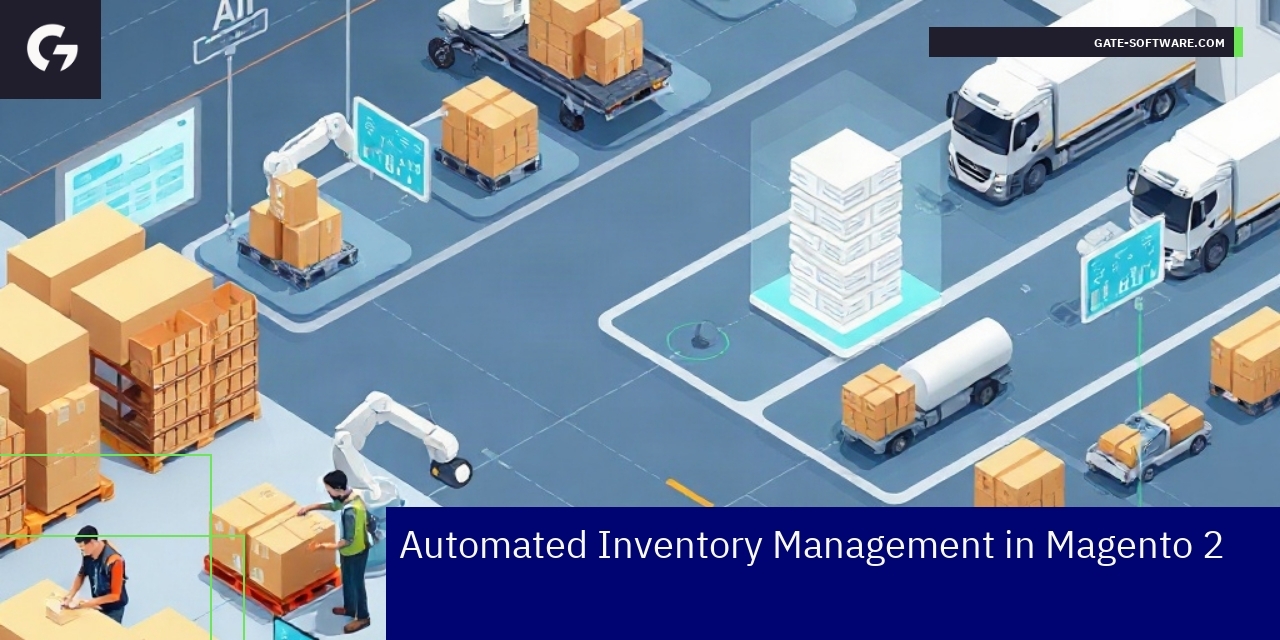
Automated Inventory Management in Magento 2
Automating inventory management within Magento 2 significantly enhances e-commerce performance by streamlining stock control, reducing errors, and optimizing operational workflows. By integrating Magento AI tools, businesses can benefit from intelligent demand forecasting and real-time inventory tracking, which help prevent stockouts and overstock situations. These AI-driven insights allow for dynamic stock adjustments tailored to consumer buying patterns and seasonal trends, directly improving sales efficiency and customer satisfaction.
Workflow automation further supports this by automating routine tasks such as stock updates, order processing, and inventory replenishment. This reduces manual intervention, accelerates response times, and lowers operational costs while maintaining accurate and consistent inventory data across multiple sales channels. The seamless synchronization enabled through Magento’s platform ensures scalability, enabling businesses to expand their operations without inventory management bottlenecks.
From a technical perspective, Magento 2’s architecture supports modular integration of third-party automation tools and AI extensions, providing flexibility in tailoring solutions to specific business needs. Automating inventory management thus not only improves operational efficiency but also helps in scaling e-commerce platforms sustainably by maintaining high performance and data integrity.

Sales Analysis and Trend Forecasting
In the context of Hyva and e-commerce, AI-driven sales analysis and trend forecasting are pivotal for enabling proactive business decisions that enhance operational efficiency and scalability. Leveraging advanced data analytics, machine learning algorithms assess vast amounts of sales data to identify patterns, seasonal fluctuations, and emerging consumer preferences. This allows businesses to anticipate demand shifts accurately and adjust inventory, marketing, and logistics accordingly.
AI models integrate real-time sales metrics with historical data to generate precise demand forecasts, helping streamline supply chain operations and reduce overstock or stockouts. Furthermore, trend forecasting tools analyze customer behavior and market signals to predict upcoming product trends, enabling product teams to innovate strategically.
The scalability of these AI solutions ensures they can handle growing data volumes as e-commerce businesses expand, while maintaining performance and delivering actionable insights. Implementing AI in Hyva for sales analytics supports data-driven decision-making at the executive level, optimizing revenue growth and market responsiveness without incurring excessive operational overhead. This strategic approach positions businesses to stay competitive by anticipating market dynamics and consumer needs proactively.
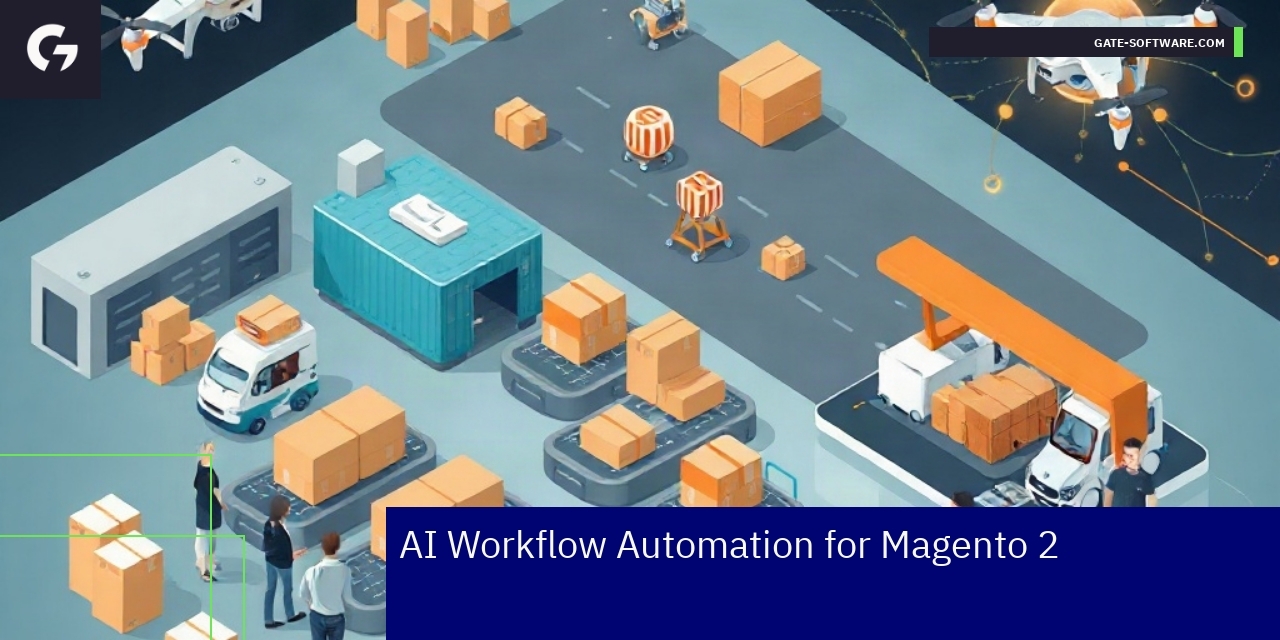
AI Workflow Automation for Magento 2
The integration of AI workflow automation into Magento 2 fundamentally transforms the operational landscape of eCommerce stores by significantly enhancing efficiency and streamlining processes. AI-driven automation facilitates the optimization of routine tasks such as order processing, inventory management, and customer service interactions, thereby reducing manual intervention and the risk of human error. This leads to smoother daily operations and more reliable performance metrics.
At a technical level, embedding AI within Magento 2 involves deploying advanced algorithms capable of learning from transactional data, customer behavior, and market trends. Such systems can predict stock replenishment needs, automate personalized marketing campaigns, and provide intelligent insights into sales performance. This not only boosts operational efficiency but also supports scalability, enabling Magento 2 stores to handle increasing transaction volumes without compromising speed or accuracy.
From an architectural standpoint, AI workflow automation necessitates robust integrations with existing Magento modules and external AI services, ensuring seamless data flow and real-time responsiveness. This often involves leveraging APIs and middleware that can handle large datasets while maintaining security and compliance standards.
In summary, AI workflow automation for Magento 2 is a critical enabler of higher store efficiency and smoother operations. It addresses real-world business challenges by improving process accuracy, enhancing customer experience, and providing actionable insights that drive strategic decision-making.
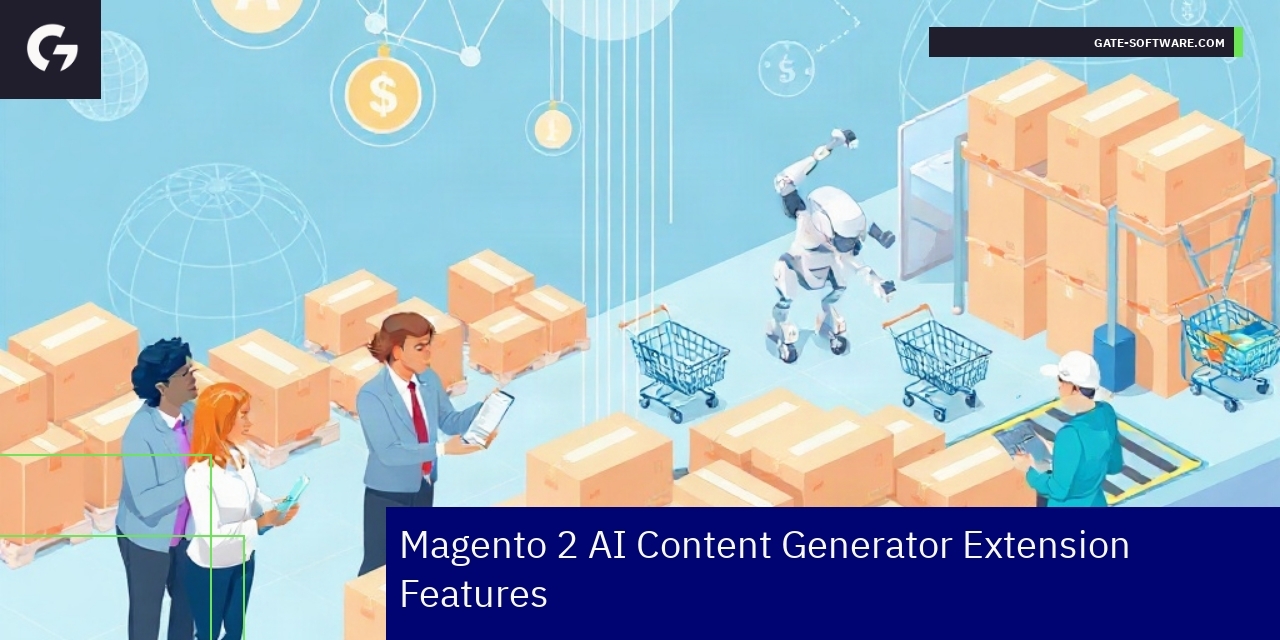
Magento 2 AI Content Generator Extension Features
Content generation tools powered by AI significantly enhance content management within Magento 2 environments, driving more effective marketing and SEO outcomes. These extensions leverage advanced natural language processing and machine learning algorithms to automate and optimize the creation of product descriptions, meta tags, blog posts, and other marketing materials. By dynamically generating high-quality, contextually relevant content, businesses can reduce manual workload and accelerate content publishing cycles without compromising on quality.
From a technical perspective, the integration of AI content generators into Magento 2 ensures seamless compatibility with existing product catalogs and marketing workflows. These tools often support bulk content creation and can be configured to align with specific SEO strategies, including keyword optimization and semantic relevance, which are critical for enhancing search engine visibility and driving organic traffic. Operationally, this leads to improved scalability, allowing businesses to maintain a robust content ecosystem even as their product range expands rapidly.
Performance-wise, AI-driven content generation reduces repetitive tasks and human errors, resulting in consistent branding and tone across various channels. Moreover, AI systems continuously learn and adapt to evolving market trends and user behavior patterns, thereby sustaining long-term relevance in content marketing strategies. By automating content creation while maintaining strategic oversight, Magento 2 AI content generator extensions provide a scalable, efficient solution to meet the digital commerce demands of today’s competitive environment.

Multilingual Support in Magento 2
Multilingual capabilities in Magento 2 play a critical role in enabling businesses to reach a global audience and enhance customer engagement effectively. Magento 2 facilitates this through its robust multi-store architecture, allowing businesses to create multiple store views that correspond to different languages. This architecture supports seamless content management where each store view can host localized versions of product descriptions, CMS pages, categories, and marketing content tailored to specific regions or languages.
The use of language packs in Magento 2 further augments its multilingual support by providing comprehensive translations for both storefront interfaces and the admin panel. These packs, often obtainable from official repositories like Magento Marketplace, allow for rapid deployment of new languages without extensive custom development. Additionally, inline translation tools and CSV-based custom translations empower Magento users to fine-tune and update language content dynamically as market needs evolve.
Localization extends beyond language text to include setting regional configurations like date, time formats, currency, and number formatting per store view. This ensures that the user experience aligns with local preferences and regulations, contributing substantially to operational efficiency and customer satisfaction.
The ability to implement intuitive language switchers within the storefront encourages an engaging shopping experience, allowing customers to effortlessly toggle between languages as they navigate. This level of customization is critical for scalability, particularly for enterprises operating across multiple geographies.
Overall, Magento 2’s multilingual support is not just a feature but a strategic enabler that supports technical architecture scalability, enhances global reach, and fosters deeper engagement with diversified customer segments.

AI Use Cases in E-commerce (Case Studies)
Artificial intelligence (AI) has transformed the e-commerce landscape by enabling personalized customer experiences, optimizing operations, and enhancing decision-making across diverse sectors. Case studies from various e-commerce industries demonstrate the powerful impact of AI-driven personalization tools and analytics.
In fashion retail, AI-powered recommendation engines analyze user behavior, preferences, and purchase history to offer tailored product suggestions, significantly boosting conversion rates and average order values. These systems dynamically adapt to individual style trends, allowing businesses to engage customers with relevant content and promotions, thus elevating customer loyalty.
In the electronics sector, AI applications streamline inventory management and demand forecasting. Machine learning models analyze historical sales data and real-time market trends to optimize stock levels and reduce holding costs. This operational efficiency ensures product availability while minimizing overstock and obsolescence risks.
Another notable use case is in online grocery platforms where AI leverages customer data to personalize shopping lists and delivery schedules. Predictive analytics enable timely inventory replenishment and efficient route planning, enhancing the customer experience through faster, reliable service.
Moreover, AI-driven chatbots and virtual assistants in e-commerce provide 24/7 customer support, addressing inquiries, resolving issues, and facilitating transactions. These systems reduce operational overhead and improve service quality, contributing to higher customer satisfaction and retention.
Across all sectors, integrating AI with scalable cloud architectures ensures robust performance and the ability to handle growing data volumes and user bases. Operationally, AI automates repetitive tasks, allowing human resources to focus on strategic initiatives.
These case studies affirm AI’s role as a powerhouse of personalization and operational excellence, driving growth and competitive advantage in the evolving e-commerce domain.
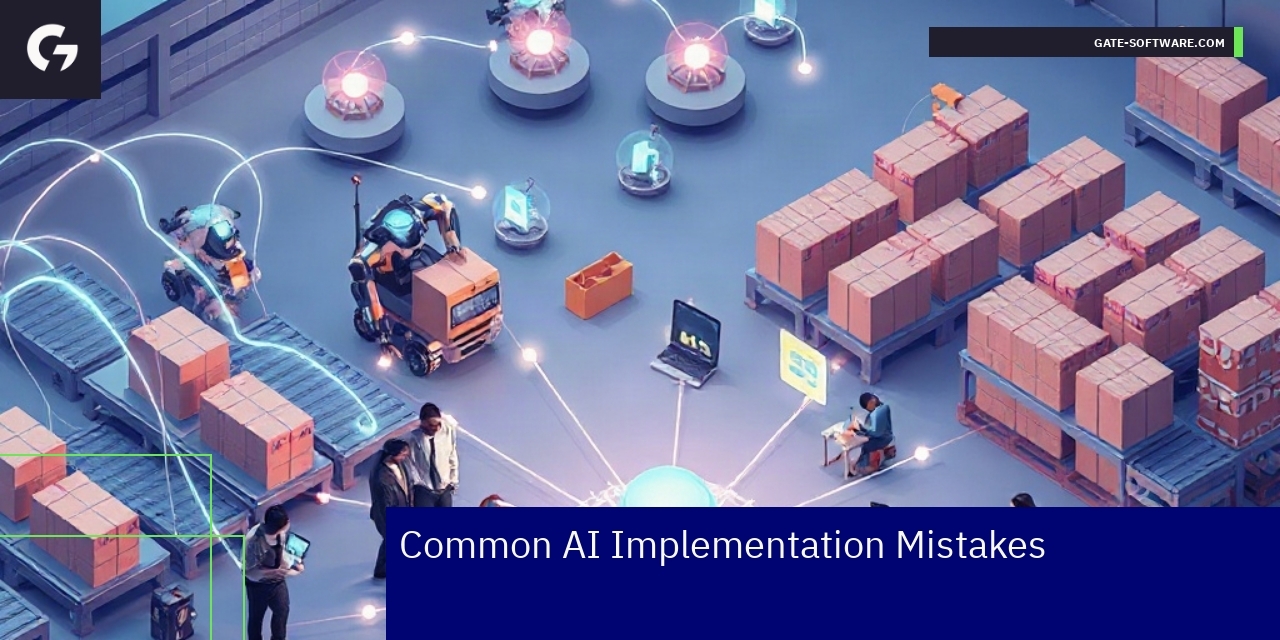
Common AI Implementation Mistakes
Implementing AI in online stores, particularly those utilizing platforms like Hyva, involves numerous technical and operational challenges. One of the most frequent mistakes is insufficient alignment between AI models and the actual business workflows. Without a clear understanding of the store’s specific operational processes, AI solutions often become misaligned, leading to poor performance and user dissatisfaction.
Another common error is underestimating the complexity of data integration. Online stores generate diverse and voluminous data streams that must be effectively consolidated and cleaned before AI application. Failure to establish robust data pipelines and governance can result in inaccurate model predictions and hinder scalability.
AI integration oversight also extends to inadequate testing and validation phases. Deploying AI features without rigorous quality assurance can expose the platform to errors that disrupt user experience and operational continuity. Moreover, neglecting continuous monitoring and model retraining prevents the system from adapting to evolving market trends and customer behaviors.
Addressing these pitfalls requires a strategic approach: clearly define AI objectives aligned with business goals, invest in comprehensive data management, and institute continuous performance evaluation frameworks. Ensuring smooth integration further demands collaboration across technical teams, customer experience designers, and business leaders to maintain operational efficiency and scalability.
Common AI Implementation Mistakes
—
If available:
—
Data and Performance Metrics – Efficiency and Cost
Key Metrics for Hyva
Hyva has established itself as a pivotal player in the transport and logistics sectors, with performance metrics supporting its operational excellence. The average time-to-delivery for Hyva hydraulic systems is approximately 72 hours, ensuring quick turnaround times to meet customer demands. Moreover, the company has achieved a 15% increase in throughput over the past year, attributed to streamlined production processes and enhanced supply chain logistics.
In terms of reliability, Hyva’s products maintain an impressive uptime of 98.5%, minimizing disruptions for clients operating in critical industries. Cost optimization initiatives have yielded a reduction in total cost of ownership (TCO) by about 20%, as a result of improved efficiency and lower maintenance requirements over the lifespan of their hydraulic systems.
Hyva also reports a 30% improvement in operational productivity thanks to automated systems and efficient resource allocation, allowing the company to scale effectively while controlling costs. Looking forward, the projected growth in their user base, estimated at a 25% annual increase, underscores their commitment to enhancing customer experiences and expanding market reach.
These metrics collectively illustrate Hyva’s focus on operational efficiency, competitive pricing, and customer satisfaction, affirming its position as a leader in hydraulic solutions for transport and logistics.

Summary
In conclusion, Hyva stands out as a leader in the hydraulic systems market by delivering tailored solutions that significantly enhance operational efficiency and productivity within the transport and logistics industries. Their commitment to high-quality engineering ensures that fleet operators can rely on durable products designed for demanding environments. Moreover, by prioritizing innovation and sustainability, Hyva not only meets the evolving needs of its global customer base but also positions itself as a forward-thinking partner in enhancing business operations. As you reflect on the next steps for your organization, consider how partnering with Hyva can elevate both performance and operational scalability in your transport and logistics endeavors. Embracing Hyva’s solutions could be a pivotal move towards achieving long-term value and success in a competitive landscape.

FAQ
What AI extensions are available for Magento 2?
Magento 2 supports multiple AI-powered extensions that enhance various business functions including product recommendations, customer segmentation, chatbots, and inventory management. Popular solutions leverage machine learning algorithms to analyze customer behavior and automate personalized marketing campaigns.
How to implement AI in Magento 2 effectively?
A successful AI implementation starts with defining clear objectives aligned with your e-commerce goals, and integration can be done via extensions or custom development using Magento’s APIs. It is critical to ensure data quality and system compatibility, as AI models require comprehensive and clean data for training and operation.
What are the best practices for AI deployment in Magento 2?
Adopt a phased implementation approach beginning with pilot projects to validate AI effectiveness before full-scale rollout. Prioritize data privacy and compliance, incorporate explainability features, and optimize AI models for scalability and performance.
How can AI improve the Magento 2 customer experience?
AI enables real-time product recommendations based on user behavior, predictive search capabilities, and personalized content, increasing engagement and sales. Intelligent chatbots provide 24/7 customer support, reducing operational overhead.
What operational efficiencies can AI bring to Magento 2?
Automation of routine tasks such as pricing adjustments, fraud detection, and customer segmentation enhances operational agility. AI algorithms streamline supply chain processes by forecasting demand and optimizing logistics.
.
.
Zamów bezpłatną konsultację
.
Z nami rozwój Twojego biznesu nabierze tempa! Zapraszamy do kontaktu średnie i duże firmy generujące min. 7 mln PLN obrotu rocznie – tam nasza ekspertyza sprawdza się najlepiej.
.
Kliknij w poniższy przycisk i skontaktuj się z jednym z naszych konsultantów e-commerce
.