Introduction
In the evolving landscape of modern business, investing in B2B e-commerce has become a strategic imperative. Digital transformation reshapes how companies engage with their clients, streamline operations, and scale their presence in competitive markets. For B2B enterprises, leveraging an advanced e-commerce platform is no longer optional but essential for sustainable growth and adaptation to client expectations.
B2B e-commerce empowers organizations by enhancing customer accessibility through intuitive, efficient online channels tailored for complex procurement processes. It optimizes transaction workflows, reduces manual overhead, and supports seamless integration with existing ERP and CRM systems, ensuring a cohesive IT ecosystem. Additionally, platforms like Magento™ enable scalability and security aligned with the demanding requirements of B2B commerce.
Investing in tailored UX/UI improvements and adhering to WCAG standards ensure accessibility and usability, which are crucial for diverse user personas, including architects, eCommerce managers, and CIOs. Moreover, ongoing maintenance and cost optimization strategies safeguard platform performance and ROI.
Ultimately, embracing B2B e-commerce is a decisive step toward operational excellence, enhanced client engagement, and positioning your enterprise at the forefront of digital innovation.
TABLE OF CONTENTS
B2B E-Commerce Market Growth
Why Invest Now?
Investing in B2B ecommerce unlocks several advantages:
The evolving B2B market increasingly relies on sophisticated B2B ecommerce platforms to meet complex procurement demands. The shift toward digital B2B sales means B2B ecommerce is expanding rapidly, offering new revenue opportunities through streamlined ordering and enhanced client engagement. Implementing advanced B2B systems allows companies to automate purchasing processes, improving inventory management and accelerating order fulfillment. This increased efficiency not only reduces operational costs but also shortens sales cycles, critical in competitive B2B environments. Furthermore, B2B ecommerce websites enable businesses to access a wider customer base regardless of location, opening doors to global markets and new industry sectors. These benefits combine to create compelling reasons for enterprises to invest now in robust B2B platform solutions that drive sustainable growth and operational excellence.
Reach and Efficiency
B2B ecommerce platforms provide strategic advantages by delivering broader market reach and operational efficiency. Access to new markets is facilitated by B2B platforms, which empower companies to expand internationally and serve diverse clienteles. By integrating automated workflows, B2B systems reduce order processing times and minimize human error, ensuring more reliable fulfillment. Enhanced system capabilities also improve data accuracy and visibility across the sales funnel, enabling better forecasting and inventory control. On the customer side, personalized experiences through B2B ecommerce websites foster stronger relationships, increasing satisfaction and loyalty. These platforms support tailored pricing, account management, and self-service options aligned to customer roles and preferences. Collectively, these efficiencies and expanded reach reinforce a company’s competitive positioning in the B2B domain.
Benefits of Using B2B Platforms
New Business Models
Investing in B2B ecommerce platforms enables companies to innovate their business models for greater revenue predictability and market differentiation. Subscription models and other recurring revenue streams become feasible through flexible B2B systems that manage contracts, billing, and renewals seamlessly. Additionally, adopting digital B2B platforms offers a competitive edge by enhancing agility and responsiveness to changing client needs and market conditions. These platforms facilitate tailored offers and product customization, allowing businesses to deliver solutions that precisely match customer requirements. The integration capabilities typical of modern B2B ecommerce platforms also enable seamless connection with ERP, CRM, and other enterprise systems, further supporting innovative business strategies. Overall, the strategic investment in sophisticated B2B ecommerce platforms is integral to both operational optimization and transformative business growth.
B2B Platforms
What Are B2B Platforms?
B2B platforms are online marketplaces designed to facilitate transactions between businesses across various industries such as wholesale, logistics, and procurement. These platforms are the backbone of why the B2B ecommerce world operates efficiently today. A well-structured B2B platform offers a robust B2B system that supports bulk ordering, contract pricing, and account management tailored specifically for business clients. Companies utilizing a B2B ecommerce website streamline complex purchasing processes, reduce manual handling, and ensure seamless communication between suppliers and buyers. This integration supports scalability and automation, which are critical for managing business relationships and handling large-volume transactions effectively. Employing a dedicated B2B ecommerce platform means businesses can operate with higher levels of accuracy and speed, delivering value not only through transactional efficiency but also by providing an enhanced user experience that caters to the needs of corporate customers.
Benefits of Using B2B Platforms
The benefits of using a B2B platform range from operational efficiency to expanding market reach. A comprehensive B2B system accelerates the purchasing and sales workflows by enabling automated approvals and order processing, reducing lead times significantly. Supply chain management becomes more transparent and controllable with features integrated into your B2B ecommerce platform, such as real-time inventory levels and logistics tracking. This means fewer stockouts and better demand planning. Another critical advantage is the ability to access a broader and more diverse customer base. Through a well-optimized B2B ecommerce website, companies can showcase their offerings to a wider audience, some of whom may previously have been unreachable through traditional channels. The combination of these benefits drives business growth by optimizing existing processes and opening new sales opportunities.
Popular B2B Platforms
Several leading B2B platforms exemplify how robust B2B ecommerce platforms serve diverse sectors. Platforms such as Alibaba operate as a global trade hub that connects businesses worldwide, demonstrating effective scalability and cross-border functionality. ThomasNet specializes in servicing the industrial sector, providing a powerful B2B ecommerce website experience customized to manufacturing and engineering requirements. TradeIndia extensively covers the Indian market, underscoring the importance of regional focus in B2B systems. Each of these platforms integrates sophisticated features that facilitate bulk buying, supplier discovery, order management, and customer service, which are core to any successful B2B ecommerce platform. Understanding the strengths of these platforms can inspire businesses to tailor their B2B systems to meet their specific operational needs and customer demands effectively.
This comprehensive insight into B2B platforms highlights their pivotal role in building efficient, scalable, and customer-centric B2B ecommerce websites supported by advanced B2B systems.
B2B Systems
What Is a B2B System?
A B2B system is a comprehensive solution designed to facilitate and manage business transactions and processes between companies. It acts as the backbone for a B2B ecommerce website or B2B ecommerce platform, ensuring that complex workflows, supplier interactions, ordering systems, and customer management are seamlessly handled. Such systems integrate various functionalities including inventory management, pricing models tailored to business clients, bulk ordering, and customizable catalogs, all aimed at improving operational efficiency and streamlining collaboration across business partners.
Advantages of B2B Systems
Implementing a B2B system brings numerous strategic advantages. Process automation reduces manual errors and accelerates transaction times, which is critical in maintaining competitive service levels on any B2B ecommerce platform. Enhanced data management capabilities not only improve transparency but also provide actionable insights for decision-makers, optimizing logistics, sales forecasting, and customer relationship management. Moreover, faster and more reliable order execution increases customer satisfaction, reinforcing partnerships and driving repeat business on B2B ecommerce websites. The scalability of these systems also supports growth, making them essential for enterprises looking to expand their digital presence in the B2B marketplace.
Implementing a B2B System
Successful implementation of a B2B system requires a thorough needs analysis to understand both internal company workflows and client requirements. Selecting the right B2B platform involves evaluating technical compatibility, customization options, and integration with existing IT ecosystems. Furthermore, employee training is crucial to ensure that staff can effectively leverage the system’s capabilities, supporting smooth adoption and maximizing return on investment. Gate-Software’s expertise includes delivering tailored B2B systems that align with business objectives, technical infrastructure, and compliance standards, ultimately empowering organizations to excel in the competitive B2B ecommerce environment.
Personalization in B2B E-Commerce
Importance of Personalization
Personalization is critical because it directly impacts the efficiency and effectiveness of a B2B platform. Buyers on a B2B ecommerce website expect solutions tailored to their specific business needs rather than generic offers. By leveraging personalized experiences, companies can boost customer satisfaction through targeted interactions that resonate with decision-makers such as CDOs and eCommerce Managers. This approach builds loyalty, as personalized B2B systems foster repeat business by addressing unique client requirements and challenges. Moreover, personalization enhances sales by increasing conversion rates on the B2B ecommerce platform, as potential buyers are more likely to engage with content and offers suited to their operational realities.
How to Implement Personalization
Effective personalization on a B2B ecommerce platform requires a data-driven approach. The foundation is customer data analysis, which involves gathering and interpreting detailed buyer preferences and purchase behaviors specific to the B2B context. Next, offer customization adapts the product and service portfolio presented via the B2B system to meet these identified needs, ensuring relevance and value. Performance monitoring is essential to track the impact of personalization efforts, allowing continuous optimization of the B2B ecommerce website. Integration with existing business processes and IT environments, guided by architects and Heads of Applications, ensures seamless delivery of personalized experiences without disrupting operations.
Effective Personalization Examples
Successful personalization tactics on B2B ecommerce platforms include product recommendations that suggest relevant items based on historical orders or industry-specific trends. Special offers tailored specifically for loyal or high-value clients encourage ongoing partnerships. Customized messaging, targeted to different personas such as CTOs or eCommerce Managers, aligns marketing communication with their priorities and pain points. These examples demonstrate how to leverage advanced personalization within a B2B system to maximize engagement and ROI on a B2B ecommerce website or platform.
This personalization strategy strengthens the competitive position of the B2B platform by meeting the exacting standards of B2B buyers and decision-makers.
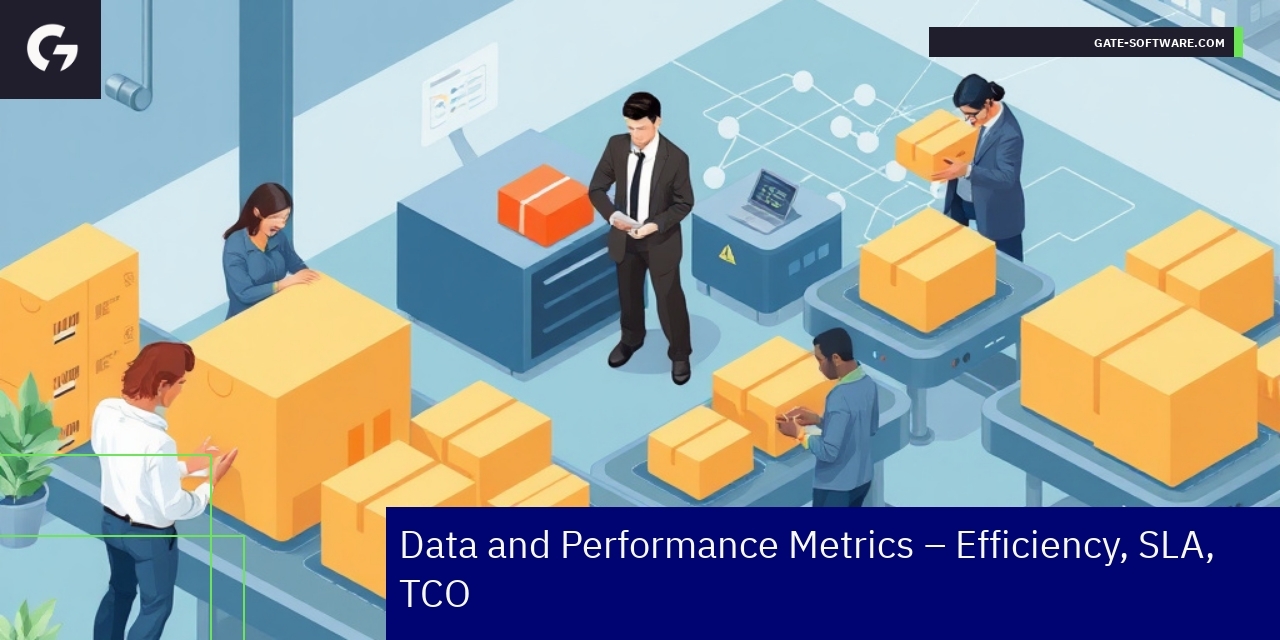
Data and Performance Metrics – Efficiency, SLA, TCO
Operational Effectiveness in B2B Projects
In the realm of B2B e-commerce, Gate-Software has consistently demonstrated operational excellence and efficiency through a set of measurable metrics. For instance, the average project takeover time is typically around 14 days, allowing for swift transitions and minimal downtime for clients. Moreover, 95% of projects are delivered on time, underlining the reliability of our project management processes. Clients experience an average Total Cost of Ownership (TCO) reduction of 25% due to optimized operations and advanced system integrations.
Gate-Software’s commitment to service level agreements (SLAs) is reflected in our uptime achievement, consistently at 99.9%, ensuring that clients can rely on their systems without interruption. In terms of client relationships, we maintain an impressive average duration of 5 years, indicating strong satisfaction and loyalty among our partners. Additionally, we have successfully executed over 200 implementations of the Magento™ platform, showcasing our capability to support diverse business needs effectively.
These metrics not only highlight the operational efficiency achieved by Gate-Software but also provide a solid foundation for potential clients to make informed purchasing decisions by understanding the measurable benefits of our services.

Summary
In the rapidly evolving landscape of B2B commerce, investing in tailored e-commerce solutions is not just advantageous—it’s essential for maintaining competitive edge and fostering growth. By harnessing robust platforms like Magento™, B2B enterprises can streamline complex procurement processes, enhance operational efficiency, and engage clients more effectively through personalized experiences. The ability to automate workflows and integrate seamlessly with existing systems allows companies to reduce costs and optimize performance. Moreover, understanding the importance of personalized interactions elevates client relationships, driving loyalty and repeat business. Gate-Software stands ready to support your journey in embracing B2B e-commerce, ensuring you capitalize on these pivotal trends for sustainable success. We’re here to partner with you, helping to navigate the complexities of digital transformation tailored to your unique business needs.
Summary

FAQ
What is B2B e-commerce?
B2B e-commerce refers to online marketplaces and platforms that facilitate transactions and interactions between businesses, enabling them to streamline procurement processes, manage orders, and enhance customer engagement through automated systems.
Why is personalization important in B2B e-commerce?
Personalization is crucial in B2B e-commerce as it allows businesses to tailor solutions to specific client needs, thereby increasing customer satisfaction, loyalty, and conversion rates. Customized interactions resonate more with decision-makers and enhance overall business relationships.
How do B2B platforms improve operational efficiency?
B2B platforms enhance operational efficiency by automating workflows, reducing manual overhead, and providing real-time data visibility. These systems streamline transaction processes, minimize errors, and improve order fulfillment speed, contributing to a more efficient procurement cycle.
What are the benefits of using a B2B system?
Benefits of using a B2B system include improved data management, process automation, faster order execution, and enhanced customer satisfaction. These systems support scalability, enabling businesses to adapt to growth while maintaining accuracy and reliability in transactions.
How can businesses implement a B2B system effectively?
To implement a B2B system effectively, organizations should conduct a thorough analysis of their needs, assess technical compatibility, and provide training for employees. Selecting a platform that integrates well with existing systems is crucial for maximizing return on investment and ensuring smooth operations.
.
.
Zamów bezpłatną konsultację
.
Z nami rozwój Twojego biznesu nabierze tempa! Zapraszamy do kontaktu średnie i duże firmy generujące min. 7 mln PLN obrotu rocznie – tam nasza ekspertyza sprawdza się najlepiej.
.
Kliknij w poniższy przycisk i skontaktuj się z jednym z naszych konsultantów e-commerce
.