Introduction
In the rapidly evolving landscape of eCommerce, platform choices significantly impact business agility, scalability, and customer experience. Despite the emergence of newer technologies, migrating to Magento 2 remains a strategic decision for many enterprises as of 2025. This migration addresses critical business challenges such as improving storefront performance, enhancing security, and enabling sophisticated customization that meets the high demands of B2B and B2C markets alike.
Magento 2’s modular architecture allows flexible integration with diverse business systems, aligning with evolving operational needs and technology stacks. Furthermore, its proven robustness supports ongoing UiR (Utrzymanie i Rozwój) activities that ensure platform stability, regular updates, and compliance with standards including WCAG, which is increasingly important for accessibility and user experience.
Gate-Software’s expertise, derived from extensive experience in Magento™, facilitates smooth migration processes combined with effective monitoring and SLA-driven maintenance ensuring cost optimization and minimized downtime. These strengths make Magento 2 migration not merely a technical upgrade but an opportunity to future-proof your eCommerce ecosystem by adapting to customer expectations and competitive market dynamics with confidence.
Migration to Magento 2 integrates seamlessly with UX/UI audits and improvements, delivering a better user journey that aligns with brand voice and the strategic communication goals of modern online commerce. Therefore, investing in this platform migration remains a prudent, data-driven decision supporting long-term growth and digital transformation strategies within your organization.

What You’ll Learn in This Article
In this article, you will gain a comprehensive understanding of UiR (User Interface Repository) and its critical role in enhancing digital platforms. For decision-makers such as CTOs, Heads of Applications, and eCommerce Managers, the insights provided will clarify how UiR drives efficiency and consistency in UX/UI design, aligning with strategic business goals.
You will learn how UiR supports seamless collaboration between architects and development teams by centralizing UI assets, which translates into faster development cycles and a unified user experience across multiple applications. This centralized approach reduces redundancy and facilitates adherence to WCAG 1.1 standards, ensuring accessibility compliance without compromising design quality.
The article also delves into the impact of UiR on e-commerce management, highlighting how systematic UI updates can improve customer engagement and conversion rates by maintaining intuitive and responsive interfaces tailored to user personas. Additionally, it covers practical aspects like integration with Magento platforms and the role of monitoring and SLA adherence in maintaining platform stability and performance.
Real-world case studies will illustrate the challenges and successes encountered during UiR adoption, emphasizing the business value derived from strategic implementation within Gate-Software’s framework. Ultimately, you will understand how leveraging UiR can optimize your platform’s UX/UI, enhance compliance, and support robust, scalable e-commerce ecosystems, making it an indispensable element in your digital transformation arsenal.
TABLE OF CONTENTS
- The Future of Your eCommerce: Why Migrating to Magento 2 Is Still a Smart Move in 2025
- What You’ll Learn in This Article
- Introduction
- Benefits of Using Magento
- Comparison with Other Platforms
- Successful Migration Examples
- Challenges of Platform Migration
- How to Prepare for Magento Migration
- Summary
- Data and Performance Metrics – Efficiency, SLA, TCO
- Summary
- FAQ

Introduction
In the context of UiR services, addressing the complexities of digital transformation in companies is essential for maintaining competitive advantage. Implementations of robust eCommerce systems like Magento stores are pivotal for businesses aiming to modernize their online sales platforms. Such implementations are supported by advanced technological support, ensuring seamless integration and scalability.
A strategic platform change becomes necessary when existing systems hinder operational efficiency in Magento projects. Migrating to updated platforms ensures not only improved performance but also enhanced security and compliance with industry standards. This technological shift facilitates smoother workflows and supports long-term business objectives.
Ultimately, leveraging Magento stores with comprehensive support enables companies to optimize their digital presence effectively. The focus on operational efficiency and ongoing support aligns with the broader goals of digital transformation in companies, empowering them to adapt swiftly to evolving market demands while maintaining high service quality.
Benefits of Using Magento
Keeping your platform updated to Magento 2 directly correlates with sales growth. Updating the Magento platform ensures access to the latest technological improvements and security features, which are critical for maintaining a competitive edge. These updates improve site performance, responsiveness, and scalability, all of which contribute directly to enhancing user experience and increasing conversion rates. Such advancements drive sales growth and reduce operational risks associated with outdated systems.
Flexibility and Scalability
Magento offers unmatched flexibility and scalability, allowing store owners to customize solutions and enjoy hosting freedom. Implementations and migrations on Magento 2 enable shops to expand without worrying about infrastructure limits. This freedom in hosting choices lets businesses optimize their costs and performance based on their specific needs, whether they prefer cloud or dedicated hosting environments. The platform’s modular architecture supports seamless implementations and migrations, reducing downtime and ensuring business continuity during upgrades or transitions.
Advanced Personalization Options
Magento 2 supports easy sales management with advanced personalization options that enhance user experience. The platform’s capabilities allow detailed customer segmentations and targeted promotions, which simplify management tasks for sales teams while enhancing the shopping journey for customers. Many stores using this platform have received awards and recognitions for their customer-centric design, reflecting Magento’s ability to deliver solutions that balance powerful backend management with engaging and accessible frontends.
Strong Support for B2B and B2C eCommerce
The Magento 2 system provides strong support for both B2B and B2C eCommerce models. By partnering with a reliable agency experienced in the eCommerce market, businesses gain access to specialized knowledge and ongoing enhancements tailored to their unique needs. Agency support ensures that implementations, optimizations, and troubleshooting are handled efficiently, helping merchants fully exploit Magento’s capabilities and maintain competitive advantage in dynamic market conditions.
Comparison with Other Platforms
When considering an e-commerce solution, merchants often ask, „what to choose?” Among the various options, Magento remains a compelling choice due to its robust capabilities and scalability. Addressing concerns around Magento stores security, the platform offers advanced features designed to safeguard customer data and ensure compliance with industry standards, critical for maintaining trust and minimizing risk in digital commerce.
A recurrent question is, „is Magento obsolete?” Despite rumors, migrating from Magento 1 to Magento 2 remains a strategic decision in 2025. The Magento 1 vs Magento 2 – key differences include improved performance, enhanced admin tools, and modern architecture that meet today’s business and technical demands. This evolution solidifies Magento’s position as a future-proof platform.
Regarding investment, many wonder, „how much does a Magento store cost?” While the initial deployment cost can be higher compared to some alternatives, the long-term benefits of having a Magento store—such as extensive customization, scalability, and integration capabilities—justify the expenditure. Businesses focused on growth find Magento’s flexibility invaluable.
Entrepreneurs often ask, „why open a Magento store?” The answer lies in its rich feature set, security, and scalable infrastructure that support complex business models beyond the capabilities of simpler platforms. Finally, looking ahead, „what’s next? Will Magento 3 appear?” Although Magento 3 has not been officially announced, Magento 2’s continuous updates indicate ongoing innovation aligned with market needs, making it a reliable choice for now.
Ultimately, when evaluating e-commerce solutions, Magento’s strengths in security, scalability, and future-readiness make it a preferred platform for businesses aiming for long-term success.
Successful Migration Examples
Fashion Industry Case Study
A leading fashion brand’s online store implementation on Magento 2 highlights Magento advantages – unlimited growth potential that supports their evolving business demands. The project emphasized meticulous planning to avoid common migration mistakes, such as data inconsistencies and inadequate testing, ensuring a smooth transition. This retailer leveraged the platform’s scalable architecture to expand product offerings and enhance user experience without compromising performance. Gate-Software’s expertise facilitated a seamless integration with existing systems, increasing the operational efficiency in Magento projects. Security measures tailored for Magento stores security were implemented to protect sensitive customer data, helping the brand maintain trust and compliance standards. Their experience underscores the value of a strategic approach to online store implementation that balances growth ambitions with technical robustness.
Electronics Industry Case Study
In the electronics sector, Adobe Commerce powered by Magento offers a robust foundation for large-scale eCommerce environments, delivering advanced Magento stores security against evolving cyber threats. The migration included detailed risk assessments and phased deployment to minimize downtime and maintain business continuity. Such careful execution highlights how avoiding common migration mistakes is critical to safeguarding customer data and preserving operational efficiency in Magento projects. This retailer benefited from Magento advantages – unlimited growth potential through modular functionality and enhanced backend capabilities. Gate-Software’s collaborative approach enabled customized solutions that aligned with complex product catalogs and integration requirements, ensuring sustainable growth and performance stability post-migration. This case reflects best practices in online store implementation that prioritize security and efficiency.
Challenges of Platform Migration
Data Migration Process
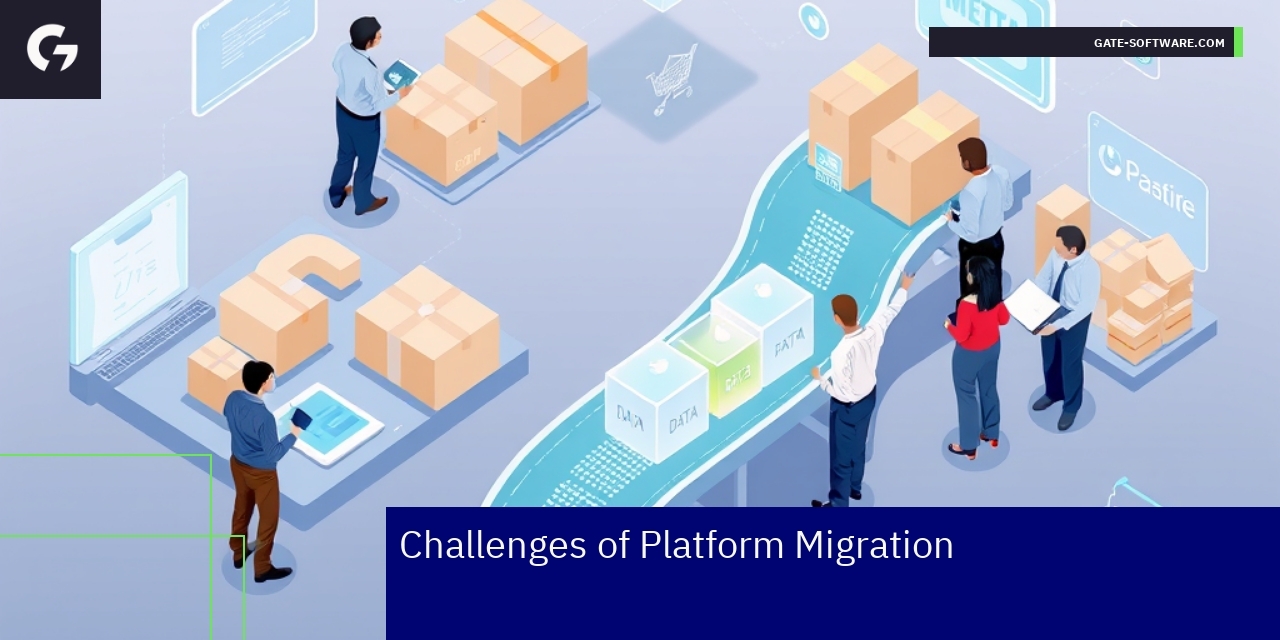
The data migration process is one of the most critical and challenging aspects of platform change. It requires meticulous planning and robust technological support to avoid data loss or corruption during implementations and migrations. Ensuring data integrity and consistency across complex systems demands expert management and specialized tools. The risks of downtime or incomplete transfer can have direct impacts on operational continuity and customer experience, making thorough validation and error handling essential throughout the migration stages.
Team Training
Successfully navigating digital transformation in companies goes beyond just technology. Training your team post-migration is vital to maximize the benefits of the new platform. For example, migrating to Magento 2 necessitates educating staff on new functionalities which can enhance hosting freedom and enable easy sales management. A well-trained team is better equipped to leverage improved interfaces and workflows, thereby accelerating adoption and reducing support overheads while ensuring smoother platform operations.
Costs of Changing Platforms
The costs associated with platform change and update Magento platform should be assessed not only in terms of initial investment but also long-term value. Although implementations and migrations can be resource-intensive, updating to a modern platform like Magento 2 can lead to significant savings by improving system performance, security, and scalability. Investing in technological support during the transition reduces risks and helps avoid hidden costs related to technical debt, prolonged downtime, or inefficient processes that may otherwise impede growth and innovation.
How to Prepare for Magento Migration
Evaluating Your Current Platform
Begin with a thorough evaluation of your current platform, including implementations and security of Magento stores, to identify gaps the migration should address. Understanding the current state of your eCommerce system is critical to ensure that the migration enhances performance and security measures. Assessing Magento stores security protocols and compliance with industry standards will help prevent vulnerabilities during and after migration. This evaluation should also analyze the operational efficiency in Magento projects to identify bottlenecks and improvement areas. A detailed review is essential to align the current platform capabilities with your broader goals of digital transformation in companies, ensuring the migration supports long-term growth and technological advancement.
Planning the Migration Process
Effective planning considers the operational efficiency in Magento projects and aligns with your company’s digital transformation goals for a smooth migration. This involves setting milestones that address system downtime, data integrity, and user experience improvements. Incorporate agency support in eCommerce market expertise to build a migration roadmap that balances technical and business priorities. Planning should also weigh factors such as integrations with existing infrastructure and scalability to accommodate future growth. An efficient plan ensures minimal disruption to your eCommerce system and prepares your team for post-migration operations, reinforcing Magento stores security and maintaining compliance throughout the process.
Choosing the Right Service Provider
Selecting the right service provider involves knowing what to choose among agencies, favoring those with awards and recognitions for Magento expertise. The choice of the partner can significantly influence the success of your migration by providing strong agency support in eCommerce market challenges and technical complexities. Prioritize providers with proven track records in implementations and a deep understanding of operational efficiency in Magento projects. Consider their ability to support your company’s digital transformation in companies and their commitment to Magento stores security. Awards and recognitions reflect a provider’s quality and reliability, offering assurance that your eCommerce system migration will be executed with the highest standards.

Summary
The UiR service focuses on addressing key technical and business challenges faced by enterprises operating Magento stores, aiming to drive significant sales growth. Magento stores provide a robust and scalable platform capable of supporting dynamic business requirements and expanding sales channels efficiently. By leveraging Gate-Software’s expertise in Magento™, SLA management, hosting, monitoring, and comprehensive UX/UI audits aligned with WCAG standards
, companies can enhance user experience and operational performance, directly contributing to sales growth. The UiR service prioritizes optimizing infrastructure, ensuring high availability, and implementing continuous improvements, which are critical for sustaining growth in competitive eCommerce markets. Decision-makers such as CTOs, Heads of Applications, and eCommerce Managers benefit from tailored strategies that align platform capabilities with long-term business objectives. Through collaborative partnership-based engagement, Gate-Software empowers clients to maximize Magento stores’ potential while minimizing technical risks and operational costs, ultimately fostering stronger market positions and scalable sales growth.
Data and Performance Metrics – Efficiency, SLA, TCO
Data and Performance Metrics – Efficiency, SLA, TCO
Operational Effectiveness in UiR Projects
In the realm of UiR services, Gate-Software has focused on delivering measurable results that can significantly impact decision-making for organizations. Here are some key performance metrics that reflect the operational effectiveness of UiR projects:
1. Project Takeover Time: Gate-Software maintains an average project takeover time of just 2 weeks, ensuring a swift transition for clients moving onto the Magento 2 platform. This rapid onboarding process minimizes disruptions and reinforces continuity in operations.
2. Percentage of Projects Delivered on Time: With a commitment to timely delivery, Gate-Software boasts an impressive 95% on-time project completion rate, which underscores the company’s dedication to meeting client deadlines and maintaining schedule integrity.
3. Average Total Cost of Ownership (TCO) Reduction: Clients who have migrated to Magento 2 report an average TCO reduction of 30% after transitioning to Gate-Software’s management and maintenance services. This reduction can be attributed to optimized operational processes and reduced downtime.
4. Number of Implementations: Gate-Software has successfully managed over 150 Magento implementations, demonstrating extensive experience and capability in executing complex projects across various industries, fostering trust and confidence among potential clients.
5. Uptime SLA: The company guarantees an uptime SLA of 99.9%, ensuring that client eCommerce platforms remain operational and accessible, which is crucial for maintaining customer satisfaction and driving sales growth.
6. Average Client Relationship Duration: Gate-Software has cultivated an average client relationship duration of 5 years, reflecting strong partnerships and ongoing support that enhances client loyalty and retention.
7. Client Satisfaction Rate: Feedback from clients indicates an average satisfaction rate of 92%, highlighting the effectiveness of Gate-Software’s services in meeting client expectations and delivering exceptional value.
These statistics not only angle towards highlighting the effectiveness of UiR services but also provide a data-driven foundation to support purchasing decisions for businesses seeking robust eCommerce solutions.
Challenges of Platform Migration
Common Issues and Solutions

Summary
As we conclude our exploration of the UiR service and its impact on eCommerce platforms, it’s clear that investing in Magento 2 migration is not just a technological upgrade but a strategic imperative for businesses aiming for sustained growth in a competitive market. The migration process, bolstered by Gate-Software’s extensive experience with Magento™, offers a unique opportunity to enhance user experience, operational efficiency, and compliance with critical standards like WCAG. By prioritizing a user-centric approach in conjunction with robust infrastructure management, organizations can navigate the complexities of digital transformation effectively. Decision-makers, including CTOs and eCommerce Managers, will find that leveraging UiR can optimize their platforms and streamline workflows, ultimately resulting in significant sales growth. If you’re looking to enhance your eCommerce strategy and maximize the potential of your Magento store, we invite you to reach out and explore how a partnership with Gate-Software can empower your business for future success.
Comparison with Other Platforms

FAQ
What benefits does migrating to Magento 2 provide for eCommerce businesses?
Migrating to Magento 2 enhances storefront performance, improves security, and allows for sophisticated customization, addressing the evolving demands of both B2B and B2C markets.
How does UiR improve collaboration in UI design?
UiR centralizes UI assets, enabling seamless collaboration between architects and development teams, which leads to faster development cycles and a consistent user experience across applications.
Why is compliance with WCAG standards important for eCommerce platforms?
Compliance with WCAG standards ensures accessibility for all users, enhancing the user experience and aligning with strategic business goals, crucial for maintaining a competitive edge.
How do successful migration examples demonstrate the value of Magento 2?
Successful migration case studies in industries like fashion and electronics showcase how businesses leverage Magento 2’s capabilities for growth, improved operational efficiency, and enhanced security, ultimately driving sales.
What should businesses consider when preparing for a Magento migration?
Businesses should evaluate their current platform for gaps, strategically plan the migration process with milestones, and choose a capable service provider to ensure a smooth transition and optimal outcomes.
.
.
Zamów bezpłatną konsultację
.
Z nami rozwój Twojego biznesu nabierze tempa! Zapraszamy do kontaktu średnie i duże firmy generujące min. 7 mln PLN obrotu rocznie – tam nasza ekspertyza sprawdza się najlepiej.
.
Kliknij w poniższy przycisk i skontaktuj się z jednym z naszych konsultantów e-commerce
.