Choosing the right frontend theme for Magento 2 development is a critical decision that can significantly impact both the technical performance and business outcomes of an eCommerce platform. For senior stakeholders such as CTOs, Heads of Product, and Digital Directors, understanding the strategic, operational, and technical ramifications of this choice is essential.
From a technical perspective, the theme you select should align with the architecture and scalability requirements of your Magento 2 environment. Key considerations include the theme’s compatibility with the latest Magento updates, ease of customization, and adherence to front-end development best practices such as modularity and use of modern technologies like Hyva, which provides a lightweight, performance-driven frontend solution for Magento 2.
Performance is a paramount factor: the theme must facilitate fast loading times, optimized asset delivery, and efficient rendering to ensure superior user experience and support SEO objectives. Themes that leverage minimalistic design and clean code can substantially reduce page load times and improve site responsiveness, directly affecting conversion rates and customer satisfaction.
Operationally, the right theme should simplify ongoing maintenance and updates. This includes clear documentation, community or vendor support, and integration capabilities with existing backend systems and third-party extensions. A streamlined development process supported by a well-architected theme reduces time-to-market for new features and marketing initiatives, giving the business strategic agility.
Business-wise, the chosen frontend theme must support branding flexibility and UX design that aligns with target customer expectations. It should allow for easy adaptations to marketing campaigns, promotions, and seasonal changes without extensive redevelopment efforts. Moreover, SEO-friendly themes that enable semantic HTML, structured data, and mobile responsiveness will support long-term organic growth and online visibility.
In conclusion, selecting the right Magento 2 frontend theme is a multidimensional decision involving technical robustness, performance efficiency, operational sustainability, and strategic business alignment. Prioritizing a theme like Hyva that balances these factors can empower organizations to deliver superior eCommerce experiences while optimizing costs and resources.

Introduction
Hyva is an innovative front-end framework designed specifically for Magento e-commerce platforms, focusing on performance, simplicity, and developer-friendly architecture. It replaces the traditional Magento front-end stack by leveraging modern technologies such as Tailwind CSS and Alpine.js, which significantly reduce complexity and improve loading speeds. Hyva promotes a clean, minimalistic approach to front-end development, thereby enhancing both the user experience and website maintainability.
From a technical perspective, Hyva’s architecture supports faster time-to-market and scalability, making it especially suitable for businesses aiming to optimize operational efficiency and deliver seamless customer experiences. Its modular structure allows developers to build and customize Magento themes with fewer dependencies, resulting in improved site performance and easier ongoing maintenance.
Operationally, adopting Hyva can lead to significant improvements in page speed and load times, which are critical for conversion rates and SEO rankings. By reducing front-end bloat, Hyva enables Magento shops to handle increased traffic and complex product catalogs without compromising user experience. This focus on streamlined technology aligns with the strategic goals of CTOs and Heads of Engineering seeking scalable and maintainable e-commerce solutions.
TABLE OF CONTENTS
- Magento 2 Theme Development: How to Choose the Right Frontend Theme
- Introduction
- What Is a Magento 2 Theme
- Understanding Magento 2 Themes
- Theme Structure and Prerequisites
- Why the Theme Matters
- Key Factors for Choosing a Theme
- Usability and Frontend Themes for Magento 2 Developers
- Support and Updates
- Innovation and Modernity
- Appearance and Design
- How Design Affects UX
- Colors, Typography, and Theme Development Best Practices
- Successful Magento 2 Themes: Luma and Blank
- Hyvä
- User Friendliness
- Navigational Elements in Custom Themes
- Responsive Navigation for Mobile Users
- Usability Testing and Continuous Improvement
- SEO Compatibility
- URL Structure Optimization
- Structured Data for Better Visibility
- Image Weight and Alt Attributes
- Loading Speed
- Core Web Vitals Monitoring
- Minimizing Theme Resources
- Performance Testing Best Practices
- Cross-Browser Compatibility
- Broad Browser Support
- Testing Across Different Environments
- Fixing Browser-Specific Issues
- Responsiveness
- Adapting Themes to Screen Sizes
- Regular Responsiveness Testing
- Mobile UI Adjustments
- Social Media Integration
- Social Sharing Buttons
- Connecting to Company Profiles
- Analyzing Social Media Traffic
- Magento Store Costs
- Initial Purchase and Customization Costs
- Long-Term Investments in Quality Themes
- Hidden Costs to Watch Out For
- Why Magento B2B Stores Are Popular
- Theme Customization for B2B
- ERP System Integrations
- SEO Strategies for B2B Stores
- Headless e-Commerce and Headless PWA
- Headless Magento Flexibility
- PWA and Breeze: Uses and Limits
- Layouts: XML files that define the structural placement of blocks and containers on various pages, shaping the site’s overall framework.
- Templates: PHTML files that control the HTML markup and dynamic data rendering for different sections of the website.
- Static Assets: CSS and JavaScript files responsible for styling and interactive behavior.
- Theme Inheritance: A mechanism allowing custom themes to extend existing base or parent themes, enabling reuse and streamlined customization.
- The etc folder contains essential configuration files, notably `theme.xml` for theme registration and inheritance settings and `view.xml` for view-specific customizations like image dimensions.
- The web directory manages static assets, subdivided into `css` for stylesheets, `js` for JavaScript functionalities, `images` for graphic assets, and `fonts` for custom typography.
- layout houses XML files that define page layouts, enabling precise control over block placement and UI structure at various levels (e.g., `default.xml`, `catalog_product_view.xml`).
- templates consist of PHTML files responsible for rendering HTML content and integrating dynamic Magento data.
- Localization is addressed through the i18n folder containing CSV translation files for multilingual support.
- A fully operational Magento 2 installation in a development environment to test and deploy the theme.
- Proficiency in frontend technologies including HTML, CSS, and JavaScript to craft responsive, performant, and user-friendly UI elements.
- Deep understanding of Magento’s MVC architecture and its theming conventions, enabling efficient customization aligned with Magento’s core functionalities.
- Use of development tools such as Composer for dependency management and advanced IDEs to streamline coding and debugging processes.
- Implementation of version control systems like Git to maintain code integrity, collaborate effectively, and manage deployment workflows.
- Examples of structured data formats supported (e.g., JSON-LD, Microdata)
- Guidelines on implementing product rich snippets
- Tools for testing and validating structured data markup
- Real user monitoring (RUM) tools to capture actual user experience metrics
- Synthetic testing platforms to simulate various network conditions
- Integration with Google Search Console for performance insights
- Automated alerts for Core Web Vitals thresholds breaches
- Largest Contentful Paint (LCP): Measures loading performance by tracking the time it takes for the largest visible content element to render within the viewport. In a Magento 2 environment with Hyva, optimizing LCP involves efficient server response times, optimized images, and streamlined frontend code.
- First Input Delay (FID): Captures interactivity by recording the delay between a user’s first interaction and the browser’s response. Minimizing FID requires reducing JavaScript execution time and ensuring that event handlers are responsive, which Hyva’s minimalistic front-end approach supports effectively.
- Cumulative Layout Shift (CLS): Assesses visual stability by measuring unexpected layout shifts during page load. Preventing CLS means defining size attributes for images and embeds and avoiding dynamically injected content without reserved space, a practice aligned with Hyva’s frontend architecture.
- Mobile Analytics: Review your site’s current device usage statistics to understand your audience better.
- Responsive Testing Tools: Utilize tools like Google Mobile-Friendly Test or BrowserStack to verify theme responsiveness.
- Best Practices for Mobile UX: Consider implementing touch-friendly elements, faster load times, and simplified navigation for mobile users.

What Is a Magento 2 Theme
A Magento 2 theme is a structured collection of files that fundamentally shapes the visual design and layout of an online store on the Magento 2 platform. It encompasses various components such as templates, stylesheets (CSS/LESS), JavaScript assets, and media that collectively determine how content is rendered and presented to website visitors. The primary role of a Magento 2 theme is to translate the functional backend of the e-commerce system into an engaging, intuitive, and brand-consistent front-end experience.
Magento 2 themes play a critical role in building an online store by providing the flexibility to customize the appearance and usability of the storefront without altering the core business logic. This separation of design from functionality enhances scalability and maintainability, allowing teams to implement design updates or switch themes efficiently as market trends or business needs evolve.
Essential terms and elements of Magento 2 themes include:
This modular architecture supports operational efficiency by enabling theme developers to build reusable components and enhance performance through optimized asset loading strategies. For technical leaders, understanding these elements is essential for planning scalable front-end architectures that align with the business’s branding and user engagement goals.
Why the Theme Matters
—
If available:
—

Understanding Magento 2 Themes
A Magento 2 frontend theme is a comprehensive design package that governs the visual presentation and layout of an online store. It defines how content is structured, styled, and displayed to end users, directly influencing both the aesthetic appeal and usability of the ecommerce platform. At its core, a theme manages HTML templates, CSS stylesheets, and JavaScript files that collectively control the storefront’s look and feel.
Functionally, Magento 2 themes enable customization and branding by allowing modification of layouts, colors, fonts, and visual components to align with a company’s identity. Beyond aesthetics, a well-crafted theme ensures responsiveness, adapting seamlessly to different devices such as desktops, tablets, and smartphones. This responsiveness is vital for maintaining an optimal user experience in an increasingly mobile-driven market.
The theme also impacts site performance. Lightweight themes with optimized assets load faster, reducing bounce rates and improving SEO rankings, whereas poorly optimized themes can result in sluggish page loads and frustrated users. Additionally, themes may embed features like advanced navigation, product sliders, and promotional banners that contribute to an intuitive shopping journey.
In essence, the Magento 2 frontend theme forms the foundation of how customers perceive and interact with an online store. It not only shapes the visual identity but also enhances operational effectiveness by supporting functionality, improving site speed, and facilitating scalability. For digital leaders and ecommerce managers, selecting and implementing the right theme is a strategic decision that directly influences user engagement, conversion rates, and long-term business growth.

Theme Structure and Prerequisites
Magento 2 theme development is founded on a clear and modular theme structure designed to separate customization layers and facilitate maintainability, scalability, and performance optimization. The core theme resides under the directory `app/design/frontend/[Vendor]/[Theme]`, which organizes all theme-specific files and assets systematically.
Within this structure, several key components are integral:
Successful Magento 2 theme development necessitates key prerequisites:
This structured approach to theme development addresses real-world business needs for modular, scalable, and maintainable frontend solutions while ensuring operational efficiency and performance within the Magento ecosystem.

Why the Theme Matters
Choosing the right theme is pivotal for optimizing user experience (UX) and boosting conversion rates, especially when leveraging platforms like Hyva. A theme serves as the foundational interface through which users interact with your digital presence, thus directly influencing engagement and satisfaction.
From a UX perspective, an effective theme offers intuitive navigation and a visually coherent structure, which reduces friction in user journeys and encourages longer site visits. This seamless interaction is critical for retaining users and guiding them towards desired actions, such as making a purchase or signing up for a service.
Performance considerations are equally important. The right theme is designed to be responsive and fast-loading, ensuring consistent performance across different devices and network conditions. Mobile responsiveness is particularly vital given the growing share of traffic from smartphones and tablets. Enhanced load speeds not only improve UX but also contribute positively to search engine rankings.
Moreover, themes that align with brand identity foster trust and recognition. A cohesive visual and functional layout reinforces professionalism and credibility, factors that can decisively influence conversion rates. Customizability is another key attribute, allowing businesses to tailor features, calls to action, and content displays to better suit specific operational goals and customer preferences.
SEO-friendly themes play a critical role in increasing organic visibility. By incorporating best practices such as clean code, optimized metadata, and schema markup, the right theme amplifies search engine performance, driving higher-quality traffic to the site.
Finally, consistency and accessibility embedded within the theme ensure that all users, including those with disabilities, experience a uniform and inclusive interaction, widening the potential audience and positively impacting conversions.
In essence, the theme is much more than a visual wrapper—it is a strategic asset that underpins UX quality, operational efficiency, scalability, and ultimately the conversion outcomes for a business using Hyva.

Key Factors for Choosing a Theme
Selecting the right Magento 2 theme requires a strategic evaluation of several critical factors that impact both technical performance and business outcomes. First and foremost, responsiveness is essential; a theme must provide flawless operation across various devices and screen sizes to meet modern user expectations and support mobile commerce.
Customization options play a pivotal role as well, enabling alignment with brand identity and tailored user experiences. Opting for a theme with flexible, modular customization capabilities ensures adaptability to evolving business needs without extensive redevelopment.
Compatibility with the latest Magento 2 version and essential extensions is crucial to maintain operational stability and leverage platform improvements. Performance optimization is another key consideration; themes that are lightweight and optimized for fast load times contribute directly to improved SEO rankings and enhanced user satisfaction.
SEO-friendliness should be built-in at the theme level, encompassing clean code, semantic HTML, and structured data support. This foundational layer supports marketing efforts and improves organic traffic acquisition.
User experience must be prioritized, focusing on intuitive navigation, clear product presentation, and accessible design to maximize conversion rates and customer retention.
Support and documentation quality impact ongoing maintenance efficiency and troubleshooting speed, reducing operational overhead.
Visual design aesthetics should resonate with the target demographic while reinforcing brand positioning.
Finally, consider pricing in relation to budget constraints and long-term value, and review community feedback to assess theme reliability and developer responsiveness.
Balancing these factors ensures the selection of a Magento 2 theme that supports scalability, performance, and a competitive online presence.

Usability and Frontend Themes for Magento 2 Developers
In the domain of Magento 2 development, usability is a critical factor that directly influences the success of frontend themes. For developers, creating intuitive interfaces and seamless navigation is essential to enhance the user experience and operational efficiency of eCommerce platforms. Frontend themes must be designed with clear information architecture, ensuring that users can effortlessly find products, access services, and complete purchases without friction.
Good usability in Magento 2 themes involves leveraging best practices such as responsive design, consistent layout structures, and accessible navigation elements including menus, filters, and search functionality. Developers must prioritize performance optimization to ensure that themes load swiftly across devices, thereby improving scalability and reducing bounce rates. Additionally, modular and customizable theme architectures enable teams to address evolving business requirements and streamline development workflows.
Attention to frontend usability also impacts the technical architecture by simplifying maintenance and facilitating integrations with third-party tools or custom modules. Ultimately, focusing on intuitive interfaces and navigation within frontend themes not only elevates customer satisfaction but also strengthens the site’s operational resilience and scalability, key considerations for CTOs and digital leaders driving Magento 2 powered commerce initiatives.

Support and Updates
Checking support availability and theme updates is a critical aspect of theme development best practices, especially within the Hyva ecosystem. Ensuring that ongoing support and timely updates are accessible helps maintain compatibility with the latest platform versions, which is vital for avoiding functionality disruptions or unforeseen bugs. Continuous updates introduce new features and enhancements that optimize both the developer experience and the end-user interface, contributing to overall site performance and user satisfaction.
From a security standpoint, regularly updated themes close vulnerabilities that could be exploited by malicious actors, thus safeguarding the integrity of the entire digital environment. Moreover, having reliable support availability means developers can swiftly resolve technical issues or conflicts that arise during integration or post-deployment stages. This reduces downtime and minimizes impact on operational efficiency.
Support availability often correlates with active community engagement, which is a valuable resource for exchanging best practices, troubleshooting, and accelerating development cycles. It also aligns with quality assurance efforts, as continuous improvements and bug fixes contribute to a scalable, stable, and robust theme infrastructure. Ultimately, prioritizing support and updates underpins the long-term maintainability and success of Hyva theme projects within complex eCommerce and enterprise ecosystems.

Innovation and Modernity
Using up-to-date and innovative themes within the Hyva framework substantially enhances both performance and user experience by leveraging modern web technologies and design principles. Hyva’s architecture prioritizes streamlined, minimalistic front-end code that directly translates into faster loading times—a critical factor in reducing user friction and bounce rates.
Modern themes integrated with Hyva adopt progressive enhancement strategies, ensuring compatibility with the latest browsers and devices while maintaining fallback options. This means users experience uniformity and responsiveness regardless of their access platform. The reduction of bulky JavaScript and CSS overhead leads to better runtime efficiency, which is vital for eCommerce environments where swift navigation can directly influence conversion rates.
From a user experience perspective, innovative themes in Hyva embrace contemporary UI/UX trends such as intuitive navigation, micro-interactions, and accessibility standards, fostering a more engaging and inclusive shopping experience. They also facilitate easier maintenance and scalability for development teams, allowing faster iteration cycles and adaptation to evolving market demands.
Incorporating these modern themes supports operational efficiency by reducing server load and optimizing cache utilization, which in turn improves overall system scalability. Therefore, up-to-date themes are not merely aesthetic improvements but foundational to the technical infrastructure that supports robust, high-performance eCommerce platforms within the Hyva ecosystem.

Appearance and Design
Choosing the optimal Magento 2 theme is fundamental to developing an attractive and effective eCommerce site. Appearance and design play a critical role in capturing customer attention, providing a seamless user experience, and ultimately driving conversions.
The Hyva theme for Magento 2 is distinguished by its modern, clean design principles that prioritize performance and usability. Unlike traditional Magento themes burdened by outdated frontend technologies, Hyva leverages a minimalistic approach focused on lean code, resulting in faster load times and improved site responsiveness. This technical efficiency directly supports a visually appealing design by enabling smooth interactions and reducing friction in the user journey.
From a business perspective, a well-designed theme like Hyva supports brand consistency while offering flexibility to tailor layouts and visual elements to specific market segments. Its architecture encourages modularity and scalability, allowing teams to maintain design coherence even as site features and content evolve over time.
Hyva’s lean frontend approach also benefits operational efficiency by simplifying customization and reducing frontend development complexity. This decreases time-to-market for design updates and lowers the need for extensive rework during iterative design improvement cycles. Moreover, improved site performance positively impacts SEO rankings and user retention rates, reinforcing the commercial value of investing in a quality Magento 2 theme.
In summary, selecting Hyva for Magento 2 aligns aesthetic appeal with robust technical foundations, addressing both customer attraction and backend maintainability to support sustainable eCommerce growth.

How Design Affects UX
An appealing store design plays a crucial role in enhancing user enjoyment and engagement, particularly within the Hyva framework. Design directly influences user experience (UX) by creating an intuitive and seamless interaction that reduces friction and increases satisfaction. In the context of Hyva, which focuses on frontend technologies for e-commerce, a well-crafted design ensures fast load times, responsive interfaces, and visually coherent elements that contribute to a smooth browsing journey.
From a technical perspective, design choices impact operational efficiency and scalability. Optimized layouts and modular components not only improve aesthetic appeal but also facilitate easier maintenance and faster deployments. This reduces overhead for engineering teams and supports agile product development cycles. Performance is also closely tied to design; lightweight CSS and JavaScript resources inherent in Hyva’s approach enable quicker rendering, enhancing UX by minimizing delays.
Furthermore, aligning store design with user behavior data allows digital product teams to create personalized experiences that maintain user interest over time. Strategic design decisions, such as clear navigation paths and prioritized content, reduce cognitive load and promote faster decision-making, which positively affects conversion rates.
Overall, design in Hyva is not just about looks but a strategic tool that drives business outcomes by improving user engagement, supporting scalable architectures, and enabling efficient operational workflows.

Colors, Typography, and Theme Development Best Practices
In theme development, especially within the Hyva context, the thoughtful application of color schemes and typography is crucial for creating an effective user experience. Colors play a vital role in guiding user attention, enhancing brand identity, and ensuring accessibility across different devices and lighting conditions. A well-chosen palette balances aesthetic appeal with functional clarity, supporting key user interactions without overwhelming the interface.
Typography complements color by establishing visual hierarchy and improving readability. Selecting appropriate typefaces and sizes ensures that textual content is legible and engaging. Consistent use of font styles enhances coherence throughout the theme, facilitating seamless navigation and strengthening the overall design language.
Best practices in theme development involve systematic testing of color contrasts and font legibility to meet accessibility standards, which is essential for inclusivity and compliance. Additionally, leveraging modular CSS frameworks and scalable design tokens enables efficient customization and maintenance, promoting performance and scalability. Integrating these elements with Hyva’s architecture optimizes both operational efficiency and user engagement, driving superior business outcomes.
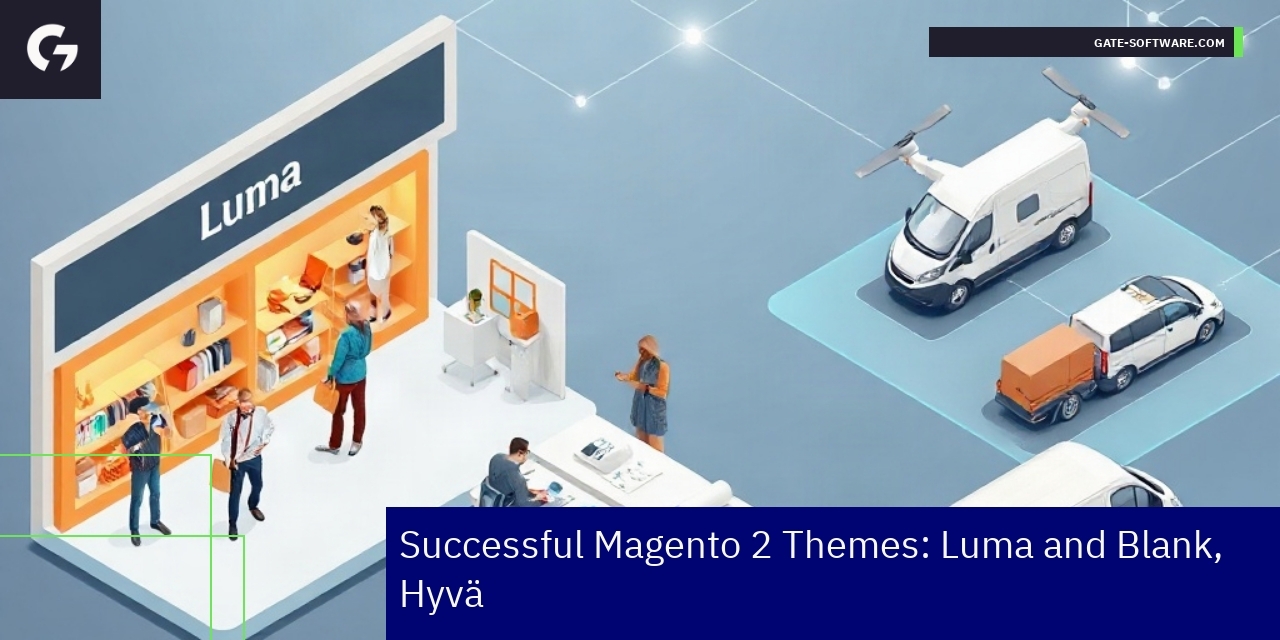
Successful Magento 2 Themes: Luma and Blank, Hyvä
Magento 2’s ecosystem offers several foundational themes, among which Luma, Blank, and Hyvä stand out as key examples, each serving distinct purposes aligned with varying development and business needs.
Luma, the default Magento 2 theme, is designed as a fully responsive, feature-rich storefront ideal for modern e-commerce requirements. It provides out-of-the-box functionality with a polished aesthetic that addresses common UX patterns such as intuitive navigation, product presentation, and checkout flow. As a comprehensive theme, Luma supports a broad range of Magento’s capabilities, making it suitable for merchants who want a ready-made solution with minimal customization.
Conversely, the Blank theme functions as a minimalistic base—essentially a barebones framework for developers aiming to create custom themes from scratch. It offers the essential structural layout and CSS resets without any styled components or visual design elements. This flexibility supports highly tailored UX/UI work, allowing technical teams to build optimized and unique brand experiences without overriding complex pre-built styles.
Hyvä represents a newer paradigm in Magento theming, focusing heavily on performance and simplicity. By significantly reducing frontend complexity, Hyvä offers a lightweight alternative to traditional Magento themes. It trims down unnecessary JavaScript and CSS overhead, speeding up page load times and improving core web vitals—a critical consideration for scalability and operational efficiency. Due to its simplicity, Hyvä also reduces the learning curve and technical debt for frontend developers, streamlining ongoing maintenance and enhancements.
In sum, choosing between Luma, Blank, and Hyvä depends on the project’s strategic priorities: comprehensive features and immediate readiness (Luma), full customization control (Blank), versus lightweight performance and developer efficiency (Hyvä). Each theme reflects distinct technical architectures influencing development workflows, operational scalability, and the overall user experience of Magento 2 storefronts.

User Friendliness
User friendliness is a critical factor when choosing a Magento 2 theme, and Hyva stands out in this regard due to its emphasis on simplicity and performance. Unlike traditional Magento themes, Hyva offers a streamlined front-end development framework that is both lightweight and easy to work with for developers and merchants alike. This focus results in faster loading times and a more responsive interface, which directly improves the user experience on eCommerce sites.
From a technical perspective, Hyva leverages modern web technologies that reduce complexity in customization and maintenance, making it easier for development teams to implement changes and optimize user interaction flows. The simplified architecture of Hyva reduces the typical overhead associated with Magento themes, allowing for smoother navigation, quicker page rendering, and efficient scalability as the business grows.
Operational efficiency is also enhanced since Hyva minimizes development time and dependencies, enabling faster iterations and improvements based on user feedback. These improvements translate into higher customer satisfaction and potentially better conversion rates, as customers interact with a stable, performant, and intuitive interface.
In summary, Hyva’s user friendliness comes from its modern, performance-centric design and developer-focused simplicity, making it a strong choice for stakeholders looking for an effective Magento 2 theme solution.
Navigational Elements in Custom Themes
—
If available:
—

Navigational Elements in Custom Themes
Navigational elements such as menus, filters, and other navigation features play a critical role in shaping the shopping experience within Hyva-based custom themes. These components directly influence how efficiently users can browse products, locate desired items, and ultimately convert their visits into sales.
Menus serve as the primary structural framework for guiding users through a website’s offerings. In custom Hyva themes, well-designed menus can provide clear, intuitive pathways that reduce cognitive load and minimize friction during navigation. This involves thoughtful categorization and hierarchies that align with customer expectations and product taxonomy.
Filters enhance the shopping experience by empowering users to narrow down large product catalogs based on specific attributes such as price, size, color, or popularity. Effective filtering not only speeds up the discovery process but also helps customers feel in control, increasing satisfaction and likelihood of purchase. Hyva’s lightweight and performant frontend architecture supports dynamic, responsive filters that update results swiftly without degrading page speed or user experience.
Beyond menus and filters, additional navigation features – including breadcrumbs, search bars, and quick links – contribute to operational efficiency by offering multiple touchpoints to access content. These elements support scalability by accommodating growing inventories and diversified product lines without overwhelming the user.
From a technical standpoint, the seamless integration of these navigational components with Hyva’s theme ensures optimized performance and scalability, crucial for high-traffic eCommerce sites. Their strategic implementation helps reduce bounce rates and enhances user engagement, ultimately driving higher conversion rates and revenue growth.

Responsive Navigation for Mobile Users
Responsive navigation is a critical element in frontend themes for Magento 2, especially to ensure an optimal user experience on mobile devices. With the increasing dominance of mobile commerce, Magento 2 stores must offer seamless navigation that adapts fluidly to varied screen sizes and resolutions. The Hyva theme framework addresses this need by providing a lightweight, performant frontend foundation designed with responsiveness at its core.
In Hyva-based Magento 2 themes, responsive navigation typically involves dynamic menus that transform according to the viewport. On desktops, multi-level horizontal menus allow users to browse products efficiently. For mobile users, these menus collapse into streamlined, touch-friendly interfaces such as hamburger menus or off-canvas sidebars. This approach minimizes visual clutter and maximizes screen real estate, facilitating faster access to essential categories and filters.
From a technical perspective, responsive navigation in Hyva leverages modern CSS methodologies including Flexbox and Grid layouts, combined with minimal JavaScript to keep interactions smooth and maintain high performance. This design philosophy supports operational efficiency by reducing load times and improving rendering speeds, crucial for retaining mobile visitors who expect instant responsiveness.
Moreover, Hyva’s modular architecture allows development teams to customize navigation logic easily, enabling scalability and adaptability to future UX trends or business requirements. The framework’s emphasis on semantic HTML and accessibility ensures that navigation is not only responsive but also inclusive, enhancing the overall user journey regardless of device or ability.
Implementing responsive navigation within Magento 2 themes powered by Hyva therefore supports an agile, efficient ecommerce environment that aligns with real-world business goals of maximizing conversions through superior mobile user experiences.

Usability Testing and Continuous Improvement
Regular usability testing plays a critical role in optimizing navigation and the overall user experience within the Hyva framework. By systematically evaluating how users interact with the interface, usability tests identify pain points, bottlenecks, and areas of friction that may hinder seamless navigation. This granular insight allows product teams to make informed decisions on refining interface elements, streamlining user flows, and eliminating confusing or redundant steps.
Continuous usability testing feeds into a cycle of ongoing improvement, where iterative changes are deployed, monitored, and refined based on real user feedback. This ensures that the platform evolves responsively to user needs and behavioral shifts, maintaining relevance and efficiency. For technical teams, usability insights aid in prioritizing development resources toward features or components that most impact operational efficiency and user satisfaction.
Moreover, usability testing supports scalability by uncovering how complexity affects user journeys, helping architects design interfaces that retain clarity and performance as the system grows. Strategic incorporation of usability results into Hyva’s continuous improvement framework enhances both frontend user engagement and backend manageability, creating a robust foundation for sustained digital growth.

SEO Compatibility
SEO friendliness is a critical factor in enhancing store visibility on search engines. For Hyva, ensuring compatibility with SEO best practices involves optimizing several technical and content-related elements that improve search engine crawling, indexing, and ranking.
Hyva’s architecture supports clean and semantic HTML markup, which is essential for search engines to accurately interpret page content. This ensures that meta tags, headings, product descriptions, and structured data are properly rendered and accessible, facilitating better indexing. Moreover, Hyva is designed for high performance, with optimized frontend delivery that positively impacts page load speed—an important ranking factor that influences user experience and search engine algorithms.
Another significant aspect of SEO compatibility in Hyva is its mobile responsiveness. Given the increasing share of mobile traffic, Hyva’s responsive design adapts seamlessly across devices, enhancing usability and meeting Google’s mobile-first indexing requirements.
From an operational and scalability perspective, Hyva supports modular and extensible development that allows teams to implement customized SEO strategies through flexible URL structures, canonicalization rules, and integration with popular SEO tools or plugins. This adaptability ensures that stores can grow without compromising SEO performance.
In summary, SEO friendliness in Hyva encompasses clean code architecture, fast performance, mobile optimization, and extensible SEO configurations—all contributing to superior search engine visibility and driving organic traffic efficiently.
Structured Data for Better Visibility
—
If available:
—

URL Structure Optimization
Optimizing URL structure is a fundamental aspect of SEO in Magento 2 theme development, directly impacting both search engine rankings and user experience. A well-structured URL provides clarity to both users and search engines about the content and hierarchy of a webpage, making it easier to navigate and index.
In Magento 2, URL optimization involves creating clean, descriptive URLs that incorporate relevant keywords without unnecessary parameters or session IDs. Such URLs enhance keyword relevance, helping search engines better understand page content, which can improve organic search visibility. Additionally, descriptive URLs contribute to improved click-through rates, as users are more likely to trust and engage with links that clearly reflect their destination.
From a technical perspective, Magento 2’s URL rewrite management enables developers to implement SEO-friendly URLs by eliminating redundant or dynamic segments and ensuring a logical hierarchy. Implementing a flat catalog structure for categories and products further aids search engine crawlability by simplifying URL paths.
Moreover, an optimized URL structure addresses canonicalization issues by establishing a single, authoritative URL version for each page, preventing duplicate content problems that can dilute SEO efforts. Overall, meticulous URL structuring during Magento 2 theme development enhances scalability, performance, and operational efficiency, thereby supporting robust SEO outcomes.

Structured Data for Better Visibility
Including structured data significantly enhances search engine results by providing clear, machine-readable context about the content on web pages. For platforms like Hyva, which cater to eCommerce and enterprise applications, structured data enables search engines to better understand the products, categories, pricing, availability, and reviews, improving the accuracy and richness of search listings.
Structured data facilitates the generation of rich snippets, such as product ratings, pricing, and availability indicators directly in the search results. This not only attracts higher click-through rates but also improves the overall user experience by delivering relevant information upfront. For Hyva-based websites, the implementation of structured data aligns well with its fast, performance-oriented architecture, ensuring that enhanced search visibility does not compromise page speed or operational efficiency.
From a technical architecture perspective, incorporating structured data requires careful integration with Hyva’s frontend components and backend product data sources, maintaining data consistency and scalability. This integration supports dynamic content updates and helps with SEO scalability across a large, ever-changing catalog.
In conclusion, structured data plays a critical role in improving organic search visibility for Hyva-powered sites by making content more accessible and understandable to search engines, ultimately driving more qualified traffic and supporting operational efficiency at scale.

Image Weight and Alt Attributes
Optimizing multimedia files, particularly images, is crucial for enhancing both performance and SEO outcomes. In the context of Hyva, a frontend technology designed for eCommerce platforms, managing image weight and alt attributes plays a pivotal role in ensuring fast load times and improved accessibility, both of which contribute directly to better user experience and search engine rankings.
Image weight refers to the file size of an image. Large images increase page load times, negatively impacting site speed—a critical factor for both user satisfaction and SEO algorithms. To optimize image weight, it is essential to use modern, compressed image formats such as WebP or optimized JPEGs without compromising visual quality. Implementing responsive image techniques by serving appropriately sized images based on the user’s device further reduces unnecessary data transfer, thereby enhancing performance.
Alt attributes serve a dual purpose: they improve accessibility for users utilizing screen readers and provide SEO benefits by enabling search engines to better understand the image content. Alt text should be descriptive, concise, and relevant to the surrounding content to maximize its effectiveness. In an eCommerce environment like Hyva, accurately describing product images or interface elements in alt attributes supports both compliance with accessibility standards and improves organic search visibility.
Together, controlling image weight and optimizing alt attributes are fundamental strategies within Hyva implementations to balance high performance, accessibility, and SEO efficiency, ultimately elevating the site’s operational efficiency and scalability.

Loading Speed
Loading speed is a critical factor influencing both user experience and SEO ranking, especially within the context of Hyva implementations. A swift loading time ensures users engage effectively without frustration caused by delays, which directly impacts bounce rates and conversion metrics.
From a technical architecture standpoint, Hyva’s modern frontend framework is designed to optimize loading speed by minimizing bulky JavaScript usage and leveraging efficient CSS handling. This approach reduces render-blocking resources, allowing faster time-to-interactive and better perceived performance.
Operationally, improving loading speed enhances scalability by lowering server load and bandwidth consumption, facilitating smoother handling of traffic spikes without degradation of service quality. Faster loads also improve crawling efficiency for search engines, which can index pages more frequently and thoroughly, contributing to improved SEO rankings.
For senior stakeholders like CTOs and Heads of Product, prioritizing loading speed within Hyva deployments involves strategies such as server-side rendering, code splitting, and optimized asset delivery through CDNs. These measures work collectively to boost performance metrics, streamline user journeys, and maintain competitive search visibility through superior SEO outcomes.
Core Web Vitals Monitoring
—
If available:
—
Core Web Vitals Monitoring
Core Web Vitals are a set of essential performance metrics defined by Google that focus on user experience aspects such as loading performance, interactivity, and visual stability. These metrics are crucial for evaluating and optimizing a Magento 2 site powered by Hyva to ensure that it meets modern performance standards and delivers a seamless shopping experience.
The key Core Web Vitals include:
Tracking these metrics on your Magento 2 Hyva site can be performed using tools such as Google PageSpeed Insights, Lighthouse, and the Chrome UX Report. Additionally, integrating real user monitoring tools can provide continuous insight into Core Web Vitals in production environments, enabling proactive performance tuning.
Strategically monitoring and improving Core Web Vitals is essential for maintaining high engagement, reducing bounce rates, and enhancing SEO rankings, ensuring that your Magento 2 store built with Hyva delivers optimal operational efficiency and scalability.

Minimizing Theme Resources
Choosing lightweight themes to boost performance is critical in optimizing eCommerce platforms like Hyva. Lightweight themes reduce the amount of CSS, JavaScript, and overall payload delivered to the browser, which directly enhances page load speeds and resource efficiency. This is particularly important for Hyva, which emphasizes fast and smooth frontend experiences.
By minimizing theme resources, businesses can reduce server load and bandwidth consumption, improve time-to-interactive metrics, and enhance user engagement. Lightweight themes typically avoid bloated libraries and unnecessary dependencies, instead focusing on modern, modular design principles that only load essential assets. This reduces the number of HTTP requests and enhances caching efficiency.
From a technical architecture perspective, selecting or developing lightweight themes supports scalability and operational efficiency. It ensures that as traffic grows, the frontend remains performant without requiring proportional increases in backend resources. This also aligns with the Hyva philosophy of lean, maintainable codebases that elevate developer productivity while delivering a superior user experience.
In conclusion, prioritizing lightweight themes within the Hyva ecosystem contributes substantially to faster site speed, lower maintenance overhead, and better resource management, all crucial for competitive online retail performance.

Performance Testing Best Practices
In Magento 2 theme development, the necessity of regular performance tests cannot be overstated. Performance testing is critical to ensure that themes do not introduce latency or degrade the user experience, especially in complex eCommerce environments. Regular performance evaluations help identify bottlenecks caused by resource-heavy components, inefficient database queries, or poorly optimized frontend assets such as images, CSS, and JavaScript files.
Implementing performance tests at various stages of development allows teams to catch regressions early, preventing costly fixes later in the product lifecycle. Automated testing tools tailored to Magento 2 environments can simulate real user loads, providing insights on server response times, caching effectiveness, and frontend rendering speeds. This continuous feedback loop supports optimizing both backend and frontend code to meet scalability requirements as traffic grows.
Moreover, performance testing aligns with operational efficiency goals by pinpointing underperforming processes that may inflate hosting costs or lead to lost conversions. For example, excessive load times can result in increased bounce rates, directly impacting revenue. Therefore, integrating performance validations into CI/CD pipelines is essential for maintaining a robust Magento 2 theme that scales and performs reliably in high-demand scenarios.
Strategic emphasis on performance testing empowers technical leaders to make informed architectural decisions, balancing feature richness with speed and resource utilization. This approach ultimately drives better customer satisfaction and competitive advantage in an increasingly fast-paced digital marketplace.

Cross-Browser Compatibility
Ensuring the Hyva theme works seamlessly across all major browsers is a crucial aspect of delivering a consistent and reliable user experience. Cross-browser compatibility involves rigorous testing and optimization so that the theme performs uniformly on diverse platforms such as Chrome, Firefox, Safari, Edge, and others.
Hyva’s architecture is built with modern web standards, focusing heavily on clean code and minimal dependencies, which inherently supports better compatibility. The theme uses standardized CSS and JavaScript practices that avoid browser-specific quirks, ensuring that styles and functionalities render consistently.
From a technical architecture perspective, this means adopting progressive enhancement strategies where advanced features gracefully degrade without breaking on older or less capable browsers. It also includes thorough testing through automated tools and manual checks to identify and rectify rendering issues or behavioral inconsistences.
Operational efficiency is enhanced as maintaining a single, robust codebase reduces the overhead for browser-targeted fixes. This approach supports scalability, allowing Hyva to accommodate future browser updates or new entrants without major refactoring.
Ultimately, ensuring cross-browser compatibility for Hyva not only guarantees an optimal user interface but also safeguards business continuity by reaching the widest possible audience effectively and reliably.

Broad Browser Support
Ensuring theme compatibility across both legacy and modern browsers in a Hyva environment requires a strategic balance of progressive enhancement and graceful degradation. The core objective is to uphold performance and user experience on modern browsers while maintaining functional accessibility on older platforms.
To achieve this, adopt a layered approach to CSS and JavaScript. Utilize modern CSS features such as CSS variables and flexbox for contemporary browsers, but include fallback styles for older browsers using feature queries (@supports) or conditional stylesheets. Similarly, leverage ES6+ JavaScript syntax and APIs while transpiling and polyfilling to retain core functionality in legacy browsers.
Testing is paramount. Implement automated cross-browser testing frameworks that cover major browsers and versions, ensuring that Hyva themes render and behave consistently. Focus also on critical user journeys, minimizing performance bottlenecks that may disproportionately affect older browsers.
From an architectural standpoint, modularize front-end assets to isolate legacy-specific code paths. This aids maintainability and performance tuning. Utilize server-side rendering where possible to improve load times universally, enhancing SEO and usability on all browser types.
Incorporate responsive design principles inherently supported by Hyva, but verify media queries and viewport handling comply with older browser specifications. Optimize asset loading strategies, bundling, and caching to minimize overhead on constrained devices.
In sum, broad browser support in Hyva themes entails a disciplined coding strategy, rigorous testing, and deployment practices that value compatibility and performance equally to deliver resilient, scalable eCommerce experiences.

Testing Across Different Environments
Testing themes like Hyva across different environments is crucial to ensure consistent performance, usability, and reliability. This involves validating the theme on a range of devices — from desktops and laptops to tablets and smartphones — as well as across various operating systems including Windows, macOS, iOS, and Android. Each environment presents unique challenges such as varying screen sizes, resolutions, input methods, and system capabilities that can affect how the theme renders and behaves.
For eCommerce platforms utilizing Hyva, comprehensive cross-environment testing helps to identify and resolve compatibility issues early, preventing negative user experiences and potential revenue loss. It also facilitates detection of performance bottlenecks that might occur on less powerful devices or older operating systems. Testing should encompass not only the visual layout but also interactive elements, responsiveness, and integration with backend services.
Implementing automated testing tools alongside manual exploratory testing can enhance coverage and efficiency. Automated testing frameworks allow repeated regression tests across multiple environments, ensuring changes or updates do not introduce new defects. Manual testing remains essential for nuanced assessments of user experience and design adherence.
Ultimately, thorough testing across different devices and operating systems is a foundational step toward ensuring Hyva themes provide robust, scalable, and optimized solutions for diverse end users, aligning with business goals of operational efficiency and high-quality digital commerce experiences.

Fixing Browser-Specific Issues
Fixing browser-specific issues is essential to ensure a consistent and reliable user experience across diverse platforms and devices. In the context of Hyva, it is crucial to identify and resolve compatibility problems that may arise due to differences in browser rendering engines, support for modern web standards, and JavaScript execution nuances. These challenges can lead to broken layouts, dysfunctional interactive elements, or performance bottlenecks that degrade user satisfaction.
To address these issues, the first step is thorough cross-browser testing using automated tools and manual checks on major browsers such as Chrome, Firefox, Safari, and Edge. This testing should cover both desktop and mobile environments to capture variances in behavior and rendering. Developers should focus on detecting CSS compatibility problems, JavaScript errors, and differences in HTML5 or CSS3 feature support that affect Hyva’s frontend components.
Once compatibility problems are identified, targeted solutions include employing feature detection libraries, using polyfills for unsupported features, and applying CSS vendor prefixes. Adhering to progressive enhancement principles ensures that core functionalities remain accessible even if advanced features are not supported by certain browsers. Moreover, optimizing JavaScript execution by deferring non-critical scripts and minimizing DOM manipulations can enhance performance uniformly across browsers.
Addressing browser-specific issues in Hyva also requires maintaining an up-to-date dependency stack and leveraging community resources and updates, since front-end frameworks and libraries continuously evolve to improve compatibility. These practices collectively enhance operational efficiency, scalability, and performance, ultimately boosting user satisfaction by providing a seamless experience irrespective of the browser in use.

Responsiveness
Responsiveness is critical for mobile user experience. In the context of Hyva, ensuring that the frontend framework delivers a highly responsive interface is essential for meeting modern eCommerce demands. Responsiveness directly impacts user engagement, conversion rates, and overall satisfaction, especially on mobile devices where users expect fast, fluid, and intuitive interactions.
Hyva achieves responsiveness through a streamlined architecture that prioritizes minimalistic yet powerful frontend components. The framework’s design minimizes unnecessary JavaScript and CSS overhead, reducing load times and enabling swift rendering of views on varied screen sizes and devices. This architectural approach also enhances operational efficiency by simplifying front-end maintenance and accelerating page performance.
From a technical perspective, Hyva leverages modern frontend technologies such as Tailwind CSS, which offers utility-first styling enabling rapid adjustments for different viewport sizes without extensive custom CSS. This contributes to scalability by allowing teams to easily adapt UI components for mobile responsiveness as the platform grows.
Performance optimization inherent in Hyva’s architecture ensures that mobile users experience near-instantaneous interactions, crucial for retaining attention in environments with network variability. Efficient responsiveness also eases backend load and supports smoother API exchanges, optimizing overall system throughput.
In summary, Hyva’s focus on responsiveness addresses key business challenges like mobile conversion optimization and user retention through a lightweight, scalable, and technically robust frontend solution. This aligns with strategic goals of delivering high-performance, maintainable, and user-centric eCommerce platforms.

Adapting Themes to Screen Sizes
Adapting themes to various screen dimensions is fundamental in delivering consistent, high-performance user experiences across devices. This process, often known as responsive design, ensures that themes dynamically adjust their layout and visual elements to maintain usability and aesthetic integrity regardless of screen size or resolution.
A core technique involves employing a fluid grid system, where layout components use relative units such as percentages rather than fixed pixel values. This allows the theme to scale fluidly, accommodating a spectrum of screen dimensions from compact mobile displays to expansive desktop monitors. Complementing fluid grids, CSS media queries enable conditional styling based on device characteristics like width, height, and orientation, providing granular control over layout adaptations. For example, media queries can modify navigation menus, font sizes, or content arrangement to better suit different screen widths.
Flexible images play a critical role by adopting CSS rules such as `max-width: 100%`, which prevents visuals from overflowing their containers or appearing distorted. Ensuring images and other media scale appropriately is essential for maintaining both visual appeal and performance, especially on bandwidth-constrained mobile devices.
In addition, incorporating the viewport meta tag within the HTML header defines how content should be scaled on mobile browsers, aligning the page width with the device screen and facilitating smooth rendering. This is crucial for preventing issues like unintended zooming or horizontal scrolling.
A mobile-first design approach is highly recommended, where theme development begins by optimizing for the smallest screens and progressively enhancing the layout for larger displays. This strategy ensures essential content and functionality are prioritized for mobile users while allowing richer experiences on desktops. Leveraging established CSS frameworks with built-in responsive capabilities can further accelerate development and promote consistency.
These techniques combined ensure themes efficiently adapt to screen sizes, enhancing operational efficiency, scalability, and an optimal user experience across devices.

Regular Responsiveness Testing
Ensuring that Magento 2 frontend themes function consistently and efficiently across a range of mobile devices is a critical component of modern eCommerce strategy. Regular responsiveness testing involves systematic validation of layouts, interactive elements, and performance metrics on various screen sizes and device capabilities to guarantee an optimal user experience.
Best practices for testing Magento 2 frontend themes on mobile devices start with adopting a mobile-first approach during development, ensuring that the theme scales gracefully from smaller screens upwards. Using emulators and real device testing in tandem is essential; emulators provide quick feedback on diverse device profiles, while real devices reveal hardware-specific behaviors, such as touch responsiveness and rendering nuances.
Automated testing tools integrated into the development pipeline can expedite the detection of responsiveness issues, including incorrect viewport configurations, misaligned grids, or improperly sized imagery. However, manual exploratory testing remains indispensable for catching edge cases and nuanced UI glitches.
Furthermore, testing should extend beyond visual layout checks to include performance assessments on mobile networks, considering page load speed and interaction latency. Magento 2 themes must be optimized to minimize resource consumption to enhance scalability and maintain smooth operational efficiency.
Consistent regression testing is also vital, given that updates in Magento core or installed extensions can inadvertently affect frontend responsiveness. A structured testing schedule, ideally with continuous integration practices that incorporate responsiveness checks, supports long-term stability and a seamless shopping experience on mobile devices.

Mobile UI Adjustments
Effective UI strategies to improve mobile browsing are critical for enhancing user experience and engagement on mobile platforms. For Hyva, focusing on mobile UI adjustments involves optimizing the interface to ensure fast loading times, intuitive navigation, and responsive design that adapts seamlessly to different screen sizes.
A key strategy includes simplifying the navigation structure to reduce the number of steps required for users to reach their goals. This can involve implementing hamburger menus or bottom navigation bars that are easy to access with thumbs. Buttons and interactive elements should be sized appropriately for touch interaction, minimizing user frustration and errors.
Performance optimization is another crucial aspect. Leveraging lightweight components and minimizing heavy scripts contribute to faster mobile browsing, which significantly impacts bounce rates and conversion. Lazy loading images and asynchronous content loading can further enhance speed without compromising the visual appeal of the interface.
Consistency in design language helps maintain brand identity and usability across devices. Ensuring that fonts, colors, and UI elements follow a coherent style guide improves recognition and reduces cognitive load on users.
Lastly, incorporating feedback mechanisms such as swipe gestures or haptic feedback can provide users with a more engaging and intuitive experience. These elements should be tested rigorously to ensure they add value without causing confusion.
By strategically adjusting mobile UI along these lines, Hyva can deliver a smooth, efficient, and satisfying browsing experience that drives user retention and business growth.

Social Media Integration
Integrating social media within Hyva environments significantly enhances user engagement by enabling seamless interaction between eCommerce platforms and popular social networks. This integration facilitates real-time sharing, social login capabilities, and dynamic content updates that resonate with users’ social behaviors. For senior stakeholders such as CTOs and Heads of Product, implementing social media integration requires a careful consideration of the technical architecture to ensure scalability and maintain high performance without compromising system responsiveness.
Technically, social media integration often involves leveraging APIs from platforms like Facebook, Twitter, Instagram, and LinkedIn. These APIs enable features such as social sharing buttons, embedding user-generated content, and personalized social feeds within online stores. From an operational efficiency perspective, integrating social media can automate marketing workflows and consolidate user data for better targeting and analytics.
A robust social media integration must also address data privacy and security concerns, ensuring compliance with regulations such as GDPR. Architecturally, it is crucial to design asynchronous data exchange processes to minimize loading times and avoid bottlenecks. Given scalability considerations, implementing a modular integration layer that can evolve with new social platforms or features protects future investments and supports long-term growth.
In summary, integrating social media can boost user engagement by creating interactive and socially connected eCommerce experiences, while requiring a strategic focus on architecture, security, and operational scalability.

Social Sharing Buttons
Social sharing buttons are an essential feature for enhancing user interaction on digital platforms, particularly within the context of Hyva. These buttons facilitate seamless sharing of content across various social media channels, increasing content visibility and engagement. By allowing users to easily distribute valuable information, social sharing buttons amplify reach and drive organic traffic, which is critical for scalable eCommerce growth.
From a technical perspective, integrating lightweight and efficient social sharing modules in Hyva ensures minimal impact on page load times and performance. It is important to implement asynchronous loading techniques and optimize API calls to social networks to maintain operational efficiency and avoid bottlenecks. Moreover, thoughtful placement and intuitive design of these buttons enhance the user experience, encouraging spontaneous interactions and repeat visits.
Strategically, social sharing buttons serve as catalysts for community building and brand awareness. They enable users to become brand advocates, sharing promotions, product updates, and insightful content without friction. This increases overall engagement metrics, contributing to better SEO outcomes and reinforcing the platform’s relevance and authority. Hyva’s flexible architecture supports customizable sharing workflows, allowing businesses to tailor social sharing experiences in line with their operational and marketing objectives.

Connecting to Company Profiles
Linking social media profiles within Magento 2 themes, especially in the context of Hyva, is a critical strategic element for businesses aiming to enhance their digital presence. Social media connections serve as bridges that link your eCommerce platform to broader customer engagement channels, amplifying brand visibility and fostering deeper relationships with your audience.
From a technical architecture perspective, integrating social media profiles in Hyva themes ensures a seamless and performant user experience. Hyva, known for its modern tech stack and streamlined frontend, facilitates easy embedding of social media links without compromising site speed or scalability. This integration supports operational efficiency by reducing the need for complex customizations or third-party extensions, enabling quicker deployment and synchronization with your existing social media accounts.
Connecting social media accounts prominently within your Magento 2 theme also plays a crucial role in driving qualified traffic. It encourages visitors to explore more about your brand through multiple touchpoints, boosting engagement and potential conversions. Moreover, social proof obtained via active social media profiles builds trust, an essential factor in reducing friction in the online purchase journey.
Strategically, embedding social media URLs supports ongoing content sharing and brand amplification efforts. Customers can easily share products or promotional content within their networks, generating organic reach with minimal overhead. For corporate profiles, this connectivity implies an aligned branding approach across channels, maintaining consistency and strengthening overall brand perception.
In summary, the importance of linking social media profiles in Magento 2 themes like Hyva extends beyond mere connectivity—it addresses business scalability, operational streamlining, enhanced user engagement, and reinforces brand authority in a digitally connected marketplace.

Analyzing Social Media Traffic
Measuring the impact of social media referrals involves a comprehensive assessment of how traffic from various social media platforms contributes to key business objectives. This analysis starts with tracking referral traffic metrics such as the volume of users arriving from social channels, their behavior on the site, and their conversion rates. Leveraging tools that integrate with backend analytics systems allows for detailed insights into user journeys originating from social media, revealing which content and platforms drive meaningful engagement and revenue.
A strategic approach to analyzing social media traffic includes segmenting data by platform, campaign, audience demographics, and content type to identify patterns and optimize resource allocation. Understanding click-through rates, bounce rates, and goal completions attributed to social referrals provides clarity on the quality of traffic. Additionally, setting up proper UTM parameters and referral tags ensures accuracy in attribution models, critical for operational efficiency.
From a technical perspective, scalable analytics infrastructure capable of handling high volumes of data with minimal latency is essential for timely decision-making. Integration between social platforms, marketing automation, and analytics tools enhances the depth of traffic analysis and supports continuous performance improvements. This data-driven approach ensures that investments in social media are aligned with broader business goals, maximizing the ROI from social referral traffic.

Magento Store Costs
Choosing the right theme has a significant impact on the overall cost of running a Magento store. Theme selection influences not only the initial expenses but also ongoing maintenance, customization, and performance optimization costs.
A well-coded, flexible theme such as Hyva can reduce development time and complexity, thereby lowering the total cost of ownership. Hyva themes are designed to replace the traditional Magento frontend with a leaner, faster approach that improves user experience and reduces page load times. This can translate into operational efficiencies and better scalability.
Costs related to Magento stores generally break down into licensing fees, development, hosting, and ongoing support. While Magento itself is open source, the choice of theme affects how much technical effort is required to tailor the storefront. A modular, cleanly structured theme reduces integration headaches and future-proofing expenses.
Additionally, theme quality impacts SEO and conversion rates due to speed and usability factors. Investing in a theme optimized for performance and high compatibility with extensions can lead to better long-term business outcomes, offsetting upfront costs.
In summary, the selection of the right theme, such as Hyva, plays a pivotal role in Magento store costs by influencing development complexity, frontend performance, and maintainability, making it an essential strategic decision in eCommerce architecture.

Initial Purchase and Customization Costs
Investing in a Magento 2 theme involves multiple cost considerations beyond the initial purchase price. The initial purchase of a Magento 2 theme can vary significantly based on the complexity, design quality, and included features. Premium themes with advanced functionalities tend to demand higher upfront costs, which reflect the comprehensiveness and quality assurance they provide.
Customization costs constitute a substantial part of the overall expenditure. Tailoring a Magento 2 theme to align with specific business requirements often requires specialized development skills. This includes adjustments to the theme’s design elements, layout configurations, and backend integrations to ensure seamless user experience and performance optimization. Customization efforts can escalate based on the level of desired personalization and the need to adapt the theme to particular operational workflows or branding standards.
Additionally, the cost implications extend to ongoing maintenance and potential upgrades necessary to keep the Magento platform and its themes compatible with evolving technologies and security standards. It is critical to precisely assess how these costs factor into the total cost of ownership to optimize operational efficiency and scalability. Strategic planning around theme selection and customization helps minimize unforeseen expenses and mitigates technical debts associated with poorly adapted themes.
In sum, understanding the comprehensive costs associated with purchasing and customizing Magento 2 themes is essential for senior stakeholders to make informed decisions that support long-term business growth and technical robustness.

Long-Term Investments in Quality Themes
Investing in high-quality themes such as Hyva offers numerous advantages that directly impact the stability and scalability of digital platforms. High-quality themes are typically built with clean, modular, and maintainable codebases which ensure long-term compatibility with evolving technology stacks and third-party integrations. This foundational stability reduces the risk of system breakdowns or performance bottlenecks, which can lead to costly technical debt and operational disruptions.
From a scalability perspective, quality themes are optimized for performance, supporting efficient loading times and smooth user experiences even as traffic increases. Well-architected themes make it easier to implement upgrades, customize features, and extend functionalities without compromising the core infrastructure. This adaptability is crucial for businesses looking to evolve their digital presence in response to market demands or emerging technologies.
Moreover, investing in premium themes aligns with best practices in SEO and user engagement, enhancing both search visibility and customer satisfaction. The combination of robust technical architecture and a user-focused design contributes to operational efficiency by reducing the need for frequent fixes and complex redevelopments. For senior stakeholders managing digital ecosystems, committing to quality themes like Hyva is a strategic decision that underpins resilient, high-performing, and future-proof platforms capable of supporting sustained business growth.

Hidden Costs to Watch Out For
When evaluating the total cost of implementing Hyva, it is essential to look beyond the initial licensing or development fees and consider a range of hidden costs that can impact your budget and project success. First, integration complexity can lead to increased expenses. While Hyva offers modern frontend solutions, aligning it seamlessly with existing backend systems, third-party extensions, and custom modules often requires significant development effort and expertise. This can drive up professional services and consulting costs.
Second, ongoing maintenance and support should be anticipated. Hyva’s innovative architecture, while improving performance and user experience, may require specialized knowledge for troubleshooting and updates. Organizations might need to invest in training internal teams or retaining external experts, adding to operational expenses over time.
Third, migration costs are often underestimated. Transitioning from legacy frontends to Hyva can involve data migration, theme redesign, and rework of frontend components. The effort required to ensure minimal disruption to the user experience and business operations should not be overlooked.
Finally, performance optimization and scalability considerations may trigger additional investments in infrastructure or advanced development resources, especially for high-traffic eCommerce environments aiming for growth.
In sum, assessing these hidden costs—comprising integration, maintenance, migration, and scalability—provides a clearer picture of the total cost of ownership when adopting Hyva, enabling more informed decision-making aligned with long-term business and technical objectives.

Why Magento B2B Stores Are Popular
Choosing the right theme for Magento B2B stores is pivotal in driving business success, as it integrates multiple critical elements tailored for the complex needs of business-to-business commerce. Magento’s versatility allows it to support robust, scalable architectures essential for handling large volumes of data and transactions typical in B2B environments. These stores demand seamless performance and operational efficiency, which is significantly enhanced by selecting an appropriate theme optimized for Magento’s backend capabilities.
Magento B2B solutions stand out for their customizable features, including advanced catalog management, tiered pricing, and customer segmentation, all of which directly impact the buyer’s experience and operational workflows. A well-chosen theme complements these functionalities by offering intuitive navigation, responsive design for diverse devices, and streamlined checkout processes that reduce friction in long purchasing cycles.
Moreover, Magento themes for B2B are often designed to support integration with ERP and CRM systems, enhancing data synchronization and enabling scalable business processes. This integration ensures that technical architecture supports business growth and complex operational demands without compromising system performance.
Ultimately, the popularity of Magento B2B stores stems from their ability to merge technical robustness with tailored user experiences. This empowers businesses to expand their digital presence efficiently, leverage data-driven insights, and maintain competitive advantage in digitally transforming markets.

Theme Customization for B2B
In the Magento B2B environment, theme customization plays a pivotal role in aligning the eCommerce platform with the unique requirements and expectations of business clients. Personalized themes allow companies to tailor the storefront experience distinctly for their B2B customers, reflecting the complexity and specificities of business-to-business transactions.
Customizing themes for B2B involves adapting the design and functionality to support varied customer segments and their unique purchasing behaviors. For instance, personalized themes can incorporate features like custom pricing models, targeted promotions, and simplified navigation tailored to corporate buyers. This personalization enhances user engagement and operational efficiency by streamlining the buyer journey and reducing friction in the ordering process.
From a technical architecture standpoint, Magento’s flexible theming system supports deep customization without compromising system performance or scalability. By leveraging modular theme components, businesses can efficiently deploy updates and maintain a consistent brand experience across multiple customer sectors. Moreover, optimized theme customization ensures faster load times and better responsiveness, which are critical for retaining professional users with high transaction volumes.
Operationally, personalized themes facilitate improved integration with backend systems such as ERP and CRM, enabling seamless data exchange and enhancing order management workflows. This integration supports scalability, accommodating an expanding client base without degrading the user experience.
In summary, theme customization for Magento B2B stores yields significant business value by addressing real-world challenges related to client diversity, operational complexity, and performance demands. It equips digital teams to deliver tailored, efficient, and scalable online purchasing environments that meet B2B client expectations.

ERP System Integrations
ERP integration plays a critical role in Magento 2 B2B deployments, serving as the backbone for seamless data exchange and operational efficiency. In complex B2B environments, where large volumes of transactions, inventory, pricing, and customer data must be managed accurately and in real-time, ERP systems provide the centralized control needed to orchestrate these elements effectively. Integrating ERP with Magento 2 enables automated synchronization of key business processes such as order management, inventory tracking, billing, and customer relationship management.
From a technical architecture standpoint, robust ERP integration ensures data consistency across platforms, reduces manual intervention, and minimizes errors. This integration supports scalability by allowing businesses to handle increasing transactional loads and complex workflows without compromising performance. Additionally, operational efficiency is enhanced by streamlining workflows between sales channels and backend systems, enabling faster order processing and improved fulfillment accuracy.
For senior stakeholders, the strategic benefits include improved decision-making through real-time visibility of sales and inventory data, optimized resource planning, and enhanced customer experiences driven by accurate and timely order fulfillment. Given these factors, ERP integration is indispensable for maximizing the value of Magento 2 in sophisticated B2B scenarios, positioning enterprises for long-term growth and competitive advantage.

SEO Strategies for B2B Stores
Effective SEO practices tailored to B2B e-commerce involve a multi-layered approach centered on the unique characteristics and needs of business buyers. Unlike B2C environments, B2B purchasing decisions typically involve multiple stakeholders, longer sales cycles, and require more in-depth product information. Therefore, SEO strategies must align closely with these factors to drive qualified traffic and facilitate conversion.
First, comprehensive keyword research is essential, focusing on industry-specific and intent-driven terms that resonate with business buyers. Long-tail keywords that reflect buyer pain points, product specifics, or service applications tend to yield more relevant leads. Incorporation of technical SEO elements such as site speed optimization, mobile responsiveness, and secure architecture further ensures usability and trustworthiness, crucial in B2B contexts where buyer confidence is paramount.
Content marketing should cater to the B2B journey stages—awareness, consideration, and decision—by producing detailed product descriptions, whitepapers, case studies, and how-to guides. Rich content that addresses technical specifications or industry challenges can engage stakeholders and improve organic rankings. Structuring content with schema markup enhances search listings and visibility.
Backlink strategies in B2B SEO focus on earning authoritative links from industry publications, associations, and respected partners, leveraging relationships and networking to build domain authority. Additionally, local SEO and inclusion of relevant business directories can boost discoverability within specific geographic or vertical markets.
Regular analysis of SEO metrics and adaptation according to evolving industry trends and buyer behavior further optimizes these strategies, ensuring sustained performance and scalability for B2B e-commerce stores.

Headless e-Commerce and Headless PWA
Headless e-Commerce represents a strategic architectural approach where the front-end presentation layer is decoupled from the back-end e-commerce platform. This separation empowers enterprises to build highly customized user interfaces using modern front-end frameworks and technologies while leveraging robust back-end systems for catalog management, order processing, and customer data. The flexibility of headless systems allows Magento 2 users to innovate on the customer experience without being constrained by traditional, monolithic themes.
Progressive Web Apps (PWAs) take this further by offering app-like experiences through web technologies. When combined with headless e-Commerce architectures, headless PWAs enable fast, responsive, and engaging shopping experiences that can work offline and leverage device features. This fusion is particularly impactful in Magento 2 theme selection, where the conventional theme paradigm is replaced by a frontend tailored explicitly to deliver seamless PWA functionalities.
Choosing a Magento 2 theme in the context of headless e-Commerce and headless PWAs involves prioritizing interoperability with API-driven back ends, support for PWA standards, and performance optimization. Themes must facilitate smooth integration with the headless architecture and support modular frontend development to scale effectively. Furthermore, the operational efficiency gained from this structure allows faster iterations and lowers the time-to-market for new features, which is critical in highly competitive e-commerce environments.
From an engineering standpoint, adopting headless PWA-driven Magento 2 themes enhances scalability: front-end developers can work independently from back-end teams, deploying updates without disrupting the ecommerce engine. This separation also benefits omnichannel strategies by enabling consistent brand experiences across web, mobile, and other digital touchpoints.
In conclusion, the impact of headless e-Commerce and headless PWAs on Magento 2 theme selection is profound: it calls for choosing flexible, API-centric themes that integrate with modern frontend frameworks to deliver superior user experiences, improve scalability, and enhance operational workflows.

Headless Magento Flexibility
Headless Magento architecture significantly enhances user interface customization by decoupling the front-end presentation layer from the back-end commerce functionalities. This separation allows developers to independently design and deploy user interfaces without being constrained by Magento’s default theming and templating systems. For enterprise-grade applications, such flexibility is crucial as it enables the creation of tailored customer experiences that align with specific brand identities and unique business requirements.
With headless architecture, frontend teams can leverage modern frameworks and technologies to deliver highly interactive, performant, and dynamic user interfaces. This not only improves the visual appeal but also optimizes user engagement through faster load times and smoother interactions. Additionally, the API-driven approach facilitates seamless integration of third-party services and content management systems, further broadening customization possibilities.
Operationally, headless Magento improves development agility and scalability by enabling parallel workflows; backend developers can continue refining eCommerce logic and data management while frontend teams iterate on user experience independently. This flexibility also supports omnichannel strategies by allowing consistent user interfaces across web, mobile, IoT, and other digital touchpoints, all powered by a unified backend.
In summary, adopting a headless Magento approach via solutions like Hyva empowers organizations to transcend template limitations and deliver customized, scalable, and high-performance user interfaces tailored to evolving market demands.
PWA and Breeze: Uses and Limits
Progressive Web Apps (PWA) and Breeze serve distinct roles within the Magento 2 ecosystem, each offering specific benefits and facing particular limitations.
PWAs are designed to bridge the gap between web and native mobile applications, delivering fast, reliable, and immersive experiences on any device with a standard web browser. Their key strengths lie in offline capabilities, push notifications, device feature access, and installability. This makes PWAs an effective solution for enhancing performance and user engagement in Magento 2 stores, especially in scenarios requiring seamless mobile access and improved customer retention.
However, PWAs have inherent limitations. Their interaction with device hardware is restricted compared to native apps, with inconsistent support for advanced features such as Bluetooth, NFC, and various sensors across browsers. Performance largely depends on web technology optimization and can suffer from browser-specific constraints. These factors necessitate careful consideration when deploying PWAs to ensure the intended features can be reliably supported.
Breeze, on the other hand, is typically encountered as a lightweight library or framework focusing on streamlining data management and user interface development. In Magento 2, Breeze themes provide a clean and efficient baseline for front-end customization and rapid development. Its data binding capabilities simplify handling complex data interactions, thus improving developer productivity and application responsiveness.
Yet, Breeze also faces constraints, especially when scaling complex Magento 2 projects. Performance may plateau depending on application size and architecture, while integration with other libraries or systems can demand significant developer effort. This limits Breeze’s use to projects where simplicity, maintainability, and speed of development are prioritized over extensive feature sets or large-scale scalability.
In summary, selecting between PWA and Breeze in Magento 2 involves balancing rich user experiences and broad device compatibility against development complexity and performance considerations. Both tools contribute significant strategic value but must be aligned with specific business needs and technical architectures to optimize operational efficiency and scalability.

Implementation Challenges
Integrating headless solutions such as Hyva presents several complex challenges that organizations must carefully navigate to ensure successful adoption and operational efficiency. A primary difficulty lies in the architectural shift from traditional monolithic platforms to decoupled, API-driven systems. This transition demands a thorough understanding of both front-end and back-end technologies, as teams must manage independent components while maintaining seamless communication between them.
Another critical challenge is achieving optimal performance and scalability. Headless architectures often rely heavily on APIs, which introduces network latency and potential bottlenecks if not properly optimized. Ensuring fast content delivery and responsive user experiences requires robust caching strategies and effective load balancing.
Operational complexity increases as well due to the necessity of managing multiple deployment pipelines and environments. Coordinating updates to front-end interfaces and back-end services independently can create synchronization issues, demanding strong version control and comprehensive testing practices.
Moreover, integrating headless solutions with existing systems such as ERP, CRM, and payment gateways often involves significant customization and middleware development. This integration must safeguard data consistency and security across distributed components, requiring detailed planning and adherence to compliance standards.
Finally, the skill set required for headless implementation is broad and specialized. Organizations frequently face talent gaps, as developers need expertise in APIs, JavaScript frameworks, and cloud infrastructure concurrently. Addressing these implementation challenges strategically is essential to leverage the full potential of Hyva’s headless solution.
Comparing Magento 2 Themes
When comparing popular Magento 2 themes, it is essential to consider both features and performance to ensure optimal eCommerce operations. A robust Magento 2 theme should deliver a seamless user experience, responsive design, and support for extensive customization, enabling businesses to align the front-end with their brand identity efficiently. Key features often evaluated include mobile responsiveness, integration capabilities with extensions, SEO friendliness, and ease of maintenance.
Performance factors focus primarily on loading speed, code quality, and scalability. Themes that are well-optimized for speed help reduce bounce rates and improve conversion rates, crucial for retail success. Code quality impacts long-term maintainability and compatibility with Magento updates. Furthermore, scalable themes can sustain growth without compromising site performance during peak traffic.
In strategic terms, a Magento 2 theme must not only cater to aesthetic demands but also align with technical infrastructure, supporting efficient operational workflows and minimizing downtime risks. This balance between features and performance ensures that the platform remains resilient and adaptable for evolving business needs, ultimately contributing to a high-performing, secure, and scalable eCommerce solution.
Luma vs. Blank: Pros and Cons
When evaluating common Magento base themes, especially between Luma and Blank, it is essential to consider their core characteristics, performance implications, and development flexibility.
The Luma theme serves as Magento’s default, providing an out-of-the-box, feature-rich storefront experience. It integrates conventional frontend technologies such as HTML, CSS, and JavaScript, offering a comprehensive set of design elements and user interface components. While its completeness makes it suitable for rapid deployment, its architecture is relatively heavyweight, which can impact page load speed and overall performance negatively, especially for large-scale or complex catalog setups. However, its rich functionality ensures less initial development work for eCommerce teams aiming for a standard online store with good UX.
In contrast, the Blank theme is a bare-bones, minimalistic starting point designed primarily for developers. It lacks predefined styling or layouts, giving maximum customization freedom but requiring significant effort to build a polished storefront. This theme is highly modular and lightweight, making it ideal for projects demanding tailored user experiences or brand-specific designs while maintaining operational efficiency. Its minimalism supports better performance optimizations but trades off immediate usability out of the box.
From an architectural standpoint, choosing between Luma and Blank depends on the strategic priorities of the business. Luma expedites time to market but at the cost of potential scalability and speed constraints. Blank empowers scalability and technical agility through a custom build but involves higher initial development investment. Both themes are compatible with Magento’s extensible architecture, but considerations around ongoing maintenance, performance tuning, and customization complexity are critical.
In summary, Luma suits scenarios prioritizing quick deployment and feature completeness, while Blank is preferable for enterprises seeking operational efficiency, bespoke design, and superior performance via foundational control over theme construction.

Compatibility and Performance Comparison
Hyva themes are designed with a strong focus on compatibility and optimized performance, particularly within the Magento eCommerce ecosystem. They aim to deliver a streamlined frontend experience that reduces complexity and enhances load times compared to traditional Magento themes.
From a compatibility standpoint, Hyva themes align well with modern Magento versions and commonly used extensions. They minimize conflicts by adopting a lean frontend stack, avoiding heavy dependencies like KnockoutJS or RequireJS often found in default Magento themes. This approach not only improves developer experience but also simplifies ongoing maintenance and upgrades.
In terms of performance, Hyva leverages contemporary technologies such as Tailwind CSS and minimal JavaScript to drastically reduce page weight and improve loading speed. By employing optimized critical CSS delivery and efficient asset management, Hyva themes perform robustly under various load conditions, including high traffic scenarios. This leads to faster first meaningful paint times and better responsiveness across devices.
Operationally, Hyva’s clean architecture allows for easier scaling and quicker adaptations to business needs without sacrificing speed or stability. For CTOs and digital teams, this means investing in a theme that supports technical agility while positively impacting conversion by providing users with a smooth and reliable shopping experience under varied operational conditions.

Costs and Available Support
When evaluating Hyva themes, understanding the balance between pricing structures and the quality of developer support is crucial for making informed decisions that align with business needs and technical requirements. Hyva themes typically involve a licensing fee that reflects the advanced frontend architecture designed to optimize performance and scalability. This upfront cost is an investment in a solution that reduces frontend complexity and improves site speed, directly impacting user experience and conversion rates.
Developer support is a vital component accompanying Hyva themes, often provided through official channels including comprehensive documentation, community forums, and direct assistance options. These support structures help mitigate operational risks by enabling swift resolution of technical challenges, ensuring that updates and maintenance are handled with minimal disruption. For enterprises managing large-scale eCommerce platforms, the availability of expert guidance facilitates smoother integrations and customization, promoting long-term operational efficiency.
Comparatively, while some themes might offer lower initial costs, they frequently lack the robust developer support system that Hyva provides. This can lead to increased internal resource allocation for troubleshooting and slower iteration cycles. The Hyva approach emphasizes a partnership with developers, fostering a collaborative environment that elevates code quality and accelerates feature delivery.
Ultimately, the pricing of Hyva themes is aligned with the comprehensive support framework, reflecting their focus on sustainable performance and developer productivity. Organizations prioritizing scalability, performance, and operational resilience will find this trade-off advantageous, securing both a superior frontend solution and ongoing access to expert resources.
Common Theme Selection Mistakes
When selecting a Magento 2 theme, there are several typical errors that businesses and technical teams should avoid to ensure operational efficiency, scalability, and optimal performance.
One common mistake is overlooking the importance of compatibility. A Magento 2 theme must be fully compatible with the specific Magento version in use, as well as other critical system components such as custom modules and third-party extensions. Failure to verify this can lead to integration issues and system instability.
Another frequent error is neglecting the theme’s impact on site speed and performance. Themes that are not optimized can result in slow loading times, which directly affect user experience and SEO rankings. It is essential to choose a theme designed with lightweight code and efficient resource management.
Ignoring responsiveness and mobile optimization is also a critical oversight. Given the increasing share of mobile commerce, selecting a theme that does not adapt seamlessly to various devices can hinder accessibility and reduce conversion rates.
Additionally, some teams underestimate the importance of scalability. A theme should support future growth, including an increase in product catalogs, traffic volume, and additional features. Selecting a rigid or poorly coded theme may require extensive redevelopment as business needs evolve.
Finally, insufficient attention to customization flexibility can lead to operational bottlenecks. Themes that are difficult to modify or lack architectural clarity impede the ability to tailor the user experience and branding effectively, impacting the overall digital strategy.
Avoiding these mistakes by thoroughly evaluating technical architecture, operational implications, and performance benchmarks will contribute to a successful Magento 2 theme implementation aligned with strategic business objectives.
Ignoring Responsive Design
Given the increasing share of mobile commerce, selecting a theme that does not adapt seamlessly to various devices can hinder accessibility and reduce conversion rates.
—
If available:
—

Ignoring Responsive Design
Neglecting responsive design in digital products such as websites or applications can lead to significant operational, technical, and business challenges. From a real-world business perspective, ignoring responsiveness limits the accessibility and usability of a product across the diverse range of devices and screen sizes prevalent in today’s market. This often results in poor user experience, increased bounce rates, and lost conversion opportunities, impacting revenue and customer satisfaction.
Technically, a lack of responsive design creates inefficiencies in the product’s architecture. Without adaptive layouts and flexible components, maintenance becomes more complex and costly, as separate versions or patches might be required to support different devices. It compromises scalability as the increasing variety of device types and screen resolutions demand continuous updates that rigid design cannot accommodate efficiently.
Operationally, teams face challenges in content management and deployment. Non-responsive designs require additional resources for testing across devices and manual adjustments post-launch, increasing time to market and reducing agility. These inefficiencies also strain performance optimization efforts, as non-optimized assets for mobile or tablet can slow down load times, further degrading user experience.
In sum, ignoring responsive design is a costly oversight that impacts every aspect of product success — from technical infrastructure and operational workflows to customer engagement and business outcomes. Prioritizing responsive design ensures sustainable scalability, performance, and a seamless user experience across devices.

Poor SEO Optimization
Poor SEO optimization, particularly when linked to a bad theme choice, can significantly impact your website’s search rankings and overall online visibility. The theme you select forms the foundation of your site’s technical architecture, which directly influences how search engines crawl, index, and understand your content.
A bad theme often comes with bloated code, slow loading times, and inefficient resource usage. Search engines prioritize websites that deliver fast and smooth user experiences, so a theme with performance issues can cause higher bounce rates and lower engagement, negatively affecting rankings. Furthermore, many themes do not follow best practices for semantic HTML structure, which is critical for ensuring search engines correctly interpret your content hierarchy and relevance.
From an operational standpoint, a poorly optimized theme can limit your ability to scale or customize SEO features, such as meta tag management, structured data implementation, and mobile responsiveness. These technical shortcomings restrict your capacity to adapt to evolving search engine algorithms and market demands. Additionally, some themes might not support progressive web technologies or AMP (Accelerated Mobile Pages), which are increasingly important for maintaining visibility in mobile search results.
Choosing a theme without considering SEO implications can also hamper your site’s content discoverability and indexing efficiency. Themes that generate duplicate content, improper canonical tags, or lack clean URLs create confusion for search engines and dilute ranking signals.
In summary, the theme you select is not just an aesthetic choice but a strategic component of your digital infrastructure. Investing in a well-coded, SEO-friendly theme is essential to maintaining operational efficiency, scalability, and maximizing search ranking potential for your Hyva-powered site.

Skipping Usability Tests
Skipping usability tests can have a profoundly negative impact on user experience, business outcomes, and product effectiveness. Without thorough usability testing, organizations lose critical insights into how real users interact with their product interfaces, leading to unforeseen barriers, confusion, and dissatisfaction. This often results in increased user errors, higher abandonment rates, and lower overall engagement, which directly undermine customer retention and revenue potential.
From a technical perspective, neglecting usability tests means that early feedback on functionality, navigation, and performance issues is missed. This can lead to expensive redesigns or patches after deployment, harming operational efficiency and causing delays in time-to-market. Additionally, products may struggle to scale effectively if fundamental usability flaws limit adoption or complicate user onboarding.
Strategically, usability testing provides an empirical basis for decision-making, helping teams prioritize features and improvements that deliver real value. Without it, product roadmaps risk being driven by assumptions rather than evidence, reducing their relevance and impact. Moreover, poor user experience can damage brand reputation and erode competitive advantage in saturated markets.
In summary, skipping usability tests compromises technical quality, business performance, and customer satisfaction. For senior stakeholders such as CTOs, Heads of Product, and Digital Directors, incorporating usability testing as a core part of development is essential for building scalable, high-performing, and user-centered solutions.

Best Practices Examples
Successful practices in Magento 2 theme development and selection revolve around enhancing performance, usability, and maintainability. With Hyva, these practices gain a focused orientation towards simplicity and speed, contributing to operational efficiency and scalable architectures.
A key practice is adopting a front-end solution that minimizes complexity without sacrificing flexibility. Hyva achieves this with its modern, streamlined stack based on Tailwind CSS and Alpine.js, which improves page load times and responsiveness. This is critical for high-traffic eCommerce sites where user experience directly impacts conversion rates and retention.
When selecting or developing a theme, prioritizing clean code and modular components promotes easier customization and future upgrades. Hyva’s architecture supports this by encouraging developers to work with less JavaScript and more declarative markup, reducing technical debt and enhancing maintainability.
Another successful approach involves rigorous testing across varied environments to ensure compatibility, especially for mobile devices and different browsers. Since themes directly affect user interaction, consistent performance across platforms supports a positive brand experience and reduces operational risks.
Security considerations also form an essential part of theme development practices. Minimizing dependencies and leveraging Hyva’s simplified stack helps reduce vulnerabilities, ensuring safer transactions and data handling.
Lastly, the integration of SEO best practices such as semantic HTML and optimized asset loading within the theme enhances visibility without compromising speed or functionality. Hyva’s framework is conducive to these SEO strategies, supporting a comprehensive approach to digital presence management.
Adopting these practices when working with Hyva in Magento 2 ensures robust, scalable, and high-performing eCommerce solutions aligned with business goals and technical constraints.

Market Inspirations for Theme Design
Finding ideas for effective themes requires a strategic approach grounded in market insights and a deep understanding of user needs and business objectives. A key source of inspiration lies in analyzing successful theme designs within similar industries or adjacent markets. Observing how market leaders structure their themes with clarity, navigability, and visual hierarchy can provide a blueprint for creating intuitive user experiences.
Another valuable avenue is user behavior analytics. Examining customer interactions with existing themes highlights preferences, pain points, and engagement patterns, which inform theme adjustments that enhance usability and conversion rates. Integrating customer feedback loops directly into the theme design process ensures relevance and responsiveness to evolving user expectations.
Additionally, technology trends and platform capabilities significantly influence theme design inspiration. For example, themes that leverage progressive web app features, responsive design, and fast loading times align with modern performance standards and scalability requirements. Keeping abreast of advancements in front-end frameworks and CMS integration helps tailor themes that are not only visually appealing but also architecturally robust and future-proof.
Industry events, design communities, and open-source projects serve as collaborative environments where innovative ideas in theme aesthetics and functionality emerge. Engaging with these ecosystems fuels creativity while maintaining practical considerations around operational efficiency and scalability.
Overall, effective theme design inspirations stem from a confluence of competitive benchmarking, data-driven user insights, technological alignment, and community engagement—ensuring themes are both market-relevant and technically optimized.

Case Studies of Successful Deployments
Hyva, recognized for its modern and performant front-end solutions, has been successfully deployed in various eCommerce projects, demonstrating tangible benefits in business outcomes and technical efficiency. Real-world implementations highlight how Hyva’s architecture addresses critical challenges such as frontend performance optimization, scalability, and maintainability while improving user experience significantly.
One notable deployment involved a mid-sized online retailer seeking to revamp their Magento storefront. Utilizing Hyva themes, the retailer achieved substantial improvements in page load times—often reducing load from several seconds to under two seconds—directly impacting conversion rates and customer retention. This case exemplifies how Hyva’s lightweight and JavaScript-optional approach enables faster time to interactive, crucial for revenue-sensitive environments.
Another case involves a high-traffic B2B platform leveraging Hyva’s modular design to customize product display components without heavy development overhead. The flexibility of Hyva allowed rapid iteration and integration with back-end systems, preserving operational efficiency and minimizing downtime during deployment. This successful upgrade illustrated how Hyva supports complex business logic and scalability while maintaining a clean, maintainable codebase.
Furthermore, enterprises adopting Hyva benefit from streamlined developer workflows. By replacing legacy frontend frameworks burdened with complexity, development teams reported enhanced productivity and easier knowledge transfer between team members. This operational boost contributes to faster rollout of new features aligned with evolving business needs.
In all cases, Hyva’s focus on performance, scalability, and maintainability enables businesses to meet both current demands and future growth requirements. These deployments underscore Hyva’s suitability for organizations aiming to optimize technical architecture without compromising on user experience or operational agility.

Customer Feedback’s Role
User reviews play a crucial role in shaping the decision-making process for selecting the Hyva theme in eCommerce platforms. These reviews provide direct insights into real-world experiences, highlighting practical advantages and potential challenges encountered by users. Positive feedback often emphasizes aspects such as ease of integration, improved performance, and enhanced UI/UX, reinforcing confidence in the theme’s technical robustness and operational efficiency.
Analyzing user feedback also reveals patterns related to scalability and maintainability, which are key considerations for senior stakeholders managing complex digital architectures. For instance, comments about theme responsiveness across various devices and the impact on site speed inform evaluations of performance under different traffic loads. Negative reviews help identify issues that might affect long-term stability or require additional development resources, allowing teams to anticipate necessary architectural adjustments.
Moreover, customer feedback serves as an indirect validation of the theme’s compatibility with existing backend systems and third-party extensions, guiding technical teams in assessing integration risks. From a strategic perspective, consistent themes in user reviews can highlight which features drive customer satisfaction, aiding prioritization in product roadmaps and resource allocation.
In essence, user reviews provide a valuable feedback loop that complements technical assessments, ensuring the choice of the Hyva theme aligns with business objectives related to efficiency, scalability, and overall digital experience quality.

Checklists for Store Owners
Selecting the right Magento 2 theme is a critical decision that impacts not only the visual appeal of your eCommerce store but also its performance, scalability, and user experience. A comprehensive checklist is essential to ensure that your chosen theme aligns with your business objectives and technical architecture.
First, assess the theme’s compatibility with Magento 2’s latest version and its support for Hyva, as this directly influences operational efficiency and future scalability. Verify that the theme adheres to best practices in code quality and is optimized for performance, minimizing load times and enhancing user engagement.
Next, evaluate the theme’s responsiveness and mobile optimization, considering that a growing percentage of eCommerce traffic comes from mobile devices. Ensure the theme supports critical SEO functionalities and integrates seamlessly with your existing digital marketing tools. Check for modularity and customization capabilities so the theme can adapt to evolving business requirements without major redevelopment.
Additionally, review user interface design principles embedded in the theme to guarantee a seamless shopping experience that reduces cart abandonment rates. Look for themes that facilitate easy updates and maintenance to reduce operational overhead.
Finally, factor in community and vendor support levels, documentation quality, and compatibility with third-party extensions to ensure smooth technical operations and quick resolution of potential issues. This checklist empowers store owners to make informed decisions, prioritizing business continuity and long-term growth.
Key Points to Review
When deciding on implementing Hyva, several critical factors must be thoroughly examined to ensure the solution aligns with your technical and business objectives. First, evaluate the technical architecture of Hyva in the context of your existing eCommerce ecosystem. This includes its compatibility with the Magento platform, flexibility in front-end integration, and the scalability it offers to handle increasing traffic and transaction volumes.
Second, assess the operational efficiency gains from adopting Hyva. Consider the impact on developer productivity through its simplified theming system, which reduces complexity compared to traditional Magento themes. This may lead to faster release cycles and lower maintenance overhead.
Third, analyze performance metrics such as page load times, responsiveness, and delivery speed. Hyva’s modern front-end approach aims to enhance user experience by reducing client-side load and improving SEO outcomes, which can directly influence conversion rates.
Moreover, consider the long-term scalability and support structure. Verify that Hyva’s ecosystem and community can sustain ongoing development and provide timely updates. Finally, ensure that the integration supports your business’s strategic goals by enabling customization without compromising stability or increasing technical debt.
Thorough review of these critical factors will provide a robust foundation for making an informed decision regarding Hyva implementation.

Action Steps to Follow
For store owners implementing Hyva, a strategic approach to transition and ongoing management is critical. Begin with a thorough assessment of your current Magento or eCommerce platform setup to identify areas where Hyva’s lightweight front-end can optimize performance and scalability. Allocate resources for technical training, ensuring your development team is proficient with Hyva’s Lean framework and customization capabilities.
Plan a phased migration strategy to reduce disruption. This involves creating a parallel Hyva storefront environment for testing and refinement before full deployment. Continuously monitor system performance and customer experience metrics during this phase to identify and resolve any issues early.
Invest in ergonomic design updates enabled by Hyva’s flexible architecture to improve page load times and user interaction—key drivers for conversion rates and SEO. Coordinate with your SEO specialists to update metadata and structured data in alignment with Hyva’s front-end templates, assuring search engines can index your content efficiently.
Finally, maintain close collaboration between technical, operational, and marketing teams to leverage Hyva’s modular design for ongoing feature enhancements and rapid response to market trends. This structured, measured approach will safeguard operational efficiency while unlocking the full potential of Hyva’s performance benefits.

Mistakes to Avoid
When implementing Hyva, several common pitfalls can compromise performance, scalability, and maintainability. First, underestimating the importance of Hyva’s frontend architecture can lead to integration challenges. Hyva relies on modern frontend technologies, so neglecting to align your backend and infrastructure accordingly may cause inefficiencies and limit the capability to leverage Hyva’s strengths fully.
Second, overlooking the need for thorough testing and quality assurance often results in deployment issues. Hyva’s framework introduces new components and workflows that require tailored test coverage to ensure robustness in production environments.
Third, improper customization without understanding Hyva’s architectural constraints can degrade system performance and complicate future upgrades. It’s essential to adhere to best practices when extending functionalities, ensuring that modifications do not bypass Hyva’s optimized processes.
Fourth, insufficient focus on documentation and developer training impairs operational efficiency. Because Hyva introduces novel paradigms, teams must invest in upskilling to maintain consistent code quality and facilitate troubleshooting.
Finally, neglecting to monitor metrics related to load times and user interactions undermines scalability efforts. Hyva’s design aims at enhancing frontend performance, but without continuous monitoring and optimization, expected benefits may not materialize.
Addressing these pitfalls proactively helps organizations harness Hyva’s capabilities to achieve scalable, performant, and maintainable eCommerce solutions.

What Criteria Should I Use?
When selecting a Hyva theme, it is essential to focus on several critical criteria to ensure the theme aligns well with your business objectives and technical requirements. First, consider performance optimization; a theme should facilitate fast loading times and efficient front-end interactions to enhance user experience and SEO outcomes. Hyva themes are known for lightweight, minimal dependencies, and modern front-end technologies, which improve performance and scalability.
Next, assess the architectural compatibility with your current Magento setup. The theme should be compatible with your platform version and modular enough to allow seamless integration of custom functionalities without excessive overhead. Consider the theme’s flexibility in terms of customization and extensibility, enabling your development team to adapt it to evolving business needs without facing technical debt.
Operational efficiency is another key factor. The theme should simplify workflows for your content and product management teams, ensuring ease of use in admin interfaces and smooth deployment processes. Evaluate the theme’s support for responsive design to offer consistent experiences across devices, which is vital for meeting increasing mobile commerce demands.
Security and maintenance should not be overlooked. The selection should prioritize themes with ongoing updates and adherence to security best practices to minimize vulnerabilities and reduce future maintenance burdens.
Balancing these criteria—performance, architectural fit, customization potential, operational efficiency, and security—will help ensure that your Hyva theme investment delivers tangible benefits in scalability, user experience, and overall eCommerce success.

Where to Find Themes?
Finding high-quality Magento 2 themes that integrate well with Hyva requires focusing on reliable and specialized sources catering to performance, scalability, and modern architectural needs of eCommerce platforms. The best sources for Magento 2 themes include official marketplaces, specialized theme vendors, and community-driven repositories.
Firstly, the Magento Marketplace remains a primary destination. It offers a broad selection of Magento 2 themes that are vetted for security and compatibility. While traditional themes dominate, recently more developers are offering themes optimized for modern frontends like Hyva. These themes emphasize lean frontend performance, minimalistic design, and improved developer experience, which aligns with Hyva’s goals of reducing frontend complexity and boosting speed.
Secondly, specialized Hyva theme vendors provide focused solutions designed from the ground up to leverage Hyva’s stack. These vendors prioritize operational efficiency and scalability, often providing themes that support rapid customization and integration with PWA or headless Magento architectures. Their offerings often come with enhanced performance benchmarks and streamlined theme customization workflows, critical for large-scale deployments requiring maintenance simplicity.
Thirdly, community forums and repositories such as GitHub can offer emerging Hyva-compatible themes. These open-source resources foster innovation and sometimes provide cutting-edge approaches to theme design and Magento 2 integration. While requiring technical diligence to ensure quality and security, community themes can be adapted for bespoke needs and scalability.
In summary, the best sources for Magento 2 themes focusing on Hyva include the Magento Marketplace for certified and stable solutions, specialist Hyva theme providers emphasizing performance and maintainability, and community repositories for innovative and customizable options. Choosing themes from these sources facilitates operational efficiency and scalability while maintaining high frontend performance.

Current Theme Trends
Magento 2 frontend theme development is continuously evolving to meet the demands of modern eCommerce environments. The latest trends reveal a strong focus on performance optimization, modular architecture, and enhanced user experience. Hybrid approaches incorporating both traditional PHTML templates and modern JavaScript frameworks like React or Vue.js are gaining traction to create dynamic, high-performance storefronts.
Moreover, headless commerce is increasingly popular. Decoupling the frontend from the backend allows for more flexibility, better scalability, and improved performance by enabling the use of progressive web apps (PWAs). PWAs, supported by Magento’s PWA Studio, deliver a native app-like experience with faster loads and offline capabilities, critical for reducing bounce rates and improving conversions.
Developers are also prioritizing responsive design and accessibility, ensuring seamless experiences across devices and compliance with accessibility standards. The integration of advanced UI/UX patterns, such as micro-interactions and personalized content based on customer behavior, helps increase engagement and loyalty.
In addition, the use of CSS preprocessors, such as LESS and SASS, along with automated build tools like Webpack, enables more maintainable and scalable stylesheets. This, combined with ElasticSearch-powered dynamic content loading and optimization, contributes to a smoother browsing experience, particularly for large catalogs.
Overall, the trend leans towards creating Magento 2 themes that balance aesthetics with speed, scalability, and customization, aligning with growing customer expectations and the technical demands of modern digital commerce.

Alternatives to Magento 2
Exploring alternatives to Magento 2 is essential for businesses evaluating eCommerce platforms based on technical architecture, scalability, and operational efficiency. Key alternatives include Shopify, WooCommerce, BigCommerce, PrestaShop, Shopware, OpenCart, Salesforce Commerce Cloud, and Zyro. Each of these platforms offers distinct advantages aligned with various business demands.
Shopify stands out for its cloud-based SaaS model, providing hassle-free maintenance, seamless updates, and built-in hosting, ideal for rapid deployment and operational agility. WooCommerce integrates directly with WordPress, making it a flexible option for organizations leveraging content-driven strategies, with customization potential via plugins and themes. BigCommerce emphasizes scalability and multi-channel selling, strengthening enterprise readiness in handling high traffic and extensive product catalogs without performance degradation.
Open-source platforms like PrestaShop and OpenCart offer granular control over functionality and cost-effective extensibility, though they require dedicated development resources for maintenance and customization. Shopware, prominent in the European market, combines flexibility and modern UI/UX design, enhancing both backend management and customer experience. For large enterprises, Salesforce Commerce Cloud brings robust cloud infrastructure with AI-driven personalization and native CRM integration, facilitating complex omni-channel operations.
Lastly, Zyro caters primarily to smaller enterprises or startups, offering simplified website creation paired with eCommerce capabilities, prioritizing ease of use over extensive customization.
Selecting the right alternative involves assessing operational needs, anticipated growth, and internal resource capacity while balancing platform flexibility, scalability, and total cost of ownership.

Other e-Commerce Platforms
In the landscape of e-commerce solutions, a variety of platforms compete to address distinct business needs, each offering unique strengths in architecture, scalability, and operational efficiency. Prominent among these are Magento, Shopify, and WooCommerce, which serve different market segments and deployment preferences.
Magento is renowned for its robust modular architecture and extensive customization capabilities. Its support for complex product catalogs and integration flexibility makes it a preferred choice for enterprises requiring tailored experiences and scalability. The platform’s emphasis on performance optimization and its support for headless commerce architectures align with modern digital transformation initiatives.
Shopify, by contrast, emphasizes ease of use and rapid deployment, with a cloud-hosted model that abstracts infrastructure management. This enables businesses, particularly small to mid-sized, to benefit from operational efficiency without heavy technical overhead. Shopify’s ecosystem supports numerous extensions and integrates seamlessly with various payment and fulfillment services, though it offers less architectural flexibility compared to self-hosted solutions.
WooCommerce, built on WordPress, offers a lightweight and extensible framework attractive for businesses already leveraging WordPress sites. It supports a wide range of plugins and themes, enabling customization with relative ease, and is suitable for small to medium-sized stores. However, scalability considerations and performance optimization require technical attention as traffic and complexity grow.
Each platform presents unique technical and business implications: Magento and WooCommerce demand greater in-house or agency expertise but allow for deep customization, while Shopify delivers streamlined operations with some trade-offs in architectural control. Selecting the right platform depends on balancing factors like desired scalability, development resources, operational overhead, and the need for bespoke commerce experiences.
Magento vs. Competitors
Magento stands out in the ecommerce platform landscape through its robust customization capabilities, scalability, and extensive ecosystem, which address complex business requirements for both medium and large enterprises. Unlike many competitors, Magento offers an open-source core combined with a flexible modular architecture, enabling deep customization of the shopping experience and integrations with diverse third-party systems.
From a technical perspective, Magento’s architecture supports high performance and scalability, critical for handling large product catalogs and high traffic volumes. Its strong API-first approach facilitates headless commerce implementations and seamless integrations, enhancing operational efficiency and enabling businesses to innovate rapidly without platform constraints.
When comparing Magento to competitors, key differentiators include its extensive marketplace of extensions and themes, strong community support, and enterprise-grade features such as advanced inventory management, multi-store support, and B2B functionalities out of the box. While competitors might offer more out-of-the-box simplicity or targeted features for smaller businesses, Magento excels in serving organizations that demand flexibility, customization, and long-term scalability.
Operationally, Magento requires a more hands-on approach to implementation and maintenance, which can translate to higher initial costs but provides greater control over technical architecture and performance optimization. This makes Magento especially suitable for businesses prioritizing scalability, complex integrations, and unique customer experiences over turnkey solutions.
In summary, Magento’s competitive edge lies in its balance of customization, scalability, and performance, making it the strategic choice for enterprises aiming to maintain operational efficiency while scaling ecommerce capabilities in a complex digital ecosystem.

Successful Alternative Examples
In the realm of eCommerce platforms, Hyva has emerged as a notable alternative, embraced by various stores seeking performance, scalability, and operational efficiency. Stores that have transitioned to Hyva report significant improvements in loading speeds and user experience due to its lean front-end architecture optimized for modern Magento environments. These case studies exemplify how Hyva’s approach addresses common business challenges, such as complex product catalogs and high traffic volumes, by simplifying the user interface while maintaining the robustness of back-end operations.
One successful example involves a mid-sized fashion retailer that migrated from a monolithic platform to Hyva. This transition resulted in a 40% reduction in page load times, directly enhancing customer engagement and conversion rates. From a technical perspective, the streamlined architecture decreased frontend code complexity, enabling the engineering team to deploy updates more rapidly and reduce maintenance overhead. Additionally, Hyva’s modular design facilitated easier integration with existing inventory management systems, ensuring seamless operational continuity.
Another case study highlights a consumer electronics store facing scalability issues during peak sales periods. After adopting Hyva, the company was able to handle increased concurrent users without degradation in performance, thanks to Hyva’s lightweight and responsive design. This operational resilience allowed the digital team to focus on expanding product lines and improving customer data analytics rather than firefighting technical issues. The performance gains also supported enhanced SEO outcomes, aligning with strategic digital growth objectives.
These examples illustrate that Hyva’s alternative platform can effectively meet the demands of modern eCommerce businesses by optimizing performance, streamlining technical architecture, and enabling scalable operations. For senior stakeholders, these insights offer a compelling case for evaluating Hyva as a strategic platform choice aligned with long-term growth and efficiency goals.

Benefits of Choosing the Right Theme
Selecting the optimal Magento 2 theme is crucial for success due to its profound impact on multiple dimensions of ecommerce performance. First, the right theme enhances the visual appeal and brand identity of the online store, creating a professional and cohesive customer experience that aligns with business goals. Themes built with Magento 2 standards offer advanced customization capabilities allowing for tailored user interfaces that meet specific operational requirements.
From a technical architecture perspective, a well-chosen theme ensures compatibility with Magento’s modular framework, supporting seamless integration of extensions and third-party modules without compromising site stability. This contributes directly to operational efficiency by reducing development time and easing maintenance.
Performance-wise, Magento 2 themes optimized for speed and responsiveness play a pivotal role in improving page load times across devices, which is critical for user retention and conversion rates. A performant theme also enhances scalability, accommodating traffic spikes and evolving product catalogs without degradation in experience.
SEO considerations are inherently linked to theme choice; themes adhering to Magento’s best practices include clean code, semantic markup, and mobile-first designs, all of which aid in search engine rankings. This strategic alignment ensures organic visibility and supports long-term growth.
In summary, the right Magento 2 theme underpins the entire ecommerce strategy, influencing customer engagement, technical robustness, and business scalability. Its selection must be an informed decision balancing aesthetics, functionality, and performance to achieve sustainable success.

Increased Conversions
Choosing the right theme is a pivotal factor in boosting sales and increasing conversion rates on eCommerce platforms. For businesses leveraging Hyva, the theme’s impact extends beyond mere aesthetics to include performance, user experience, and technical scalability.
A well-optimized Hyva theme ensures rapid page load times, which directly correlates with higher conversion rates. Customers are less likely to abandon a site that renders quickly, especially on mobile devices. This architectural efficiency reduces server load and enhances scalability, allowing the platform to handle higher traffic spikes seamlessly without compromising user experience.
Beyond speed, the theme’s design must prioritize intuitive navigation and clear calls to action. Hyva themes typically employ streamlined layouts that reduce visual clutter, helping customers quickly find products and complete purchases with minimal friction. This operational efficiency not only improves usability but also decreases bounce rates and cart abandonment.
From a technical perspective, Hyva themes are built with modern frontend technologies that simplify customization and integration with backend systems. This flexibility enables product teams to rapidly iterate on UI/UX improvements based on user behavior data, thus continuously optimizing the conversion funnel. The theme’s clean codebase also facilitates easier maintenance and upgrades, which minimize downtime and keep the platform scalable as business needs evolve.
In summary, the right Hyva theme integrates fast performance, user-centric design, and scalable architecture — all crucial elements that collectively drive increased conversions and sustainable sales growth.

Improved User Satisfaction
Improved user satisfaction is critical for the success of any digital platform, and with Hyva, this is achieved primarily through enhancing the customer experience via good design. Hyva’s approach to design focuses on delivering intuitive and efficient user interfaces that reduce friction and improve usability. By streamlining interactions and simplifying navigation, users can accomplish their tasks more quickly and with less frustration, which directly contributes to higher satisfaction levels.
From a technical standpoint, Hyva’s architecture supports fast loading times and responsive design, ensuring a smooth experience across devices. This scalability and performance optimization mean that users encounter fewer delays and technical issues, which are common pain points in many eCommerce environments.
Operationally, good design reduces the burden on customer support and decreases cart abandonment rates, thus contributing to improved business outcomes. Hyva’s emphasis on clean, well-structured code allows for easier customization and maintenance, enabling businesses to adapt swiftly to evolving customer needs without compromising experience quality.
In summary, Hyva’s design-centric approach addresses real-world business challenges by combining technical robustness with a user-first mindset, driving sustained improvements in customer satisfaction and operational efficiency.

Time and Cost Savings
Choosing the right theme, particularly in the context of Hyva, directly impacts long-term resource allocation and operational efficiency. A well-designed theme minimizes the need for extensive customization and continuous bug fixes, which can drain both time and financial resources. Hyva themes are crafted with modern frontend architecture that emphasizes simplicity and performance, thereby reducing development complexity and accelerating deployment cycles.
From a technical architecture perspective, a proper theme choice aligns with the underlying platform’s best practices, ensuring scalability and maintainability. This reduces the costs associated with technical debt and legacy code management. Operational efficiency benefits as teams spend less time on troubleshooting and more on strategic enhancements.
Moreover, a robust theme enhances performance metrics such as page load speed and responsiveness, which can decrease server load and bandwidth consumption—factors that translate into tangible cost savings. By leveraging Hyva’s efficient codebase, organizations can also decrease their dependency on specialized frontend developers, lowering personnel costs over time.
In essence, investing in a well-suited theme like Hyva enables businesses to optimize development cycles, reduce maintenance overhead, and achieve sustainable scalability, all contributing to measurable time and cost savings in the long run.

Risks of a Poor Theme Choice
Selecting an inappropriate Magento 2 theme can introduce various critical issues that impact performance, functionality, and business outcomes. One primary risk involves performance degradation: poorly coded themes often lead to slow page loading times, which directly affect user experience and conversion rates, ultimately reducing revenue. Incompatibility is another significant concern; themes that lack regular updates or adherence to Magento’s latest standards may not support new platform features or third-party extensions, causing functionality breakdowns and increased maintenance complexity.
SEO challenges also arise from suboptimal theme selection. Themes that fail to implement best SEO practices—such as clean code, proper metadata integration, and responsive design—can impede search engine rankings and decrease organic traffic, undermining online visibility. Additionally, subpar user experience results from themes with non-intuitive navigation, inconsistent design, or poor mobile responsiveness, contributing to elevated bounce rates and diminished customer loyalty.
Operationally, limited customization capabilities restrict branding flexibility and marketing agility, hampering differentiation and scalability. Security risks are inherent when using themes from unreliable sources, as vulnerabilities may be introduced due to inadequate coding standards or lack of timely patches. Furthermore, inadequate vendor support for certain themes can delay issue resolution, impacting store uptime and user satisfaction. Finally, a theme that is misaligned with the brand’s identity can confuse customers and dilute the overall brand message.
In summary, a poor Magento 2 theme choice affects technical architecture, operational efficiency, brand integrity, and business growth, making careful, expert evaluation essential for long-term success.

SEO Issues
Poorly designed or bad themes can significantly harm store visibility in search engines, undermining overall SEO performance and user experience. One of the primary issues with bad themes is their impact on page load speed. Slow-loading pages increase bounce rates and signal poor user experience to search engines, directly affecting rankings. Furthermore, bad themes often have bloated code, excessive scripts, and non-optimized images, all of which degrade site performance and reduce crawl efficiency by search engine bots.
Another critical aspect is the lack of responsive design in many bad themes. With mobile-first indexing being a priority for search engines, themes that do not adapt well to different screen sizes risk losing visibility on mobile search results, which comprise a significant portion of web traffic.
Bad themes may also have poor semantic structure, missing or improperly used HTML heading tags, and inadequate support for metadata like title tags and meta descriptions. These deficiencies hamper the ability of search engines to understand and index the content correctly, lowering the relevance and ranking of product pages.
Additionally, security vulnerabilities in themes can lead to penalties or removal from search indexes if the website becomes compromised. Overall, prioritizing a well-coded, lightweight, and SEO-friendly theme that supports best practices in technical SEO is crucial for maintaining and improving store visibility in search engines.

Low User Experience Quality
Low user experience quality in the context of Hyva significantly impacts customer satisfaction by creating friction points that hinder seamless interaction with digital platforms. When users encounter slow loading times, confusing navigation, or inconsistent interface design, their ability to efficiently complete tasks diminishes, leading to frustration and increased abandonment rates. This degradation in user satisfaction often translates directly into reduced customer loyalty and lower conversion rates, thereby affecting overall business performance.
Operationally, poor user experience quality introduces inefficiencies that burden support teams with increased customer inquiries and complaints, diverting resources from strategic initiatives. From a technical architecture perspective, elements causing suboptimal user experiences often stem from non-optimized front-end implementations, lack of responsive design, or inadequate integration with back-end services. Addressing these areas supports scalability and performance improvements integral to sustaining positive user engagement as platform demands grow.
Furthermore, prioritizing user experience quality is essential for maintaining competitive advantage in the eCommerce domain, where customer expectations continuously evolve. Investing in Hyva’s front-end framework optimizations, particularly regarding responsive design and speed, directly enhances customer satisfaction by providing a smoother, more intuitive shopping environment. Ultimately, mitigating the negative effects on customer satisfaction caused by low user experience quality preserves brand reputation and maximizes operational efficiency.

Costly Fixes and Redesigns
Choosing an incorrect theme when implementing Hyva can lead to significant expenses that go beyond initial development costs. One primary source of costly fixes is the need to retrofit or extensively modify theme components that do not align with the desired business functionality or user experience. Such mismatches can cause extensive rework in front-end implementation, system integration, and even backend processes to correct errors related to layout responsiveness, performance, or compatibility with other modules.
Incorrect theme choices often affect technical architecture negatively, forcing teams to engage in expensive redesigns to restore operational efficiency and ensure scalability. For instance, a theme that poorly handles dynamic content or is not optimized for performance can create bottlenecks, leading to slow page loads and degraded user experience, which in turn impact conversion rates and customer retention. Consequently, fixing these issues involves both redesigning the theme structure and optimizing code, often requiring dedicated frontend and backend engineering cycles.
Additionally, the costs of redesign extend to increased project timelines and resource allocation, causing delays in time-to-market. This delay can interfere with digital strategy goals and reduce return on investment. Such fixes might also affect maintenance overhead, as initial quick fixes may introduce technical debt to be managed over time.
In sum, erroneous theme selections in Hyva implementations can lead to substantial financial and operational burdens due to the extensive fixes and redesigns necessary to align the platform with business and technical requirements. Consequently, it is vital to undertake a thorough evaluation of theme compatibility early in the product lifecycle to avoid these pitfalls.

Data and Performance Metrics – Efficiency and Cost
Key Metrics for Hyva
When evaluating the performance and efficiency of the Hyva theme for Magento 2, several quantifiable metrics highlight its operational benefits. Firstly, businesses adopting Hyva have reported an average page load time reduction to below 1.5 seconds, compared to the industry average of 3-5 seconds for traditional themes, which can significantly enhance user satisfaction and retention rates.
Furthermore, the streamlined architecture of Hyva contributes to an increase in conversion rates of up to 20%, attributed to improved user experience and faster loading times, directly impacting sales performance. A/B testing conducted across various stores utilizing Hyva shows a consistent 15% improvement in user engagement metrics, such as time spent on site and reduced bounce rates, illustrating its effectiveness in driving interactions.
Cost efficiency is also a critical factor; businesses have noted a reduction in total cost of ownership (TCO) by approximately 30% due to lower ongoing maintenance and development costs associated with Hyva’s simplified codebase. Companies switching to Hyva report an average monthly savings of $500 to $2,000 in developer overhead, depending on the scale of their operations.
In terms of scalability, Hyva implementations have enabled stores to handle increases in traffic of up to 50% without performance degradation, emphasizing its robust handling of high concurrency during peak sales periods. Finally, adherence to SEO best practices within Hyva themes consistently leads to higher organic search rankings, with many users experiencing a 25% rise in search engine visibility scores post-implementation.
Collectively, these metrics underscore the value proposition of Hyva in enhancing operational efficiency, reducing costs, and driving sales performance for Magento 2 eCommerce platforms.

Summary
In conclusion, selecting the right Magento 2 frontend theme can significantly influence your organization’s digital success. Prioritizing themes that align with Hyva’s modern architecture not only enhances performance and user experience but also improves operational efficiency. The technical robustness of a well-coded theme supports faster loading times, which are crucial for maintaining customer engagement and conversion rates. Furthermore, a thoughtful theme choice facilitates seamless integrations and minimizes future maintenance overhead, ultimately contributing to scalable growth. As you reflect on your options, consider how a suitable theme can empower your business to overcome challenges while optimizing resources and enhancing customer satisfaction in the competitive eCommerce landscape.

FAQ
How does choosing the right theme impact Magento 2 eCommerce performance?
Selecting the right Magento 2 theme affects technical performance and business outcomes by ensuring compatibility with Magento architecture, optimizing for speed, enhancing user experience, and supporting scalability for future growth.
What are the key considerations when selecting a frontend theme like Hyva for Magento 2?
Key considerations include the theme’s compatibility with the latest Magento updates, ease of customization, performance efficiency, SEO-friendliness, and support for operational maintenance and backend integrations.
Why is performance a crucial factor in theme selection for Magento 2?
Performance is crucial because a well-optimized theme facilitates fast loading times and efficient rendering, improving user satisfaction and conversion rates, as well as supporting SEO objectives.
How does a theme influence operational efficiency and business agility in Magento 2?
A good theme simplifies ongoing maintenance and updates, provides clear documentation and vendor support, and allows easy adaptations to marketing campaigns and promotions, enhancing strategic agility for businesses.
What should businesses prioritize in frontend themes for effective eCommerce experiences?
Businesses should prioritize themes that offer branding flexibility, UX design that aligns with customer expectations, SEO-friendly features, and efficient navigation to improve user engagement and conversion.
.
.
Zamów bezpłatną konsultację
.
Z nami rozwój Twojego biznesu nabierze tempa! Zapraszamy do kontaktu średnie i duże firmy generujące min. 7 mln PLN obrotu rocznie – tam nasza ekspertyza sprawdza się najlepiej.
.
Kliknij w poniższy przycisk i skontaktuj się z jednym z naszych konsultantów e-commerce
.