Introduction
Integrating Magento 2 into existing business systems presents both significant opportunities and complex challenges. For CTOs, CDOs, eCommerce Managers, and Heads of Applications, a seamless integration strategy is pivotal to ensure business continuity, scalability, and enhanced customer experience. The process involves connecting Magento 2 with ERP, CRM, PIM, and various third-party services while maintaining data integrity, performance, and security.
Gate-Software’s approach to Magento 2 integration is grounded in industry best practices and deep technical expertise, addressing not only the technical setup but also aligning integration strategies with overarching business goals. Key considerations include selecting appropriate middleware, establishing robust APIs, and ensuring compliance with UX/UI standards and accessibility guidelines such as WCAG 1.1. This integration supports efficient maintenance and development cycles (Utrzymanie i Rozwój), optimizing for cost and operational agility.
By leveraging Gate-Software’s Magento™ framework and service level agreements (SLA), clients benefit from proactive monitoring, hosting optimization, and tailored support models that mitigate risk and elevate platform performance. This guide aims to provide a comprehensive overview to assist decision-makers in evaluating and executing Magento 2 integrations that are both technically sound and business-driven.
TABLE OF CONTENTS
What Is Magento 2?
Magento 2 is a powerful e-commerce platform designed to create and manage online stores with enhanced performance, scalability, and security. It represents a significant evolution from its predecessor, focusing on providing a more flexible and efficient environment for both developers and business decision-makers. Magento 2 Integration plays a critical role in enabling businesses to connect their online stores with various external systems, such as ERP, CRM, payment gateways, and more, optimizing operational workflows and improving customer experiences.
To understand How to Add an Integration In Magento 2, it is essential to recognize its modular architecture that supports seamless incorporation of third-party extensions and custom-built modules. This capability allows businesses to tailor their solutions according to specific technical requirements while ensuring that integration features meet the highest standards of reliability and scalability. Known Issues around integration often relate to compatibility with legacy systems or improper configuration; however, following Magento 2 ERP Integration in 2024: Step-By-Step Guide can help avoid these pitfalls by adhering to best practices and compliance standards.
Integration Features of Magento 2 include real-time data synchronization, automated order management, inventory updates, and customer data integration, facilitating streamlined B2B and B2C operations. Other Magento Integrations, such as with marketing platforms and analytics tools, further empower retailers to leverage data-driven strategies for growth. Overall, Magento 2 stands out as a comprehensive solution that meets the complex demands of modern e-commerce ecosystems, enabling companies to deliver exceptional user experiences and maintain competitive advantages.
Case Study
Why Integrate Magento 2 with Other Systems?
Integrating Magento 2 with other systems is a strategic imperative to enhance operational efficiency and streamline processes across your eCommerce ecosystem. By enabling Automatic Inventory Update, businesses can ensure real-time synchronization of stock levels, reducing the risk of overselling or stockouts and thereby improving customer satisfaction.
Simplify Order Management through integration by connecting Magento 2 with ERP, CRM, and fulfillment platforms. This connectivity facilitates seamless order processing, tracking, and status updates, reducing manual errors and accelerating delivery times.
Integration also helps Reach More Customers by synchronizing product data and marketing campaigns across various channels. Coupled with a unified data flow, Magento 2 integration allows marketing teams to leverage insights and tailor communication effectively.
Technical steps such as How to Get Access Token from Magento? and How to Set Integration Details in GetResponse? are essential for establishing secure and reliable connections between systems. Proper configuration ensures smooth data import and export, critical for functions like How to Configure Import for Each Store? which supports multi-store setups.
Overall, integrating Magento 2 with other systems optimizes business processes, reduces operational costs, and provides a scalable foundation for growth. For decision-makers like CTOs and Heads of Applications, this integration is vital to achieving a cohesive digital infrastructure that supports evolving eCommerce demands.
Main Integration Options
In the realm of Magento 2 Integration, addressing the complexities of modern e-commerce platforms is essential for seamless operations. The integration landscape encompasses a diverse array of tools and processes to support both backend and frontend functionalities. Mobile Everywhere initiatives emphasize the necessity of optimizing Magento 2 platforms for mobile responsiveness and user experience, which directly impacts customer engagement and conversion rates.
One critical aspect lies in how to set integration details in GetResponse. This involves configuring parameters to ensure smooth data flow between Magento 2 and GetResponse, facilitating automated marketing campaigns and customer relationship management. Similarly, understanding what happens to contacts in Magento when they unsubscribe from GetResponse is crucial. This integration management ensures compliance with privacy regulations and maintains the cleanliness of marketing lists, avoiding redundant or unwanted communications.
The Magento 2 ERP Integration in 2024: Step-By-Step Guide outlines structured procedures to align enterprise resource planning with e-commerce operations. This integration supports inventory management, order processing, and financial reconciliation within a unified system architecture. Extending processes in Magento 2 ERP Integration involves customizing workflows to adapt to unique business requirements, thereby enhancing operational efficiency and scalability.
Gate-Software’s offer to try all integrations free for 14 days provides an opportunity to evaluate these connections without commitment, promoting informed decision-making. For Magento 2 users, knowing how to install the GetResponse plugin in Magento 2 is vital for rapid deployment and integration of marketing automation capabilities. The range of implementations spans from basic configurations to advanced setups tailored for Adobe Commerce environments, ensuring that integration solutions match business complexities.
This comprehensive approach to Magento 2 Integration and supporting systems reflects a deep understanding of technical and business challenges, fostering partnership-driven implementations that optimize performance and user satisfaction.
Magento 2 Integration Process
The Magento 2 Integration process requires a detailed and structured approach to ensure seamless operation and optimal performance. It begins with careful Planning to define Technical Requirements and foresee potential Known Issues. This phase involves mapping out the architecture and preparing for Online Store Deployment, ensuring alignment with business goals.
Implementation follows, where Magento 2 ERP Integration in 2024 is executed with precision. Integration Features are meticulously configured to support business workflows, including data synchronization and real-time updates. Gate-Software’s expertise in Integration Features and Other Magento Integrations ensures that each component is tailored to the client’s specific environment.
Testing and Optimization close the process by validating functionality against the Technical Requirements set earlier. Testing identifies any Known Issues, allowing the team to address them promptly. Optimization includes fine-tuning to enhance performance and user experience.
Throughout the Magento 2 Integration Process, attention is given to How to Configure Import for Each Store? to maintain data integrity and consistency across multiple sales channels. This integrated approach guarantees a robust system ready for scalable Online Store Deployment.
Case Study
Successful Magento 2 Integrations in the UiR service context highlight the complexities and technical precision required to optimize eCommerce platforms. Implementing Magento 2 Integration involves a detailed process including How to Add an Integration In Magento 2, where security and scalability must be balanced. Gate-Software’s approach ensures that each integration supports seamless communication with third-party systems, enabling businesses to Reach More Customers effectively through enhanced platform capabilities. This includes workflows for Automatic Inventory Update, which is critical for real-time stock management and order fulfillment. A key technical challenge addressed is How to Get Access Token from Magento? which is essential for secure API communication and maintaining system integrity across multi-channel environments.
Business Results Analysis demonstrates measurable improvements in operational efficiency and customer engagement by deploying robust Magento 2 Integrations. Companies benefit from streamlined processes that cut down manual intervention and reduce errors in inventory data thanks to Automatic Inventory Update mechanisms. This also facilitates scaling strategies aligned with marketing and sales goals to Reach More Customers while maintaining high system availability. The implementation phase includes addressing security protocols to manage How to Get Access Token from Magento? securely, ensuring that data flows and permissions are handled according to compliance standards. Overall, these implementations underscore the importance of a comprehensive technical strategy to maximize returns on Magento 2 platforms in the UiR domain.
FAQs
What Are the Costs of Integrating Magento 2?
Integrating Magento 2 involves multiple facets that affect the overall costs. Factors include the complexity of your existing systems, the need for Magento 2 ERP Integration in 2024: Step-By-Step Guide, and the extent to which you require customization. Standard integration efforts, such as synchronizing product catalogs, customer data, and orders, generally follow well-documented methodologies but may vary based on your platform’s scale. Extending Processes in Magento 2 ERP Integration often demands additional developer expertise, directly influencing expenses. Moreover, incorporating Magento 2 Integration with your chosen ERP or third-party platforms can require licenses, middleware, or cloud services that add to the total investment. Effective planning using the How to Set Integration Details in GetResponse? can optimize workflows and reduce operational friction. Additionally, for Online Store Deployment, ensuring robust integration guarantees minimal downtime and seamless customer experience, factors that contribute to both initial costs and long-term ROI.
Can I Integrate Magento 2 with Non-Mainstream Systems?
Yes, integrating Magento 2 with non-mainstream or less typical systems is feasible but requires tailored strategies. Gate-Software’s expertise in Magento 2 ERP Integration in 2024: Step-By-Step Guide ensures that even non-standard APIs or bespoke platforms can be connected effectively. Leveraging flexible middleware and well-designed connectors allows extending processes beyond standard E-commerce or retail frameworks. The challenge lies in accurately mapping data flows and ensuring synchronization without compromising performance. Detailed attention to the How to Set Integration Details in GetResponse? is crucial when automating marketing or communication tasks alongside operational integration. Furthermore, during Online Store Deployment, special considerations for compatibility and scalability should be made to support future business evolution while maintaining compliance with Adobe Commerce best practices.
—
Summary
Magento 2 Integration is a multifaceted process demanding careful assessment of costs, especially in the context of ERP and marketing synchronization. Utilizing a Magento 2 ERP Integration in 2024: Step-By-Step Guide enables companies to extend workflows and streamline operations effectively. Whether integrating with mainstream or non-mainstream systems, ensuring precise configuration, such as through How to Set Integration Details in GetResponse?, is essential for automation success. Strategic Online Store Deployment using Adobe Commerce benefits from a comprehensive approach, balancing technical integration and business goals. Extending processes within Magento 2 infrastructure optimizes performance, improves data flow, and supports scalable growth.
Call to Action
For professional and seamless Magento 2 Integration, including expert support in ERP synchronization and marketing automation, consider partnering with Gate-Software. Leverage our knowledge and experience to achieve robust and efficient system integration tailored to your business needs.

Data and Performance Metrics – Efficiency, SLA, TCO
Operational Effectiveness in UiR Projects
In the rapidly evolving e-commerce landscape, the operational effectiveness of Gate-Software’s UiR service can be evidenced through several key metrics that showcase both performance and cost efficiency. For instance, Gate-Software typically reports a project takeover time of just 2 weeks, ensuring that clients experience minimal disruption during the transition period.
Furthermore, approximately 95% of projects are delivered on time, demonstrating a strong adherence to deadlines and client expectations. The service has also achieved an average Total Cost of Ownership (TCO) reduction of around 30% compared to traditional integration solutions, highlighting significant cost benefits for clients.
In terms of system reliability, Gate-Software’s uptime SLA averages at 99.9%, which translates to robust system availability and supports uninterrupted business operations. The company has successfully completed over 150 implementations of Magento 2 integrations, showcasing extensive experience and expertise in this domain.
On the relationship front, Gate-Software maintains an average client relationship duration of 3 years, indicating a strong track record of satisfaction and continued collaboration. With such measurable results, the UiR service not only emphasizes efficiency and cost-effectiveness but also supports businesses in achieving their strategic goals with confidence and reliability.
Summary
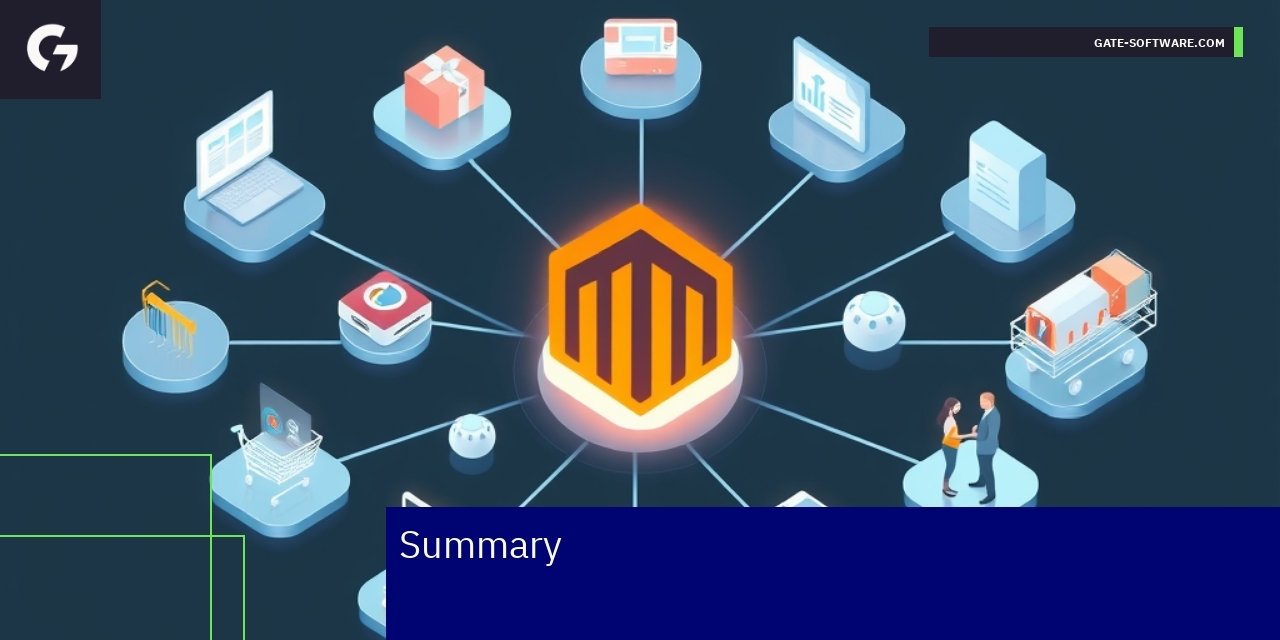
Integrating Magento 2 into your business ecosystem is a strategic move that can significantly enhance operational efficiency and customer satisfaction. With Gate-Software’s expertise, the integration process is tailored to meet your specific business needs, ensuring seamless connectivity with ERP, CRM, and other critical systems. Our approach, based on the Magento™ framework, not only addresses the technical aspects but also aligns integration efforts with your broader business goals. By minimizing complexity and emphasizing robust technical setup, we help you to leverage the full potential of Magento 2, optimizing workflows, ensuring data integrity, and enhancing overall performance. Ultimately, partnering with us positions your business for scalable growth, delivering measurable improvements in user experience and operational agility that are essential to stand out in today’s competitive digital landscape. We invite you to explore how our tailored solutions can empower your business through effective Magento 2 integration.
Summary

FAQ
What Are the Costs of Integrating Magento 2?
Integrating Magento 2 involves various factors that influence overall costs, such as system complexity, required customization, and the potential need for additional developer expertise. Integration with third-party platforms may incur additional expenses, including licenses and middleware costs. Effective planning can help manage these costs and ensure a return on investment.
Can I Integrate Magento 2 with Non-Mainstream Systems?
Yes, integrating Magento 2 with non-mainstream or bespoke systems is possible but requires tailored strategies. It entails leveraging flexible middleware and ensuring precise data mapping to maintain performance and synchronization. Adhering to Adobe Commerce best practices is crucial during this process.
Why Integrate Magento 2 with Other Systems?
Integrating Magento 2 with other systems enhances operational efficiency by enabling real-time inventory updates, simplifying order management, and synchronizing marketing campaigns. It provides a cohesive digital infrastructure that supports evolving eCommerce demands and improves customer satisfaction.
How Does the Magento 2 Integration Process Work?
The Magento 2 integration process consists of three main steps: Planning, where technical requirements are defined; Implementation, where configurations are executed; and Testing and Optimization, where functionality is validated and performance is enhanced. This structured approach ensures seamless operation and data integrity.
What Are the Main Integration Options for Magento 2?
Main integration options for Magento 2 include connecting with PIM (Product Information Management) systems, ERP (Enterprise Resource Planning) systems, payment gateways, and logistics systems. Each integration supports unique business processes such as order tracking, inventory management, and customer data synchronization.
.
.
Zamów bezpłatną konsultację
.
Z nami rozwój Twojego biznesu nabierze tempa! Zapraszamy do kontaktu średnie i duże firmy generujące min. 7 mln PLN obrotu rocznie – tam nasza ekspertyza sprawdza się najlepiej.
.
Kliknij w poniższy przycisk i skontaktuj się z jednym z naszych konsultantów e-commerce
.