Introduction
Magento 2 represents a significant advancement in the e-commerce platform landscape, delivering enhanced performance, scalability, and usability tailored to modern business requirements. Architected with a modular design and leveraging contemporary PHP frameworks, Magento 2 offers improved maintainability and extensibility that align with the complex needs of B2B and B2C operations. A fundamental shift from its predecessor, Magento 1, this platform introduces full-page caching that optimizes loading speeds—an essential factor in improving user experience and conversion rates in competitive digital marketplaces.
The administrative interface in Magento 2 emphasizes usability, providing eCommerce Managers and Heads of Applications with streamlined workflows and intuitive controls. Combined with out-of-the-box mobile responsiveness, this empowers businesses to meet rising customer expectations across devices. Additionally, Magento 2 includes built-in SEO enhancements essential for organic visibility and sustainable traffic growth, integrating seamlessly with contemporary marketing strategies.
In terms of security and compliance, Magento 2 benefits from ongoing updates to safeguard online stores against emerging threats, a critical consideration for CTOs and CIOs maintaining platform integrity. Its extended B2B capabilities enable complex pricing, quoting, and ordering processes that support sophisticated corporate clients, reflecting Gate-Software’s focus on scalable UiR (Utrzymanie i Rozwój) services aligned with client growth objectives.
In summary, Magento 2 is a robust, future-proof solution that addresses real-world technical and business challenges faced by e-commerce entities. It supports Gate-Software’s comprehensive approach to platform maintenance and development, ensuring clients can adapt swiftly to evolving market dynamics and technological trends.
TABLE OF CONTENTS
-
-
- Magento 2 in E-commerce: Key Aspects and Differences
- What is Magento?
- How Magento Differs from WordPress
- How Magento Differs from PrestaShop
- Magento Editions
- Benefits of Magento
- Magento for Small and Large Businesses
- Magento Implementation
- Magento and SEO
- Magento Security
- Magento and External System Integrations
- Technical Support and Magento Community
- Choosing an E-commerce Platform: Key Factors
- Best E-commerce Platforms for Small Businesses
- Best E-commerce Platforms for Large Enterprises
- SEO Impact on E-commerce Platforms
- Security on E-commerce Platforms
- Performance and Scalability of E-commerce Platforms
- Dane i metryki wydajności – Efektywność, SLA, TCO
- Summary
- FAQ
-

What is Magento?
Magento is a widely recognized e-commerce platform designed to support diverse online retail operations. It stands out for its flexibility and scalability, making it a suitable option for businesses ranging from small startups to large enterprises. As an open-source solution, Magento offers an elastic foundation that can be tailored extensively through customization and extensions, enabling companies to meet specific market and operational demands.
Definition of an E-commerce Platform
An e-commerce platform like Magento is a comprehensive system for deployments of online stores that combines essential tools for managing products, promotions, payments, and customer experiences. Within Magento projects, costs are carefully managed through modular approaches and scalability options, allowing businesses to optimize their investments while continuously adapting the platform to evolving needs.
History and Development of Magento
Magento’s evolution has been driven by the community and enterprise adaptations focusing heavily on customization and extensions. Strong integrations and technical support ecosystems have emerged, enabling seamless connections to ERP, CRM, and marketing systems essential for business continuity and operational excellence. This collaborative growth ensures Magento remains at the forefront of modern e-commerce technologies.
Top Features of Magento
Core features of Magento Adobe include advanced content optimization capabilities that improve product visibility and customer engagement, supporting tailored marketing strategies. Furthermore, Magento is engineered to enhance page load speed, a critical performance metric that influences user satisfaction and conversion rates. Such technical strengths directly support optimized business outcomes in competitive online environments.
How Magento Differs from WordPress
When it comes to choosing an e-commerce platform for online businesses, Magento and WordPress are two popular options. However, they serve different purposes and offer unique functionalities, making them suitable for distinct types of projects. Below we explore the differences between these two platforms in terms of usage, performance, scalability, security, and support.
Usage and Features
Magento is specifically designed as an e-commerce platform, providing a wide range of features tailored for online stores. It offers advanced product catalog management, customizable product recommendations, and complex pricing models. Furthermore, Magento supports multiple deployments, making it an excellent choice for larger businesses that require sophisticated e-commerce operations.
In contrast, WordPress, while it can be extended with plugins like WooCommerce, was originally created as a blogging platform. Its e-commerce capabilities are more limited and typically suited for smaller shops. WordPress offers fewer built-in features for managing inventory and complex customer relationships compared to Magento. While WordPress might appeal to bloggers or content-driven sites, Magento is explicitly focused on optimizing the e-commerce experience.
Performance and Scalability
Magento’s architecture is built to support high-traffic stores and can handle a large volume of data thanks to its robust backend. This makes it superior in terms of scalability for growing businesses and those with extensive product inventories. Magento’s focus on page load speed is crucial for user experience and can significantly reduce cart abandonment rates.
Conversely, while WordPress can manage smaller stores effectively, it may face performance issues as inventory and traffic increase. As a site grows, businesses may need to implement caching plugins or optimize their setup to maintain acceptable performance levels. Thus, for businesses with ambitious growth plans, Magento offers a scalable solution that’s built to handle a substantial amount of traffic and transactions.
Security and Support
Security is a critical consideration for any e-commerce platform. Magento offers more in-depth security features, including the ability to conduct regular security audits and robust risk management protocols. Businesses using Magento often implement SSL certificates to ensure data protection for online transactions. The platform also facilitates regular software updates to address any emerging security vulnerabilities.
WordPress, while it has plugins available to bolster security, is often viewed as more vulnerable to attacks, particularly if not maintained properly. Websites using WordPress must prioritize regular software updates and security enhancements to protect against threats, especially when handling sensitive customer data. Overall, Magento provides a more secure environment, tailored specifically for secure transactions on e-commerce platforms.
In conclusion, both Magento and WordPress have their strengths and weaknesses. Magento excels as a dedicated e-commerce platform with powerful scalability, performance, and security features, making it ideal for serious online retailers. WordPress, while versatile for content-focused sites, may not meet the stringent demands of larger e-commerce operations without significant customization and maintenance efforts.
How Magento Differs from PrestaShop
Magento is a comprehensive e-commerce platform designed for launching an online store with an emphasis on stringent Magento platform security, distinguishing it significantly from PrestaShop. Magento’s architecture supports high scalability, making it ideal for enterprises requiring robust and secure solutions. The platform delivers superior customization and extensions, enabling businesses to tailor their storefronts extensively to meet unique operational needs. This flexibility extends into seamless integrations and technical support, ensuring that Magento can work within complex IT ecosystems efficiently.
Feature Comparison
When comparing features, Magento leads with a more expansive set of capabilities than PrestaShop. Its advanced modular system empowers sophisticated customization and extensions, supporting intricate business logic and workflows. Additionally, Magento’s robust APIs facilitate stronger integrations and technical support from third-party tools and services, providing businesses with a stable backbone for complex e-commerce operations. This depth of feature richness supports more nuanced content optimization and improved page load speed, critical for maintaining an engaging customer experience and SEO compliance.
Implementation Costs
Magento’s costs for deployment and ongoing management are generally higher than PrestaShop due to the platform’s enterprise-grade capabilities and resource demands. However, these costs include the benefit of structured regular software updates that enhance security and performance continuously, a critical factor for businesses prioritizing operational stability and Magento platform security. Investments in Magento typically yield long-term gains through decreased downtime, advanced security controls, and compliance with evolving e-commerce standards.
Customization and Extensions
Magento excels in content optimization through its flexible architecture, supporting comprehensive content management and tailoring at scale. Enhanced by a vast ecosystem of extensions, businesses can optimize product catalogs, promotional content, and checkout flows with precision. Additionally, Magento’s focus on page load speed ensures that customized sites remain performant, delivering seamless shopping experiences that foster higher conversions and customer retention—key differentiators compared to the more basic customization and speed capabilities found in PrestaShop.

Magento Editions
Magento Open Source
The Magento Open Source edition is a widely adopted free open-source platform ideal for businesses seeking flexible deployments without the upfront expenses associated with paid platforms. It offers robust options for customization and extensions, enabling teams to tailor features to precise operational needs while maintaining control over costs. This adaptability supports efficient integrations into existing systems, although core Magento platform security measures require proactive management. Challenges often arise around optimizing content optimization and ensuring ideal page load speed, which directly impact user experience and SEO performance. However, community-driven updates and resources can help address these areas. For organizations prioritizing budget-conscious yet scalable solutions, Magento Open Source provides a foundational environment to innovate with sufficient technical allowances and a clear path towards incremental enhancements.
Magento Commerce
Magento Commerce is designed for enterprise-level organizations that demand advanced integrations and technical support alongside a secure, comprehensive framework. As a paid platform, it emphasizes guaranteed Magento platform security provisions and compliance features suited to complex eCommerce ecosystems. This edition supports sophisticated customization and extensions aligned with business growth strategies, and its architecture facilitates seamless deployments at scale. Through enhanced content management tools, Magento Commerce improves content optimization, which bolsters conversion rates and site performance metrics. Additionally, the platform prioritizes superior page load speed, ensuring minimal downtime and swift transaction processes. While associated costs are higher, the value lies in dedicated support resources and minimized operational risks, critical for CIOs, CDOs, and Head of Applications focusing on robust, secure, and scalable commerce infrastructures.
Magento Cloud
The Magento Cloud edition uniquely leverages cloud hosting benefits, combining scalability and reliability for dynamic eCommerce needs. It excels in delivering enhanced content optimization through integrated performance monitoring and automated workflows, which contribute to optimized page load speed—a vital factor for customer engagement and retention. This paid platform streamlines deployments with cloud-native tools, significantly reducing time to market. By supporting advanced customization and extensions, and offering comprehensive integrations and technical support, Magento Cloud ensures businesses maintain agility while expanding operations. Importantly, it integrates high standards of Magento platform security designed for multi-tenant environments, addressing vulnerabilities inherent in cloud setups. Though costs reflect the premium nature of cloud services, the trade-off benefits include operational efficiency and future-proof scalability for forward-thinking digital commerce strategies.

Benefits of Magento
Magento offers multiple benefits as an e-commerce platform, supporting complex deployments while maintaining industry-leading security on e-commerce platforms.
Flexibility and Customization
Its greatest advantage is the unmatched flexibility and customization enabled by numerous extensions and extensive integrations and technical support. This adaptability allows enterprises to tailor their e-commerce platforms specifically to meet business needs and user expectations, providing personalized shopping experiences while maintaining robustness. The rich ecosystem of extensions ensures the ability to expand functionalities without compromising system stability or security, supporting scalable growth.
Support for Large Stores
Magento is ideal for large-scale operations owing to manageable costs and consistent regular software updates that ensure stability. These updates include not only feature enhancements but also security patches, reinforcing Magento’s commitment to maintaining a secure environment. The platform’s architecture can efficiently handle substantial product catalogs and high traffic volumes, making it well-suited for sophisticated deployments across diverse markets. Careful cost management and optimized resource use help balance investment with enduring performance.
Payment Systems Integration
Strong payment systems integration is backed by secure connections, such as SSL, and ongoing security audits, making Magento reliable for financial workflows. Utilizing SSL certificates guarantees encrypted communication during transactions, safeguarding user data against interception or fraud. Regular security audits proactively detect and mitigate vulnerabilities, ensuring compliance with industry standards and protecting both the business and its customers. This solid foundation enables seamless and secure payment operations critical for e-commerce success.
Magento for Small and Large Businesses
Use in Small Businesses
Small businesses benefit from Magento’s flexible customization and extensions while keeping costs under control. The Magento e-commerce platform offers scalable deployments that allow small enterprises to start lean and expand their online presence without overextending budgets. Customization enables these businesses to tailor their storefronts closely to customer needs and market trends, making every investment count. Moreover, Magento platform security ensures that even small operations protect customer data and maintain trust. Efficient content optimization and improved page load speed contribute to higher engagement and conversions, proving crucial for small businesses competing in dense markets.
Use in Large Enterprises
Large enterprises rely heavily on advanced integrations and technical support, and prioritize Magento platform security for high-traffic environments. In complex deployments, Magento supports extensive integrations with ERP, CRM, and other enterprise systems, providing seamless operations and real-time data flows. Dedicated technical support from service providers like Gate-Software ensures minimal downtime and rapid response to issues, which is critical in large-scale e-commerce environments. Strong Magento platform security frameworks protect against sophisticated threats, safeguarding valuable data and operational continuity. Optimizing content and maintaining fast page load speed on this platform also contribute significantly to customer satisfaction and retention at scale.
Choosing the Right Hosting
Selecting Magento Hosting that supports top-tier content optimization and fast page load speed is essential for success. Hosting environments optimized for Magento ensure stability and responsiveness, enhancing user experience by minimizing latency and downtime. Such environments facilitate better deployment workflows and support customization and extensions without compromising performance. Prioritizing hosting solutions aligned with Magento’s requirements helps businesses of all sizes maximize the platform’s capabilities—from secure, seamless integrations to efficient content delivery and robust security protocols—enabling sustained growth and competitive advantage in the e-commerce landscape.

Magento Implementation
Launching an Online Store
Implementing Magento to launch an online store requires a thorough understanding of both the costs involved and the importance of maintaining regular software updates. These updates ensure that your e-commerce platform remains secure, compliant, and capable of supporting new features. Proper planning at this stage mitigates risks and sets the foundation for scalability and customization.
Implementation Costs
Accurate planning of costs must encompass the investment required for customization and extensions, which adapt the platform to specific business needs. Additionally, integrating various systems and using integrations and technical support effectively can optimize operations, but also impact overall expenses. Understanding these elements holistically allows businesses to budget realistically and avoid surprises.
Technical Support
Reliable technical support is indispensable and involves ongoing security audits to evaluate security on e-commerce platforms continuously. Coupled with proactive risk management, these practices help safeguard the online store against threats and ensure stable functionality. Partnering with experienced teams that provide comprehensive support can enhance uptime and performance.

Magento and SEO
Content Optimization
Magento’s SEO features include advanced content optimization, fast page load speed, and enforcing an SSL certificate for secure browsing.
Effective content optimization on the Magento platform involves refining product descriptions, metadata, and site structure to enhance search engine rankings. This comprehensive approach ensures that the e-commerce platform delivers relevant content that aligns with user queries, thereby increasing organic traffic. Furthermore, integrating content optimization with Magento platform security measures safeguards data integrity and maintains search engine trust. Through meticulous content management and optimization strategies, businesses can improve visibility while reinforcing their digital presence securely.
Page Load Speed
Fast page load speed combined with smart product recommendations and personalized offers and discounts boosts customer engagement.
Page load speed is critical to user experience and SEO performance. On the Magento platform, optimizing load times involves efficient caching, CDN integration, and streamlined resource management. Enhancing speed directly correlates with reduced bounce rates and higher conversion potential. Additionally, leveraging Magento’s capability for intelligent product recommendations alongside personalized offers and discounts further enriches the user experience. These features keep customers engaged longer, which positively impacts SEO by signaling relevance and quality to search engines while driving sales.
SSL Certificate
Maintaining an SSL certificate is part of wider Magento security audits and comprehensive risk management workflows.
An active SSL certificate ensures secure communication between users and the e-commerce platform, which is a critical trust factor for both customers and search engines. Regular security audits within Magento enable identification of vulnerabilities and help maintain compliance with security standards. These audits, coupled with thorough risk management strategies, protect the platform against threats and contribute to a secure online environment. Secure browsing instilled by SSL certification not only enhances Magento platform security but also strengthens SEO rankings by meeting search engine requirements for encryption and user safety.
Magento Security
Security Audit
Magento’s security starts with thorough security audits, enforced SSL certificates, and regular software updates to protect deployments.
A comprehensive security audit is foundational to maintaining robust security on e-commerce platforms like Magento. This process identifies potential vulnerabilities in deployments, ensuring that open-source platforms are shielded from threats. Enforcing a valid SSL certificate safeguards data transmission, which is critical given the sensitivity of customer and transaction information. Regular software updates apply patches that quickly address newly discovered security flaws, thus fortifying the platform against evolving risks. Together, these layers provide a resilient security posture that supports safe customer interactions and preserves brand trust.
Elimination of Critical Issues
Addressing vulnerabilities also supports better content optimization and enhanced page load speed for safer user experiences.
By proactively eliminating critical security issues, Magento not only strengthens protection but also improves performance factors such as content optimization and page load speed. Security vulnerabilities can cause disruptions or slowdowns within technical integrations, undermining user experience. Resolving these weak points ensures smooth integrations, stable functionality, and uninterrupted access. Moreover, secure platforms encourage optimization efforts without risking exposure, ultimately creating a balance between technical robustness and superior frontend performance.
Project Security Guarantee
Tailored solutions with customization and extensions, combined with solid integrations and technical support, provide a project security guarantee.
The complexity of Magento deployments often necessitates advanced customization and extensions to meet unique business needs. Ensuring these modifications do not compromise security requires expert oversight. The integration of secure, scalable components aligns with rigorous technical support frameworks to mitigate potential threats introduced by new functionalities. This comprehensive approach guarantees project security, enabling confident scalability while maintaining compliance with security standards. It assures decision-makers that their e-commerce environment is not just functional, but resilient against security challenges.
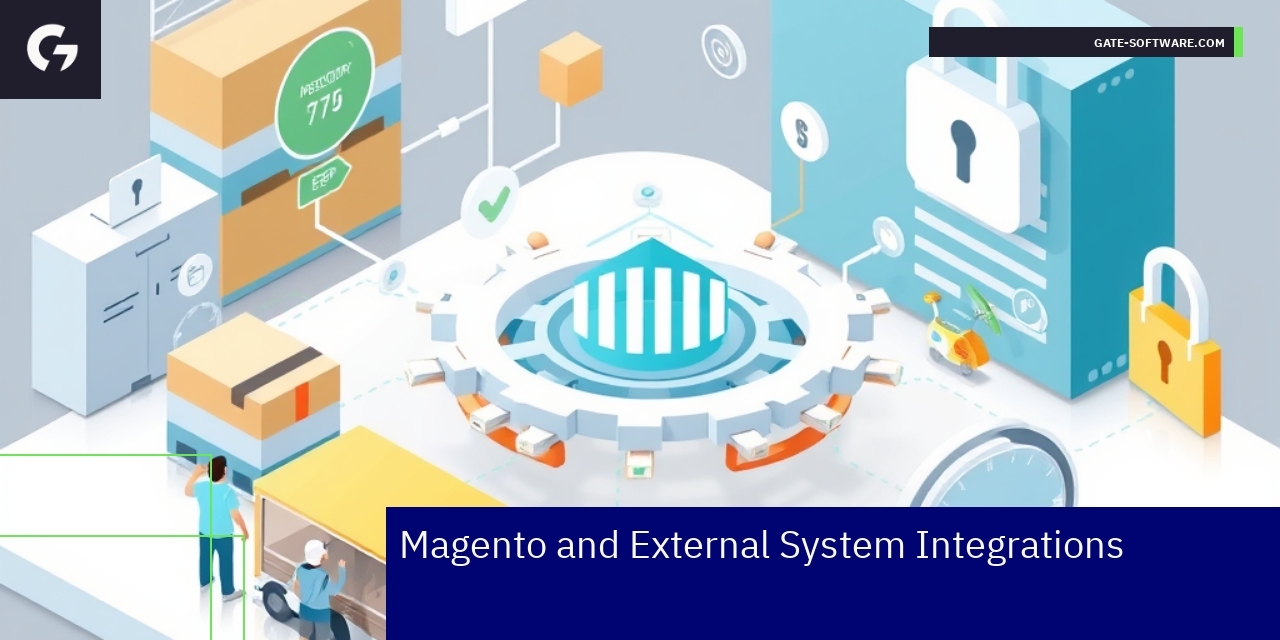
Magento and External System Integrations
ERP Integrations
Integrating Magento with ERP systems is critical for optimizing e-commerce platform deployments. ERP integration enables seamless synchronization of inventory, orders, and financial data, which helps control costs and enhances operational efficiency. Maintaining regular software updates is essential to ensure compatibility and security, as well as to sustain optimal performance. Frequent security audits support risk mitigation by identifying vulnerabilities between both systems, thus strengthening security on e-commerce platforms. Furthermore, a well-executed ERP integration can positively impact page load speed by streamlining backend processes, reducing delays and improving the overall user experience.
CRM Integrations
Magento’s CRM integrations facilitate improved customer management and targeted marketing strategies through enriched customer data insights. These connections contribute to ongoing content optimization, allowing businesses to tailor communications and offers effectively. To uphold performance and minimize vulnerabilities, implementing continuous security audits and proactive risk management is indispensable. Such measures help protect customer data and maintain trust, which are vital for any e-commerce platform. By combining CRM data with Magento, enterprises optimize the costs associated with customer acquisition and retention, while ensuring the platform remains secure and scalable.
Payment Systems Integrations
Efficient payment systems integrations are essential to guarantee smooth, secure transactions on Magento platforms. Such integrations must prioritize security protocols to protect sensitive payment information, thereby enhancing security on e-commerce platforms and managing operational risk. Furthermore, optimized payment workflows directly influence page load speed at checkout, a key factor for reducing cart abandonment and maximizing conversion rates. Regular software updates and audits help keep integrations compliant with evolving security standards. These improvements collectively drive better content optimization and ensure the e-commerce platform maintains high availability and reliability while balancing operational costs.
Technical Support and Magento Community
Documentation Availability
In the ever-evolving landscape of e-commerce platforms, having access to comprehensive documentation is essential for businesses utilizing Magento. Gate-Software ensures that all users have a robust knowledge base that includes extensive guides on deployments and the installation of SSL certificates. Regular software updates are crucial for maintaining security on e-commerce platforms, and our documentation highlights the best practices for implementing these updates. Additionally, we provide detailed information on performing regular security audits and risk management assessments to safeguard your online store from potential threats. Our documentation is designed to help users navigate through complex processes easily, making it simple to customize and extend your Magento store as needed. With clear instructions on integrating various extensions and managing configurations, you can enhance the functionality of your e-commerce platform effectively.
Magento Community
The Magento Community is a vibrant ecosystem that offers immense support for merchants and developers alike. This collaborative environment fosters innovation and knowledge sharing among users of all skill levels. Being part of this community allows you to engage with like-minded professionals, discover new customization options, and explore various extensions that can enhance your e-commerce platform. Participating in forums and discussion groups enables users to share experiences and solutions related to security on e-commerce platforms. Moreover, community events and meetups provide valuable opportunities to network and learn from industry experts. In times of uncertainty, such as navigating security audits or implementing risk management strategies, the Magento Community serves as an invaluable resource, offering practical advice and proven solutions for overcoming challenges and maximizing the potential of your online store.
Technical Support
When it comes to maintaining a successful e-commerce platform, having reliable technical support is invaluable. At Gate-Software, our team is dedicated to providing expert assistance for all Magento-related inquiries. Whether you need help with deployments, SSL certificate implementation, or troubleshooting issues related to security on e-commerce platforms, our support professionals are here to help. We understand that regular software updates are vital for maintaining security, and our technical support team ensures that your online store is running smoothly and securely. We also offer guidance on conducting thorough security audits and effective risk management techniques, empowering you to protect your business from potential threats. By leveraging our technical support, customers can optimize their Magento experience while efficiently integrating and customizing their desired extensions. Our commitment to customer satisfaction and technical excellence guarantees that users can focus on growing their businesses with confidence.

Choosing an E-commerce Platform: Key Factors
Understanding Business Needs
A clear view of business needs must consider costs and the importance of regular software updates when selecting a platform. Understanding specific business requirements guides the choice of an e-commerce platform that aligns with operational goals and budget constraints. Considering the costs involves evaluating not only initial deployment expenses but also ongoing investments in maintenance and enhancements. Crucially, platforms that offer regular software updates ensure continuity, improvement of functionalities, and compliance with evolving standards, which is vital to maintaining competitive advantage and security.
Cost-Benefit Analysis
Effective evaluation involves looking at security audits outcomes and risk management capabilities. Platforms must be assessed for their ability to withstand cyber threats and safeguard sensitive data, making security on e-commerce platforms a fundamental factor. Conducting thorough security audits identifies vulnerabilities and provides insights for strengthening defenses. Meanwhile, robust risk management practices mitigate potential disruptions, safeguarding business continuity during deployments and operational phases.
Customization and Flexibility
Platforms must offer efficient content optimization and maintain fast page load speed to remain competitive. The ability to tailor the platform to unique business needs while ensuring user-friendly experiences depends on customization flexibility. Effective content optimization directly impacts SEO performance and user engagement, while an optimized page load speed is critical for reducing bounce rates and enhancing conversion rates. Together, these elements support sustained growth and customer satisfaction in dynamic e-commerce environments.

Best E-commerce Platforms for Small Businesses
Platform Comparison
Comparison includes availability of SSL certificates and ease of performing regular software updates.
Choosing the best e-commerce platform involves assessing critical security features such as the availability of SSL certificates, which protect customer data through encryption and build trust. Small businesses deploying their online stores need platforms that facilitate easy installation and renewal of SSL certificates to ensure continuous secure transactions. Additionally, the ease of performing regular software updates is essential to maintain platform security and functionality. Platforms that streamline update processes reduce downtime and the risk of security vulnerabilities. For small businesses, picking an e-commerce platform that offers detailed support for SSL and has automated or well-documented update mechanisms enhances both safety and operational efficiency during deployments.
Advantages of Small Platforms
Smaller platforms may benefit from targeted security audits and simplified risk management.
Small e-commerce platforms can leverage their scale by conducting focused security audits to identify and mitigate risks specific to their business models and infrastructure. These audits help in uncovering vulnerabilities that might be overlooked in larger, more complex deployments. Effective risk management on smaller platforms is often more straightforward, enabling quicker responses to threats and adjustments to security policies. This targeted approach supports maintaining robust security on e-commerce platforms despite limited resources. Emphasizing rigorous audits and proactive risk management helps ensure data protection and compliance, fostering consumer confidence and business continuity.
Choosing the Right Platform
Choosing involves balancing needs for customization and extensions with well-supported integrations and technical support.
When selecting an e-commerce platform, small businesses must consider their requirements for customization and extensions to tailor their storefronts to market needs and user experience goals. The ability to develop or integrate custom features allows businesses to differentiate themselves competitively. However, these customizations should coexist harmoniously with stable integrations and technical support, ensuring that third-party services like payment gateways, analytics, or shipping solutions function seamlessly. Reliable technical support is crucial for resolving challenges promptly and securing the platform from emerging threats. Thus, a balanced decision weighing extensibility against dependable support frameworks drives sustainable and secure deployments for small e-commerce businesses.

Best E-commerce Platforms for Large Enterprises
Comparison of Large Platforms
Large-scale e-commerce platforms designed for enterprise use vary significantly in their costs and the robustness of their regular software updates. Enterprises must weigh initial deployment expenses against long-term value, considering not only licensing fees but also integration and customization costs. Efficient deployments ensure minimal downtime and smooth migration paths, crucial for large operations. The platforms with mature update processes deliver timely security patches and feature upgrades, reducing vulnerabilities. Understanding the nuances of security on e-commerce platforms is essential, as continuous improvements safeguard against evolving threats. Decision-makers should assess how update strategies align with their security audit schedules and risk management practices, aiming to minimize operational disruptions while maintaining compliance.
Advantages of Large Platforms
Enterprise-grade platforms typically offer extensive frameworks for conducting in-depth security audits, ensuring that vulnerabilities are systematically identified and addressed. Their advanced risk management capabilities help enterprises preempt potential security breaches or operational failures. Large platforms often support integrated tools for continuous compliance monitoring, facilitating adherence to industry standards and regulations. This level of security infrastructure is vital for protecting sensitive customer data and maintaining brand reputation. Moreover, these platforms support scalable solutions that can adapt to increasing transaction volumes without compromising security, thereby fostering trust in the e-commerce platform among both internal teams and customers.
Choosing the Right Platform
When selecting an enterprise e-commerce platform, it is critical to prioritize superior content optimization coupled with high page load speed. These factors directly impact user experience and conversion rates. Content must be tailored dynamically to meet diverse customer personas, leveraging insights to enhance engagement. Efficient content management systems integrated within the platform enable quick updates aligned with marketing strategies. Additionally, a fast page load speed reduces bounce rates and improves SEO rankings, driving more organic traffic. Decision-makers should ensure the chosen solution supports these capabilities while harmonizing with other enterprise systems. Balancing these technical parameters with comprehensive security audits and structured risk management frameworks guarantees a reliable and high-performing e-commerce environment.

SEO Impact on E-commerce Platforms
Content Optimization
SEO depends heavily on strategic content optimization, proper SSL certificate use, and regular software updates. In the context of e-commerce platform management, optimizing content involves not only keyword integration but also ensuring that product descriptions, metadata, and landing pages are crafted to meet search engine standards while enhancing user engagement. A properly implemented SSL certificate not only secures customer transactions but also boosts search rankings by signaling site trustworthiness to search engines. Continuous regular software updates maintain platform performance and security, reducing vulnerabilities that could negatively affect SEO rankings. These updates support compatibility with new SEO technologies and improve the platform’s responsiveness, which is essential for maintaining high SEO standards on an e-commerce platform.
Page Loading Speed
Faster page loading speed improves ranking and user experience, supported by ongoing security audits and risk management. Speed is a critical factor for both SEO and customer retention; slow-loading pages increase bounce rates and reduce conversions. Conducting thorough security audits helps identify and mitigate vulnerabilities that could slow down your site or expose it to threats, thereby impacting SEO through downtime or blacklisting. Effective risk management strategies ensure that potential issues are proactively addressed, safeguarding the platform’s operational integrity. This ties directly into the SEO goals of maintaining smooth, fast, and reliable access to e-commerce services, which is a priority in the UiR service context.
SSL Certificate
SSL management requires careful customization and extensions, as well as well-coordinated integrations and technical support. Beyond standard SSL implementation, customization and extensions can tailor security to specific transactional needs unique to the e-commerce platform. Proper integration with payment gateways, user authentication systems, and other technical infrastructures is vital to maintaining secure connections throughout the customer journey. Dedicated technical support ensures that SSL certificates are updated, renewed, and configured without disruption, reinforcing site security, boosting customer trust, and positively impacting SEO. In the realm of UiR services, these technical nuances are essential to align security measures with business objectives and SEO demands on e-commerce platforms.

Security on E-commerce Platforms
Regular Software Updates
Maintaining security on e-commerce platforms requires a disciplined approach to regular software updates. These updates address vulnerabilities as soon as they are discovered, ensuring the platform remains resilient against emerging threats. While managing the costs associated with frequent updates, it is crucial to implement thorough security audits to verify the integrity and effectiveness of updates. These audits not only assess the security posture but also identify any gaps or configuration issues that could compromise platform safety. Combining regular software updates with security audits creates a robust defense mechanism, safeguarding customer data and maintaining trust.
Risk Management
Effective risk management is fundamental to optimizing content and maintaining fast page load speed—both critical for user experience and SEO performance on e-commerce platforms. Continuous monitoring and assessment allow for the identification of potential threats before they impact operations. Risk management involves prioritizing vulnerabilities and allocating resources efficiently to address them. By aligning risk mitigation with content optimization strategies, e-commerce platforms can ensure that security measures do not impede performance. This balance helps maintain high availability and responsiveness, which are crucial for sustaining customer engagement and conversion rates.
Security Audit
Security audits play a vital role in fortifying security on e-commerce platforms. They provide comprehensive evaluations of the platform’s defenses, checking compliance with industry standards and verifying configurations such as SSL certificates. An up-to-date SSL certificate is indispensable for securing data in transit, protecting against interception and ensuring customer confidence. Combining these audits with regular software updates creates a continuous security improvement cycle. This approach minimizes risks and aligns security practices with operational realities, ensuring the platform is well-prepared against evolving cyber threats.
Performance and Scalability of E-commerce Platforms
Platform Performance
High platform performance is achievable with mindful oversight of costs and proactive security audits. Ensuring your e-commerce platform operates efficiently requires balancing resource allocation and infrastructure investment to avoid unnecessary expenditures. Regular security audits help identify vulnerabilities early, protecting sensitive customer data and maintaining trust. This vigilance is essential for compliance and safeguarding against breaches that can disrupt service availability or damage reputation. The complexity of deployments must be managed carefully, integrating secure protocols without compromising speed or functionality.
Solution Scalability
Effective solution scalability depends on well-executed content optimization and maintaining strong page load speed metrics. As your e-commerce platform scales up to accommodate increased users and transactions, efficient content optimization ensures that the system’s responsiveness remains intact. This includes optimizing images, scripts, and database queries to reduce load on servers and accelerate content delivery. Achieving optimal page load speed is critical for user experience and SEO, directly impacting conversion rates. Scalability strategies should be closely aligned with platform architecture to support growth seamlessly without impairing performance.
Performance Optimization
Optimizing performance includes securing data via SSL certificates and consistent regular software updates. Implementing SSL certificates is fundamental for encrypting data in transit, reassuring customers of their safety on your e-commerce platform. Moreover, regular software updates address security patches, enhance functionality, and improve compatibility with emerging technologies. These updates are vital to maintaining system integrity and resilience against evolving cyber threats. Continuous monitoring and fine-tuning based on performance metrics ensure the platform runs smoothly and sustainably over time.

Dane i metryki wydajności – Efektywność, SLA, TCO
Skuteczność operacyjna w projektach UiR
W kontekście wdrażania usług UiR, efektywność operacyjna jest kluczowym czynnikiem, który wpływa na sukces projektów. Poniżej przedstawiamy kilka istotnych metryk, które mogą zostać wykorzystane do analizy i wizualizacji wydajności projektów realizowanych przez Gate-Software.
1. Średni Czas Przejęcia Projektu: Istotne jest, aby czas ten wynosił średnio od 2 do 4 tygodni, co znacząco wpływa na efektywność procesu wprowadzania nowych rozwiązania.
2. % Projektów Dostarczanych na Czas: Wysoki wskaźnik, który powinien w idealnych warunkach oscylować wokół 90-95%, podkreśla zdolność firmy do spełnienia ustalonych terminów.
3. Średnia Redukcja TCO: Projekty, które korzystają z usług UiR, powinny wykazywać średnią redukcję całkowitych kosztów użytkowania na poziomie 15-30%, co przyciąga nowych klientów.
4. Liczba Wdrożeń: Na rok powinno przypadać minimum 20-50 wdrożeń, co ukazuje skalowalność usług i zaufanie klientów do marki.
5. Uptime SLA: Utrzymanie nieprzerwanego działania na poziomie 99,9% jest kluczowe dla użytkowników e-commerce, co świadczy o niezawodności usług.
6. Średnia Długość Relacji z Klientem: Długofalowe partnerstwa powinny wynosić średnio 3-5 lat, co podkreśla satysfakcję klientów i ich lojalność.
Te metryki mogą posłużyć do tworzenia wykresów, infografik oraz tabel porównawczych, co dodatkowo wspiera decyzje zakupowe potencjalnych klientów.

Summary
In conclusion, Magento 2 stands out as a powerful e-commerce platform designed to address the complexities of modern online business operations. With its superior performance, scalability, and robust security features, Magento 2 is particularly suited for companies looking to grow in competitive digital environments. Its modular architecture enables significant customization and flexibility, allowing businesses to tailor their online stores to meet specific market demands while maintaining operational effectiveness. The platform’s commitment to ongoing security updates and compliance further enhances its appeal, providing peace of mind for CTOs and CIOs tasked with safeguarding their digital assets.
At Gate-Software, we understand the unique challenges faced by businesses navigating the e-commerce landscape. Our UiR (Utrzymanie i Rozwój) services are designed to support you in maintaining and developing your Magento platform, ensuring that you can adapt quickly to changing market conditions and technological trends. We encourage you to reach out to us for further discussions on how our expertise can help you maximize your investment in Magento and drive your business forward with confidence. Together, let’s explore the full potential of your e-commerce endeavors.

FAQ
What is Magento?
Magento is a widely recognized e-commerce platform designed to support diverse online retail operations, offering flexibility and scalability for businesses of all sizes. It allows for extensive customization through various extensions, making it adaptable to meet specific market demands.
How does Magento differ from WordPress?
Magento is specifically designed as an e-commerce platform with advanced features for online stores, such as product catalog management and complex pricing models. In contrast, WordPress originated as a blogging platform and offers more limited e-commerce capabilities, making Magento a better choice for larger businesses requiring sophisticated e-commerce functionality.
What are the core benefits of using Magento?
Magento provides multiple benefits, including unmatched flexibility and customization, robust support for large stores, and secure payment systems integration. These features enable businesses to tailor their e-commerce platforms to their specific needs while ensuring scalability and maintaining high performance.
How does Magento ensure security for e-commerce platforms?
Magento employs several security measures, including regular software updates, security audits, and the use of SSL certificates. These practices help protect online stores against vulnerabilities and threats, ensuring a secure shopping environment for customers.
What is the importance of page load speed in Magento?
Page load speed is critical for user experience and SEO performance. Magento is designed to optimize load times, which can significantly reduce bounce rates and improve conversion rates, making it essential for maintaining competitive advantage in the e-commerce landscape.
.
.
Zamów bezpłatną konsultację
.
Z nami rozwój Twojego biznesu nabierze tempa! Zapraszamy do kontaktu średnie i duże firmy generujące min. 7 mln PLN obrotu rocznie – tam nasza ekspertyza sprawdza się najlepiej.
.
Kliknij w poniższy przycisk i skontaktuj się z jednym z naszych konsultantów e-commerce
.