Optimizing Magento 2 for B2B eCommerce requires a strategic focus on functionalities and integrations that address complex business needs. Key strategies involve enhancing user experience for business buyers, streamlining procurement processes, and leveraging advanced customization capabilities of Magento 2 to support B2B workflows.
A critical aspect is the configuration of role-based access controls and customized catalogs, enabling businesses to tailor product visibility and pricing based on customer segments. This improves relevance and simplifies purchasing decisions for B2B clients. Additionally, Magento 2’s support for quick ordering, bulk order uploads, and shared shopping lists caters to typical B2B purchasing patterns, reducing friction in the buying cycle.
Performance optimization is also paramount. Ensuring fast load times and robust system scalability impacts client satisfaction and operational continuity, especially for enterprises with high transaction volumes. Integrations with ERP and CRM systems help synchronize data flows and automate backend processes, enhancing efficiency and reducing manual errors.
From an SEO perspective, optimizing category trees, product metadata, and content structure in Magento 2 increases visibility targeted at business buyers, driving qualified traffic. Leveraging analytics tools integrated into Magento aids in monitoring B2B customer behavior and refining marketing strategies accordingly.
In summary, Magento 2 B2B optimization demands a comprehensive approach covering user experience, technical performance, backend integration, and targeted marketing—all aligned to address the unique requirements of B2B commerce. These strategies collectively ensure a scalable, efficient, and competitive B2B eCommerce operation.

Introduction
In the dynamic landscape of business-to-business (B2B) services, effective delivery of solutions and support is crucial for fostering enduring partnerships and driving organizational growth. B2B services encompass a diverse array of offerings such as consulting, IT services, logistics, and customer support, all tailored to meet the complex and unique demands of businesses across various industries.
Navigating the B2B ecosystem requires an intricate understanding of client needs, often characterized by prolonged sales cycles, involvement of multiple stakeholders, and the necessity for customized solutions. This complexity demands service providers to adopt a strategic and client-centric approach, emphasizing operational efficiency, scalability, and performance to remain competitive.
The strategic value of B2B services lies in their ability to build trust and deliver consistent, high-quality outcomes that align with the strategic goals of client organizations. By doing so, B2B service providers not only enhance their service offerings but also contribute significantly to their clients’ success, thereby shaping broader market trends and fostering competitive advantage in the industry.
TABLE OF CONTENTS
- Magento 2 B2B Optimization: Key Strategies for Success
- Introduction
- What is Magento 2 B2B?
- Essential Magento 2 B2B Features
- Catalog Management
- Personalizing User Experience
- Order Processing and Payments
- Template Changes Needed
- Benefits of a Thoughtful Template
- Challenges of Template Changes
- Available Language Versions
- Implementing Localization
- Challenges with Language Management
- What Do You Want to Improve?
- Optimization Areas
- Assessment Methods
- Where Should the Module Work?
- Module Applications
- Module Compatibility
- Which System to Connect With?
- Integration Process
- Benefits of Integration
- Compatibility
- Testing Importance
- Compatibility Problems
- Module Pricing
- Pricing Factors
- Cost Analysis
- Magento 2 Advantages
- Main Advantages
- B2B-Specific Features
- Magento 2 Challenges
- Potential Drawbacks
- Coping Strategies
- Managing Users in Magento 2
- Key Management Aspects
- Support Tools
- Guides and Resources
- Alternatives to Magento 2
- Data and Performance Metrics – Efficiency and Cost
- Summary
- FAQ
- Case studies illustrating successful Magento 2 B2B integrations
- Whitepapers on best practices for system integrations
- Vendor comparison guides for ERP, CRM, and PIM solutions
- Best practices for defining user roles
- Common challenges in user management
- Tools for auditing and reporting user activities
- Integration tips for SSO and LDAP systems

What is Magento 2 B2B?
Magento 2 B2B is a specialized version of the Magento eCommerce platform tailored to meet the unique demands of business-to-business transactions. Unlike its B2C (business-to-consumer) counterpart, the Magento 2 B2B platform incorporates advanced features that accommodate the complexities inherent in B2B sales processes. These include capabilities such as bulk ordering, customized and tiered pricing models, quick order forms, and extensive account and user role management—allowing multiple users within a single organization to operate with specific permissions, such as buyers and approvers.
Key differences distinguishing Magento 2 B2B from the B2C version revolve around operational scale and customer management. B2B pricing structures are typically negotiated and volume-based, contrasting with the fixed pricing model in B2C. The platform also supports detailed order management functions tailored for bulk purchases and streamlined reorder workflows, which are critical for business clients managing recurring large orders. Furthermore, B2B customers benefit from enhanced account management features, including tracking order histories and requesting custom quotes—functionalities designed to facilitate complex purchasing decisions and contractual agreements.
Magento for B2B eCommerce is essential because it equips enterprises with the tools necessary to optimize operational efficiency, improve customer relationship management, and scale their commerce activities effectively. Its robust architecture supports scalability and performance demands typical of B2B ecosystems, providing a secure and adaptable foundation that enhances the buyer’s journey and operational workflows in a competitive business environment.
Essential Magento 2 B2B Features
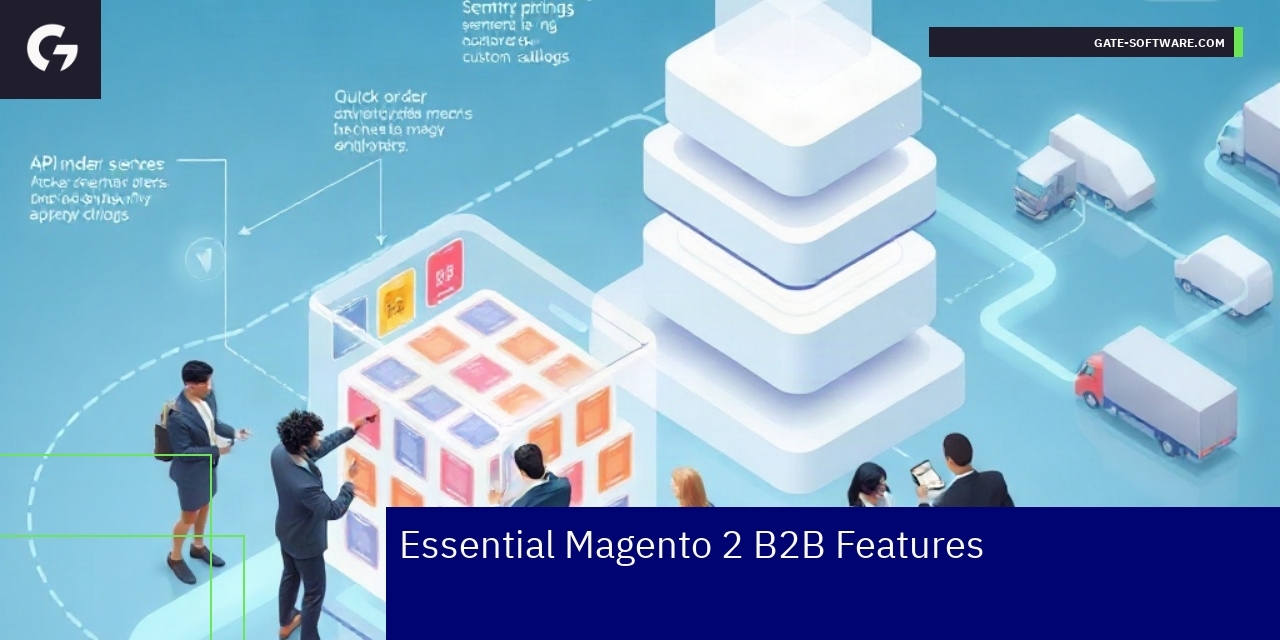
Magento 2 offers a robust set of features tailored for B2B commerce, crucial for businesses aiming to streamline and scale their operations effectively in 2024. Among the pivotal capabilities is advanced catalog management, which allows businesses to create and organize complex product catalogs with ease. This functionality supports tiered pricing, custom catalogs for different buyer segments, and bulk product uploads, addressing the nuanced needs of B2B buyers.
Order processing in Magento 2 B2B is designed to handle large-volume and recurring orders efficiently. Features such as quick order forms, requisition lists, and flexible payment terms facilitate streamlined purchasing workflows, reducing friction and improving buyer satisfaction. Automation in order approvals and credit limit management enhances operational efficiency and financial control.
Integration with external systems stands out as a critical feature for ensuring seamless business operations. Magento 2 supports robust API connectivity that enables synchronization with ERP, CRM, and inventory management systems. This integration capability ensures real-time data exchange, enhancing accuracy and consistency across business functions.
In summary, Magento 2’s B2B features in 2024 focus on delivering scalable, efficient, and integrated commerce solutions, addressing the complex demands of B2B enterprises and enabling them to maintain competitive operational efficiency.
Catalog Management
(If available: screenshots or diagrams demonstrating catalog setup and tiered pricing features)
(If available: links to official Magento 2 documentation or tutorials on catalog management)
(If available: case studies showcasing successful B2B implementations utilizing catalog management)

Catalog Management
Efficiently managing your product catalog within Magento 2 is foundational for scaling a B2B eCommerce business. Magento 2 offers robust catalog management features designed to handle extensive product data and complex business requirements inherent to B2B operations.
A critical starting point is structuring the catalog to mirror your business hierarchy and customer segmentation. Using Magento 2’s flexible product types—such as simple, configurable, grouped, and bundled products—allows you to represent complex B2B offerings effectively. Organizing products into well-defined categories and subcategories enhances searchability and navigation for your users, which is vital as your catalog scales.
Maintaining product data accuracy and consistency is paramount. Leveraging Magento’s advanced attributes and attribute sets lets you tailor product information to meet diverse B2B client needs, including custom pricing, bulk quantities, and specification sheets. Utilizing Magento’s import/export tools or integrating a Product Information Management (PIM) system ensures smooth bulk updates and synchronization across platforms, minimizing operational overhead.
Performance is another cornerstone. As your catalog grows, Magento 2 supports scalable indexing and caching strategies to sustain fast page loads and responsive user experiences. Implementing layered navigation and optimized search functionality improves discoverability within large catalogs, directly impacting conversion rates.
Additionally, Magento 2’s APIs facilitate integration with external systems such as ERP or CRM, enabling real-time updates and comprehensive management of product availability, pricing, and customer-specific terms. This integration supports complex B2B sales cycles and personalized buying experiences.
To scale effectively, regularly audit your catalog to remove obsolete products and refine categories based on analytics insights. This operational discipline ensures your catalog remains clean, navigable, and aligned with evolving market demands.
By combining Magento 2’s flexible catalog architecture with strategic data governance and performance optimization, B2B eCommerce businesses can efficiently manage extensive product portfolios while positioning for sustainable growth.

Personalizing User Experience
Customizing the interface to optimize the B2B purchase process in a Magento 2 store and enhancing customer interactions requires a strategic approach that balances usability, performance, and scalability. In B2B environments, where purchase cycles are often longer and involve multiple stakeholders, personalizing the user experience can significantly improve operational efficiency and drive higher conversion rates.
Magento 2 provides a flexible architecture that supports customization at various levels—from the storefront design to backend workflows. By tailoring the interface to the specific needs of B2B buyers, businesses can present relevant product catalogs, pricing tiers, and order histories that align with each customer’s role and purchase patterns. Such personalization reduces friction in the buying process and accelerates decision-making.
Key customization strategies include role-based access to product data and pricing, dynamic content presentation based on customer segmentation, and integration of advanced search and filtering capabilities. Enhancing customer interactions also involves streamlining communication channels, embedding self-service tools, and enabling seamless reordering and bulk purchasing features.
The technical implementation should prioritize scalability to handle growing data volumes and user load without compromising performance. Leveraging Magento 2’s modular design, developers can implement these customizations in a maintainable way that supports ongoing evolution according to business needs. This structured personalization approach maximizes the platform’s potential while fostering stronger B2B relationships through more intuitive and efficient digital experiences.

Order Processing and Payments
In B2B environments, effective methods for handling payments and orders securely are critical to streamlining operations and enhancing customer satisfaction. Secure payment processing involves implementing robust encryption protocols and compliance with industry standards such as PCI DSS to protect sensitive financial data. Integrating automated order management systems reduces manual errors, accelerates transaction times, and allows real-time tracking of order status, which improves operational efficiency.
To facilitate seamless B2B transactions, companies often adopt electronic invoicing and automated payment reconciliation mechanisms that minimize delays and disputes. These systems must be scalable to handle complex workflows involving multiple stakeholders and varying payment terms. Additionally, supporting diverse payment methods, including wire transfers, credit terms, and digital payment platforms, ensures flexibility that meets the specific needs of business clients.
Implementing thorough validation processes during order entry, coupled with fraud detection layers, safeguards against unauthorized transactions and operational risks. This systematic approach enhances transparency and trust between trading partners, driving long-term business relationships. Overall, a strategic focus on secure, automated, and scalable payment and order processing systems is essential for operational excellence and customer satisfaction in the B2B sector.

Template Changes Needed
Optimizing Magento 2 for B2B requires targeted template modifications that enhance both functionality and SEO performance. One critical area is the URL structure, which needs to be clean, descriptive, and reflect the B2B product hierarchy accurately to improve search engine crawlability and user navigation.
Key template changes include customizing category and product page layouts to ensure relevant B2B-specific information is prominently displayed, such as bulk pricing, custom quotes, or customer-specific catalogs. Templates should be adapted to support rich snippet data and schema markup for B2B transactions, helping search engines understand the page context better.
The URL structure must eliminate redundant parameters and avoid duplicate content by implementing canonical tags and consistent URL formats. Product URLs should follow a logical path reflecting category and subcategory relationships, supporting intuitive navigation and linking strategies.
Additionally, templates must be optimized for responsive design and fast loading times, as performance impacts both SEO rankings and user experience in B2B environments where buyers rely on efficient site interactions.
In summary, Magento 2 B2B optimization hinges on template adjustments that marry functional B2B features with SEO best practices, emphasizing a well-organized URL architecture for superior search visibility.
Challenges of Template Changes
—
If available:
—

Benefits of a Thoughtful Template
A well-planned template offers significant advantages in a B2B context, particularly when it comes to improving faceted navigation and reducing duplicate content. Faceted navigation allows users to filter and find information quickly based on multiple attributes or categories. A thoughtful template inherently supports this by providing a clear, consistent structure that aligns with the underlying data architecture. This structured approach enhances the user experience by enabling more intuitive filtering and faster access to relevant content, which is crucial in complex B2B environments where decision-makers require precision and efficiency.
Moreover, templates designed with careful consideration reduce duplicate content by standardizing how information is presented and categorized. Duplication is a common issue in B2B digital platforms, leading to SEO challenges and diminished content quality. By enforcing uniform layouts and consistent tagging within the template, organizations ensure that content is unique, well-organized, and easily indexable by search engines. This not only improves site performance but also supports operational scalability and maintainability.
From a technical standpoint, thoughtful templates facilitate easier updates and scalability. When templates are designed to accommodate future growth and varied content types, they allow for seamless content expansion without compromising performance or user experience. This is particularly important in B2B contexts, where product catalogs, documentation, or service descriptions frequently evolve.
In summary, the advantages of a well-planned template in B2B settings include enhanced faceted navigation for better usability, reduced duplicate content for improved SEO and content integrity, and a scalable framework for ongoing operational efficiency and technical robustness.

Challenges of Template Changes
Template changes in Magento, especially in a B2B context, present a range of complex challenges that require specialized expertise. One of the primary issues is managing Magento SEO problems that frequently arise during these adjustments. Template modifications can inadvertently disrupt crucial SEO elements such as metadata structures, canonical tags, URL configurations, and schema markup. These disruptions can lead to significant drops in search engine rankings, affecting the visibility of the B2B platform to potential clients.
Moreover, template changes often impact the technical architecture of the Magento system. Altering templates can introduce conflicts with existing extensions, degrade site performance, and complicate frontend-backend integration. This poses operational efficiency issues, as teams must balance development velocity with the stability and scalability of the platform. A poorly managed template update can lead to increased page load times and decreased responsiveness, both of which degrade user experience and conversion rates.
Scalability is another critical factor. B2B platforms frequently handle large catalogs and complex product data structures. Template changes must be meticulously planned and executed to ensure that the underlying codebase supports growth without impairing performance. Without professional intervention, there is a risk of creating technical debt and maintenance burdens that increase over time.
Given these challenges, professional help is indispensable. Experts with deep Magento SEO knowledge and technical acumen ensure that template changes preserve or enhance SEO integrity, maintain operational efficiency, and support long-term scalability. They apply rigorous testing, implement SEO best practices, and tailor solutions that align with the business’s strategic goals—ultimately safeguarding the platform from common pitfalls associated with template adjustments.

Available Language Versions
Multilingual support in Magento 2 B2B environments plays a crucial role in enhancing global business effectiveness by enabling seamless interaction with diverse international markets. Implementing multiple language versions caters to varied customer preferences and legal requirements, which directly impacts user experience and conversion rates. From a technical architecture perspective, Magento 2 provides robust mechanisms for configuring stores with distinct language versions, allowing businesses to tailor content, pricing, and promotions to specific regions while maintaining operational efficiency through centralized management.
In terms of mobile SEO, multilingual implementations must carefully manage hreflang tags, localized URLs, and server responses to ensure proper indexing and ranking across different languages. Magento 2’s support for multiple languages needs to integrate with mobile-friendly design principles because search engines prioritize mobile usability. This demands optimized loading times, responsive layouts, and minimal reliance on client-heavy operations.
JavaScript rendering presents another dimension in multilingual B2B Magento 2 stores, particularly since modern front-end frameworks and dynamic content loading can affect how search engines crawl and index pages. Ensuring that essential multilingual content is rendered server-side or efficiently hydrated client-side improves SEO outcomes while preserving performance and scalability. Furthermore, handling JavaScript rendering thoughtfully reduces risks of content mismatch between languages and enhances accessibility.
Overall, the strategic deployment of multiple language versions within Magento 2 B2B farms must balance operational scalability, mobile SEO best practices, and JavaScript rendering strategies to maximize global reach and business impact.

Implementing Localization
Implementing localization for multiple language versions within a B2B context requires a strategic approach that prioritizes structured data and schema markup to enhance search engine understanding and user experience. Localization is not merely translating content, but adapting it to reflect cultural, linguistic, and regional specifics that resonate with the target audience while preserving the technical integrity and semantic clarity of the data.
When integrating multiple language versions, it is essential to use hreflang tags correctly. These tags help search engines identify the language and geographic targeting of a page, preventing duplicate content issues and ensuring the right audience finds the right version. Each localized page should have self-referential hreflang tags, referencing all available language versions including itself.
Structured data and schema markup must be applied consistently across all language versions. Utilizing standardized schemas such as Organization, Product, or Service schema allows search engines to parse and index content more efficiently, improving visibility in localized search results. It is critical that the schema markup content aligns precisely with the language of the page to avoid confusion and indexing errors.
Content management systems or platforms employed should support multi-language structured data implementation seamlessly, ensuring that each language variation automatically maintains accurate schema.
From an operational perspective, maintaining synchronized updates across language versions avoids content drift. Automated workflows or content synchronization tools help scale localization efforts without sacrificing consistency.
Technically, avoiding mixed-language markup inside structured data is crucial to preserve schema validity. Proper encoding and character set declarations must be maintained for each localized page to support language-specific characters and symbols without impacting schema parsers.
In summary, best practices emphasize accurate hreflang implementation, consistent and language-specific structured data application, and scalable content operations to effectively integrate multiple language versions with schema markup in a B2B environment. This approach not only supports SEO but also enhances semantic clarity and user experience across diverse markets.

Challenges with Language Management
Managing multiple languages within B2B digital environments presents a complex set of challenges that directly impact crawlability, indexation, and ongoing monitoring processes. Ensuring that search engines can efficiently crawl multilingual content is difficult due to variations in URL structures, hreflang implementations, and content duplication risks. Improperly managed language tags and inconsistent sitemap configurations often lead to incomplete or erroneous indexing, which adversely affects organic visibility and user reach across markets.
From a technical architecture standpoint, scalable solutions require robust frameworks that support dynamic language detection and seamless content delivery. This involves maintaining parallel language versions that are structurally harmonized yet culturally adapted, often necessitating advanced content management systems with multilingual capabilities. Operational efficiency is hindered if these systems lack automation for language updates, resulting in delayed deployments and higher error rates.
In addition, monitoring language performance demands sophisticated analytics setups that can differentiate and segment traffic by locale and language preferences. Continuous audits are essential to identify issues such as orphaned pages, broken hreflang references, or incorrect canonical tags, which can significantly degrade indexation quality. For large B2B enterprises, the challenge extends to coordinating global teams responsible for regional compliance and SEO best practices, ensuring consistency without sacrificing local relevance.
Overall, addressing these challenges requires a strategic approach integrating technical precision, process optimization, and ongoing oversight to maintain high crawlability and indexation standards while supporting business growth in diverse linguistic markets.

What Do You Want to Improve?
Identifying optimization areas in your Magento 2 B2B store requires a strategic approach focused on both business and technical dimensions. Begin with a comprehensive audit of your current platform performance by analyzing key business metrics such as conversion rates, average order value, and customer retention alongside technical indicators like page load times, server response, and checkout process efficiency. Pay particular attention to the user experience for B2B buyers, who often need bulk ordering capabilities, custom pricing, and streamlined workflows compatible with their procurement systems.
Key strategies for B2B Magento 2 optimization include enhancing catalog management with advanced segmentation and personalized catalogs, optimizing the performance of product data handling to ensure fast search and filtering, and leveraging Magento’s API integrations to connect with ERP and CRM systems for seamless data flow. Scalability should be addressed by evaluating hosting and infrastructure settings, employing caching mechanisms, and optimizing database queries to handle high volume orders without latency.
Operational efficiency gains can be achieved by automating routine tasks such as inventory updates and order processing, while ensuring workflows support complex B2B requirements like multi-user accounts and approval workflows. Security and compliance must also be prioritized given the sensitive nature of B2B transactions.
Ultimately, the optimization process must align with your company’s broader digital and technology roadmap, ensuring that improvements not only solve current pain points but also support long-term growth and flexibility in your Magento 2 B2B ecosystem.

Optimization Areas
In B2B environments, optimizing critical areas is essential for achieving better performance and enhanced SEO results. One fundamental optimization area is the sales process. Streamlining sales workflows, improving lead management, and increasing sales team efficiency directly impact conversion rates and customer acquisition. Optimizing these processes ensures that potential clients move efficiently through the sales funnel, reducing friction and sales cycle times.
Supply chain management also plays a vital role in performance. By optimizing inventory levels, reducing logistics costs, and maintaining strong supplier relationships, businesses can improve operational continuity while lowering expenses. This not only affects the bottom line but also enhances site credibility and trust, indirectly benefiting SEO through improved user and client experiences.
Marketing strategies must be refined and targeted. Employing data analytics to gain better customer insights helps tailor content and campaigns that resonate with specific business segments. Well-optimized content marketing supports SEO by boosting organic search visibility, drawing qualified traffic, and reinforcing authority in niche markets.
Customer relationship management (CRM) systems require careful optimization. Improving engagement with personalized communication and automating service delivery enhances client satisfaction and retention. This consistent interaction also generates data that can feed back into marketing and product development strategies, creating a virtuous cycle of improvement.
Additionally, product development processes must be agile and customer-focused. By rapidly integrating market feedback and optimizing features, companies ensure their offerings remain relevant and competitive, improving brand presence and client loyalty—both crucial for sustained SEO value.
Pricing strategies should be dynamic and data-driven, reflecting competitive and value-based models. This ensures market alignment while preserving profitability. Operational efficiency, through workflow automation and lean practices, further reduces costs and boosts capacity, enabling quicker response times and scaling potential.
Financial management, human resources, and technology integration rounds out the optimization landscape. Efficient cash flow, strategic talent acquisition, training, IT infrastructure enhancements, and robust data security frameworks all contribute to stable, scalable, and high-performing B2B operations.
Focusing on these optimization areas collectively addresses both technical architecture and business operations, offering a comprehensive approach to improving performance and SEO in the B2B space.

Assessment Methods
Effectively evaluating your store’s optimization needs for sustained growth requires a strategic, data-driven approach tailored to the B2B environment. First, perform a comprehensive performance audit focusing on key technical architecture components such as site speed, server scalability, and database responsiveness. Monitoring these metrics identifies bottlenecks that impede customer experience and operational efficiency. Secondly, conduct user behavior analyses using analytics tools that capture navigation patterns, conversion funnels, and drop-off points specific to your B2B audience. This aids in detecting optimization opportunities aligned with buyer journeys and decision-making processes.
Moreover, integrate an assessment of content relevance and SEO health by examining search rankings, keyword performance, and semantic alignment with industry-specific queries, ensuring visibility to target B2B clients. Evaluate the integration and performance of backend systems—like CRM, ERP, and inventory management—to maintain seamless data flow and scalability as order volumes increase.
Operationally, conduct regular security and compliance audits critical in B2B transactions to safeguard data integrity and trust. Finally, establish ongoing metrics tracking and A/B testing frameworks to iterate improvements systematically, balancing technical enhancements with business objectives. This multi-dimensional assessment methodology positions B2B stores to adapt dynamically, optimize effectively, and sustain growth amid complex market demands.

Where Should the Module Work?
When planning module functionality within Magento 2 B2B environments, it is crucial to carefully determine where the module should operate to maximize benefits and ensure smooth integration. The module’s placement affects not only its performance but also the overall operational efficiency, scalability, and the ability to meet real-world business needs.
Primarily, the module should work within the Magento 2 backend system where business-specific processes take place. This includes areas managing customer accounts, custom pricing, quotes, and order approvals — all vital for B2B workflows. Integrating closely with the backend allows seamless interaction with critical business data, enabling automated and sophisticated functionalities such as dynamic pricing rules or contract management.
In addition, modules can leverage Magento’s API layer to ensure modularity and scalability. By exposing module capabilities through APIs, businesses can integrate external tools or ERP systems, maintaining data consistency across platforms and enabling real-time synchronization. Well-designed APIs also facilitate upgrading components without disrupting the broader system architecture.
On the frontend, the module should enhance the buyer’s experience with personalized catalogs, tailored promotions, and streamlined checkout processes tailored for B2B customers. However, frontend functionalities must be tightly synchronized with backend logic to maintain data integrity and accurate business rule enforcement.
From a technical architecture perspective, ensuring that modules operate efficiently under potentially high loads typical of B2B transactional volumes is critical. Therefore, the module should be optimized for performance to handle large datasets and concurrent users without degrading system responsiveness.
Operationally, the module must support scalability to adapt to growing business demands. This includes the ability to extend features or integrate additional service components as the B2B environment evolves.
In summary, the module within Magento 2 B2B should primarily operate at the backend with API-driven extensibility, supported by frontend enhancements designed for B2B buyer experience. This placement ensures efficient integration, robust performance, and the ability to address complex business processes strategically.

Module Applications
Selecting the right modules to enhance your eCommerce operations is critical for optimizing performance, scalability, and operational efficiency in a B2B environment. Modules serve as building blocks that extend core eCommerce functionalities and directly impact the technical architecture. Proper module selection should align with both immediate business needs and long-term strategic goals.
In B2B eCommerce, modules typically include product catalog management, bulk ordering capabilities, pricing and discount management, customer segmentation, and integration with ERP and CRM systems. These modules must support complex business rules such as tiered pricing, contract management, and order approvals. Ensuring seamless integration with existing systems minimizes data silos and enhances workflow automation.
Performance considerations are paramount; modules should be optimized to handle high transaction volumes and concurrent users without compromising response times. Scalability is equally important, as modules need to adapt to growing catalogs, expanding product lines, and increased order throughput. Flexible architecture designs such as microservices or modular monoliths facilitate easier updates and module replacements.
Operational efficiency is enhanced by modules that automate key business processes like inventory synchronization, real-time pricing updates, and customer-specific promotions. Additionally, modules enabling advanced analytics offer crucial insights for continuous improvement. A strategic approach to module selection—balancing functionality, integration depth, and system performance—drives sustainable growth in B2B eCommerce operations.

Module Compatibility
Ensuring module compatibility within B2B systems is critical to maintaining robust system stability and operational efficiency. Compatibility testing and integration processes must be meticulously designed to identify and avoid potential conflicts that can arise between diverse software components or service modules. A thorough understanding of interface contracts, data exchange formats, and communication protocols used across modules helps prevent integration errors and system downtime.
Key insights for testing include establishing automated regression suites that target integration points, enabling early detection of incompatibilities after module updates or deployments. Employing environment replication strategies akin to production settings ensures test results are reliable and representative of real-world scenarios.
Additionally, version control and dependency management must be rigorously maintained to track module changes and their impact on dependent components. It is essential to maintain backward compatibility and provide clear deprecation paths to manage upgrades smoothly.
Moreover, performance benchmarking of integrated modules highlights potential bottlenecks or resource conflicts that could degrade overall system performance. Stress testing under realistic workloads ensures modules handle peak demand without failures.
By focusing on these testing and integration best practices, organizations can avoid conflicts, minimize downtime, and enhance the stability of complex B2B platforms, aligning with strategic goals of scalability and operational resilience.

Which System to Connect With?
Integrating Magento 2 B2B with the right systems is critical to fully leverage the 7 strategic benefits of an online B2B customer portal. These benefits typically include enhanced customer experience, streamlined order management, improved sales processes, greater operational efficiency, personalized marketing, scalable growth, and integrated analytics.
Key systems to consider for integration include:
1. Enterprise Resource Planning (ERP) Systems
ERP integration ensures real-time synchronization between inventory, pricing, and order fulfillment, eliminating data silos and improving operational efficiency. By connecting Magento 2 B2B to ERP systems, businesses achieve accurate stock management and streamlined procurement processes that support scalability and performance.
2. Customer Relationship Management (CRM) Platforms
Integrating CRM systems enhances customer data management and enables personalized marketing efforts within the B2B portal. This connection supports targeted communication and relationship-building strategies, directly impacting sales effectiveness and customer retention.
3. Product Information Management (PIM) Solutions
PIM integration centralizes product data, improving consistency across catalogs and making complex product information easily accessible. This reduces errors and accelerates go-to-market timelines, enhancing the overall customer experience on the Magento 2 platform.
4. Business Intelligence and Analytics Tools
Connecting analytics platforms provides actionable insights into customer behavior, sales trends, and operational performance. This integration empowers executives to make data-driven decisions, aligning with strategic objectives and improving the portal’s long-term value.
5. Payment Gateways and Financial Systems
Seamless integration with payment and financial systems ensures secure transactions, automated invoicing, and efficient payment reconciliations. This reduces manual errors and expedites order-to-cash cycles critical for B2B commerce.
6. Logistics and Supply Chain Management Solutions
Integrating logistics systems enables real-time shipment tracking, inventory forecasting, and delivery coordination. This boosts transparency and operational agility, essential for meeting complex B2B customer demands.
7. Marketing Automation Platforms
Linking marketing automation tools facilitates lead nurturing, personalized campaigns, and lifecycle management within the B2B portal. This drives customer engagement and supports scalable growth.
Selecting and connecting these systems with Magento 2 B2B not only harnesses the strategic benefits of an online B2B customer portal but also creates a robust, scalable architecture designed for operational efficiency and superior customer experience.
Integration Process
—
If available:
—

Integration Process
Integrating external systems in a B2B environment involves a systematic approach to ensure seamless workflows, operational efficiency, and scalable technical architecture. The integration process typically begins with a comprehensive assessment of existing infrastructure and business needs to identify critical systems requiring connection. This foundational evaluation ensures that the integration aligns with strategic objectives and addresses real-world business problems.
Following the assessment, mapping data flow and defining integration points are essential. Clear interface definitions and data exchange formats must be established to guarantee interoperability between disparate systems. The utilization of APIs, middleware, or Enterprise Service Bus (ESB) architectures often facilitates these integrations, ensuring flexibility and scalability.
Next, the process includes designing and developing integration components with a focus on robust error handling, data validation, and security measures. Testing is a crucial phase, involving unit, system, and user acceptance testing to confirm that integrations perform reliably under various conditions and maintain data integrity.
Deployment strategies consider minimal disruption to ongoing operations and incorporate monitoring tools for continuous performance and error tracking post-launch. Additionally, documentation and training for technical teams ensure sustainable management and ongoing optimizations.
Throughout the integration process, a key emphasis is placed on aligning technical architecture with business goals, enhancing operational efficiency, and supporting high performance at scale. This structured approach mitigates risks and enables scalable, performant workflows essential for competitive B2B operations.

Benefits of Integration
Integrating systems within a B2B environment significantly elevates store performance and enhances customer experience by creating a seamless flow of information and operations across platforms. The primary benefit lies in improved operational efficiency, where automation replaces manual data handling, reducing errors and accelerating processes. This leads to faster order fulfillment, inventory updates, and customer service responses, essential for maintaining competitive advantage and reliability.
From a technical architecture standpoint, integration enables real-time data synchronization between disparate systems such as ERP, CRM, and e-commerce platforms. This real-time access to accurate and up-to-date information empowers decision-makers with actionable insights, improving demand forecasting, inventory management, and personalized service delivery. Scalability is another critical factor; integrated systems provide a flexible framework that can easily adjust to business growth, seasonal fluctuations, or new market requirements without significant redesign or downtime.
Furthermore, integration fosters stronger B2B relationships by streamlining communication and collaboration between partners. It supports compliance and risk management by ensuring consistent data governance and transparency across the supply chain. Enhanced customer experience results from synchronized information that allows tailored interactions and faster issue resolution, ultimately leading to higher client retention and satisfaction.
In summary, integration is a strategic enabler for B2B businesses seeking operational excellence, scalability, and superior customer experience, driving sustainable performance improvements across the value chain.

Compatibility
In Magento 2 B2B environments, component compatibility is a critical factor that ensures a stable and reliable platform. The complex architecture of B2B systems demands that each module, extension, and custom integration aligns seamlessly to avoid conflicts that can disrupt business operations. Compatibility issues can lead to downtime, degraded performance, and increased maintenance costs, all of which negatively impact customer experience and operational efficiency.
Ensuring compatibility involves rigorous testing of components in the context of Magento’s core updates, third-party extensions, and customizations tailored to B2B needs. It requires a strategic approach to version control and dependency management, accommodating scalability while maintaining security standards. Magento 2’s modular framework enables flexibility but also raises the stakes for compatibility management, as any incompatibility can cascade across interconnected systems like ERP, CRM, and payment gateways.
From a technical architecture perspective, compatibility influences system scaling and performance optimization. Consistent integration of compatible components reduces bottlenecks and supports smooth data flow essential for complex B2B transactions. Maintaining compatible components also helps streamline upgrade paths, minimizing disruptions during patching or major version updates.
In summary, component compatibility in Magento 2 B2B is pivotal for sustaining a reliable platform that meets the demanding needs of B2B enterprises. It ensures operational continuity, supports seamless scaling, and protects the business from unforeseen technical debt.

Testing Importance
Testing is a core process vital to ensuring system stability and avoiding Magento SEO issues, especially in the B2B context where the stakes for visibility and performance are high. In complex eCommerce platforms like Magento, responsible for managing vast product catalogs and intricate customer interactions, testing helps maintain operational continuity by identifying and addressing technical and SEO-related issues before they impact users or search rankings.
System stability is tightly coupled with reliable SEO performance; problems such as broken links, slow page load times, duplicated content, and incorrect meta tags can degrade search engine rankings significantly. For B2B businesses, where the buying process is multifaceted and client acquisition cycles are longer and more deliberate, maintaining optimized Magento SEO is essential to ensure that the right audience discovers offerings efficiently.
Effective testing encompasses both functional system checks and SEO audits focused on key elements such as URL structures, metadata accuracy, canonical tags, and site architecture—all integral to preventing Magento SEO issues. Continuous testing supports scalability and performance, enabling swift adaptation to changes in product listings, categories, or promotions without compromising SEO health.
In summary, embedding rigorous testing within Magento operations is fundamental for safeguarding SEO integrity, sustaining system stability, and securing competitive advantage in the B2B digital marketplace. This structured approach reduces risk, enhances user experience, and facilitates consistent organic search visibility, directly benefiting growth and revenue outcomes.

Compatibility Problems
In B2B operations, compatibility problems frequently arise due to the integration of diverse systems, technologies, and processes spanning multiple organizations. These incompatibilities can manifest in technical architectures, data formats, communication protocols, or operational workflows, creating critical challenges that jeopardize efficiency and scalability.
One major challenge is the lack of standardized interfaces between software platforms, which impedes seamless data exchange and automation. Without compatible APIs or middleware solutions, businesses face manual interventions, increasing error rates and delaying processes. Furthermore, hardware and infrastructure disparities between partners can affect system performance or availability, causing unpredictable downtime or bottlenecks in the value chain.
To address these issues proactively, enterprises must invest in thorough compatibility assessments during the planning phase. This includes detailed audits of existing architectures and identification of integration points that may require customization or upgrades. Leveraging industry standards and interoperable protocols reduces the risk of vendor lock-in and enhances long-term scalability.
Operationally, establishing clear communication channels and governance frameworks between partners supports quick resolution of compatibility conflicts. Implementing robust testing environments for integration scenarios prior to deployment helps detect misalignments early, avoiding costly disruptions. Continuous monitoring and version control across systems ensure that updates do not introduce new incompatibilities, preserving operational stability.
Effectively managing compatibility in B2B ecosystems demands a strategic, cross-functional approach that balances technical rigor with operational agility. By anticipating potential challenges and embedding compatibility considerations into technology roadmaps and partner collaboration models, businesses can safeguard seamless operations and drive sustainable growth.

Module Pricing
In B2B project management, module pricing plays a critical role in shaping optimization decisions and the overall budgeting process. Accurate understanding of module costs allows senior stakeholders—such as CTOs, Heads of Product, and Digital Directors—to allocate resources efficiently, ensuring technical architecture aligns with financial constraints without compromising operational efficiency.
Module prices directly impact how project scopes are defined and prioritized. When module costs are high, teams often focus on optimizing functionality within those modules to maximize return on investment. Conversely, lower-priced modules may be deployed more iteratively or with less customization, maintaining scalability without overextending budgets.
From a budgeting perspective, precise module pricing helps forecast total project expenditure more reliably and supports phased budgeting strategies. By incorporating detailed module cost breakdowns, organizations can better manage cash flow, mitigate risks related to scope creep, and adapt their development roadmaps in response to financial limitations.
Furthermore, understanding module pricing influences technical decision-making. It guides architects and engineers in selecting appropriate solutions or third-party integrations based on cost-benefit analyses, potentially balancing between custom-built and off-the-shelf components. This balance affects long-term maintenance, performance, and scalability outcomes.
Overall, module pricing is a foundational element that interconnects financial planning with technical strategy. It ensures that B2B projects maintain operational efficiency while adhering to economic realities, enabling strategic investment decisions that drive sustainable growth.

Pricing Factors
Selecting modules in a B2B context requires a careful balance between cost-effectiveness and functionality to ensure strategic alignment with business goals and technical architecture. Cost-effectiveness involves evaluating not only the upfront price of acquisition but also the total cost of ownership, which includes integration, maintenance, upgrades, and scalability. Functionality should be assessed based on how well a module meets key operational requirements, such as compatibility with existing systems, performance under load, and contribution to automation and efficiency. Moreover, modules that offer extensibility and flexible configuration can provide long-term value by adapting to evolving business needs.
When evaluating cost-effectiveness, consider both direct and indirect costs, including the impact on internal resources and the potential reduction in operational expenses through automation or improved workflows. Functionality assessment should prioritize modules that address critical pain points without unnecessary complexity or feature bloat, focusing on those that enhance decision-making, data accuracy, and process transparency.
In summary, selecting modules hinges on a multidimensional analysis combining financial prudence and technical merit to drive scalability, operational efficiency, and maintainability within a B2B ecosystem.

Cost Analysis
Efficient budgeting of module expenditures without compromising quality is critical in B2B environments where project scales and complexity demand precision in cost management. A strategic approach begins with comprehensive cost breakdowns to identify all constituent expenses, including development, integration, maintenance, and potential scalability needs. This granular visibility supports informed allocation of funds, ensuring resources target high-impact areas that drive performance and functionality.
Leveraging modular design principles enables selective investment—prioritizing modules based on their business value, technical necessity, and return on investment. This prevents unnecessary spending on lesser-impact components, optimizing overall expenditure. Concurrently, investing in scalable and maintainable architecture minimizes future costs by reducing the need for extensive refactoring or overhauls.
Supplier and vendor negotiations grounded in transparent technical requirements also contribute to cost efficiencies, securing competitive pricing without sacrificing quality. Incorporating automation tools in testing and deployment phases further reduces operational expenses while maintaining rigorous quality standards.
Additionally, adopting robust project management methodologies enhances forecasting accuracy and budget adherence, minimizing overruns. Continuous monitoring using real-time data analytics allows for dynamic budget adjustments aligned with project progress and emerging risks.
In summary, an expert-driven cost analysis in B2B prioritizes detailed expense mapping, modular prioritization, scalable architecture, vendor collaboration, and technology-driven efficiency—all pivotal to budgeting module expenditures efficiently without compromising quality.
Magento 2 Advantages
Magento 2 stands out in the B2B eCommerce space by delivering a comprehensive platform tailored to the specific needs of business buyers and sellers. One of its core strengths lies in its ability to handle complex pricing models and customer-specific catalogs, enabling companies to personalize product offerings and pricing structures for different client segments. This customization supports sophisticated sales strategies and improves buyer engagement by simplifying the purchasing process.
The platform also excels in product management, accommodating large inventories and offering features like bulk imports and configurable products, which streamline operations and reduce administrative overhead. B2B-focused functionalities such as requisition lists, quick order forms, and accounts with multiple users reflect Magento 2’s deep alignment with the nuances of corporate procurement workflows.
From a technical perspective, Magento 2 is built on a modern, scalable architecture ensuring enhanced performance even with high transaction volumes. This scalability supports business growth without sacrificing responsiveness or user experience. Coupled with advanced search capabilities, Magento 2 ensures that buyers can quickly and accurately find products, a critical factor in efficient B2B purchasing.
Another key advantage is its robust integration ecosystem. Magento 2’s ability to seamlessly connect with ERP, CRM, and other enterprise systems ensures operational efficiency and data consistency across business functions, improving decision-making and customer service. Additionally, its responsive design facilitates mobile commerce, allowing B2B users to transact conveniently from any device.
Finally, Magento 2 benefits from a vibrant developer community and an extensive marketplace of extensions. This ecosystem enables continuous customization and innovation, helping businesses stay competitive and address evolving market demands effectively. Collectively, these factors confirm why Adobe Commerce (Magento) leads the way in B2B eCommerce solutions.
Main Advantages
Magento 2 offers a robust set of functions that position it as a strategic platform choice for businesses focused on growth within the B2B sector. At its core, Magento 2 excels in scalability, allowing enterprises to efficiently handle expanding product catalogs, increasing order volumes, and a growing user base without performance degradation. This scalability is supported by a modular architecture, which enables seamless integration of custom features and third-party extensions tailored to complex B2B workflows.
From an operational efficiency standpoint, Magento 2 provides advanced inventory management capabilities vital for B2B environments where multiple warehouses, complex product variants, and customer-specific pricing rules are common. These features decrease manual overhead and streamline order processing cycles, directly impacting business agility.
Furthermore, Magento 2’s flexible pricing and catalog management systems support various business models, including tiered pricing and negotiated contracts, enabling precise control over commercial terms with diverse client segments. The platform’s robust API architecture facilitates smooth integration with existing ERP, CRM, and supply chain management systems, ensuring data consistency and operational coherence.
Performance optimization features such as full-page caching and support for modern PHP versions contribute to faster load times, essential for maintaining high user satisfaction in time-sensitive B2B transactions. Security is also a critical aspect, with Magento 2 offering enterprise-grade protections including granular user role definitions and compliance with industry standards, safeguarding sensitive business data.
In sum, Magento 2’s comprehensive functionality—from extensibility and scalability to operational efficiency and security—offers a technically sophisticated and business-aligned platform that supports complex B2B growth objectives effectively.

B2B-Specific Features
In tailoring options specifically for B2B companies, an effective online B2B customer portal must prioritize functionalities that address the unique complexities of business interactions. Key features include advanced user management capabilities, enabling multiple users from a single client organization with role-based permissions to control access and tasks efficiently. The portal should support detailed product catalogs with customizable pricing structures that reflect negotiated contracts and volume discounts, facilitating accurate and flexible order placement.
Seamless integration with ERP and CRM systems is critical to synchronize workflows, stock levels, and client data, ensuring operational efficiency and real-time information accuracy. Robust order management features—such as bulk ordering, order history, and reordering capabilities—streamline purchasing processes while reducing errors. Additionally, incorporating comprehensive analytics dashboards empowers businesses to monitor buying patterns, optimize inventory, and refine sales strategies.
Security protocols tailored for B2B environments, including advanced authentication and data encryption, safeguard sensitive commercial information. Scalability is equally important to support growing client bases and expanding product lines without compromising performance. Altogether, these tailored options create a customer portal that not only meets but anticipates the strategic and operational needs of B2B companies, ensuring efficiency, transparency, and enhanced customer satisfaction throughout the business relationship.

Magento 2 Challenges
Magento 2 users often encounter a range of obstacles that can impact the efficiency and scalability of their e-commerce operations. A primary challenge is the platform’s complexity during setup and configuration, which can pose significant difficulties for teams lacking deep technical expertise. This complexity extends into ongoing maintenance and upgrades, where regular updates needed for security and performance can disrupt operations if not managed properly.
Performance optimization represents another critical challenge. Magento 2’s default installations may not deliver optimal speed or resource efficiency, necessitating advanced tuning and infrastructure investment. Coupled with this is the relatively high cost of hosting, as the platform demands powerful servers to maintain robust performance under load, impacting overall operational budgets.
Customization is a double-edged sword for Magento 2 users. Though highly customizable, substantial modifications require advanced programming skills and careful management of extensions to avoid compatibility issues in future updates. Such technical prerequisites underscore the platform’s steep learning curve, particularly for teams transitioning from simpler systems.
Magento SEO problems further heighten the need for professional intervention. Proper SEO management within Magento 2 is essential to maintain search engine visibility but can be complex due to the platform’s architecture. Professional help is often required to address these SEO challenges effectively and to ensure that Magento 2-powered sites are optimized for search rankings while maintaining structural and operational integrity.

Potential Drawbacks
Maintaining Magento 2 in a B2B environment involves several technical requirements and challenges that can impact both operational efficiency and scalability. Magento 2’s architecture demands robust server infrastructure to handle complex B2B functionalities such as customized pricing, bulk ordering, and multiple user roles. This requires careful capacity planning and regular server optimization to ensure high performance under heavy transactional loads.
Typical issues include difficulties in managing frequent updates and patches, which are necessary to keep the platform secure and compliant but may introduce compatibility problems with custom modules or third-party integrations. The complexity of Magento 2’s codebase can also result in longer development cycles for implementing new features or troubleshooting bugs, demanding highly skilled technical resources.
Additionally, database optimization is critical since B2B operations generate large volumes of data, including complex product catalogs and customer hierarchies. Poor database management can lead to slow query responses and decreased user experience. Caching mechanisms must be meticulously configured to balance load and data freshness, while integration with ERP or CRM systems often presents synchronization challenges.
In summary, running Magento 2 for B2B requires continuous investment in technical expertise and infrastructure to address these potential drawbacks and maintain a seamless, scalable eCommerce operation.
Coping Strategies
In the context of B2B operations, coping strategies involve structured and pragmatic approaches to overcoming challenges that arise in managing business stores, especially in maintaining optimization. Effective coping encompasses a blend of problem-focused and adaptive mechanisms, targeting both operational bottlenecks and emotional resilience within teams.
Problem-focused coping in B2B entails proactive identification and resolution of specific issues such as system inefficiencies, inventory mismanagement, or suboptimal sales funnels. By analyzing data patterns and leveraging technical tools, businesses can devise targeted interventions—ranging from process automation to improved integration between sales and supply chain platforms—to minimize friction and downtime. Emphasizing iterative problem-solving ensures that stores remain agile and responsive to evolving market demands.
Emotion-focused coping also has value at the organizational level, particularly in managing stress around tight deadlines, unpredictable market shifts, or technical failures. Techniques such as fostering open communication, encouraging team collaboration, and providing support resources mitigate burnout and sustain workforce productivity. Cultivating a culture that acknowledges challenges while encouraging adaptive employee responses maintains operational stability under pressure.
Avoidance coping, common but often detrimental, includes ignoring emerging issues or deferring difficult decisions. This may temporarily reduce disruption but risks accumulating technical debt and operational risks that compromise store optimization long-term. Awareness and early intervention are critical to substituting avoidance with constructive coping measures.
A balanced coping strategy integrates continuous monitoring with strategic adjustments, supported by data analytics and agile workflows. Investing in scalable infrastructure and robust performance tracking enhances both detection and response capabilities, enabling businesses to keep their stores optimized amidst complexity and volatility.
In summary, applying multifaceted coping strategies—combining technical problem resolution with adaptive organizational behaviors—provides a comprehensive framework for sustaining optimization and overcoming recurrent problems in B2B environments.

Managing Users in Magento 2
Effectively managing users within Magento 2 is critical for supporting B2B operations and ensuring secure access to sensitive business data. In a B2B context, user management goes beyond basic account creation—it involves structuring roles, permissions, and access controls to align with organizational hierarchies and operational workflows.
Magento 2 offers granular user role management that allows assigning specific permissions to different users based on their function within the business. This segmentation helps prevent unauthorized access and reduces security risks by ensuring that users only interact with the data and functions necessary for their role. For example, purchase managers, sales representatives, and financial officers can each have tailored access profiles.
To support scalability and operational efficiency, teams can leverage Magento’s native support for multiple user accounts under a single company profile. This enables businesses to grant access to multiple employees while maintaining visibility and control through centralized administration. Permissions can be adjusted dynamically to accommodate changes in personnel or organizational structure without compromising security.
Furthermore, integrating Magento 2’s user management with external identity providers via single sign-on (SSO) and LDAP can streamline user authentication processes, enhance security through centralized credential management, and simplify compliance with corporate IT policies.
Robust auditing and logging capabilities in Magento 2 allow administrators to monitor user activities, detect anomalies, and quickly respond to any suspicious behavior. These features are essential for maintaining data integrity and meeting regulatory requirements in complex B2B environments.
Overall, managing users in Magento 2 for B2B requires a strategic approach that balances operational needs with security imperatives, leveraging Magento’s flexible architecture to support scalable, secure, and efficient user access management.
Key Management Aspects
—
If available:
—

Key Management Aspects
Effective user management in Magento 2 for B2B environments revolves around several critical elements designed to enhance operational efficiency, scalability, and security. Central to this is the ability to precisely control user roles and permissions, ensuring that each user or group accesses only the resources and functionalities necessary for their role. This granular approach to access management reduces security risks and aligns with organizational hierarchies and workflows.
Integration with corporate identity systems such as LDAP or Active Directory is another essential aspect. It streamlines user provisioning and deprovisioning, supporting single sign-on (SSO) for seamless authentication while maintaining centralized control. This integration not only improves user experience but also strengthens compliance and auditing capabilities.
Scalability in user management is critical, particularly in B2B contexts where organizations can have complex structures with multiple departments, locations, and external partners. Magento 2 must support flexible user groupings and customer segmentation to reflect these complexities and enable tailored pricing, catalogs, and workflows.
Operational efficiency is further enhanced by robust user activity monitoring and audit trails, which help in identifying misuse, ensuring compliance, and informing continuous improvement. Automation of routine user management tasks reduces administrative overhead and minimizes human error.
Finally, the technical architecture should support high performance under load, ensuring that user management operations do not become bottlenecks, especially during peak business periods. Scalability and performance optimizations at the database and application levels are vital to maintaining a responsive and reliable user experience in large-scale B2B deployments.

Support Tools
In the B2B environment, support tools play a crucial role in facilitating user management and enhancing operational workflows. These tools are designed to streamline the administration of user roles, permissions, and access controls, which is vital for maintaining security and compliance in complex business settings. Effective user management tools reduce manual overhead, enabling organizations to scale operations efficiently while minimizing risks associated with unauthorized access.
Beyond user management, support tools improve operational workflow by automating routine tasks, integrating disparate systems, and providing real-time analytics. This leads to increased productivity and better resource allocation. For instance, workflow automation tools can orchestrate processes across multiple departments, ensuring consistency and reducing delays. Furthermore, support tools often include robust reporting capabilities that provide insights into system performance and user activity, aiding strategic decision-making.
In the context of scalability and technical architecture, support tools must be flexible and interoperable with existing enterprise systems. They should support API integrations and modular configurations to adapt to evolving business needs without causing disruption. Emphasizing security, performance, and ease of use, these tools are indispensable for digital transformation initiatives and sustaining competitive advantage in the B2B sector.

Guides and Resources
Where to find comprehensive information and resources to help you master Magento 2 B2B.
Mastering Magento 2 B2B requires access to detailed technical guides, official documentation, and community-contributed resources that cover implementation strategies, customization, and optimization practices tailored for B2B environments. Key resources include the official Magento 2 B2B documentation, which thoroughly explains architectural decisions, native B2B features such as company accounts, shared catalogs, and quote management, and integration capabilities with ERP and CRM systems to improve operational efficiency.
In addition to official materials, expert-level whitepapers and case studies provide insights into solving real-world business problems using Magento 2 B2B, including scalability solutions to handle large product catalogs and high transaction volumes common in B2B eCommerce. These resources highlight best practices for enhancing performance and ensuring seamless customer experiences in B2B sales cycles.
Engaging with developer forums and Magento B2B-focused communities offers valuable peer insights and troubleshooting advice. Specialized courses and webinars also contribute to deepening understanding of the platform’s technical architecture, customization potential, and the latest features that support B2B digital transformation.
Leveraging these comprehensive resources enables senior stakeholders—including CTOs, Heads of Product, and Digital Directors—to strategically plan Magento 2 B2B deployments that align with business goals, ensure system scalability, and maintain operational efficiency at scale.

Alternatives to Magento 2
When considering alternatives to Magento 2 for your B2B platform needs, it is vital to evaluate options that excel in scalability, operational efficiency, and integration capabilities to address complex business-to-business requirements. Several platforms offer robust features tailored to B2B commerce, including advanced pricing models, customer segmentation, and multi-channel support.
Key alternatives often emphasize modular architectures that facilitate customization while maintaining performance at scale. These solutions typically support extensive API integrations, enabling seamless connectivity with ERP, CRM, and other enterprise systems critical for operational workflows. Additionally, they provide flexible catalog management and buyer-specific experiences, which are pivotal in B2B transactions.
Understanding each platform’s technical stack and deployment options—including cloud-native and on-premises availability—helps align the solution with your existing infrastructure and growth plans. Moreover, assessing ongoing maintenance demands, community support, and extensibility ensures sustained scalability and adaptability.
In summary, choosing the right alternative to Magento 2 involves a strategic review of technical architecture, integration potential, and B2B-centric features that enhance overall operational effectiveness and futureproof your commerce platform.

Data and Performance Metrics – Efficiency and Cost
Key Metrics for B2B
In the realm of B2B commerce, optimizing operational performance and managing costs are vital for sustainable growth. One key metric, the average time-to-delivery for B2B orders, is often around 3 to 5 business days, depending on order complexity and logistics efficiency. Reducing this time by just 20% can significantly enhance customer satisfaction and increase repeat business.
Additionally, companies utilizing advanced procurement systems may experience up to a 30% reduction in purchasing cycle time, minimizing administrative overhead and freeing resources for strategic initiatives. Furthermore, businesses can achieve an average return on investment (ROI) of 150% to 300% when integrating comprehensive eCommerce platforms like Magento 2, underscoring the financial benefits of such investments.
Operational uptime is another critical factor, with leading B2B platforms reporting uptime rates of 99.9%, which is essential for ensuring continuous service availability and minimizing lost sales opportunities. Companies that effectively manage their supply chain can experience cost reductions of 20% to 30% through improved inventory management and optimized logistics strategies.
On the performance side, enhancing page load speeds by even 2 seconds can lead to a 20% increase in conversion rates, showcasing the direct impact of technical efficiency on sales outcomes. Finally, successful B2B operations often support a user base of over 1,000 active users in a single portal, illustrating the scalability potential of modern eCommerce solutions.
Collectively, these metrics highlight the importance of efficiency and cost management in driving B2B success, providing measurable insights that support informed decision-making and strategic planning.

Summary
In summary, optimizing Magento 2 for B2B eCommerce is essential for addressing the unique complexities of business transactions and enhancing operational efficiency. The platform offers a robust set of features, including role-based access controls and customized catalogs, that allow businesses to tailor the purchasing experience for their clients. Performance optimization, technical integrations, and an increased focus on user experience significantly impact customer satisfaction and operational continuity. By leveraging advanced features that streamline procurement processes and support bulk ordering, companies can reduce friction in the buying cycle and ensure scalable B2B operations. Furthermore, integrating analytics tools aids in refining marketing strategies and monitoring customer behavior, which are crucial for sustained growth. As businesses continue to navigate the evolving B2B landscape, the strategic implementation of Magento 2’s capabilities will empower decision-makers to foster strong client relationships and drive competitive advantage. It is essential to reflect on these insights and consider the next steps in optimizing your Magento 2 B2B platform for greater success.

FAQ
What is Magento 2 B2B?
Magento 2 B2B is a specialized version of the Magento eCommerce platform tailored to meet the unique demands of business-to-business transactions, incorporating advanced features that accommodate bulk ordering, customizable pricing models, and comprehensive account management.
How does Magento 2 enhance the B2B purchasing experience?
Magento 2 enhances the B2B purchasing experience by providing functionalities such as role-based access controls, quick order forms, bulk product uploads, and shared shopping lists, which simplify procurement processes and improve relevance for business clients.
What are key features of Magento 2 that support B2B operations?
Key features of Magento 2 that support B2B operations include advanced catalog management, flexible payment terms, order processing automation, integration capabilities with ERP and CRM systems, as well as robust analytics tools to monitor customer behavior.
Why is performance optimization critical for Magento 2 B2B?
Performance optimization is critical for Magento 2 B2B because fast load times and strong system scalability directly impact client satisfaction and operational continuity, especially for enterprises with high transaction volumes.
What challenges do businesses face when implementing Magento 2 for B2B?
Businesses face challenges such as the complexity of setup and configuration, ensuring compatibility during customization, managing frequent updates, and addressing SEO concerns, which can impact the efficiency and scalability of their eCommerce operations.
.
.
Zamów bezpłatną konsultację
.
Z nami rozwój Twojego biznesu nabierze tempa! Zapraszamy do kontaktu średnie i duże firmy generujące min. 7 mln PLN obrotu rocznie – tam nasza ekspertyza sprawdza się najlepiej.
.
Kliknij w poniższy przycisk i skontaktuj się z jednym z naszych konsultantów e-commerce
.