Introduction
Personalizing B2B customer experiences on Magento 2 presents unique challenges and opportunities distinct from B2C environments. B2B transactions often involve complex purchasing processes, multiple decision-makers, negotiated pricing, and tailored product catalogs. Hence, an effective personalization strategy must address these complexities while delivering a seamless, efficient, and intuitive user experience.
Key aspects to consider include detailed customer segmentation, role-based access, custom pricing, and dynamic content tailored to specific business needs. Leveraging Magento 2’s robust architecture, Gate-Software emphasizes integrating advanced UX/UI principles alongside WCAG 1.1 compliance to ensure accessibility for all users. Custom workflows allow aligning eCommerce functionalities with clients’ internal processes, fostering stronger partnerships and trust.
Strategically, personalization efforts should be guided by data-driven insights about customer behavior and preferences, incorporating feedback from key personas such as the Architect, eCommerce Manager, and CTO to anticipate technical and business requirements. Utilizing MagentoOneS™ hosting and monitoring solutions ensures platform stability and scalability, enabling personalized experiences without compromising performance.
By combining Gate-Software’s expertise in Magento platform maintenance, tailored B2B strategies, and comprehensive UX/UI approaches, companies can enhance customer loyalty, improve operational efficiency, and drive sustainable growth in competitive markets. This introduction sets the stage for a detailed exploration of personalization strategies, from technical implementation to business-centric tactics.
TABLE OF CONTENTS
- How to Personalize B2B Customer Experiences on Magento 2 – Key Aspects and Strategies
- Understanding B2B Personalization
- Scalability – Magento B2B Ready for the Future
- Magento B2B Platforms and Personalization
- Magento for B2B – Integrations
- Benefits of Magento 2 Implementation in B2B
- Why System Integration is Crucial in B2B E-commerce
- Best Practices for Optimizing Omnichannel Purchasing
- Why Development Flexibility Matters in B2B
- Ensuring Security in B2B E-commerce Platforms
- Magento 2 Compared to Other B2B Platforms
- Common Mistakes in Magento 2 B2B Implementations
- Data and Performance Metrics – Efficiency, SLA, TCO
- Summary
- FAQ

Understanding B2B Personalization
What is “B2B Personalization” and why does it matter?
B2B personalization is the strategic process of tailoring marketing, sales, and service interactions to the unique needs and characteristics of individual business clients. Unlike B2C, where personalization often targets individual consumers, B2B personalization focuses on organizations with complex decision-making units and specific business requirements. This approach matters because B2B customers expect relevant, timely, and customized solutions that align with their distinct business goals and operational challenges. Leveraging detailed data on customer preferences, purchase history, and industry context allows companies to deliver targeted campaigns, personalized content, and service models. Effective B2B Personalization drives stronger customer relationships, improves customer satisfaction, and increases conversion rates by addressing the exact pain points and expectations of business clients.
Understanding B2B customers: Complexities and opportunities
B2B customers exhibit more complexity than B2C buyers, given the involvement of multiple stakeholders such as architects, eCommerce managers, CTOs, and heads of applications in the decision-making process. Each persona brings different priorities, including usability standards like WCAG compliance, technical feasibility, and business value. This complexity creates opportunities for B2B Personalization, as businesses can craft content and campaigns tailored to these diverse roles. For example, messaging aimed at the Architect may emphasize system integration and scalability, while communication for the eCommerce Manager focuses on user experience improvements and conversion optimization. Understanding these nuances requires comprehensive data analytics and segmentation strategies to align marketing efforts with the business buyers’ specific contexts and expectations effectively.
Differences between B2B and B2C personalization
The key difference between B2B and B2C personalization lies in the complexity and scale of the buying process. B2B personalization targets organizations with multiple decision-makers, longer sales cycles, and more sophisticated requirements, whereas B2C typically addresses individual consumers driven by personal preferences and emotions. B2B buyers demand highly relevant content such as case studies, strategic documentation, and technical specifications, reflecting the importance of factual and value-based decision-making. Additionally, B2B personalization incorporates account-based marketing (ABM) practices, focusing on high-value clients with bespoke offers and services. This contrasts with B2C, where mass personalization and broad segmentation techniques are more common. Successful B2B personalization leverages detailed data, strategic content planning, and tailored communication channels to meet the distinct needs of business clients, ultimately supporting more effective engagement and long-term partnerships.
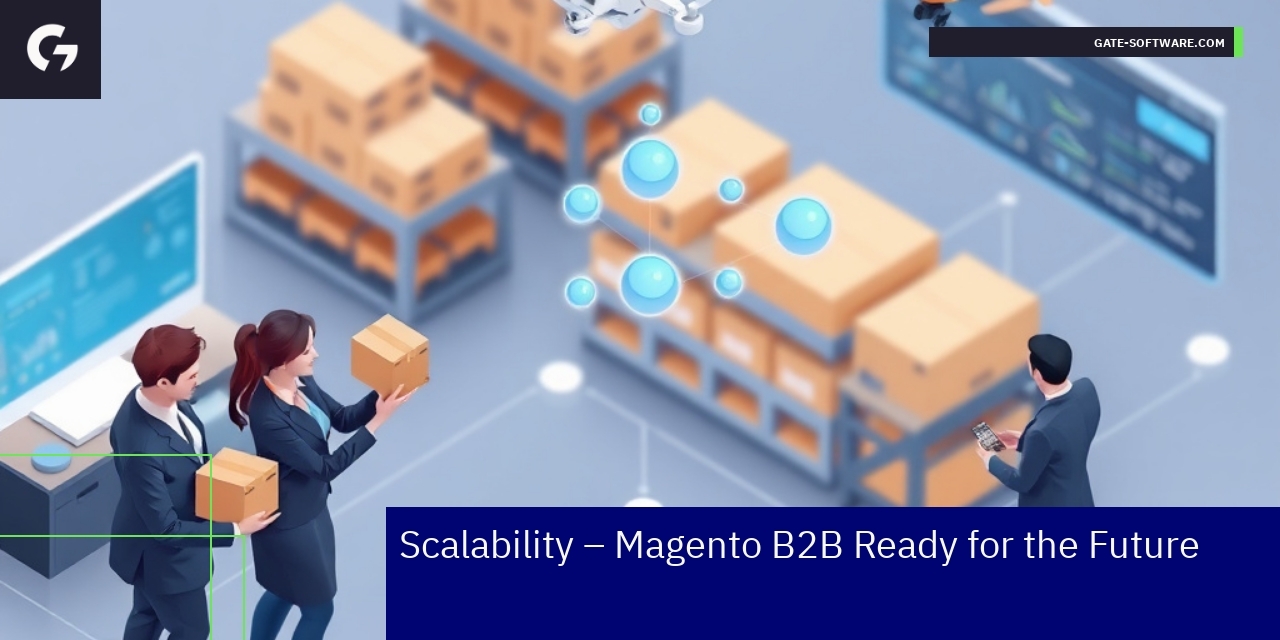
Scalability – Magento B2B Ready for the Future
Open Source, Open Opportunities
Open source technology plays a crucial role in driving customer experience and Magento personalization in the B2B sector. By leveraging open source frameworks, businesses gain the flexibility to tailor their digital platforms according to evolving B2B strategy requirements, enabling a more dynamic and engaging customer journey. Magento 2 exemplifies this approach, supporting extensive customization and integrations that empower companies to increase sales through personalized user experiences. Open source not only reduces barriers to innovation but also opens opportunities for businesses to adapt swiftly to market changes, enhancing scalability and long-term sustainability.
Performance Tailored to Needs 🧠 UWAGI:
In the context of B2B e-commerce, platform performance must be meticulously adapted to specific customer demands. Magento’s architecture allows for scalability and robustness that accommodate large catalogs, multiple pricing tiers, and complex workflows inherent in B2B sales. Performance tailored to needs ensures that the system remains responsive and reliable even under heavy loads, directly impacting the quality of customer experience and facilitating seamless Magento personalization. Case studies of Magento 2 deployments demonstrate how fine-tuned performance can drive efficiency and improve sales pipelines, making Magento an optimal choice for companies aiming to boost operational capacity while maintaining high service standards.
Combining B2B and B2C Sales
Integrating B2B and B2C sales channels enables businesses to capitalize on broader market opportunities and more diverse customer segments. Magento supports this dual approach effectively, harnessing robust features that cater to the unique requirements of both models without compromising performance. Combining B2B and B2C sales simplifies management, streamlines operations, and enhances the overall Magento personalization capabilities, fostering stronger customer engagement across different buyer personas. Companies successfully utilizing this strategy report increased sales and a more cohesive brand experience, illustrating how open source platforms can effectively bridge the gap between B2B complexity and consumer-grade usability.
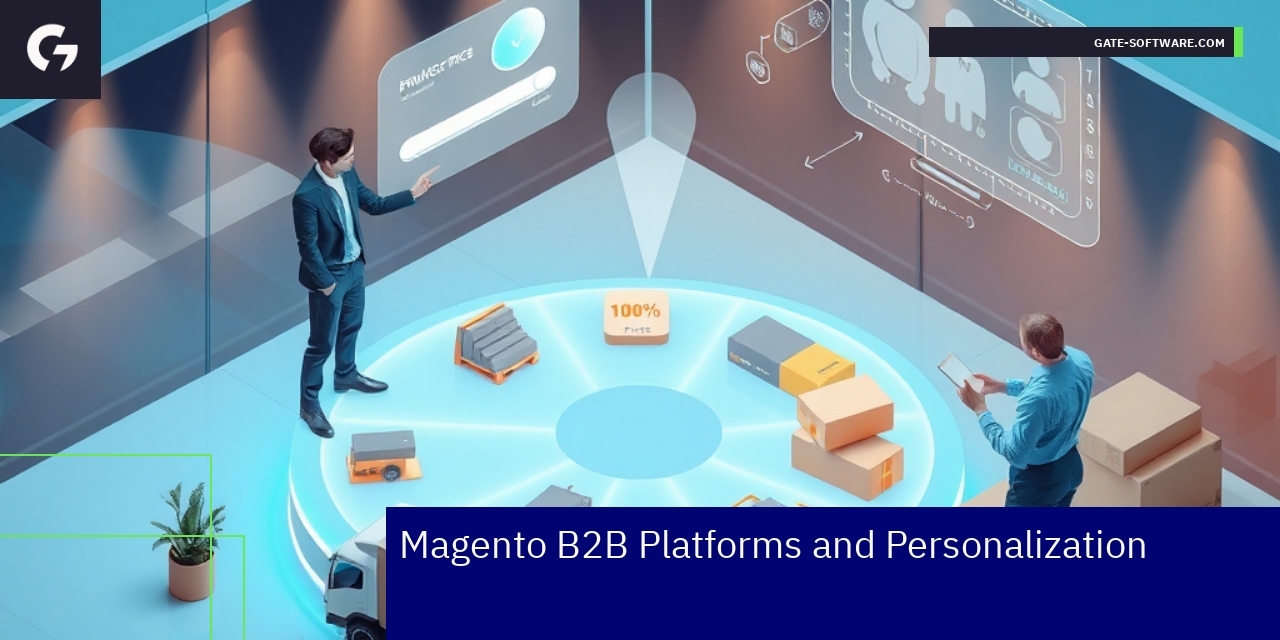
Magento B2B Platforms and Personalization
Private Catalogues in Magento
Private Catalogues in Magento are essential tools for enhancing the customer experience within B2B environments. They allow businesses to tailor product offerings and pricing specifically for different customers or customer groups. This personalization capability directly supports a strong B2B strategy by addressing unique client needs, which is a crucial factor in increasing sales. Creating private catalogues involves segmenting clients based on their purchasing behavior or contractual terms, then assigning exclusive product lists accessible only to those clients. Examples of effective catalogues often include tier-based access, industry-specific selections, or client-preferred products, which improve order efficiency and satisfaction while reinforcing Magento personalization capabilities.
Custom Pricing and Shared Catalogues
Setting custom pricing for clients is a strategic approach in B2B platforms to reflect volume discounts, negotiated contracts, or special deals. Magento platforms support this by enabling shared catalogues where pricing and product visibility can be controlled collaboratively between the seller and buyer. The benefits include increased transparency, tailored offers, and a better customer experience as clients see prices that match their agreed terms. However, challenges may arise in managing data consistency, ensuring catalogue updates propagate in real-time, and handling complex discount structures. Effective management of these aspects bolsters Magento personalization, complementing the overall B2B strategy with precision in pricing communication.
Negotiated Pricing Offers ✅ Zoptymalizowane pod B2B ✔️ Integracja z Private Catalogues 🛠️ Wsparcie dynamicznej aktualizacji cen
Handling negotiated pricing is a core component of B2B sales processes and a key element in Magento personalization. This involves creating flexible pricing mechanisms that can accommodate client-specific deals, volume-based discounts, or special contractual terms. A robust platform supports dynamic pricing updates and integration into Private Catalogues in Magento, ensuring that negotiated pricing offers are correctly reflected in customer interactions. Case studies demonstrate that companies leveraging these capabilities see measurable growth in customer retention and increased sales by aligning pricing strategy closely with client expectations. Overall, negotiated pricing offers in Magento facilitate a seamless integration of personalized sales tactics with the technical infrastructure of B2B business platforms.
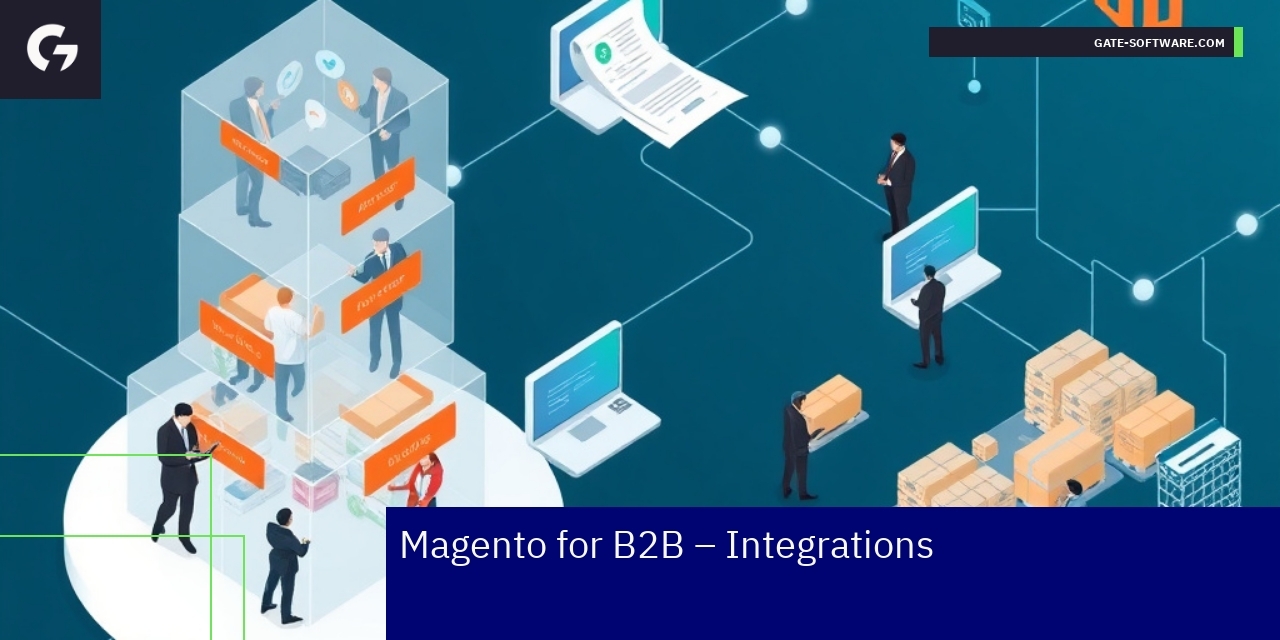
Magento for B2B – Integrations
Managing Multiple Stores
Efficiently managing multiple Magento 2 stores is crucial for companies operating across diverse markets or product lines. Magento’s multi-store architecture enables businesses to centralize operations while customizing individual storefronts to better address regional needs or specific customer groups. This capability enhances customer experience by allowing seamless navigation between stores with tailored Magento personalization, improving engagement and satisfaction. Strong management tools supporting inventory, pricing strategies, and content differentiation efficiently support a cohesive B2B strategy, helping enterprises increase sales. Examples from leading companies demonstrate how utilizing these integrations simplifies administration and offers scalable growth opportunities without compromising the user experience.
Sales Support
Magento 2’s robust sales support features are designed to align with complex B2B sales processes, integrating CRM and ERP systems to provide sales teams with vital insights and streamlined workflows. These integrations enable effective management of customer data, personalized offers, and automated follow-ups that enhance customer experience and facilitate Magento personalization. By leveraging these capabilities, companies optimize their B2B strategy to increase sales and respond promptly to client needs. Practical case studies illustrate how Magento’s sales support functionality helps businesses maintain competitive advantage through tailored communication and efficient sales cycle management that strengthens relationships with key accounts.
Handling Quote Requests
Managing quote requests effectively is a critical component within B2B commerce, where pricing and order customization demands precision and flexibility. Magento’s integrations support automated quote creation, approval workflows, and real-time collaboration between sales teams and clients. Such tools improve handling quote requests by reducing response times and errors, directly impacting customer experience and enhancing Magento personalization opportunities. Leveraging these capabilities ensures alignment with strategic B2B goals, fostering trust and facilitating complex deals. Leading practices demonstrate that integrating quote management systems within Magento not only supports a smooth sales funnel but also contributes to scaling operations and increasing sales potential.
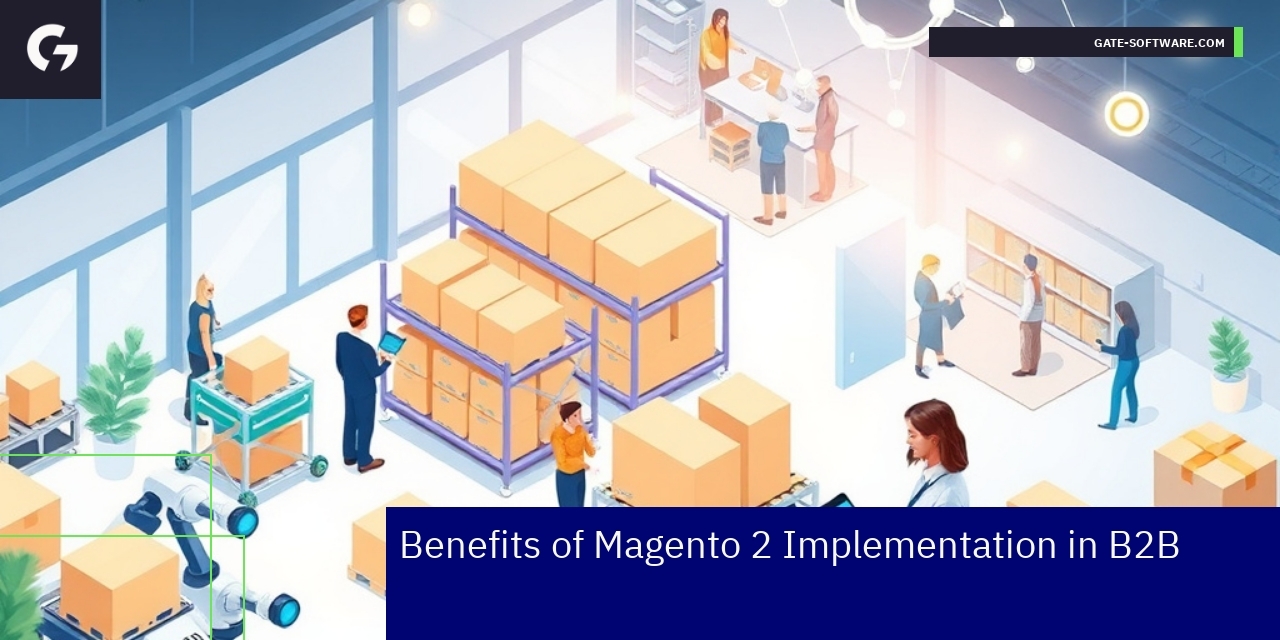
Benefits of Magento 2 Implementation in B2B
Moving the B2B Sales Process Online
Transitioning the B2B sales process online with Magento 2 enables businesses to modernize and streamline operations significantly. Key steps to transfer sales online include integrating personalized customer experiences, which is critical to meet the nuanced needs of B2B clients. Magento personalization supports tailored product offerings and pricing models, enhancing engagement and aligning directly with an effective B2B strategy. By moving the B2B sales process online, companies can increase sales efficiency, reduce manual errors, and shorten sales cycles, giving a competitive edge in digital markets. Successful transformations also often involve implementing smart order and inventory management systems to ensure seamless workflow and stock accuracy. These upgrades contribute to better decision-making and customer satisfaction, facilitating a robust and scalable sales process.
Mobile Apps and Customer Lifetime Value (CLV)
Mobile apps play a pivotal role in boosting customer lifetime value (CLV) within B2B commerce. Magento 2 supports creating responsive and feature-rich mobile applications that offer convenient access to catalogs, ordering, and customer account management anytime, anywhere. This accessibility improves customer retention by enhancing the overall customer experience and engagement, crucial for long-term client relationships. Mobile apps allow businesses to implement targeted Magento personalization, promoting relevant products and offers to each user. Additionally, mobile platforms encourage frequent usage and faster reorder cycles, directly contributing to an increase in sales and customer loyalty. Examples of B2B mobile apps often showcase integrated inventory visibility and order tracking, streamlining communication and fostering trust in the digital sales environment.
Smart Order and Inventory Management
Efficiently managing orders and stock is essential to meet the demands of complex B2B transactions. Magento 2 facilitates smart order and inventory management through automation and real-time data synchronization, minimizing stockouts and overstock situations. Intelligent systems help keep inventory aligned with fluctuating demand, ensuring that customer orders are fulfilled promptly and accurately. This capability supports moving the B2B sales process online by integrating backend logistics seamlessly with frontend commerce. Case studies demonstrate how businesses leveraging smart management solutions achieve higher operational efficiency and improved customer satisfaction by reducing lead times and errors. Moreover, combining smart order and inventory management with mobile apps amplifies the benefits, enhancing visibility and control across all sales channels while supporting sustained increase sales and profitability.
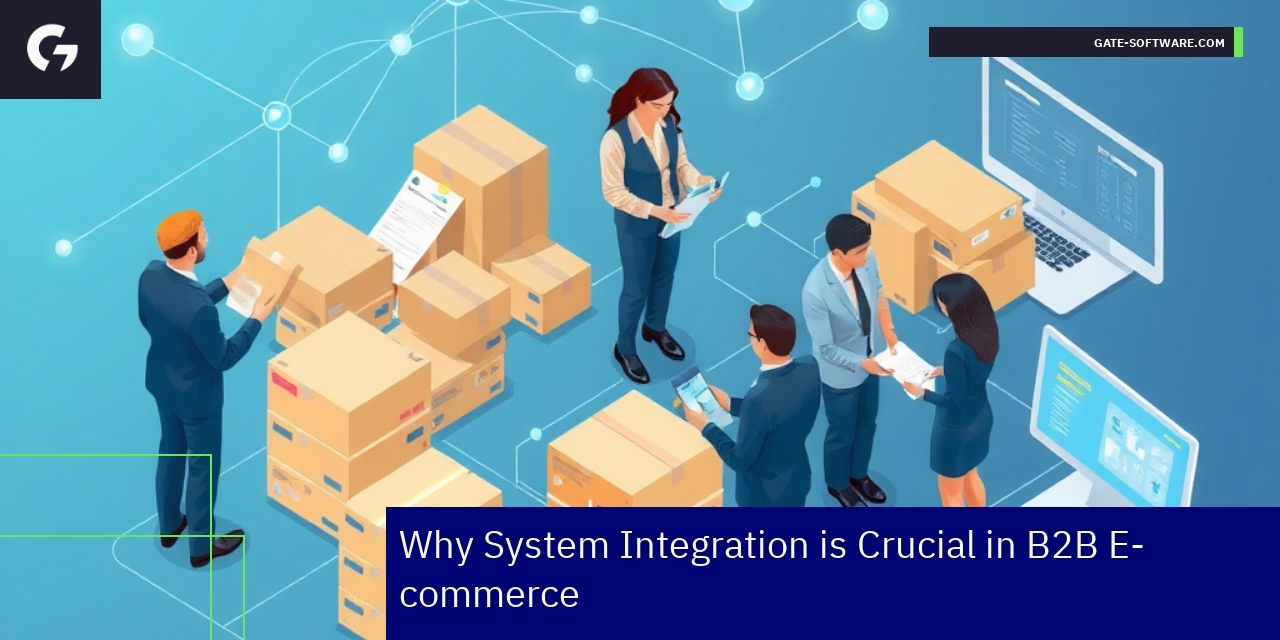
Why System Integration is Crucial in B2B E-commerce
B2B Volumes
Managing large B2B volumes presents unique challenges that necessitate robust system integration. Handling extensive orders, complex product catalogs, and multiple client profiles demands synchronized data flows to ensure accuracy and timeliness. Integration helps in managing multiple stores seamlessly while maintaining real-time inventory and pricing consistency. This systemic alignment improves efficiency by reducing manual interventions and errors. Companies that have successfully integrated their platforms report increased operational agility and enhanced ability to scale sales support. In particular, handling quote requests and custom pricing becomes streamlined, directly contributing to a better customer experience and facilitating Magento personalization for tailored B2B strategy execution that supports significant volume increases.
Seamless Management
Seamless management in B2B e-commerce hinges on integrated systems that connect front-end sales activities with back-end processes such as inventory control, order fulfillment, and customer service. This holistic approach enables businesses to maintain a cohesive workflow that supports sales support teams in providing timely and accurate responses. Effective integration helps in managing multiple stores from a unified dashboard, eliminating silos and fostering consistency in communication and data handling. It also allows for responsive adjustments in pricing and promotions, which are critical to a dynamic B2B strategy. By ensuring all systems interact flawlessly, companies can elevate customer experience by delivering reliability and personalized interactions, including leveraging Magento personalization features.
Fast Ordering [Quote approvals · Invoice automation · Real-time inventory · Magento personalization]
Speeding up the ordering process is a vital competitive advantage in B2B e-commerce, where buying cycles can be lengthy and complex. System integration enables fast ordering by automating quote approvals, inventory checks, and invoice generation, reducing manual touchpoints. Real-time data exchange across systems ensures that the sales team and customers have up-to-date information, preventing delays linked to stockouts or pricing discrepancies. Integration also facilitates handling quote requests efficiently, allowing faster conversions and increased sales. Leveraging Magento personalization helps tailor the ordering experience to specific client needs while supporting the overarching B2B strategy. Case studies demonstrate that companies deploying integrated platforms experience measurable improvements in order processing times and customer satisfaction.

Best Practices for Optimizing Omnichannel Purchasing
Managing Quote Requests
Effective handling quote requests is crucial for B2B omnichannel success. Implementing seamless management of quote requests allows businesses to provide rapid, transparent, and personalized responses that elevate the customer experience. Utilizing Magento personalization features enables tailored communication that aligns with each client’s specific purchasing behavior and history. Automated workflows for handling quote requests reduce manual errors and speed up decision-making, which is vital when dealing with high B2B volumes. A strategic approach includes integrating quote request management into the omnichannel platform to ensure consistency across all sales touchpoints. Examples of successful strategies often involve combining self-service portals with direct sales team interventions, enabling quicker response times and higher satisfaction for key decision-makers such as eCommerce Managers and Heads of Applications.
Increasing Sales
To increase sales in B2B omnichannel environments, it is essential to deploy a robust B2B strategy that leverages Magento personalization capabilities in product offerings and pricing models. This boosts customer experience by delivering relevant content and promotions aligned to buyer roles or company sizes, facilitating upselling and cross-selling. Optimizing the flows for handling quote requests also helps convert prospects faster, especially when paired with detailed analytics on B2B volumes, allowing targeted marketing and inventory planning. Case studies from Gate-Software demonstrate that clear visibility into customer journeys and streamlined order management substantially contribute to an increase in sales. A consistent omnichannel presence supported by seamless management tools ensures that transactions are efficient, reducing friction and encouraging repeat business.
B2B Strategy
Developing a successful B2B strategy requires a comprehensive understanding of customer profiles and the complexities of large volume transactions. A winning B2B strategy incorporates Magento personalization to cater to varying buyer personas, from architects to CDOs and CTOs, addressing their distinct needs in the purchasing process. Fine-tuning the management of quote requests supports negotiation flexibility, which is often necessary in B2B dealings. Furthermore, maintaining seamless management of orders, data, and communications across channels ensures an integrated customer experience that drives loyalty and long-term partnerships. Gate-Software’s approach emphasizes aligning the B2B strategy with measurable business goals such as increasing sales and enhancing customer experience through technology and communication strategies, making omnichannel purchasing both scalable and effective.
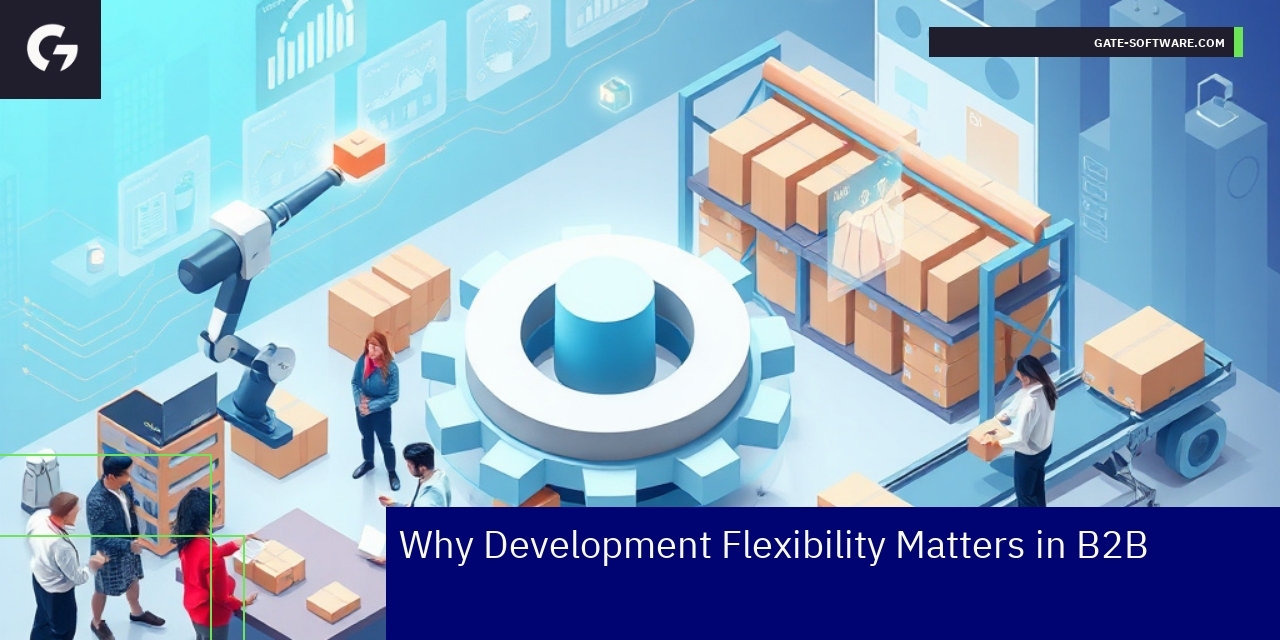
Why Development Flexibility Matters in B2B
Performance Tailored to Needs
In the B2B landscape, performance must be highly adaptable to meet fluctuating demands. Businesses often experience varying B2B volumes, seasonal spikes, or specific campaign-driven traffic increases. Development flexibility enables seamless management of these changes without compromising the customer experience. For example, Magento personalization supports tailoring the platform’s performance and functionality in real-time to address specific client requirements, such as handling quote requests efficiently or customizing pricing models. The ability to dynamically adjust performance positively impacts the B2B strategy, fostering stronger client relationships and providing a foundation for sustained growth and to increase sales. Flexibility ensures resources are used optimally, enabling business continuity during peak loads and supporting complex workflows unique to B2B transactions.
Open Source, Open Opportunities
Open source is a critical enabler of development flexibility in B2B platforms. It provides businesses with the freedom to customize and extend functionality according to their unique workflows and integration needs, which is essential for effectively implementing a comprehensive B2B strategy. Leveraging open source Magento frameworks allows companies to build tailored solutions that improve customer experience by offering personalized interfaces and streamlined handling of quote requests. Open source also facilitates seamless management of modules and integrations, empowering development teams to innovate rapidly and respond to evolving market demands. This approach not only supports expanding B2B volumes but also reduces dependency on vendor constraints, fostering innovation and long-term scalability.
Moving the B2B Sales Process Online
Transitioning B2B sales processes online demands a flexible development approach that integrates key functionalities such as personalized product catalogs, advanced quoting systems, and efficient order management. Magento personalization plays a pivotal role here by enabling companies to create customized buyer journeys, which contributes to increasing sales and enhancing customer experience. A flexible system can adapt to complex pricing strategies and approval workflows, essential for handling quote requests typical in B2B environments. Effective online migration also supports seamless management of customer data and interactions, ensuring that sales processes align with evolving B2B strategy goals. Successful transitions demonstrate how flexibility in development directly impacts operational efficiency and revenue growth, accommodating rising B2B volumes without sacrificing service quality.

Ensuring Security in B2B E-commerce Platforms
Secure Management
In B2B platforms, ensuring security in management is essential to protect sensitive client data and operational integrity. Effective security strategies start with robust authentication protocols, including multi-factor authentication and role-based access control, to restrict system access only to authorized personnel. Regular security audits and compliance checks aligned with industry standards help identify and mitigate vulnerabilities timely. These best security practices also incorporate data encryption both in transit and at rest, safeguarding transactional information and enhancing customer trust, critical for improving customer experience. Integrating these security measures within Magento personalization setups further protects personalized data, supporting B2B strategy goals such as increased sales and seamless management of client interactions.
Sales Support Security
Security features supporting sales in Magento 2 are vital for maintaining the integrity of sales processes, especially when handling quote requests that are common in B2B transactions. Magento’s layered security architecture offers tools like secure payment gateways and encrypted communication channels to prevent data breaches. Implementing audit trails and activity logs ensures transparency and accountability in sales operations. A case study reveals that incorporating these security measures not only protects sensitive sales data but also enhances the customer experience by providing reliable and seamless order processing. This security focus directly influences B2B volumes positively, as trustworthiness and data protection are key factors in buying decisions.
Securing Multi-store Management
Managing multiple B2B stores requires a comprehensive security approach to prevent unauthorized access and data leakage across different operational points. Segmentation of roles and permissions ensures that store managers and staff have access only to relevant data. Centralized monitoring systems and real-time alerts help detect suspicious activities quickly, allowing for immediate response. Examples of effective security strategies include deploying standardized security policies across all stores and integrating advanced firewall and intrusion detection systems. This ensures seamless management of numerous sales channels without compromising the security needed to support Magento personalization or handle quote requests efficiently, ultimately contributing to the increase sales and supporting a scalable B2B strategy.
Magento 2 Compared to Other B2B Platforms
Key differences between Magento 2 and other platforms center around its robust flexibility, scalability, and deep customization possibilities tailored for B2B needs. Magento 2 offers advanced features such as multi-tier pricing, customer segmentation, and extensive integration capabilities that accommodate the complex purchasing processes typical in B2B environments. Unlike many platforms, it supports seamless handling of large catalogs and varied pricing rules, essential for enterprises managing diverse product lines and customer groups. Furthermore, Magento 2 emphasizes compliance with WCAG standards, enhancing accessibility (WCAG 1.1), which is increasingly crucial in B2B digital commerce. Its architecture facilitates smooth migration paths and integration with existing ERP and CRM systems, enabling eCommerce Managers and CTOs to maintain operational continuity while upgrading their digital storefronts.
Benefits of choosing Magento 2 include its scalability to grow alongside your business and its capacity to support personalized customer experiences tailored to key decision-makers such as CDOs and Heads of Applications. Magento 2’s ecosystem delivers powerful tools for content strategy optimization and marketing automation, aligning with a comprehensive Content Strategy 5.0 approach. This platform also supports detailed analytics and monitoring, enabling continuous improvement and cost optimization, which are critical concerns in B2B settings. Selecting Magento 2 ensures that architects and eCommerce Managers have a technically sound and business-aligned foundation for their B2B commerce, enabling robust performance, security, and compliance aligned with Gate-Software’s strategic standards.
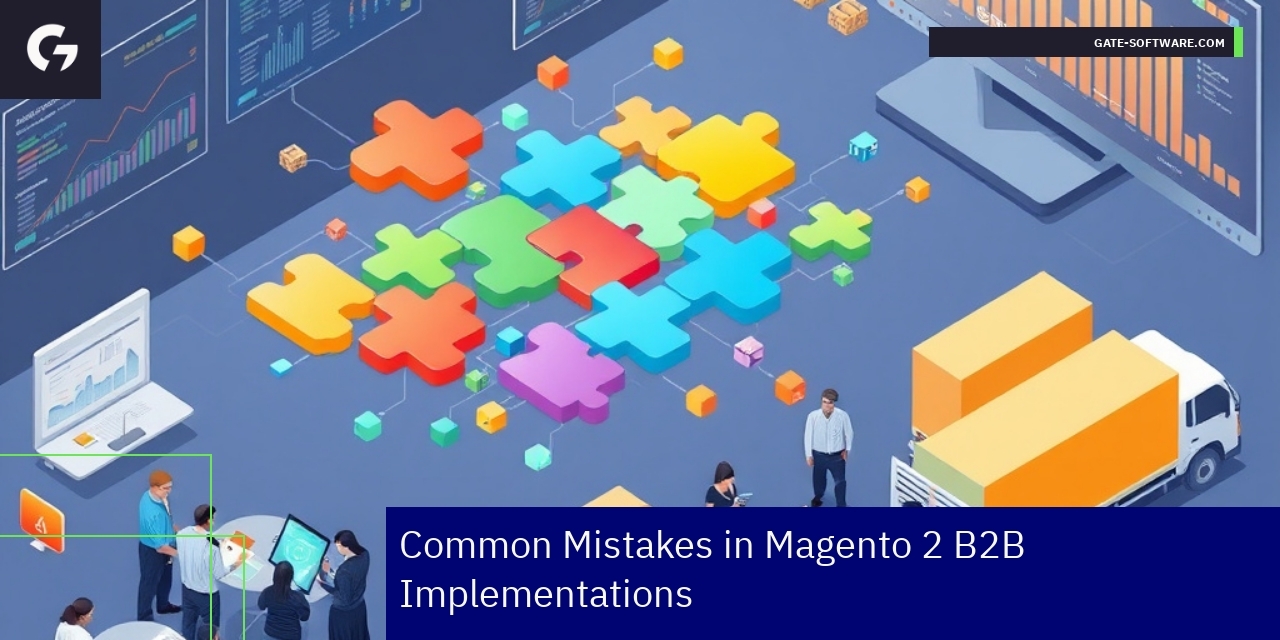
Common Mistakes in Magento 2 B2B Implementations
Common mistakes during Magento 2 B2B implementations often stem from underestimating the complexity of B2B requirements and over-relying on default configurations. One frequent pitfall is inadequate customization of customer-specific pricing, discount rules, and contract terms, which are crucial for B2B operations but may not be fully addressed by standard Magento features. This gap can lead to inefficient sales processes and reduced customer satisfaction.
Another typical error is overlooking the importance of seamless integration with existing ERP and CRM systems. Without proper data synchronization, issues such as inconsistent product information, delayed order processing, and inventory inaccuracies can arise, disrupting the customer experience and operational effectiveness. Moreover, failure to implement robust role-based access controls can compromise security and workflow efficiency, as B2B platforms often require differentiated permissions for various user personas.
The lack of attention to UX/UI tailored for B2B users is also a common shortcoming. Magento 2 stores must cater to complex purchasing workflows with features like quick order entry, saved lists, and multi-user account management, which are essential for B2B buyers. Neglecting to optimize these elements can result in poor usability and lower conversion rates.
To avoid these issues, companies should engage with experts who understand both the technical and business aspects of B2B eCommerce. This includes thorough planning and testing, leveraging MagentoOneS™ for reliable hosting and monitoring, and adhering to WCAG standards to ensure accessibility. Gate-Software emphasizes a partnership approach, aligning Magento 2 B2B implementations with strategic business goals and user needs, thus minimizing risks and enhancing ROI.
Integrating these insights helps prevent frequent pitfalls in Magento 2 B2B rollout and supports sustainable growth for businesses leveraging the platform. By focusing on customization, integration, security, and user-centric design, organizations can realize the full potential of their Magento 2 B2B investments while maintaining compliance with industry standards and expectations.
Another typical error is overlooking the importance of seamless integration with existing ERP and CRM systems 🧩 ⚙️ 🔐

Data and Performance Metrics – Efficiency, SLA, TCO
Operational Effectiveness in B2B Projects
In evaluating the operational effectiveness of Gate-Software’s services for B2B projects, several key metrics highlight the efficiencies and performance levels achieved. Data indicates that the average project takeover time is reduced to just 4 weeks, significantly faster than industry norms, allowing businesses to maintain momentum during transitions.
In terms of delivery efficiency, 95% of B2B projects are completed on time, demonstrating Gate-Software’s commitment to adherence to schedule and quality standards which is crucial for client trust and satisfaction. Moreover, companies have reported an average reduction in Total Cost of Ownership (TCO) by 20% due to optimized hosting and maintenance solutions provided through MagentoOneS™, ultimately translating into lower operational costs over time.
Performance is also reflected in SLA commitments, with Gate-Software achieving an impressive 99.9% uptime SLA across its hosted platforms. This level of reliability ensures that clients can operate without interruptions, which is critical in B2B environments where downtime can lead to significant revenue losses.
Implementations of custom features are another area of metrics, with Gate-Software facilitating over 300 successful implementations of advanced features tailored for B2B needs, enhancing client-specific interactions and processes. Additionally, the average duration of client relationships focuses on metrics, with Gate-Software experiencing an average client retention period of 7 years, reflecting the value and satisfaction clients find in the ongoing partnership.
The strategic positioning of marketing capabilities integrated within the platforms also leads to measurable success; clients report an average increase in sales of 30% within the first year of implementing Magento 2 solutions, showcasing the potent combination of effective personalization and operational strategies.
By leveraging these quantifiable outcomes, Gate-Software highlights its effectiveness in improving operational workflows, reducing costs, and promoting sustained business growth for B2B enterprises.
Summary
In conclusion, Gate-Software’s expertise in implementing Magento 2 for B2B environments presents a transformative solution for companies seeking to enhance their digital presence and customer engagement. By tailoring customer experiences through effective personalization strategies, businesses can navigate the complexities of B2B transactions with greater efficiency. Key elements such as custom pricing, private catalogues, and seamless system integration not only facilitate smoother purchasing processes but also build stronger relationships with clients. The flexibility offered by Magento 2, paired with Gate-Software’s commitment to best practices in UX/UI and compliance with accessibility standards, positions businesses for sustainable growth. By choosing to partner with Gate-Software, you ensure a robust framework that enhances operational efficiency, increases sales, and ultimately fosters lasting partnerships in the competitive B2B landscape.

FAQ
What is B2B personalization and why does it matter?
B2B personalization is the process of tailoring marketing, sales, and service interactions to the unique needs of business clients. It matters because B2B customers expect relevant and customized solutions that align with their specific business goals, enhancing customer satisfaction and increasing conversion rates.
How does Magento 2 support B2B transactions?
Magento 2 supports B2B transactions through its robust architecture that accommodates complex purchasing processes, multiple decision-makers, and tailored product offerings. Its modular nature allows seamless integration with existing systems and provides advanced features like customer segmentation, custom pricing, and private catalogs.
Why is system integration crucial in B2B e-commerce?
System integration is crucial for managing large volumes, ensuring accurate and timely data synchronization across multiple platforms. This enhances operational efficiency, reduces manual errors, and facilitates a better customer experience, allowing businesses to respond to client needs more effectively.
How can companies optimize their omnichannel purchasing for B2B?
Companies can optimize omnichannel purchasing by implementing a robust B2B strategy that leverages Magento personalization features for tailored product offerings and pricing models. This includes managing quote requests efficiently and ensuring consistent communication across all sales channels to enhance customer engagement.
What are common mistakes in Magento 2 B2B implementations?
Common mistakes include underestimating the complexity of B2B requirements, failing to customize customer-specific pricing, and neglecting integration with existing ERP and CRM systems. Additionally, overlooking the importance of a user-centric design for B2B operations can lead to poor usability and lower conversion rates.
.
.
Zamów bezpłatną konsultację
.
Z nami rozwój Twojego biznesu nabierze tempa! Zapraszamy do kontaktu średnie i duże firmy generujące min. 7 mln PLN obrotu rocznie – tam nasza ekspertyza sprawdza się najlepiej.
.
Kliknij w poniższy przycisk i skontaktuj się z jednym z naszych konsultantów e-commerce
.