Introduction
A B2B eCommerce platform is a specialized digital solution tailored to facilitate commercial interactions between businesses. Differentiating from B2C platforms, these systems address the complexities of business transactions such as bulk ordering, negotiated pricing, multi-level approvals, and integration with backend systems like ERP and CRM. Selecting the right B2B platform is critical to streamlining procurement processes, enhancing customer experience, and supporting scalable growth.
Key considerations in choosing the best B2B eCommerce platform include assessing your business’s unique needs—ranging from product complexity and sales volume to customer segmentation and workflows. Scalability is essential to ensure the platform supports growth without compromising performance. Customization capabilities allow alignment with brand identity and operational specifics, while integration with existing IT infrastructure reduces silos and increases efficiency.
Furthermore, robust security measures protect sensitive corporate data, and a variety of payment options accommodate business purchasing models. User experience must facilitate smooth navigation and order management, reflecting the expectations of B2B buyers who prioritize efficiency and clarity. Finally, comprehensive support and transparent pricing structures play integral roles in ensuring long-term success with the chosen platform.
By addressing these strategic and technical factors, organizations can select a B2B eCommerce platform that not only meets current demands but also adapts to future market and technological shifts, bolstering competitive advantage within the B2B landscape.
TABLE OF CONTENTS
- B2B Store: What Is a B2B eCommerce Platform and How to Choose the Best One?
- What Is a B2B eCommerce Platform?
- Benefits of Using B2B Platforms
- How to Choose the Right B2B eCommerce Platform?
- Best B2B eCommerce Platforms at a Glance
- ERP Integration
- What’s Happening in the B2B eCommerce Market Today
- Data and Performance Metrics – Efficiency, SLA, TCO
- Summary
- FAQ
What Is a B2B eCommerce Platform?
A B2B eCommerce platform (Business to Business) is a system that facilitates transactions and collaboration between companies. Unlike B2C models where purchases are made by individual consumers, platformy b2b enable businesses to sell and buy products and services directly from other businesses. These platformy b2b commonly include product catalogs, order management systems, and integrated data analytics to enhance operational efficiency and streamline complex business processes. A system b2b is designed to support wholesale transactions, tailored pricing models, and customer account management, which are essential for effective commercial relationships in business environments.
How Does a B2B System Work?
A B2B system operates by allowing companies to engage in multifaceted commercial transactions that typically involve longer sales cycles and contract negotiations, unlike simpler retail transactions. Ecommerce b2b platforms facilitate interactions by providing tools such as order processing, invoicing, and ERP system integration. These capabilities allow businesses to automate workflows and improve coordination across departments. In a system b2b, the integration with supply chain management and customer relationship systems ensures that all parties maintain visibility and control over orders, inventory, and financial transactions.
Key Features of B2B eCommerce Platforms
Key features of a platforma b2b include support for bulk ordering, flexible pricing rules catering to different customer segments, and comprehensive management of customer accounts. Ecommerce b2b platforms often incorporate integration with ERP and inventory systems to provide real-time data on stock levels and order status, improving decision-making processes. Additionally, system b2b architecture supports robust security measures and compliance capabilities required in B2B transactions. These features equip businesses with the tools to manage complex sales pipelines effectively while enhancing the overall customer experience.
What Is a B2B eCommerce Platform?
A B2B eCommerce platform (Business to Business) is a system that facilitates transactions and collaboration between companies. Unlike B2C models where purchases are made by individual consumers, platformy b2b enable businesses to sell and buy products and services directly from other businesses. These platformy b2b commonly include product catalogs, order management systems, and integrated data analytics to enhance operational efficiency and streamline complex business processes. A system b2b is designed to support wholesale transactions, tailored pricing models, and customer account management, which are essential for effective commercial relationships in business environments.
Benefits of Using B2B Platforms
Using B2B platforms offers significant benefits that directly address the complexities faced by companies operating in the digital B2B landscape. These platformy b2b facilitate streamlined ecommerce b2b processes by integrating various operational functions into a single, cohesive system b2b, ultimately enhancing productivity and decision-making.
One of the primary advantages of platformy b2b is the improved operational efficiency. Automating routine tasks such as order management, invoicing, and inventory control reduces human error and accelerates workflows. This efficiency gain translates into faster response times and better resource allocation, crucial factors for maintaining competitive advantage in the B2B sector.
Ecommerce b2b platforms also enhance customer relationship management by enabling personalized communication and tailored product offerings. Thanks to data analytics embedded in many system b2b solutions, companies gain insights into customer behavior and market trends, empowering them to make informed strategic decisions. The analytical capabilities support segmentation, lead scoring, and sales forecasting, which are essential for sustained growth.
Moreover, platformy b2b provide easy access to a broad product catalog and supplier network, simplifying procurement processes and enabling companies to negotiate better terms. Integrations with existing IT infrastructure ensure that system b2b solutions align with enterprise architecture, supporting scalability and security compliance.
In summary, leveraging ecommerce b2b platforms and system b2b solutions not only optimizes operational workflows but also enhances strategic business functions, fostering stronger client partnerships and improving market responsiveness.
How to Choose the Right B2B eCommerce Platform?
Choosing the right platforma b2b is a strategic decision that directly impacts the efficiency and scalability of any ecommerce b2b operation. A robust system b2b should not only support complex B2B workflows but also seamlessly integrate with existing enterprise systems such as ERP, CRM, and supply chain management. This integration is crucial to ensure data consistency, automate processes, and provide a unified experience to users.
Functionality is paramount; the platforma b2b must offer advanced features tailored to B2B commerce, including tiered pricing, bulk ordering, customized catalogs, and detailed user roles and permissions. Usability for both buyers and administrators is equally important to reduce friction in daily transactions and maintenance.
Technical support and service level agreements (SLA) are critical to minimize downtime and swiftly address issues, ensuring business continuity. Additionally, cost considerations must include not only licensing fees but also implementation, customization, hosting, and ongoing maintenance.
Gate-Software’s expertise in system b2b solutions emphasizes a consultative approach, adapting platforma b2b to the specific industry and organizational needs. This customization enhances operational efficiency, user experience, and ultimately drives business growth in ecommerce b2b environments.
How to Choose the Right B2B eCommerce Platform?
Best B2B eCommerce Platforms at a Glance
Among the best B2B eCommerce platforms are Alibaba, ThomasNet, and Ariba Network. Each of these platforms offers various functions that simplify the commercial operations of businesses. A robust system b2b enables seamless integration of procurement, inventory management, and order processing, which are critical for efficient B2B transactions. These platformy b2b typically provide advanced features such as customizable catalogs, dynamic pricing models, and detailed analytics, which cater to the complex needs of B2B buyers and sellers.
Ecommerce b2b environments must also prioritize scalability and security to support large transaction volumes and sensitive data exchanges. Gate-Software’s expertise lies in ensuring that these system b2b components are optimized for high performance and compliance with industry standards. Moreover, modern B2B platforms facilitate smoother customer journeys by integrating with ERP and CRM systems, enhancing user experience while driving operational efficiency.
By leveraging tailored platformy b2b solutions, companies can reduce procurement costs, accelerate sales cycles, and improve supply chain transparency. The choice of ecommerce b2b platform should always align with the strategic goals of the organization, considering factors such as flexibility, integration capabilities, and channel management. Gate-Software supports clients in selecting and customizing these platforms to fully realize the business benefits embedded in advanced system b2b architectures.
ERP Integration
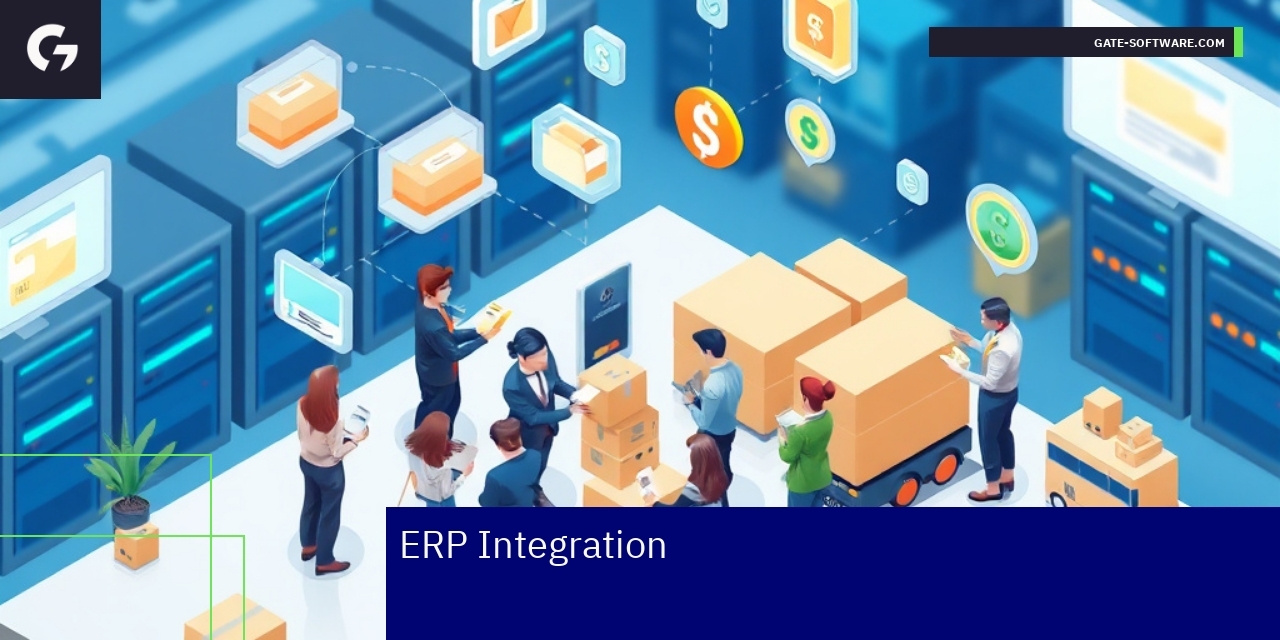
Integration of B2B platforms with ERP systems is key to automating business processes. Through this integration, companies can efficiently manage orders, inventory, and customer relationships, resulting in time and resource savings.
A platforma b2b that communicates seamlessly with your ERP system ensures real-time data synchronization, reducing manual entry errors and accelerating order processing cycles. This seamless connection between system b2b and ERP allows for better control over entire supply chains, inventory management, and financial transactions. For ecommerce b2b environments, ERP integration supports consistent product data across channels, accurate pricing, and promotions management, which are critical for maintaining competitiveness and customer satisfaction.
Effective ERP integration enables decision-makers such as CTOs and Heads of Applications to gain comprehensive insights and analytics, empowering them to optimize workflows and respond swiftly to market demands. It also enhances customer relationship management by providing a unified view of customer orders and history, which facilitates personalized service and stronger B2B partnerships.
Gate-Software’s approach emphasizes tailored integration strategies that align with your existing technology stack and business processes. This ensures that your platforma b2b works in harmony with system b2b and ecommerce b2b solutions to drive efficiency, scalability, and long-term growth.

What’s Happening in the B2B eCommerce Market Today
The B2B eCommerce landscape is evolving rapidly, driven by digital transformation and the need for greater operational efficiency. Companies increasingly adopt ecommerce b2b solutions to streamline their sales processes, improve customer experience, and enhance scalability. The integration of advanced system b2b functionalities enables businesses to automate key workflows such as order management, invoicing, and customer relationship management, reducing manual intervention and errors. This shift is propelled by the demand for personalized, seamless buying journeys that mirror B2C simplicity but cater to complex B2B requirements.
Platformy b2b have become fundamental assets for companies aiming to stay competitive. Modern B2B platforms not only provide transactional capabilities but also support complex pricing models, contract management, and multi-channel integrations. They facilitate robust data analytics and business intelligence, empowering decision-makers like CTOs and eCommerce Managers to craft strategic initiatives based on customer behavior and market trends. The future of B2B eCommerce looks promising, with continuous improvements in user experience and adherence to standards such as WCAG, ensuring accessibility and inclusivity across digital channels.
In summary, the B2B eCommerce market today is characterized by a strategic focus on digital platforms and systems that automate and personalize business processes. The growing importance of ecommerce b2b and system b2b solutions, alongside platformy b2b, is key to responding effectively to evolving customer expectations and achieving sustainable growth in the B2B sector.
Data and Performance Metrics – Efficiency, SLA, TCO
Operational Effectiveness in B2B Projects
Gate-Software’s commitment to delivering effective B2B solutions is reflected in several key performance metrics that validate the operational efficiency and cost-effectiveness of its services.
With an average project takeover time of just 2 weeks, Gate-Software ensures a swift onboarding process, allowing clients to quickly adapt to the systems without significant downtime. Furthermore, a remarkable 95% of projects are delivered on time, demonstrating the company’s reliability and adherence to established timelines.
Clients also benefit from a significant reduction in Total Cost of Ownership (TCO), averaging around 30% when leveraging Gate-Software’s B2B solutions, which include integration support and process optimization strategies. This efficiency is further enhanced by an impressive 99.8% uptime SLA, ensuring that business operations run smoothly and interruptions are minimized.
In terms of service capacity, Gate-Software has successfully implemented over 150 B2B projects, showcasing their extensive experience and ability to handle diverse client needs. The average duration of client relationships stands at 4 years, indicating strong ongoing partnerships and satisfaction with the services provided.
These metrics not only highlight Gate-Software’s operational capabilities but also provide prospective clients with a credible basis for informed decision-making when considering investments in B2B eCommerce solutions.
Summary
In conclusion, choosing the right B2B eCommerce platform is pivotal for organizations aiming to enhance operational efficiency and foster strong customer relationships in today’s competitive landscape. Gate-Software is dedicated to tailoring system b2b solutions to meet your unique business requirements, ensuring seamless integration with your existing infrastructure, such as ERP and CRM systems. Our expertise not only aids in simplifying complex purchasing processes but also boosts overall productivity through automation and streamlined workflows. By leveraging advanced analytics and personalized features within the chosen platforma b2b, your organization can achieve greater insights into customer behavior and market trends, allowing for informed strategic decisions. We invite you to explore further how our specialized services can elevate your B2B operations and drive sustainable growth. Let’s collaborate to unlock the full potential of your eCommerce b2b strategy.

FAQ
What Is a B2B eCommerce Platform?
A B2B eCommerce platform is a digital solution designed to facilitate transactions and collaboration between businesses, enabling them to buy and sell products and services directly to one another.
How Does a B2B System Work?
A B2B system operates by allowing companies to engage in complex commercial transactions that typically involve longer sales cycles and contract negotiations, supported by tools like order processing, invoicing, and ERP integration.
What Are the Key Features of B2B eCommerce Platforms?
Key features include support for bulk ordering, flexible pricing models, comprehensive customer account management, and integration with ERP and inventory systems to enhance operational efficiency and decision-making.
Why Should Businesses Use B2B Platforms?
B2B platforms improve operational efficiency by automating routine tasks, enhance customer relationship management through personalized communication, and provide insights into customer behavior, ultimately fostering stronger client partnerships.
How Do You Choose the Right B2B eCommerce Platform?
Choosing the right platform involves assessing functionalities that meet B2B needs, ensuring seamless integration with existing systems, considering usability for both buyers and administrators, and evaluating support and cost factors.
.
.
Zamów bezpłatną konsultację
.
Z nami rozwój Twojego biznesu nabierze tempa! Zapraszamy do kontaktu średnie i duże firmy generujące min. 7 mln PLN obrotu rocznie – tam nasza ekspertyza sprawdza się najlepiej.
.
Kliknij w poniższy przycisk i skontaktuj się z jednym z naszych konsultantów e-commerce
.