Introduction
B2B ecommerce platforms represent a pivotal evolution for enterprises seeking to optimize their sales channels and operational workflows. These platforms deliver a comprehensive suite of advantages that address the complex needs of B2B transactions, facilitating growth and efficiency across multiple dimensions.
Primarily, B2B ecommerce platforms expand market reach by enabling companies to connect with a broader audience beyond traditional geographic constraints. This global accessibility supports 24/7 availability, allowing customers to transact at their convenience, thereby increasing order volumes and accelerating sales cycles.
Moreover, the platforms enhance the customer experience through intuitive UX/UI design, personalized buyer journeys, and streamlined navigation. These features contribute to improved satisfaction and foster long-term client loyalty, essential in a B2B context where relationships are foundational.
Operational efficiency is significantly elevated as these platforms automate crucial processes such as order management, inventory control, invoicing, and procurement workflows. This automation reduces manual errors, shortens processing times, and cuts operational costs, supporting scalable business growth.
Data analytics capabilities embedded within B2B ecommerce environments offer actionable insights into buyer behavior, market trends, and product performance. Such data-driven intelligence enables companies to refine their strategies and better meet client demands.
Security and compliance are paramount; thus, these platforms incorporate advanced safeguards aligned with industry standards to protect sensitive business data and transactional integrity.
Finally, B2B ecommerce platforms are designed for integration with existing IT ecosystems, including ERP and CRM systems, ensuring seamless end-to-end business process orchestration.
In sum, B2B ecommerce platforms are indispensable tools that respond to the technical and business challenges faced by modern enterprises, underpinning robust, scalable, and customer-centric operations.

What You Will Learn
In the rapidly evolving landscape of digital commerce, understanding B2B ecommerce is crucial for decision-makers such as CTOs, eCommerce Managers, and Heads of Applications. This section aims to elucidate key concepts and strategies surrounding the implementation of a B2B ecommerce platform, focusing on how these systems can streamline sales processes and differentiate themselves from other sales models.
Implementing a B2B Ecommerce Platform
One of the primary objectives of this guide is to offer insights into implementing a B2B ecommerce platform. This process is not merely about setting up a website; it involves a comprehensive approach to adopting technology that can transform your business operations. A successful B2B ecommerce system should be tailored to meet the unique complexities of B2B transactions, such as bulk ordering, account management, and customized pricing.
We will discuss essential steps in the implementation process, such as assessing your current sales workflow, mapping out customer journeys, and ensuring integration with existing ERP or CRM systems. By closely examining these elements, you’ll gain a clear understanding of how to create a cohesive ecosystem that enhances productivity and improves customer satisfaction.
Streamlining Sales Processes
One of the most significant benefits of adopting a robust B2B ecommerce system is the ability to streamline sales processes. Traditional sales models often involve lengthy negotiations, paper-based transactions, and multiple touchpoints, making them inefficient and prone to errors. In contrast, a digital B2B environment allows for automation of various sales functions, such as pricing adjustments, order management, and customer relationship tracking.
We will explore various automation tools and features commonly found in B2B ecommerce platforms, providing you with the knowledge to enhance operational efficiency. Implementing features such as automated invoicing, real-time inventory management, and user-friendly dashboards can help free up valuable resources and enable your sales team to focus on high-impact activities.
Understanding the Differences Between B2B Ecommerce and Other Sales Models
In this section, we will also clarify the differences between B2B ecommerce and other sales models, such as B2C (Business to Consumer). Understanding these differences is pivotal for decision-makers looking to tailor their strategies effectively. B2B transactions often involve larger order sizes, longer sales cycles, and personalized solutions, which necessitate a different approach to customer engagement and service delivery.
By recognizing these distinctions, your team will be better equipped to develop targeted marketing strategies, establish stronger relationships with business customers, and create valuable, customized experiences that cater to your clients’ specific needs.
Choosing the Right B2B Ecommerce Platform for Your Business
Finally, we will guide you on how to choose the right B2B ecommerce platform for your business. With numerous options available on the market, selecting the ideal platform that aligns with your organizational needs can be a daunting task. Factors to consider include scalability, user experience, integration capabilities, and security features.
We will provide a framework for evaluating different platforms by highlighting key features that facilitate smooth transactions, improve customer interaction, and ensure compliance with industry standards. This knowledge will empower you to make informed decisions that will ultimately drive growth and operational excellence.
In summary, this guide will equip you with the vital knowledge necessary to navigate the B2B ecommerce landscape. From implementing a B2B ecommerce platform and streamlining sales processes to understanding the unique nature of B2B transactions and choosing the right system for your business needs, you will gain insights that can profoundly impact your organization’s digital transformation strategy.
TABLE OF CONTENTS
Benefits of B2B Platforms
Increased Efficiency
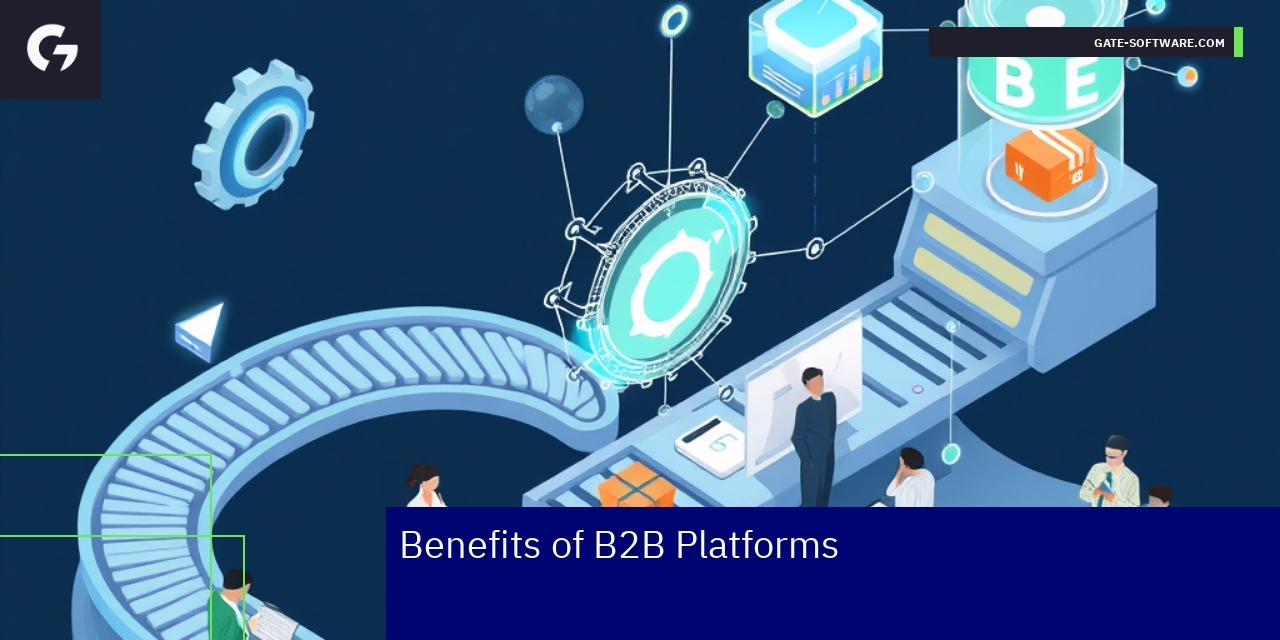
Implementing a robust platforma b2b offers significant improvements in operational efficiency by automating critical sales and supply chain workflows. Such a system b2b streamlines processes like order management, inventory control, and invoicing, reducing manual interventions and the risk of errors. These efficiencies inherent to ecommerce b2b solutions lead to faster transaction cycles and smoother coordination between departments. Moreover, a well-integrated platforma b2b adapts to complex business rules and custom pricing models, which are essential for B2B transactions. This optimization not only accelerates order fulfillment but also enhances resource utilization, driving cost savings and agility in response to market demands.
Better Customer Service
One of the key advantages of platformy b2b lies in enabling superior customer service tailored to the specific needs of business clients. By leveraging the features of a dedicated system b2b, companies can offer personalized purchasing experiences, including customized catalogs and flexible payment options. Ecommerce b2b platforms support real-time support tools, such as chat and order tracking, which empower customers with transparency and quicker issue resolution. Additionally, platforma b2b facilitates consistent communication and relationship management, strengthening client loyalty and satisfaction. This more responsive and informed service approach improves retention rates and fosters long-term partnerships.
System Integration
Seamless integration with existing business systems is crucial for maximizing the value of ecommerce b2b solutions. A flexible platforma b2b is designed to connect smoothly with ERP, CRM, and other enterprise software, ensuring unified visibility into sales, inventory, and customer data. This system b2b synchronization eliminates data silos, enabling better forecasting, reporting, and decision-making. Integration also supports automation of workflows across departments, reducing redundancies and enhancing operational coherence. For B2B enterprises, these interconnected platformy b2b capabilities are essential to maintain competitive agility and deliver consistent business outcomes.

How to Choose a B2B Platform
Needs Analysis
Start by conducting a thorough needs analysis to select the right platforma B2B. Understanding your company’s requirements for ecommerce B2B and how you plan to use the system B2B ensures better alignment and investment returns. This involves evaluating your current sales processes, customer expectations, and growth plans. An accurate needs analysis helps to identify which functionalities are essential, such as integration capabilities with existing ERP or CRM systems, support for multi-user accounts, or specific B2B sales workflows. Taking this step seriously prevents investing in an overly complex or inadequate system and ensures the chosen platforma B2B can support your business scalability and operational efficiency.
Feature Comparison
Comparing features across platformy B2B helps identify the best fit. Consider functions specific to B2B ecommerce, such as bulk ordering, pricing tiers, and account management. A solid understanding of the system B2B capabilities offered by each platforma B2B clarifies your options. For example, assess how each platform handles customized pricing, discount structures, and user roles. Look for platforms that offer seamless integration with business intelligence tools and supply chain management. This stage should evaluate both the technical capabilities and user experience aspects to ensure the ecommerce B2b solution not only meets core requirements but also enhances the workflow of sales teams and buyers.
Implementation Costs
Assessing implementation costs involves examining ecommerce B2B pricing models. Both initial and ongoing expenses must be balanced with the benefits of the system B2B. Reviewing platformy B2B cost structures helps avoid surprises and supports budgeting. Consider licensing fees, customization costs, integration expenses, and the price of ongoing support and updates. Also, check for scalability-related costs which may increase with transaction volume or additional users. A transparent cost assessment enables you to select a platforma B2B that fits both your budget and long-term business needs without compromising on essential functionality or service quality.
B2B Ecommerce Trends
Process Automation
B2B eCommerce Trends emphasize the critical role of process automation in advancing business efficiency. Modern platformy b2b are designed to automate repetitive and time-consuming tasks within the system b2b, significantly enhancing operational speed and accuracy. By integrating advanced ecommerce b2b solutions, companies experience reduced manual workload, which translates into fewer errors and improved scalability. Automation streamlines order processing, inventory management, and customer communications, enabling businesses to respond swiftly to market demands. This not only boosts productivity but also supports compliance and audit processes within complex B2B environments.
Personalized Experiences
The shift toward personalization marks a significant trend in B2B ecommerce. A well-configured platforma b2b adapts to the specific needs of clients, fostering deeper engagement and long-term loyalty. Personalization within the system b2b includes tailored pricing models, customized product recommendations, and targeted communications that resonate with distinct buyer personas. Enhanced personalization improves the customer journey, making it more intuitive and relevant. This strategic approach allows companies to differentiate their ecommerce b2b platforms by offering unique value propositions aligned with client expectations, driving higher conversion rates and repeat business.
Sustainable Growth
Sustainable growth is becoming an integral element of B2B ecommerce strategies, with platformy b2b playing a supportive role in eco-conscious business practices. Systems b2b can optimize resource utilization, minimize waste, and promote greener logistics solutions, which contribute to sustainability goals. Ecommerce b2b platforms enable organizations to implement efficient supply chain management and reduce their environmental footprint. By aligning technological adoption with sustainability, businesses not only enhance operational resilience but also meet growing client demands for responsible corporate behavior—a decisive factor in maintaining competitive advantage in the B2B marketplace.

Challenges When Implementing B2B Platforms
Initial Costs
One challenge of launching a B2B ecommerce system B2B is managing initial costs. The price of platforma B2B licenses and setup can be significant. Balancing budget constraints with the benefits of platformy B2B requires careful financial planning. Decision-makers must evaluate not only the upfront expenditure on software and infrastructure but also consider the long-term return on investment by choosing scalable and adaptable system B2B solutions. For enterprises adopting ecommerce B2B, poor cost planning can delay project timelines and limit capabilities.
Employee Training
Proper employee training is vital for the success of any ecommerce B2B solution. A system B2B cannot reach its potential without user proficiency. Investing in training ensures that platformy B2B are used effectively and adoption rates are high. Training should focus on both technical capabilities and operational workflows, empowering employees to maximize platform utility. Overlooking this aspect can result in underutilized tools and reduced productivity in ecommerce B2B environments.
Data Management
Managing large volumes of data is an ongoing challenge in ecommerce B2B environments. Platforma B2B must handle complex data securely and accurately. The system B2B benefits from structured data management protocols to prevent errors and improve decision-making. Effective data integration from multiple sources, compliance with security standards, and maintaining data integrity are critical to supporting seamless transactions and personalized business relationships within platformy B2B. Robust data governance directly impacts operational efficiency and customer satisfaction.
Successful Implementations Examples
Case Study 1
This case study highlights how implementing a platforma B2B boosted sales efficiency. The system B2B was able to scale quickly while ecommerce B2B features supported complex ordering processes. By adopting a comprehensive platforma B2B, the client streamlined their order management and integrated multiple sales channels seamlessly. The system B2B architecture ensured reliable data flow and optimized backend operations, accommodating high transaction volumes without performance degradation. Meanwhile, ecommerce B2B capabilities enhanced user experience for key account managers and buyers, simplifying repeat ordering and enabling tailored pricing models. This implementation demonstrated how a unified platforma B2B could directly impact operational agility and competitive positioning in a demanding market environment.
Case Study 2
Another example showcases a company leveraging platformy B2B to enhance customer service. The ecommerce B2B tools integrated with existing systems enabled a seamless experience across the system B2B. By deploying modern platformy B2B, the organization improved responsiveness and personalized interactions with their clients. The ecommerce B2B solutions facilitated real-time inventory visibility and simplified contract management, driving faster order turnaround and reduced errors. Integrating these platformy B2B components with legacy systems ensured continuity and data consistency across all operational layers. This case illustrates the strategic advantage that a well-orchestrated system B2B implementation can provide, especially in improving customer satisfaction and operational transparency.
Case Study 3
In a third successful implementation, the system B2B improved data accuracy and reporting by adopting a modern platforma B2B. The ecommerce B2B capabilities reduced manual errors and increased operational visibility. This initiative focused on automating complex workflows and enhancing data consolidation across multiple departments. The platforma B2B enabled advanced analytics and reporting tools, delivering actionable insights to decision-makers. At the same time, ecommerce B2B functionalities helped in managing buyer hierarchies and facilitating bulk orders with custom payment terms. The entire system B2B upgrade resulted in significant time savings and elevated compliance standards, showcasing how technology-driven transformation can address intricate B2B challenges effectively.

Data and Performance Metrics – Efficiency, SLA, TCO
Operational Effectiveness in B2B Projects
In the ever-competitive B2B landscape, organizations leveraging Gate-Software’s solutions have reported remarkable outcomes marked by significant operational metrics. The adoption of Magento™ technology has resulted in a 45% average reduction in project takeover time, allowing businesses to swiftly transition from legacy systems to advanced platforms.
Moreover, companies utilizing Gate-Software services show a 95% rate of projects delivered on time, reflecting the company’s commitment to robust project management and execution strategies. The average total cost of ownership (TCO) reported by clients has decreased by approximately 30%, primarily due to streamlined processes and efficient resource allocation.
Analyzing uptime metrics, clients enjoy an impressive 99.9% SLA uptime, ensuring that their business operations remain uninterrupted and reliable. Furthermore, the average duration of client relationships has expanded to 6 years, illustrating the strong partnerships formed through exceptional service and support.
Another noteworthy statistic includes the number of successful implementations, which has reached over 1500 projects, showcasing Gate-Software’s extensive experience and proven track record in delivering effective B2B solutions. Lastly, organizations have noted that by automating their workflows, they have experienced a 40% increase in overall operational efficiency, which directly contributes to driving growth and enhancing customer satisfaction.
These measurable metrics not only underline the operational effectiveness of Gate-Software’s B2B services but also serve as compelling data points that can influence purchasing decisions for potential clients.
Summary
In today’s dynamic B2B landscape, adopting a robust ecommerce platform is crucial for businesses aiming to enhance their operational efficiency and customer engagement. With Gate-Software’s expertise in deploying powerful solutions like Magento™, your organization can unlock a myriad of benefits—including improved sales processes, enhanced customer service, and seamless system integration. The strategic implementation of a B2B platform allows for greater market reach and personalized buyer experiences, tailored to the complex nature of B2B transactions. By investing in advanced data analytics capabilities, your team can harness actionable insights that drive data-informed decision-making and refine business strategies. Furthermore, strong security measures ensure the protection of sensitive information, fostering trust with your clients. With our commitment to innovation and customer-centricity, we invite you to explore how a tailored B2B ecommerce solution can transform your business operations, improve stakeholder relationships, and ultimately lead to sustainable growth. Let’s connect and unlock your B2B potential together.

FAQ
What are the primary advantages of using B2B ecommerce platforms?
B2B ecommerce platforms expand market reach, enhance customer experience, improve operational efficiency through automation, and provide data analytics capabilities for better decision-making.
How do B2B ecommerce platforms improve customer service?
These platforms offer personalized purchasing experiences, such as customized catalogs and flexible payment options, while also providing real-time support tools for quicker issue resolution.
Why is system integration crucial for B2B ecommerce?
Seamless integration with existing business systems like ERP and CRM ensures unified visibility into sales, inventory, and customer data, eliminating data silos and enhancing overall operational coherence.
How can a business assess its needs when selecting a B2B platform?
A thorough needs analysis should evaluate current sales processes, customer expectations, and growth plans to ensure the chosen platform aligns with specific business requirements.
What trends are shaping the future of B2B ecommerce?
Key trends include increased process automation, a shift toward personalized customer experiences, and a focus on sustainable growth, all of which enhance efficiency and responsiveness in B2B environments.
.
.
Zamów bezpłatną konsultację
.
Z nami rozwój Twojego biznesu nabierze tempa! Zapraszamy do kontaktu średnie i duże firmy generujące min. 7 mln PLN obrotu rocznie – tam nasza ekspertyza sprawdza się najlepiej.
.
Kliknij w poniższy przycisk i skontaktuj się z jednym z naszych konsultantów e-commerce
.