Introduction
B2B e-commerce purchase processes encompass the methods and activities through which businesses buy goods and services from other businesses, rather than from individual consumers. These processes typically involve placing orders, negotiating pricing, evaluating supplier performance, and managing customer relationships. Unique to B2B transactions are higher order volumes, long-term contracts, and more complex internal approval workflows within organizations.
Optimizing these processes in Magento 2 involves enhancing the performance, usability, and efficiency of the online store platform to meet B2B demands. This includes improving page load speeds, streamlining navigation, and tailoring purchasing workflows to accommodate the distinct needs of business clients. Effective optimization in Magento 2 enables B2B stores to increase conversion rates, elevate customer satisfaction, and lower operational costs—key factors for sustainable success in digital commerce.
TABLE OF CONTENTS
- Optimizing B2B Purchases with Magento 2: Key to Success
- Defining B2B Purchase Processes
- Boosting Magento 2 Store Performance
- Magento 2 vs Other E-commerce Platforms
- Continuous Monitoring of Magento 2 Performance
- Common Issues When Optimizing Magento 2
- Enhancing B2B Store Performance with Magento 2
- Why Monitoring Magento 2 Performance is Critical for B2B
- How Magento 2 Implementations Boost B2B Sales
- Top Magento 2 Setup Errors
- Benefits and Risks of Magento 2
- Data and Performance Metrics – Efficiency, SLA, TCO
- Summary
- FAQ
- Key optimization strategies
- Leveraging data for decision-making
- Analyzing the purchase process
- Key challenges in B2B e-commerce
- Benefits of integration
- Best practices for integration
- Crucial security aspects
- Tips for safeguarding data
- Key performance indicators
- Examples of effective sales strategies
- How to reduce order times?
- Logistics best practices
- Importance of responsiveness
- UX/UI recommendations
- Key metrics to track
- Analyzing performance data
- What are key metrics?
- How to define and monitor them?
- Impact of automation on performance
- Examples of automation in Magento 2
- Optimize B2B Purchases with Magento 2 Quick Order by SKU Extension
- Features of Quick Order Functionality
- Benefits of Integrating Quick Order by SKU for Magento 2
- How to Streamline B2B Orders Using Quick Order SKU for Magento 2?
- Core strategies to improve performance
- Using technology for optimization
- Strategies To Scale Your B2B eCommerce Business Using Magento 2
- Skup się na potrzebach klient indywidualny oraz zakupy biznesowe
- Przykłady dynamicznych produktów i segmentacji klientów zwiększają skuteczność
- Personalizacja wpływa bezpośrednio na profesjonalne zakupy i doświadczenie użytkownika
- How to shorten delivery times
- Best logistics practices
- Key security considerations
- Data protection guidelines
- Security Measures for Purchase Order Payment Methods in Magento 2
- Importance of responsive design
- UX/UI tips

Defining B2B Purchase Processes
A purchase process in the B2B context is a structured sequence of steps that organizations follow to acquire products or services to meet their business needs. Unlike B2C transactions, B2B purchases often involve multiple stakeholders, extended decision-making cycles, and higher transaction values. This complexity requires deep understanding of the Key elements in B2B purchase processes, such as identifying business requirements, evaluating suppliers, managing internal approvals, negotiating contracts, and ensuring compliance with strategic objectives.
The B2B purchase process starts with a clear definition of business goals and procurement criteria, aligning with company strategy. Next, a cross-functional team usually leads vendor selection, conducting thorough assessments based on technical compatibility, service levels, and cost optimization. Effective communication and collaboration tools are instrumental in facilitating these stages, especially when dealing with sophisticated platforms like Magento for e-commerce and platform maintenance.
Gate-Software’s expertise emphasizes the importance of aligning purchase processes with UX/UI standards and WCAG compliance, ensuring accessible and user-friendly purchasing interfaces. Additionally, integrating persona insights, such as concerns of the Architect, eCommerce Manager, or CTO, allows tailoring the experience to meet decision-makers’ expectations and technical requirements.
Overall, managing B2B purchase processes with a strategic and systematic approach brings transparency, efficiency, and stronger supplier relationships, ultimately supporting the scalability and innovation goals of modern enterprises. Integrating these elements into your purchase cycle empowers better decisions and optimizes procurement outcomes aligned with your business and marketing strategies.

Boosting Magento 2 Store Performance
B2B Purchase Process
ERP and CRM Integration
Security and Data Protection
Sales Efficiency 🧠 🔧

Magento 2 vs Other E-commerce Platforms
Feature and capability comparison
When evaluating Magento 2 against other e-commerce platforms for B2B, the focus lies in robust customization options, seamless integration capabilities, and advanced scalability to meet enterprise-level demands. Magento 2 supports complex product catalogs and flexible pricing models essential for B2B transactions, including tiered pricing and customer segmentation. Compared to other platforms, Magento 2 provides strong support for multi-channel sales and extensive API availability, enabling integration with ERP, CRM, and logistics systems. Key features such as built-in support for subscriptions and bulk ordering streamline B2B workflows. These capabilities enable businesses to tailor their platform to complex B2B sales processes while ensuring compliance with industry standards and facilitating digital transformation efforts.
Choosing the right platform for B2B
Decision-makers must consider platform flexibility, scalability, and the ability to support B2B-specific functionalities such as customer groups, negotiated pricing, and segmented marketing. Magento 2 stands out by offering a comprehensive suite of tools for personalizing the buyer experience and a modular architecture that adapts to evolving business needs. The platform’s high performance under heavy transaction loads and its extensive partner ecosystem also contribute to its suitability for B2B enterprises. Ensuring the platform aligns with strategic goals around customer experience and operational efficiency is critical when selecting an e-commerce solution for B2B.
Sales Efficiency
Tracking key performance indicators (KPIs) such as conversion rates, average order value, and sales velocity is crucial in assessing sales efficiency. Magento 2 provides detailed analytics and reporting tools tailored for B2B environments, enabling granular insights into customer behaviors and sales trends. Leveraging these insights helps optimize sales strategies, enhance upselling opportunities, and improve overall revenue realization. The platform’s integration with advanced CRM and marketing automation systems further boosts sales efficiency by enabling targeted campaigns and streamlined customer interactions.
Effective B2B sales strategies on Magento 2 include personalized pricing structures, streamlined reordering processes, and account-based marketing tailored for key clients. Using Magento 2’s features like customer segmentation, special promotions, and quote management allows businesses to respond dynamically to customer needs and negotiation demands. Additionally, investing in detailed UX/UI design improves user engagement and simplifies complex purchasing cycles typical in B2B transactions, contributing to higher closing rates and sustained business growth.
Order Fulfillment Time
Reducing order fulfillment time in B2B e-commerce is pivotal for customer satisfaction and operational efficiency. Magento 2 supports automation of order processing workflows, inventory synchronization, and real-time order tracking, which collectively accelerate fulfillment cycles. Implementing optimized warehouse management integrations and automating logistics coordination reduces manual errors and delays. Ensuring seamless communication across sales, inventory, and delivery teams through the platform enables rapid response to order changes, enhancing overall timeliness.
Effective logistics management in B2B settings leverages Magento 2’s ability to integrate with third-party logistics providers and ERP systems for end-to-end visibility. Best practices include real-time inventory updates, automated shipment notifications, and flexible shipment options accommodating bulk and scheduled deliveries. Maintaining transparency with customers through status updates and providing multi-location shipping capabilities support complex B2B supply chain requirements, ultimately driving greater operational resilience and customer trust.
Mobile-Friendly Storefront
Responsive design is critical for B2B e-commerce platforms to ensure accessibility across devices for a diverse user base often working remotely or in varied environments. Magento 2’s mobile-friendly storefront capabilities enable seamless browsing, ordering, and account management from any device, thereby increasing engagement and reducing abandonment rates. Meeting WCAG standards further guarantees usability for all users, aligning with modern accessibility expectations in B2B business environments.
Optimizing the user experience on B2B platforms involves clear navigation, streamlined checkout processes, and easy access to account-specific data such as order history and pricing quotes. Magento 2’s flexible UX/UI architecture supports these needs with customizable themes and modules tailored to B2B personas, including Architekt, eCommerce Manager, and CTO. Prioritizing intuitive design that reduces cognitive load and supports complex purchasing workflows leads to higher customer satisfaction and repeat business.

Continuous Monitoring of Magento 2 Performance
Why monitoring is essential
Continuous monitoring of Magento 2 performance is critical in B2B environments where uptime, speed, and seamless transaction flows directly impact business efficiency and customer satisfaction. For large-scale B2B platforms, delays or downtime can cause significant revenue loss and damage client relationships. Monitoring helps identify bottlenecks, server response issues, and transaction failures early, allowing teams to address them proactively. It also ensures compliance with service-level agreements (SLA), providing a reliable user experience to key stakeholders such as eCommerce Managers and CTOs. Utilizing real-time data and alerts minimizes operational risks and drives continuous improvement in platform stability.
Tools for performance monitoring
Effective performance monitoring relies on specialized tools tailored to Magento 2 ecosystems. These tools track critical metrics such as page load time, server response time, API latency, and database query efficiency. Integration of monitoring solutions with Magento 2 allows for comprehensive visibility into site health and user interactions. Common practices include using application performance monitoring (APM) tools that provide detailed analytics and historical data trends. Automation in alerting and reporting supports faster incident resolution, enabling IT teams to maintain optimal platform performance and secure high availability crucial to B2B operations.
Performance Metrics Monitoring
Monitoring key metrics is indispensable in measuring Magento 2’s operational success. Metrics include system uptime, average transaction processing time, server CPU and memory utilization, and error rate percentages. These indicators reveal the platform’s responsiveness and resilience under peak B2B loads, facilitating timely interventions. Tracking frontend performance, such as time to first byte (TTFB) and full page load duration, ensures users experience minimal friction when navigating the store or completing purchases. Regularly reviewing these metrics empowers decision-makers to prioritize infrastructure upgrades or optimizations aligned with business growth.
Analyzing gathered performance data helps uncover performance degradation patterns and root causes. Data visualizations and dashboards convert raw data into actionable insights, supporting data-driven decisions to enhance system architecture. Advanced analytics enable segmentation of performance by user type, geographic location, or transaction volume, tailoring solutions to the unique demands of B2B customers. This analysis also identifies opportunities for process automation or caching improvements that improve throughput and user satisfaction. Ensuring ongoing performance analysis is part of a proactive maintenance strategy reduces risk of disruptions during critical transactional periods.
📊 Performance Dashboards | 📈 Trend Analysis | ⚠️ Alerting Systems | 🔍 Root Cause Analysis | 🤖 Automation Insights
Defining Key Metrics
Key metrics are quantifiable measures that provide insight into the efficiency and effectiveness of Magento 2 operations specifically tuned to B2B needs. These include performance indicators such as order processing time, server load balancing metrics, API response rates, and compliance with accessibility standards (WCAG 1.1). Defining these metrics requires understanding the platform’s business objectives and technical architecture to align monitoring goals with impact on revenue and user experience.
Defining and monitoring key metrics involves collaboration between architects, eCommerce managers, and IT teams. Metrics should be SMART: Specific, Measurable, Achievable, Relevant, and Time-bound. Automated monitoring systems track these metrics continuously, with alerts configured for anomalies. Establishing baselines based on historical data allows realistic performance targets. Metrics must also be contextualized with B2B purchasing behaviors and platform-specific factors like Magento 2 Quick Order by SKU extension usage, ensuring monitoring reflects real-world business activity.
Automating Purchase Processes
Automation in purchase processes significantly enhances Magento 2 performance by reducing manual intervention, accelerating transaction times, and decreasing error rates. Automated workflows free up human resources for strategic tasks, improving operational efficiency and scalability, which are paramount in complex B2B environments.
Magento 2 supports various automation features including automated inventory updates, real-time pricing adjustments, and streamlined order processing. Integration with ERP and CRM systems further automates data synchronization, minimizing redundancy and errors.
The Quick Order by SKU extension expedites bulk purchasing by allowing customers to input product SKUs directly, bypassing time-consuming catalog browsing. This tool amplifies buyer efficiency, critical for B2B clients managing large, repetitive orders.
Features include SKU input fields, bulk upload of product lists, real-time stock validation, and price verification. These ensure accurate and fast order entry, reducing cart abandonment rates and improving customer satisfaction.
Integration of this extension drives greater purchasing speed, improves order accuracy, and enhances user experience specifically for B2B customers. It supports personalized pricing and tiered discounts, aligning with complex business buying structures.
Streamlining B2B orders involves training staff in using bulk SKU entry, optimizing backend inventory handling, and enabling seamless system integrations. This accelerates order fulfillment and strengthens customer loyalty by providing a fast, intuitive ordering process aligned with B2B buyer expectations.

Common Issues When Optimizing Magento 2
– Why errors are costly
Errors during the optimization of Magento 2 in B2B environments can incur significant costs, both financially and operationally. Faulty implementations often lead to disruptions in crucial business processes such as order management, inventory tracking, and customer relationship management. These disruptions can cause delays, lost sales opportunities, and damage to client trust. Moreover, errors require additional resources to diagnose and fix, increasing the total cost of ownership. Ensuring a stable and error-free system is vital to maintaining efficient workflows and meeting the high expectations of B2B customers.
– How to avoid them
Avoiding common errors in Magento 2 optimization requires a comprehensive, systematic approach grounded in detailed analysis and proactive planning. It is crucial to involve all relevant stakeholders, especially roles such as Architect, Head of Applications, and eCommerce Manager, to align on technical requirements and business goals. Implementing robust testing protocols, continuous monitoring, and adherence to established standards like WCAG for accessibility can prevent many typical mistakes. Leveraging insights from previous successful B2B projects and using Gate-Software’s expertise in MagentoOneS™ framework ensures reliable configurations and minimizes risks.
Typical Setup Problems
##### – Analysis of common issues
Common setup issues in Magento 2 often stem from improper configuration of key modules such as purchase order management or pricing strategies tailored for B2B clients. In many cases, integration points with existing ERP or CRM systems cause data inconsistencies or latency problems. Another frequent problem is insufficient customization for the typical B2B sales workflow, which includes multi-user accounts and negotiated price lists. Such issues can degrade the user experience and reduce trust in the e-commerce platform.
##### – Tips to prevent mistakes
Preventing typical mistakes requires thorough requirements gathering and clear documentation of workflows before any coding or integration begins. Use version control and staged environments for testing every update against realistic B2B use cases, including compliance with SEO expectations for phrases like Magento for B2B: Optimizing Your E-commerce Platform. Regular UX/UI audits aligned with WCAG standards help ensure accessibility and usability, preventing costly redesigns later. Employ SLA-driven monitoring to detect early signs of system degradation or failures.
##### – Common Issues When Setting Up Purchase Orders in Magento 2
Purchase order management is critical in B2B scenarios and often a source of common issues. Problems arise from misconfigured approval workflows, insufficient flexibility in handling bulk orders or payment terms, and lack of integration with back-office systems. This can lead to order processing delays or errors affecting supply chain efficiency. Ensuring that purchase order setup aligns with business rules and automating repetitive processes while maintaining audit trails helps optimize operational performance.
🛠️ Najczęstsze problemy z konfiguracją mogą wynikać z braków w dokumentacji wymagań i niedoprecyzowanych procesów biznesowych. Zaleca się regularne przeglądy oraz warsztaty z udziałem zespołów technicznych i biznesowych, aby unikać nieporozumień i błędów implementacyjnych.
🔍 Rekomendowane jest wdrożenie automatycznych testów integracyjnych i funkcjonalnych dla kluczowych modułów, co przyspiesza wykrywanie problemów oraz ogranicza wpływ błędów na środowisko produkcyjne.
📈 Monitorowanie wydajności i poprawności działania systemu w fazie testów oraz produkcji powinno być standardem, by szybko reagować na anomalie i minimalizować ryzyko negatywnego wpływu na operacje B2B.
Benefits and Risks of Magento 2 Implementation
##### – What are the benefits?
Magento 2 offers scalable and flexible solutions suited for B2B e-commerce, allowing customized pricing, personalized catalogs, and streamlined workflows. Its architecture supports integration with diverse third-party systems essential for B2B operations, enhancing efficiency and customer satisfaction. Magento’s features, combined with Gate-Software’s expert strategies, provide a robust platform for digital transformation, enabling businesses to adapt rapidly to changing market demands while improving transaction security and data accuracy.
##### – Potential risks involved
Despite its advantages, Magento 2 implementation carries risks that include complex setup requirements and potential performance bottlenecks if not properly optimized. Integration failures with legacy systems can disrupt order processing and CRM functions. Inadequate consideration of accessibility standards and UX/UI can alienate users, reducing platform adoption. Mitigating these risks requires deep technical expertise, careful planning, and ongoing maintenance to safeguard uptime and system integrity in a B2B context.
Customer Relationship Management
##### – Key CRM aspects
Effective CRM integration in Magento 2 is vital for maintaining strong B2B customer relationships. This requires seamless synchronization of customer data, tailored communication channels, and tracking of purchasing histories to support personalized marketing strategies and sales optimization. Accurate CRM data enables better segmentation and targeted outreach, improving engagement and loyalty.
##### – CRM tools overview
Popular CRM tools integrated with Magento 2 provide advanced analytics, lead management, and automated workflows that cater to B2B needs. Choosing the right CRM depends on compatibility with existing systems and scalability to support complex organizational structures. The focus is on solutions that enhance transparency and efficiency across the sales lifecycle.
##### – Magento for B2B: Optimizing Your E-commerce Platform
Optimizing Magento for B2B involves leveraging its capabilities to address specific challenges such as multi-user account management, complex pricing models, and compliance with security standards. Combining Magento’s robust platform with Gate-Software’s strategic consultancy ensures the creation of a streamlined, scalable, and user-friendly e-commerce environment designed to support sophisticated B2B operations and deliver measurable business outcomes.
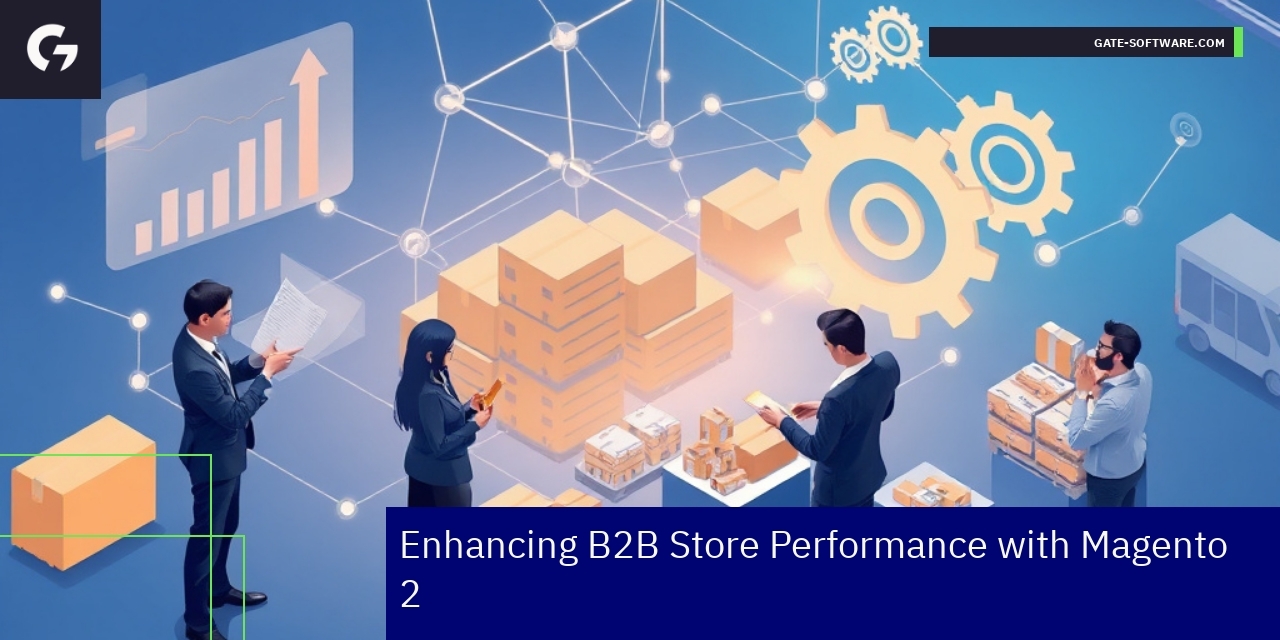
Enhancing B2B Store Performance with Magento 2
Personalizing Customer Offers 🧠 UWAGI:
Personalization plays a critical role in boosting sales within B2B eCommerce environments powered by Magento 2. By tailoring offers and recommendations to specific business clients, companies can increase engagement and conversion rates. Personalized pricing, volume discounts, and custom catalogs aligned with klient indywidualny needs enhance the buying experience. Successful personalization examples include dynamic product displays based on purchase history and customer segmentation, which directly impacts zakupy biznesowe and profesjonalne zakupy effectiveness.
Integrating Marketing Tools
Integrating advanced marketing tools with Magento 2 infrastructure supports stronger campaign management and customer reach. Recommended tools include CRM systems, marketing automation platforms, and analytics solutions that sync seamlessly with Magento to enhance data-driven decision making. Effective integration results in streamlined workflows and improved tracking of kampanie marketingowe business goals. This enables businesses to leverage social media and content strategies more effectively, maintaining a competitive edge in the sektor B2B market.
Sales Efficiency
Measuring sales effectiveness in a Magento-based B2B store involves analyzing key performance indicators such as conversion rates, average order value, and customer retention. Implementing successful campaign examples demonstrates how targeted marketing efforts and optimized sales funnels can drive growth. Focused strategies on optymalizacja platformy B2B commerce contribute to a more efficient sales process, ensuring that eCommerce Manager and Head of Applications achieve measurable improvements aligned with company objectives in the B2B sector.

Why Monitoring Magento 2 Performance is Critical for B2B
How monitoring impacts success
Monitoring Magento 2 performance directly influences B2B success by ensuring that the platform operates smoothly under complex, high-volume transactions. A slow or unreliable e-commerce site can disrupt the buyer journey, leading to lost orders and damaged client relationships. For B2B companies, where transactions often involve bulk purchases and long-term partnerships, the cost of downtime or sluggish responses is especially high. Monitoring allows businesses to detect bottlenecks early and maintain system stability, which supports higher customer satisfaction and loyalty. Integrating performance monitoring with business KPIs enhances the ability to correlate technical health with commercial outcomes, driving continuous improvement.
Key indicators to follow
Key performance indicators for Magento 2 in a B2B context include page load times, server response times, throughput rates, and error rates during peak business activities. It is vital to also track API integration latencies between Magento and ERP, CRM, or inventory management systems to avoid data flow interruptions. Monitoring database query performance becomes critical as complex product catalogs and pricing structures typical in B2B settings demand efficient backend operations. Tracking user interaction metrics alongside system performance data provides a holistic understanding of the platform’s health and user experience, essential for proactive maintenance and troubleshooting.
Continuous Performance Monitoring
Continuous monitoring of Magento 2 performance offers significant advantages by providing real-time insights and early detection of anomalies before they escalate into critical failures. This approach reduces downtime and supports SLA compliance, key concerns for B2B customers who rely on predictable access to ordering systems. Examples of monitoring tools tailored for Magento 2 environments include application performance management platforms, server health dashboards, and log analytics tools. These tools enable IT teams to automate alerts and generate detailed reports that inform ongoing optimization and capacity planning, ensuring the platform scales with business growth.
Setting Key Metrics
Defining clear success metrics aligned with B2B goals is foundational for effective performance management. Metrics should include transaction throughput, availability percentages, and response time thresholds that reflect business expectations. Including SEO performance metrics ensures the Magento 2 platform maintains visibility and attracts new corporate clients. Analyzing data trends using advanced analytics helps identify recurring issues and optimize resource allocation. This structured approach supports transparent reporting to stakeholders and continuous refinement of the platform to meet evolving market demands.
Seamless Integration with Other Systems
Integrating Magento 2 performance monitoring with other enterprise systems such as ERP, CRM, and supply chain solutions enhances operational visibility and automation. These integrations facilitate synchronized data exchange, ensuring real-time inventory updates, order processing, and customer communications. The benefit of seamless integration lies in the reduction of manual interventions, minimizing errors, and speeding up the order-to-delivery cycle. By monitoring these connected systems as a unified technology ecosystem, B2B organizations can rapidly pinpoint and resolve performance disruptions, maintaining service excellence and competitive advantage.

How Magento 2 Implementations Boost B2B Sales
Meeting Customer Expectations
Magento 2 supports B2B sales by enabling businesses to collect detailed customer feedback that informs continuous improvements tailored to client needs. By integrating advanced tools for gathering insights directly from customers, enterprises can adapt their offerings and services to meet evolving expectations. Enhancing customer experience is achieved through personalized catalogues, dynamic pricing, and streamlined ordering processes—all designed to simplify interactions and foster customer loyalty. The Magento Strategy Boosted B2B Customers by focusing on tailored user journeys and effective communication strategies that align with the unique buyer personas in B2B sectors, including eCommerce Managers and Heads of Applications. These adaptations help companies realize greater customer satisfaction, which directly translates into drive sales growth and stronger business relationships.
Sales Efficiency
Key performance indicators in B2B sales with Magento 2 include conversion rates of complex product offerings, average order value, and customer retention rates. Efficient sales strategies leverage Magento’s customizable workflows and automation capabilities to accelerate deal cycles and reduce manual order processing errors. Examples of effective strategies include implementing multi-tier pricing, managing multiple roles and permissions for corporate accounts, and integrating seamless payment and credit options. By focusing on these aspects, Magento 2 enables a measurable impact on sales performance, helping organizations meet and exceed their sales targets within competitive B2B markets.
Order Fulfillment Time
Improving order times in B2B environments using Magento 2 involves optimizing the logistics and inventory management modules. Real-time inventory updates and automated order processing reduce delays and errors, ensuring faster delivery. Additionally, logistics tips such as integrating Magento with third-party logistics providers or ERP systems enable streamlined shipping and tracking processes. Efficient fulfillment not only meets the stringent demands of B2B customers but also supports scalable growth and operational effectiveness, making Magento 2 a crucial platform for businesses aiming to enhance their order fulfillment capabilities.

Top Magento 2 Setup Errors
Overview of typical problems
In B2B implementations of Magento 2, common setup errors often stem from misconfigured inventory management, complex pricing structures, and inadequate integration with ERP systems. These issues can lead to operational inefficiencies and impact order fulfillment times significantly. Another frequent problem is the improper setup of customer group rules and permissions, which is critical for segmenting B2B buyers and offering tailored pricing or catalogs. Additionally, lack of optimization for Security Measures for Purchase Order Payment Methods in Magento 2 can expose platforms to risks. Ensuring compliance with data protection guidelines is often overlooked, leading to vulnerabilities.
Prevention tips
To prevent these issues, thorough initial configuration aligned with business processes is essential. Implementing best logistics practices that fit the B2B supply chain will also reduce delivery times and increase satisfaction. Regular audits of security protocols, particularly focusing on Security Measures for Purchase Order Payment Methods in Magento 2, help maintain data integrity and protect sensitive transactions. Educating teams on mobile storefront importance and ensuring responsive design contributes to better UX/UI, which is increasingly relevant for B2B buyers accessing stores via mobile devices.
Order Fulfillment Time
Efficient order fulfillment is a cornerstone of successful B2B Magento 2 stores. Shortening delivery times requires integrating real-time inventory management with logistic partners and optimizing warehouse workflows. Adopting automated order processing and shipment tracking reduces manual errors and accelerates dispatch. Best logistics practices, such as using reliable couriers and consolidating shipments, minimize delays and costs. Magento 2 should be configured to support various shipping methods preferred by B2B clients, ensuring transparent communication of delivery status.
Security & Data Protection
Security in B2B e-commerce demands rigorous attention, especially in Magento 2 setups handling high-value transactions and sensitive data. Key security considerations include implementing robust authentication protocols, role-based access controls, and encryption of payment data. Compliance with data protection guidelines is mandatory to maintain trust and avoid legal penalties. Specifically, Security Measures for Purchase Order Payment Methods in Magento 2 must be enhanced to prevent fraud and unauthorized order manipulations. Continuous monitoring and timely updates of security patches are indispensable.
Mobile Storefront
With the increasing use of mobile devices in business purchasing, having a mobile storefront that adapts flawlessly to various screens is critical. Responsive design improves accessibility and user satisfaction, directly impacting conversion rates. UX/UI tips include simplifying navigation for quick access to frequently used products, integrating predictive search functions, and ensuring that forms and checkout processes are intuitive and swift. Compliance with WCAG standards further ensures usability for all users, including those with disabilities, enhancing the overall B2B user experience.

Benefits and Risks of Magento 2
What benefits exist?
Magento 2 offers significant advantages for B2B businesses focused on enhancing sales efficiency and streamlining operations. Critical effectiveness indicators include tailored pricing, personalized catalogs, and simplified checkout flows that expedite transaction processes. Efficient actions within the platform leverage these features to reduce sales cycles and increase transaction frequency. Integration with ERP systems ensures real-time synchronization of inventory and order data, enabling seamless supply chain management. CRM integration enriches customer data management, supports sales tracking, and fosters long-term client relationships. Key features for B2B transactions in Magento, such as company account management, quote requests, and bulk ordering, empower businesses to meet complex customer demands. Best practices for B2B Magento migration emphasize thorough planning, data integrity, and phased implementation to minimize downtime. Automating purchase processes through Magento’s capabilities enhances operational performance by reducing manual interventions, error rates, and processing times. Real-life automation examples include automated reordering and approval workflows that significantly improve purchase efficiency.
What risks may arise?
Despite its benefits, Magento 2 presents challenges that B2B companies must address to ensure smooth operations. Complex system architecture and extensive customization options may require specialized technical expertise, raising implementation and maintenance costs. Integration with ERP and CRM systems, while beneficial, can encounter compatibility issues that delay deployments or require costly adjustments. Performance challenges may emerge from highly tailored environments, necessitating ongoing optimization efforts. Security vulnerabilities exist and mandate rigorous protocols and regular system updates to safeguard sensitive B2B data. Dependence on third-party extensions to fulfill niche business needs introduces risks related to compatibility, versioning, and security, which can affect platform stability and continuity.
Sales Efficiency
Critical effectiveness indicators such as shortened sales cycles, increased average order values, and improved customer retention rates reveal Magento 2’s impact on B2B sales. Efficient actions include leveraging personalization features, setting tiered pricing strategies, and streamlining checkout steps to enhance buyer experience. These measures directly support B2B eCommerce goals by optimizing transaction throughput and boosting overall revenue.
ERP and CRM Integration
Integration benefits encompass unified data flow, improved accuracy in order and inventory management, and enhanced customer relationship oversight. Best integration practices involve selecting compatible technologies, rigorous testing phases, and ongoing synchronization monitoring to ensure consistent data exchange. Magento’s specific features for B2B transactions—such as company management, custom catalogs, and quote-based pricing—are essential to address unique B2B workflows. Best practices for B2B Magento migration underline the importance of preserving data integrity, maintaining operational continuity, and utilizing expert support to mitigate migration risks.
Automating Purchase Processes
Automation positively influences performance by reducing manual workload, speeding up order processing, and minimizing errors. Magento 2 supports a variety of automation scenarios: automated purchase approvals, smart reorder points, and dynamic pricing rules tailored for B2B customers. These examples showcase how automation in Magento enhances operational agility and cost efficiency, enabling businesses to scale confidently.
—
Conclusion
Magento 2 delivers comprehensive tools that boost sales efficiency, enable seamless ERP and CRM integration, and support automation of complex B2B purchase processes. While implementation challenges such as technical complexity, integration pitfalls, and security vulnerabilities require careful management, the platform’s robust capabilities make it a strategic asset for B2B enterprises. Continuous optimization of purchase processes and adherence to best practices will ensure maximum benefit realization and sustained competitive advantage in evolving digital commerce landscapes.

Data and Performance Metrics – Efficiency, SLA, TCO
Operational Effectiveness in B2B Projects
In the realm of B2B e-commerce, measurable outcomes play a crucial role in decision-making and assessing overall efficiency. At Gate-Software, we emphasize vital operational metrics that reflect our service quality and client satisfaction.
1. Project Takeover Time: On average, we complete project takeovers within 30 days, ensuring a smooth transition and minimizing disruptions to client operations.
2. Timely Delivery Rate: We pride ourselves on our 95% on-time project delivery rate, a testament to our commitment to meeting deadlines and client expectations.
3. Total Cost of Ownership (TCO) Reduction: Clients utilizing our MagentoOneS™ services have reported an average 20% reduction in TCO compared to traditional management approaches, enhancing their profit margins.
4. Implementations Count: Over the past year, we have successfully executed 150+ B2B implementations, showcasing our extensive experience and capability in delivering tailored solutions.
5. Uptime SLA: Our Service Level Agreements guarantee an uptime of 99.9%, ensuring that clients can rely on consistent availability of their e-commerce platforms.
6. Average Client Relationship Duration: We maintain an impressive 5-year average client relationship, reflecting the trust and satisfaction we cultivate through our services and support.
7. Customer Satisfaction Score: Feedback from our clients indicates an overall satisfaction score of 4.8 out of 5, highlighting our focus on quality and responsiveness throughout the service process.
These metrics not only illustrate our operational prowess but also serve as a solid foundation for potential clients to measure our effectiveness against their own business objectives and expectations.

Summary
In the ever-evolving landscape of B2B e-commerce, Gate-Software’s expertise in optimizing Magento 2 serves as a critical asset for businesses aiming to enhance their purchasing processes and capitalize on digital opportunities. By streamlining order management, integrating vital ERP and CRM systems, and implementing effective automation strategies, companies can significantly boost sales efficiency and customer satisfaction. The platform’s flexibility facilitates tailored pricing and personalized catalogs, meeting the unique demands of B2B clients. However, to fully leverage these advantages, ongoing performance monitoring and adherence to best practices are essential to address potential implementation challenges. By addressing these aspects, businesses not only optimize their operational capabilities but also ensure lasting competitive advantages in the marketplace. We invite you to explore further how Gate-Software can support your B2B transformation and elevate your e-commerce success.

FAQ
How does B2B differ from B2C in e-commerce?
B2B e-commerce involves businesses purchasing goods and services from other businesses, characterized by higher order volumes, long-term contracts, and complex internal approval workflows, unlike B2C which focuses on individual consumers.
What are key strategies for optimizing Magento 2 for B2B?
Key strategies include enhancing platform performance, improving usability and navigation, integrating ERP and CRM systems, and ensuring compliance with UX/UI standards to cater to the unique needs of B2B clients.
Why is monitoring Magento 2 performance critical for B2B?
Continuous monitoring is essential as it helps identify bottlenecks, ensure uptime, and maintain transaction efficiency, directly impacting customer satisfaction and operational costs in a competitive B2B environment.
What are common challenges when implementing B2B processes in Magento 2?
Common challenges include misconfigured workflows, inadequate customer segmentation, and integration issues with existing ERP and CRM systems, which can disrupt order management and reduce trust in the platform.
How does automation enhance B2B purchase processes in Magento 2?
Automation accelerates transaction processing, reduces manual errors, and enhances operational efficiency by streamlining tasks such as inventory updates and order processing, making it essential for handling complex B2B workflows effectively.
.
.
Zamów bezpłatną konsultację
.
Z nami rozwój Twojego biznesu nabierze tempa! Zapraszamy do kontaktu średnie i duże firmy generujące min. 7 mln PLN obrotu rocznie – tam nasza ekspertyza sprawdza się najlepiej.
.
Kliknij w poniższy przycisk i skontaktuj się z jednym z naszych konsultantów e-commerce
.