Introduction
Maximizing the efficiency of a B2B store built on Magento 2 requires a comprehensive approach that balances technical excellence with strategic business goals. For CTOs, CDOs, eCommerce Managers, and Heads of Applications, this means leveraging Magento’s robust architecture and modular capabilities to ensure seamless performance, scalability, and user experience tailored to the complex demands of B2B commerce.
Magento 2 offers extensive customization options and integration capabilities essential for enterprises operating in B2B markets. Efficiency improvements commonly focus on optimizing backend processes such as catalog management, pricing rules, and customer segmentation while enhancing the frontend with intuitive UX/UI aligned with WCAG guidelines. Moreover, maintaining a lean, scalable infrastructure—including hosting and monitoring aligned with SLA commitments—is vital to reduce downtime and boost transaction throughput.
This introduction sets the stage for discussing practical tips grounded in Gate-Software’s expertise, combining strategic insights with technical best practices to drive measurable improvements in store operations, user satisfaction, and ultimately, business outcomes within the MagentoOneS™ ecosystem.
Optimizing Backend Processes
Catalog Management
Details on how to streamline catalog operations to improve performance and maintainability.
Pricing Rules
Approaches to configure flexible and performant pricing structures tailored for B2B clients.
Customer Segmentation
Techniques to segment customers effectively for personalized experience and marketing.
TABLE OF CONTENTS
- How to Boost Your B2B Store Efficiency with Magento 2? Practical Tips
- Magento 2 Basics for B2B
- Pre-Implementation Analysis – A Foundation Not to Skip
- Design and Development – From Concept to Live Store
- How Long Does a Magento 2 Implementation Really Take?
- Is Magento 2 Suitable for Small Stores or Only Big Players?
- Main Costs of Magento 2 Implementation
- Can I Manage Store Development on My Own After Launch?
- Measuring Magento 2 Implementation Effectiveness
- The Role of Your Implementation Partner After Launch
- Scalability – Magento B2B Ready for the Future
- Why Are Magento B2B Stores So Popular?
- Magento 2 Compared to Other eCommerce Platforms
- Checklists and Steps for Effective Optimization
- Common Magento 2 Implementation Mistakes
- Alternatives to Magento 2 in B2B
- Benefits and Risks of Magento 2
- Data and Performance Metrics – Efficiency, SLA, TCO
- Summary
- FAQ
- Monitorowanie wydajności i analiza logów
- Optymalizacja cache i indeksowania
- Audyty kodu i przeglądy architektury
- Ustawienia serwera i infrastruktury
- Testy obciążeniowe i skalowanie
- Regularne raportowanie wyników optymalizacji
- Szybkie reagowanie na zgłoszenia użytkowników
- Ciągłe szkolenia techniczne zespołu
- Proaktywne wdrażanie najnowszych praktyk Magento
- Współpraca z zespołem klienta nad roadmapą funkcji

Magento 2 Basics for B2B
In today’s B2B e-commerce environment, understanding the basic concepts of Magento 2 functionalities is essential for effective platform management and growth. Magento 2 offers a robust framework designed to meet the complex needs of B2B businesses, which often involve multi-tiered pricing, custom catalogs, and tailored buyer experiences that differ significantly from B2C models.
One of the fundamental differences between B2B and B2C lies in the nature of the customer relationship and purchasing process. B2B transactions typically involve larger order volumes, negotiation cycles, and specific organizational roles such as procurement officers and business managers. Magento 2 supports these requirements through features like custom quotes, purchase orders, and company accounts, which open the door for more personalized and secure transactions.
By leveraging Magento 2 functionalities such as advanced pricing rules, approval workflows, and shared catalogs, B2B companies can create an optimized buying experience that aligns with their clients’ operational needs. These functionalities enable businesses to implement complex discount structures and streamline order approvals, which are critical in B2B environments.
Moreover, understanding these basic concepts helps IT and eCommerce teams configure and extend the Magento 2 platform effectively, integrating with ERP and CRM systems common in B2B contexts. The architectural flexibility of Magento 2 enables seamless scalability, ensuring the platform can grow with business demands while maintaining performance and security standards.
In conclusion, mastering Magento 2 basics for B2B allows decision-makers to harness the platform’s full potential, addressing both immediate business challenges and long-term growth objectives. Emphasizing the differences between B2B and B2C in strategy and execution is key to unlocking value and delivering a superior buyer experience.

Pre-Implementation Analysis – A Foundation Not to Skip
Magento Optimization in Pre-Implementation 🧠 UWAGI:
Magento Optimization in Pre-Implementation
Effective Magento performance optimization best practices begin well before the official project launch. During the pre-implementation phase, it is critical to analyze performance data and metrics such as Efficiency, SLA compliance, and Total Cost of Ownership (TCO). This foundational analysis enables the design of a scalable and robust Magento architecture tailored for complex B2B environments. Addressing optimization early minimizes risks related to slow load times, bottlenecks in product catalog management, and integration challenges with other services. Ensuring the platform adheres to strict performance benchmarks before implementation sets the stage for a seamless user experience and operational efficiency.
B2B Strategies in Analysis
A thorough pre-implementation analysis must integrate B2B strategies that are aligned with the company’s sales processes and customer journey. This includes segmentation of key personas like eCommerce Managers and CTOs, mapping workflows, and benchmarking against SLA targets specific to B2B contexts. The analysis should evaluate how product catalog management can be optimized to handle extensive data, tiered pricing, and custom catalogs typical in B2B scenarios. Incorporating these strategic considerations early helps in crafting precise performance data and metrics frameworks, ensuring the final implementation supports both current and future business requirements.
B2B Sales and Pre-Implementation
Pre-implementation activities play a pivotal role in strengthening B2B sales channels. Understanding the sales cycle implications on the platform’s architecture, including integration with CRM and other supporting services, ensures smoother transactions and better customer retention. Detailed performance data and metrics guide decisions on necessary features and SLA levels that the platform must maintain. Furthermore, effective Magento performance optimization best practices directly influence the ability to manage complex product catalog management needs, which are essential for supporting diverse product portfolios and customized sales agreements in B2B sales environments.

Design and Development – From Concept to Live Store
B2B Marketing in Design Phase
In the design phase of B2B eCommerce platforms, prioritizing B2B marketing strategies is critical to align the user experience with the complex purchasing processes typical for business clients. Understanding the unique needs of key personas such as eCommerce Managers and CIO/CTO decision-makers informs interface design that facilitates seamless order management and efficient workflows. Integrating security as a fundamental aspect of UX/UI design ensures compliance with enterprise standards and builds trust. Effective B2B marketing during design also involves tailoring content and navigation to highlight Magento performance optimization best practices, thus supporting the scalability and responsiveness that B2B transactions demand. This phase sets the foundation for a platform that supports intricate B2B strategies by combining robust security, streamlined order management, and marketing-informed user journeys.
Magento Optimization during Development 🧠 Uwaga: Priorytet bezpieczeństwa i wydajności | 🔧 Optymalizacje techniczne | 📈 Monitorowanie ciągłe
During development, applying Magento performance optimization best practices is essential to meet B2B needs for high availability, fast load times, and reliable transaction processing. Optimizations target server configurations, database tuning, and frontend delivery to prevent bottlenecks affecting order management and security. Developers work closely with architects and system administrators to implement caching mechanisms, asynchronous order processing, and secure payment integrations. This ensures that security protocols maintain data integrity and confidentiality without compromising user experience or system performance. Magento’s flexible architecture supports tailored B2B strategies, enabling features such as custom pricing, role-based access, and detailed transaction logs. Successful development demands continuous performance monitoring and security audits aligned with the specific requirements of B2B marketing goals.
B2B Strategies in Store Design
Designing a B2B store requires embedding B2B strategies deeply into the platform’s architecture and user interface. Key considerations include advanced order management features such as bulk ordering, purchase approvals, and multi-user accounts, which address the complexity of B2B procurement cycles. Security remains a priority, necessitating compliance with industry standards and the implementation of multi-layered protection to safeguard sensitive business data. Magento supports these strategies by offering extensible modules and APIs that enhance functionality according to client-specific needs. Aligning store design with B2B marketing insights enables effective targeting and communication, reinforcing brand value propositions throughout the customer journey. The integration of order management efficiency and rigorous security frameworks within the store design is fundamental to driving sustained business growth and operational excellence.

How Long Does a Magento 2 Implementation Really Take?
B2B Sales and Implementation Time
The duration of a Magento 2 implementation in a B2B context largely depends on the complexity and scale of the sales processes involved. B2B sales typically require tailored workflows, integration with multiple ERP or CRM systems, and custom pricing structures, all of which extend implementation timelines. An essential consideration is aligning the implementation phases with SLA agreements to ensure predictable delivery and maintain business continuity. Effective project planning that incorporates performance data and metrics — Efficiency, SLA, TCO — helps optimize resource allocation and scheduling. Understanding these parameters upfront enables a realistic timetable while managing expectations across technical and commercial teams, a must for any serious B2B Magento rollout.
Magento Optimization and Time
Magento performance optimization best practices play a significant role in influencing how long an implementation takes. Beyond the base setup, optimizing Magento for peak performance ensures the platform can handle B2B demands such as bulk orders, complex catalogs, and high traffic without compromising speed. This optimization involves careful configuration, including caching strategies, database tuning, and front-end enhancements. Integrating these best practices from the beginning avoids costly retrofits and reduces total cost of ownership (TCO) over the long term. Therefore, the timeline should allocate sufficient buffers for performance audits, load testing, and fine-tuning, all crucial in delivering a robust Magento 2 platform that supports scalable B2B operations.
B2B Marketing and Timelines
In the context of B2B marketing, the implementation timeline must be synchronized with marketing campaigns and content strategies to maximize impact. Magento 2 implementations that incorporate advanced marketing capabilities — such as personalized content, targeted promotions, and analytics — require close collaboration between technical and marketing teams. Proper planning for integration of marketing tools influences the overall project duration but ensures smooth activation of campaigns driving lead generation and sales conversion. Using performance data and metrics also helps measure campaign effectiveness and optimize marketing spend, contributing ultimately to a lower TCO. Synchronizing these timelines with other services, including ongoing support and platform maintenance, creates a seamless path to realizing full value from a Magento 2 B2B platform.

Is Magento 2 Suitable for Small Stores or Only Big Players?
B2B Strategies for Small Stores
For small stores engaged in B2B, Magento 2 offers a flexible platform to implement tailored B2B strategies effectively. Leveraging Magento’s modular architecture allows small businesses to customize their online presence to meet the distinct requirements of business clients, such as personalized pricing, custom catalogs, and streamlined purchasing processes. Integrating Magento performance optimization best practices ensures smaller B2B stores can operate smoothly without compromising user experience or scalability. A focused product catalog management approach within Magento empowers small enterprises to maintain clear and organized offerings, which is critical for B2B clients who often require detailed product information. Strategically, small stores can maximize their impact by concentrating on building strong relationships and efficient B2B sales processes supported by Magento’s comprehensive features tailored for such needs.
B2B Sales by Store Size
B2B sales dynamics vary significantly depending on the size of the store. For small stores, Magento 2 facilitates an agile sales approach by supporting easy-to-manage product updates, multiple pricing tiers, and custom promotions aligned with client requirements. This adaptability allows smaller B2B players to compete effectively while maintaining control over their sales pipeline. In contrast to large enterprises, small stores benefit from Magento’s capacity to scale sales options without overwhelming their operational capabilities. Implementing Magento performance optimization best practices ensures that as store size grows or fluctuates, the infrastructure remains reliable, which is crucial for maintaining uninterrupted B2B sales flows. Additionally, efficient product catalog management helps maintain accuracy and complexity appropriate for store size, enabling personalized interactions that drive sales success.
Magento Optimization for Smaller Players
Optimization of Magento 2 for smaller B2B players is critical to harnessing the platform’s full potential without incurring unnecessary complexity or costs. Best practices in Magento performance optimization focus on streamlining hosting environments, leveraging efficient caching, and minimizing resource consumption tailored to the smaller traffic and operational scale typical of small stores. Employing optimized product catalog management techniques ensures that catalogs remain manageable and intuitive, preventing performance bottlenecks while supporting detailed B2B sales requirements. Furthermore, smaller players can benefit from Gate-Software’s expertise in fine-tuning Magento setups specifically for B2B strategies, resulting in a balance between robust functionality and lean operational overhead. This approach ensures that smaller stores are not only viable Magento users but can also compete effectively in the B2B space alongside larger enterprises.

Main Costs of Magento 2 Implementation
B2B Store Setup Costs
Setting up a Magento 2 store for B2B involves multiple cost factors that go beyond a typical B2C implementation. The B2B store setup costs include not only licensing and hosting expenses but also specialized development for features such as custom pricing tiers, customer segmentation, and advanced product catalog management capabilities that support complex product structures and bulk ordering. Integration with existing ERP and CRM systems is often necessary, adding to development time and costs. Moreover, ensuring compliance with accessibility standards and UX/UI adjustments tailored for B2B users can increase initial investments, but these are essential for usability and adoption. Strategic planning of these costs ensures a scalable platform aligned with business operations.
Magento Optimization vs. Costs
Post-setup, Magento requires continuous attention to performance through Magento performance optimization best practices. Optimizing server configurations, implementing effective caching mechanisms, and database tuning are critical to maintain load speeds and handle high transaction volumes typical for B2B. While optimization can incur additional costs, it significantly affects user experience and operational efficiency. Avoiding performance bottlenecks prevents revenue loss and costly downtime. Leveraging monitoring tools and proactive maintenance minimizes unexpected expenses. Balancing optimization investments against running costs is vital for long-term sustainability and aligns with strategic goals for a robust Magento environment.
B2B Marketing Budgets
In the B2B environment, marketing budgets must be carefully allocated to support demand generation tailored to business clients. Effective B2B marketing involves targeted campaigns, content personalization, and precise segmentation that reflect the buying processes of enterprises. Budgets encompass digital marketing, account-based marketing initiatives, and analytical tools to measure ROI. Integrating marketing efforts with Magento’s capabilities enables seamless customer journeys and data-driven decision-making. Allocation for other services, such as SEO specialists familiar with Polish SEO phrases and content alignment, ensures visibility and traffic growth. Thoughtful distribution of marketing resources complements the technical side, driving a successful Magento 2 B2B store.

Can I Manage Store Development on My Own After Launch?
B2B Sales and Self-Development
Managing B2B sales independently after launching a store demands a strategic approach tailored to the complexities of business clients. It requires continuous refinement of customer journeys and relationship management to align with evolving market needs. Effective product catalog management becomes crucial, ensuring the offerings remain relevant and competitive. Business buyers expect seamless interactions, transparency, and efficient service, making it imperative to regularly analyze sales data and adapt B2B strategies accordingly. Leveraging insights from analytics can empower eCommerce Managers and Heads of Applications to make informed decisions that enhance conversion rates while maintaining strong customer engagement without external dependencies.
Magento Optimization for Self-Management
Optimizing Magento performance is foundational for sustainable self-management of a store post-launch. Businesses need to adopt Magento performance optimization best practices such as cache management, database indexing, and streamlined server configurations to maintain site speed and reliability. Regular updates and monitoring ensure the platform handles increasing B2B transaction volumes without bottlenecks. Additionally, implementing automated testing and monitoring tools can mitigate risks and reduce downtime. For CTOs and IT architects, mastering these optimization techniques means controlling costs while ensuring the platform scales with business growth, providing a stable foundation for other services integration and efficient product catalog management.
B2B Strategies for Self-Development
Developing and adapting B2B strategies on your own requires a clear understanding of client segmentation, pricing models, and personalized marketing efforts. Self-driven strategy evolution includes continuous competitor analysis and customer feedback loops to refine value propositions. Integrating these strategies into Magento’s capabilities supports dynamic pricing, complex order workflows, and multi-tiered access for business clients. Ensuring that all processes align with overarching sales goals fosters independence in managing growth trajectories. Collaboration between eCommerce Managers, CDOs, and CIOs/CTOs is critical to embed these strategies within the technology framework while leveraging other services to optimize operational efficiency and product catalog management.

Measuring Magento 2 Implementation Effectiveness
Performance Data and Metrics – Efficiency, SLA, TCO
In B2B Magento 2 implementations, assessing effectiveness begins with clear performance data and metrics. Efficiency involves measuring order processing times, cart abandonment rates, and site load times — each significantly impacting user experience and sales outcomes. SLA adherence is critical, with strict monitoring of uptime and availability ensuring business continuity, alongside rapid response times for issue resolution. Total Cost of Ownership (TCO) evaluation encompasses initial deployment costs, ongoing maintenance, hosting, and third-party integrations, offering a clear picture of investment versus return. Together, these metrics form the foundation for evaluating Magento performance optimization best practices, guiding technical teams to maintain optimal platform health while supporting business goals.
💡 Key Metrics
📊 Data Collection Methods
⚙️ Monitoring Tools
Magento Optimization in Effectiveness Measurement
Optimizing Magento goes beyond baseline performance; it involves systematic application of best practices such as advanced caching mechanisms (e.g., Varnish, Redis), Content Delivery Networks (CDNs), and careful media optimization to minimize load times. Regular database tuning and removal of unnecessary extensions safeguard system agility. Within a B2B context, this technical rigor aligns closely with business goals, ensuring the platform supports complex product catalog management without sacrificing speed or reliability. The integration with other services, including ERP and CRM systems, must also be seamless, enabling efficient workflows and high data integrity. These optimization efforts directly influence performance data and metrics, reinforcing SLA commitments and optimizing TCO by reducing downtime and resource waste.
B2B Marketing and Metrics
B2B marketing effectiveness within Magento 2 implementations hinges on robust tracking of conversion rates from targeted campaigns, user engagement with marketing content, and repeat purchase metrics indicative of customer loyalty. Accurate, user-friendly product catalog management is vital, directly influencing lead quality and conversion. Advanced features facilitating personalized offers or negotiated deals further enhance the marketing impact. Coupled with performance data and metrics, these marketing insights inform continuous refinement of both front-end customer journeys and backend operational processes. This end-to-end visibility supports sustained optimization of Magento performance, ensuring marketing efforts translate into tangible sales growth while containing TCO through targeted investments.

The Role of Your Implementation Partner After Launch
B2B Sales and Partner Support
After launch, effective support from your implementation partner is crucial for sustaining and growing B2B sales. Partners play a key role in assisting your sales teams with platform-related challenges, ensuring smooth integration with existing sales processes, and quickly resolving issues that might hinder transactional efficiency. By providing ongoing technical and operational support, the partner helps maintain robust, scalable solutions that align with evolving B2B strategies. This support extends to training and enablement, empowering your internal teams to fully leverage the platform’s features and capabilities. Continuous collaboration with your implementation partner ensures that B2B sales channels remain optimized, competitive, and responsive to market demands.
Magento Optimization and Partner
Post-launch, one of the critical roles of your implementation partner is to focus on Magento performance optimization best practices. This involves thorough monitoring and tuning of the platform to maintain optimal speed, stability, and scalability—essential qualities for any B2B environment handling high traffic and complex transactions. The partner applies expert knowledge in infrastructure, caching, indexing, and code enhancement to minimize latency and avoid bottlenecks. Regular performance reviews and audits allow the partner to proactively address emerging issues, ensuring that the Magento platform remains reliable, efficient, and capable of supporting future growth. This technical vigilance directly supports improved user experiences and increased sales effectiveness.
Kluczowe obszary optymalizacji Magento
Zalecenia dla partnerów wdrożeniowych
B2B Strategies in Partner Collaboration
Collaboration with your implementation partner goes beyond technical maintenance by actively supporting your evolving B2B strategies. Partners contribute strategic insights based on thorough analysis of operational data and market trends, helping you refine sales approaches and customer engagement models. They provide expertise in configuring advanced features such as customer-specific pricing, custom catalogs, and segmented workflows that are vital for personalized B2B interactions. Through joint planning and agile communication, your partner ensures that platform capabilities align perfectly with your business goals. This partnership fosters agility, enabling your organization to respond effectively to competitive pressures and capitalize on new B2B opportunities.
Other Services and Product Catalog Management
In addition to core platform support, implementation partners assist with other services critical to business continuity and growth, such as integration with CRM, ERP, and third-party tools. This enhances efficiency across the sales and operational funnels. Managing the product catalog post-launch is another essential area where the partner provides ongoing expertise—ensuring that catalogs are comprehensive, well-structured, and up to date. Proper catalog management supports accurate inventory, streamlined procurement, and effective customer navigation, all of which are vital for sustained B2B success. Continuous optimization of these areas helps maintain operational excellence and drives superior business outcomes.
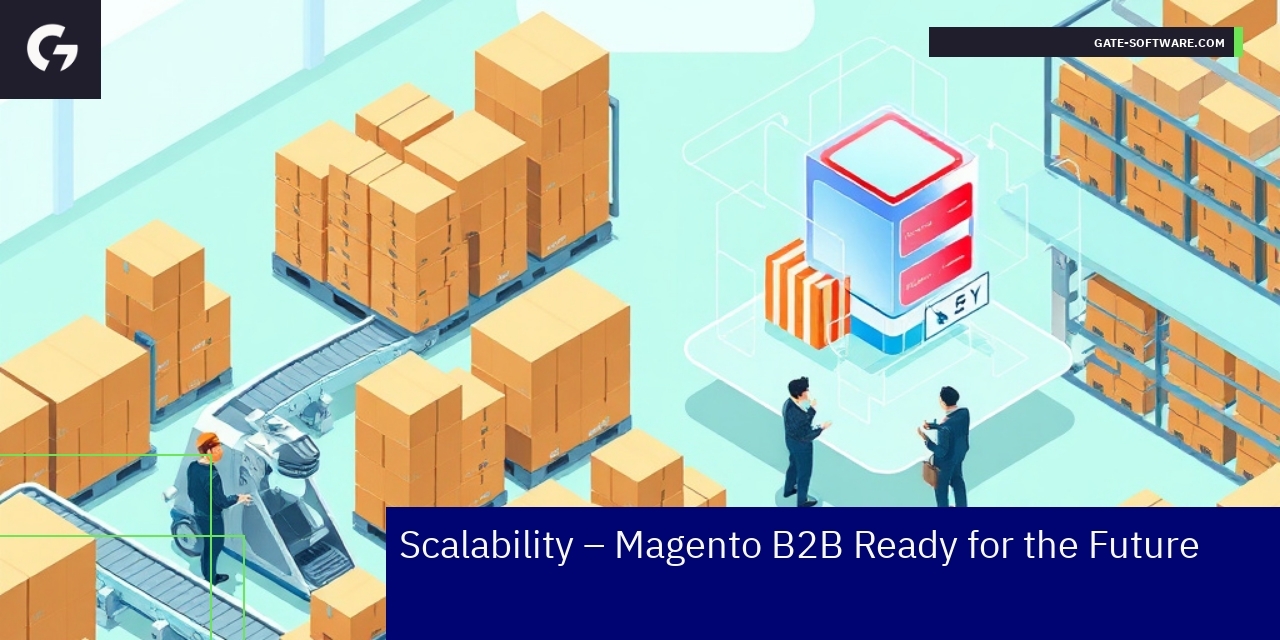
Scalability – Magento B2B Ready for the Future
Future-Proof Magento Optimization 🛠️🚀✅
Scalability in Magento for B2B environments demands a forward-looking approach integrating Magento performance optimization best practices to ensure long-term platform resilience. As businesses grow, the complexity of managing large product catalogs and increasing transaction volumes requires robust infrastructure and optimized codebases that prevent bottlenecks. Future-proof Magento optimization involves consistent monitoring, leveraging advanced caching mechanisms, and applying incremental improvements to database queries and indexing processes. This ensures that system responsiveness remains high, even during peak sales periods and large-scale B2B operations. Additionally, integrating with scalable hosting and cloud services allows seamless resource scaling while maintaining platform stability and security. Strategic maintenance aligned with Magento’s roadmap, combined with optimization of UX/UI tailored to B2B user journeys, sets a foundation for sustainable growth and adaptability to evolving market needs.
B2B Strategies for Scalability
Effective B2B strategies for scalability focus on harmonizing business processes with technology capabilities. Central to this is leveraging Magento’s flexibility to customize workflows that support complex B2B sales structures, including multi-tier pricing, negotiation mechanisms, and account hierarchy management. Product catalog management plays a crucial role, requiring precise configuration to handle extensive product assortments, configuration options, and personalized pricing. Scalability is also achieved through modular system architecture, enabling addition of functionalities or integrations with ERP and CRM systems without disrupting existing operations. Aligning these strategies with analytics and data-driven insights enhances decision-making and responsiveness to market demands. Emphasizing Magento performance optimization best practices across development cycles supports these strategies by ensuring that system performance scales in tandem with business expansion and diversification of other services.
B2B Sales and Long-Term Vision
Long-term success in B2B sales relies on a scalable platform that supports complex, often custom, client requirements and fosters strong partner relationships. Magento’s adaptability to B2B needs allows enterprises to implement tailored pricing models, contract management, and automated workflows that streamline sales processes. Maintaining high performance is critical to avoid friction points that could disrupt customer experience, especially as product catalog management becomes increasingly sophisticated with numerous SKUs and custom product configurations. Investing in Magento performance optimization best practices reduces downtime and accelerates transaction processing, supporting sustained B2B growth. Moreover, aligning other services such as marketing automation, customer service, and analytics within the Magento ecosystem allows for a comprehensive approach to business expansion. This vision secures Magento’s role as a foundational tool in B2B sales strategy, capable of evolving alongside technological advancements and changing market dynamics.

Why Are Magento B2B Stores So Popular?
B2B Marketing and Magento Popularity
Magento B2B stores have gained popularity largely due to their robust capabilities in addressing specific B2B marketing challenges. The platform supports complex workflows and customer segmentation that are essential for targeted B2B marketing strategies. This enables companies to tailor their communications and offerings precisely, making marketing efforts more effective. Additionally, Magento’s flexibility allows integration with various other services, enhancing the overall marketing ecosystem and enabling businesses to coordinate efforts across multiple channels. This adaptability not only supports dynamic B2B marketing but also helps optimize customer engagement throughout the sales funnel.
Magento Optimization and Popularity Growth
The rise in Magento store popularity within B2B sectors is also attributed to Magento performance optimization best practices. These include advanced caching, database indexing, and streamlined frontend delivery, which ensure fast and reliable browsing experiences despite extensive product catalogs. Efficient product catalog management is pivotal, as B2B stores often feature thousands of SKUs with complex pricing and availability rules. Magento’s architecture supports this complexity while maintaining high performance, which directly correlates with better customer satisfaction and increased conversion rates. Moreover, optimized backend processes reduce operational costs and improve scalability, facilitating growth for B2B ecommerce platforms.
B2B Strategies Behind Popularity
Underlying the popularity of Magento B2B stores are deeply integrated B2B strategies tailored to corporate purchasing behaviors and organizational structures. Magento aids in implementing multi-tier pricing, custom quotes, and permissions management that align with enterprise procurement policies. This strategic alignment supports seamless, compliant transactions that large companies demand. Furthermore, Magento’s ecosystem includes other services such as integrations with ERP and CRM systems, which streamline order processing and customer management. Together, these strategic capabilities make Magento a reliable choice for enterprises aiming to develop sophisticated B2B ecommerce platforms that drive growth and operational efficiency.

Magento 2 Compared to Other eCommerce Platforms
In the B2B sector, selecting the right eCommerce platform is critical to address complex business requirements such as large product catalogs, customized pricing, and enterprise-level integrations. Magento 2 stands out in this context due to its robust architecture and flexibility but must be evaluated alongside other major platforms such as WooCommerce and Shopify.
Magento 2 vs WooCommerce reflects a key contrast in scalability and functionality. Magento 2 offers far greater scalability, capable of supporting extensive catalogs and high transaction volumes typical in B2B operations. It provides advanced features like customer segmentation, personalized pricing, and multi-tier account management. On the downside, this power comes with increased complexity and higher costs in hosting and maintenance, requiring specialized development skills. WooCommerce, being a WordPress extension, is cost-effective and user-friendly, which makes it attractive for smaller B2B entities. However, it falls short in handling very large catalogs and lacks many intrinsic B2B functionalities, which can limit long-term growth and operational efficiency.
Comparing Magento 2 vs Shopify highlights distinct priorities: Magento 2’s strength lies in its customization capabilities and comprehensive B2B functionality—including quote handling, bulk ordering, and integration flexibility—making it well suited for enterprises with specialized workflows. Shopify offers ease of use with fast setup and straightforward management, beneficial for businesses prioritizing quick deployment over deep customization. Yet, Shopify’s limitations in customizing B2B processes and its reliance on third-party apps may constrain companies with complex needs. Additionally, Shopify’s subscription and app costs may accumulate, contrasting with Magento’s often higher but more predictable licensing and maintenance expenses.
In summary, the decision between Magento 2 vs WooCommerce or Magento 2 vs Shopify hinges on business scale, technical resource availability, and required B2B features. Magento 2 excels for enterprises demanding comprehensive, scalable, and customizable solutions despite its higher complexity and cost. WooCommerce and Shopify suit smaller B2B businesses aiming for simplicity and affordability but with acknowledged limitations in advanced B2B functionalities. Understanding these pros and cons is essential for CTOs, Heads of Applications, and eCommerce Managers seeking a platform that aligns with their strategic and operational objectives.
Magento 2 vs WooCommerce reflects a key contrast in scalability and functionality

Checklists and Steps for Effective Optimization
Effective optimization in a B2B environment demands a precise and structured approach to address both technical and business challenges. The process begins with a clear identification of objectives aligned with corporate goals and stakeholder expectations, typically involving key decision-makers such as the Architect, CTO, and eCommerce Manager. Establishing a comprehensive assessment framework allows for in-depth analysis of current platform performance across MagentoOneS™ implementation, hosting infrastructure, and user experience compliance, with a special emphasis on WCAG 1.1 standards.
Next, implementation checklists should include a thorough audit of system architecture to ensure scalability and security, detailed verification of UX/UI components against defined personas, and validation of integration points within B2B workflows. The optimization steps also encompass migration readiness checks, cost control measures, and continuous monitoring protocols. Each stage must be documented with clear testing criteria and success metrics to facilitate iterative improvements and accountability.
By methodically following these steps and leveraging Gate-Software’s strategic guidelines, companies can achieve not only enhanced operational efficiency but also a tailored customer experience that supports sustainable growth in the B2B sector. This disciplined approach ensures that all optimization steps and implementation checklists are practical, measurable, and directly linked to business value.

Common Magento 2 Implementation Mistakes
Implementing Magento 2 in a B2B context presents unique challenges that can lead to costly implementation mistakes if not carefully managed. One common pitfall is underestimating the complexity of B2B workflows and customer requirements, which results in solutions that do not fully support key functions such as complex pricing structures, bulk ordering, and custom quote processes. To avoid these pitfalls, it is critical to engage early with key stakeholders such as eCommerce Managers and Architects to map out detailed user journeys that reflect real business operations.
Another frequent mistake involves neglecting performance optimization and scalability considerations. B2B platforms often handle large catalogs and high transaction volumes, so failing to optimize hosting, caching, and database management can lead to slow site response and poor user experience. Incorporating Gate-Software’s proven SLA and monitoring practices during implementation helps to maintain system reliability and speed.
Poor integration with existing enterprise systems (ERP, CRM) is also a significant implementation mistake. Overlooking this integration results in fragmented data flow and operational inefficiencies. Working closely with Head of Applications and CTO/CTO roles ensures that APIs and middleware solutions seamlessly connect Magento 2 with other critical platforms, reducing data silos.
Finally, insufficient attention to WCAG and UX/UI standards can alienate B2B users who demand both accessibility and intuitive interfaces. Prioritizing audits against WCAG 1.1 guidelines and applying Gate-Software’s UX principles during design phases helps create inclusive and efficient user experiences.
In summary, avoiding common implementation mistakes in Magento 2 requires a strategic approach that encompasses detailed business requirements, performance tuning, robust integrations, and compliance with accessibility standards — all aligned with Gate-Software’s B2B expertise and methodology. This approach ensures business continuity, user satisfaction, and long-term platform success, minimizing risks associated with implementation mistakes and clearly showing how to avoid pitfalls.

Alternatives to Magento 2 in B2B
When considering alternatives to Magento 2 for B2B eCommerce, selecting other platforms involves a detailed evaluation of their capabilities in handling complex B2B workflows, integration possibilities, and scalability tailored to business needs. Comparisons between platforms should focus on core functionalities such as customer segmentation, pricing flexibility, and support for large order volumes, ensuring seamless business transactions and user management.
B2B eCommerce platforms must offer robust functionalities to support multi-tier pricing structures, custom catalogs, and integration with ERP and CRM systems. This ensures streamlined processes from product management to order fulfillment. Additionally, evaluating these systems based on compliance with usability standards and accessibility (e.g., WCAG) contributes to an inclusive and efficient customer journey.
Gate-Software’s expertise in B2B digital transformation emphasizes choosing platforms that align with strategic goals and provide a scalable foundation for continuous growth. Our experience highlights the significance of custom solutions and ongoing support that cater precisely to the technical and business challenges faced by CTOs, Heads of Applications, and eCommerce Managers. This approach ensures the platforms deployed are not just alternatives but comprehensive ecosystems capable of driving B2B success.

Benefits and Risks of Magento 2
Magento 2 presents a robust platform tailored to meet the complex demands of B2B commerce, delivering numerous benefits alongside inherent risks that must be carefully evaluated through a risk analysis framework.
Among the primary benefits is the platform’s high level of customization and flexibility, allowing businesses to tailor their e-commerce environments specifically to their B2B requirements. This adaptability supports advanced features such as custom pricing, bulk order management, and customer segmentation, which are essential for complex sales processes. Magento 2’s scalable architecture supports growth in product range, transaction volumes, and traffic without compromising performance—an imperative for expanding B2B operations. Moreover, seamless integration capabilities with ERP and CRM systems enhance operational efficiency and data consistency. Its inherent SEO-friendly structure boosts online visibility, while mobile responsiveness ensures access across devices, catering to modern B2B buyer expectations.
Conversely, the risks associated with Magento 2 include operational complexity and the need for specialized technical skills, which can elevate costs and slow deployment. The platform’s total cost of ownership, encompassing development, hosting, and ongoing maintenance, may be significant, warranting a thorough risk analysis. Performance bottlenecks can arise if the system is not optimally configured, particularly with extensive product catalogs. Continuous maintenance and security updates are required to mitigate vulnerabilities and protect business data, consuming time and resources. Lastly, there is a risk of system overhead from underutilized features, which may lead to inefficiencies if not streamlined.
In summary, the benefits and risks of Magento 2 must be assessed strategically. For B2B enterprises, leveraging the platform’s strengths while proactively managing its challenges is key to unlocking its full potential and minimizing operational risks.
Customization and Flexibility
Advanced Features
Custom Pricing
Bulk Order Management
Customer Segmentation

Data and Performance Metrics – Efficiency, SLA, TCO
Operational Effectiveness in B2B Projects
In the context of B2B Magento 2 implementations, a comprehensive evaluation of operational effectiveness is essential for ensuring success. Here are some critical metrics that highlight the performance and cost efficiency of these projects:
1. Average Project Takeover Time: The onboarding process for new Magento projects typically averages 4 to 6 weeks, depending on the complexity of business requirements and existing system integrations.
2. Percentage of Projects Delivered On Time: Gate-Software prides itself on a 95% success rate in delivering B2B projects within stipulated timelines, ensuring adherence to client schedules and minimizing disruption.
3. Average Total Cost of Ownership (TCO) Reduction: Implementing managed services alongside Magento solutions can lead to a TCO reduction of 15-25% within the first year, reflecting efficiency gained from optimized maintenance and operations.
4. Number of Implementations: Over the past year, Gate-Software has successfully completed over 50 B2B Magento implementations, showcasing our capacity to handle diverse client needs and complex solutions at scale.
5. Uptime SLA: Our robust hosting solutions guarantee a 99.9% uptime SLA, ensuring that B2B platforms remain accessible that is critical for operational continuity and customer interaction.
6. Average Client Relationship Duration: On average, client relationships last over 5 years, underlining our commitment to long-term partnerships and ongoing support, crucial for continuous growth in dynamic B2B environments.
7. Site Load Time Improvement Post-Implementation: Following Magento optimization best practices, businesses can achieve site load time improvements of upwards of 25%, significantly enhancing user experience and engagement during peak traffic periods.
These metrics not only provide insight into the operational effectiveness of B2B projects but also assist in making informed decisions that drive business growth and efficiency within the Magento 2 framework.

Summary
In conclusion, leveraging Gate-Software’s expertise in optimizing Magento 2 for B2B environments can significantly enhance your online store’s efficiency, user experience, and overall business outcomes. By focusing on detailed pre-implementation analysis, effective design and development strategies, and long-term performance optimization, you enable your B2B operations to thrive in today’s competitive landscape. Whether you are a CTO, CDO, or eCommerce Manager, understanding the unique complexities of B2B workflows and investing in tailored solutions ensures that you can meet and exceed your client’s expectations. The strategic alignment with Gate-Software positions you for sustainable growth, increased sales, and a strong market presence. We encourage you to reach out for continued support and collaboration as you navigate your Magento 2 journey.
Pre-Implementation Analysis
Effective Design and Development Strategies
Long-term Performance Optimization

FAQ
How can Magento 2 optimize B2B sales processes?
Magento 2 offers advanced features such as custom pricing, bulk ordering, and tailored catalog management that streamline B2B sales processes. By integrating these functionalities, businesses can align their sales strategies with operational requirements, enhancing customer interactions and transaction efficiency.
What are the key costs associated with setting up a B2B store on Magento 2?
Setting up a B2B store on Magento 2 involves costs related to licensing, hosting, development for specialized features, and integration with existing systems like ERP and CRM. Additionally, ongoing maintenance and compliance with standards such as WCAG also contribute to the overall investment.
How long does it typically take to implement Magento 2 for a B2B business?
The implementation timeline for Magento 2 in a B2B context can vary significantly depending on the complexity of sales processes and required integrations. On average, it can take several months to complete, particularly if extensive customizations and system adjustments are necessary.
Why is pre-implementation analysis crucial for B2B ecommerce?
Pre-implementation analysis is vital as it helps identify specific business needs, optimize performance metrics, and ensure the architecture supports future growth. This foundational work prevents potential issues related to slow loading times and integration bottlenecks during the actual rollout.
Can I manage my Magento 2 store development after launch without external assistance?
Yes, managing your Magento 2 store development post-launch is possible. However, it requires a strong understanding of Magento optimization practices, regular performance monitoring, and the ability to adapt B2B strategies to evolving market demands to ensure sustained success and operational stability.
.
.
Zamów bezpłatną konsultację
.
Z nami rozwój Twojego biznesu nabierze tempa! Zapraszamy do kontaktu średnie i duże firmy generujące min. 7 mln PLN obrotu rocznie – tam nasza ekspertyza sprawdza się najlepiej.
.
Kliknij w poniższy przycisk i skontaktuj się z jednym z naszych konsultantów e-commerce
.