Introduction
In the contemporary B2B landscape, digital transformation and platformization are key drivers of competitive advantage. Magento B2B is designed as a strategic partner solution for businesses seeking to streamline procurement, enhance supply chain transparency, and foster close collaboration within the B2B ecosystem. Built on robust technological foundations, this platform offers tailored features that address the specific needs of partners in complex trade networks, including integration flexibility, scalability, and compliance with industry standards.
This solution supports seamless order management, real-time inventory control, and personalized user experiences based on role-specific permissions and workflows. Emphasizing usability and adherence to WCAG guidelines, Magento B2B enables businesses to deliver efficient and inclusive digital commerce experiences. Moreover, it leverages data-driven insights to optimize price management and promote sustainable growth strategies aligned with corporate digital transformation goals.
Gate-Software’s expertise in Utrzymanie i Rozwój Magento™, together with proven practices in UX/UI, ensures that Magento B2B operates as a reliable infrastructure backbone, providing stable uptime, security, and continuous innovation. Through this platform, partners gain access to advanced tools fostering long-term cooperation and operational excellence in the evolving B2B marketplace.
TABLE OF CONTENTS
-
-
- Magento B2B – Your B2B Platform Store for Partners
- Definitions and Basics of a B2B Platform
- Differences Between B2C and B2B Stores
- Starting a B2B Store – Easier Than You Think!
- Integrating Your Online Store with Wholesalers
- Ready to Start Your B2B Platform? Check Automico B2B!
- Examples and Case Studies
- Comparisons and Alternatives
- Checklists and Steps to Start a B2B Platform
- Common Mistakes When Launching a B2B Platform
- FAQ – Frequently Asked Questions
- Benefits and Risks of B2B E-commerce
- Data and Performance Metrics – Efficiency, SLA, TCO
- Summary
- FAQ
-
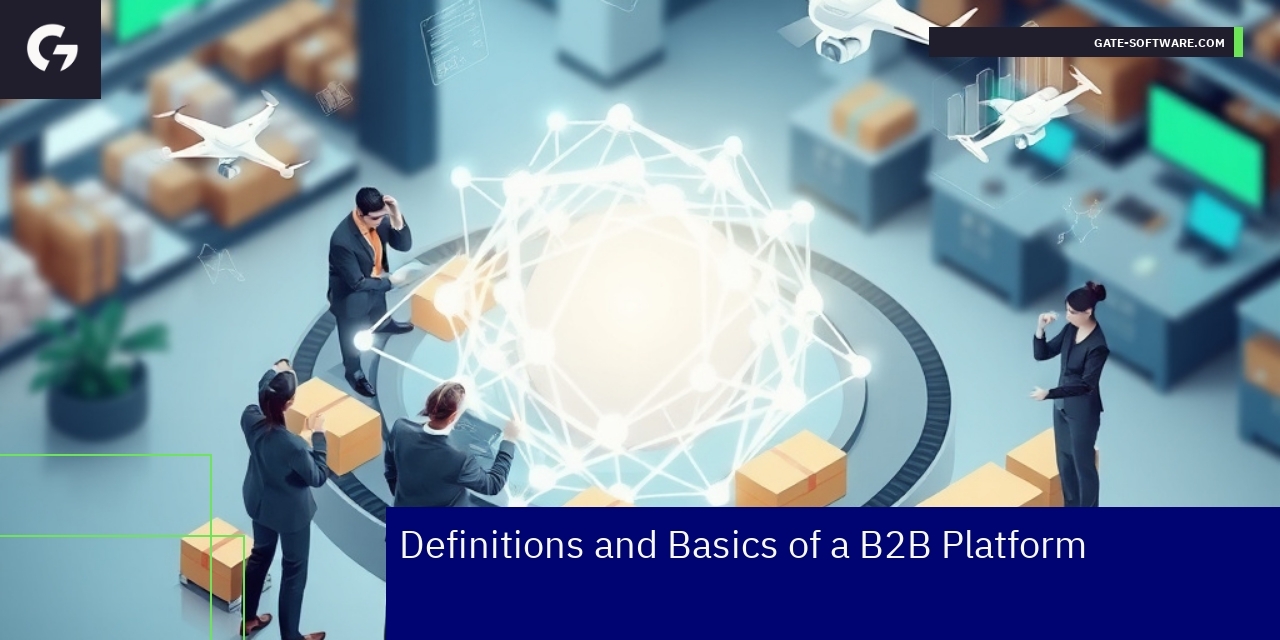
Definitions and Basics of a B2B Platform
A B2B platform is a specialized digital environment designed to facilitate business-to-business transactions, differing fundamentally from consumer-focused marketplaces. Within the realm of ecommerce b2b, these platforms serve as crucial operational hubs where companies can efficiently manage procurement, sales, and supply chain interactions. The system b2b typically includes integrated tools that support complex workflows, such as bulk ordering, contract negotiations, and tailored pricing models, addressing the distinct requirements of corporate clients.
Platforms b2b are characterized by their ability to handle large transactional volumes and offer robust functionalities like invoicing, payment processing, and customer relationship management, which collectively streamline business operations. These platforms often integrate with existing enterprise systems to maintain continuity and provide actionable insights across procurement and sales channels. Understanding basic concepts and definitions related to B2B is essential to harness the full capabilities of these platforms, ensuring alignment with business goals and technical infrastructure.
The evolution of ecommerce b2b reflects a trend toward digital transformation, where companies demand scalable, secure, and customizable solutions embedded with features that support decision-making and operational efficiency. Mastery of the foundational elements of a b2b platform enables businesses to optimize their supply chain, enhance partner collaboration, and maintain competitiveness in a rapidly evolving market landscape.
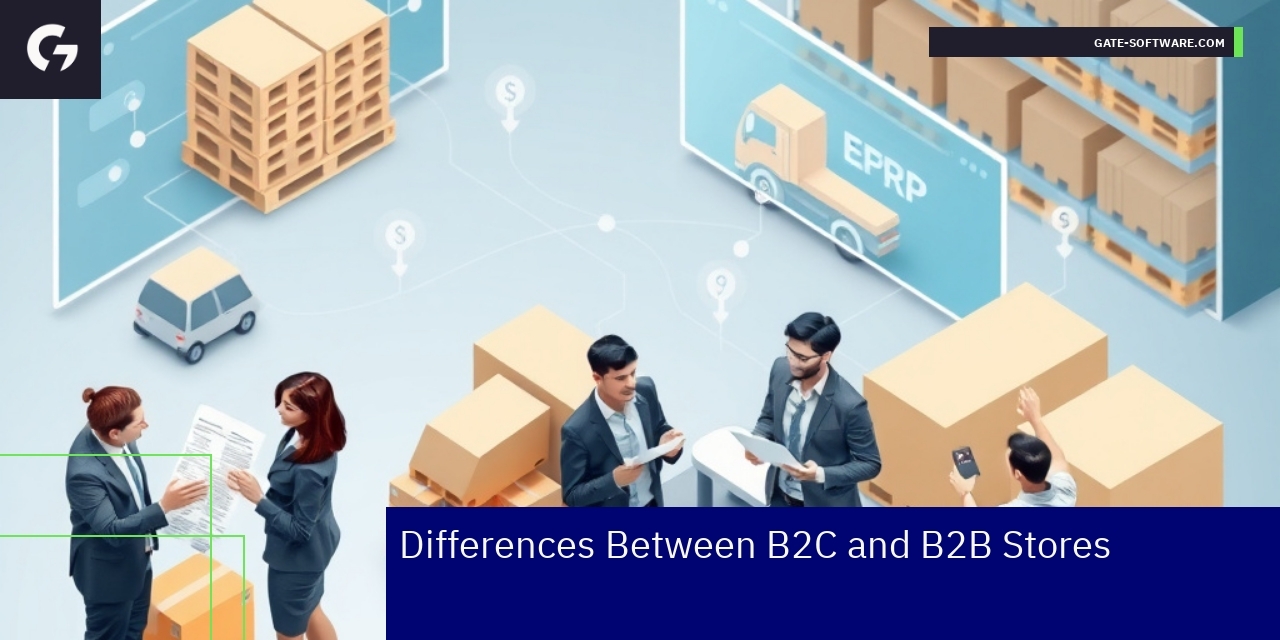
Differences Between B2C and B2B Stores
Implementing a B2B Platform – Is It for You?
Implementing a system b2b platform requires a distinct approach compared to a typical B2C store. The key differences in business models between B2C and B2B revolve around the complexity of transactions, the length of the sales cycle, and the nature of customer relationships. In a B2B ecommerce b2b context, the platform must support needs and capabilities analysis to tailor functionalities that address larger order volumes, custom pricing, and multi-level approvals. Unlike consumer-focused interfaces, a b2b platform prioritizes account management, integration with ERP systems, and personalized workflows to support complex business processes. Why Is B2B Important? Because it directly influences operational efficiency and partner satisfaction through precision and customization. Gate-Software solutions highlight essential steps to begin with thorough cost and investment analysis to align the platform implementation with business goals and scalability. Deciding on the right platform b2b involves assessing not only current demands but also forecasting future needs in partner ecosystems and marketplace trends such as How Partner Marketplaces Drive Revenue Growth in 2025.
B2B Store Features – Start in a Few Steps
B2B stores differ fundamentally from B2C stores, requiring tailored features to support wholesale transactions, corporate accounts, and contractual pricing models. Platforms b2b must incorporate functionalities like tiered pricing, quote management, and bulk order processing, which are uncommon in consumer setups. The essential steps to begin building a B2B store include defining buyer personas, performing needs and capabilities analysis, and integrating with existing backend systems for seamless data exchange. Effective ecommerce b2b solutions also focus on user access controls, enabling multiple users per company with distinct roles and permissions, reflecting real organizational structures. From UX/UI perspective, the interface must balance complexity with usability to maintain productivity without sacrificing ease of use. How to Start a B2B Partner Program: The Essential Guide includes these considerations as foundational, ensuring that platform capabilities align with strategic partnership goals. Cost and investment analysis supports prioritizing feature development and integration efforts within budget constraints.
Cost of Starting a B2B Platform – What Does Online Wholesale Distribution Really Cost?
Understanding the cost and investment analysis of launching a B2B platform is crucial for managing expectations and ROI. Unlike B2C stores, ecommerce b2b platforms involve higher upfront costs due to sophisticated features like custom pricing engines, advanced security, and integration capabilities necessary for B2B operations. These costs encompass software licensing, development, UX/UI adjustments to ensure compliance with standards such as WCAG for accessibility, and ongoing maintenance. Additionally, operational expenses include onboarding business clients, training, and supporting multi-tiered pricing and contract management. The investment also extends to marketing and communication strategies tailored to B2B audiences, focusing on direct sales support and partner engagement. How Partner Marketplaces Drive Revenue Growth in 2025 signals an increasing trend for integrating partner ecosystem management into the platform, which also impacts cost structure. An accurate cost and investment analysis informs the essential steps to begin your B2B platform journey with clear financial planning and risk management to optimize for long-term success.
Integrating Your Online Store with Wholesalers

Starting a B2B Store – Easier Than You Think!
LinkedIn B2B – Building Communication and Marketing
Utilizing LinkedIn for ecommerce b2b communication and marketing strategies is essential in today’s digital B2B landscape. LinkedIn offers a powerful platform to engage key decision-makers such as eCommerce Managers, CDOs, and CTOs, enabling businesses to showcase their system b2b solutions and b2b platform capabilities. Effective marketing strategies on LinkedIn involve sharing insightful content on purchase and launch process optimization and highlighting case studies like The Partner-Led Growth Playbook: KPIs, Metrics, and Signals That Prove It’s Working. By establishing thought leadership and fostering genuine relationships through consistent engagement, companies can significantly boost their outreach and grow partnerships. This approach aligns with key marketing strategies that underpin success in B2B partnerships, combining brand voice consistency with targeted communication for real business impact.
Omnibus Directive in B2B – What You Should Know
Understanding legal regulations and their B2B impact is crucial when starting a b2b store or managing platforms b2b operations. The Omnibus Directive introduces important changes that affect contract transparency, consumer protection, and marketplace dynamics in B2B interactions. This impacts the purchase and launch process by requiring businesses to adapt contract frameworks and ensure compliance without compromising efficiency. Companies must integrate these legal insights into their system b2b to maintain trust and avoid legal pitfalls. Awareness of such regulations also informs the deployment of B2B Partnerships 101: 15 Strategies for Success in 2026, where adherence to legal standards enhances long-term partnership viability and operational stability.
B2B Digital Marketing – Choosing the Right Strategy
Selecting the appropriate digital strategy is a cornerstone of effective ecommerce b2b success. With a variety of platforms b2b and marketing channels available, focusing on personalized campaigns and data-driven optimization guarantees better conversion rates. Emphasizing the use of b2b platform analytics to track KPIs—detailed in The Partner-Led Growth Playbook: KPIs, Metrics, and Signals That Prove It’s Working—helps refine customer acquisition and retention efforts. Additionally, integrating marketing strategies on LinkedIn with broader digital tactics creates a cohesive presence that drives engagement and nurtures 15 Strategies for B2B Partnership Success in 2026. Business decision-makers must consider legal regulations and their B2B impact throughout marketing efforts to ensure alignment with compliance while maximizing reach and ROI.
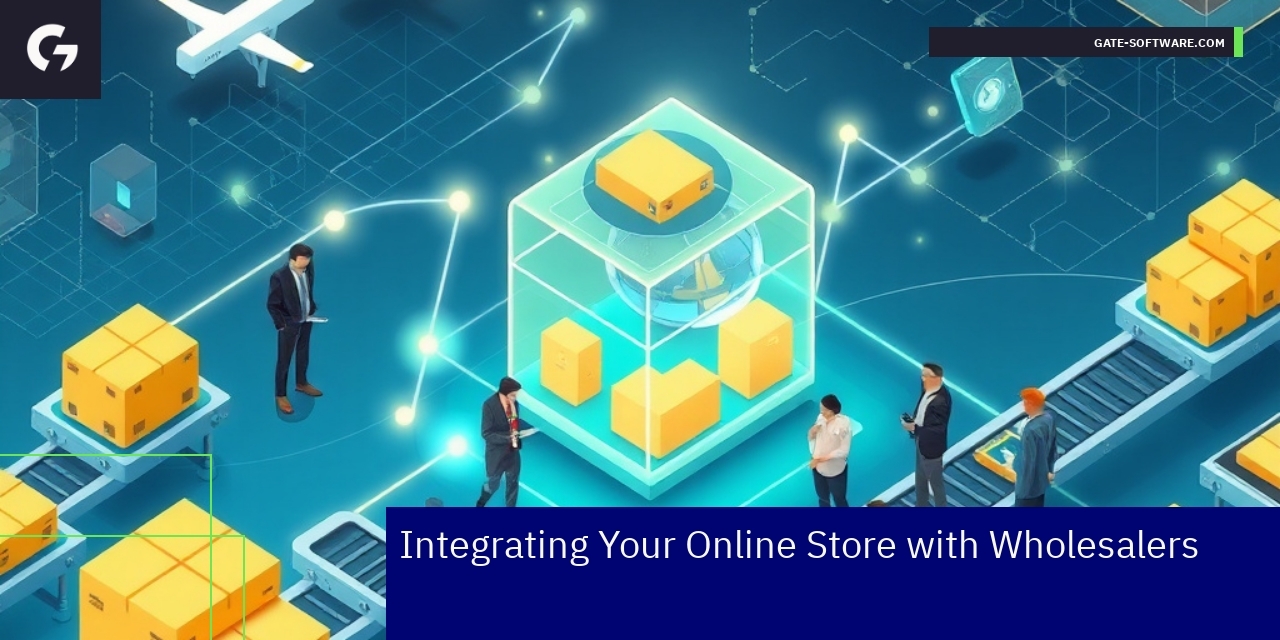
Integrating Your Online Store with Wholesalers
Integrating your online store with wholesalers is a strategic move in the B2B sector that leverages system b2b and ecommerce b2b capabilities to streamline operations and improve service delivery. The core of such integration lies in selecting the right platforms b2b or b2b platform that support seamless communication between your sales system and wholesale suppliers. This connection is critical for managing real-time inventory updates, order processing, pricing adjustments, and fulfillment workflows efficiently.
The integration possibilities and benefits are multi-fold. Integrations often utilize APIs or Electronic Data Interchange (EDI) protocols to enable automated data flows that replace manual processes. Such automation reduces errors, accelerates order cycles, and enhances visibility across supply chains, directly benefiting both your business and wholesale partners. Furthermore, through integration, dynamic pricing models and personalized procurement options become feasible, aligning with the complexity and scale typical for ecommerce b2b transactions.
Regarding types of B2B partnership programs, your store can engage wholesaler collaborations in various formats including reseller programs, dropshipping arrangements, and strategic alliances based on co-marketing. Each model requires specific integration approaches to synchronize catalog management, order fulfillment, and invoicing systems. For example, reseller and dropshipping models benefit from real-time stock synchronization, ensuring accurate availability information despite complex supply chains.
In essence, leveraging the right b2b platform with robust integration capabilities creates a competitive advantage. It enhances operational agility and supports tailored commercial models necessary for thriving in the b2b marketplace. The Gate-Software approach emphasizes architecting these integrations thoughtfully, combining technical expertise with an understanding of the unique demands in ecommerce b2b environments. This ensures your online store and wholesalers operate as a cohesive ecosystem to reliably meet business customers’ expectations.
Common Mistakes When Launching a B2B Platform
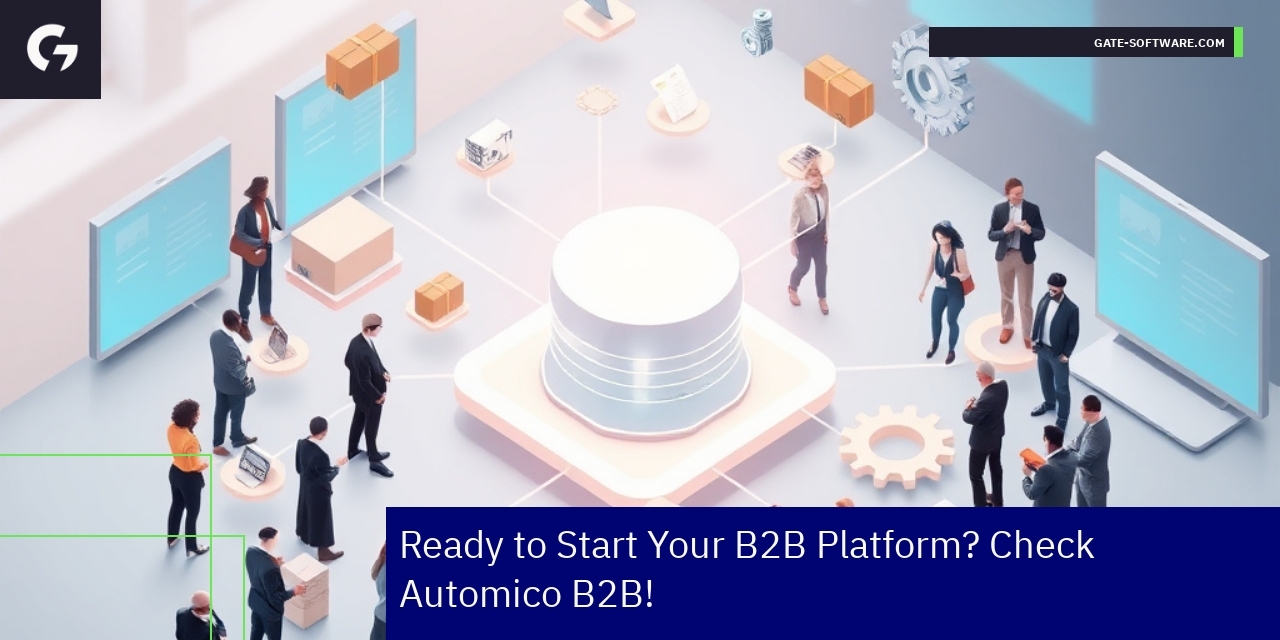
Ready to Start Your B2B Platform? Check Automico B2B!
Building and managing a successful system b2b requires a robust, scalable, and intelligent solution that can address the complexities unique to ecommerce b2b environments. Platforms b2b must handle diverse customer roles, complex pricing strategies, and intricate order workflows while maintaining a seamless user experience. Automico B2B platform is designed precisely for these challenges, providing an integrated ecosystem that supports growth, flexibility, and efficiency.
Automico B2B offer and advantages lie in its ability to unify multiple business processes into a single platform that optimizes not only sales but also customer engagement and operational workflows. From personalized catalogs and automated price negotiation to streamlined bulk ordering, Automico B2B is built to empower B2B companies with the tools they need to compete and excel. Furthermore, the system’s compliance with WCAG standards ensures inclusivity and accessibility, fostering a positive brand image.
Why the AI Partner Fit Score™ actually works is a fundamental aspect of Automico B2B’s value proposition. This AI-driven metric assesses compatibility between partners, streamlines matchmaking, and helps businesses establish relationships that maximize mutual benefit. By leveraging advanced analytics and machine learning, Automico B2B enhances decision-making processes, reduces matchmaking friction, and ultimately drives higher conversion rates in the b2b platform ecosystem. This smart integration sets Automico apart as not just a system b2b but as a strategic partner in ecommerce b2b success.

Examples and Case Studies
In the realm of system b2b and ecommerce b2b, successful platforms b2b implementations often hinge on addressing complex client requirements and ensuring seamless integration with existing infrastructure. One of the core challenges in deploying a b2b platform lies in customizing workflows and automating processes to enhance operational efficiency without compromising security or user experience. Real implementation examples demonstrate how Gate-Software leverages Magento™ to build scalable, robust systems tailored to unique business models, achieving significant improvements in transactional throughput and partner engagement.
A pivotal aspect of these implementations is understanding the nuances of business-to-business interactions, including multi-tier pricing, contract-specific catalogs, and compliance with industry-specific standards such as WCAG for accessibility. Integrating advanced UX/UI designs aligned with personas like the Architect, eCommerce Manager, and CTO ensures that the platform not only meets functional needs but also supports strategic business goals.
Furthermore, How to Start a B2B Partner Program: The Essential Guide highlights the importance of creating a structured partner onboarding process supported by digital tools embedded in the b2b platform. This approach facilitates effective communication, performance tracking, and long-term relationship management, which are critical for sustaining growth in a competitive market. These case studies collectively illustrate how Gate-Software’s solutions translate strategic ambitions into operational realities for enterprises seeking to thrive in the ecommerce b2b landscape.
Differences Between B2C and B2B Stores

Comparisons and Alternatives
In the B2B sector, selecting the ideal system b2b or ecommerce b2b solution demands a clear understanding of what a b2b platform entails and how it aligns with your business objectives. A b2b platform typically facilitates complex transactions and stakeholder interactions unique to business clients, differing fundamentally from B2C models by emphasizing scalability, integration, and tailored workflows that support diverse business processes.
When examining the comparison of various B2B platforms, it is crucial to consider platforms b2b that provide robust integration capabilities with existing enterprise systems, such as ERP and CRM, to ensure seamless data flow and operational efficiency. Platforms focused on ecommerce b2b offer specialized features like customer-specific pricing, bulk order management, and negotiated terms, streamlining procurement cycles and improving buyer experience.
Alternatives in the market range from fully customizable platforms to more standardized solutions. A customizable b2b platform can address specific business needs, including intricate approval workflows and compliance requirements but often involves higher initial investment and maintenance costs. In contrast, standardized platforms may offer faster deployment and lower upfront costs but with less flexibility.
For CTOs, Heads of Applications, and eCommerce Managers, the evaluation should include considerations of scalability, security standards, user experience aligned with UX/UI best practices, and compliance with accessibility standards like WCAG 1.1. Moreover, the platform’s ability to support marketing and sales strategies through integration with analytics, marketing automation, and personalized content delivery frameworks remains critical.
Ultimately, understanding what is a b2b platform in the context of your organization’s ecosystem enables you to choose the solution that best balances technical capabilities and business goals. Leveraging Gate-Software’s strategic insights into platforms b2b can help design resilient, efficient, and competitive ecommerce b2b environments tailored to your enterprise-scale requirements.
Checklists and Steps to Start a B2B Platform
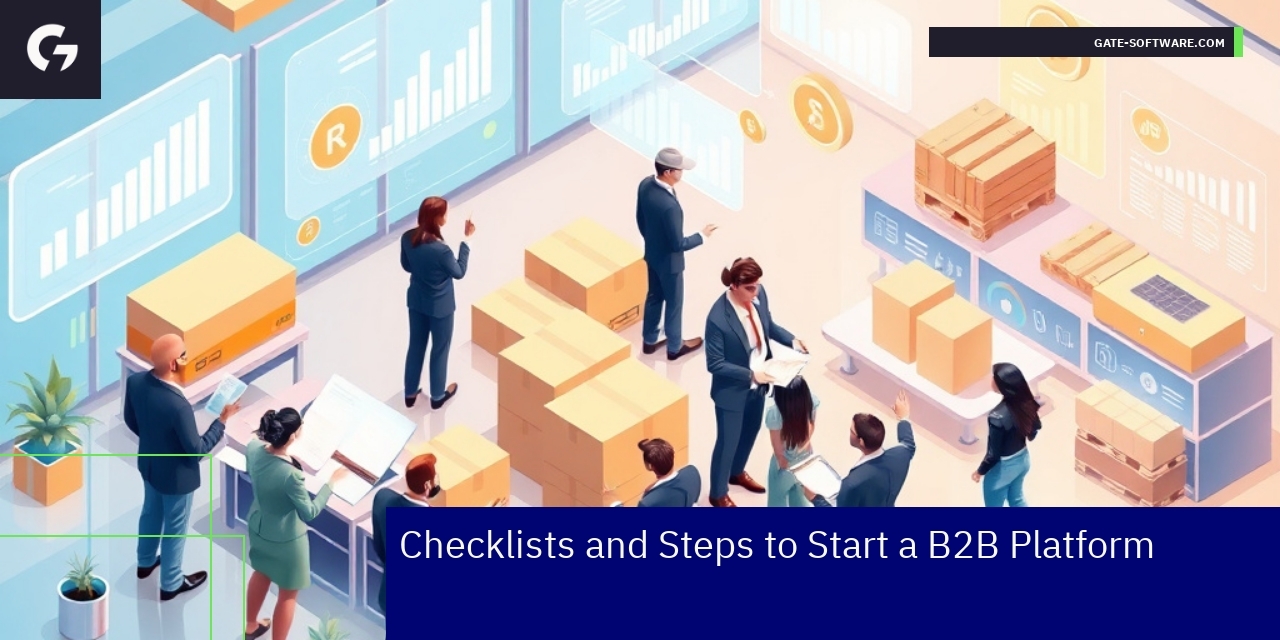
Starting a successful B2B platform requires a structured checklist and methodical steps that address both technical and business challenges inherent to ecommerce b2b environments. A foundational component is selecting the right system b2b that seamlessly integrates with your existing infrastructure and supports scalability for future growth.
First, conduct a thorough assessment of your target market and define clear buyer personas tailored to your business clients. This step ensures that platforms b2b are designed with user-centric features that cater to enterprise needs such as bulk ordering, contract pricing, and multi-user access. Consider the technical architecture with input from architects and CTOs to guarantee robustness, security, and compliance with standards like WCAG for accessibility.
Next, focus on defining KPIs and metrics from The Partner-Led Growth Playbook: KPIs, Metrics, and Signals That Prove It’s Working. Measuring platform adoption, transaction volumes, conversion rates, and customer retention is crucial. This data-driven approach guides iterative improvements and validates the return on investment.
Additionally, develop entrepreneur checklists that cover legal compliance, payment gateways, data privacy, and seamless integration with ERP and CRM systems. Implementing UX/UI best practices will enhance usability and foster client loyalty.
Effective project management and cooperation models are vital during development, migration, or platform takeover stages. Leveraging expertise in Magento™ and cloud hosting ensures high availability and cost optimization.
In summary, launching a b2b platform is a multidimensional endeavor centered around selecting the right system b2b, applying precise metrics from The Partner-Led Growth Playbook, and following entrepreneur checklists aligned with Gate-Software’s strategic and technical know-how in ecommerce b2b. This approach builds a scalable, user-friendly, and measurable solution that meets evolving business client demands.

Common Mistakes When Launching a B2B Platform
Launching a platforms b2b comes with specific challenges that can hinder long-term success if not anticipated. One key pitfall to avoid is insufficient understanding of the system b2b requirements, especially in aligning with complex business processes and integration needs typical in ecommerce b2b environments. Ignoring the nuances of buyer personas such as Architects, eCommerce Managers, and CTOs can result in a platform that fails to resonate with its core users.
Technical pitfalls to avoid include underestimating the complexity of building scalable and secure b2b platform infrastructure. Many launches fail due to inadequate preparation for traffic spikes or insufficient attention to compliance with standards like WCAG, diminishing user trust and accessibility. Another frequent shortcoming is neglecting integration capabilities, which limits the platform’s ability to connect seamlessly with partners’ ERP, CRM, or logistics systems—crucial for effective B2B transactions.
From a strategic perspective, weak marketing alignment often undermines the launch. A strong content strategy—including clear communication of value propositions tailored for B2B stakeholders—is essential to draw and retain qualified leads. Moreover, pricing models must reflect real business value while maintaining competitiveness within the ecommerce b2b space.
Finally, avoiding the common trap of feature overload is crucial. Prioritizing intuitive UX/UI design tailored to B2B workflows enhances adoption rates and reduces friction. By addressing these pitfalls to avoid, companies set a solid foundation to implement 15 Strategies for B2B Partnership Success in 2026, enabling scalable growth and enduring relationships.

FAQ – Frequently Asked Questions
In the context of system b2b and ecommerce b2b, organizations are increasingly adopting platforms b2b to optimize their operational efficiency and customer engagement. A b2b platform serves as a critical infrastructure enabling seamless transactions, integrations, and communications between businesses. Understanding system b2b is essential for CTOs and Heads of Applications seeking to leverage technology for scalable growth.
Answers to common questions often revolve around the customization capabilities of platforms b2b, integration with legacy systems, and compliance with industry standards such as WCAG for accessibility. Effective ecommerce b2b solutions must address these technical challenges while aligning with strategic business goals, ensuring smooth buyer-supplier collaboration and enhanced user experience.
What Are B2B Partnerships? They are strategic alliances between businesses designed to create mutual value through collaboration. These partnerships often leverage sophisticated b2b platforms to streamline procurement, supply chain management, and data exchange. For decision-makers, nurturing these relationships involves deploying robust system b2b architectures that support interoperability, security, and scalability in complex environments.
This FAQ section encapsulates critical insights for professionals navigating the evolving landscape of ecommerce b2b and system b2b environments, emphasizing the importance of selecting the right b2b platform to achieve business agility and competitive advantage.
FAQ
Benefits and Risks of B2B E-commerce
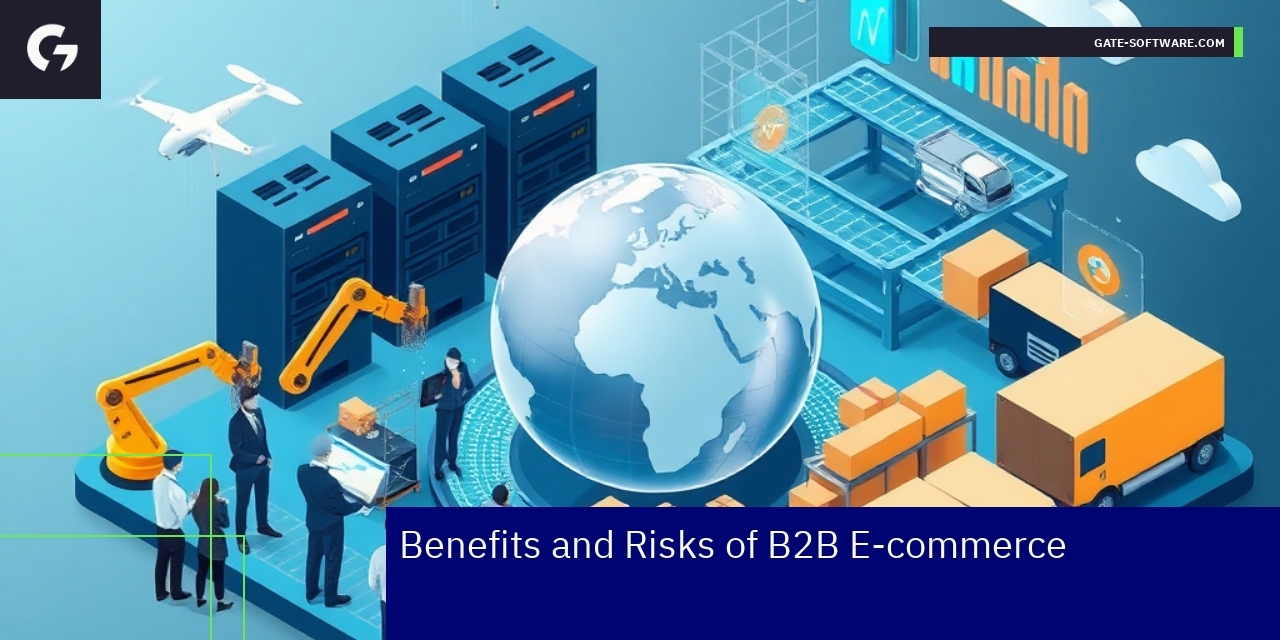
E-commerce B2B presents significant benefits and risks that decision-makers such as CTOs, Heads of Applications, and eCommerce Managers must carefully evaluate.
Benefits include: expanding client reach by enabling companies to access broader markets globally, which is vital in leveraging platforms b2b effectively. Automation within ecommerce b2b environments streamlines order processing, payments, and inventory management, boosting operational efficiency and reducing manual errors. Cost optimization is another advantage, as digitized sales channels reduce reliance on traditional physical infrastructures. Data analytics within system b2b allow for deeper insights into customer behavior and preferences, facilitating personalized service and optimized marketing strategies. Additionally, the 24/7 availability of b2b platform business models enhances customer convenience and increases sales opportunities beyond conventional working hours.
Risks to consider: cyber security remains a paramount concern given the sensitive nature of B2B transactions and data handled via ecommerce b2b platforms. Any breach could erode trust and lead to substantial financial and reputational damage. Integration complexity arises when merging new b2b platforms with legacy enterprise systems, requiring careful planning and technical expertise. Compliance with diverse local regulations and standards can slow deployment and increase costs. Market competition is fierce, making differentiation and continuous innovation imperative. Furthermore, operational dependence on technological infrastructure exposes companies to risks related to system outages or failures, which could disrupt business continuity.
Why Is B2B Important? Because it not only optimizes traditional business processes but also creates new digital ecosystems where companies collaborate more efficiently, gain competitive advantages, and enhance customer experiences.
An analysis of benefits and risks for each organization should guide strategic decisions regarding system b2b adoption to maximize value while mitigating vulnerabilities inherent in the transformation to ecommerce b2b. This balanced awareness is crucial for sustainable success in modern digital commerce environments.
Data and Performance Metrics – Efficiency, SLA, TCO
Operational Effectiveness in B2B Projects
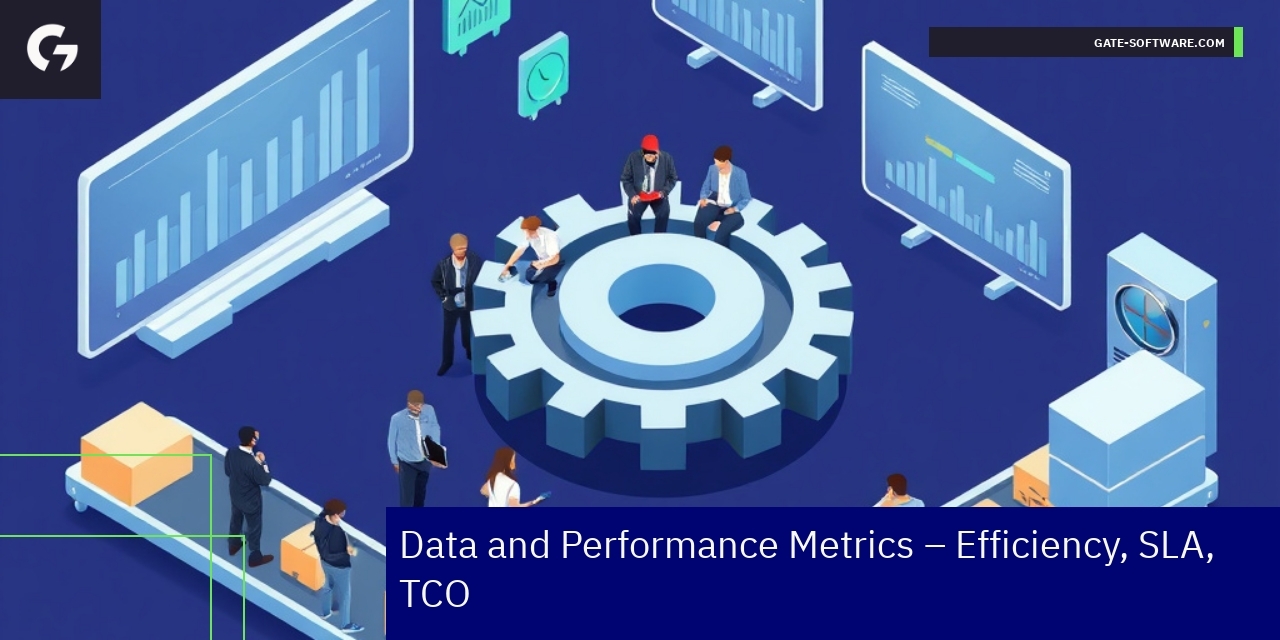
In the realm of B2B operations, precise metrics are vital in gauging performance and ensuring strategic alignment with business goals. Gate-Software has compiled significant data points that illustrate operational effectiveness and reliability in managing B2B projects through the Magento B2B platform.
1. Project Takeover Time: On average, Gate-Software facilitates project takeovers within 2 weeks, ensuring a swift transition that minimizes disruption and accelerates time-to-value for clients.
2. Percentage of Projects Delivered on Time: With a robust project management framework, 95% of B2B projects are delivered within the agreed timelines, reflecting the company’s commitment to reliability and efficiency.
3. Average TCO Reduction: Clients utilizing Gate-Software’s solutions experience an average 20% reduction in Total Cost of Ownership (TCO) over three years, attributed to improved automation and streamlined processes that lower operational costs.
4. Number of Implementations: Gate-Software has successfully executed over 150 B2B platform implementations, showcasing its extensive experience and capability in addressing diverse business needs across industries.
5. Uptime SLA: Gate-Software maintains an impressive uptime SLA of 99.9%, ensuring that the platform remains highly available, which is crucial for B2B operations requiring constant access and reliability.
6. Average Client Relationship Duration: The typical client relationship spans approximately 5 years, indicative of sustained satisfaction and long-term partnerships that evolve alongside the clients’ business requirements.
7. Client Satisfaction Rate: Feedback channels reveal a client satisfaction rate of 90%, reinforcing the effectiveness of Gate-Software’s solutions in meeting B2B operational demands and enhancing partner collaborations.
These metrics provide a solid foundation for decision-makers when considering investing in B2B solutions. By showcasing measurable success and operational excellence, Gate-Software positions itself as a strategic ally in navigating the challenges of the B2B landscape.
Summary
In today’s rapidly evolving B2B landscape, Gate-Software’s Magento B2B platform stands out as a vital solution for businesses aiming to enhance their procurement processes and boost collaboration across their supply chains. By leveraging advanced technology and proven expertise in Utrzymanie i Rozwój Magento™, this platform not only provides seamless order management and real-time inventory control but also emphasizes compliance with industry standards and usability that enhances user satisfaction. Business decision-makers will find significant value in the tailored features designed to address the complexities of B2B operations, from integration capabilities to personalized user experiences.
Investing in a robust B2B platform like Magento B2B facilitates sustainable growth by optimizing pricing management and enabling data-driven insights that align with corporate transformation initiatives. The result is a reliable infrastructure that fosters long-term partnerships and operational excellence within the competitive B2B marketplace. We encourage you to explore how Gate-Software can enhance your B2B strategy and support your journey towards achieving greater operational efficiency and success. Reach out for a consultation and discover the potential of a trusted strategic partnership in e-commerce B2B solutions.
FAQ
What is a B2B platform?
A B2B platform is a specialized digital environment designed to facilitate business-to-business transactions, enabling companies to efficiently manage procurement, sales, and supply chain interactions. It includes integrated tools for bulk ordering, contract negotiations, and tailored pricing models, supporting the distinct requirements of corporate clients.
How does a B2B platform differ from a B2C platform?
B2B platforms differ from B2C platforms primarily in terms of transaction complexity, the length of the sales cycle, and customer relationships. B2B platforms support larger order volumes, custom pricing, and require multi-level approvals, while B2C platforms focus on individual consumer transactions with simpler workflows.
Why is integration important for a B2B platform?
Integration is crucial for a B2B platform as it enhances operational agility and enables accurate real-time inventory management. Utilizing APIs or EDI for seamless integration reduces errors and speeds up order cycles, creating a unified ecosystem that meets complex B2B demands effectively.
How can businesses leverage LinkedIn for B2B marketing?
Businesses can leverage LinkedIn for B2B marketing by engaging key decision-makers, sharing informative content about their B2B solutions, and establishing thought leadership through consistent interactions. This helps in boosting outreach and forming valuable partnerships within the B2B landscape.
What are some common mistakes when launching a B2B platform?
Common mistakes when launching a B2B platform include underestimating technical complexity, neglecting user personas, and failing to prioritize scalable infrastructure. It’s essential to align marketing strategies with clear value-driven messaging to effectively attract and retain business clients.
.
.
Zamów bezpłatną konsultację
.
Z nami rozwój Twojego biznesu nabierze tempa! Zapraszamy do kontaktu średnie i duże firmy generujące min. 7 mln PLN obrotu rocznie – tam nasza ekspertyza sprawdza się najlepiej.
.
Kliknij w poniższy przycisk i skontaktuj się z jednym z naszych konsultantów e-commerce
.