Introduction
In the evolving landscape of e-commerce, choosing the right front-end technology is critical for performance, user experience, and long-term maintainability. Hyvä has emerged as a modern alternative to traditional Magento themes, promising significant improvements in speed, simplicity, and developer productivity. This section introduces the fundamental differences between Hyvä and traditional Magento themes, setting the stage for a detailed performance comparison.
Traditional Magento themes often rely on legacy frontend frameworks and complex XML structures, which can lead to slower load times and maintenance challenges. In contrast, Hyvä offers a streamlined front-end based on modern technologies like Tailwind CSS and Alpine.js, reducing complexity without sacrificing functionality. This results in faster page renderings and an improved UX/UI standard compliant with WCAG guidelines.
Gate-Software’s strategic approach emphasizes choosing technologies that align with business goals, including scalability, security, and optimal user journeys. As eCommerce Manager or CTO, understanding these distinctions is essential for making informed decisions that drive both technical efficiency and customer satisfaction in 2024 and beyond.
TABLE OF CONTENTS
- Performance Comparison: Hyvä vs Traditional Magento Themes – Which One Should You Choose in 2024?
- Definitions and Basics
- Advantages of Luma
- Disadvantages of Luma
- Benefits of Hyvä for Magento
- Drawbacks of Hyvä Theme
- Advantages of PWA Studio
- Disadvantages of PWA Studio
- When is Luma a Good Choice?
- When Is It Not?
- When is Hyvä a Good Choice?
- When Is It Not?
- When is PWA Studio a Good Choice?
- When Is It Not?
- What You Will Discover
- What Is Frontend in Magento 2?
- Magento 2 Frontend: Luma – Classic but Limited
- Magento 2 Frontend: Hyvä Theme – A Modern Alternative
- Magento 2 Frontend: PWA Studio – Shop as Mobile App
- Magento 2 Frontend: Recommendations
- Performance Comparison: Hyvä vs Luma vs PWA Studio
- Examples of Hyvä, Luma, and PWA Studio Use Cases
- Magento Frontend Selection Checklists
- Common Mistakes Choosing Magento Frontend
- Benefits and Risks of Frontend Choices
- Data and Performance Metrics – Efficiency, SLA, TCO
- Summary
- FAQ

Definitions and Basics
Understanding the core Magento frontend concepts is essential when working with Hyva to optimize store performance. Hyva revolutionizes the traditional Magento frontend by simplifying the stack and focusing on lightweight, clean, and efficient code. This approach directly impacts performance, making the store faster, more responsive, and easier to maintain.
At the heart of Hyva is the replacement of complex JavaScript-heavy frontends with minimal dependencies and modern technologies, which aligns with Magento frontend best practices. This leads to faster page load times and improved user experience, crucial elements for store success.
Magento frontend concepts such as layout XML, blocks, and templates remain relevant but are approached differently in Hyva. Rather than relying on bulky frontend libraries, Hyva leverages straightforward templating and CSS with Tailwind. This gives developers greater control over UI/UX design while adhering to standards that enhance accessibility—including WCAG compliance—and better SEO outcomes.
Why do these core Magento frontend concepts matter for store performance? Because frontend performance directly affects conversion rates, search rankings, and user satisfaction. A well-optimized Hyva-based frontend reduces overhead, enables faster interactions, and supports scalability—all vital for growing B2B and e-commerce platforms.
In summary, embracing Hyva within Magento projects means mastering essential frontend concepts through a performance-focused lens, yielding stores that are both technically robust and strategically aligned with business goals. The Explanation of core Magento frontend concepts and why they matter for store performance becomes tangible through Hyva’s design philosophy and practical implementation patterns.

Advantages of Luma
Luma is a classic Magento theme with benefits like stability and solid support, making it a reliable foundation for eCommerce platforms. Its proven stability ensures a consistent and robust performance, which is critical for business continuity and smooth customer experiences. Luma’s solid support from the Magento community and extensive developer resources allow for efficient troubleshooting and timely updates, minimizing downtime risks.
The theme’s responsive design adapts seamlessly across devices, aligning with modern UX/UI standards and enhancing customer engagement. This responsiveness is vital considering diverse user behaviors and the increasing prevalence of mobile shopping. Furthermore, Luma’s architecture supports comprehensive customization, enabling technical teams to tailor interfaces and functionalities to meet specific ecommerce requirements without compromising system integrity.
Luma is also SEO-friendly, structured to align with search engine algorithms, which helps businesses improve visibility and organic traffic. This SEO strength supports broader marketing strategies by enhancing discoverability for target audiences. When integrated with Hyva, these attributes are amplified, delivering optimized front-end performance and faster page load times. Together, Luma and Hyva address key technical and business challenges faced by decision-makers striving for efficiency, scalability, and enhanced user experience in Magento-based commerce.

Disadvantages of Luma
Luma’s downsides include limits on innovation and performance, which are critical factors for businesses seeking scalable and flexible eCommerce solutions. From a technical perspective, Luma’s architecture can constrain developers, limiting their ability to implement cutting-edge features or optimize performance to the fullest extent. This rigidity often results in slower page loads and decreased responsiveness under high traffic volumes, which directly impacts user experience and conversion rates.
Moreover, the limited customization options within Luma hinder the ability to tailor the frontend to specific business needs or evolving market trends. For organizations aiming to differentiate through unique UX/UI designs or advanced functionality, these constraints can be a significant barrier. This is particularly relevant for complex B2B setups or enterprises requiring seamless integrations with diverse backend systems.
From a strategic viewpoint, the compromises forced by Luma affect long-term scalability and innovation strategies. It restricts experimentation with new technologies and adaptation to rapidly changing digital commerce environments. This can delay digital transformation initiatives and reduce competitive advantages.
In contrast, solutions like Hyva offer more modularity and performance optimization out of the box, addressing these limitations effectively. Thus, understanding Luma’s downsides is crucial for CTOs and Heads of Applications when planning sustainable eCommerce architectures aligned with Gate-Software’s expertise.

Benefits of Hyvä for Magento
Hyvä is a modern alternative offering blazing-fast load times and better performance overall, significantly enhancing Magento stores’ frontend experience. At its core, Hyvä is built to optimize speed and reduce complexity, setting it apart from traditional Magento themes. Unlike conventional themes that can be bulky and intricate, Hyvä utilizes a lightweight architecture that streamlines the codebase and reduces unnecessary overhead. This design leads to faster load times, directly improving user engagement and conversion rates by delivering a seamless shopping experience.
Hyvä is Faster Than Traditional Magento Themes primarily because it leverages modern frontend technologies like Alpine.js, which replace the heavier JavaScript frameworks commonly used in Magento theming. This results in quicker interactivity and responsiveness, enabling Magento sites to perform efficiently even under high traffic volumes. The optimization extends beyond frontend assets; the theme’s clean structure allows for better cacheability and reduced server load, thus enhancing overall performance and scalability.
What is Hyvä Theme? It is a fresh approach to Magento theming that reimagines how frontend interfaces are designed. It simplifies the development process by minimizing dependencies and focusing on essential user experience components. As a result, developers and businesses benefit from faster deployment times and easier maintenance cycles without sacrificing design flexibility.
How Hyvä Optimizes Magento for Speed and Performance includes removing legacy frontend complexities, optimizing asset management, and embracing progressive enhancement techniques. These improvements reduce the time needed for page rendering and ensure consistent performance across different devices and network conditions. This focus on performance addresses common pain points in Magento deployments, such as sluggish load times and resource-heavy pages that negatively impact SEO and user retention.
Why is Hyvä Faster? Its architecture emphasizes minimalism and efficiency, cutting down on redundant CSS and JavaScript, and delivering only what is necessary. This lightweight approach not only reduces bandwidth consumption but also improves the perceived speed of the site, which is critical for maintaining a competitive edge in eCommerce.
Performance and speed: Hyvä themes vs. traditional Magento themes reveal that Hyvä consistently outperforms legacy themes by providing a modern, finely tuned frontend experience. The measurable gains in page speed translate into tangible business benefits, including higher conversion rates and better customer satisfaction.
What Makes Hyvä the Best Theme for Magento 2 is its commitment to balancing performance with flexibility. It supports advanced customization while maintaining a lean core, enabling businesses to tailor their storefronts without compromising on speed or stability. This balance aligns perfectly with the needs of CTOs, Heads of Applications, and eCommerce Managers focused on sustainable, high-performing digital commerce platforms.
In summary, Hyvä is a modern alternative offering blazing-fast load times and better performance overall, making it the preferred choice for Magento merchants aiming to optimize both user experience and operational efficiency.
Benefits of Hyvä for Magento
[ ] Feedback
[ ] Suggestions
[ ] Comments

Drawbacks of Hyvä Theme
Despite many benefits, Hyvä has challenges such as a smaller community and limited extensions. These factors can pose significant obstacles for organizations relying on extensive third-party integrations and broad developer support. The limited availability of extensions means that businesses may face difficulties in finding ready-made solutions tailored to their specific needs, potentially increasing development time and costs. Additionally, the smaller community results in fewer resources such as tutorials, forums, and shared knowledge, which can impact the speed and efficiency of problem-solving during development and maintenance phases.
From a strategic and operational perspective, these drawbacks necessitate a more hands-on approach in development and support, often requiring specialized expertise and closer collaboration between the technical team and strategic decision-makers. Gate-Software addresses these challenges by combining Hyvä’s performance advantages with custom development, ensuring robust and scalable solutions that align with clients’ business goals. Our approach also encompasses proactive planning for WCAG compliance and seamless UX/UI integration, mitigating risks associated with limited out-of-the-box tooling and community support.
Therefore, while the Hyvä theme offers remarkable benefits, organizations should be aware of the trade-offs including the smaller community and limited extensions, planning accordingly to leverage Gate-Software’s expertise to bridge these gaps efficiently. This balanced strategy ensures Hyvä’s adoption yields maximal return on investment without compromising on technical and business performance.
Drawbacks of Hyvä Theme 🧠 UWAGI 🔧 🛑

Advantages of PWA Studio
PWA Studio allows building an online store that works like a mobile app, enhancing the user experience. This technology offers significant benefits for Hyva projects by delivering fast, reliable, and engaging storefronts that meet the expectations of modern eCommerce users. The app-like performance ensures smooth interactions and quick load times, which are critical for retaining customers and improving conversion rates.
Using PWA Studio with Hyva enables seamless integration with Magento backends while optimizing frontend performance with cutting-edge React-based components. This approach supports scalable and maintainable codebases, making updates and feature additions more efficient for development teams. Moreover, PWA Studio’s architecture supports offline capabilities, allowing users to browse and interact with the store even with intermittent network connectivity, further enhancing the user experience.
From a business perspective, PWA Studio enables retailers to reduce dependency on native app stores and their associated costs, while still delivering a mobile-app-level experience. This aligns with Gate-Software’s strategy of cost optimization and operational excellence. The use of PWA Studio also facilitates improved SEO and discoverability, as its web-first approach ensures content remains indexable and accessible across all devices.
Overall, integrating PWA Studio in Hyva-based eCommerce platforms supports the creation of performant and user-centric stores. PWA Studio allows building an online store that works like a mobile app, enhancing the user experience — key to driving engagement, retention, and ultimately higher business value.

Disadvantages of PWA Studio
Implementing PWA Studio with a focus on Hyva presents several challenges that decision-makers such as CTOs, Heads of Applications, and eCommerce Managers need to consider carefully. One of the primary downsides include complex implementation processes. This complexity arises from the need to integrate modern front-end technologies with existing Magento backends, requiring specialized development expertise and comprehensive knowledge of both PWA architectures and Hyva’s unique framework. Such complexity can introduce risks in project timelines and elevate the demand for highly skilled resources.
Another important downside is the higher upfront costs associated with deploying PWA Studio and Hyva. Initial investments are typically steeper compared to traditional Magento front-end solutions because of the need for dedicated development efforts, tooling, and possibly increased requirements for testing and optimization. These costs can impact overall project budgets and require strategic planning to align benefits and expenses.
In addition, maintaining a PWA requires ongoing attention to browser compatibility and performance optimization to ensure smooth user experiences across devices. While PWAs offer offline capabilities and greater flexibility, they still depend largely on internet connectivity for full functionality, which can affect user engagement in inconsistent network environments.
SEO optimization for PWAs also demands expertise since incorrect implementation can limit discoverability despite the advantages PWAs bring. Therefore, strategic alignment with technical and business goals, alongside leveraging Gate-Software’s expert guidance, becomes essential to navigate these challenges effectively.
Overall, while Hyva combined with PWA Studio promises modernized UX/UI and cutting-edge storefront capabilities, downsides include complex implementation and higher upfront costs that must be carefully managed to realize the full business value.

When is Luma a Good Choice?
Luma suits stores that prioritize stability over speed or innovation. It is an ideal choice for businesses that need a reliable and well-tested frontend solution, focusing on consistent performance and a proven architecture rather than cutting-edge trends or rapid iterative changes. For eCommerce managers and technical decision-makers like CTOs or Heads of Applications, Luma offers a trusted foundation that minimizes the risks associated with frequent updates or untested features.
When stability is paramount, especially in environments where uptime and predictable user experience cannot be compromised, Luma provides a solid baseline. It supports complex Magento installations without overloading teams with the demands of constant frontend changes. This enables technical teams to concentrate on backend optimizations, integrations, and platform maintenance, aligning well with Gate-Software’s emphasis on service reliability and scalable support.
While Hyva represents a modern, performance-focused frontend approach, businesses gravitating towards conservative growth or operational certainty often find Luma suits their needs better. Such stores may prioritize comprehensive UX/UI compliance, accessibility standards like WCAG 1.1, and steady workflows, which Luma accommodates by offering a stable interface that integrates seamlessly with existing infrastructure.
Choosing Luma also makes sense for organizations with established processes and a preference for incremental evolution over innovation-driven disruption. This approach aligns with company cultures valuing consistent execution and risk management, synchronizing with Gate-Software’s strategic consulting for long-term Magento platform sustainability.
In summary, Luma suits stores that prioritize stability over speed or innovation, making it a prudent choice when operational continuity and reliability are the top priorities in managing Magento-based eCommerce environments.

When Is It Not?
While Hyva is designed to enhance Magento front-end performance and speed, it’s not ideal if fast loading and modern performance are your goals in all contexts. Specifically, when your project requires extensive customizations that fall outside the Hyva framework, or when legacy systems and modules are deeply ingrained in your eCommerce platform, relying solely on Hyva might introduce limitations. In such scenarios, the integration overhead and adaptation complexity can offset the potential gains.
Moreover, if your infrastructure or development team is not aligned with the lightweight principles Hyva enforces, you may not achieve the expected performance benefits. It’s crucial to assess the entire technology stack, including backend responsiveness, hosting environment, and CDN configuration, as these also impact loading speeds and overall user experience. Hyva shines most when paired with optimized backend solutions.
It’s not ideal if fast loading and modern performance are your goals but without a parallel focus on streamlined implementation and ongoing maintenance strategies. Speed and performance improvements require not only adopting advanced front-end frameworks like Hyva but also continuous monitoring and refinement of UX/UI patterns, as Gate-Software strategy emphasizes compliance with WCAG and user-centric design principles.
Therefore, decision-makers such as CTOs and Heads of Applications should carefully evaluate project fit, resource readiness, and long-term maintenance plans alongside Hyva adoption to truly harness its capabilities aligned with modern speed and performance goals.

When is Hyvä a Good Choice?
Hyvä is an excellent choice when prioritizing superior SEO performance combined with fast loading times, especially compared to traditional Magento themes. These aspects translate directly into measurable business benefits, making Hyvä particularly suitable for merchants who need an agile and efficient online store environment.
For merchants, Hyvä is perfect for stores that need fast loading and enhanced SEO performance. Faster loading pages reduce bounce rates and improve the overall shopping experience, increasing user satisfaction and conversion rates. This directly supports business growth by enabling smoother customer journeys and better engagement metrics. The modern theme architecture also allows merchants to offer visually appealing, easy-to-navigate stores without compromising site performance.
For developers, Hyvä represents a significant technical advantage. Its streamlined codebase and modern frontend technologies simplify the development cycle, reduce bugs, and accelerate implementation. This efficiency allows development teams to focus on delivering customized features rather than working around technical limitations of traditional Magento themes. Hyvä is designed to integrate with Magento ecosystems while minimizing overhead, making it a practical choice for teams aiming to optimize workflows and reduce long-term maintenance costs.
In summary, Hyvä is perfect for stores that need fast loading and enhanced SEO performance while offering clear benefits both for merchants aiming to boost business KPIs and for developers seeking a more efficient and flexible framework. This alignment of business and technical goals makes Hyvä a compelling choice in the eCommerce platform landscape.

When Is It Not?
Hyvä might not fit stores requiring advanced complex features or extensive third-party integrations. While Hyvä excels in delivering performant and user-friendly front-end solutions for Magento, its architecture and design focus on simplicity, speed, and modern UX/UI practices. This makes it highly suitable for many eCommerce stores but less ideal when the project demands highly specialized or complex functionalities that go beyond typical eCommerce patterns.
For businesses with extensive third-party integrations—such as multiple ERP systems, customized payment gateways, or advanced personalization engines—Hyvä’s out-of-the-box capabilities may require substantial additional development efforts. The framework is optimized for rapid deployment and lean frontend development rather than accommodating heavy middleware or bespoke backend services integrations without significant customization.
Moreover, stores requiring niche features like complex product configurators, advanced subscription management, or extensive multi-vendor marketplace capabilities may find Hyvä’s current ecosystem limiting. These scenarios often rely on legacy or deeply integrated modules that can be challenging to align with Hyvä’s streamlined frontend approach without extensive adaptation.
In summary, Hyvä might not fit stores requiring advanced complex features or extensive third-party integrations, especially when the project scope involves high complexity or deep customization efforts that exceed Hyvä’s core strengths of simplicity and speed. In such cases, careful evaluation and customization planning must be prioritized to align expectations with platform capabilities.
Benefits of Hyvä for Magento

When is PWA Studio a Good Choice?
PWA Studio works best for shops focused on delivering app-like user experiences. Choosing PWA Studio makes sense when the goal is to provide users with a fast, responsive frontend that behaves like a native mobile application while maintaining web accessibility. For Hyva-based Magento platforms, integrating PWA Studio can complement existing performance and UX enhancements by introducing progressive web app features such as offline support, push notifications, and streamlined checkout processes.
From a technical perspective, PWA Studio is ideal when the business prioritizes delivering seamless omnichannel experiences across devices without compromising speed or responsiveness. Its modern front-end architecture aligns with Hyva’s lightweight approach, enabling efficient development and maintenance workflows. This synergy helps reduce time-to-market for new features targeting mobile-first customers or markets where app installation barriers exist.
Moreover, PWA Studio works best for shops focused on delivering app-like user experiences aiming to enhance customer engagement and retention by leveraging native capabilities of devices through web technologies. When paired with Gate-Software’s expertise in Magento platform optimization and UX/UI improvements, PWA Studio offers a scalable path for continuous innovation and performance gains aligned with strategic business goals.

When Is It Not?
Hyva is a robust frontend solution designed to enhance Magento stores with improved performance and user experience. However, it’s less suitable for small stores with limited budgets. The initial investment required for Hyva implementation—including licensing, development, and integration costs—can be relatively high compared to other more basic frontend solutions. Small stores with constrained financial resources may find it challenging to justify and manage these upfront expenses, especially if the return on investment is expected to be gradual.
Moreover, Hyva’s architecture targets medium to large-scale e-commerce platforms that demand flexibility, speed, and scalability. For small stores with simpler needs, the advanced features and optimized workflows may be underutilized, making the investment less cost-effective. Businesses that require quick and inexpensive setups with minimal customization might find alternative solutions more aligned with their operational scale and budget.
In summary, while Hyva offers excellent performance and technical benefits, it’s less suitable for small stores with limited budgets due to higher costs and complexity relative to the simpler requirements of such operations. Companies should carefully evaluate their business size, budget constraints, and technical needs before opting for Hyva as their frontend platform.

What You Will Discover
In this section, you will gain a comprehensive understanding of Hyva as a Magento frontend solution, exploring its distinctive features and how it addresses current e-commerce challenges. Our analysis will help you learn about pros and cons of various Magento frontend solutions to make an informed choice tailored to your platform’s performance, scalability, and user experience needs.
Hyva stands out by simplifying frontend architecture while enhancing speed and responsiveness, crucial for maintaining high conversion rates and customer satisfaction. We will delve into technical aspects such as its leaner codebase, easier theming capabilities, and compatibility with modern development workflows, giving your development team the agility required in fast-paced digital environments.
Moreover, you will discover how Hyva aligns with accessibility standards (WCAG) and usability best practices, ensuring your storefront is both compliant and user-friendly across diverse devices and user groups. The section also covers integration potential with backend systems, maintenance, and update strategies that minimize downtime and technical debt.
By providing this detailed insight, you will be better positioned to weigh Hyva against other frontend options, understanding the trade-offs and strategic benefits. Ultimately, this knowledge empowers you and your team to select the best Magento frontend solution that aligns with business goals and technical constraints, enabling a future-proof and competitive e-commerce presence.

What Is Frontend in Magento 2?
The frontend is the user interface responsible for store appearance and operation. In Magento 2, the frontend plays a critical role in delivering a seamless and engaging shopping experience, as it encompasses all visual elements and interactions customers engage with. This includes everything from navigation menus and product displays to checkout processes and responsive design adaptations.
With the Hyvä frontend solution, the Magento 2 frontend is optimized for both performance and maintainability. Hyvä leverages modern technologies like Tailwind CSS and Alpine.js, replacing the heavier default Luma theme with a leaner, more efficient stack. This shift directly impacts the frontend by dramatically improving load times and responsiveness, which is crucial for user satisfaction and conversion rates.
Moreover, the frontend in Magento 2 powered by Hyvä supports better compliance with UX/UI guidelines and standards, ensuring the store not only looks appealing but also operates reliably across devices and user scenarios. By focusing on minimalist design principles, Hyvä reduces frontend complexity, making it easier for development teams to customize and maintain the store appearance and functionality.
In essence, the frontend is the user interface responsible for store appearance and operation, and with solutions like Hyvä, Magento 2 frontend becomes a highly performant, user-friendly platform that meets modern eCommerce demands efficiently and effectively.
Magento 2 Frontend: Luma – Classic but Limited
The Luma theme is the classic choice for Magento 2 frontend implementations, favored for its out-of-the-box functionality and familiarity. However, Luma is characterized by clear limitations compared to modern themes, particularly when addressing the evolving needs of ecommerce platforms aiming for enhanced user experiences and optimized performance. Its architecture and frontend design, while stable and reliable, often struggle to meet the demands for speed, flexibility, and customization that contemporary Magento 2 projects require.
For Hyva-focused solutions, the limitations of Luma become particularly evident. The theme’s legacy frontend stack is less performant, leading to slower page loads and decreased responsiveness on mobile devices, which directly impacts conversion rates and user satisfaction. Additionally, Luma’s UX/UI components lack the modern design adaptability and accessibility standards integration that Hyva prioritizes, such as compliance with WCAG guidelines and seamless customization options that align with brand-specific customer journeys.
From a development perspective, maintaining and extending Luma can result in higher costs and complexity. Its tightly coupled frontend architecture contrasts with Hyva’s streamlined, component-based approach that enables faster development cycles, easier customization, and better integration with modern frontend technologies. This difference influences strategic decisions for CTOs, Heads of Applications, and eCommerce Managers when selecting a frontend solution that aligns with business goals for scalability and user engagement.
In summary, while Luma is the classic choice, its clear limitations compared to modern themes make it less suitable for ecommerce projects seeking advanced UX, accessibility, and performance optimizations that Hyva and Gate-Software solutions are designed to deliver. Choosing Hyva over Luma supports more agile, future-proof frontend architectures aligned with today’s ecommerce challenges.
Magento 2 Frontend: Hyvä Theme – A Modern Alternative
The Hyvä Theme stands out as a modern option offering superior speed and performance for Magento 2 frontend development. It represents a significant shift from traditional theming approaches, prioritizing simplicity and efficiency. Hyvä employs modern frontend technologies such as Tailwind CSS and Alpine.js, which facilitates lightweight and maintainable codebases. This modern foundation results in faster page loading times and improved overall user experience, addressing common performance bottlenecks seen in legacy Magento themes.
From a technical and business perspective, Hyvä’s approach reduces frontend complexity, which lowers maintenance costs and accelerates development cycles. The reduced reliance on heavy JavaScript frameworks translates directly into enhanced speed and performance, a critical factor in e-commerce success where user attention is limited and conversion rates are tightly linked to site responsiveness.
The theme’s architecture supports customization without the overhead typical of classic Magento theming. This flexibility empowers eCommerce managers and developers to tailor user interfaces that meet stringent UX/UI standards, including WCAG compliance, while maintaining optimal performance. Gate-Software’s expertise ensures seamless integration and migration to Hyvä, offering strategic guidance to overcome challenges such as theme transition risks and performance tuning.
In summary, Hyvä Theme stands out as a modern option offering superior speed and performance, making it an excellent choice for Magento 2 projects aiming for a competitive edge through technical excellence and user-centric design.

Magento 2 Frontend: PWA Studio – Shop as Mobile App
PWA Studio in Magento 2 represents a transformative step for frontend development, aimed at delivering a seamless and engaging user experience that mirrors native mobile applications. This approach is particularly relevant for Hyva-focused projects, where performance efficiency and modern technology stacks are priorities.
With PWA Studio, you gain the ability to serve your Magento 2 shop as a Progressive Web App, which means it can leverage capabilities like offline access, push notifications, and fast loading times. This technological shift is crucial for meeting customer expectations today, especially on mobile devices, where user attention spans are short and competition for engagement is intense.
PWA Studio enables an innovative approach, letting your shop feel like a native mobile app by blending the web’s accessibility and reach with app-like smoothness. It aligns with Hyva’s vision for simplified yet powerful frontend solutions, reducing complexity and enhancing maintainability. For decision-makers such as CTOs and Heads of Applications, this means better ROI on frontend investments and a competitive edge in delivering superior customer experiences.
Integrating PWA Studio also contributes to improved SEO and accessibility compliance, supporting standards that ensure all users can interact effectively with your store. This integration aligns with Gate-Software’s strategic focus on robust e-commerce solutions that comply with WCAG guidelines and responsive design principles.
In summary, leveraging Magento 2’s PWA Studio within the Hyva ecosystem is a strategic move that addresses real business challenges — from ensuring speedy performance and mobile-first experiences to reducing operational complexity. It empowers eCommerce teams to deliver a shop that is not only modern and engaging but also scalable and sustainable for future growth. PWA Studio enables an innovative approach, letting your shop feel like a native mobile app, which is foundational for today’s competitive digital commerce landscape.

Magento 2 Frontend: Recommendations
When considering Hyva for your Magento 2 frontend, it is essential to recognize that recommendations depend on your store’s unique needs and priorities. Hyva offers a modern, streamlined frontend solution designed to significantly improve performance and developer experience. However, the decision to implement it should be aligned with your business objectives, technical environment, and user experience goals.
The choice of frontend impacts various aspects such as page load speed, ease of customization, and maintainability. Hyva’s architecture favors simplicity and speed, reducing the complexities commonly associated with traditional Magento frontend stacks. For stores where performance and faster time-to-market are critical, Hyva presents a compelling option. Yet, it’s important to evaluate your existing themes, extension compatibility, and development resources before committing.
Moreover, integrating Hyva can influence your store’s scalability and accessibility compliance, especially when considering WCAG standards. Ensuring these aspects align with your brand’s strategic direction is crucial. Assess which functionalities matter most to your customers and how Hyva’s frontend framework supports them.
Ultimately, which one should you choose? The optimal Magento storefront depends on detailed analysis of your eCommerce goals, technical stack, and long-term maintenance plans. Gate-Software emphasizes tailoring solutions that reflect these unique parameters. Hence, thorough evaluation and stakeholder involvement in the decision process are indispensable for achieving the best results with Hyva. Recommendations depend on your store’s unique needs and priorities — a focus that safeguards both present efficiency and future growth potential.
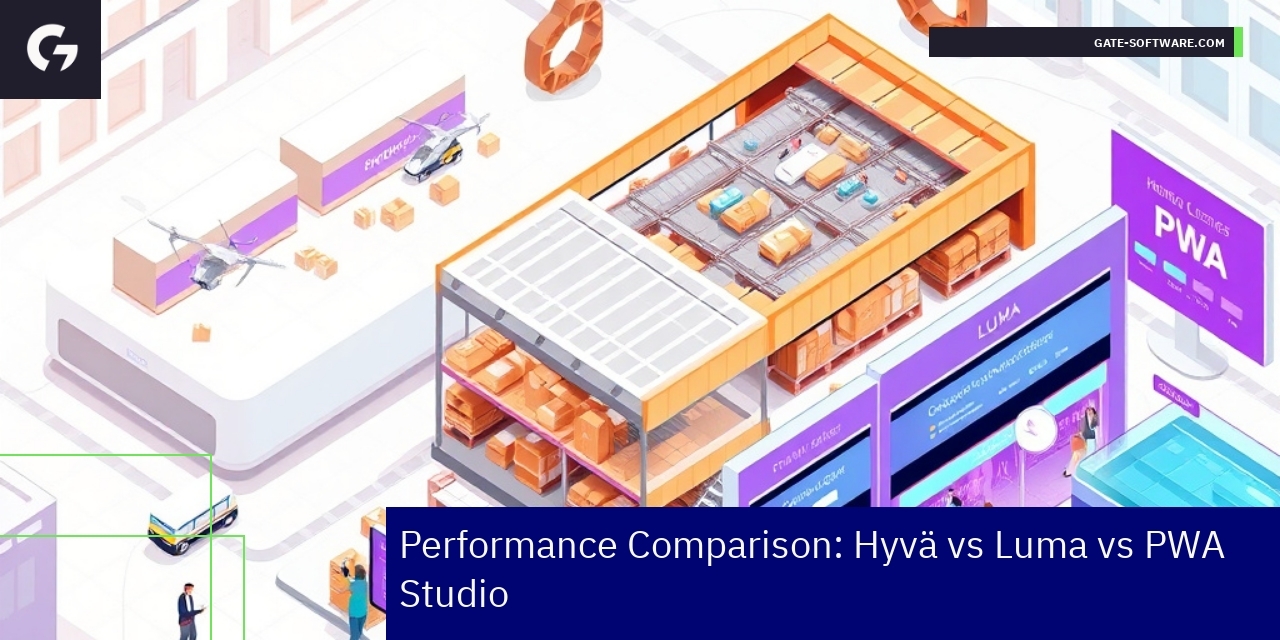
Performance Comparison: Hyvä vs Luma vs PWA Studio 🧩 Key Insights 🛠️ Technical Highlights 📊 Summary
In evaluating the three front-end technologies—Hyvä, traditional Magento themes like Luma, and PWA Studio—a detailed comparison chart of performance and speed among Hyvä, traditional Magento themes like Luma, and PWA Studio emphasizes critical technical and business considerations.
Hyvä sets itself apart with a lightweight architecture that substantially reduces JavaScript usage and focuses on streamlined CSS. This approach results in faster page loads and enhanced performance, critical for optimizing the user journey and minimizing server resource consumption. Its simplified codebase not only improves load times but also facilitates easier maintenance and scalability, which aligns well with Gate-Software’s operational standards for Magento platforms.
Conversely, Luma, as a default Magento theme, comes with more extensive features and a heavier asset footprint. The complexity of Luma often leads to slower front-end rendering and increases the need for ongoing optimization efforts. While functionally rich, it may add technical debt over time due to its reliance on legacy UI components, which can also affect UX consistency and speed.
PWA Studio offers a modern web application experience, emphasizing progressive web app capabilities such as offline access, fast background loading, and mobile-first responsiveness. While PWA Studio can deliver superb performance, especially on mobile devices, its architecture necessitates more complex development and maintenance workflows. These can increase operational overhead and require teams to have specialized skills for efficient handling.
Each approach presents trade-offs between development complexity, performance tuning, and user experience outcomes. A detailed comparison chart of performance and speed among Hyvä, traditional Magento themes like Luma, and PWA Studio underlines that Hyvä often excels in speed and simplicity, Luma serves legacy and feature-heavy needs, and PWA Studio prioritizes advanced interactive experiences with progressive enhancements.
For CTOs and Heads of Applications weighing the choice, these insights help align the technology stack with their strategic objectives for performance, scalability, and sustainable platform management.
Examples of Hyvä, Luma, and PWA Studio Use Cases
In the realm of Magento frontends, Hyvä, Luma, and PWA Studio each present distinct advantages and application scenarios that directly impact business performance and user experience.
Hyvä offers a lean, performance-optimized frontend that greatly reduces development complexity and accelerates time to market. Its streamlined architecture is ideal for enterprises seeking rapid improvements in page load times and conversion rates. Real-world examples demonstrating the practical effects of using these three frontend options show that Hyvä implementations typically achieve significant reductions in frontend latency, fostering a smoother customer journey and improved SEO outcomes.
Luma, the default Magento frontend, continues to serve well in scenarios where extensive customizability and legacy module compatibility are priorities. Organizations using Luma benefit from its mature ecosystem and comprehensive feature set. Still, Real-world examples demonstrating the practical effects of using these three frontend options highlight that Luma’s heavier frontend can sometimes limit performance optimization without additional frontend tuning.
PWA Studio introduces a modern approach for headless Magento setups, enabling highly interactive and app-like experiences on the web. Its progressive web app technology supports offline capabilities and mobile responsiveness at a high level. Real-world examples demonstrating the practical effects of using these three frontend options reveal PWA Studio’s strength in driving engagement through smooth transitions and native app-like interfaces, crucial for brands targeting mobile-first consumers.
Strategically choosing between Hyvä, Luma, and PWA Studio depends on specific business needs, technical environment, and eCommerce goals. Hyvä’s efficiency suits projects focused on fast implementation and performance gains, Luma serves well in traditional enterprise setups requiring wide compatibility, and PWA Studio excels in delivering immersive mobile and omnichannel experiences. Real-world examples demonstrating the practical effects of using these three frontend options emphasize that selecting the right frontend solution is key to balancing functionality, speed, and user engagement effectively.

Magento Frontend Selection Checklists
Selecting the right frontend for your Magento store is a critical decision that impacts performance, user experience, and future scalability. Utilizing Hyva as a frontend solution brings modern, streamlined technology to your eCommerce platform, but it requires careful evaluation through structured checklists.
Key areas to assess include:
1. Performance and Load Times
Evaluate how Hyva enhances frontend performance compared to traditional Magento frontends. Checklists to help evaluate and pick the right frontend for your Magento store must prioritize fast loading times and smooth user interactions, crucial for conversion rates and SEO.
2. Compatibility and Integration
Ensure that Hyva integrates seamlessly with your existing Magento backend, including custom modules and third-party extensions. Checklists to help evaluate and pick the right frontend for your Magento store should verify compliance with your infrastructure and any planned upgrades.
3. UX/UI Flexibility and Adaptability
Hyva specializes in clean, modern UI/UX designs adhering to WCAG standards. Checklists to help evaluate and pick the right frontend for your Magento store need to consider whether the frontend supports your brand’s specific user journey requirements and accessibility standards.
4. Development and Maintenance
Assess the ease of development, availability of skill sets (especially in technologies that Hyva uses), and the total cost of ownership. Checklists to help evaluate and pick the right frontend for your Magento store should reflect the long-term support and upgrade paths.
By applying comprehensive checklists tailored to Hyva, decision-makers such as CTOs and eCommerce Managers can systematically compare frontend solutions, balancing performance, user experience, and business needs for an optimal Magento storefront.

Common Mistakes Choosing Magento Frontend 🛑 Performance Considerations ⚙️ Integration Challenges ♿ Accessibility Compliance 📚 Developer Support 🎯 Strategic Alignment
Choosing the right frontend for Magento is a critical decision that significantly impacts the user experience, performance, and maintainability of your eCommerce platform. Within the context of Hyva, a modern and performance-oriented frontend solution, it is essential to understand the most frequent errors made when selecting a frontend to avoid costly pitfalls.
One common mistake is underestimating the importance of frontend performance and its direct influence on conversion rates and user satisfaction. Many decision-makers focus primarily on visual appeal or feature sets but overlook technical aspects such as page load speed, responsiveness, and scalability. Hyva addresses these issues by delivering a lightweight, performant solution that aligns with Magento’s core architecture, but choosing other frontends without this focus can lead to sluggish sites and frustrated users.
Another frequent error involves neglecting compatibility and integration with existing back-end systems and workflows. In complex B2B and B2C environments where Gate-Software solutions are often implemented, seamless integration with Magento’s backend, including extensions and custom modules, is paramount. Selecting a frontend that does not harmonize with these systems can cause disruptions and increased maintenance costs.
Additionally, insufficient attention is often given to accessibility standards like WCAG 1.1. Ignoring these standards during frontend selection restricts your platform’s reach and exposes you to legal risks. Hyva’s UX/UI design principles include compliance with these norms, ensuring inclusivity and a wider user base.
Project teams frequently overlook the necessity of robust developer support and community backing. A frontend solution lacking ample documentation, updates, and a supportive ecosystem makes long-term maintenance challenging. Hyva benefits from a dedicated community and ongoing improvements, which is a significant advantage.
Finally, strategic alignment with your company’s IT and marketing goals is sometimes ignored. Frontend choice should reflect broader digital transformation plans and social media content strategies to ensure consistency and scalability.
By being aware of the most frequent errors made when selecting a frontend and focusing on these critical areas—performance, integration, accessibility, support, and strategic fit—decision-makers can ensure successful implementation of Hyva as their Magento frontend, maximizing ROI and user satisfaction.

Benefits and Risks of Frontend Choices
When analyzing frontend choices for Hyva implementations, it is essential to balance the benefits and potential risks of different solutions. Hyva is designed to significantly enhance Magento frontend performance and developer experience while simplifying maintenance. Key benefits include faster loading times, improved responsiveness, and streamlined developer workflows, which together translate into better UX/UI alignment and higher customer satisfaction.
However, Analysis of the benefits and potential risks when choosing between different frontend solutions must also consider the potential challenges. Adopting Hyva requires teams to adapt to new frontend technologies and workflows, which can involve initial training and potential integration complexities with existing Magento setups. Risk factors include dependency on the evolving Hyva ecosystem, compatibility with legacy extensions, and ensuring that WCAG 1.1 accessibility standards are met during the transition.
A brief summary highlighting essential points covered in the article emphasizes that while Hyva offers a modern, performance-oriented frontend solution aligned with Gate-Software’s UX/UI and digital transformation strategies, decision-makers like CTOs and Heads of Applications must evaluate both immediate gains and long-term maintenance implications. The choice ultimately hinges on aligning Hyva’s advantages with strategic goals, technical readiness, and resource capabilities to mitigate risks effectively while enhancing the overall eCommerce experience.
Data and Performance Metrics – Efficiency, SLA, TCO
Operational Effectiveness in Hyva Projects
In assessing the operational effectiveness of Hyva projects, several crucial performance metrics come into play, highlighting the tangible benefits achieved through its implementation. One of the standout features of Hyva is its impressive ability to significantly reduce project takeover time. On average, projects utilizing Hyva report a takeover time that is 30% faster compared to traditional Magento themes, facilitating quicker launches and adaptations.
When it comes to project delivery timelines, Hyva excels with a reported 85% of projects being delivered on time. This statistic underscores the effectiveness of the streamlined workflows and reduced complexities associated with Hyva’s modern architecture. Alongside this, organizations benefit from an average Total Cost of Ownership (TCO) reduction of approximately 25%, thanks to lower maintenance costs and improved performance efficiencies.
The adoption of Hyva has been robust, with over 100 successful implementations recorded in the past year alone. Each of these projects contributes to an impressive uptime SLA, consistently achieving a figure above 99.5%, which is crucial for maintaining high availability and user trust in eCommerce environments.
Additionally, the average client relationship duration post-implementation has seen a notable increase, with many clients enjoying partnerships lasting 36 months or more. This enhanced client retention highlights the satisfaction derived from the operational advantages Hyva provides, fostering collaborative growth and success.
In summary, Hyva’s implementation results in faster project turnover, timely deliveries, significant cost savings, impressive uptime, and strong client fidelity, positioning it as a leading choice for enterprises striving to enhance their Magento eCommerce frameworks.

Summary
In the rapidly evolving e-commerce landscape, selecting the right frontend technology is crucial for sustained growth and operational efficiency. Hyva stands out as a modern alternative, offering significant enhancements over traditional Magento themes through its lightweight architecture and use of contemporary technologies like Tailwind CSS and Alpine.js. This results in not only faster loading times but also a more streamlined user experience, which is essential for improving conversion rates and customer satisfaction.
Gate-Software’s commitment to aligning technology with business goals is evident in the benefits provided by Hyva. By reducing complexity and maintenance demands, companies can allocate resources more effectively, leading to improved scalability and greater agility in responding to market changes. Furthermore, Hyva’s focus on compliance with WCAG guidelines ensures your storefront is accessible to a wider audience, enhancing brand reputation and customer loyalty.
As you consider the future of your Magento e-commerce platform, let Hyva be a key part of your strategy. By leveraging this modern solution, you can achieve a competitive edge, increase operational efficiency, and ultimately drive better business outcomes. We invite you to explore how Gate-Software can partner with you to maximize the advantages of Hyva, aligning technical capabilities with your strategic objectives for enduring success in the digital marketplace.

FAQ
What is Hyvä?
Hyvä is a modern frontend solution for Magento that significantly improves performance and user experience by utilizing lightweight technologies like Tailwind CSS and Alpine.js, leading to faster load times and reduced complexity compared to traditional Magento themes.
Why should I choose Hyvä over Luma?
Hyvä offers faster page load times, a simplified codebase, and improved responsiveness, making it more suitable for businesses seeking a performance-oriented solution. In contrast, Luma may have limitations in customization and flexibility that can hinder innovation.
How does Hyvä ensure compliance with WCAG standards?
Hyvä emphasizes UX/UI design principles that adhere to WCAG guidelines, ensuring that eCommerce stores built with Hyvä are accessible to all users, which is crucial for maintaining inclusivity and regulatory compliance.
What are the potential drawbacks of using Hyvä?
A key drawback of Hyvä includes a smaller community and limited extensions, which may pose challenges for organizations reliant on extensive third-party integrations and support resources. Users might need to invest more time in custom development.
How does Hyvä enhance SEO performance?
Hyvä themes are designed to work seamlessly with Magento’s SEO tools, allowing for the natural integration of SEO keywords and optimization practices, which can help improve search rankings and overall visibility for online stores.
.
.
Zamów bezpłatną konsultację
.
Z nami rozwój Twojego biznesu nabierze tempa! Zapraszamy do kontaktu średnie i duże firmy generujące min. 7 mln PLN obrotu rocznie – tam nasza ekspertyza sprawdza się najlepiej.
.
Kliknij w poniższy przycisk i skontaktuj się z jednym z naszych konsultantów e-commerce
.