Introduction
Magento 2 stands as a pivotal platform for B2B companies seeking to drive growth and enhance operational efficiency in increasingly complex digital marketplaces. Its robust architecture and extensive customization capabilities enable businesses to tailor their eCommerce systems precisely to the unique demands of B2B transactions, characterized by larger order volumes, personalized pricing strategies, and intricate procurement workflows.
From a technical perspective, Magento 2 supports scalable infrastructure that can handle high traffic and large product catalogs without compromising performance. This scalability is crucial for B2B companies aiming to expand rapidly or operate globally, ensuring consistent user experience. The platform’s modular design facilitates integration with enterprise resource planning (ERP), customer relationship management (CRM), and other essential systems, thereby streamlining data flows and reducing manual overhead.
Operationally, Magento 2 empowers B2B organizations to automate complex sales processes such as customer-specific catalogs, tiered pricing, and quote management. Such features reduce administrative burden and accelerate sales cycles. Additionally, Magento’s advanced analytics and reporting tools provide actionable insights that inform strategic decision-making, allowing companies to optimize inventory, forecast demand, and refine marketing campaigns.
Strategically, adopting Magento 2 aligns with the broader digital transformation goals of B2B companies by enhancing customer experience with personalized, self-service portals and mobile-optimized interfaces. This facilitates stronger client relationships and supports omnichannel strategies crucial for competitive differentiation.
In summary, Magento 2 offers B2B companies a comprehensive, flexible platform that addresses real-world business challenges, supports complex technical requirements, and delivers measurable improvements in efficiency and growth potential.
TABLE OF CONTENTS
- Magento 2 for B2B Companies: The Key to Growth and Efficiency
- Magento 2: Definitions and Basics
- Open Source Freedom as Magento 2’s Foundation
- Custom Pricing and Its Importance
- Logistics Support in Magento 2
- Top Magento B2B Functionalities
- Benefits of Magento B2B
- B2B Platform on Magento
- Magento Multistore for B2B and B2C Sales
- How to Implement Magento 2 in a B2B Company?
- Magento 2 vs. Other E-commerce Platforms
- Common Mistakes in Magento 2 Implementation
- Alternatives to Magento 2
- Benefits and Risks of Magento 2
- Data and Performance Metrics – Efficiency and Cost
- Summary
- FAQ
- Tips for managing multi-store pricing effectively
- Examples of regional pricing strategies
- Case studies on logistics optimization in Magento 2
- Detailed case studies showcasing Magento 2 logistics integrations
- User testimonials on Magento 2 B2B feature performance
- Technical documentation links for Magento 2 B2B extensions
- Industry-specific customization examples using Magento 2 logistics tools
- Case studies or examples of successful Magento 2 implementations in B2B companies
- Links to Magento 2 B2B feature documentation
- Recommended tools or extensions that support B2B functionalities in Magento 2
- Case studies showcasing Magento 2 implementations in large-scale B2B companies
- Comparison charts highlighting feature differences between Magento 2, Shopify, and WooCommerce
- Links to technical resources for Magento 2 customization and integration
Magento 2: Definitions and Basics
Understanding the Magento 2 definition is essential to unlocking its potential for B2B e-commerce. Magento 2 is an open-source platform designed to provide a flexible and robust foundation for online businesses, especially in the B2B sector. As the successor to Magento 1, it introduces significant improvements in performance, scalability, and usability, which are critical for complex B2B operations.
Magento 2’s basic features cater directly to the needs of enterprise-level commerce. Its user-friendly admin interface simplifies managing multiple stores and extensive product catalogs. The platform supports responsive design, ensuring seamless customer experiences across devices—a vital aspect for B2B buyers who often shop via various endpoints. Performance enhancements like advanced caching and optimized database queries enable high transaction volumes with reliability.
A noteworthy aspect of Magento 2 is its advanced B2B functionality, including customer-specific pricing, quote management, and company account structures that allow for multiple user roles within a single organization. These features streamline procurement workflows and enable tailored pricing strategies. Magento 2 also offers robust REST and SOAP APIs, facilitating integration with ERP systems and other backend solutions, which is crucial for operational efficiency and data consistency in B2B environments.
Magento development history reflects a trajectory of continuous innovation and adaptation. Since its initial release in 2008 and subsequent major evolution with Magento 2 in 2015, the platform has expanded its capabilities to meet the evolving demands of modern e-commerce. Magento 2’s ongoing enhancements reinforce its position as a leading choice for B2B e-commerce by delivering scalable, secure, and adaptable solutions enterprises rely on daily.

Open Source Freedom as Magento 2’s Foundation
Essential B2B Platform Features
Magento 2’s open source freedom underpins its capability to meet essential features required for sophisticated B2B e-commerce environments. This freedom allows for extensive customization and adaptability, ensuring the platform can honor strict functional requirements unique to B2B businesses. Its architecture supports advanced functionalities such as complex pricing structures, tiered catalogs, and custom workflows integral to B2B selling processes. Meeting performance requirements is a priority, with Magento 2 delivering robust platform size and performance metrics that prevent bottlenecks and latency, which are critical factors in maintaining a good UX. A seamless UX converts visitors into customers efficiently while simplifying order management—key to handling large, complex B2B transactions. The platform’s flexibility ensures businesses can continually implement updates and optimize user experiences in line with evolving market demands without compromising operational efficiency or security.
Unlimited Growth with Magento 2
Magento 2 is designed for unlimited growth, leveraging its open source freedom and flexible architecture to accommodate expansion and increased complexity in B2B operations. This ensures that businesses are not constrained by rigid platform capabilities but can scale their e-commerce presence in alignment with business ambitions and market requirements. The platform’s capacity for smooth maintenance and ongoing development is vital for sustaining performance at scale, addressing evolving performance requirements while integrating new essential features as needed. This flexibility extends to integrations with third-party systems and custom modules, which are often critical for B2B ecosystems seeking uninterrupted growth and innovation. Ultimately, Magento 2 provides a sustainable foundation for maintaining and developing a high-performing B2B e-commerce environment that handles increasing user demands and operational complexities without losing functional integrity or speed. This foundation supports unlimited growth potential, enabling businesses to remain competitive through ongoing platform enhancements and scalability.

Custom Pricing and Its Importance
Unlocking the potential of Magento 2 B2B extends to managing custom pricing tailored to various user roles and permissions. Effective user management in Magento 2 ensures pricing strategies meet client needs precisely, enhancing sales efficiency. Custom pricing is essential for accommodating diverse business agreements, volume discounts, or contract-specific pricing, which are common in B2B transactions. By leveraging custom pricing, companies can adapt their product pricing dynamically based on different user roles, providing a more personalized and relevant buying experience that ultimately drives conversion and customer retention.
Multiple Stores, One Panel
Managing multiple stores from one panel is a Magento 2 strength. This centralized control simplifies product catalog management in Magento 2 by providing a unified interface to oversee various catalogs across different store views. This centralized approach also streamlines logistics handling, crucial for businesses with complex supply chains or regional distribution strategies. Businesses can apply custom pricing rules per store, allowing different pricing models to reflect regional market demands or customer segments. The ability to administer multiple stores via one panel reduces administrative overhead and improves operational agility, essential for scaling B2B ecommerce efficiently.
—
If available:
—
Good UX as the Success Key
Good UX is fundamental to why Magento 2 is effective for B2B ecommerce. A user-friendly interface that incorporates custom pricing transparently ensures that customers, based on their user roles, view accurate and relevant pricing without confusion. Good UX supports marketing and SEO efforts by enhancing customer engagement and facilitating seamless navigation through product catalogs and pricing options. Magento 2’s ready-made modules further augment this by providing tools to optimize the user journey, from personalized pricing displays to streamlined checkout processes. This combination of good UX and tailored pricing improves sales funnels, reinforces brand trust, and drives repeat business in complex B2B environments.
Logistics Support in Magento 2
Leveraging Magento 2 B2B extensions, logistics support emerges as a critical component tailored to satisfy stringent functional requirements typical in B2B environments. Effective logistics support ensures seamless coordination between inventory, warehousing, and distribution workflows, enabling businesses to maintain efficient supply chain management within their e-commerce operations. Magento B2B integrations facilitate this by allowing real-time data synchronization with third-party logistics providers and internal ERP systems, streamlining order fulfillment and shipment tracking accuracy.
Can Magento Meet B2B E-commerce Demands?
Magento’s capabilities have been demonstrated through case studies highlighting successful B2B implementations in demanding sectors such as HVAC sales digitalization. The platform supports complex sales processes by embedding targeted marketing strategies and automated workflows directly into the e-commerce environment. This makes Magento a viable solution to meet B2B e-commerce demands, even for industries requiring high customization and scalability.
Selected Magento B2B Features
Magento 2 offers selected Magento B2B features including advanced order management in Magento 2—facilitating bulk ordering, customized pricing, and flexible payment terms. Moreover, its ambitious scalability allows businesses to grow without compromising performance or operational efficiency. This combination of logistics support and comprehensive B2B functionalities positions Magento as a strong contender for organizations seeking to optimize their e-commerce logistics while addressing unique industry needs.
—
If available:
—
Top Magento B2B Functionalities
Digitalizing Sales in the Construction Industry
Digitalizing sales in the construction industry is a critical factor for driving e-commerce growth within specialized B2B sectors. Adobe Magento 2 serves as a powerful eCommerce platform tailored to meet these needs, enabling businesses to streamline procurement processes, manage complex product catalogs, and support large transactional volumes. The top Magento B2B functionalities that contribute to digitalizing sales in the construction industry include advanced inventory management, personalized pricing, customizable catalogs, and robust integration capabilities with ERP and supply chain systems. These features ensure companies can efficiently handle bulk orders, provide dynamic pricing based on customer segments, and maintain accurate stock data, all of which are essential for sustaining growth on a reliable B2B platform.
Who Is Magento 2 For?
Magento 2 is designed specifically for B2B enterprises seeking a scalable and feature-rich eCommerce platform. It caters to businesses requiring complex workflows such as customer-specific pricing, bulk order management, flexible payment options, and negotiation capabilities. Who is it for? Key users include manufacturers, wholesalers, and distributors who demand seamless integration with existing business systems and need to support high-volume transactions with reliable performance. This makes Magento 2 a strategic choice for companies focusing on e-commerce growth through digital transformation. Additionally, businesses concerned with maintenance and development value the platform’s modular architecture and active community support, as outlined in Magento implementations FAQ, positioning it as a robust foundation for continuous store expansion and operational efficiency.
Benefits of Magento B2B
Full System Integration
One of the primary benefits of Magento B2B is its capability for full integration with existing enterprise systems, particularly ERP and CRM platforms. This full integration improves operational efficiency by allowing seamless data exchange and synchronization across customer management in Magento 2 and core business processes. The result is a unified workflow that minimizes manual entry errors, accelerates order processing, and provides a real-time overview of customer interactions and inventory status. These Magento B2B integrations enable companies to maintain consistency in customer data, manage complex pricing and contract terms, and streamline supply chain operations — all crucial for scaling B2B activities. The full integration framework supports both out-of-the-box connectors and custom-built integration layers, accommodating diverse technology stacks and legacy system architectures without sacrificing performance requirements.
Custom Implementation Built from Scratch
Custom implementation is another critical benefit of Magento B2B, allowing businesses to tailor their eCommerce platforms precisely to their unique operational needs. This approach supports building a Magento B2B environment from scratch, addressing specific business rules, user roles, and transaction workflows that standard solutions might not cover. Custom implementation ensures compliance with stringent performance requirements essential for high-volume B2B transactions and complex catalog structures while maintaining a good UX for diverse users. Tailor-made features can include personalized pricing models, tiered customer group access, and advanced quote and order management capabilities. Ultimately, custom-built implementations facilitate agility and innovation in B2B commerce, allowing companies to differentiate themselves by integrating proprietary workflows, third-party extensions, and Magento B2B integrations that align with their strategic objectives and operational challenges.
B2B Platform on Magento
eCommerce Platform as a Growth Tool
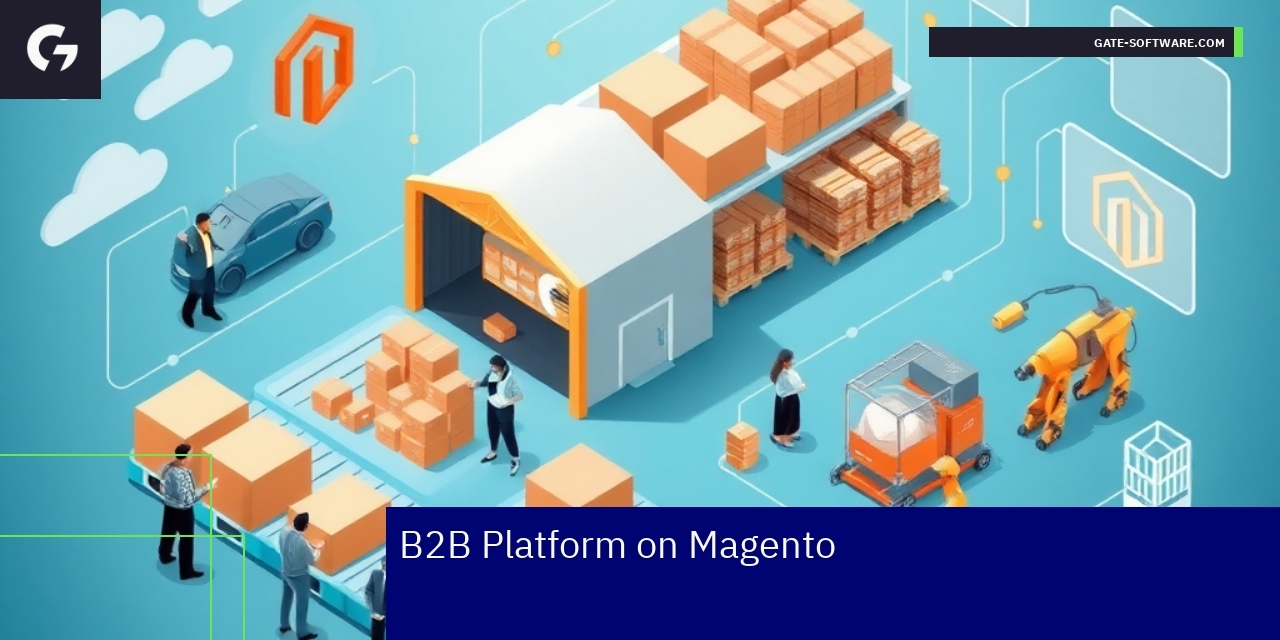
Implementing Magento 2 as your B2B platform leverages its advanced eCommerce platform capabilities to drive significant e-commerce growth. Magento 2 is designed to support complex logistics operations which are essential for efficient order fulfillment and inventory management in B2B scenarios. This logistics support enhances operational workflows, reducing bottlenecks and facilitating smoother distribution processes. As a scalable eCommerce platform, Magento balances platform size and performance effectively, enabling businesses to expand their stores without sacrificing speed or reliability. These features collectively position the Magento 2 eCommerce platform as a crucial growth tool, directly contributing to improved sales results through enhanced customer experience and operational efficiency.
Magento Implementations – FAQ
Magento implementations FAQ address common inquiries regarding the functional requirements and marketing capabilities necessary for a successful B2B platform deployment. Case studies often highlight how different businesses have met unique functional requirements such as custom pricing, complex catalogs, and integration with existing ERP systems through Magento 2. Additionally, the platform’s marketing capabilities enable tailored promotions and personalized customer interactions, supporting the broader digital marketing strategy. This FAQ resource helps stakeholders navigate the technical complexities of Magento implementations, ensuring informed decision-making that aligns with business objectives and drives effective store expansion.
Magento Multistore for B2B and B2C Sales
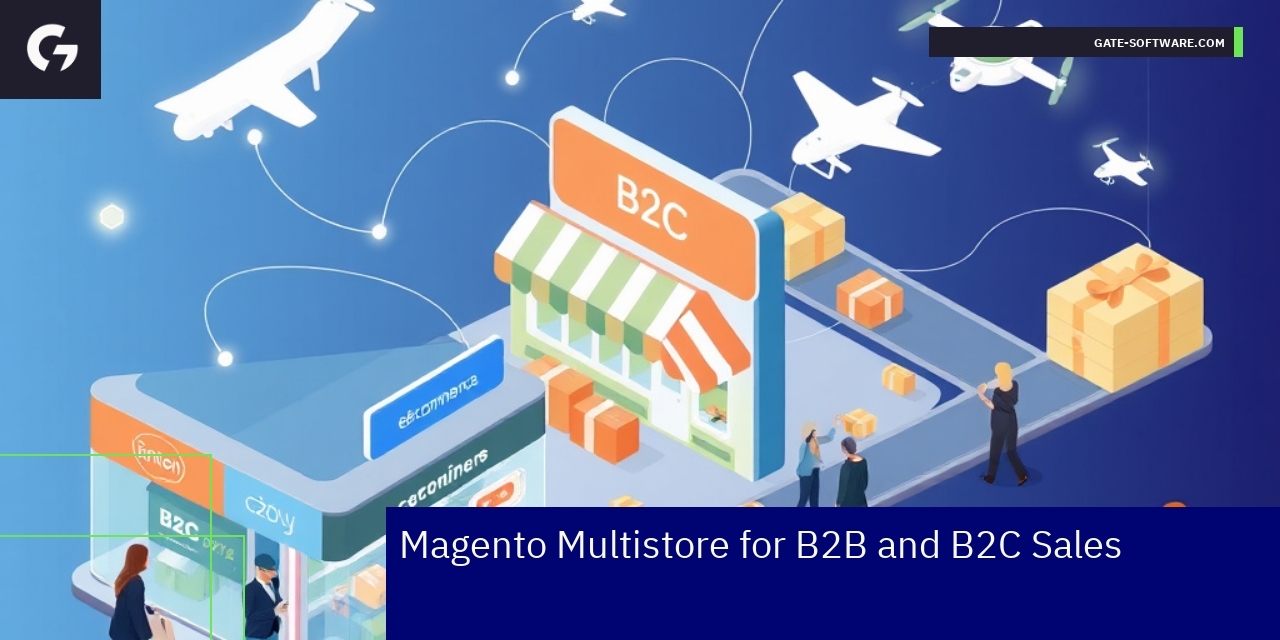
Magento multistore functionality provides a powerful solution for businesses operating both B2B and B2C sales channels. It enables the management of multiple stores from one panel, streamlining administrative tasks and operational workflows. This consolidated approach improves efficiency by allowing centralized control over inventory, pricing, and content management while catering to diverse customer segments with tailored experiences.
In a typical B2B and B2C setup, Magento multistore supports separate catalogs and pricing models, addressing the distinct needs of business clients and consumers. This allows businesses to customize product assortments and pricing strategies that fit different purchasing behaviors and volume requirements. Additionally, unique themes and branding can be applied for each store, ensuring a differentiated user experience aligned with brand identity and customer expectations.
From a technical perspective, Magento’s multistore architecture maintains flexible configuration options across stores without sacrificing scalability. Access control and user permissions can be designed specifically to accommodate the complexity of B2B roles and purchasing processes without affecting the B2C customer journey. This is critical in industries like HVAC sales digitalization, where specialized workflows and product configurations are necessary.
Overall, Magento multistore offers a robust framework that supports multiple stores under one administrative umbrella, providing B2B and B2C enterprises with an integrated platform to boost operational excellence, scalability, and customer satisfaction in their digital commerce initiatives.

How to Implement Magento 2 in a B2B Company?
Implementing Magento 2 in a B2B company demands a strategic and methodical approach that aligns technical architecture with the unique operational requirements of business-to-business commerce. Magento 2 implementation involves several critical steps designed to ensure scalability, operational efficiency, and seamless integration with existing enterprise systems.
The first essential step in the Magento 2 implementation process is a thorough requirements analysis to understand specific B2B needs such as custom pricing, bulk ordering, and complex workflows. This forms the foundation for a tailored implementation plan. Following this, designing an architecture that supports high performance and scalability is imperative, as B2B platforms must manage extensive catalogs and large transaction volumes without degradation.
Next, development and customization focus on adapting the core Magento 2 functionalities to incorporate B2B features like customer segmentation, advanced payment options, and role-based access controls. Integrating Magento 2 with backend ERP, CRM, and inventory management systems is a crucial best practice to streamline operations and provide a unified view of customer data and order processing.
Testing and quality assurance are vital stages to validate functionality and performance under realistic loads, ensuring the platform operates reliably when scaled. After deployment, continuous monitoring and optimization help maintain optimal performance and adapt to evolving business requirements.
Throughout the Magento 2 implementation, adhering to best practices such as modular development, adherence to Magento coding standards, and prioritizing security protocols will maximize success and reduce technical debt. This systematic approach allows B2B companies to leverage Magento 2 effectively, enhancing customer experience, accelerating order processing, and supporting sustained business growth.
If available:
Magento 2 vs. Other E-commerce Platforms
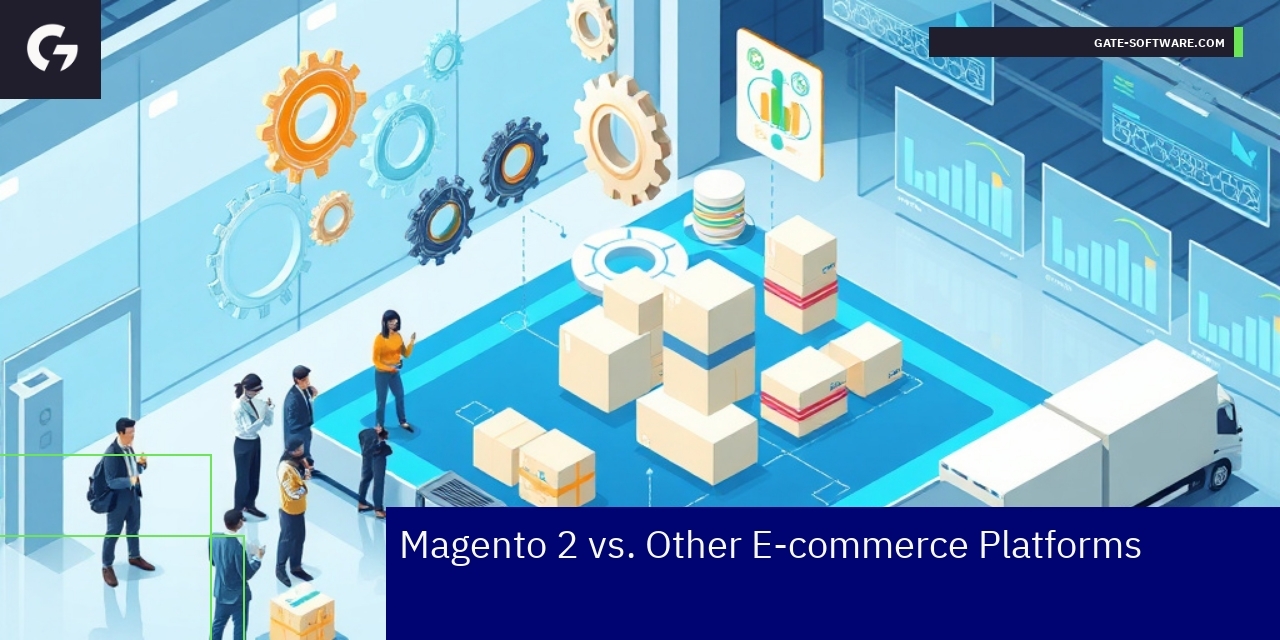
When evaluating B2B e-commerce solutions, the Magento 2 comparison with other e-commerce platforms such as Shopify and WordPress is essential for informed platform selection. Magento 2 is recognized for its robust architecture, designed to support complex business requirements and high transaction volumes typical in B2B environments. Its modular and scalable framework allows organizations to tailor the platform to their specific operational needs, ensuring long-term scalability and performance.
Unlike many other e-commerce platforms, Magento 2 provides extensive customization options and advanced features that cater to intricate product catalogs, multi-tier pricing, and integration with enterprise resource planning (ERP) systems. This depth of functionality supports operational efficiency, enabling businesses to streamline workflows and improve customer experience. However, Magento 2 typically requires more technical expertise to deploy and maintain, reflecting its enterprise-grade capabilities.
Other e-commerce platforms, such as Shopify, offer simplicity and ease of use with managed hosting and a more straightforward setup. While well-suited for smaller scale or less complex B2B needs, they may lack the extensibility and performance optimization found in Magento 2. WordPress, with WooCommerce as an add-on, offers flexibility and a broad ecosystem of plugins but might require significant customization for advanced B2B functionalities.
In summary, the Magento 2 comparison emphasizes its superiority for businesses prioritizing scalability, comprehensive feature sets, and technical architecture tailored to complex B2B requirements. Platform selection should align with the organization’s technical capacity, growth projections, and operational demands to maximize e-commerce effectiveness.
—
If available:
—

Common Mistakes in Magento 2 Implementation
Implementing Magento 2 for B2B environments demands precision and strategic foresight, yet there are common implementation mistakes that can undermine the entire project’s success. One frequent pitfall is underestimating the complexity of Magento 2’s architecture and its customization requirements for B2B-specific needs. This often leads to rushed or incomplete integrations that hamper scalability and performance over time. Another prevalent mistake is neglecting a thorough initial analysis of business processes and operational workflows, which results in misaligned system setups that do not fully support sales cycles or customer management intricacies.
How to avoid these challenges involves adhering to proven best practices such as conducting detailed requirement gathering sessions with all key stakeholders before commencement. This ensures that all technical and business requirements are comprehensively captured and translated into implementation parameters. It is also critical to implement strong project governance frameworks alongside robust testing phases to catch integration issues early, particularly around payment, pricing, and customer segmentation functions critical for B2B operations.
Best practices further include investing in scalable infrastructure and leveraging Magento 2’s modular capabilities to maintain flexibility for future business growth. Aligning the implementation strategy with established eCommerce standards and ensuring seamless third-party integrations are other essential steps. By focusing on these measures, businesses can avoid common implementation mistakes and ensure successful deployment, boosting operational efficiency and ultimately enhancing sales performance in the competitive B2B marketplace.

Alternatives to Magento 2
When evaluating B2B e-commerce platforms, considering alternatives to Magento 2 is crucial for aligning technical architecture with business goals. Magento 2 is a powerful, modular platform with extensive customization possibilities, but its complexity and resource demands may push companies to explore other platforms that better fit operational efficiency and scalability needs.
Shopify is a widely adopted hosted solution that excels with its ease of deployment and maintenance. Though originally favored by B2C, Shopify has expanded features tailored for B2B, including integrated payment solutions and scalability for growing transaction volumes. Its managed infrastructure reduces overhead, allowing technical teams to focus on integration rather than platform upkeep.
WooCommerce, a plugin for WordPress, is another viable alternative, especially if content management is integral to the e-commerce strategy. It offers flexibility in design and seamless integration with marketing tools, but demands careful attention to scalability and performance optimization, which may require dedicated engineering resources as transaction complexity grows.
Other platforms like PrestaShop and OpenCart provide open-source solutions with strong customization potential but often necessitate a more hands-on approach to infrastructure and security, impacting operational workload.
Choosing the right platform involves a balance between feature sets, integration capabilities, total cost of ownership, and long-term scalability. Businesses should assess their current and projected transaction volumes, technical team capacity, and specific B2B workflow requirements when considering alternatives to Magento 2. Integrating with existing systems like ERP or CRM should also weigh heavily in platform evaluation.
In summary, exploring other platforms alongside Magento 2 provides avenues for optimizing performance and operational efficiency in B2B e-commerce environments, ensuring the chosen solution scales seamlessly with business growth.

Benefits and Risks of Magento 2
Magento 2 stands as a robust platform widely adopted in the B2B eCommerce sector, offering a spectrum of benefits and risks that must be carefully examined during platform choice. The benefits and risks of Magento 2 originate from its architectural strengths, scalability, customization capabilities, and operational complexity, all vital components to consider in a thorough risk analysis.
One of the key benefits and risks of Magento 2 lies in its flexibility and extensibility. Magento 2 supports advanced customization tailored to specific B2B workflows, including complex pricing rules, customer segmentation, and streamlined procurement processes. This flexibility drives operational efficiency and business agility but also introduces risks related to the need for skilled development resources and ongoing maintenance dependencies. Poorly managed customizations may escalate costs and extend timelines, impacting scalability and performance.
Another crucial aspect in the benefits and risks analysis involves Magento 2’s architecture. The platform’s modular design enhances scalability, allowing businesses to handle high transaction volumes effectively, a top priority for B2B operations. However, this modularity requires expertise in managing integrations and upgrades, posing risk factors in system stability and future-proofing. A comprehensive risk analysis must evaluate these technical architecture implications thoroughly.
Security and data management also form pivotal points in the benefits and risks framework. Magento 2 includes strong security features vital for B2B transactions, mitigating risks associated with data breaches and compliance failures. Yet, the platform’s exposure to external extensions and integrations can create vulnerabilities that demand vigilant risk management strategies.
In conclusion, performing a detailed risk analysis that includes evaluating both the benefits and risks of Magento 2 is essential for an informed platform choice. Senior stakeholders must weigh the technical architecture, operational efficiency, scalability demands, and security posture to leverage Magento 2 effectively in B2B environments.

Data and Performance Metrics – Efficiency and Cost
Key Metrics for B2B
In the realm of B2B ecommerce, operational efficiency is paramount, with businesses reporting an average reduction of 30% in order processing time after implementing Magento 2. Companies utilizing Magento 2 have achieved a 25% decrease in inventory holding costs, primarily due to enhanced visibility and streamlined inventory management practices. Furthermore, organizations that have adopted automated workflows experience an up to 40% improvement in sales cycle times, demonstrating the platform’s ability to accelerate the transaction process.
In terms of performance, B2B companies leveraging Magento 2 report an uptime of 99.9%, ensuring reliability even during peak traffic periods. The platform is capable of handling up to 1,000 transactions per minute, making it highly suitable for businesses with large volumes of sales. Additionally, customers experience an average page load time of 2 seconds, significantly enhancing user experience and potentially improving conversion rates.
On the cost side, Magento 2 users often see a total cost of ownership (TCO) reduction of approximately 20% after streamlining operations through system integrations and improved efficiencies. Additionally, businesses employing customized pricing strategies through the platform can optimize profit margins, leading to an average return on investment (ROI) of over 150% within the first year of implementing Magento 2.
Lastly, B2B enterprises report an increase in customer retention rates by 15% attributed to enhanced personalization features and user experience improvements facilitated by the platform’s capabilities. These metrics provide a compelling case for Magento 2 as a leading choice for B2B organizations aiming to enhance efficiency, performance, and cost-effectiveness in their ecommerce strategies.
Summary
In conclusion, Magento 2 serves as a vital foundation for B2B companies striving for growth and operational effectiveness in the dynamic digital commerce landscape. With its robust architecture and extensive customization options, it meets the intricate requirements of B2B transactions, enabling tailored solutions for large orders, personalized pricing, and unique procurement workflows. The platform’s scalability ensures that businesses can handle high traffic and diverse product catalogs without sacrificing performance, making it an ideal choice for companies looking to expand their operations globally. Moreover, Magento 2 facilitates the automation of complex sales processes, reducing administrative burdens while providing advanced analytics that empower strategic decision-making. By enhancing customer experiences with personalized and mobile-optimized interfaces, Magento 2 aligns with the digital transformation goals of B2B enterprises, ultimately fostering stronger client relationships and competitive differentiation. As you consider your options in eCommerce, reflecting on the practical benefits that Magento 2 brings to your organization can inform your decision-making process and position your business for sustained growth and efficiency in an increasingly competitive marketplace.

FAQ
What are the key benefits of using Magento 2 for B2B companies?
Magento 2 provides B2B companies with a flexible and robust platform that supports complex transactions, personalized pricing, and intricate procurement workflows. It enables businesses to automate sales processes, integrate with ERP and CRM systems, and optimize operations through advanced analytics and reporting tools.
How does Magento 2 support scalable infrastructure for B2B operations?
Magento 2’s architecture is designed to handle high traffic and large product catalogs without compromising performance, making it ideal for rapidly expanding B2B companies. Its modular design allows for smooth integration with essential systems, ensuring consistent user experience even during peak periods.
Why is custom pricing important in B2B transactions using Magento 2?
Custom pricing allows B2B companies to adapt their pricing strategies based on different user roles and specific business agreements. This personalization enhances the customer experience, improves sales efficiency, and drives conversion rates by ensuring that clients receive relevant and accurate pricing.
How can Magento 2 streamline logistics support for B2B companies?
Magento 2 enhances logistics support by facilitating seamless coordination between inventory, warehousing, and distribution workflows. It allows real-time data synchronization with third-party logistics providers, ensuring efficient order fulfillment and accurate shipment tracking tailored to the complexities of B2B sales.
What common mistakes should businesses avoid when implementing Magento 2?
Common mistakes include underestimating Magento 2’s complexity and neglecting thorough initial analysis of business processes. Businesses should focus on detailed requirement gathering, robust testing, and aligning implementation strategies with established eCommerce standards to avoid integration issues and ensure successful deployment.
.
.
Zamów bezpłatną konsultację
.
Z nami rozwój Twojego biznesu nabierze tempa! Zapraszamy do kontaktu średnie i duże firmy generujące min. 7 mln PLN obrotu rocznie – tam nasza ekspertyza sprawdza się najlepiej.
.
Kliknij w poniższy przycisk i skontaktuj się z jednym z naszych konsultantów e-commerce
.