Introduction
In the dynamic realm of B2B commerce, leveraging powerful and adaptable eCommerce platforms is crucial for sustainable business growth. Magento 2 stands out as a robust solution tailored to meet the complex needs of B2B enterprises. Its specialized features facilitate streamlined procurement processes, advanced customer management, and seamless integration capabilities, all of which contribute to enhanced operational efficiency and customer satisfaction.
Understanding and implementing Magento 2’s B2B functionalities can significantly improve your organization’s capacity to manage large accounts, customize price and catalog rules, and automate order workflows. These capabilities are essential for delivering personalized, scalable solutions that align with the strategic demands of modern B2B markets.
This introduction sets the stage to explore how businesses can effectively leverage Magento 2 B2B features to optimize their workflows, improve UX/UI tailored for business clients, ensure compliance with standards like WCAG 1.1, and ultimately drive business growth through technology that integrates smoothly with existing organizational structures and marketing strategies.

What You Will Learn
Magento 2 B2B solutions offer key features designed specifically to meet the complex needs of business clients. These features include advanced account management with support for multiple buyers and roles, customized pricing and catalogs, streamlined ordering processes, and integration capabilities with existing enterprise systems. Understanding these functionalities is crucial for effectively implementing Magento 2 in a B2B environment, ensuring scalability, security, and performance that align with business objectives.
The key benefits of Magento 2 B2B extend beyond mere functionality. Businesses gain improved operational efficiency through automation of repetitive tasks, enhanced customer experience with personalized interactions, and increased sales opportunities thanks to customized pricing and flexible payment options. These benefits contribute to higher customer retention and support long-term business growth, making Magento 2 a valuable platform for companies focused on B2B commerce.
Practical use cases illustrate how Magento 2 B2B features solve real-world challenges. For example, manufacturers can manage complex product catalogs with multiple configurations, wholesalers can streamline bulk ordering and approval workflows, and service providers can integrate quote requests directly into the purchasing process. These scenarios demonstrate the platform’s versatility and how it supports diverse business models, enabling companies to address specific market demands effectively.
Best practices in Magento 2 B2B implementation emphasize thorough planning around user roles and permissions, seamless integration with ERP and CRM systems, and compliance with accessibility standards such as WCAG. Avoiding common mistakes like neglecting UX/UI optimization or underestimating the importance of SLA and monitoring leads to a more robust and user-friendly environment. Leveraging Gate-Software expertise ensures adherence to these standards and supports continuous improvement, minimizing risks and maximizing ROI.
TABLE OF CONTENTS
- Magento 2 B2B Features: How to Leverage Them for Your Business Growth
- What You Will Learn
- Magento 2 B2B Basics
- Benefits of Magento 2 for B2B
- What Is a PIM System and Its Role in B2B E-commerce?
- Best Practices for Omnichannel Purchase Optimization
- System Integration in B2B E-commerce: Why It Matters
- Migrating from Magento 1 to Magento 2: Key Steps and Timeline
- Magento 1 vs Magento 2 for B2B
- Alternatives to Magento 2 in B2B E-commerce
- Data and Performance Metrics – Efficiency, SLA, TCO
- Magento 2 B2B Use Cases
- Case Studies: Success Stories Using Magento 2
- Data and Performance Metrics – Efficiency, SLA, TCO
- Summary
- FAQ
Magento 2 B2B Basics
What Is Magento 2?
Magento 2 is a leading platform designed to support the growth of e-commerce, especially for B2B businesses. Its scalable architecture and wide range of features make it a top choice for companies aiming to implement a robust B2B platform. Understanding what Magento 2 offers helps clarify why businesses choose it for B2B sales success. Personalization capabilities and seamless Magento 2 B2B extensions further boost the platform’s effectiveness at meeting diverse client needs. Magento 2 enables integration with various B2B tools and provides advanced user management features crucial for corporate clients. The platform’s compliance options, including standards like WCAG 1.1, ensure accessibility and a professional UX/UI tailored to B2B demands. This foundation supports strategic goals around digital transformation and enhances competitive positioning by streamlining complex purchasing processes typical in B2B transactions.
B2B Platform as a Foundation
A well-built B2B platform is the foundation of any successful e-commerce strategy. Magento 2 excels both in B2B and B2C sales, empowering businesses to offer fast ordering solutions and efficient quote request management. This foundation not only enables growth but optimizes sales processes, a key benefit for any e-commerce initiative leveraging Magento 2. A resilient B2B platform integrates seamlessly with ERP and CRM systems, supporting customer segmentation and multi-tier pricing strategies. Magento 2’s modularity allows customization driven by precise Architect and eCommerce Manager requirements, aligning the platform with specific user personas and operational workflows. Enhancing B2B sales channels with features such as bulk ordering and automated catalog updates further serves to maximize efficiency and client satisfaction.
Magento 2 Implementation in Practice 🧩 Integration and Personalization ⚙️ Compliance and Stability 💡 Collaboration and Expertise
Implementing Magento 2 involves a detailed process spanning initial setup to full customization. Leveraging Magento 2 B2B extensions enhances the ability to personalize your web store and tailor the e-commerce environment according to client needs. This hands-on approach ensures efficient catalog management and automatic update of offers, which directly optimize B2B sales processes. Close cooperation among CTO, Head of Applications, and eCommerce Managers ensures IT infrastructure meets performance and scalability expectations. Gate-Software’s expertise in MagentoOneS™, SLA frameworks, and monitoring aligns with delivering stable B2B commerce ecosystems. Additionally, compliance audits concerning UX/UI and WCAG standards guarantee accessible and user-friendly interfaces crucial for B2B client retention and conversion rates.
B2B Efficiency with Magento 2
Efficiency in B2B sales relies on intuitive tools such as order editing, seamless process management, and a comprehensive admin panel. Magento 2’s features facilitate these needs, underpinning why so many companies choose Magento 2 for B2B e-commerce to gain operational agility and client satisfaction. The platform supports intricate workflows typical in B2B, including multi-user account management and tailored pricing structures. Integration potential with marketing automation and content strategies, aligned with Gate-Software’s social media and brand voice plans, empowers coherent communication and positioning. Magento 2 architecture supports security and scalability ensuring long-term cost optimization. Its flexible admin tools allow eCommerce Managers and CDOs to control product assortments dynamically, driving customer-centric strategies in complex B2B environments.
Benefits of Magento 2 for B2B
E-commerce Growth with Magento 2
Magento 2 strongly supports e-commerce growth by offering a feature-rich B2B platform. It enables businesses to manage complex product catalogs efficiently with automatic catalog updates that keep the offering current without manual intervention. The platform’s diverse payment options, including net terms and purchase orders, are tailored to meet the unique needs of B2B clients. Magento 2 also provides user-friendly self-service tools that empower customers to manage their accounts, view order histories, and reorder with ease. These capabilities ensure your store can scale efficiently and accommodate varied client demands, crucial for businesses aiming to expand their digital presence. These key benefits of Magento 2 B2B highlight why it remains a preferred solution for addressing the technical and commercial challenges of B2B e-commerce.
Personalized Client Approach 🧩 🤝 💡
Magento 2 excels in facilitating a personalized client approach by enabling detailed management of quote requests. The platform allows sales teams to create, customize, and negotiate quotes directly within the system, streamlining communication and accelerating sales cycles. Furthermore, Magento supports multi-user access for companies, allowing different stakeholders within a client organization to collaborate on purchases under a single corporate account. This enhances engagement and improves customer relationships by aligning the platform’s functionality with the complex procurement processes of B2B clients. Tailoring logistics support and order workflows to individual client needs is also possible, supporting a more responsive and client-focused service model that fosters long-term partnerships.
Handling Quote Requests
Efficient handling of quote requests is fundamental in B2B sales, and Magento 2 provides robust tools to manage this process smoothly. The platform enables easy order editing, allowing businesses to adapt quotes to changing client requirements without losing transactional data integrity. This flexibility ensures performance meets business expectations while maintaining transparency and control. The ability to manage quotes and orders seamlessly reduces administrative overhead and enhances customer satisfaction, as clients receive timely and accurate proposals. Magento 2’s sophisticated quote management complements the broader sales workflow, making it a critical feature for B2B companies that depend on customized pricing and negotiated terms to close deals effectively.
What Is a PIM System and Its Role in B2B E-commerce?
Product Data Management
A Product Information Management (PIM) system is essential for driving growth in e-commerce by centralizing and simplifying the management of product data. In the context of a B2B platform, PIM offers intuitive self-service tools that empower users within corporate structures to handle complex product information efficiently. It adapts performance parameters to meet operational requirements and supports a variety of payment options needed for intricate B2B transactions. By ensuring data consistency and accuracy, a PIM system streamlines product data management, enabling businesses to maintain high-quality, up-to-date product information across various channels without manual errors or redundancies.
Automatic Catalog Updates
Integrating PIM with a platform like Magento 2 enables automatic, real-time catalog updates that accelerate the ordering process and enhance overall platform management. This integration helps maintain synchronized product information across multiple touchpoints, reducing the time-to-market for new products or changes. Crucially, the system supports multiple users managing corporate accounts simultaneously, which addresses the complex hierarchical and permission-based needs typical in B2B environments. Such automation and multi-user capabilities reduce operational bottlenecks, increasing agility in responding to customer demands and market changes.
PIM and B2B Efficiency
The combined functionality of PIM systems and Magento 2 significantly boosts efficiency in B2B commerce by enhancing key processes such as order editing, quote request management, and logistics support. These capabilities optimize workflows, reduce errors, and improve customer experience by enabling faster and more flexible responses to business client needs. The synergy between PIM and Magento 2 underscores the advantage of deploying robust digital tools tailored for B2B, helping companies streamline sales processes, improve data transparency, and maintain competitive service levels in complex B2B ecosystems.

Best Practices for Omnichannel Purchase Optimization
Fast Ordering as a Success Factor
Fast and straightforward ordering is essential in B2B e-commerce to meet the expectations of corporate clients who demand efficiency and reliability. Magento 2’s platform supports fast ordering by offering a streamlined user interface that reduces friction in the purchasing process. Multiple payment methods, including invoicing and credit options, cater to diverse customer needs, while the ability to manage corporate accounts with multiple users increases operational efficiency. This functionality empowers sales teams to expedite order processing and respond swiftly to business demands. The combination of speed and simplicity in ordering directly contributes to higher conversion rates and customer retention, making it a critical factor in omnichannel purchase optimization.
User-Friendly Self-Service Tools
Self-service tools within Magento 2 enable clients to take control of their orders, shipping, and payment processes, fostering transparency and trust. These tools allow B2B customers to track order status, access invoices, initiate returns, and manage complex logistics without intermediary delays. This autonomy reduces the load on customer service while improving client satisfaction. The intuitive design and functionality of these self-service tools align with the expectations of modern B2B buyers, who prioritize convenience and responsiveness. Consequently, companies relying on Magento 2 see enhanced customer loyalty and smoother operational workflows, making user-friendly self-service tools a cornerstone of successful omnichannel strategies.
Seamless Process Management
Effective process management is at the heart of omnichannel success. Magento 2 facilitates seamless coordination of orders, payments, and corporate account administration, ensuring that business transactions proceed without interruption. Flexible payment options support varied B2B financial arrangements, while multi-user account management enhances collaboration across different roles within a customer organization. By integrating these elements into a cohesive workflow, Magento 2 helps businesses harmonize online and offline channels, reduce bottlenecks, and adapt quickly to changing market conditions. This seamless process management not only optimizes the customer experience but also drives operational excellence, positioning companies to compete effectively in the evolving B2B landscape.
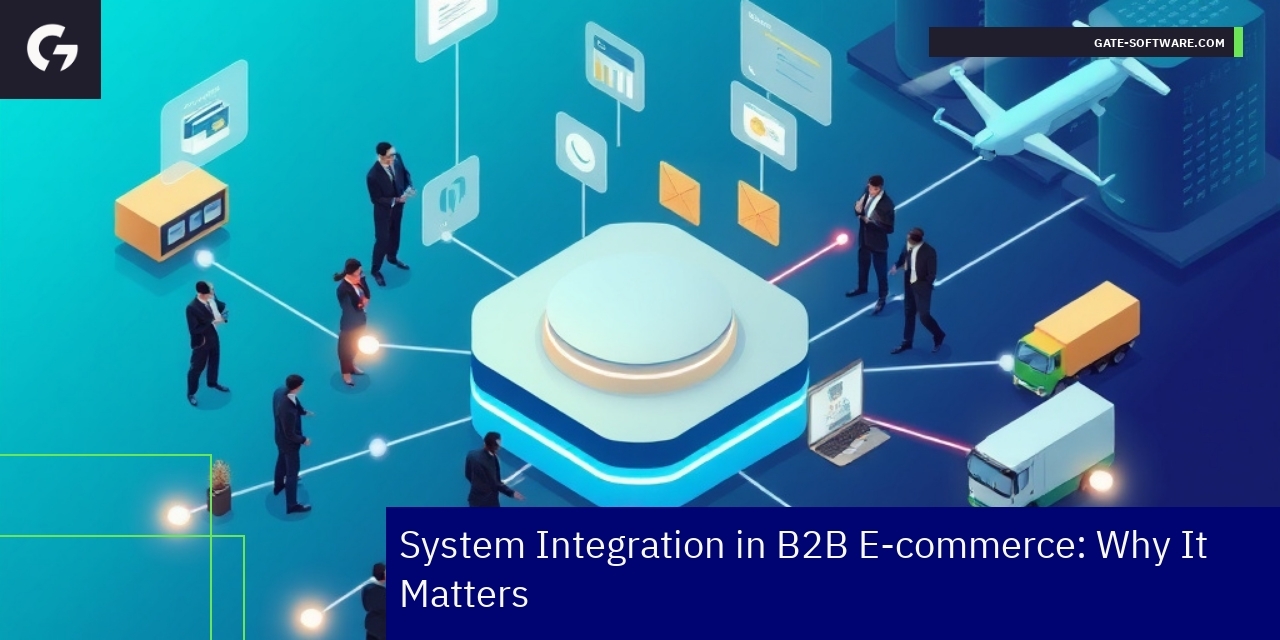
System Integration in B2B E-commerce: Why It Matters
B2B Effectiveness Through Integration
Integrating Magento 2 with other business systems significantly enhances B2B efficiency by automating updates to product offerings, streamlining order management, and enabling intuitive self-service portals for multiple account users. This integration reduces manual workload and errors, allowing sales teams and customers to access real-time, accurate information which optimizes sales processes. By supporting features such as tiered pricing and customized catalogs, Magento 2 ensures that businesses can cater to diverse client needs within a cohesive platform. This seamless connection between systems contributes not only to faster transaction completion but also to improved customer satisfaction, as buyers experience consistent and reliable service across all touchpoints. Integration facilitates personalized experiences based on customer data and order history, increasing client retention and loyalty. Gate-Software solutions leverage this capacity to enable B2B clients to maintain control while scaling their operations efficiently.
Logistics and Payment Management
Effective logistics and payment management are central pillars of B2B e-commerce, and Magento 2’s platform excels by providing comprehensive tools for order editing, shipment tracking, and flexible payment options. Integration with external logistics providers and payment gateways ensures smooth administration processes, allowing businesses to adapt quickly to supply chain changes and varying payment preferences. Accurate synchronization of inventory and delivery schedules minimizes delays and errors, providing transparency to both sellers and buyers. The system supports complex payment scenarios such as purchase orders, invoicing, and credit limits, which are critical for B2B operations. This robust approach to logistics and payments secures reliable service delivery, reduces risk, and improves cash flow management. Gate-Software’s expertise in integrating these functionalities ensures that B2B clients can handle large volumes of transactions without sacrificing speed or accuracy.
B2B Platform as an Integration Hub ⬛️📦🔗
Magento 2 functions as a central integration hub, acting as the backbone of B2B e-commerce ecosystems by consolidating ordering, logistics, payment, and quotation processes into a single unified platform. This centralization accelerates ordering cycles and simplifies management for businesses by providing a consistent interface and data repository. Integration enables rapid quote generation, order modifications, and inventory updates, empowering clients to respond swiftly to market demands. By connecting diverse systems—ERP, CRM, warehouse management—Magento 2 facilitates seamless data exchange and end-to-end process coordination. This makes it an indispensable tool for companies looking to centralize their e-commerce environment and enhance operational transparency. Gate-Software supports this integration ecosystem through tailored solutions that align with the strategic objectives of B2B businesses, ensuring technology investments deliver maximum value over time.
Migrating from Magento 1 to Magento 2: Key Steps and Timeline
Checklists and Common Mistakes 🛠️ Checklist | ⚠️ Common Pitfalls | ✅ Best Practices
A smooth migration requires detailed checklists and awareness of common pitfalls. Preparing your B2B platform carefully supports e-commerce development and ensures order editing and operational management remain efficient throughout the process. Utilizing comprehensive planning and verification steps prevents disruptions in sales workflows and inventory management. Key aspects include verifying data integrity, ensuring compatibility of existing customizations, and aligning functionality with B2B-specific requirements such as multi-user corporate accounts and tailored pricing models. Avoiding common mistakes like overlooking integration dependencies or underestimating testing complexity is critical for a seamless transition preserving business continuity.
Magento 2 Implementation in Practice
The implementation phase focuses on efficiency, speed, automatic catalog updates, and enabling multiple users per corporate account. Following proven Magento 2 B2B extensions and practices ensures a successful migration and improved sales workflows. Key technical steps involve deploying optimized B2B modules, configuring advanced quote management, and integrating self-service portals for clients. This stage emphasizes automating repetitive tasks and empowering users across sales and procurement teams with tailored access controls. Close collaboration between technical teams and business stakeholders aligns platform capabilities with strategic growth objectives and maintains compliance with WCAG standards, enhancing both usability and accessibility.
Migration Time and Planning
Accurate planning based on your e-commerce growth goals and B2B efficiency needs is necessary to keep migration on track. Organizing quote management and leveraging self-service tools will allow a smooth transition to Magento 2. Establishing realistic timelines accounts for discovery, development, testing, and rollout phases, with milestones that include data migration validation and stakeholder training. Attention to order processing continuity and scalability ensures that the new platform supports expanding transaction volumes and complex B2B workflows. By integrating feedback loops during the migration timeline, organizations can proactively adjust project scope and resources, minimizing downtime and accelerating ROI realization.
Magento 1 vs Magento 2 for B2B
Functional Differences
Magento 2 introduces enhanced functionalities and better supports future-focused e-commerce growth compared to Magento 1. Advanced order editing and quote management highlight the platform’s superiority for B2B use. These improvements address core business needs such as streamlined workflows and more flexible transaction handling. Enhanced APIs and better integration capabilities also facilitate seamless connection with ERP and CRM systems, vital for complex B2B operations. The platform’s upgraded architecture supports scalability and robustness, which are essential for handling high transaction volumes and maintaining smooth performance under enterprise workloads. This makes Magento 2 a more future-proof choice for businesses seeking to expand their digital commerce capabilities while ensuring compliance with business process requirements and maintaining a user-friendly UX/UI aligned with WCAG standards.
B2B Efficiency Comparison
Magento 2 provides faster ordering, automatic updates, and supports multiple account users, increasing efficiency significantly over Magento 1. The ability to configure custom roles and permissions for different users simplifies management of complex B2B hierarchies, reducing administrative overhead. Automation of pricing, discount rules, and contract terms optimizes purchasing processes and minimizes errors. The platform also supports integrated payment and shipping methods that adapt to business needs. These efficiencies directly translate to reduced operational costs and improved user satisfaction. For eCommerce Managers and Heads of Applications, these features facilitate better control and monitoring, enhancing decision-making and operational excellence. The streamlined backend interface combined with powerful reporting tools supports continuous improvement and faster response to market changes.
Magento 2 as the Future
The future of B2B e-commerce lies with Magento 2, thanks to its scalable platform, enhanced efficiency, intuitive self-service tools, and improved logistics support. Magento 2’s architecture is designed to support ongoing digital transformation initiatives, enabling integration with AI-driven analytics and personalized marketing strategies supported by Gate-Software’s content and social media strategies. Self-service portals empower key stakeholders to independently manage orders, quotes, and support requests, reducing dependency on IT resources. Logistics support is enhanced through real-time inventory management and flexible delivery options, crucial for meeting B2B clients’ high expectations. These combined benefits position Magento 2 as the best choice for ongoing business growth, delivering measurable value and supporting sustainable competitive advantage in complex e-commerce ecosystems.
Alternatives to Magento 2 in B2B E-commerce
B2B Platform Comparison
While Magento 2 offers significant benefits, other platforms also offer features such as flexible payments, fast ordering, and multi-user corporate account management. Evaluating these can help you determine the best fit for your needs. In the B2B e-commerce sector, flexibility in payment options is crucial as businesses often require tailored invoicing, purchase orders, and credit limits. Additionally, fast ordering processes, such as quick reordering and bulk order capabilities, reduce transaction time and enhance user experience. Multi-user corporate account management allows different stakeholders within a company to participate in purchasing with defined roles and permissions, which is key for organizational control. Platforms like OroCommerce, Shopify Plus, and BigCommerce provide robust solutions in these areas, enabling crucial B2B functions while maintaining scalability and adaptability. Proper platform choice directly impacts operational efficiency and customer satisfaction in B2B environments.
Quote Management in Alternatives
Alternative platforms vary in how they handle quote requests, order editing, and process management. User-friendly self-service tools remain a key feature to compare across different solutions. Efficient quote management is essential in B2B e-commerce, where pricing negotiations and custom terms are common. Some platforms allow customers to request quotes directly from the portal and receive personalized proposals swiftly, streamlining sales cycles. Furthermore, the ability to edit orders post-quote approval supports dynamic business needs and helps avoid order errors. Self-service functionalities empower clients to manage their orders and negotiate terms independently, reducing administrative overhead and enhancing transparency. This decentralization aligns with the expectations of corporate clients seeking autonomy and control during the purchasing process.
E-commerce Growth with Other Platforms
Some platforms support e-commerce growth effectively with strong automation, quote management, and logistics features, providing options beyond Magento 2 for businesses with unique requirements. Automation in B2B e-commerce includes tools for managing complex workflows, triggering reorder reminders, and automating discounting and approvals. Logistics integration ensures accurate real-time inventory tracking and efficient delivery management, which are critical for maintaining service levels. Additionally, advanced quote management systems foster personalized client interactions, enhancing conversion rates and long-term relationships. Choosing a platform with these integrated capabilities supports sustainable growth by optimizing operational processes and enabling scalable, customer-centric commerce models. This is vital for businesses aiming to expand their B2B presence while maintaining efficiency and compliance with industry standards.

Data and Performance Metrics – Efficiency, SLA, TCO
Monitoring B2B Performance
Tracking performance is crucial for achieving efficiency in B2B environments. Magento 2 supports monitoring vital metrics, including TCO, by providing tools that facilitate automatic updates and intuitive self-service management. This enables businesses to optimize operations and respond rapidly to changes after the initial store launch. Effective performance tracking ensures maintenance of operational standards, identifying bottlenecks early and supporting scalable growth. Leveraging such monitoring capabilities enhances decision-making, empowering eCommerce Managers and CTOs to improve system responsiveness and cost control while aligning with strategic business goals.
SLA in E-commerce
Service Level Agreements (SLA) play a foundational role in defining clear operational expectations within B2B e-commerce. They specifically address critical processes such as order editing and workflow management. Magento 2’s platform supports strict adherence to SLAs by providing reliable features that facilitate timely and accurate order processing, as well as robust multi-user account handling. This ensures that service reliability and customer satisfaction are maintained at high levels, which is essential for sustaining long-term B2B partnerships. For Heads of Applications and CDOs, maintaining SLA compliance is integral in managing risks and ensuring seamless business continuity.
TCO and Its Role in Growth
Understanding the Total Cost of Ownership (TCO) is essential when considering Magento 2 for B2B implementation. Magento 2 improves e-commerce efficiency by accelerating ordering processes, managing quotes effectively, and supporting comprehensive logistics operations. These features contribute directly to optimizing investment returns through reduced operational costs and enhanced productivity. Evaluating TCO allows decision-makers to forecast expenses more accurately and align technology investments with business growth strategies. For CTOs and eCommerce Managers, a clear grasp of TCO informs better budgeting, resource allocation, and long-term planning essential for sustainable B2B development.
Magento 2 B2B Use Cases 🧩 📈 ⚙️
Magento 2 offers comprehensive solutions tailored to the complex needs of B2B enterprises, addressing both technical and business challenges with precision. One significant use case is personalizacja dla klientów B2B, where Magento 2 enables the creation of customized user experiences through segmented pricing, personalized catalogs, and buyer-specific promotions. This flexibility supports large-scale enterprises seeking to optimize the customer journey and increase repeat sales.
Another critical aspect is efektywne zarządzanie zapasami w Magento 2, allowing companies to streamline inventory oversight across multiple warehouses and sales channels. Real-time stock updates and automated replenishment workflows reduce operational bottlenecks, ensuring timely order fulfillment which is essential in B2B commerce with its bulk order dynamics.
Magento 2 also supports zakupy hurtowe w Magento 2, facilitating bulk ordering through streamlined catalogs that enable quick product selection and efficient checkout processes, meeting the demands of professional buyers accustomed to rapid procurement cycles. Coupled with niestandardowe katalogi i ceny B2B, businesses can manage differentiated price lists and product assortments for various client segments, providing a competitive edge through tailored commercial terms.
Effective zarządzanie grupami klientów w Magento 2 empowers enterprises to segment their customer base finely, allowing marketing and sales teams to implement targeted outreach and support tailored content, boosting engagement and conversion rates. Furthermore, robust integracja z systemami ERP i CRM w Magento 2 ensures seamless data flow between commerce platforms and back-office systems, enhancing operational efficiency, eliminating manual errors, and providing unified management of orders, inventory, and customer data.
In summary, Magento 2’s B2B capabilities provide a solid technological foundation for businesses to scale, optimize supply chain processes, and deliver exceptional buyer experiences while supporting complex pricing, inventory, and client management strategies essential for success in today’s demanding markets.

Case Studies: Success Stories Using Magento 2
In the realm of B2B commerce, leveraging Magento 2 has proven to be a transformative decision for many organizations aiming to enhance their digital operations and achieve measurable business growth. Gate-Software’s expertise in Magento 2 implementations focuses on addressing complex technical and business challenges typical in B2B environments, such as seamless integration with existing systems, scalability to support growing transaction volumes, and compliance with industry standards including WCAG accessibility guidelines.
One prominent success story involves a mid-sized company aiming to increase their sales by streamlining the client purchasing experience. By customizing Magento 2 to support their unique business rules, integrating advanced UX/UI designs aligned with WCAG 1.1 standards, and implementing robust hosting and monitoring solutions, Gate-Software facilitated a rapid increase in order conversions and reduced cart abandonment rates. This case underscores how Magento 2’s flexibility supports critical B2B applications, including personalized pricing, complex quote requests, and multi-tier customer management.
Another case highlights a significant transformation of B2B processes for an enterprise client. Gate-Software’s approach included a comprehensive audit of the client’s existing platform, cost optimization strategies, and migration to the latest Magento 2 version. The project emphasized maintaining high availability through SLA-driven hosting environments and continuous performance monitoring. Furthermore, the adoption of Magento 2 enabled better alignment with the client’s marketing and communication strategies, enhancing their brand voice and facilitating more precise targeting across digital channels.
Integrating Magento 2 into B2B operations requires a nuanced understanding of customer personas such as Architects, eCommerce Managers, and CTOs, ensuring technical implementations align with strategic business goals. Gate-Software supports these clients with robust support models and knowledge sharing, driving continuous improvement and innovation in their eCommerce platforms. These case studies demonstrate how Magento 2, combined with strategic partnership and expert guidance, can drive real success in B2B markets.

Data and Performance Metrics – Efficiency, SLA, TCO
Operational Effectiveness in B2B Projects
In the realm of B2B commerce, operational metrics play a vital role in assessing and enhancing performance. For Gate-Software, key metrics reflect their commitment to delivering efficient solutions. For instance, projects typically have an average takeover time of 4 weeks, allowing businesses to transition smoothly into utilizing their new e-commerce platforms. Impressively, 95% of projects are delivered on time, adhering to the established Service Level Agreements (SLA) that ensure reliability and high standards of service.
Moreover, clients often experience an average reduction in Total Cost of Ownership (TCO) by approximately 25% following the implementation of Magento 2 solutions. This noteworthy decrease is attributable to the platform’s ability to streamline operations and eliminate inefficiencies.
In terms of uptime, Gate-Software guarantees an SLA of 99.9%, ensuring that clients’ e-commerce platforms remain accessible and operational, which is indispensable for maintaining customer satisfaction and trust. The average client relationship duration stands at an impressive 6 years, indicative of the strong partnerships fostered through ongoing support and reliable service.
Additionally, Gate-Software has completed over 100 B2B implementations, showcasing their extensive experience and proficiency in delivering tailored e-commerce solutions that meet the specific needs of diverse businesses. This wealth of experience enhances their ability to address the unique challenges faced by B2B clients effectively, solidifying their position as a trusted partner in e-commerce development.
These metrics underscore the operational effectiveness of Gate-Software’s B2B projects, offering data-driven insights that support purchasing decisions and validate the efficacy of their services in enhancing business growth and efficiency.

Summary
In conclusion, leveraging Magento 2 for your B2B e-commerce needs can significantly transform your business operations and enhance customer satisfaction. The platform’s specialized features, such as advanced account management, customized pricing, and seamless integration capabilities, enable organizations to efficiently handle complex workflows tailored to the demands of B2B transactions. By implementing Magento 2, businesses can achieve improved operational efficiency through automation, enhanced client relationships through personalized interactions, and increased sales opportunities by offering flexible payment options and streamlined procurement processes. The successful integration of Magento 2 not only supports scalability and security but also aligns with your strategic growth objectives, making it a valuable asset for companies focused on succeeding in the competitive B2B market. If you’re looking to optimize your e-commerce experience and drive sustainable growth, considering experts like Gate-Software can further empower your implementation and maximize the transformative potential of Magento 2.

FAQ
What are the key features of Magento 2 for B2B commerce?
Magento 2 offers several key features for B2B commerce, including support for multiple buyers and roles within company accounts, custom pricing and catalogs tailored to different customer segments, and streamlined ordering processes that facilitate bulk purchases. Additionally, it integrates with purchase orders and provides quote management tools that enhance procurement workflows.
How does Magento 2 enhance operational efficiency for B2B businesses?
Magento 2 enhances operational efficiency by automating repetitive tasks such as order processing and catalog updates, which reduces manual workloads and minimizes errors. Its comprehensive admin panel allows businesses to manage complex workflows, including multi-user account management and customized pricing, thereby improving response times and customer satisfaction.
What benefits does Magento 2 provide for personalized client engagement?
Magento 2 facilitates personalized client engagement through its ability to create tailored experiences for different customer segments. It allows businesses to manage quote requests effectively, enabling sales teams to customize proposals and pricing according to specific needs. This personalization fosters stronger client relationships and encourages repeat business.
Why is system integration important in B2B e-commerce using Magento 2?
System integration is crucial in B2B e-commerce as it enables seamless data flow between Magento 2 and other business systems like ERP and CRM. This integration supports automated updates, real-time inventory management, and cohesive order processing, leading to improved operational efficiency and a better overall customer experience.
What common mistakes should be avoided when migrating to Magento 2?
Common mistakes when migrating to Magento 2 include underestimating data migration complexity, failing to align with the UX/UI standards and compliance requirements, and not leveraging the new features of Magento 2 effectively. Additionally, insufficient testing and lack of a staged approach can lead to downtimes and broken integrations, which should be addressed through careful planning and expert consultation.
.
.
Zamów bezpłatną konsultację
.
Z nami rozwój Twojego biznesu nabierze tempa! Zapraszamy do kontaktu średnie i duże firmy generujące min. 7 mln PLN obrotu rocznie – tam nasza ekspertyza sprawdza się najlepiej.
.
Kliknij w poniższy przycisk i skontaktuj się z jednym z naszych konsultantów e-commerce
.