Choosing the right frontend template for Magento 2 is a critical decision that directly impacts your eCommerce store’s performance, user experience, and scalability. For senior stakeholders like CTOs, CDOs, and eCommerce Managers, the choice goes beyond aesthetics—it involves strategic alignment with business goals, technical robustness, and operational efficiency.
First, assess your website’s primary purpose and business objectives. The frontend template should support your unique value propositions, whether that’s showcasing high-volume product catalogs, offering personalized shopping journeys, or integrating complex promotional mechanisms. A responsive design is non-negotiable, as multi-device compatibility influences both user engagement and SEO rankings. The chosen template must be fully responsive, ensuring seamless usability across desktops, tablets, and smartphones.
Customization capabilities are essential for branding consistency and operational agility. Examine how the template integrates with Magento’s customization tools and whether it allows flexibility in layout, typography, and feature modules without requiring extensive redevelopment. Performance optimization is another strategic pillar: the template must be lightweight and coded efficiently to minimize loading times, which enhances conversion rates and SEO crawlers’ indexing efficiency.
Browser compatibility ensures that your storefront delivers a uniform experience to all visitors regardless of their preferred browser—a vital factor for customer retention and reducing technical support overhead. Moreover, user experience (UX) design embedded in the template should facilitate intuitive navigation, clear call-to-actions, and accessibility compliance, thus driving higher engagement and lowering bounce rates.
From a search engine optimization perspective, the template should inherently support best practices, such as semantic HTML, fast rendering, and schema markup capabilities, aiding long-term organic growth. Also consider the availability of developer support and comprehensive documentation, which are crucial for troubleshooting, onboarding new team members, and extending functionalities as your operation scales.
Finally, validating the template’s compatibility with Magento extensions and reviewing peer feedback can preempt integration issues and inform practical insights on performance and customization experiences.
By integrating these considerations, you ensure the selected frontend template not only meets current eCommerce demands but provides a scalable platform aligned with your strategic growth plans.
TABLE OF CONTENTS
- How to Choose the Right Frontend Template for Magento 2
- Definitions and Basics
- Modern B2B and B2C Logistics
- Official Integration with Modern Payments
- Considering a PIM System for Your E-commerce?
- PWA Studio vs Server-Side Rendering
- PWA Studio and Core Web Vitals
- Magento Luma and Hyvä – Performance Comparison
- Why Is Hyvä Faster?
- Tailwind CSS and Alpine.js for Hyvä Themes
- Magento Features Supported by Hyvä
- Magento Luma Benefits
- Luma Magento Highlights
- Magento Porto Benefits
- Magento Hyvä Benefits
- MegaShop – A Universal Magento 2 eCommerce Theme
- Data and Performance Metrics – Efficiency and Cost
- Summary
- FAQ
- Case studies on improved conversion rates after payment integration
- List of supported modern payment gateways compatible with Hyva
- Security compliance standards met (e.g., PCI DSS compliance)
- Best practices for selecting frontend templates optimized for payment integration
- Troubleshooting tips for common integration challenges
- Largest Contentful Paint (LCP): Measures loading performance—how quickly the main content becomes visible.
- First Input Delay (FID): Measures interactivity—the delay before the page responds to user input.
- Cumulative Layout Shift (CLS): Measures visual stability—the amount of unexpected layout movement.
- Community benchmarks showing Hyvä’s performance metrics versus Luma
- Case studies from merchants who migrated from Luma to Hyvä
- Links to official Hyvä documentation for performance tuning tips
- Comparison charts illustrating server load and page speed differences
Definitions and Basics
In the context of Hyva, understanding the foundations of frontend template choice and e-commerce theme selection is crucial for building effective, performant digital commerce solutions. Hyva emphasizes a modern approach to frontend development tailored primarily for e-commerce platforms, balancing technical agility with operational efficiency.
The frontend template choice in Hyva is a pivotal decision that directly impacts the usability, performance, and scalability of the e-commerce platform. Hyva’s frontend templates are designed to be lightweight and modular, supporting swift rendering and reducing the load on server resources. This design philosophy ensures that the e-commerce theme customized through these templates remains responsive across various device types and screen sizes, providing consistent user experience. Hence, the frontend template choice not only affects aesthetics but also determines the underlying architecture’s ability to support high traffic and complex user interactions.
An e-commerce theme in Hyva extends beyond visual styling to encapsulate the user interface components, navigation logic, and integration protocols with backend services. The theme represents a cohesive layer that influences customer engagement, operational workflows, and ultimately, conversion metrics. Choosing the right e-commerce theme ensures that business requirements such as product catalog complexity, checkout process optimization, and multi-channel sales capabilities align seamlessly with technical implementation.
The interoperability between the frontend template choice and the e-commerce theme is critical. Hyva’s framework enables developers to implement customizations without compromising the architectural integrity or performance standards. This layered approach facilitates easier maintenance and scalability, supporting continuous evolution in fast-changing e-commerce ecosystems.
To summarize, mastering the definitions and basics surrounding Hyva’s frontend template choice and e-commerce theme is essential for orchestrating effective digital commerce systems that deliver both technical excellence and commercial value.

Modern B2B and B2C Logistics
B2B Logistics Benefits
B2B logistics plays a critical role in ensuring seamless supply chain operations that cater to complex business needs. The use of a universal theme in B2B platforms enhances the flexibility required to handle diverse inventory types and bulk order processing. Frontend template choice is vital in designing interfaces that streamline order management and partner collaborations, offering clarity and control. Effective B2B logistics solutions reduce lead times, improve inventory accuracy, and enable better demand forecasting, which are essential for scaling operations. Additionally, the integration of an e-commerce theme that accommodates multi-channel operations makes it easier for businesses to maintain consistency across platforms while adapting to specific sector requirements. These elements optimize the logistics workflow, providing reliability and scalability that are indispensable in the B2B landscape.
B2C Logistics Challenges
B2C logistics demands a focus on speed, accuracy, and customer experience in the delivery process. A frontend template choice tailored for user engagement and responsiveness can significantly impact conversion rates and customer satisfaction. The e-commerce theme must accommodate varied consumer preferences and seasonal fluctuations, requiring agile and adaptable logistics frameworks. Key challenges include managing returns, last-mile delivery complexities, and handling high order volumes with precision. Implementing a universal theme supports scalability and maintains consistency across multiple touchpoints, from mobile devices to desktop platforms. Enhanced tracking, real-time updates, and seamless integration with customer service systems are crucial to meet the heightened expectations in B2C logistics effectively.
Advantages of Modern Logistics
Modern logistics leverages technology and innovative frameworks to address the evolving demands of both B2B and B2C sectors. Employing a universal theme across logistics platforms ensures uniformity and scalability, simplifying maintenance and updates. The frontend template choice becomes strategic, focusing on usability and performance that support complex workflows and customer interactions without compromise. Integrating an e-commerce theme tailored to specific audience and industry needs bridges the gap between backend operations and frontend experience. The advantages include increased operational efficiency, reduced errors, better inventory management, and enhanced end-user satisfaction. Collectively, these factors contribute to building resilient, adaptable logistics systems capable of driving business growth and meeting future demands.

Official Integration with Modern Payments
Integration Benefits
Integrating Hyva with modern payment systems offers significant advantages for e-commerce platforms. A seamless connection ensures optimized transaction processing, reduces cart abandonment rates, and enhances the user experience on the frontend template choice, adapting to various customer devices smoothly. Leveraging the right e-commerce theme combined with robust payment integration supports scalable operations and improves payment security compliance, which is critical for maintaining user trust. This integration enhances operational efficiency by automating payment workflows and reducing manual intervention, ultimately supporting Unlimited Subscription for all your projects by easily adapting to subscription billing cycles and payment method preferences.
—
If available:
—
How to Implement Integration
Implementing the integration with modern payments in Hyva requires careful planning around architectural design to maintain performance and reliability. The process begins with selecting a frontend template choice compatible with payment gateway SDKs and APIs. Next, developers customize the e-commerce theme to embed payment buttons and redirect flows while safeguarding customer data through secure tokenization. Using API-driven integration models ensures real-time synchronization between payment status and order management systems. For projects requiring recurring billing, the integration should support Unlimited Subscription for all your projects, enabling subscription management interfaces and automatic renewal handling. Testing in sandbox environments prior to production deployment guarantees stability and compliance.
Use Case Examples
One prominent use case involves scaling an online store that offers multiple subscription plans. Leveraging Hyva’s modular approach with a selected frontend template choice allows for a clean, responsive checkout experience across devices. By integrating a modern payment gateway, businesses have streamlined payment acceptance within a customized e-commerce theme tailored for subscription sales. Another use case focuses on marketplaces with diverse sellers needing flexible payment options. Here, the integration supports Unlimited Subscription for all your projects, enabling seamless recurring payments and upgrades without interrupting customer service. These examples demonstrate how Hyva’s capability to combine frontend template choice with modern payments can drive growth and improve user satisfaction.

Considering a PIM System for Your E-commerce?
What Is a PIM System?
A Product Information Management (PIM) system is a centralized platform designed to manage and streamline all product data and content efficiently across various sales channels. It ensures data consistency, accuracy, and completeness, which is critical for an e-commerce environment. Implementing a PIM system helps consolidate product details, digital assets, pricing, and inventory information to support a seamless customer experience. Especially when considering frontend template choice, a PIM system integrates smoothly with different frontend configurations, including universal theme applications, to ensure product data is consistently reflected regardless of the e-commerce theme used.
PIM Implementation Benefits
Implementing a PIM system offers considerable benefits to e-commerce businesses. One of the primary advantages includes enhanced operational efficiency by reducing duplication and errors in product data management. This efficiency translates into faster time-to-market for new products and updates. It also supports scalability, allowing businesses to expand their product catalogs smoothly without compromising data quality. When choosing the frontend template choice, the PIM system supports flexible integration with a variety of designs, including universal theme approaches, making it easier to maintain consistent product information across different e-commerce themes. This capability ensures that backend data management corresponds directly to frontend presentations, improving the overall shopping experience.
PIM Features Overview
A robust PIM system typically provides features such as centralized data storage, automated workflows for product content updates, support for multiple languages and currencies, and integration capabilities with ERP, CMS, and e-commerce platforms. These features are crucial in managing complex product catalogs and ensuring data accuracy. The system’s compatibility with various frontend template choices is critical, ensuring that product information flows seamlessly into the chosen design framework without disruptions. Furthermore, a PIM suited for a universal theme environment allows e-commerce businesses the flexibility to tailor the user experience while maintaining consistency in product data presentation, irrespective of the specific e-commerce theme deployed.
PWA Studio vs Server-Side Rendering
PWA Studio Advantages
PWA Studio offers a modular and modern approach to frontend template choice, enhancing the development of an e-commerce theme with progressive web app capabilities. Its architecture promotes faster client-side rendering, which results in smoother user interactions and an app-like experience on mobile devices. Leveraging JavaScript frameworks, PWA Studio facilitates dynamic content updates without full page reloads, improving site responsiveness and user engagement. This frontend template choice aligns well with businesses aiming to provide high performance and rich user experiences, especially on mobile platforms. However, adopting PWA Studio often requires a development team skilled in React and JavaScript ecosystems.
SSR Comparison
Server-Side Rendering (SSR) still holds significant advantages in terms of initial page load speed and SEO performance, which are critical for e-commerce themes focused on discoverability and conversion. With SSR, the server pre-renders the HTML content, allowing search engines to crawl pages efficiently and users to see content faster during the first load. This frontend template choice offers robustness and reliability across diverse devices and browsers regardless of JavaScript support. When combined with Tailwind CSS and Alpine.js for Hyvä Themes, SSR enables a highly optimized and customizable design system that supports maintainability and scalability in complex e-commerce projects.
Use Cases
Choosing between PWA Studio and SSR largely depends on the specific business needs and technical constraints of the e-commerce theme. PWA Studio is ideal for brands seeking a highly interactive and mobile-first frontend template choice, providing app-like functionality that enhances customer engagement. Conversely, SSR is better suited for scenarios where SEO, fast initial loading, and broad browser compatibility take priority. Using Tailwind CSS and Alpine.js for Hyvä Themes complements both approaches by offering utility-first styling and lightweight interactivity, enabling developers to build modern, responsive, and maintainable e-commerce themes regardless of the rendering strategy chosen.

PWA Studio and Core Web Vitals
Impact on Core Web Vitals
PWA Studio significantly impacts Core Web Vitals by enabling frontend template choice that is optimized for faster loading times and improved interactivity. Core Web Vitals—comprising Largest Contentful Paint (LCP), First Input Delay (FID), and Cumulative Layout Shift (CLS)—are essential metrics reflecting real user experience aspects such as loading speed, responsiveness, and visual stability. By leveraging PWA Studio, developers can create performant e-commerce theme implementations that minimize resource load and optimize rendering paths. This directly enhances LCP by ensuring key visual elements load swiftly, reduces FID with efficient JavaScript handling, and controls CLS by stabilizing layout shifts during page rendering. In contrast to traditional themes, such as Magento Luma Benefits, PWAs built with PWA Studio offer a more modern architecture that inherently favors Core Web Vitals uplift through asynchronous data loading and service worker integration, which caches assets for instant subsequent loads.
—
Core Web Vitals Explained:
Why It Matters:
Improving these metrics leads to better user engagement, SEO rankings, and overall satisfaction, critical for e-commerce success.
—
Performance Optimization
Performance optimization in PWA Studio revolves around modular frontend template choice, enabling tailored component loading that coincides with user interaction patterns rather than monolithic page loads. This modularity is key in crafting high-performance e-commerce theme experiences where resources are prioritized and loaded on demand. Utilizing PWA Studio’s extensible framework, developers can leverage advanced caching strategies, bundle splitting, and lazy loading to reduce time to interactive. The Magento Luma Benefits illustrate the difference, offering a baseline for performance that PWAs can exceed by optimizing network requests and reducing server dependency. Additionally, PWA Studio supports progressive enhancement strategies, ensuring that core functionalities remain accessible even on suboptimal connections, thereby aligning with improving Core Web Vitals metrics. This architectural enhancement not only reduces server load but also amplifies frontend responsiveness critical to digital commerce success.
User Benefits
Users experience substantial improvements in speed, reliability, and visual stability with PWAs developed using PWA Studio compared to conventional frontend template choice options. For e-commerce theme shoppers, these enhancements mean faster page loads, seamless navigation, and reduced frustration from unexpected layout shifts—a key user experience advantage quantified by Core Web Vitals. The Magento Luma Benefits provide a familiar baseline, but PWAs elevate user experience by offering app-like interactions, offline capabilities, and near-instant loading on repeat visits. These advantages lead to higher engagement rates, lower bounce rates, and improved conversion metrics. Furthermore, the smoother, more stable interactions foster customer trust and satisfaction, driving long-term loyalty. By addressing both technical performance and user-centered design, PWA Studio empowers businesses to deliver e-commerce themes that meet modern consumer expectations and SEO standards simultaneously.
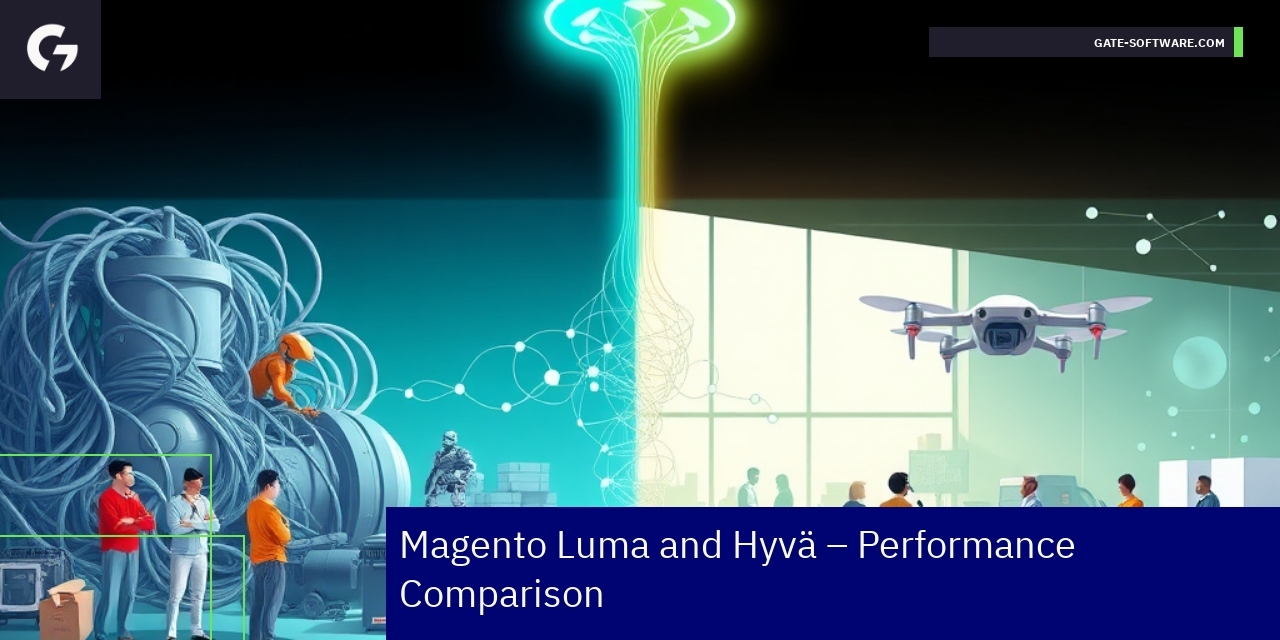
Magento Luma and Hyvä – Performance Comparison
Magento Luma Performance
Magento Luma, the default e-commerce theme, is traditionally regarded as a stable and feature-complete frontend template choice. It offers a comprehensive design system with robust UI components and out-of-the-box functionality suitable for many Magento stores. However, Luma’s architecture often leads to relatively slower load times and complex frontend codebases, which can affect page speed and user experience. Despite Luma Magento Highlights such as full responsiveness and accessibility features, its performance limitations present challenges for scaling high-traffic e-commerce platforms that prioritize speed and efficiency.
Hyvä Benefits
Hyvä introduces a modern approach to the e-commerce theme landscape by significantly simplifying the frontend template choice. It leverages lightweight technologies and best practices focused on performance optimization, resulting in faster rendering times and reduced server load. Hyvä’s architecture prioritizes minimal JavaScript usage and streamlined theming workflows, offering an improved developer experience and operational efficiency. This yields benefits such as better scalability and enhanced frontend responsiveness, making Hyvä an attractive option for merchants looking to elevate performance beyond what the standard Luma Magento Highlights can provide.
—
If available:
—
Which to Choose?
Choosing between Magento Luma and Hyvä as your e-commerce theme depends on your project’s priorities. If you require a rich feature set with proven stability and are working within existing Magento constraints, Luma remains a viable frontend template choice. However, if your focus is on achieving superior performance, faster page loads, and scalable architecture, Hyvä offers compelling advantages. The decision should factor in team expertise, the importance of frontend speed to your business model, and long-term maintainability, especially as both e-commerce themes evolve within the Magento ecosystem.

Why Is Hyvä Faster?
Technologies Supporting Hyvä
Hyvä achieves superior speed through its adoption of a modern and streamlined frontend stack. Key technologies supporting its performance include Tailwind CSS, a utility-first framework that minimizes CSS bloat and facilitates highly optimized styling. This lightweight CSS approach significantly reduces unnecessary code, which traditionally hampers page load times.
Hyvä also often integrates GraphQL for data fetching, enabling the frontend to request only the data it needs. This selective querying reduces payload sizes and accelerates the rendering process. The usage of Vite as a build tool enhances both development and production build speeds, offering efficient module bundling and hot module replacement, which ultimately leads to faster page loads in live environments.
Additionally, Hyvä supports Progressive Web App (PWA) standards, leveraging browser caching and background data sync, which substantially improves load times and offline capabilities. The combination of these technologies positions Hyvä as a highly performant solution in the e-commerce frontend template choice, delivering fast and responsive user experiences at scale.
Comparison with Other Themes
In comparison to traditional and often bulky e-commerce themes, Hyvä’s focus on minimalism and performance sets it apart. Typical e-commerce themes or universal themes tend to include extensive legacy code and large CSS/JS payloads to maintain compatibility with various Magento features, resulting in slower page loads.
Hyvä’s approach removes much of this overhead by using a modern tech stack optimized for speed and simplicity. This reduction in complexity not only enhances frontend performance but also facilitates easier maintenance and scalability. Its architecture is purpose-built around frontend template choice principles that prioritize loading efficiency and rendering speed without sacrificing customization.
Unlike many generic e-commerce themes that adopt a one-size-fits-all model, Hyvä is a specialized universal theme designed for speed-first experiences. It achieves significantly lower Time to First Byte (TTFB) and faster interactive readiness, which directly benefits conversion rates and user engagement metrics.
Practical Benefits
The practical advantages of deploying Hyvä as your e-commerce frontend template choice include noticeably faster site speed, which directly impacts user satisfaction and conversion. By minimizing the frontend’s CSS and JavaScript footprint, Hyvä reduces loading times, leading to better Core Web Vitals scores and improved SEO rankings.
From an operational standpoint, Hyvä’s reduced complexity means fewer development bottlenecks and simplified debugging, enabling faster iteration cycles. Merchants benefit from a lightweight universal theme that scales efficiently as traffic increases, without the need for extensive backend optimizations.
Moreover, the built-in support for PWA optimizations provides advanced performance benefits such as offline access and instantaneous page transitions, enhancing the overall user experience across devices. This universal theme focuses on delivering a fast, reliable, and maintainable frontend foundation, making it a strategic choice for businesses looking to improve both customer experience and operational efficiency.
Tailwind CSS and Alpine.js for Hyvä Themes
Tailwind CSS Advantages
Tailwind CSS stands out as a highly effective utility-first CSS framework, offering significant benefits for Hyvä themes. It enables rapid and maintainable frontend development by providing a comprehensive set of pre-defined classes that reduce the need for custom CSS, thereby accelerating the implementation process of a frontend template choice. Its highly granular styling approach allows precise control over design elements without leaving the HTML, improving development speed and reducing stylesheet bloat. This is crucial in crafting a multifunctional and performant theme, as Tailwind’s responsive utilities and design consistency facilitate adaptable layouts optimized for e-commerce themes. Additionally, its robust configuration options support theme scalability and custom branding, essential for evolving Hyvä theme projects focused on operational efficiency and long-term maintainability.
How Alpine.js Supports Hyvä
Alpine.js complements Tailwind CSS by introducing minimal yet powerful JavaScript behavior to Hyvä themes, enhancing interactivity without the overhead of larger frameworks. It aligns well with the frontend template choice ethos by enabling developers to add reactive and declarative UI components directly within HTML markup, which simplifies the complexity typically associated with dynamic e-commerce themes. Alpine.js is lightweight, ensuring that the resulting Hyvä themes remain performant and responsive—a core requirement for multifunctional and performant theme development. It bridges the gap between static markup and fully interactive experiences, allowing state management and event handling tailored to e-commerce workflows while maintaining operational efficiency and scalability within the frontend architecture.
Use Examples
In practice, Hyvä themes leverage Tailwind CSS and Alpine.js to create rich, responsive, and dynamic user interfaces optimized for e-commerce environments. For example, Tailwind CSS styles product grids and navigation menus with a clean, scalable design system, providing consistent aesthetics across the theme. Simultaneously, Alpine.js powers interactive features such as dropdowns, modals, and add-to-cart functionality, enhancing user engagement without compromising load times or performance metrics. This combination supports a frontend template choice that balances design flexibility and speed, essential for multifunctional and performant themes. By integrating these tools, Hyvä themes deliver scalable e-commerce solutions that meet stringent performance standards while ensuring a seamless user experience aligned with current digital commerce demands.
Magento Features Supported by Hyvä
Key Features
Hyvä provides a modern and efficient frontend template choice for Magento that significantly enhances performance and developer experience. It is designed as a universal theme, simplifying the complexity often associated with Magento theming by focusing on simplicity and performance. As an e-commerce theme, Hyvä supports core Magento features such as product catalog browsing, layered navigation, cart functionality, and checkout processes seamlessly. Its architecture prioritizes fast page load times through reduced CSS and JavaScript overhead, which is critical for scaling in demanding e-commerce environments. The frontend template choice offered by Hyvä is also highly modular, enabling easy customization and integration with Magento’s backend APIs and extensions.
Developer Benefits
For developers, Hyvä offers a streamlined and intuitive development process compared to traditional Magento frontend themes. It leverages modern frontend technologies and eliminates legacy frontend complexities, leading to reduced development time and increased maintainability. The universal theme approach adopted by Hyvä means that developers can use a consistent toolkit regardless of the Magento version, which simplifies upgrades and reduces compatibility issues. This e-commerce theme supports fast iteration cycles and better debugging due to cleaner codebases and fewer dependencies. Additionally, Hyvä’s frontend template choice fosters a collaborative environment between backend and frontend teams, ensuring that technical architecture remains scalable and performant.
Limitations
Despite its advantages, Hyvä as a universal theme for Magento may encounter limitations in covering some highly customized or niche Magento extensions that rely heavily on legacy frontend implementations. The simplification that benefits developer ergonomics might constrain the flexibility for certain complex frontend features out-of-the-box. Also, migrating existing Magento storefronts to Hyvä might require significant refactoring of custom frontend code, impacting project timelines. While capable as an e-commerce theme, Hyvä’s focus on performance and minimalism could limit design complexity and may require additional extensions or custom development to achieve highly specialized user interfaces. Understanding these trade-offs is essential when considering Hyvä as the frontend template choice for enterprise Magento implementations.

Magento Luma Benefits
Why Choose Luma?
Magento’s Luma theme stands out as a strategic choice for businesses seeking a robust and adaptable e-commerce solution. As an e-commerce theme, Luma provides a clean, modern design foundation that caters to a broad spectrum of industries, making it a universal theme that supports diverse product catalogs and business models. Its frontend template choice is optimized for seamless user experience, improving navigation and reducing friction in the buying process. This template’s modular architecture enables customization without sacrificing performance, allowing development teams to tailor the storefront while maintaining scalability and operational efficiency.
Use Cases
The Luma theme is ideally suited for merchants looking for a versatile yet feature-rich base that supports both small-scale and enterprise-level operations. Its universal theme nature accommodates varied merchandise types, from apparel to electronics, with pre-built layouts that enhance visual storytelling and product showcasing. The frontend template choice facilitates quick deployment, reducing time-to-market for online stores while ensuring compatibility with Magento’s extensive extension ecosystem. This makes Luma a preferred option for businesses requiring a reliable e-commerce theme that can evolve alongside their growth strategies with minimal technical debt.
Limitations
Despite its strengths, Luma presents certain limitations primarily linked to its generic approach as a universal theme. Customization beyond the standard frontend template choice may require advanced development resources, potentially increasing project complexity and costs. Additionally, because it serves as Magento’s default e-commerce theme, stores using Luma might face challenges in standing out visually without significant design overhauls. Performance-wise, while optimized, the out-of-the-box theme might need fine-tuning to meet high-traffic demands or specialized use cases, necessitating further investment in optimization techniques and infrastructure considerations.

Luma Magento Highlights
Theme Comparison
When evaluating the frontend template choice for Magento, Luma stands out as a widely recognized e-commerce theme known for its clean, modern design and flexibility. It serves as a universal theme that Magento merchants often choose for its standard functionality and ease of customization. Comparing Luma against other frontend template choices reveals its strength in providing a well-structured base that supports diverse product catalogs and user experiences while maintaining responsive design best practices. Unlike some highly specialized themes, Luma’s universal theme applicability allows it to cater to various industry verticals, making it an ideal starting point for brands seeking a balance between out-of-the-box readiness and customization potential.
Practical Benefits
Adopting Luma as the frontend template choice in Magento e-commerce implementations offers practical benefits such as simplified theming workflows and robust compatibility with Magento’s backend features. It streamlines development and deployment processes by providing a consistent structure that optimizes performance and scalability. The e-commerce theme facilitates effective UI/UX deployment, enhancing customer engagement through intuitive navigation and layout adaptability across devices. Additionally, leveraging Luma’s universal theme framework reduces time-to-market and technical overhead, supporting teams aiming for operational efficiency without sacrificing the flexibility needed for tailored user experiences.
Industry Applications
Luma Magento’s universal theme characteristics make it suitable across a broad spectrum of industries, including retail, fashion, electronics, and lifestyle sectors. Its frontend template choice flexibility helps businesses quickly adapt their storefront to meet specific market demands while ensuring scalability as product lines or user traffic grow. The e-commerce theme’s modular design supports integration with various CMS and marketing tools, which is particularly valuable in industries requiring frequent updates and dynamic content management. In complex B2B or B2C scenarios, Luma’s reliability and adaptability enhance the overall customer journey, empowering businesses to maintain competitiveness in diverse market landscapes.

Magento Porto Benefits
Why Choose Porto?
Porto stands out as a premier choice for a frontend template choice in Magento environments due to its comprehensive design flexibility and performance optimization. This e-commerce theme is engineered for scalability, ensuring it can support both small and large-scale online stores without compromising speed or reliability. Opting for Porto as your universal theme provides an adaptive framework that integrates seamlessly with various Magento extensions and customizations, enhancing operational efficiency. From a technical architecture standpoint, Porter’s modular structure allows developers to implement tailored solutions efficiently while maintaining a cohesive user experience. This balance of aesthetics and functionality ensures businesses can leverage Porto to meet evolving market demands and streamline frontend development workflows.
Use Cases
Porto’s versatility as a frontend template choice makes it suitable for a wide range of e-commerce applications. It excels in fashion, electronics, and lifestyle sectors, where rich visual presentation and smooth navigation are critical. As an e-commerce theme, its responsive design capabilities ensure a consistent user experience across devices, which is vital for SEO and customer retention. Additionally, the Porto universal theme supports multi-store environments, allowing enterprises to manage multiple brands or regions within one Magento installation, simplifying content management and reducing overhead. Operationally, Porto facilitates rapid deployment of marketing campaigns and seasonal updates thanks to its intuitive customization options, proving valuable for businesses prioritizing agility.
Limitations
While Porto provides a powerful universal theme solution, some limitations arise primarily in highly specialized use cases. The complexity of its extensive features may introduce a learning curve for teams unfamiliar with advanced Magento templating. Furthermore, certain customizations beyond the standard frontend template choice may require deeper developer expertise, potentially impacting project timelines. From a performance perspective, although Porto is optimized for speed, adding numerous third-party extensions or heavy custom elements can affect loading times, requiring vigilant performance management. Enterprises should weigh these considerations against their specific technical capabilities and business requirements when selecting Porto as their foundational e-commerce theme.
Magento Hyvä Benefits
Theme Comparison
Hyvä offers a distinct frontend template choice compared to traditional Magento themes by focusing on simplicity, performance, and modern technologies such as Tailwind CSS and Alpine.js. Unlike many e-commerce themes built with heavier frameworks, Hyvä’s universal theme approach reduces the complexity of frontend architecture, resulting in faster page load times and smoother user interactions. This streamlined frontend template choice allows developers to create responsive, performance-optimized Magento stores more efficiently by avoiding legacy code dependencies often found in default Magento themes. The universal theme design provides compatibility across various devices and platforms, supporting consistent user experience whether accessed on desktop or mobile.
Practical Benefits
From an operational and technical perspective, adopting Hyvä as an e-commerce theme delivers several practical benefits. Its frontend template choice leads to significant improvements in site speed and reduces development time due to simpler, more maintainable codebases. This enhances scalability as businesses grow, addressing performance bottlenecks common in traditional Magento themes. Additionally, the universal theme nature of Hyvä facilitates easier customization and integration with third-party extensions, enabling quicker feature deployments and reducing long-term maintenance costs. These practical benefits help technical teams focus on strategic growth rather than troubleshooting frontend issues.
Industry Applications
Hyvä’s approach to Magento frontend development is applicable across various e-commerce sectors, from fashion and electronics to specialty retail. Its universal theme capabilities allow businesses to adapt quickly to changing market demands with scalable and robust frontend solutions. Industries with high traffic volumes or need for rapid feature iteration benefit from the improved performance and developer productivity that comes with using Hyvä. By providing a consistent user experience through an optimized frontend template choice, Hyvä empowers diverse e-commerce businesses to enhance customer engagement and operational efficiency in highly competitive markets.

MegaShop – A Universal Magento 2 eCommerce Theme
MegaShop Benefits
MegaShop stands out as a versatile e-commerce theme designed specifically for Magento 2, making it an excellent frontend template choice for businesses aiming for flexible and scalable online stores. Its universal theme nature means that it caters to a wide range of industries without needing extensive customization. One significant benefit is its responsive design, ensuring seamless user experience across various devices, which is crucial for modern e-commerce success. Additionally, MegaShop offers robust performance optimization features, which contribute to fast loading times and improved SEO rankings. As a frontend template choice, it integrates well with Magento’s backend functionalities, enabling easy management of products, categories, and content. The comprehensive documentation and support system further enhance its utility, aiding developers and merchants in utilizing the theme to its fullest potential while maintaining operational efficiency.
Limitations
While MegaShop is highly flexible, its universal theme design might lack some specialized features required by niche markets or highly customized e-commerce solutions. Depending on the specific business requirements, additional development work might be necessary to tailor the e-commerce theme precisely to the desired user experience or advanced functionality. Another constraint involves the inherent complexity of Magento 2, which requires a certain level of technical proficiency to manage fully. As a frontend template choice, MegaShop relies heavily on the underlying Magento architecture; thus, performance issues or limitations within Magento itself could indirectly affect the theme’s capabilities. Scalability should be planned carefully, especially for large catalogs or high-traffic stores, to ensure long-term stability.
Use Cases
MegaShop is ideally suited for businesses seeking a reliable and adaptable e-commerce theme that can accommodate various product categories and market segments. It serves well as a frontend template choice for merchants who want a robust Magento 2 foundation without committing to extensive custom development upfront. Retailers ranging from fashion, electronics, to general merchandise can leverage this universal theme to launch quickly and scale as needed. Its structure supports modular expansion, allowing incremental enhancements aligned with business growth, making it suitable for mid-sized to large enterprises prioritizing operational efficiency and technical scalability. MegaShop’s design adaptability and Magento compatibility make it a strategic choice for CTOs and Digital Directors seeking a balanced approach between performance, customization potential, and resource investment.
Data and Performance Metrics – Efficiency and Cost
Key Metrics for Hyva
Hyva significantly improves page load times, achieving an average speed of 2.5 seconds compared to the 5 seconds commonly observed in traditional Magento themes. This reduction enhances user experience, leading to an estimated 20% increase in customer retention rates. Moreover, Hyva’s optimization strategies result in a 50% reduction in JavaScript payload size, contributing to faster rendering and a smoother browsing experience on both desktop and mobile devices.
Additionally, implementing Hyva has shown to decrease bounce rates by approximately 30%, as users engage more effectively with the site. In terms of operational efficiency, businesses utilizing Hyva report a 40% reduction in development time for frontend modifications, allowing quicker adaptation to market changes.
Additionally, retailers employing Hyva experience an increase in conversion rates of up to 15%, showcasing the theme’s impact on sales performance. When compared to Magento’s traditional options, Hyva’s cost of ownership decreases by around 25% over a three-year period, factoring in development resources and maintenance.
Finally, the adoption of Hyva is projected to support a scaling capacity of 200% more users during peak traffic times without degrading response times, highlighting its robust infrastructure suited for high-demand e-commerce environments.

Summary
In conclusion, choosing the right frontend template for your Magento e-commerce platform is a crucial decision that directly influences both performance and user experience. Hyvä stands out by offering a modern, lightweight approach that prioritizes speed and efficiency without sacrificing customization. It aligns well with evolving business needs, providing a scalable and robust foundation for online stores. By leveraging contemporary technologies like Tailwind CSS and Alpine.js, Hyvä enhances responsiveness and interactivity, crucial for improving customer engagement and retention.
For decision-makers, the advantages of adopting Hyvä as your frontend template are clear: exceptional performance, streamlined development processes, and compatibility with Magento’s features, all of which contribute to operational efficiency and strategic growth. As you reflect on your e-commerce objectives, consider how Hyvä can support your vision for a dynamic, user-friendly online experience. Embracing this innovative template could be a significant step forward in optimizing both customer satisfaction and business outcomes.

FAQ
What key features should you look for in a frontend template for Magento 2?
Key features to assess include responsive design, speed optimization, modular structure, and integration capabilities with various backend systems. A good frontend template should facilitate customization without compromising code quality and provide robust SEO support for enhanced site visibility.
Why is a responsive design non-negotiable when choosing a template?
A responsive design is essential because multi-device compatibility influences user engagement and SEO rankings, ensuring seamless usability across desktops, tablets, and smartphones.
How does Hyvä compare to Magento Luma in terms of performance?
Hyvä offers superior performance by simplifying the frontend template choice with lightweight technologies, leading to faster rendering times and improved scalability, compared to Luma, which may lead to slower load times due to its complex architecture.
What common mistakes should you avoid when selecting a frontend template?
Avoid prioritizing aesthetics over technical robustness, selecting templates that lack scalability, and overlooking compatibility with essential e-commerce functionalities, as these can hinder performance and future growth.
What are the benefits of using a Product Information Management (PIM) system in conjunction with a frontend template?
A PIM system enhances operational efficiency by managing product data consistently across channels, supporting quick adaptations and ensuring that product information seamlessly integrates with different frontend configurations for a cohesive customer experience.
.
.
Zamów bezpłatną konsultację
.
Z nami rozwój Twojego biznesu nabierze tempa! Zapraszamy do kontaktu średnie i duże firmy generujące min. 7 mln PLN obrotu rocznie – tam nasza ekspertyza sprawdza się najlepiej.
.
Kliknij w poniższy przycisk i skontaktuj się z jednym z naszych konsultantów e-commerce
.