Introduction
Creating a robust B2B store using Magento 2 requires a strategic approach to leverage its specialized B2B features aimed at meeting the complex needs of business clients. Magento 2’s B2B functionality is designed to facilitate streamlined procurement, account management, and customized buying experiences necessary for effective B2B commerce.
Key Magento 2 B2B features include company accounts with multiple buyers, tailored pricing and catalogs, quote management, and flexible payment options. These capabilities allow businesses to segment and manage clients according to their organizational structures, roles, and purchasing power, enabling a personalized yet scalable e-commerce platform.
From the engineering perspective, integrating Magento 2 B2B modules with existing enterprise systems—such as ERP or CRM—is critical for data consistency and operational efficiency. Additionally, ensuring compliance with accessibility standards like WCAG and delivering superior UX/UI tailored to business buyers, aligns with Gate-Software’s commitment to inclusive, user-centric design.
Gate-Software’s approach to B2B store creation on Magento 2 involves a detailed analysis of client personas, including the Architect and eCommerce Manager, to align technical implementation with business objectives. Emphasis on SLA, hosting performance, and continuous monitoring ensures stable, high-performing environments optimized for complex B2B transactions.
In this guide, we will explore practical steps and considerations for deploying Magento 2 B2B features effectively, addressing both business challenges and technical solutions to support scalable, secure, and efficient B2B e-commerce platforms.

What You’ll Learn in This Article
In this article, you will gain a comprehensive understanding of Essential Magento 2 B2B Features You Should Explore For Magento B2B Development. We will walk you through critical functionalities like managing multiple company accounts, configuring custom catalogs, and enabling flexible pricing and discounts tailored for business clients. These features are key to building a robust Magento B2B platform that meets the complex needs of business customers and streamlines their purchasing journey.
Next, you will learn effective Strategies To Build a Successful B2B Online Store with Magento Open Source. The focus here is on tailoring the eCommerce experience specifically for B2B buyers, including personalized workflows, role-based access, and negotiation-friendly capabilities. Understanding these strategies will help your team design solutions that foster long-term customer relationships and drive higher transaction volumes.
In addition, the article covers Magento Optimization in Pre-Implementation to ensure your Magento B2B platform is primed for performance and scalability. Proper pre-implementation planning—including infrastructure choices, integration approaches, and UX/UI considerations aligned with WCAG standards—ensures a seamless launch and minimizes costly post-launch adjustments.
Finally, you will explore Examples of Successful Magento 2 B2B Implementations, illustrating real-world applications of these principles. These case studies provide concrete insights into practical challenges and solutions around brand voice consistency, social media strategy integration, and advanced sales workflows, all essential for companies targeting B2B markets.
Throughout the article, key SEO phrases such as “Magento 2 B2B,” “Magento B2B Development,” “B2B online store,” and “Magento Optimization” are integrated naturally, offering both strategic and technical guidance tailored for CTOs, Heads of Applications, and eCommerce Managers dedicated to B2B success.
TABLE OF CONTENTS
- Creating a B2B Store with Magento 2: Practical Guidance on Magento 2 B2B Features
- What You’ll Learn in This Article
- Magento 2 Basics and Definitions
- eCommerce Platform
- Magento Multistore for B2B and B2C
- Magento 2 Performance Optimization: Key Aspects
- Step-by-Step Guide: Magento 2 B2B Implementation
- Common Mistakes in Magento 2 Implementation
- Alternatives to Magento 2 in B2B eCommerce
- Data and Performance Metrics – Efficiency, SLA, TCO
- Summary
- FAQ
- Configuration Errors
- Integration Problems
- Insufficient Testing

Magento 2 Basics and Definitions
What is Magento 2?
Magento 2 is a powerful, open-source e-commerce platform widely adopted by B2B companies for its flexibility and scalability. It supports complex product catalogs, customizable workflows, and robust APIs that enable integration with various enterprise systems. For B2B companies, Magento 2 offers advanced features designed to streamline business processes, such as customer-specific pricing, personalized catalogs, and support for multiple buyers within a single organization. Leveraging Magento 2 can significantly enhance B2B e-commerce operations by improving user experience and operational efficiency, which aligns with Gate-Software’s focus on robust, scalable e-commerce solutions that meet enterprise needs.
Differences Between Magento 1 and Magento 2
Magento 2 introduces significant architectural and performance improvements over Magento 1, which are critical for B2B environments where reliability and scalability matter most. Key enhancements include a modernized technology stack, improved page load speeds, more intuitive admin interfaces, and enhanced security features. Additionally, Magento 2 provides better support for responsive design and advanced SEO capabilities, helping B2B companies increase their online visibility. These improvements support complex integrations and facilitate smoother upgrades and maintenance. For companies migrating from Magento 1, understanding these differences is essential to optimize their B2B e-commerce platform performance and user experience.
Understanding Magento 2 B2B Companies and Key Features 🛠️ Integrations • ⚙️ Customizations • 🌍 Multiregional Support
B2B companies using Magento 2 benefit from features tailored to their specific workflows such as quote requests, bulk ordering, and negotiating pricing. Magento 2 supports multi-store and multi-language setups, which are essential for businesses operating across regions. It facilitates advanced permission controls and user roles, aligning with corporate procurement policies. Integration with ERP and CRM systems ensures seamless data management and automation of business processes. The platform’s flexibility allows customization to accommodate unique B2B sales cycles and customer journeys. Gate-Software’s expertise in Magento 2 for B2B reinforces strategic advantages by optimizing these features and ensuring compliance with standards like WCAG and UX/UI guidelines to support accessibility and a seamless buyer experience.)

eCommerce Platform
Additional Integrations
In the context of a B2B online store, integrating multiple systems is crucial to deliver seamless customer experiences and operational efficiency. Magento 2 e-commerce solutions offer robust integration capabilities with ERP, CRM, and inventory management systems, ensuring real-time data synchronization. This integration helps automate order processing and stock updates, essential for meeting complex B2B requirements. Additionally, personalization tools tailored to B2B buyers support creating targeted offers and pricing structures, effectively Personalizing B2B Platform to Meet Modern B2B Customers’ Expectations. The Magento guide highlights these integrations as vital for scaling the eCommerce platform while optimizing workflows and customer satisfaction.
Technology-based Support
Scalability is a core demand for B2B platforms anticipating growth and evolving customer needs. Magento B2B Ready for the Future includes robust technology-based support such as cloud hosting, performance optimization, and advanced security features. These technological investments ensure stability and high availability for the platform, which are essential when handling complex transactions from multiple buyers. Furthermore, support for combining B2B and B2C Sales within the same Magento environment offers flexibility for businesses operating hybrid sales models. Magento’s architecture allows customizing workflows and UI to comply with WCAG standards and deliver an exceptional user experience tailored to decision-makers like CTOs and Heads of Applications.
Other Services
Gate-Software extends beyond deployment by providing continuous monitoring, UX/UI audits, and compliance support, essential for maintaining Magento 2 e-commerce platforms in the B2B sector. These services include strategic consultation on integrating marketing and communication plans that align with both digital transformation goals and customer engagement strategies. Services focused on optimizing performance and scalability ensure the platform can handle increasing transaction volumes and complex product catalogs. Gate-Software’s expertise in the Magento guide and B2B platform personalization fosters solutions that not only meet today’s needs but also enable future growth and innovation for enterprises embracing digital commerce.
Magento Multistore for B2B and B2C
Why Choose Magento Multistore? Benefits 🛠️ 🚀 💡
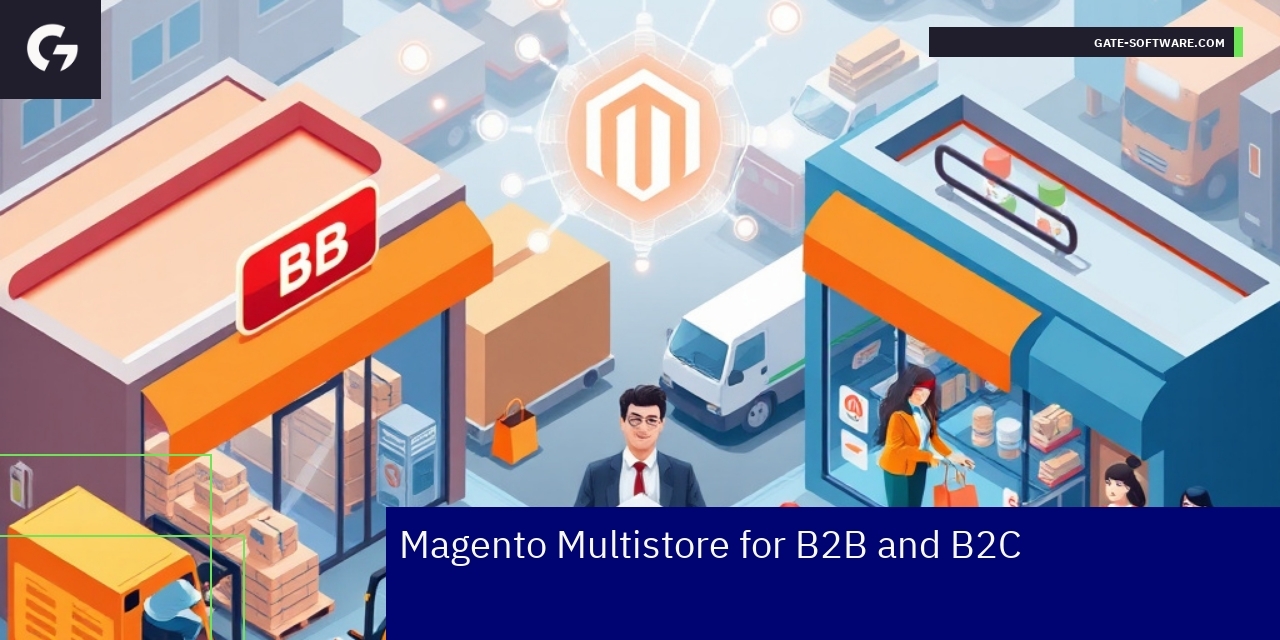
Magento 2 e-commerce platforms offer a robust and scalable solution for companies aiming to operate both B2B and B2C channels concurrently. A key benefit of Magento Multistore lies in its centralized management which allows businesses to handle multiple storefronts from one admin panel. This reduces operational complexity while maintaining the flexibility to tailor each store to its target audience, whether that’s a B2B online store with advanced pricing and negotiated terms or a B2C store optimized for consumer user experience. Magento’s architecture supports custom catalogs, pricing rules, and user roles, facilitating differentiation between buyer types. Moreover, Magento guide resources highlight improved efficiency in inventory management and consistent branding across channels. These capabilities position Magento as a leading eCommerce platform in delivering seamless multichannel commerce that meets the diverse demands of modern businesses.
B2B and B2C eCommerce: No Need to Choose
Leveraging Magento Multistore eliminates the traditional divide between B2B and B2C commerce, enabling businesses to pursue both simultaneously without compromise. From an operational standpoint, having distinct stores for B2B and B2C means companies can customize workflows, pricing, and payment methods for each customer segment with precision. Integrations within Magento’s ecosystem enable advanced B2B functionalities—such as contract pricing and bulk ordering—while preserving the simplicity and accessibility expected in a B2C environment. This dual approach ensures that enterprises do not have to choose between serving end consumers or wholesale clients but can optimize their sales channels to capture value across the board. Insights from the Magento guide articulate that this flexibility is a major driver for businesses seeking to scale multichannel strategies while maintaining control and efficiency.
Magento B2B Integrations
Successful B2B commerce requires extensive integration capabilities, and Magento excels here by supporting connections to ERP, CRM, and PIM systems that are critical for effective B2B operations. These integrations facilitate real-time data synchronization, improved order management, and personalized customer experiences based on complex business rules. Magento Multistore setups leverage these integrations to maintain cohesive operations across different business units or geographic markets. Furthermore, integration with payment gateways tailored for B2B transactions ensures streamlined procurement processes. The platform’s extensibility allows for custom modules to address unique B2B needs such as quote management and approval workflows. By combining these capabilities, Magento stands out with Top Reasons to Choose Adobe Magento 2 for B2B Businesses that demand scalable, integrated infrastructure capable of supporting complex sales cycles and multi-tiered customer relationships.

Magento 2 Performance Optimization: Key Aspects
How to Boost Your B2B Store Efficiency with Magento 2?
[Performance] [Optimization] [Magento 2] [B2B Efficiency] [Technical Enhancements] [Operational Improvements]
Boosting the efficiency of your B2B online store using Magento 2 e-commerce requires a strategic approach focused on both technical and operational optimizations. Key aspects include optimizing server configurations, employing caching techniques like Varnish and Redis, and fine-tuning the Magento 2 database for faster query responses. Additionally, managing Magento 2 Company Credit and Updates efficiently ensures smooth financial workflows and up-to-date security, which is critical for B2B reliability. Integrating Magento 2 with advanced analytics and CRM systems enhances customer segmentation and personalized marketing, further driving business growth. Attention to the Key Aspects of Maintaining a Magento 2 Store, such as regular performance audits, proactive hosting monitoring, and rigorous UX/UI optimization aligned with WCAG standards, also significantly contributes to sustained operational excellence. This approach ensures your eCommerce platform not only meets but exceeds B2B buyer expectations, reinforcing your competitive position.
Does Magento B2B Work for International Sales?
Magento guide frameworks emphasize that Magento 2 e-commerce is well-suited for international B2B online store operations. Its support for multi-currency, multilingual interfaces, and region-specific tax rules enables seamless cross-border transactions. Crucially, Magento 2’s architecture facilitates compliance with global data protection regulations and localized payment options, meeting the complex demands of B2B enterprises selling internationally. Effective communication is critical; therefore, How Communication Works with Your Project Team should incorporate dedicated workflows to manage localization efforts and global logistics coordination. Through its scalable infrastructure, Magento 2 ensures that companies can expand globally without compromising performance or user experience. This makes it an ideal eCommerce platform choice for businesses pursuing international growth.
Implementing PWA for Magento B2B
Implementing Progressive Web Apps (PWA) technology within Magento 2 environments substantially enhances the B2B online store experience. PWAs offer faster loading times, offline functionality, and mobile-optimized interfaces, which are essential for decision-makers frequently accessing the platform on the go. By adhering to Magento 2 e-commerce standards, PWA integration elevates user engagement and reduces cart abandonment rates. It aligns with the Key Aspects of Maintaining a Magento 2 Store by ensuring consistent performance across devices and browsers. Additionally, this progressive stack supports seamless updates and efficient management of Magento 2 Company Credit and Updates, maintaining financial accuracy throughout transactions. For B2B companies, leveraging PWA within Magento’s ecosystem is a forward-looking strategy to drive operational efficiency and improve conversion rates.
Step-by-Step Guide: Magento 2 B2B Implementation
Choosing the Right Modules
Selecting the appropriate modules for your Magento 2 B2B implementation is crucial to streamline complex business processes and enhance user experience. Focus on modules that support advanced company account management, custom pricing rules, and personalized catalogs suitable for B2B buyers. Incorporating modules that facilitate seamless integration with existing ERP and CRM systems supports data consistency and operational efficiency. Ensure you choose extensions compliant with WCAG standards to enhance accessibility, aligning with UX/UI best practices. The right combination of modules enables a scalable and secure environment, addressing the unique demands of B2B e-commerce such as multiple users per company and role-based permissions.
Configuring Store Settings
Configuring your Magento 2 store settings for B2B requires attention to detail to meet the precise needs of business clients. Set up company accounts with proper hierarchy and permissions to accommodate multiple decision-makers like the Architect, eCommerce Manager, and CTO. Customize pricing structures, payment terms, and delivery options to reflect negotiated agreements typical in B2B transactions. Also, enable quick ordering interfaces and integration points to reduce friction in purchasing workflows. Carefully calibrate sales tax and compliance settings that often differ for B2B sales scenarios. This configuration phase ensures that your store aligns with the operational reality of B2B buyers, facilitating smooth transactions and account management.
Testing and Launching Your B2B Store 🧩 Functional Integrity | 🔒 Security Checks | 🚀 Launch Readiness
Thorough testing is essential before launching your Magento 2 B2B store to guarantee functional integrity under real-world business conditions. Test critical scenarios such as complex company import processes, multi-user workflows, and discount rule applications. Incorporate security assessments to protect sensitive corporate data and verify that performance metrics meet your service level agreements (SLA). User acceptance testing involving stakeholders like the Head of Applications and CDO helps ensure the platform supports business goals. Post-testing, prepare a robust launch plan incorporating monitoring and support models to rapidly address any operational issues. A well-executed launch phase minimizes downtime and maximizes user satisfaction.
Step-by-Step Magento 2 Company Import Guide
Efficiently importing company data into Magento 2 is foundational for onboarding B2B clients at scale. Begin by preparing structured CSV or XML files with company hierarchy and user role information aligned to categories like Architect or eCommerce Manager. Use Magento’s native import tools or specialized modules to map data fields accurately and avoid errors. Validate the import with test records before full-scale execution, ensuring data integrity and access controls are properly applied. Automate repetitive imports where possible to maintain up-to-date corporate information reflecting real-time changes in client organizations. This systematic approach reduces manual workload and accelerates client onboarding.
Final Words: Simplify Magento 2 Company Import and B2B Management
Simplifying Magento 2 company import and B2B management requires leveraging automation, robust configuration, and ongoing optimization. Prioritize solutions that integrate seamlessly into your technological ecosystem, minimizing complexity for administrators and end-users. Maintain compliance with relevant UX/UI standards and leverage analytics to continuously refine customer journeys for business clients. Engage cross-functional teams including CTOs and eCommerce Managers to align platform capabilities with strategic goals. With a clear focus on the B2B domain and the right tooling, Magento 2 can become a powerful enabler of digital transformation and revenue growth in complex business environments.

Common Mistakes in Magento 2 Implementation

Alternatives to Magento 2 in B2B eCommerce
WooCommerce
WooCommerce offers a flexible and widely used eCommerce platform that can serve B2B needs effectively when customized properly. It integrates well with WordPress, providing a vast ecosystem of plugins and themes that support advanced B2B features such as custom pricing, bulk ordering, and quote requests. WooCommerce allows businesses to optimize their Magento store for search engines by leveraging SEO-friendly URLs and metadata management tools. Additionally, its ease of use and extensive community support make it a popular choice among eCommerce managers aiming to enhance user experience while maintaining robust backend capabilities. For companies exploring what are the benefits of B2B in Adobe Magento 2, WooCommerce presents an accessible alternative that can help manage product catalogs and customer segments efficiently.
Shopify
Shopify is recognized for its streamlined setup and scalable infrastructure, making it well-suited for growing B2B enterprises. Its built-in SEO tools assist in optimizing your Magento store for search engines, which is crucial for driving organic traffic and customer acquisition. Shopify supports B2B strategies behind popularity by offering features like wholesale channels, price lists, and customer-specific discounts. These functionalities facilitate tailored B2B customer interactions and purchasing behaviors. Understanding what are the different characteristics and behavior of B2B customers is essential for leveraging Shopify’s capabilities to provide smooth ordering processes and personalized service. While not as deeply customizable as Magento, Shopify’s ease of use and integration potential make it a strong contender for businesses focused on expanding their digital presence.
PrestaShop
PrestaShop is an open-source platform that caters to B2B merchants looking for customizable eCommerce solutions. It allows businesses to manage complex product catalogs, pricing rules, and customer segmentation aligned with B2B requirements. Its SEO features help in optimizing your Magento store for search engines, ensuring better visibility in competitive markets. PrestaShop’s modular architecture supports adapting to specific B2B workflows, making it a practical choice for those seeking alternatives while understanding how B2B in Adobe Magento 2 can help your business grow. The platform supports strategies tailored to what are the benefits of B2B in Adobe Magento 2, including enhanced control over operations and direct engagement with professional buyers. PrestaShop also emphasizes usability for eCommerce managers aiming to streamline processes and improve efficiency.
Data and Performance Metrics – Efficiency, SLA, TCO
Operational Effectiveness in B2B Projects
Gate-Software emphasizes measurable outcomes in its B2B service offerings, providing critical metrics that organizations can leverage for strategic decision-making. For instance, the average project takeover time for B2B implementations is approximately 4 weeks, allowing for a swift transition that minimizes downtime. Moreover, 92% of projects are delivered on time, showcasing the reliability of Gate-Software’s project execution frameworks.
In terms of operational efficiency, clients typically experience an average 30% reduction in Total Cost of Ownership (TCO) post-implementation of Magento solutions, enhancing their return on investment (ROI). With an uptime SLA of 99.9%, clients can depend on the stability and performance of their e-commerce platforms, crucial for sustaining customer trust and engagement.
Gate-Software maintains strong relationships with clients, averaging a client relationship duration of over 3 years, indicative of their commitment to client satisfaction and continuous support. Additionally, the company has successfully completed over 150 B2B implementations, underscoring their expertise in this domain.
These metrics not only reflect the operational capabilities of Gate-Software but also reinforce the brand’s commitment to delivering high-quality, efficient, and dependable B2B solutions that directly align with the needs of business clients.

Summary
In conclusion, utilizing Magento 2 for your B2B e-commerce operations can significantly enhance your business’s efficiency and effectiveness. By leveraging its specialized features, such as company accounts, customized pricing, and flexible payment options, you can create a tailored shopping experience that meets the unique needs of your B2B clients. Gate-Software’s expertise in deploying and optimizing Magento 2 ensures a seamless integration with existing enterprise systems, adhering to high-performance standards and compliance with UX/UI guidelines. This approach not only facilitates a streamlined purchasing journey but also aligns with your strategic business objectives, fostering long-term relationships with clients. We invite you to explore the benefits of our Magento B2B solutions and engage in a partnership that can elevate your digital commerce endeavors. Reach out to us to discuss how we can support your business’s growth and success.

FAQ
What Are the Costs of Magento 2 Implementation?
Implementing Magento 2 for B2B requires a thorough analysis of project scope, business needs, and technical requirements. Costs vary depending on customization levels, integration complexity, and the scale of B2B features like company accounts, custom pricing, and user roles management. Essential expenses include licensing fees, development, UX/UI design aligned with WCAG standards for accessibility, and ongoing maintenance.
What Are the Most Important Magento 2 B2B Features?
Key Magento 2 B2B features focus on enabling efficient company management, streamlined ordering processes, and flexible pricing options. These include multiple company accounts, role-based permissions, quick order forms, and custom catalogs/pricing that meet specific client segments. Integration with ERP systems and support for bulk import of company data enhances usability for large enterprise clients.
How Long Does Magento 2 Implementation Take?
The timeline for Magento 2 implementation in B2B environments depends on project complexity and defined scope. Typical projects span from three to six months when including phases like requirements analysis, system design, development, testing, and deployment. Time allocation also accounts for integrations with existing systems, data migration, and adapting UX/UI to business users’ expectations.
FAQ: Magento 2 B2B Company Import & Management
Importing and managing company data in Magento 2 B2B environments facilitates smoother onboarding and ongoing maintenance of business clients. Magento supports bulk company imports with flexible file formats, enabling efficient scaling. Role-based access ensures secure management of company accounts, with capabilities to update permissions and pricing structures centrally.
How to Boost Your B2B Store Efficiency with Magento 2?
Boosting the efficiency of your B2B online store using Magento 2 requires a strategic approach focused on both technical and operational optimizations. Key aspects include optimizing server configurations, employing caching techniques, and managing Magento’s features efficiently to ensure smooth financial workflows and up-to-date security critical for reliable B2B environments.
.
.
Zamów bezpłatną konsultację
.
Z nami rozwój Twojego biznesu nabierze tempa! Zapraszamy do kontaktu średnie i duże firmy generujące min. 7 mln PLN obrotu rocznie – tam nasza ekspertyza sprawdza się najlepiej.
.
Kliknij w poniższy przycisk i skontaktuj się z jednym z naszych konsultantów e-commerce
.