Introduction
A B2B store is an e-commerce platform specifically designed to facilitate business-to-business transactions. Unlike B2C stores that cater directly to individual consumers, B2B stores serve other companies, offering products and services that meet the distinct needs of organizational buyers. This specialization requires features such as bulk ordering, custom pricing, account management, and integration with enterprise resource planning (ERP) systems.
Key differences between B2B and B2C stores lie in their sales processes, customer relationships, and technical requirements. B2B transactions typically involve longer sales cycles, higher order values, and more complex negotiation processes. Buyers in B2B environments often require personalized solutions, multi-user access, and detailed product specifications. Furthermore, the UX/UI of B2B stores must accommodate these complexities while maintaining efficiency and clarity. This demands adherence to professional standards such as WCAG for accessibility.
By understanding these distinctions, businesses can leverage top sales automation tools to optimize workflows, streamline procurement, and enhance customer engagement within their B2B ecosystems. Gate-Software’s expertise in Magento™, SLA management, and tailored UX/UI audits supports the seamless automation and growth of B2B stores.
TABLE OF CONTENTS
- B2B Store – How to Automate Sales in Your Business with Top Sales Automation Tools for B2B Teams
- How to Effectively Implement a B2B Ordering System
- LinkedIn B2B – Building Communication and Marketing
- Omnibus Directive in B2B – What You Need to Know
- B2B Digital Marketing – Choosing the Right Strategy
- Implementing a B2B Store – Is It for You?
- Want to Set Up a B2B Store? Check Automico B2B!
- Data and Performance Metrics – Efficiency, SLA, TCO
- Summary
- FAQ
- Key takeaways: Automico B2B supports efficient launch and management of professional online wholesale stores with advanced sales automation. The market offers varied platforms with integrated B2B marketing automation software essential for scalable growth. Investing in B2B eCommerce aligns with modern digital trends that enhance lead generation, sales management, and customer experience.
- Next steps for those interested in launching a B2B store: Assess your business needs alongside the features of Automico B2B and alternative platforms, focusing on integration capabilities, automation tools, and scalability, to select the best solution for your B2B growth strategy.
- Project Takeover Time: On average, projects are transferred and operational within 4 weeks, ensuring minimal disruption and quick adaptation to client needs.
- On-Time Delivery Rate: Gate-Software maintains a 92% on-time delivery rate for B2B projects, reflecting strong adherence to timelines and client expectations.
- Total Cost of Ownership (TCO): Clients have reported an average TCO reduction of 30% when utilizing Gate-Software’s optimized B2B solutions, demonstrating substantial long-term savings.
- Number of Successful Implementations: Over the past year, Gate-Software successfully executed 150 B2B e-commerce implementations, showcasing our robust capacity to handle diverse client requirements.
- Uptime SLA: Gate-Software guarantees a 99.9% uptime SLA, ensuring that clients’ systems remain operational and reliable, a critical factor in maintaining business continuity.
- Average Client Relationship Duration: The average duration of business relationships with B2B clients spans 5 years, highlighting the trust and ongoing partnership built through our tailored services.
- Customer Satisfaction Rate: Recent surveys indicate a 90% customer satisfaction rate among B2B clients, underscoring the effectiveness of our solutions and support services.
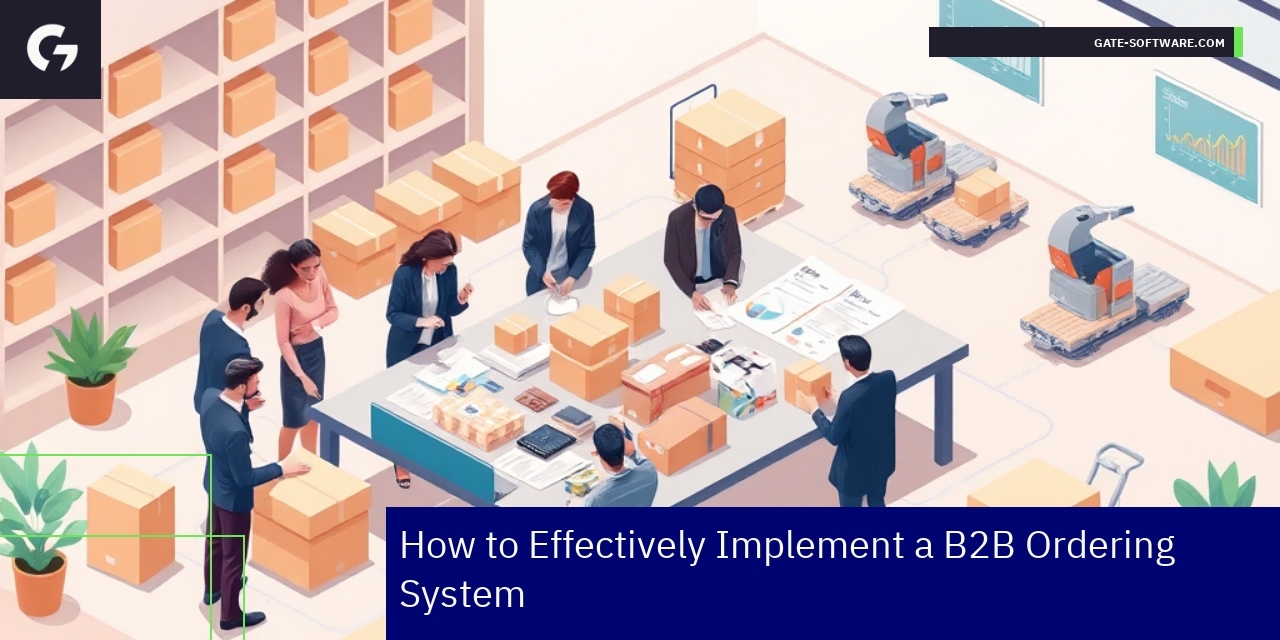
How to Effectively Implement a B2B Ordering System
Understanding Producers’ Needs in Retail and Wholesale
Implementing the right system b2b tailored to producers who sell both retail and wholesale is crucial. These producers benefit from sales automation tools that streamline order processing and inventory management, making their workflows more efficient. Exploring what is sales automation software and using top sales automation tools for B2B teams ensures seamless integration with existing business systems. By aligning the system b2b with the unique requirements of producers, businesses can optimize order accuracy and reduce manual errors. This approach supports scalability in production and distribution, addressing diverse client demands from different sales channels effectively.
How Wholesalers Selling to Physical and Online Stores Benefit
Wholesalers adopting a system b2b designed for both physical and online store clients can maximize efficiency. Leveraging B2B sales automation platforms facilitates better order tracking and personalized client interactions, embodying the best sales automation tools for B2B teams to generate leads and improve outreach. The system b2b enhances coordination between logistics and sales departments, ensuring timely deliveries and inventory updates. With tailored features for wholesalers, the platform supports multi-channel sales strategies and customer segmentation, allowing wholesalers to adapt quickly to market changes and customer needs in both digital and physical environments.
Best Practices in Business Client Service
High-quality customer service is a cornerstone of a successful B2B system. Applying salesforce personalization and utilizing AI-driven solutions, like the 12 best AI sales tools every B2B team must use, can elevate business client satisfaction and loyalty. System b2b solutions that incorporate advanced analytics offer insights into client behavior and preferences, enabling personalized communications and proactive service. Incorporating feedback loops and automating routine tasks free up resources for deeper client engagement, which is vital in B2B relationships where trust and reliability drive long-term partnerships.
Checklist: Implementing a B2B System
To effectively implement a system b2b, follow a detailed checklist incorporating essential steps such as assessing needs, choosing software, employee training on what is B2B marketing automation software, and monitoring system performance using the 10 best sales automation tools. Prioritizing integration capabilities with existing ERP and CRM systems ensures a unified operational flow. Training teams to leverage automation and analytics tools maximizes system benefits, while ongoing performance reviews help identify areas for improvement. A structured approach reduces deployment risks and accelerates return on investment in the system b2b implementation.
Common Mistakes When Implementing a B2B System
Avoid pitfalls like underestimating onboarding time or neglecting data integration. Understanding what are the benefits of B2B marketing automation platforms helps circumvent common errors and ensures smoother system adoption. Lack of clear communication between IT and business units and failure to customize the system b2b to specific workflows often hinder success. Proactively addressing these issues by setting realistic timelines and involving stakeholders at every stage secures project alignment. Moreover, prioritizing data quality and adopting scalable solutions prevent future operational disruptions after the system b2b goes live.
Advantages of B2B Sales Online

LinkedIn B2B – Building Communication and Marketing
Advantages of B2B Sales Online
Ecommerce b2b platforms, especially LinkedIn, present unique advantages by enabling precise targeting and networking within professional communities. The platform’s capabilities support building strong relationships and trust, which are essential for B2B sales cycles. Utilizing the 6 B2B sales automation tools designed for lead generation and outreach optimizes the sales pipeline, increasing efficiency and accelerating deal closures. These tools enhance visibility by automating personalized communication, follow-ups, and data-driven insights, which are critical in the competitive ecommerce b2b environment. Companies that leverage LinkedIn effectively can markedly improve their brand recognition and customer engagement, positioning themselves as authoritative players in their sectors.
Preparing an Offer for Wholesale Clients
Creating a compelling offer for wholesale clients requires deep insight into their operational needs and decision-making processes. Employing sales automation software streamlines the customization of proposals, adapting the offer to specific client profiles and buying behaviors observed on ecommerce b2b platforms. This approach not only improves relevance but also significantly heightens conversion rates by delivering timely and precisely tailored content and pricing. Understanding the nuances between wholesale and retail demands allows businesses to allocate resources efficiently and optimize their ecommerce b2b strategies for maximum impact. Engaging wholesale clients through LinkedIn enables meaningful dialogue backed by data-driven personalization, reinforcing trust and fostering long-term partnerships.
Separate Offers for Retail and Wholesale Clients
Developing distinct strategies for retail and wholesale customers is essential for maximizing business outcomes on ecommerce b2b platforms. Leveraging B2B sales automation: a complete guide and tools list empowers organizations to address the specific pain points and expectations of each segment. The ability to create dedicated communication streams, pricing models, and loyalty programs ensures that both retail and wholesale clients receive relevant and engaging interactions. This targeted approach improves customer satisfaction and retention while enhancing operational efficiency. On platforms like LinkedIn, segmentation supported by automation allows precise delivery of content and offers, maintaining the delicate balance of personalization and scale required in ecommerce b2b environments.
Case Study: Company Successes on LinkedIn
Examining company successes on LinkedIn reveals the strategic deployment of the 10 best sales automation tools that significantly enhance B2B marketing reach and sales performance. These tools facilitate comprehensive lead management, analytics, and automated outreach, enabling businesses to scale their ecommerce b2b initiatives effectively. Companies that integrate these technologies with their LinkedIn presence benefit from improved pipeline visibility and conversion optimization. This case study underscores the critical role of technology in supporting complex sales processes inherent in ecommerce b2b, where decision cycles are longer and require consistent engagement. The blend of automation and human insight on LinkedIn results in sustainable growth and strengthened market positioning.
Differences Between B2C and B2B Stores

Omnibus Directive in B2B – What You Need to Know
Changes Introduced by the Directive
Understanding the new regulations is vital for platformy b2b providers. The Omnibus Directive brings significant changes that enhance transparency and fairness in B2B transactions. These changes affect how businesses handle customer information, complaint mechanisms, and digital sales processes. For platformy b2b, this means updating systems to align with stricter data handling and communication requirements. Complying with updated standards ensures smooth operation and helps avoid penalties linked to B2B sales automation, which is critical for maintaining trust and efficiency on these platforms. Vendors and platform operators need to assess their current workflows and integrate the directive’s provisions into their compliance strategies.
Directive’s Impact on B2B Ecommerce
The omnibus directive reshapes the landscape for platformy b2b frameworks by imposing new transparency and compliance demands. Ecommerce on these platforms must now incorporate features that facilitate clearer information for buyers and standardize dispute resolution processes. This directive pushes platform operators towards adopting sophisticated tools like the 10 best sales automation tools to remain compliant and competitive. These technologies help optimize B2B operations by automating compliance checks and improving customer interactions, aligning ecommerce activities with the directive’s regulatory framework. Understanding what is B2B marketing automation software and integrating it effectively can position businesses for smoother transitions and better market responsiveness.
Preparing for the Changes
Preparation is key to effectively managing the directive’s requirements. Platform providers should focus on updating their technology stacks and training internal teams on the implications of new B2B sales automation regulations. This includes familiarizing staff with what is B2B marketing automation software and how to implement it strategically. Adopting suitable B2B sales automation tools not only supports compliance but also enhances operational efficiency. Proactive steps like revising marketing content, optimizing user experience, and upgrading CRM systems are essential to ensure platformy b2b can navigate the transition without disruptions or risk of non-compliance.
Benefits and Risks of the Directive
While the Omnibus Directive introduces benefits such as increased transparency, fairness, and consumer protection within platformy b2b ecosystems, it also brings challenges. One key risk is the potential rise in compliance costs due to the need for updated tools and processes. However, employing robust sales automation software can mitigate these risks by streamlining compliance tasks and reducing manual workload. This balance allows businesses to leverage the directive’s advantages while managing the operational and financial impacts. Companies that adapt strategically can turn these regulatory changes into opportunities for process improvement and strengthened customer trust.
B2B Digital Marketing – Choosing the Right Strategy
Key Product Offer Elements in a B2B Store
Highlighting critical product features in platforma b2b stores is essential for attracting and retaining business clients. These features include detailed product specifications, bulk pricing options, and clear availability statuses that meet the expectations of professional buyers. Emphasizing the benefits of B2B marketing automation platforms alongside these product elements can significantly enhance client acquisition. Automation tools ensure personalized targeting and follow-ups, streamline communication workflows, and provide insights into buyer behavior, all crucial in the B2B decision-making process. Integrating these capabilities within your platforma b2b helps create a seamless shopping experience that aligns with the complex and often prolonged B2B sales cycles.
How to Buy on B2B Platforms
Understanding the purchasing process on platforma b2b requires grasping the nuances of B2B buyer behavior and the supporting technology. Utilizing sales automation software can simplify order management and improve transaction efficiency. Such systems enable businesses to manage approvals, track orders, and automate reordering processes while maintaining compliance with procurement policies. Streamlining the supply chain through these technologies reduces errors and delays, enhancing customer satisfaction. Therefore, a successful platforma b2b focuses not just on product display but also on optimizing the backend processes that support buying, ensuring a professional and reliable purchasing journey for clients.
B2B System – Enhancing Business Client Service
A platforma b2b system with advanced capabilities improves client service by delivering personalized communication adapted to each customer’s profile and needs. Leveraging Salesforce personalization and AI-powered tools enables businesses to offer targeted recommendations, prompt responses, and proactive support. This fosters customer loyalty and long-term business relationships. Additionally, integrating AI analytics helps in predicting client needs and optimizing service delivery. Such a system supports efficient account management and enhances the overall client experience, crucial for maintaining competitive advantage in B2B markets where relationships and trust are paramount.
Comparing B2B and B2C Marketing Strategies
B2B marketing strategies differ fundamentally from B2C approaches due to the nature of the target audience and sales processes. B2B marketing automation software centers on relationship management, lead nurturing, and accommodating longer sales cycles. The focus is on delivering value through detailed content, case studies, and personalized outreach tailored to decision-makers like CTOs, eCommerce Managers, or CIOs. In contrast, B2C strategies prioritize broad reach and impulse purchasing. Implementing the right platforma b2b marketing tools enables businesses to efficiently manage complex sales funnels, foster trust, and build enduring partnerships, which are less emphasized in B2C marketing.
Implementing a B2B Store – Is It for You?
Costs of Setting Up a B2B Store: Real Expenses of Wholesale Online Sales
Setting up a B2B store involves a detailed cost assessment critical for accurate budgeting. Costs encompass software licenses essential for platform operation, especially when integrating the 10 best sales automation tools that streamline workflows and enhance customer interactions. Beyond initial software expenses, ongoing maintenance costs cover technical support, regular updates, and system scalability to accommodate growing wholesale operations. These investments are foundational for a robust online wholesale distribution channel that meets the complex needs of B2B clients. The overall cost structure should also consider integration with backend systems such as ERP and CRM to maintain seamless data flow and operational consistency, supporting efficient order processing and customer management.
Differences Between B2C and B2B Stores
B2B and B2C stores diverge significantly in their sales processes and client engagement models. Unlike B2C, where purchases are often impulsive and based on user experience, B2B transactions demand nuanced client communication including personalized pricing and negotiated terms. Sales automation software plays a pivotal role in the B2B context, supporting complex workflows like multi-level approvals and bulk order management. The client journey in B2B requires detailed product information, contract management, and integration with company procurement systems. Understanding these differences is key to tailoring a B2B store’s offerings and infrastructure to the business customer’s expectations, facilitating smoother, long-term sales relationships.
B2B Store Specifics – Getting Started in a Few Steps
Launching a B2B store efficiently hinges on leveraging top AI sales tools that automate routine tasks and enhance decision-making accuracy. Prioritizing systems for efficient order management and client relationship management establishes a solid foundation for scalable operations. A practical approach begins with selecting a platform that supports complex pricing models and customer segmentation, followed by implementing AI-driven tools to streamline forecast demand and personalize offers. Central to success is focusing on user experience tailored to business clients, ensuring the platform is intuitive while compliant with standards like WCAG 1.1 for accessibility. This stepwise deployment maximizes operational efficiency and client satisfaction from the outset.
FAQ: Common Questions About B2B Stores
Frequently asked questions about B2B stores often revolve around system integration challenges, including how to effectively synchronize sales automation software with existing company infrastructure. The role of such software extends beyond sales acceleration to data consolidation, workflow management, and predictive analytics. Maximizing benefits from the 12 best AI sales tools involves understanding their functionalities from lead scoring to automated follow-ups, which boost sales team productivity. B2B teams must also address concerns about data security, scalability, and customization to align the store’s capabilities with unique organizational requirements. These insights help demystify the B2B store setup and operation, facilitating informed decision-making for eCommerce Managers and CTOs.
Want to Set Up a B2B Store? Check Automico B2B!
Launch a Professional Online Wholesale Store
Automico B2B offers a comprehensive platform designed to simplify setting up a professional online wholesale store. It integrates advanced sales automation tools that streamline all aspects of B2B transactions, including bulk ordering, customer-specific pricing, and seamless inventory management. This focus on automation and efficiency ensures smoother operations and stronger client engagement, key factors for success in B2B eCommerce. The platform’s compatibility with existing systems also aids in reducing implementation friction and accelerating time-to-market, enabling businesses to meet their B2B customers’ expectations effectively.
Available B2B Platforms on the Market
The B2B eCommerce landscape features numerous platforms that cater to wholesale needs, each offering unique capabilities. Alongside Automico B2B, other platforms incorporate powerful automated sales solutions and B2B marketing automation software designed for scalable business growth. These tools leverage data-driven workflows to optimize lead generation, customer segmentation, and personalized communication—functions vital for B2B marketers looking to increase conversion rates. When selecting a platform, it is critical to consider integrations with ERP, CRM, and payment gateways, ensuring the chosen solution aligns with your comprehensive business ecosystem.
Why Invest in B2B Ecommerce?
Investing in B2B eCommerce is increasingly important due to the digital transformation reshaping buyer behaviors in wholesale markets. Adoption of leading B2B sales automation tools drives efficiencies in sales management, from qualification to closing deals, supporting enhanced lead generation and outreach. Moreover, digital B2B channels expand market reach beyond geographic constraints, creating new revenue streams. The evolving trends also emphasize the importance of delivering superior customer experiences—something that dedicated B2B platforms like Automico B2B facilitate by enabling personalized and efficient purchasing processes.
Alternatives to Automico B2B
While Automico B2B provides a robust set of features, businesses should consider other platforms offering complementary capabilities. The market includes solutions with diverse functionalities, including the 6 B2B sales automation tools that address lead generation and outreach effectiveness. These alternatives may offer different integrations, pricing models, or specialized features that better suit particular industry verticals or company sizes. Careful evaluation of these options ensures the selected platform aligns with your strategic goals and operational demands, enabling sustainable growth in the B2B channel.
—
Summary
Data and Performance Metrics – Efficiency, SLA, TCO
Operational Effectiveness in B2B Projects
In the competitive landscape of B2B, precise metrics highlight the efficiency and effectiveness of services provided by Gate-Software. The following data points illustrate the operational capabilities and cost metrics that underpin successful B2B implementations:
These metrics not only exemplify the operational prowess of Gate-Software in the B2B sector but also provide potential clients with measurable assurance in the value derived from our services.
Summary
In conclusion, Gate-Software’s expertise in B2B solutions, particularly through the Automico B2B platform, offers a transformative opportunity for businesses aiming to enhance their online wholesale operations. By integrating advanced sales automation tools, companies can streamline their processes, improve client engagement, and adapt effectively to the evolving landscape of B2B ecommerce. The investment in such technology not only aligns with the needs of today’s digital buyers but also prepares businesses to leverage the benefits of greater efficiency, enhanced customer experiences, and sustained growth. We encourage you to consider how these insights and tools can support your strategic objectives in the B2B space and invite you to reach out for further discussions on how we can collaborate to elevate your operations.
FAQ
How does a B2B store differ from a B2C store?
A B2B store is designed for business-to-business transactions, focusing on meeting the specific needs of organizational buyers, while B2C stores cater directly to individual consumers. Key differences include longer sales cycles, higher order values, and complex negotiation processes in B2B environments.
What features are essential for a B2B e-commerce platform?
Essential features for a B2B e-commerce platform include bulk ordering capabilities, custom pricing, comprehensive account management, integration with ERP systems, and adherence to professional UX/UI standards like WCAG for accessibility.
Why is sales automation important in a B2B context?
Sales automation is crucial in B2B as it streamlines workflows, enhances order processing, and allows for personalized client interactions. This leads to improved efficiency, better customer engagement, and ultimately, increased sales.
How can businesses prepare for the Omnibus Directive in B2B?
Businesses can prepare for the Omnibus Directive by updating their technology stacks, training staff on compliance requirements, and integrating robust sales automation tools. These steps ensure adherence to regulations, improve operational efficiency, and maintain customer trust.
What are the benefits of investing in B2B e-commerce?
Investing in B2B e-commerce enhances efficiency in sales processes, expands market reach, and improves customer experiences through personalized automation. It allows businesses to thrive in the digital landscape and adapt to changing buyer behaviors effectively.
.
.
Zamów bezpłatną konsultację
.
Z nami rozwój Twojego biznesu nabierze tempa! Zapraszamy do kontaktu średnie i duże firmy generujące min. 7 mln PLN obrotu rocznie – tam nasza ekspertyza sprawdza się najlepiej.
.
Kliknij w poniższy przycisk i skontaktuj się z jednym z naszych konsultantów e-commerce
.