Introduction
Implementing a B2B eCommerce platform is a strategic initiative that requires a thorough understanding of both technical and business requirements. For Gate-Software’s clients, successful implementation centers on aligning the platform capabilities with complex B2B processes such as multi-level approvals, customer-specific pricing, and integration with existing enterprise systems like ERP and CRM.
A robust B2B platform should offer scalability to support growing transaction volumes and customization to adapt to unique workflows. User experience (UX/UI) tailored to B2B personas — including Architects, eCommerce Managers, and CTOs — ensures the platform supports their decision-making and operational needs efficiently. Accessibility standards such as WCAG 1.1 compliance are critical to widen usability across teams.
Moreover, integrating seamless hosting, monitoring, and SLA provisions guarantees performance stability and security, especially in high-demand scenarios typical for B2B commerce. Gate-Software’s Magento™ solution illustrates how dedicated platforms can combine technical excellence with business acumen to optimize eCommerce journeys.
In essence, effective implementation involves a data-driven approach starting from detailed requirements analysis, through phased development and migration, to ongoing maintenance and optimization — all while fostering collaboration among key stakeholders and ensuring the platform scales with evolving market demands. This strategic methodology underpins increased operational efficiency and enhanced client relationships in the B2B sector.
TABLE OF CONTENTS
- B2B eCommerce Platforms – How to Effectively Implement a B2B eCommerce Platform in Your Business?
- B2B Definition & Basics
- B2B Order Systems
- LinkedIn B2B – Building Communication & Marketing
- Omnibus Directive in B2B – What to Know?
- B2B Digital Marketing – Strategy Selection
- Implementing a B2B Store – Is it for Me?
- Start Your B2B Store with Automico B2B!
- B2C vs B2B Stores – What’s the Difference?
- B2B Store Specifics – Start in a Few Steps
- Cost of Setting Up a B2B Store – What Does Online Wholesale Really Cost?
- Setting Up a B2B Store – Easier Than You Think!
- Wholesalers Selling to Brick-and-Mortar and Online Stores
- Manufacturers Selling Retail & Wholesale
- Stores Operating or Planning B2B Sales
- How to Prepare a Wholesale Offer?
- B2B Store – Grow Your Sales!
- FAQ about B2B Stores
- Data and Performance Metrics – Efficiency, SLA, TCO
- Summary
- FAQ
B2B Definition & Basics
What is B2B?
B2B, or Business-to-Business, refers to commercial transactions where one business sells products or services to another business. This category is distinct by its focus on supporting business operations, production chains, or reselling activities, rather than end consumers. Companies engaged in B2B typically deal with complex procurement processes, long-term contracts, and strategic partnerships. Unlike retail or B2C markets, B2B emphasizes efficiency, scalability, and robust service-level agreements to ensure smooth cooperation between organizations. Understanding the nuances of B2B transactions is critical for achieving sustainable growth in verticals like e-commerce platform management, digital transformation, and IT infrastructure integration, especially for decision-makers such as CTOs, Heads of Applications, and eCommerce Managers.
Main Differences Between B2B and B2C
The primary difference between B2B and B2C lies in their target audience and decision-making processes. B2B transactions typically involve higher transaction values with multiple stakeholders, including procurement specialists and technical teams, compared to B2C’s individual consumer focus. The sales cycles in B2B markets are longer and more complex, requiring tailored offers, personalized communication, and multi-level approvals. Moreover, B2B marketing strategies focus on relationship building, trust, and demonstrating tangible ROI, contrasting with B2C’s emphasis on brand appeal and emotional engagement. Understanding these distinctions is vital for optimizing UX/UI and ensuring compliance with standards like WCAG 1.1 to accommodate specialized user needs in B2B platforms.
Key Concepts Related to B2B
Key concepts in B2B include lead generation, account-based marketing (ABM), customer lifecycle management, and strategic partnership development. Effective lead generation integrates SEO techniques using targeted keywords relevant to B2B, while ABM allows precise engagement with key accounts, such as Architekt and eCommerce Manager personas. Moreover, operational efficiency in B2B heavily depends on robust CRM systems and SLA adherence to maintain reliability and optimize costs—critical points for IT and application management teams. Equally, optimizing social media and content strategies aligned with Gate-Software’s brand voice enhances market positioning in B2B. Mastery of these concepts enables businesses to navigate B2B complexities and capitalize on strategic opportunities for digital commerce and platform migration projects.
B2B Order Systems
How Does a B2B eCommerce Platform Work?
A system B2B eCommerce platform serves as a digital environment where businesses can streamline purchasing processes, offering a tailored experience for B2B buyers. Unlike B2C platforms, these systems accommodate complex transactions, bulk orders, and negotiated pricing frameworks. The platform integrates with existing enterprise resource planning (ERP) and customer relationship management (CRM) systems to ensure real-time inventory updates and personalized pricing models. Moreover, it supports user roles and permissions aligned with organizational hierarchies, allowing different access levels for procurement teams. A well-implemented system B2B eCommerce platform optimizes order management, automates approvals, and facilitates communication between vendors and buyers, leading to enhanced operational efficiency and transparency.
Benefits of B2B eCommerce Platforms
Utilizing a system B2B eCommerce platform delivers notable advantages including cost reductions, process automation, and enriched customer experiences. The platform provides easy access to product catalogs, detailed specifications, and order histories, enabling buyers to make informed decisions quickly. For businesses, this translates into improved cash flow management and lowered operational overheads by reducing reliance on manual order processing. Additionally, advanced analytics embedded within the platform help identify buying patterns and optimize inventory management. Enhanced user interfaces compliant with UX/UI best practices and WCAG standards ensure accessibility and usability, further increasing adoption by diverse stakeholder groups. Overall, the system B2B eCommerce platform fosters stronger business relationships through transparency and reliability.
Choosing the Right B2B Platform
Selecting the appropriate system B2B eCommerce platform hinges on aligning platform capabilities with business requirements and scalability needs. Key considerations include integration flexibility with legacy systems such as ERP and CRM, support for complex pricing and discount structures, and capabilities for multi-channel order management. Equally important are compliance with accessibility standards like WCAG 1.1 and the capacity for customization according to the buyer persona profiles relevant to the organization—ranging from architects to eCommerce managers. Security features, uptime guarantees under SLA, and hosting options must also be evaluated critically. Choosing a platform with a robust support ecosystem and continuous product development enables adaptability to evolving market demands and technological advancements.
Types of B2B Platforms
System B2B eCommerce platforms can be categorized based on deployment models and functionality focus. These include cloud-based platforms offering scalability and lower upfront costs, on-premises solutions providing higher control and customization, and hybrid models balancing both approaches. Functional categorizations include product-centric platforms useful for catalog management, order management systems (OMS) focusing on order lifecycle automation, and customer-centric platforms designed to enhance buyer engagement through personalization. Additionally, some platforms specialize in vertical markets, offering tailored features for specific industries. Understanding these distinctions helps businesses identify a system B2B eCommerce platform that best fits their operational model and strategic goals while leveraging content phrases effectively across their digital presence.
Impact on B2B eCommerce Platforms

LinkedIn B2B – Building Communication & Marketing
Brand Building on LinkedIn
Building a strong brand presence on LinkedIn is essential for B2B companies aiming to engage key decision-makers such as CTOs, eCommerce Managers, and Heads of Applications. Leveraging content that aligns with the strategic priorities of these personas enhances trust and positions your business as a thought leader in ecommerce B2B. Consistent, valuable content that addresses real business challenges—such as platform integration, UX/UI optimization, and WCAG compliance—builds credibility. Using LinkedIn as a platform to showcase case studies, migration successes, and SLA adherence supports the narrative of reliability and technical expertise needed in B2B sectors. Content phrases here should emphasize solutions that directly impact business efficiency and digital transformation.
Managing B2B Campaigns
Effective management of B2B campaigns on LinkedIn requires a targeted approach that addresses the complexity of ecommerce B2B relations. Campaigns should be crafted to capture the attention of niche audiences including eCommerce Managers and CDOs by emphasizing outcomes like cost optimization, enhanced platform stability, and seamless integration solutions. Utilizing well-defined personas helps tailor the messaging and content delivery, aligning marketing efforts with business needs. Content phrases should highlight how campaign strategies drive measurable benefits in ecommerce B2B, focusing on value creation and process improvement rather than generic offers. Regular monitoring and agile adjustments based on data insights are key to sustained campaign success.
Analyzing Campaign Results
Analyzing campaign results within the ecommerce B2B space demands attention to metrics that reflect business impact, such as lead quality, engagement from decision-makers, and impact on sales pipelines. LinkedIn analytics combined with internal CRM data allow for an integrated view of campaign effectiveness. Focusing on KPIs relevant to B2B sectors—like conversion rates among CIO/CTO personas and content interaction from Heads of Applications—provides actionable insights. This data-driven analysis supports continuous refinement of messaging and content phrases to better resonate with a professional audience, ensuring that communication remains aligned with strategic goals and drives tangible ecommerce B2B growth.
Examples of Successful Campaigns
Successful LinkedIn campaigns in ecommerce B2B combine precise targeting, relevant content, and strong value propositions to engage decision-makers effectively. For instance, a campaign showcasing Gate-Software’s expertise in Magento platform migrations highlighted cost optimization and SLA guarantees, resonating well with eCommerce Managers and Architects. Another campaign focused on UX/UI audit processes attracted CTOs and CDOs by addressing compliance with WCAG and platform usability improvements. These cases demonstrate that thoughtful content phrases emphasizing problem-solving and technology leadership can significantly enhance brand perception and lead generation in ecommerce B2B, creating sustained engagement and business opportunities.

Omnibus Directive in B2B – What to Know?
What is the Omnibus Directive?
The Omnibus Directive is a comprehensive set of regulations introduced to enhance consumer protection and transparency in commercial transactions across the European Union. While primarily focused on consumer rights, its implications extend to B2B interactions, especially where businesses engage in transactions resembling consumer dealings, such as smaller businesses or sole traders as clients. For B2B eCommerce platforms, understanding the directive is critical as it mandates clearer information disclosure, transparent pricing, and stronger guarantees. This means platforms need to ensure that all information related to products and services is precise and easily accessible. The directive also imposes stricter rules on online reviews and digital contracts, which impacts how B2B eCommerce platforms manage user-generated content and contractual terms.
Impact on B2B eCommerce Platforms
B2B eCommerce platforms must adapt to the new requirements set by the Omnibus Directive to remain compliant and competitive. This includes revising policies around pricing transparency and improving user interfaces to clearly present terms and conditions. For many platforms, this involves upgrading backend processes and front-end UX to handle more detailed disclosures and automated compliance checks. Additionally, the directive’s focus on digital content means that platforms must be vigilant about the authenticity and moderation of reviews and feedback, crucial elements influencing B2B buyer decisions. Being proactive in these adaptations not only ensures legal compliance but also builds trust and credibility in B2B eCommerce platforms, enhancing long-term client relationships.
Preparing for Changes
Preparation for the Omnibus Directive requires a strategic approach combining legal insight, technical adjustments, and user experience improvements. B2B eCommerce platforms should conduct comprehensive audits of their current compliance status, identify gaps, and plan upgrades in information presentation and contract management systems. Collaboration between legal teams and IT departments is essential to integrate these changes seamlessly. Implementing standardized processes for monitoring user reviews and maintaining transparent pricing models are also key steps. Training customer support and sales teams on new compliance standards ensures consistent communication with clients. Leveraging Gate-Software’s expertise in platform optimization and regulatory compliance can simplify these transitions and maintain operational continuity.
Mistakes to Avoid
Common pitfalls in adapting to the Omnibus Directive include underestimating the scope of necessary changes and delaying implementation until the last moment. B2B eCommerce platforms should avoid treating the directive as solely a legal issue without addressing the technological and UX impacts. Ignoring the need for clear, accessible information or failing to moderate digital content properly can lead to compliance breaches and damage to reputation. Overlooking the importance of internal alignment between departments or neglecting ongoing monitoring processes can also undermine efforts. Effective change management and continuous evaluation aligned with the directive’s evolving standards are crucial for sustainable compliance and competitive advantage in B2B eCommerce platforms.
Benefits and Risks
B2B Digital Marketing – Strategy Selection
B2B Marketing Strategies
Effective B2B marketing strategies focus on building long-term relationships and delivering tailored value propositions that resonate with decision-makers such as CTOs, eCommerce Managers, and Heads of Applications. Central to these strategies is leveraging data-driven insights to align marketing content with the specific technical and business challenges faced by client organizations. Content must emphasize the strategic benefits and operational efficiencies enabled by solutions, particularly those related to B2B eCommerce platform implementations. This approach drives engagement by addressing pain points such as integration complexity, scalability, and compliance with standards like WCAG. A well-articulated content strategy incorporating case studies, technical whitepapers, and targeted messaging enhances credibility and supports the buyer’s journey through education and trust-building.
Choosing a B2B eCommerce Platform
Selecting the right B2B eCommerce platform involves evaluating factors such as system architecture flexibility, security compliance, and seamless integration with existing enterprise applications—critical for CTO-level decision-makers. The platform must support complex product configurations, multi-tier pricing models, and tailored workflows typical of B2B transactions. Additionally, the choice should reflect the buyer personas’ expectations regarding user experience and accessibility standards (WCAG). An optimal B2B eCommerce platform balances robust backend capabilities with a UX/UI that facilitates efficient purchasing processes for business customers. Strategic alignment with IT and business goals ensures the platform serves as a scalable foundation for growth and digital transformation initiatives.
Using Marketing Tools
Marketing tools in B2B digital marketing are valued for their ability to automate complex campaigns, deliver personalized content, and provide actionable analytics to refine strategy continuously. Tools that support multi-channel orchestration, including social media aligned with brand voice and content strategy, enable companies to maintain coherence and relevance. CRM integrations and marketing automation platforms allow real-time engagement with key personas such as Architects and CDOs, nurturing leads with technical content and strategic insights. Measurement of content effectiveness, lead generation, and conversion through data analytics tools supports continuous optimization of the marketing funnel, maximizing ROI from digital campaigns focused on B2B eCommerce platform offerings.
B2B vs B2C Strategy Comparison
B2B digital marketing strategy differs fundamentally from B2C in its emphasis on relationship-building, longer sales cycles, and more complex decision-making hierarchies. B2B strategies prioritize content that addresses strategic challenges, compliance regulations, and nuanced product configurations suitable for business clients, while B2C focuses more on emotional appeal and impulse buying. In B2B, the marketing approach must engage multiple stakeholders within client organizations, aligning messaging with their distinct roles such as CIO/CTO or Head of Applications. The decision criteria for choosing a B2B eCommerce platform are typically centered on integration capabilities, scalability, and meeting enterprise-grade requirements, contrasting with B2C’s focus on user experience and brand loyalty. This difference necessitates a more consultative and educational content approach in B2B marketing.
Implementing a B2B Store – Is it for Me?
Business Needs Analysis
Implementing a B2B store requires a thorough analysis of your business needs to ensure alignment with strategic goals and operational workflows. A system B2B eCommerce platform must address complex buyer-seller relationships, large transaction volumes, and specific contractual terms. Understanding the unique purchasing processes in B2B environments—such as multi-user accounts, tiered pricing, and custom catalogs—is essential for selecting the right solution. The system B2B eCommerce platform should also support integration with existing ERP, CRM, and supply chain management systems to streamline operations and data flow. Additionally, evaluating user experience demands for professional buyers, including precise product information, ease of order reordering, and mobile accessibility, helps determine the suitability of a platform. In essence, analyzing your business model’s complexity and digital maturity will guide whether a B2B store implementation is the right step forward.
Implementation Costs
The costs associated with implementing a system B2B eCommerce platform can vary widely based on your business requirements and technical complexity. Expenses include software licensing or development, integration with third-party systems, customization to meet specific workflows, and adherence to compliance standards such as WCAG for accessibility. Ongoing maintenance, hosting, SLAs, and monitoring services contribute to total cost of ownership. Investing in user training and change management is critical to maximize adoption and ROI. Gate-Software’s approach focuses on cost optimization by leveraging Magento™ and proven project takeover strategies, reducing implementation time and avoiding unforeseen expenses. Understanding your budget constraints alongside expected benefits helps prioritize features and rollout phases for the B2B platform.
Examples of Implementations
Successful implementation examples showcase how a system B2B eCommerce platform can transform complex sales operations. Enterprises that migrated legacy ordering systems to modern Magento-based platforms witnessed improvements in order accuracy, customer satisfaction, and operational efficiency. Custom features such as contract-specific pricing, automated approvals, and comprehensive reporting are common in these implementations. Additionally, strict adherence to UX/UI standards and WCAG guidelines enhanced accessibility and usability for diverse user personas, including eCommerce Managers and Architects. Highlighting real cases where integration with ERP and marketing automation tools led to measurable growth illustrates the platform’s value. These examples reinforce the strategic importance of choosing a tailored system B2B eCommerce platform.
Steps for Successful Implementation
Implementing a system B2B eCommerce platform involves structured phases commencing with detailed requirements gathering from stakeholders across sales, IT, and marketing. Following this, selecting technology aligned with both business objectives and technical ecosystems is key. The development phase should emphasize scalable architecture, seamless integration, and personalization capabilities tailored for B2B buyers. Rigorous testing, including UX/UI audits and compliance verifications, ensures the platform meets both user expectations and legal standards. Rollout strategies often incorporate pilot launches and phased adoption to minimize disruption. Post-implementation support, continuous optimization, and responsive SLA agreements guarantee the platform evolves with your business needs. Collaboration between Gate-Software’s specialists, IT teams, and business leaders drives implementation success.
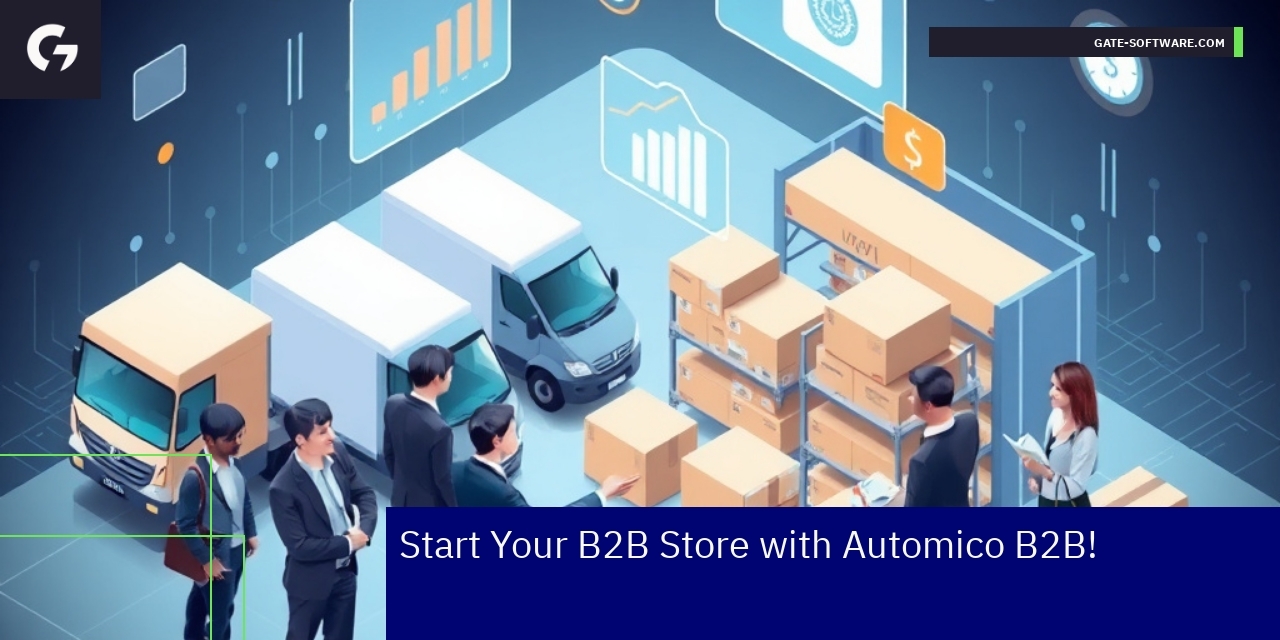
Start Your B2B Store with Automico B2B!
Benefits of Automico B2B
Automico B2B provides a comprehensive foundation for launching and scaling your ecommerce B2B operations. Its tailored functionalities address the unique procurement processes and workflows typical in B2B environments, ensuring seamless integration with existing business systems. This solution enhances efficiency by automating order management, pricing, and customer-specific catalogs, which reduces manual errors and accelerates transaction cycles. Additionally, Automico B2B supports multi-user accounts and advanced permission settings, allowing organizations to manage their internal buyers effectively. By leveraging this platform, businesses can meet the complex demands of B2B buyers while maintaining a high level of customization and control. These features collectively empower enterprises to build strong, long-term client relationships within their ecommerce B2B channels.
How to Set up a B2B Store with Automico
Setting up a B2B store with Automico involves a strategic, step-by-step approach that aligns technical capabilities with your company’s commercial objectives. Initially, defining target personas and understanding purchasing behaviors in ecommerce B2B is critical. Automico supports integration with Magento and other e-commerce platforms, providing a flexible architecture for scalability. The setup includes configuring customer-specific price lists, payment terms, and freight conditions to accommodate varying contractual agreements. Equally important is the implementation of user roles and permission levels to secure access and maintain compliance within your B2B ecosystem. Automico’s architecture also facilitates quick onboarding and data migration from legacy systems, ensuring business continuity and reducing downtime. Following best practices in UX/UI design recommended by Gate-Software enhances navigation and user satisfaction in your B2B store.
Technical Support & Customer Service
Robust technical support and customer service are fundamental to sustaining ecommerce B2B operations powered by Automico. Gate-Software offers continuous assistance through controlled service level agreements (SLA), ensuring that system performance, monitoring, and issue resolution meet strict business standards. Support teams are specialized in B2B platform challenges, including scalability, security, and integration issues, providing expert guidance throughout the digital commerce lifecycle. Customer service extends beyond troubleshooting, encompassing proactive communication strategies and training resources aligned with the needs of eCommerce Managers and IT leaders. This collaborative approach guarantees the stability of B2B stores and the optimal experience for all stakeholders, reinforcing the partnership between service providers and clients in the ecommerce B2B domain.
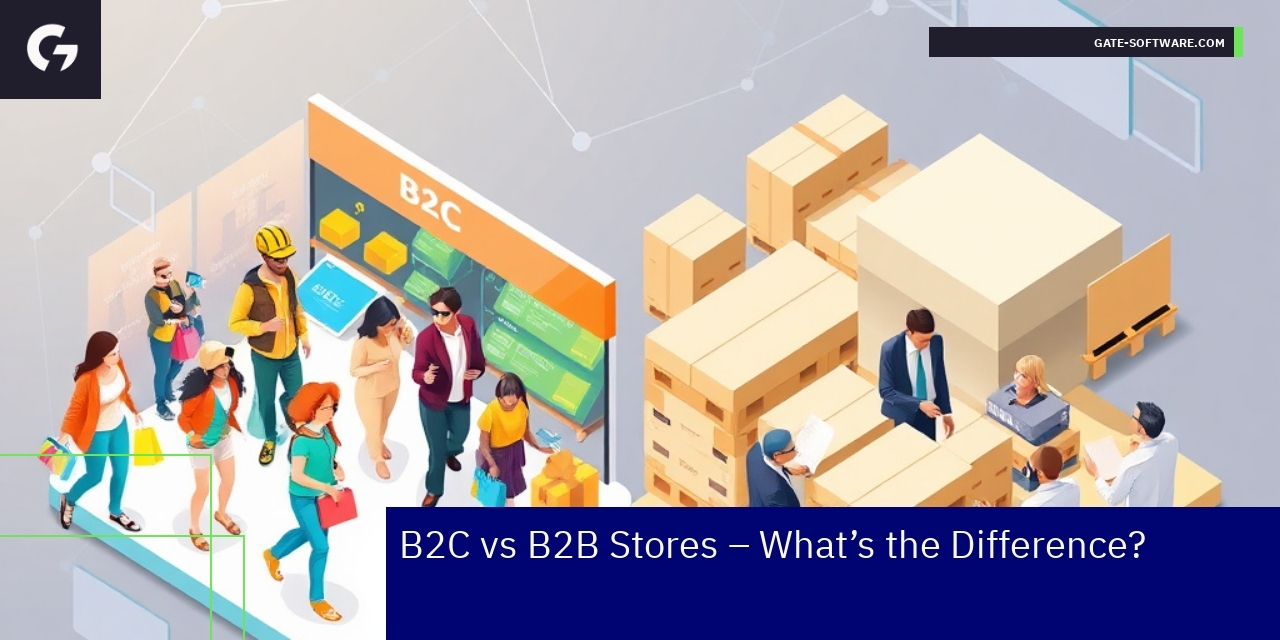
B2C vs B2B Stores – What’s the Difference?
Differences in Sales Models
B2B and B2C stores differ fundamentally in their sales approaches. B2C stores focus on quick transactions, targeting individual consumers with immediate buying intent and often leveraging emotional appeal or impulse purchases. Sales cycles tend to be short, and pricing is typically fixed with promotions driving demand.
In contrast, B2B eCommerce platforms address longer, more complex sales cycles involving multiple stakeholders and negotiation on pricing and terms. B2B transactions frequently involve bulk orders, customized contracts, and repeat purchases based on established relationships. The sales model is consultative, requiring tailored offerings aligned with the buyer’s operational needs and procurement processes.
Understanding Customer Needs
Customer needs in B2C centers around user experience, ease of purchase, and brand engagement. Consumers expect seamless interfaces, relevant content, and swift checkout processes.
For B2B, understanding customer needs is more intricate, involving deeper insights into the buyer’s business goals, challenges, and workflows. B2B eCommerce platforms must deliver functionalities such as role-based access, approval workflows, and detailed product information to support complex purchasing decisions. Personalization and content tailored to specific industries or user personas play a significant role in influencing purchase decisions.
Examples of B2B and B2C Stores
B2C stores include consumer-centric retailers like online fashion outlets or electronics stores focused on end-user convenience and broad product assortments.
B2B stores, powered by B2B eCommerce platforms, serve industries such as manufacturing, wholesale, or services, where buyers seek bulk quantities, technical details, and pricing transparency. Solutions delivered via these platforms often incorporate advanced integrations with ERP or CRM systems to align with corporate procurement standards and optimize operational efficiency.
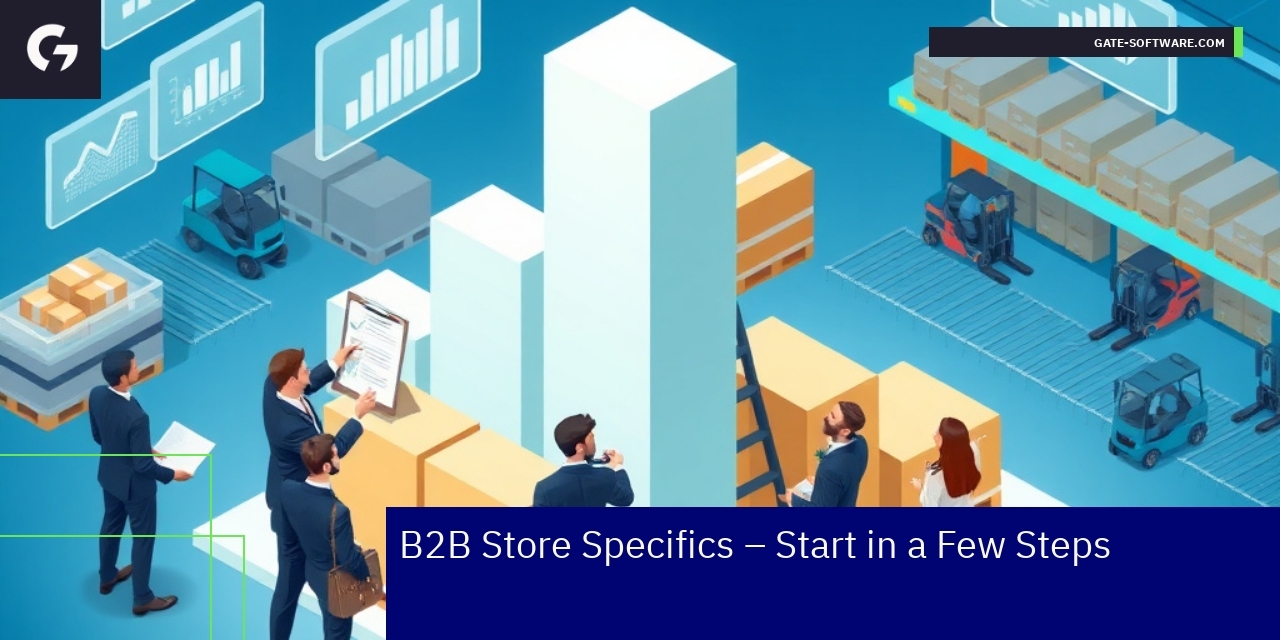
B2B Store Specifics – Start in a Few Steps
First Steps in B2B
Starting a B2B store requires a well-structured approach tailored to the complexities of business-to-business transactions. The foundation lies in selecting a robust B2B eCommerce platform that supports the unique needs of wholesale clients, including customized pricing, bulk ordering capabilities, and account management. It is essential to integrate these features seamlessly into the platform to enhance user experience and streamline operations. Early-stage planning should focus on defining customer personas, mapping out the buyer journey, and ensuring compliance with industry standards. Leveraging data analytics within the B2B eCommerce platform enables businesses to track client behavior and tailor offerings accordingly, fostering long-term partnerships grounded in trust and efficiency.
Managing Wholesale Offers
Effective management of wholesale offers is crucial within a B2B eCommerce platform to maintain competitiveness and meet client expectations. This involves setting tiered pricing strategies, volume discounts, and special promotions that cater to various customer segments. Automation tools within the platform can facilitate real-time updates to offers and inventory, reducing errors and delays. Additionally, clear communication channels for negotiations and approvals are vital. Gate-Software solutions support these processes by ensuring the platform can handle complex pricing models and provide detailed analytics to monitor the success of wholesale offers, allowing businesses to respond quickly to market demands.
Sales Process Optimization
Optimizing the sales process in a B2B context requires a focus on efficiency and transparency. The B2B eCommerce platform should enable seamless order processing, from quote requests to order fulfillment, integrating with existing ERP and CRM systems. Implementing workflow automation reduces manual tasks, accelerating the sales cycle and minimizing errors. Furthermore, data-driven insights offered by the platform allow sales teams to identify bottlenecks and adjust strategies accordingly. Gate-Software emphasizes the importance of aligning technology solutions with business goals to enhance customer satisfaction and drive revenue growth through streamlined sales workflows.
Checklists for Beginners
For businesses embarking on the B2B eCommerce journey, comprehensive checklists ensure readiness and help avoid common pitfalls. Key checkpoints include platform scalability, security compliance, integration capabilities, and user-friendly design aligned with UX/UI standards. It’s also critical to establish clear pricing rules within the B2B eCommerce platform and ensure all team members are trained on system functionalities. Regular audits and updates, guided by Gate-Software’s expert recommendations, help maintain platform performance and compliance with evolving industry requirements. This structured approach lays a solid foundation for sustainable growth in the competitive B2B marketplace.
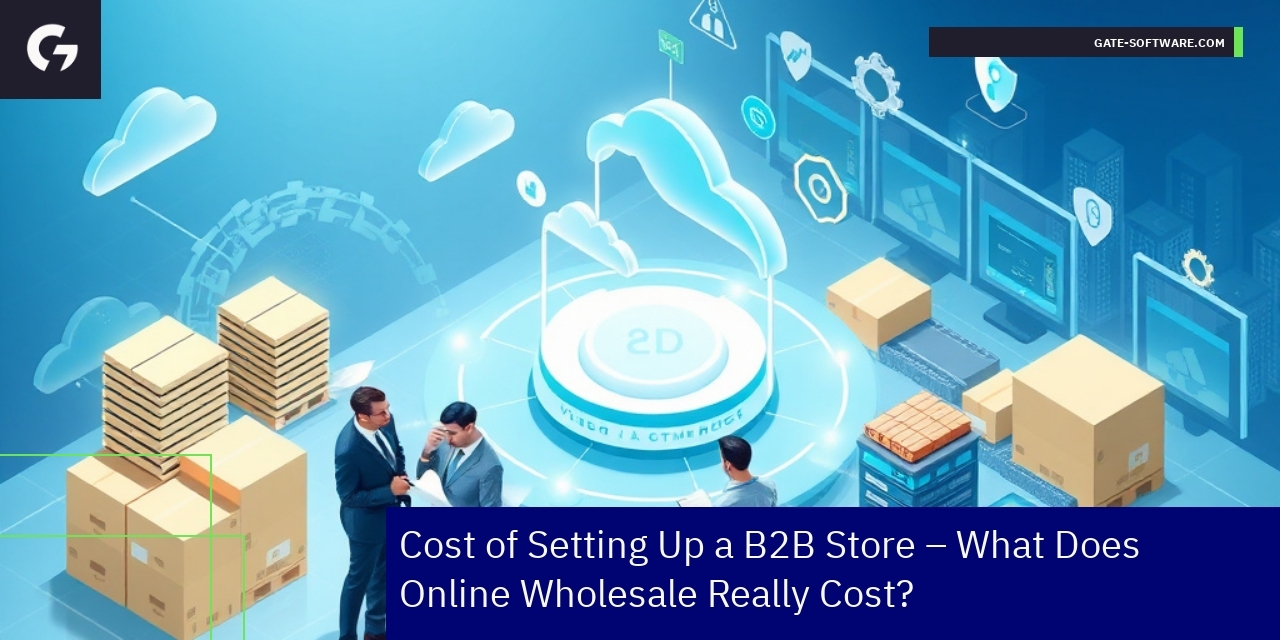
Cost of Setting Up a B2B Store – What Does Online Wholesale Really Cost?
Cost Analysis
Establishing a system B2B eCommerce platform requires thorough cost analysis that goes beyond initial expenses. Key cost factors include software licensing, platform customization, integration with existing ERP and CRM systems, hosting, security measures, and compliance with standards such as WCAG for accessibility. The technical architecture often involves selecting scalable cloud hosting solutions, which influence ongoing operational costs. Additionally, specialized development and UX/UI design tailored to B2B buyers’ workflows and personas—such as Architects, eCommerce Managers, and CTOs—impact budget considerations. Maintenance and continuous updates ensure the platform remains competitive and secure, contributing to lifecycle costs. Given these diverse cost drivers, businesses must focus on both setup and recurring expenses to fully understand their investment in the system B2B eCommerce platform.
Budget Management
Effective budget management for a system B2B eCommerce platform involves strategic planning and prioritization aligned with business objectives. Startups and established companies alike benefit from transparent budgeting processes covering development, integrations, infrastructure, and marketing communications linked to the platform’s launch and growth phases. Engaging stakeholders such as the Head of Applications and CDO ensures that technical and business needs are balanced. Risk mitigation strategies, including contingency funds for unforeseen technical challenges or compliance updates, help maintain financial control. Moreover, investing in scalable architecture and modular solutions allows cost adjustments as the platform evolves. Proper budget allocation to content strategy and ongoing optimization enhances platform engagement, supporting sustainable business growth and return on investment.
Cost Examples
Cost examples for setting up a system B2B eCommerce platform vary widely depending on scope and complexity. Basic implementations using standard Magento™ hosting and monitoring services might start from moderate budgets covering licensing, development, and initial integrations. More comprehensive projects include custom UX/UI audits, compliance with WCAG 1.1 standards, migration from legacy systems, and multi-channel content strategies aligned with brand voice specifications. These advanced features increase initial setup costs but often deliver higher long-term value and operational efficiency. For instance, facilitating multiple pricing tiers, bulk order capabilities, and personalized user roles require deeper technical input. It is critical to evaluate both one-time capital expenses and ongoing operational costs, including SLA arrangements and platform maintenance, to inform realistic budgeting for the system B2B eCommerce platform.
Benefits and Risks
Investing in a system B2B eCommerce platform offers significant benefits such as streamlined operations, improved customer experience, and enhanced market reach with tailored content strategies and brand consistency. By integrating with enterprise systems, businesses can automate workflows and reduce manual errors, supporting faster order processing and better data insights. However, risks include high initial investments and the complexity of managing customized integrations or compliance requirements. Misalignment with business personas or inadequate content can limit adoption and customer satisfaction. Additionally, failing to account for scalability and security can expose the platform to technical debt or cyber threats. Strategic partnerships and expertise, like that from Gate-Software, help mitigate these risks by ensuring solutions are robust, compliant, and aligned with evolving B2B market demands.
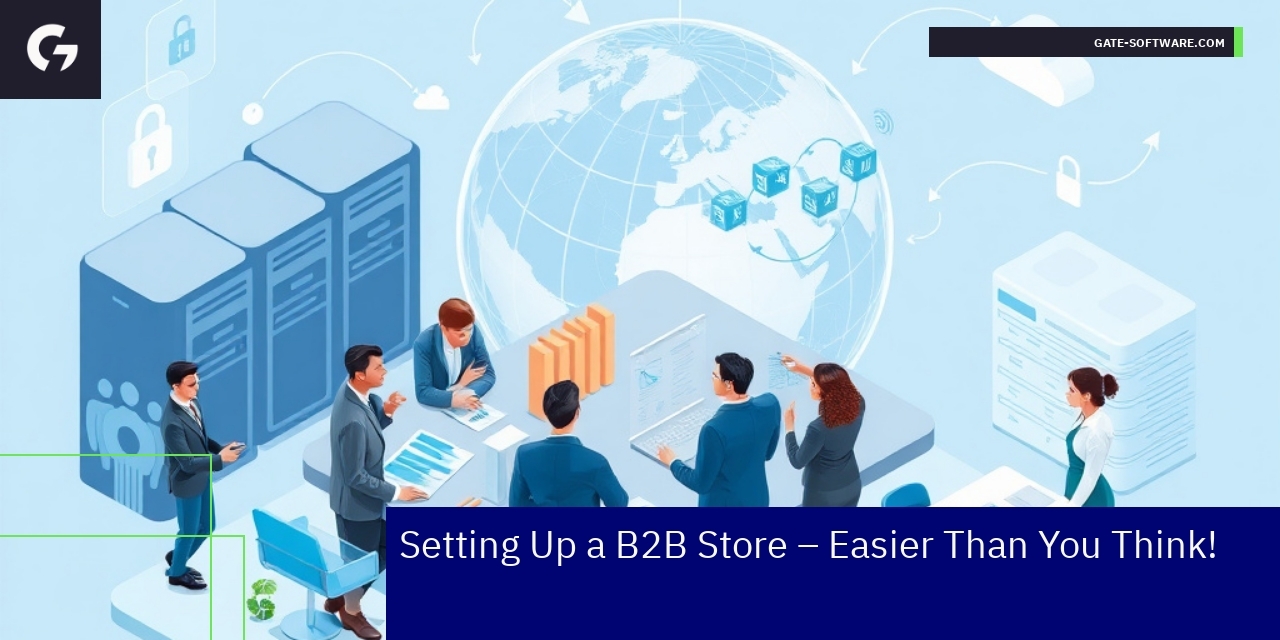
Setting Up a B2B Store – Easier Than You Think!
Steps to Set Up a B2B Store
Setting up an ecommerce B2B store involves a structured approach tailored to the specific needs of business clients. Start with a clear definition of your target personas, such as Architects, eCommerce Managers, and CTOs, to ensure the platform’s functionality aligns with their expectations. Next, focus on technical infrastructure by leveraging robust solutions like Magento™ for secure, scalable hosting and seamless integration with existing systems. Implement strict adherence to WCAG 1.1 standards to provide accessible UX/UI design, enhancing usability for all users. Pay special attention to multi-tiered pricing models, custom catalogs, and streamlined workflows that reflect complex B2B purchase processes. Integrate analytics and monitoring tools that assist with SLA management and cost optimization, ensuring long-term platform efficiency. Throughout, maintain consistent communication guided by your brand voice and content strategy, embedding relevant content phrases that support SEO and client education across all touchpoints.
Purchase Process Support
Efficient purchase process support is critical in ecommerce B2B environments to reduce friction and improve conversion rates. Automate order workflows to handle bulk orders, customizable approval processes, and contract-specific pricing. Providing key decision-makers like Heads of Applications with real-time order tracking and flexible payment options fosters transparency and trust. Integrate comprehensive support for multiple user roles within organizations, ensuring each stakeholder has appropriate access and control settings configured according to their buying authority. Transparency in stock availability and delivery timelines aligns expectations and mitigates order delays. Use data-driven insights to identify bottlenecks and optimize checkout flows regularly. Compliance with security and privacy regulations is paramount, given the sensitive nature of B2B transactions. Content strategies focused on educating buyers about these processes enhance user confidence and the perception of your ecommerce B2B platform as a reliable partner.
Store Benefits
The benefits of a well-executed ecommerce B2B store are multifaceted. It enables companies to scale operations digitally while maintaining complex business relationships and tailored offerings. Automated workflows reduce administrative overhead and human error, delivering faster response times and higher satisfaction. Real-time data integration helps decision-makers optimize inventory and forecast demand more accurately, contributing to cost savings over time. Accessibility compliance and superior UX/UI design demonstrate your brand’s commitment to inclusivity and professionalism, which strengthens customer loyalty. The flexibility to create personalized buying experiences supports diverse business models and negotiation styles typical in B2B. Furthermore, your content strategy reinforces thought leadership, helping clients navigate product portfolios and industry trends effectively. Ultimately, these benefits translate into sustainable revenue growth and stronger partnerships within the B2B marketplace.
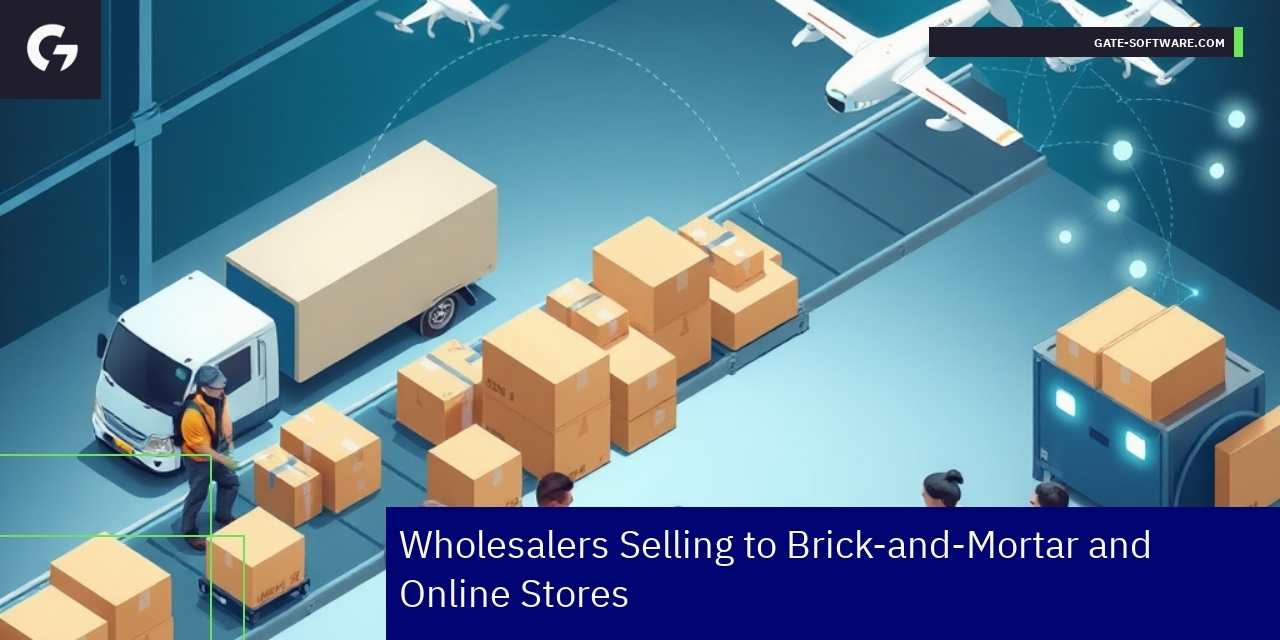
Wholesalers Selling to Brick-and-Mortar and Online Stores
Cooperation with Wholesalers
In the B2B sector, effective cooperation with wholesalers is essential for building a robust supply chain that caters to both brick-and-mortar and online stores. This requires a seamless integration of order processing systems and real-time inventory management to ensure responsiveness and accuracy. Utilizing advanced B2B eCommerce platforms enables wholesalers to offer personalized pricing, bulk order discounts, and tailored product catalogs that meet the specific needs of different retail channels. These platforms also support complex negotiations and contract management, fostering long-term partnerships. Communication between wholesalers and retailers should be streamlined through unified digital channels, enhancing transparency and operational efficiency. Leveraging Gate-Software’s solutions facilitates compliance with industry standards, reduces operational overhead, and aligns with market demands.
Order Management
Effective order management is a critical component in wholesalers servicing both physical stores and online retailers. B2B eCommerce platforms play a pivotal role by automating order capture, validation, and fulfillment workflows. They enable wholesalers to handle high-volume transactions and multi-channel distribution from a centralized system, ensuring that orders are processed swiftly and accurately. Real-time synchronization of stock levels across channels prevents overselling and backorders, while advanced analytics provide insights into order patterns and customer behavior. Gate-Software’s integration expertise supports seamless connectivity between Magento-based platforms and external ERP systems, optimizing inventory turnover and reducing order cycle times. This results in improved service levels and enhances the overall buyer experience.
Wholesaler Examples
Successful wholesalers operating in the B2B ecosystem leverage specialized B2B eCommerce platforms to meet the demands of both brick-and-mortar and online stores. These examples often showcase tailored solutions such as customized storefronts, role-based access controls, and automated workflows that streamline order processing and customer management. They implement comprehensive content strategies to support product discovery and decision-making, integrating SEO phrases like B2B eCommerce platforms to enhance online visibility. Gate-Software’s expertise in Magento platform maintenance and upgrade paths allows wholesalers to scale their digital operations effectively, ensuring continuity and adaptability in fast-evolving markets. These implementations demonstrate how technology-driven wholesalers can elevate operational efficiency and customer satisfaction simultaneously.

Manufacturers Selling Retail & Wholesale
Sales Management
Effective sales management in the context of both retail and wholesale sales demands precise coordination and data-driven decision-making. Manufacturers must address complex inventory dynamics, pricing differentiation, and order processing workflows across varied buyer segments. Leveraging a system B2B eCommerce platform enables streamlined order management and real-time inventory visibility, crucial for balancing supply and demand efficiently. This platform also aids in tracking sales performance metrics, empowering Heads of Applications and eCommerce Managers to optimize sales strategies. The result is an adaptable system that supports scalable operations, reduces order errors, and ensures timely fulfillment across both retail and wholesale channels.
Collaboration with Manufacturers
Collaboration between manufacturers and their wholesale or retail partners is foundational to successful B2B commerce. Utilizing a system B2B eCommerce platform facilitates seamless integration and data sharing, which enhances transparency and operational synchronization. Such platforms offer real-time access to product information, stock levels, pricing updates, and order tracking, fostering trust and responsiveness between parties. This digital collaboration supports complex pricing models and contract terms customary in B2B contexts, enabling partners to tailor offerings and promotions efficiently. For CTOs and CDOs, the platform’s interoperability and scalability also ensure that evolving collaboration needs are met without disrupting existing ecosystems.
Manufacturer Examples
Successful manufacturers embracing both retail and wholesale sales underscore the critical role of a system B2B eCommerce platform. For example, a leading manufacturer of industrial equipment integrated their legacy systems with a modern B2B platform, achieving unified channel management and enhanced customer self-service capabilities. This integration reduced operational overhead and improved order accuracy. Another example is a chemical products supplier who deployed a system B2B eCommerce platform to harmonize pricing and compliance documentation across wholesale and retail clients, accelerating order cycles and improving customer satisfaction. These cases illustrate how the right technological approach enables manufacturers to meet diverse customer expectations while maintaining operational excellence.
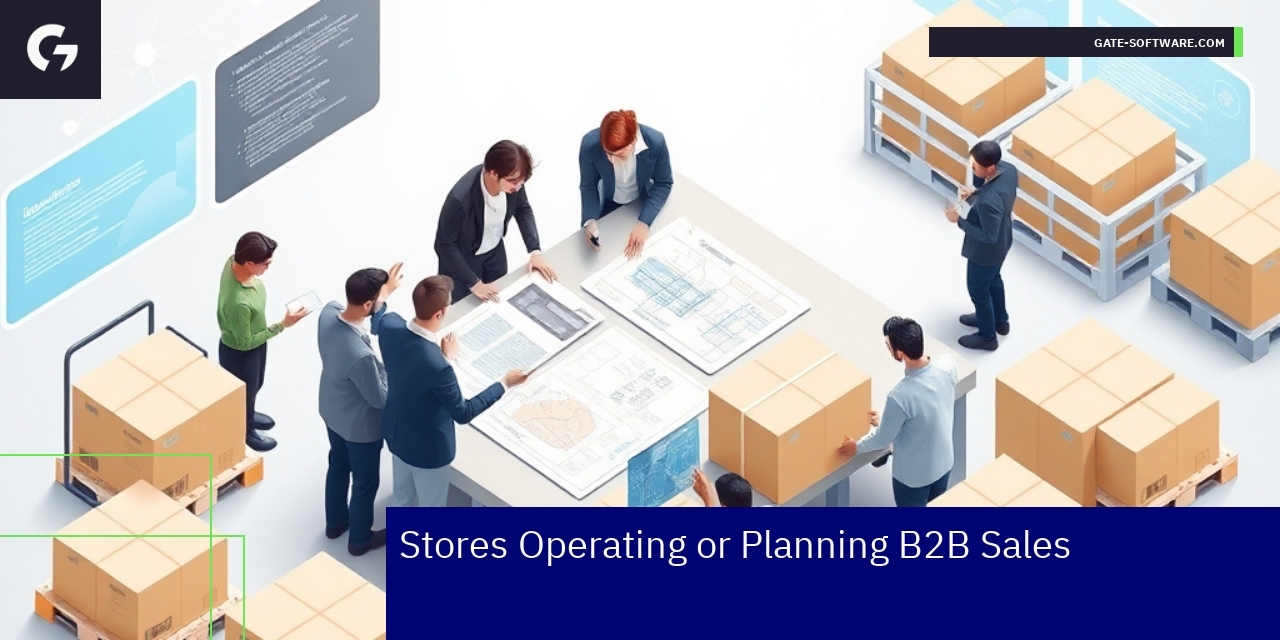
Stores Operating or Planning B2B Sales
Examples of B2B Stores
In the ecommerce B2B landscape, stores that successfully operate or plan their B2B sales focus heavily on tailored customer experiences, robust offer management, and seamless integration with enterprise systems. Examples include distributors and manufacturers who provide large-scale clients with personalized pricing, contract terms, and volume discounts. These B2B stores leverage Magento platforms optimized for transactional efficiency and flexibility, addressing complex procurement processes and multi-user account management. Their content strategies emphasize clear communication of product specifications, compliance standards, and delivery logistics, which align with the technical and operational demands of B2B buyers.
B2B Sales Planning
Planning B2B sales requires an integrated approach combining data-driven insights, sales team empowerment, and scalable technology. ecommerce B2B stores implement comprehensive content phrases that reflect buyer personas such as Architects, eCommerce Managers, and CTOs to ensure messaging resonates with decision-makers. Strategic sales planning involves forecasting demand, aligning product offerings with market needs, and orchestrating offer cycles that anticipate customer requirements. An effective B2B sales plan incorporates multi-channel engagement, automation of repetitive processes, and adherence to standards like WCAG to improve accessibility. This strategic foresight reduces time-to-market and enhances the efficiency of sales pipelines.
Offer Management
Offer management in ecommerce B2B stores is pivotal to controlling pricing complexity, discount structures, and contract compliance. Effective offer management systems integrate with ERP and CRM platforms to maintain real-time data on stock levels, customer credit lines, and order histories. Using precise content phrases within product descriptions and promotional materials ensures transparency and supports buyer confidence. Gate-Software emphasizes a modular, scalable approach to offer management, enabling businesses to dynamically adjust offers based on customer segments or seasonal trends. This flexibility optimizes conversion rates and fosters long-term business relationships within the B2B ecosystem.

How to Prepare a Wholesale Offer?
Key Offer Elements
Preparing a wholesale offer for B2B requires a thorough understanding of product details, pricing strategies, and collaboration terms. The offer should clearly describe product specifications, available variants, and pricing that balances competitiveness with profitability. Setting minimum order quantities and defining payment and delivery terms are essential to streamline business operations and meet client expectations efficiently. Utilizing a B2B eCommerce platform can facilitate transparent communication of these elements and automate key processes, enhancing the buyer’s experience. Including personalized options within the offer allows tailoring solutions to specific client needs, which strengthens business relationships and customer loyalty.
Customer Relationship Management
Effective customer relationship management is vital to the success of a wholesale offer in the B2B sector. Leveraging a B2B eCommerce platform enables seamless interaction, order tracking, and real-time updates that meet the expectations of professional buyers. Developing clear communication channels and offering comprehensive support facilitates trust and responsiveness. Maintaining updated customer profiles and purchasing histories within the platform helps in crafting offers suited to each client’s preferences and business cycles. A structured approach to relationship management promotes sustained engagement, repeat business, and ultimately supports growth in a competitive B2B environment.
Offer Examples
Successful wholesale offers on a B2B eCommerce platform typically include transparent pricing tiers, volume discounts, and clear delivery schedules. An example might be a tiered price list where clients receive better rates as order volumes increase, encouraging larger purchases. Coupled with detailed product descriptions and compliance indicators (such as WCAG standards for digital interfaces), these offers align with the professional expectations of B2B buyers. Additionally, integrating strategic content phrases into the offer presentation on the platform helps enhance discoverability and engagement. Providing case-specific tailoring of offers, supported by analytics and client feedback, ensures relevance and effectiveness within the B2B marketplace.

B2B Store – Grow Your Sales!
Growth Strategies
In the competitive landscape of B2B commerce, growth strategies must be precise and data-driven. Leveraging a system B2B eCommerce platform enables businesses to align their sales processes with client expectations by providing personalized experiences and automating complex workflows. Utilizing insights from such a platform, companies can segment their audience effectively, tailor content to decision-makers, and enhance lead nurturing through targeted communication. Content phrases embedded in product descriptions and marketing campaigns help improve discoverability within niche markets, further driving customer acquisition. Integrating strategic content marketing with the system B2B eCommerce platform creates a foundation for sustainable growth, fostering engagement and accelerating sales cycles in B2B environments.
Managing Online Sales
Managing online sales in a B2B environment requires robust tools that facilitate seamless order processing, inventory oversight, and client management. A system B2B eCommerce platform provides the scalability and flexibility needed to handle complex pricing models, bulk orders, and contract-based sales common in B2B transactions. It supports transparency through real-time data visibility, enabling sales teams and customers to track orders and inventory performance easily. Such platforms often integrate with ERP and CRM systems, streamlining workflows and ensuring data consistency. Moreover, incorporating content phrases specific to product usage and applications enhances the customer journey, clarifying value propositions and speeding decision-making processes.
Customer Support
Delivering high-quality customer support is a cornerstone in maintaining competitive advantage within B2B sectors. Utilizing a system B2B eCommerce platform enhances support capabilities by integrating communication channels, providing personalized client dashboards, and enabling ticket tracking specific to order histories and contracts. Efficient customer support teams rely on these platforms to access vital information quickly, allowing them to resolve issues promptly and maintain strong relationships. Embedding content phrases that address common client concerns and technical specifications within support resources improves self-service options and reduces response times. Comprehensive support powered by the system B2B eCommerce platform fosters trust and client retention, essential for long-term business growth.
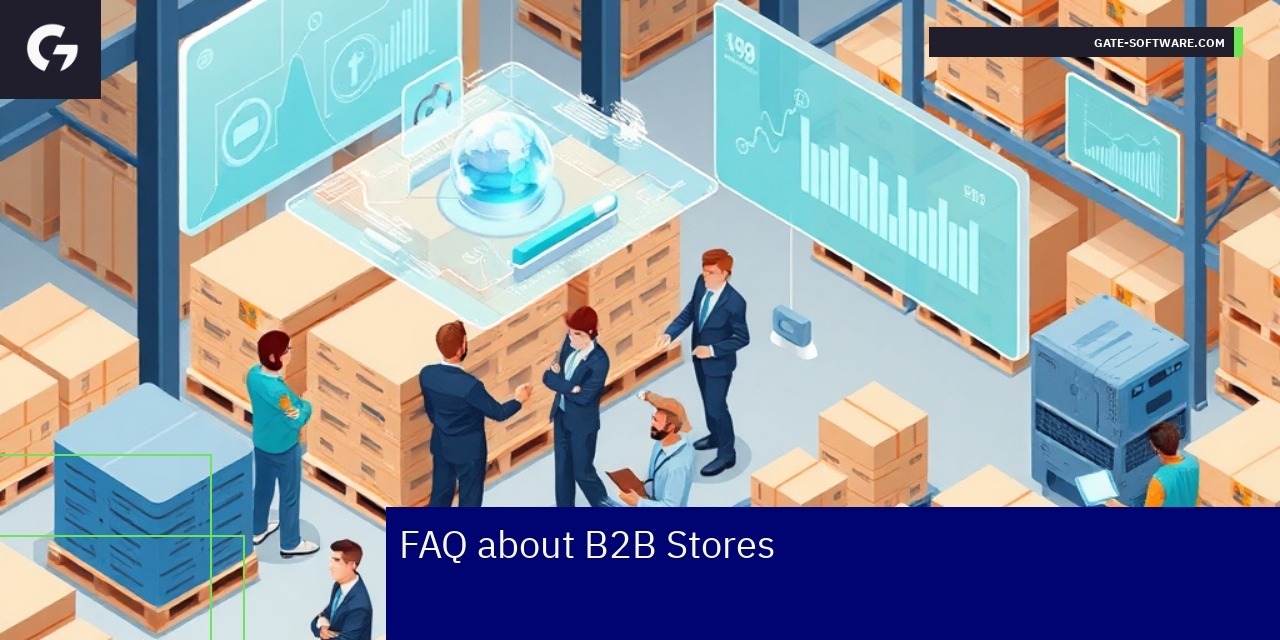
FAQ about B2B Stores
What are the most common questions about B2B stores?
Common questions about B2B stores revolve around how these platforms handle complex transactions, pricing models, and scalability. Decision-makers frequently ask about integration capabilities with existing ERP and CRM systems, ensuring seamless data flow and operational efficiency. They also focus on compliance with industry standards like WCAG for accessibility and how user experience (UX/UI) is optimized to support professional buyers. Another key area pertains to managing multi-user accounts with varied roles and permissions, which is critical for large organizations. Questions about security, hosting reliability, and SLA commitments are also prevalent, reflecting the need for robust, always-available systems tailored for B2B operations. Understanding these factors helps businesses choose platforms that reduce friction in purchasing processes, improve order management, and support long-term growth.
What are the pros and cons of B2B eCommerce platforms?
B2B eCommerce platforms offer numerous advantages including enhanced efficiency through automation of order processing and inventory management. They provide personalized pricing and catalog options that cater to different customer segments, improving sales effectiveness. Integration with existing IT infrastructure is another positive aspect, enabling real-time data synchronization and analytics for informed decision-making. However, challenges include high initial implementation costs and the complexity of customizing platforms to address unique business rules and workflows. Ensuring compliance with WCAG 1.1 standards for accessibility and maintaining a user-friendly UX/UI can require ongoing investments. Maintenance and hosting must meet stringent SLA requirements to guarantee uptime and performance. Balancing these pros and cons is essential for companies to leverage B2B eCommerce for competitive advantage, especially in sectors demanding tailored digital solutions.
What are the key marketing aspects for B2B platforms?
Marketing B2B platforms requires a deep understanding of buyer personas, such as Architects, eCommerce Managers, CDOs, and CTOs, each with distinct priorities and pain points. Content strategies should be aligned with these roles, addressing their technical and business challenges through targeted communication. Emphasizing Gate-Software’s expertise in Magento™, hosting, monitoring, and cost optimization reflects credibility and value. SEO phrases like B2B and Magento stores must be seamlessly integrated to enhance discoverability. Social media and content marketing should focus on educating and nurturing leads, while communication strategies must maintain a professional, partnership-oriented tone to build trust. Additionally, implementing measurable plans such as the JPS (One-page plan) supports consistent messaging and brand voice. These marketing aspects help position B2B platforms as indispensable tools driving digital transformation and operational excellence.
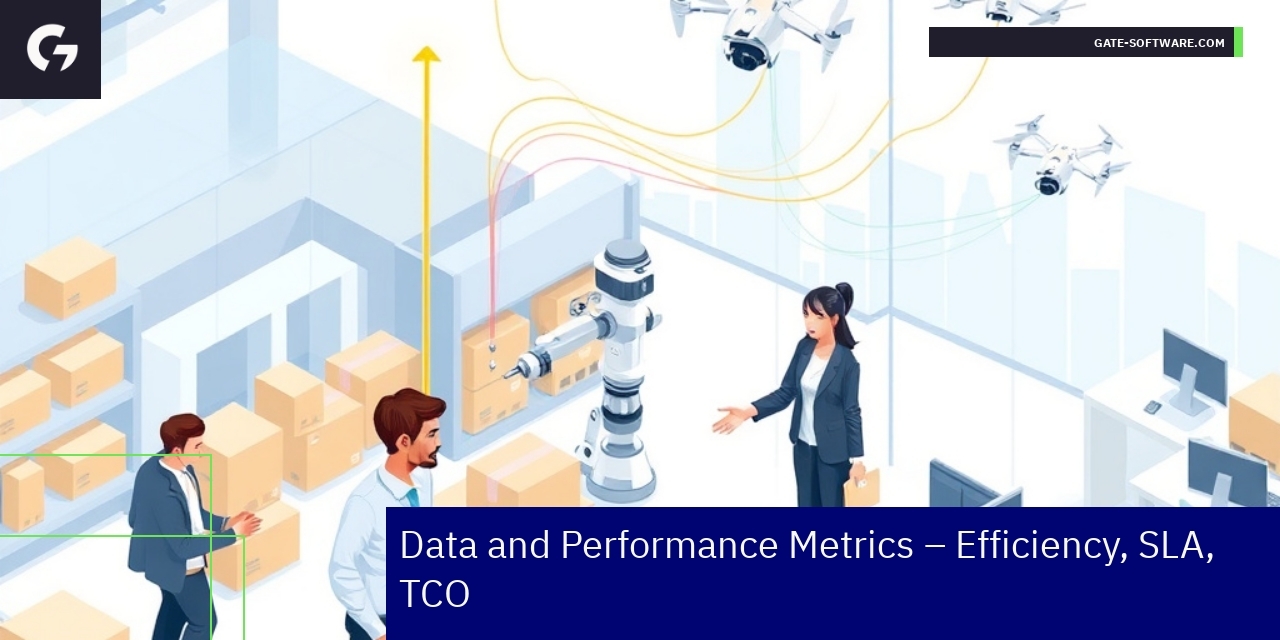
Data and Performance Metrics – Efficiency, SLA, TCO
Operational Effectiveness in B2B Projects
Gate-Software’s commitment to excellence is reflected in our operational metrics for B2B projects. Our average project takeover time stands at 4 weeks, ensuring that new clients experience prompt and efficient transitions. Notably, 95% of projects are delivered on time, enabling our partners to maintain their operational schedules without disruption.
In terms of cost-effectiveness, clients typically experience an average TCO reduction of 20% after implementation, largely attributable to streamlined processes and advanced automation features offered through our systems. Since the inception of our B2B services, we have successfully completed over 150 implementations, showcasing our extensive expertise in the field.
Moreover, we pride ourselves on an outstanding uptime SLA of 99.8%, providing our clients with the reliable performance needed to maintain business continuity. The average duration of our client relationships is an impressive 5 years, a testament to the trust and satisfaction our services foster.
These metrics not only underscore our operational efficiencies but also serve as compelling evidence for prospective clients considering Gate-Software for their B2B eCommerce transformation.

Summary
In conclusion, implementing a B2B eCommerce platform is a strategic move that can significantly enhance operational efficiency and strengthen client relationships. Gate-Software’s focus on tailoring solutions like Magento™ to the unique challenges of B2B transactions ensures that businesses can navigate complex purchasing processes with ease. Customized features, scalability, and adherence to essential standards such as WCAG for accessibility are pivotal in meeting the demands of business buyers. By fostering a collaborative environment that prioritizes continuous optimization, Gate-Software empowers organizations to adapt to evolving market conditions and achieve sustainable growth. If you are considering embarking on a B2B digital journey or seeking to optimize your current operations, connecting with Gate-Software can provide the expert guidance necessary to unlock new growth potentials.
FAQ
What is B2B?
B2B, or Business-to-Business, refers to commercial transactions where one business sells products or services to another business, focusing on supporting operations and procurement processes rather than end consumers.
How does a B2B eCommerce platform work?
A B2B eCommerce platform serves as a digital environment that streamlines purchasing processes, accommodating complex transactions, bulk orders, and integration with existing ERP and CRM systems for real-time data management.
What are the benefits of using a B2B eCommerce platform?
The benefits include cost reductions, process automation, easy access to product information, improved cash flow management, and enhanced user experience through tailored interfaces that comply with accessibility standards.
What should I consider when choosing a B2B platform?
Key considerations include integration flexibility with existing systems, support for complex pricing models, compliance with WCAG standards, and the capabilities for customization according to buyer personas.
How can I prepare for the implementation of a B2B store?
Preparing for implementation involves conducting a thorough business needs analysis, defining customer purchasing processes, evaluating integration needs, and ensuring compliance with relevant standards, facilitating a seamless launch.
.
.
Zamów bezpłatną konsultację
.
Z nami rozwój Twojego biznesu nabierze tempa! Zapraszamy do kontaktu średnie i duże firmy generujące min. 7 mln PLN obrotu rocznie – tam nasza ekspertyza sprawdza się najlepiej.
.
Kliknij w poniższy przycisk i skontaktuj się z jednym z naszych konsultantów e-commerce
.