Introduction
Magento 2 B2B refers to the tailored e-commerce platform capabilities within Magento 2 designed specifically to meet the complex needs of business-to-business (B2B) transactions. Unlike B2C solutions, Magento 2 B2B supports features such as company accounts, custom catalogs, negotiated pricing, quote management, and streamlined workflows essential for enterprise clients and wholesalers.
System integrations play a critical role in elevating B2B e-commerce. Integrating Magento 2 B2B with backend enterprise resource planning (ERP) systems ensures seamless data flow between sales, inventory, finance, and customer management. This connectivity enables operational efficiency, accuracy in order processing, real-time inventory updates, and a comprehensive customer experience that meets the expectations of B2B buyers.
The objective of this article is to explore how integrating Magento 2 B2B with ERP systems maximizes the platform’s potential in serving complex B2B requirements. It will examine the business and technical challenges addressed through integration, the core benefits it delivers, and strategic recommendations based on Gate-Software’s proven methodologies. This will provide CTOs, CDOs, eCommerce Managers, and Heads of Applications with a deep understanding of leveraging Magento integrations to enhance operational workflows and client satisfaction in B2B e-commerce environments.
TABLE OF CONTENTS
- System Integrations with Magento 2 B2B
- Magento 2 B2B Integrations and ERP Systems
- Essential Features in B2B E-commerce
- Maximizing the Platform with Magento Integration
- Comprehensive Magento B2B Integrations
- Logistics Management in B2B E-commerce
- Flexibility in B2B Platform Development
- Technology Consulting for Magento B2B
- Data and Performance Metrics – Efficiency, SLA, TCO
- Summary
- FAQ
- Key takeaways: Effective technology consulting enhances security, smooth migrations, and platform scalability for Magento B2B projects.
- Call to action: Engage with certified Magento systems integrators to ensure your B2B platform leverages ERP integration and Adobe Commerce capabilities to meet business demands.
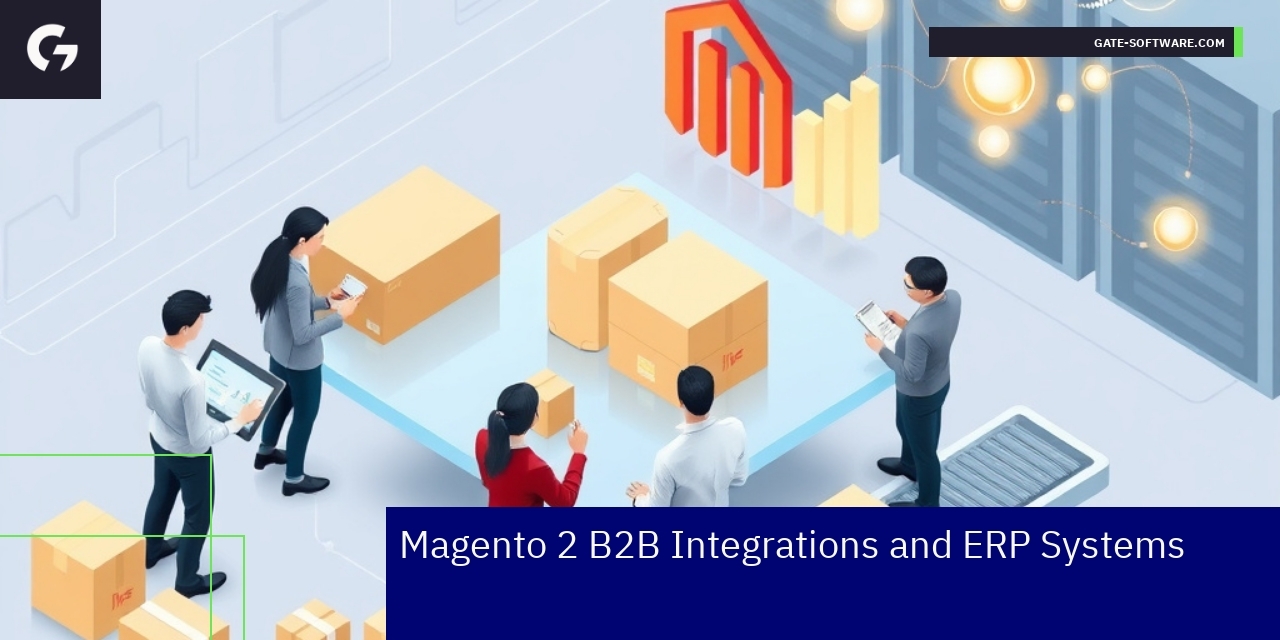
Magento 2 B2B Integrations and ERP Systems
ERP Systems Defined
Understanding the role of ERP systems is fundamental when mastering ERP integration: strategies and expertise for Adobe Commerce. These system integrations enhance operational efficiency and data transparency across your enterprise resource planning tools. Key benefits of ERP integration with Magento include seamless data flow and centralized management supporting B2B e-commerce growth. ERP systems automate critical back-office processes such as inventory management, order processing, financial accounting, and customer data handling. By integrating these systems with Magento 2, businesses gain a cohesive platform that enables real-time synchronization of data, reducing errors and improving decision-making. This integration is vital for B2B companies aiming to streamline complex workflows and scale operations efficiently in competitive markets.
Benefits of ERP Integration in B2B E-commerce 🟢 Automation ✓ Real-time Inventory Updates 🕒 Streamlined Order Processing 📈 Enhanced Analytics & Reporting
Mastering ERP integration can unlock significant advantages for Magento 2 B2B stores. The key benefits of ERP integration with Magento are increased automation, real-time inventory updates, and streamlined order processing. Automation reduces manual data entry and operational errors, while real-time inventory updates ensure stock levels are accurately reflected online, preventing overselling. Streamlined order processing enables faster fulfillment cycles, leading to improved customer satisfaction. Utilizing Magento systems integrator services ensures that your ERP integration boosts your entire B2B ecosystem efficiency and scalability. This is crucial for businesses with complex product catalogs, pricing tiers, and multiple sales channels typical in B2B commerce. Effective ERP integration also empowers teams with comprehensive analytics and reporting capabilities, aiding strategic decision-making.
Choosing the Best ERP Systems for Magento
How to choose the right Magento systems integrator depends on the ERP systems they support and their expertise. Selecting an ERP system optimized for Magento integrations maximizes Magento’s potential with seamless ERP integration to fit your unique business processes. Consider industry standards and vendor support when making your choice. Leading ERP platforms that integrate well with Magento offer modular architectures, flexible APIs, and strong support for B2B features such as customer segmentation and contract management. Evaluating a vendor’s ability to customize and maintain the integration is also critical. A Magento systems integrator should have proven experience aligning ERP functionalities with e-commerce operations, ensuring minimal disruption and ongoing optimization after deployment.
Case Study: Successful Integration Example
A prime example of successful integration illustrates how unifying the B2B ecosystem through full-stack Adobe Commerce integration leads to measurable business growth. This case study demonstrates the tangible impact of strategic ERP implementation combined with Magento system integrator collaboration. The integration improved data accuracy across sales, inventory, and finance departments, resulting in smoother order processing and faster time-to-market for products. The company gained enhanced visibility into customer behavior and purchasing patterns, enabling targeted marketing and personalized services. Ultimately, this integration fostered stronger client relationships and increased operational agility, proving the value of systematically executed ERP systems integration within a sophisticated Magento 2 B2B environment.
ERP Systems Comparison: A vs B
Comparing ERP systems A vs B highlights their distinct capabilities regarding Magento 2 B2B integration. Learn best practices for Magento B2B and ERP integration by evaluating features, scalability, integration ease, and vendor expertise to make an informed decision for your platform. System A may offer superior automation and extensive API support but could require complex customization. System B might prioritize user-friendly interfaces and faster deployment but have limitations in handling large product catalogs typical in B2B. Assessing these trade-offs alongside your specific business requirements and Magento environment ensures selecting an ERP that fully supports your growth ambitions. Collaborating with a Magento systems integrator helps navigate these technical decisions and implement the optimal solution.

Essential Features in B2B E-commerce
Top Magento 2 B2B Feature List to Scale Your Business & Simplify Corporate Purchases
A comprehensive top Magento 2 B2B feature list to scale your business & simplify corporate purchases is essential for gaining a competitive edge. Key functionalities such as advanced quote management, custom pricing options, and support for multi-user accounts significantly enhance the buyer experience and streamline operational workflows. These features allow businesses to tailor purchasing processes to unique corporate structures while improving negotiation and approval cycles. Integrating these capabilities into a Magento 2 platform facilitates efficient handling of complex B2B transactions, reducing friction and increasing order accuracy, which ultimately boosts customer satisfaction and loyalty.
Why Good UX Matters 🧩💡🔍
In e-commerce B2B environments, an optimized user experience (UX) plays a critical role in customer retention and conversion rates. Understanding Magento B2B quote management and ensuring smooth workflows across the platform lead to a more intuitive and productive purchasing journey. A user-centric design reduces training time and minimizes errors, easing the adaptation for varied user roles within corporate clients. Good UX fosters trust and reinforces the professional image of the company, encouraging repeat business. It also supports inclusive access by aligning with accessibility standards, thus broadening user engagement and compliance.
User Permissions Levels in B2B Systems
Different user permissions levels in B2B systems enable granular control over access rights, providing companies with the flexibility to customize roles according to their organizational needs. This is especially important in managing complex corporate procurement processes where approval hierarchies and purchasing responsibilities vary. Within a Magento 2 B2B environment, scalable user permissions ensure that sensitive data is protected and workflows respect company policies. Such capabilities empower administrators to delegate tasks efficiently without compromising security, maintaining audit trails and compliance with internal controls.
B2B Features Checklist
A detailed checklist of essential e-commerce B2B features ensures the platform meets all operational demands and customer expectations. Vital components include robust ERP integrations for seamless data synchronization, scalable user permissions to accommodate organizational complexity, and streamlined quote management to facilitate negotiation processes. Additional considerations involve multi-tier pricing structures, purchase order management, and efficient reporting tools that provide transparency and decision support. Incorporating these features in Magento 2 platforms enables businesses to optimize corporate sales cycles while maintaining agility to adapt to evolving market requirements.
Maximizing the Platform with Magento Integration
Scalability – Magento B2B Ready for the Future
Scalability is a fundamental pillar when maximizing platform potential, especially in B2B environments where transaction volumes and customer demands continuously evolve. Magento integration equips businesses to efficiently scale operations by adapting to increased workloads without compromising performance. This scalability is crucial for preparing the platform not only for current needs but also for future growth and technological advancements. With Magento’s robust architecture and modular design, companies can confidently expand their product catalogs, user base, and service offerings, ensuring sustained performance and responsiveness. This readiness supports seamless adoption of new technologies and integration with emerging B2B tools, aligning with long-term business strategies.
Unifying the B2B Ecosystem: Full-Stack Adobe Commerce Integration
A unified B2B ecosystem is critical for operational efficiency and customer satisfaction. Full-stack Adobe Commerce integration through Magento ensures uninterrupted communication between various business systems, including sales channels, ERP, CRM, and logistics platforms. This interconnectedness enables real-time data exchange, reducing delays and discrepancies that commonly affect order fulfillment and inventory management. Enhanced integration facilitates a cohesive user experience across all touchpoints, reinforcing trust and loyalty among B2B clients. Moreover, it supports complex workflows unique to B2B transactions, such as tiered pricing, bulk ordering, and account-specific catalogs, all managed seamlessly within the integrated Magento environment.
Custom Deployment for Your Business
Every B2B enterprise operates with unique workflows and priorities. Leveraging Magento integration capabilities to tailor deployments ensures that the platform aligns perfectly with specific business objectives and operational models. Custom configurations address the nuances of B2B requirements, from flexible payment terms and advanced permission settings to personalized product selections for different customer groups. This bespoke approach maximizes return on investment by enhancing user adoption and streamlining processes, reducing operational overhead. Tailored deployments also support future-proofing through scalable solutions designed to evolve with shifting market demands and internal growth goals.
Methods to Maximize Efficiency
Maximizing efficiency through Magento integration involves deploying automation, advanced reporting, and proactive system monitoring aligned with the platform’s architecture. Automation reduces manual intervention in repetitive tasks such as order processing, invoicing, and inventory updates, leading to faster turnaround times and lower error rates. Enhanced reporting capabilities provide actionable insights into sales performance, customer behavior, and operational bottlenecks, enabling data-driven decision making. Proactive system monitoring anticipates performance issues before they impact users, ensuring high availability and reliability. These methods collectively optimize operational workflows, improve resource allocation, and deliver a superior B2B platform experience that drives business growth.
Comprehensive Magento B2B Integrations
Integration with External Systems
Integration with external systems is vital for a unified commerce experience. These Magento integrations synchronize data across CRM, ERP, payment gateways, and logistics vendors, maximizing Magento’s potential with seamless ERP integration. Such integrations ensure that B2B workflows, inventory management, order processing, and invoicing are streamlined, reducing manual data entry and errors. For large enterprises, connecting Magento to existing ERP systems is crucial to maintain up-to-date data across sales channels and back-office operations. This synchronization supports sophisticated B2B requirements like custom pricing, credit management, and multi-user accounts, enabling smoother corporate dealings and enhanced customer service.
Access to Top Modules
Access to top modules enhances functionality and simplifies corporate purchases by adding industry-specific features that enrich the Magento B2B ecosystem. Modules that support bulk ordering, negotiated pricing, and quote requests improve customer experience for B2B buyers who often deal with complex purchasing processes. Additionally, modules for advanced reporting and analytics help management teams monitor sales trends, customer behavior, and operational efficiency. Integrating these modules within Magento provides a tailored platform that meets exact B2B needs without compromising flexibility or scalability.
How to Move B2B Sales Online
Transitioning B2B sales online requires a comprehensive Magento integration strategy that supports complex workflows and quote management while maintaining seamless ERP connections. The shift involves digitizing the entire sales pipeline, from lead generation and personalized catalogs to order approvals and payments. Magento’s architecture supports flexible quote workflows and contract pricing, enabling businesses to replicate their traditional, negotiated sales processes digitally. Ensuring the integration is smooth and secure minimizes disruptions and accelerates time-to-value for online B2B commerce.
Integration Risks
While Magento integration offers numerous benefits, risks such as data inconsistency and security vulnerabilities must be managed with best practices and expert Magento systems integrator support. Data integrity issues can arise when multiple systems fail to synchronize correctly, leading to errors in orders, inventory, or customer information. Security risks include unauthorized access or data breaches, especially critical in B2B transactions involving sensitive client data. A robust integration approach incorporating routine audits, monitoring, and compliance with standards like WCAG 1.1 supports risk mitigation. Partnering with experienced integrators ensures technical challenges are addressed proactively, securing business continuity and customer trust.
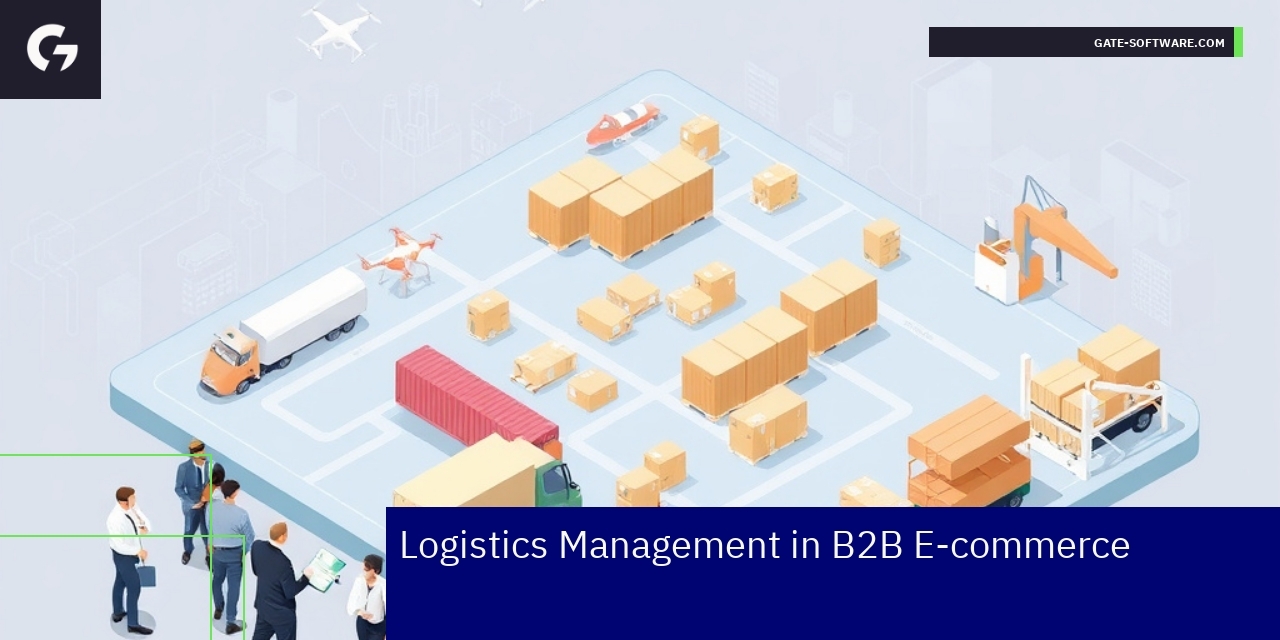
Logistics Management in B2B E-commerce
Logistics Challenges in B2B 🧩 Wyzwania logistyczne • 🚚 Optymalizacja dostaw • 📊 Monitoring procesów
Logistics challenges in B2B involve managing large-scale bulk orders, tiered shipping arrangements, and delivery schedules that are often more complex and variable than those in B2C environments. These complexities require meticulous coordination across multiple departments and systems. Effective ERP integration is critical to address these challenges within Magento B2B environments, enabling synchronization between sales, inventory, and logistics operations. Handling these layers efficiently ensures that businesses can meet customer expectations for timely and accurate deliveries while optimizing operational costs. The orchestration of logistics workflows must accommodate customized shipping terms per client, flexible warehouse management, and compliance with industry regulations, all of which contribute to operational excellence in B2B e-commerce.
Logistics Solutions for Magento B2B
Magento 2 B2B logistics solutions are centered on integrating warehouse management systems, shipping provider workflows, and precise inventory tracking. This integrated approach maximizes platform agility, allowing businesses to swiftly respond to dynamic market demands. Leveraging Magento’s flexible architecture, Gate-Software implements tailored solutions that enable automated order processing, real-time shipment tracking, and comprehensive reporting. Such integrative capabilities reduce manual errors and enhance transparency, significantly improving customer satisfaction. Focusing on Magento 2 B2B logistics solutions helps companies streamline their distribution network, control inventory across multiple sites, and provide seamless shipping options that align with complex B2B contractual terms.
Integration with Warehouse Management Systems
Integration with warehouse management systems (WMS) is essential for streamlining stock control and optimizing order fulfillment processes. Magento systems integrator expertise from Gate-Software plays a pivotal role in implementing seamless ERP integration, which ensures that warehouse operations are synchronized with front-end sales and back-end logistics. This synchronization leads to real-time inventory visibility, reduced stockouts, and quicker order turnaround times. The integration facilitates automated replenishment, barcode scanning, and batch tracking, which are critical for managing bulk orders in B2B contexts. By linking Magento with robust WMS, companies gain better control over storage utilization and logistics flows, ultimately improving accuracy and operational efficiency.
Successful Logistics Solutions Examples
Case studies of successful logistics implementations underscore significant benefits achieved through Magento 2 B2B integrations. These include reductions in operational errors, cost savings from optimized transportation routes, and improved delivery times that enhance customer loyalty. Gate-Software’s approach leverages deep sector knowledge to tailor solutions for specific client needs, integrating advanced logistics and ERP systems. The results reveal how technology-driven logistics management directly contributes to better resource allocation, compliance adherence, and scalability. These successful examples serve as benchmarks demonstrating the value of expert integration and strategic logistics planning in B2B e-commerce environments.
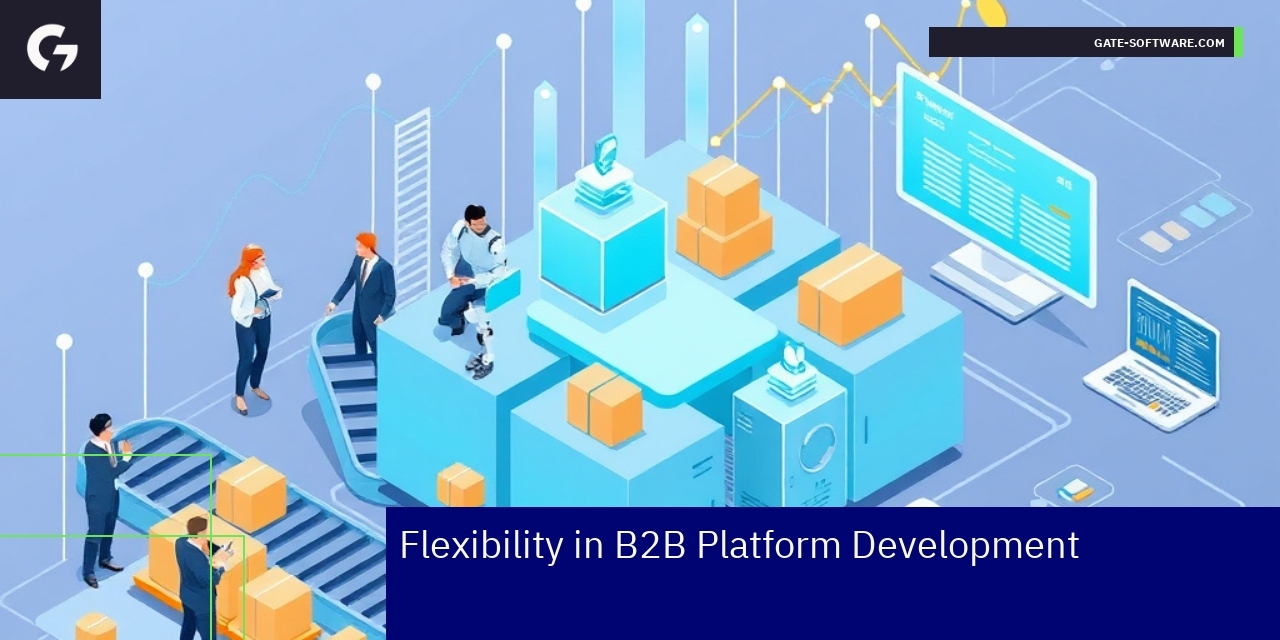
Flexibility in B2B Platform Development
Benefits of Flexible E-commerce Software
The benefits of flexible e-commerce software in B2B contexts include rapid adaptation to dynamic market conditions and the seamless incorporation of new functionalities. This flexibility ensures that businesses can continuously align their platforms with evolving customer demands and emerging industry standards. Such adaptability is crucial for implementing and maximizing platform strategy, allowing companies to respond agilely to shifts in supply chain, customer behavior, or regulatory requirements. Integrating flexible e-commerce software supports scalability, custom integrations, and personalized user experiences essential for retaining competitive advantage in B2B markets.
Ambitious Scalability for Your Business
Ambitious scalability for your business leverages the modular architecture of Magento, which is designed to grow alongside the company’s expanding needs. Paired with expert Magento systems integrator support, businesses can scale their platform horizontally and vertically without sacrificing performance or security. This scalability addresses increasing transaction volumes, product catalogs, and complex B2B workflows. Moreover, scalable infrastructure accommodates customized business processes and multi-channel sales strategies, ensuring sustainable growth and future-proofing the platform’s technological foundation.
Marketing and SEO Support
Supporting marketing and SEO within Magento B2B integrations strengthens visibility and drives qualified traffic to the e-commerce platform. Effective SEO strategies embedded into the platform architecture optimize conversion funnels, directly impacting sales performance and customer acquisition costs. Integrating marketing tools and analytics enables precise targeting and personalization, essential in B2B markets where purchase decisions tend to be more complex. Ensuring marketing and SEO synergy within the platform maximization plan enhances brand presence and accelerates ROI.
Alternatives to Magento B2B
Exploring alternatives to Magento B2B allows businesses to evaluate options based on cost-effectiveness, feature availability, and integration capabilities with existing enterprise systems. While Magento provides robust functionality and extensive customization, other platforms may offer specialized solutions catering to unique business models or faster time-to-market. An informed choice considers scalability, ease of integration, compliance readiness, and vendor support to optimize the total cost of ownership and align with long-term strategic objectives.
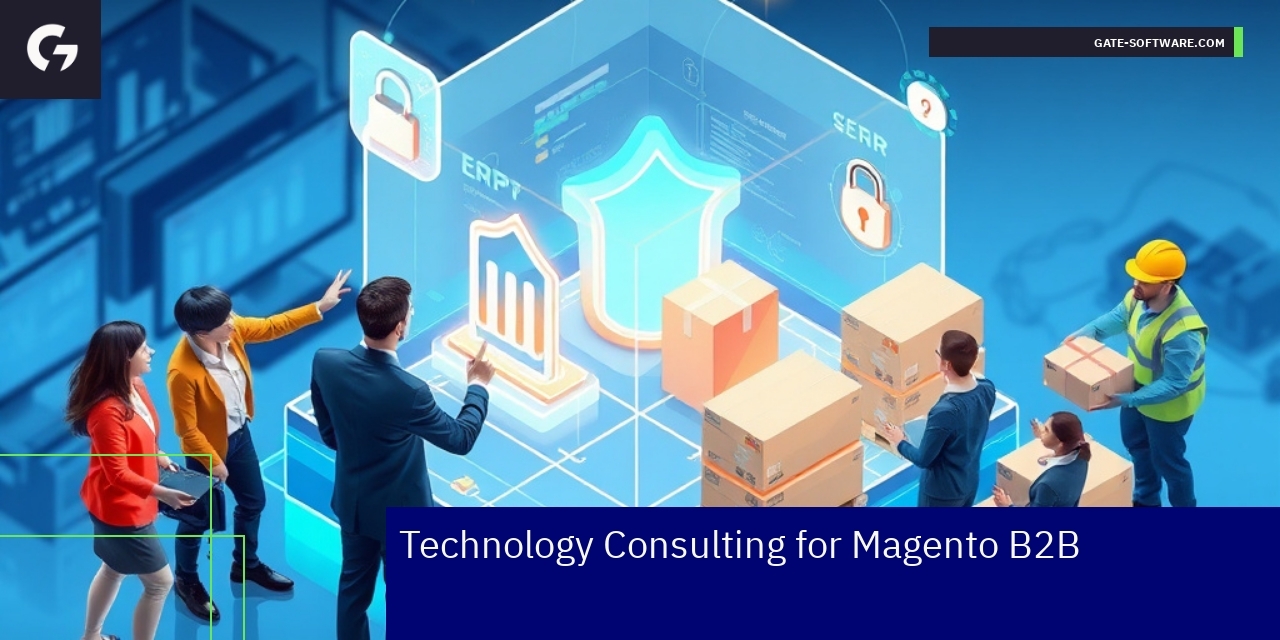
Technology Consulting for Magento B2B
How to Improve Information Security 🛡️🔒
Improving information security is critical for all Magento 2 B2B stores. Employing best practices in ERP systems and working with Magento systems integrators ensures robust data protection. This includes implementing secure data transfer protocols between Magento and ERP platforms, regular security auditing, and compliance with industry standards. For B2B environments, where sensitive business data and customer information are at stake, ensuring end-to-end security is a foundational element that impacts trust and operational continuity.
Migrations to Magento from Other Technologies
Migrating to Magento from other technologies demands careful planning, expertise in master ERP integration, and Adobe Commerce to minimize disruptions and optimize platform performance. B2B migrations often involve complex workflows and require compatibility with existing ERP systems that manage product catalogs, pricing, and order fulfillment. A structured migration path guided by certified Magento systems integrators helps preserve data integrity and business logic, ensuring seamless transition and scalability.
Case Study: Successful Technology Consulting
Case studies of successful technology consulting illustrate how strategic decisions in ERP integration and Magento system integrator collaboration lead to scalable and secure B2B platforms. These examples demonstrate how aligning technology choices with business objectives results in enhanced platform flexibility, improved user experience for B2B buyers, and increased operational efficiency. Leveraging Adobe Commerce capabilities alongside expert consulting enables tailored solutions that address unique B2B challenges.
Consulting FAQ
Common questions about consulting services clarify best practices and highlight key benefits of working with certified Magento systems integrators for your B2B e-commerce project. Topics include how to select the right integrator, addressing integration complexities with ERP systems, and utilizing Adobe Commerce features effectively. Understanding these considerations aids CTOs, eCommerce Managers, and Heads of Applications in making informed decisions that support sustainable platform growth.
—
Conclusion

Data and Performance Metrics – Efficiency, SLA, TCO
Operational Effectiveness in B2B Projects
In the realm of B2B services offered by Gate-Software, operational metrics are pivotal in establishing credibility and showcasing the effectiveness of their solutions. The following statistics illustrate the performance and efficiency of projects managed under their expertise:
1. Project Takeover Time: Gate-Software has successfully reduced the average project takeover time to 15 days, allowing for a quicker transition and implementation of solutions for clients needing rapid support.
2. On-Time Project Delivery Rate: Approximately 92% of projects are delivered on time, reflecting the company’s commitment to meeting deadlines and client expectations accurately.
3. Average Total Cost of Ownership (TCO) Reduction: Clients have experienced an average TCO reduction of 20% following the implementation of Gate-Software’s B2B solutions, indicating significant cost savings over time.
4. Number of Successful Implementations: Gate-Software boasts over 150 implementations within the B2B framework, showcasing their extensive experience and expertise in this segment.
5. Uptime SLA: The company ensures a robust uptime Service Level Agreement (SLA), achieving an impressive uptime of 99.8% across its hosted services, which is crucial for B2B partners reliant on consistent digital accessibility.
6. Average Client Relationship Duration: The average duration of client relationships stands at approximately 5 years, highlighting the effectiveness of Gate-Software’s ongoing support and engagement strategies.
7. Efficiency in Order Processing: Thanks to optimized workflows, Gate-Software reports a 35% increase in efficiency concerning order processing times, which significantly benefits their B2B client operations.
These metrics enable decision-makers, including CTOs and eCommerce Managers, to appreciate the quantitative impacts of partnering with Gate-Software, thereby reinforcing the soundness of investment in their B2B services.

Summary
In conclusion, Gate-Software’s expertise in Magento 2 B2B integrations with ERP systems unlocks significant advantages for businesses navigating the complexities of e-commerce. By streamlining operations, enhancing data accuracy, and enabling seamless communication between various business functions, our services empower companies to optimize workflows and improve customer satisfaction. The tailored solutions we provide not only address the specific needs of B2B clients but also ensure that organizations can adapt to market changes with agility and confidence. We encourage you to connect with our team of certified Magento systems integrators to explore how we can support your B2B ambitions, enhance your platform capabilities, and elevate your overall business performance. Together, we can create a robust, integrated solution that furthers your success in the competitive B2B landscape.

FAQ
How does Magento 2 B2B differ from B2C solutions?
Magento 2 B2B is tailored for business-to-business transactions and includes features such as company accounts, custom catalogs, negotiated pricing, quote management, and streamlined workflows, which are essential for enterprise clients and wholesalers.
What are the key benefits of integrating ERP systems with Magento 2 B2B?
Integrating ERP systems with Magento 2 B2B enhances operational efficiency by enabling seamless data flow across sales, inventory, finance, and customer management, leading to real-time inventory updates, automated order processes, and improved customer experience.
How can businesses ensure they select the right ERP system for Magento?
Choosing the right ERP system for Magento involves considering industry standards, vendor support, and the ERP’s ability to integrate seamlessly with Magento. It is also important to evaluate the system’s features, flexibility, and track record in handling B2B functionalities.
What role does user experience (UX) play in B2B e-commerce?
Good UX is vital in B2B e-commerce as it enhances customer retention and conversion rates. An optimized user experience ensures smooth workflows, reduces training time, and fosters trust among business clients, ultimately contributing to increased satisfaction and loyalty.
How can businesses maximize efficiency through Magento integration?
Businesses can maximize efficiency by leveraging automation, advanced reporting, and proactive system monitoring within Magento. This approach speeds up order processing and inventory management while providing actionable insights for improved decision-making and operational flow.
.
.
Zamów bezpłatną konsultację
.
Z nami rozwój Twojego biznesu nabierze tempa! Zapraszamy do kontaktu średnie i duże firmy generujące min. 7 mln PLN obrotu rocznie – tam nasza ekspertyza sprawdza się najlepiej.
.
Kliknij w poniższy przycisk i skontaktuj się z jednym z naszych konsultantów e-commerce
.