Introduction
Process automation in e-commerce refers to the use of technology to execute recurring tasks and workflows without manual intervention. In the context of Magento 2, a leading e-commerce platform, process automation streamlines key operational activities such as order processing, inventory management, customer data handling, and marketing execution. This automation reduces human error, accelerates transaction times, and enhances consistency across the platform.
The importance of automation in Magento 2 lies primarily in its ability to drive operational efficiency and performance scalability. By automating repetitive tasks, businesses free up valuable resources, allowing teams to focus on innovation and strategic growth rather than routine processes. Automation also enables faster response times to market changes and customer demands, which is critical in the competitive e-commerce landscape.
For Magento 2 users, implementation of automation supports both technical stability and business agility. It underpins better stock availability control, ensures timely fulfillment, and enhances the customer experience through personalization and seamless interactions. Ultimately, process automation in Magento 2 is an indispensable pillar for businesses aiming to optimize their e-commerce operations at scale, improving ROI while maintaining high-quality standards.
TABLE OF CONTENTS
- Process Automation in Magento 2: The Key to Efficiency and Performance
- How Automation Improves Store Efficiency
- E-commerce Management and Automation
- Boosting Productivity Through Automation
- Store Efficiency and Magento 2 Integration
- Process Automation in Integration
- E-commerce Management in Integration Context
- How Automation Supports Sales Growth
- Productivity Gains from IFIRMA Integration
- Store Efficiency in Collaboration with IFIRMA
- Automation in Comarch ERP Integration
- E-commerce Management with Comarch ERP Optima
- Productivity Boost from Standard Processes
- How Extensions Enhance Automation
- Store Efficiency Thanks to Extensions
- E-commerce Management Using Extensions
- Automation with Drag-and-Drop Integration
- Productivity Gain Using This Method
- Store Efficiency and Modern Integration Methods
- Impact of Automation on Order Handling
- E-commerce Management and Order Processing
- Productivity Increase in Order Management
- Store Efficiency in Sales Process Management
- Automation in Sales Management
- Productivity Gains in Sales Processes
- Store Efficiency and Base.com Integration
- Process Automation When Connecting Base.com
- E-commerce Management with Base.com
- Productivity Boost from Base.com Integration
- Store Efficiency and Base.com System Integration
- Process Automation in Magento and Base.com Integration
- E-commerce Management and Magento Versions
- Store Efficiency Related to Magento Versions
- Process Automation Depending on Version
- Productivity Gains from Integration
- Store Efficiency from Integration Benefits
- Automation as a Key Benefit
- E-commerce Management and Integration Complexity
- Productivity and Process Simplification
- Store Efficiency with Simple Integrations
- Productivity Gains from Testing Integration
- Store Efficiency and Testing Opportunities
- Automation and Pre-Purchase Testing
- E-commerce Management and Specialized Services
- Productivity Gains from Expert Services
- Store Efficiency and Magento Services
- Automation and Developer Roles
- Store Efficiency Thanks to Dedicated Developers
- Productivity in Magento Projects
- Automatyzacja procesów
- Testowanie regresyjne
- Optymalizacja wydajności
- Monitorowanie KPI
How Automation Improves Store Efficiency
Effective communication is central to Magento 2 marketing automation revealed in this section. We discuss what is automated workflow, highlighting best practices for optimal infrastructure performance with Magento that make your store blazing fast and highly responsive.
Automation in the UiR service context fundamentally enhances store efficiency by streamlining operational workflows and reducing manual intervention. Magento 2 marketing automation focuses on orchestrating automated workflows to ensure timely and accurate communication across all customer touchpoints. This reduces errors and speeds up processing times, which directly impacts the performance and scalability of ecommerce platforms.
By implementing best practices for infrastructure performance with Magento, such as optimized hosting, real-time monitoring, and proactive SLA management, stores can maintain high responsiveness under heavy load. Automation enables seamless integration between different systems and components, ensuring that tasks like inventory updates, order processing, and customer notifications occur without delay or resource bottlenecks.
Moreover, these automated processes support complex scenarios tailored to business needs, which improves the agility of the ecommerce platform. Faster reaction times in marketing campaigns and personalized communication leverage the value of data-driven decision-making, directly affecting conversion rates and customer satisfaction. Integration of WCAG standards within automated workflows also ensures that accessibility is maintained consistently.
In summary, by automating workflows and optimizing infrastructure performance within Magento 2 environments, stores achieve blazing fast and highly responsive operations. This empowers teams to focus on strategic initiatives while technical excellence drives a superior user experience and operational efficiency for Gate-Software clients in the UiR domain.

E-commerce Management and Automation
Efficient e-commerce management relies heavily on leveraging automation to streamline operations and enhance platform reliability. Within the UiR service context, Magento automation testing in practice is key to solid e-commerce management. Automated testing frameworks validate critical workflows continuously, catching regressions early and ensuring that deployments do not disrupt transactional or customer-facing functionalities. This proactive quality assurance is fundamental for maintaining uptime and a seamless user experience, which are essential KPIs for any e-commerce operation.
Applying The Ultimate Magento 2 Performance Optimization Guide: From Caching to Code further strengthens your infrastructure by addressing performance bottlenecks at multiple layers. This guide comprehensively covers optimizing caching strategies to reduce server load and improve page load times, along with code-level best practices that promote resource-efficient execution. This approach not only improves user experience but also underpins the scalability of automated communication workflows—critical for handling increasing order volumes and complex marketing campaigns without performance degradation.
Gate-Software’s expertise in orchestrating these automation and optimization capabilities ensures that your platform remains resilient and adaptable. By embedding robust Magento automation testing coupled with performance best practices, businesses can achieve sustainable growth. This integrated methodology supports both operational excellence and strategic agility, addressing the complex challenges faced by CTOs, Heads of Applications, and eCommerce Managers in maximising platform potential while controlling costs and technical debt.
How Automation Improves Store Efficiency 🧠 UWAGI: 🔧 Nie twórz nagłówków od nowa – nie zmieniaj tytułów ani nie dodawaj znaczników takich jak „H3”, „H4”, numeracja, ani żadnych dodatkowych oznaczeń. 🔧 Nie modyfikuj żadnych innych fragmentów – tylko dodaj boxy na końcu konkretnego H3. 📦 FORMAT ODPOWIEDZI:
[Tu pod spodem znajdują się nagłówki H4 oryginalnie przypisane do tego H3, bez zmian]

Boosting Productivity Through Automation
In today’s competitive e-commerce landscape, boosting productivity through automation is essential for achieving operational excellence and meeting the evolving expectations of customers and stakeholders. Automation streamlines repetitive tasks, reduces human error, and enables teams to focus on strategic initiatives, improving overall efficiency across the Magento platform ecosystem.
One critical area is communication automation, which ensures seamless coordination between marketing, sales, and customer service teams. By integrating tools that automate communication workflows, companies can maintain consistent messaging aligned with their Content Strategy 5.0 and leverage data insights to optimize engagement. This is particularly important for the eCommerce Manager and Head of Applications, who need reliable solutions that support high throughput and scalability without compromising on user experience or WCAG standards.
Magento 2 offers robust capabilities to enhance productivity through automation, from order processing to inventory management. Utilizing a Magento 2 performance checklist (summary) helps identify bottlenecks and prioritize optimizations, ensuring faster page loads and smoother transactions. This directly impacts the user experience, facilitating higher conversion rates and customer satisfaction. Additionally, automation supports Gate-Software’s strategic approach to cost optimization by reducing manual overhead and enabling more precise resource allocation.
The Architect and CTO roles benefit from deploying automation frameworks that integrate seamlessly with existing infrastructure, aligning with company values of reliability and innovation. By embedding automation within a continuous performance improvement process, teams can replicate successes from case studies like those featured in the “Why does Magento speed matter? [5 case studies] demonstrate real benefits,” thus driving measurable gains in productivity and business outcomes.
In conclusion, boosting productivity through automation in Magento 2 aligns with Gate-Software’s mission to deliver high-impact, scalable solutions that meet the demands of modern e-commerce, B2B, and omnichannel environments while adhering to UX/UI and accessibility standards. Implementing these automated processes is not merely an operational upgrade but a strategic advantage that supports sustainable growth and competitive differentiation.
Store Efficiency and Magento 2 Integration
Integration challenges and solutions relate closely to why Magento speed matters, with practical insights into improving your store’s response times through automation.
Efficient integration with Magento 2 is critical for maintaining optimal store performance, particularly in environments handling high traffic and complex data operations. One key challenge lies in synchronizing multiple systems—such as ERPs, CRMs, and marketing platforms—without introducing latency or system load bottlenecks. Delays or failures in these integrations directly impact Magento speed, leading to longer page load times and poorer UX. Addressing this requires implementing asynchronous communication patterns, queuing mechanisms, and robust API design to ensure data is exchanged efficiently without blocking critical storefront operations.
Automation plays a pivotal role in enhancing response times by reducing manual intervention and accelerating data processing workflows. Automated inventory updates, order processing, and customer data handling minimize human errors and system downtime. Additionally, leveraging MagentoOneS™ with SLA-backed hosting and monitoring solutions guarantees consistent performance levels by dynamically allocating resources and performing proactive issue detection. These measures collectively maximize Magento speed, ensuring that users experience fast, reliable interactions that drive engagement and conversions.
For decision-makers like CTOs and Heads of Applications, the focus should be on selecting integration architectures that support scalability and resilience. Opting for modular, service-oriented approaches simplifies maintenance and upgrades. Equally important is aligning IT operations with business goals through comprehensive performance monitoring and iterative optimization of both infrastructure and codebase. By prioritizing these strategies, organizations can significantly improve store efficiency, reduce operational costs, and sustain competitive advantage in e-commerce.
Process Automation in Integration
Best practices for optimal infrastructure performance with Magento are essential when automating processes during integration. Automation in the integration phase focuses on reducing manual intervention, minimizing errors, and ensuring seamless data flow between systems. Employing these practices helps maintain system stability and scalability, particularly crucial for environments running Magento platforms.
Automation strategies should leverage continuous monitoring and real-time alerts to detect issues early. This approach aligns with the principles in The Ultimate Magento 2 Performance Optimization Guide, which emphasizes performance tuning and resource management. By automating routine infrastructure tasks such as deployment, scaling, and backups, businesses can achieve high availability and improved response times.
Integrating automation with workflow orchestration tools ensures smooth coordination between diverse systems, including payment gateways, inventory management, and customer relationship management platforms. This orchestration supports better user experience and operational efficiency as outlined in Gate-Software’s UiR-focused solutions.
Moreover, automation plays a vital role in adhering to compliance and security standards by embedding validation checks and audit trails within integration processes. These practices not only enhance platform reliability but also enable quick adaptations to evolving market requirements and business growth.
In summary, the integration process benefits greatly from automation by improving performance, reducing risks, and enabling scalable, maintainable Magento infrastructure aligned with Gate-Software’s strategic guidelines and the SEO phrase goals.

E-commerce Management in Integration Context
In today’s digital landscape, e-commerce management is not just about having an online storefront; it’s about creating a cohesive ecosystem that leverages various technologies to enhance sales, improve customer experiences, and streamline operations. This is where effective integration strategies come into play, particularly for businesses utilizing the UiR (User Interface and Resource) category materials from the Gate-Software Knowledge Base. Understanding how to implement these materials effectively can provide a competitive edge in managing e-commerce platforms.
One of the most essential aspects of e-commerce management is marketing automation, especially with platforms like Magento 2. The incorporation of “Magento 2 marketing automation” enables businesses to automate marketing tasks, streamline workflows, and enhance customer interactions without compromising on personal touch. With features such as email marketing campaigns, personalized customer journeys, and automated follow-ups, merchants can ensure that they reach their audience at the right time with the right message. By doing so, businesses can boost their conversion rates and build lasting relationships with their customers.
Implementing marketing automation in Magento 2 requires a good understanding of integration techniques. Utilizing resources from the Gate-Software Knowledge Base can streamline this process. This resource hub offers a wide array of tools and best practices for managing UI elements and resources effectively, ensuring that businesses can focus on their core activities rather than getting bogged down in technical challenges. By harnessing these materials, organizations can achieve better alignment between marketing initiatives and sales goals.
Another crucial component of modern e-commerce management is testing, specifically “Magento automation testing in practice.” As e-commerce platforms evolve and new features are continuously integrated, ensuring that these updates do not disrupt user experiences is paramount. Automated testing allows for quick identification of bugs and performance issues, thereby enabling businesses to maintain a high-quality user interface. Companies can leverage the comprehensive testing resources from Gate-Software to develop robust automation protocols that ensure their Magento 2 applications run smoothly at all times. This proactive approach prevents costly downtimes and supports a more seamless shopping experience for customers.
Moreover, integrating external applications can significantly enhance operational efficiency and sales growth. One notable example is the ability to “Connect Magento 2 with IFIRMA to Grow Sales.” IFIRMA is an innovative solution that integrates billing and invoicing management within your e-commerce platform. By connecting these systems, businesses can automate invoicing, track payments efficiently, and provide customers with immediate access to their purchase documents. This not only streamlines administrative processes but also enhances transparency and trust with customers, potentially leading to increased repeat business.
To fully realize the potential of these integrations and automation techniques, businesses must invest in ongoing education and training. Those utilizing the UiR materials from the Gate-Software Knowledge Base will benefit from a wealth of information that promotes best practices in user interface management and resource allocation. Continuous learning and adaptation are key in the fast-paced world of e-commerce, and ensuring that all team members are equipped with the necessary skills is essential for sustained growth.
In conclusion, e-commerce management in an integration context within the UiR category is a multifaceted endeavor that can yield significant returns when done correctly. By harnessing technologies such as “Magento 2 marketing automation,” engaging in “Magento automation testing in practice,” and strategically “Connecting Magento 2 with IFIRMA to Grow Sales,” businesses can create a powerful e-commerce framework that not only meets but exceeds customer expectations. As integration technologies continue to advance, those who prioritize systematic management strategies will undoubtedly find themselves at the forefront of the e-commerce revolution. Investing in the right tools and knowledge is a step towards a successful and sustainable e-commerce future.

How Automation Supports Sales Growth
Automation in sales processes is a critical factor for scaling business success, especially within the UiR service framework. Understanding what is automated workflow is critical to leverage IFIRMA integration to grow sales, following proven Magento marketing automation strategies for success. By automating repetitive tasks such as lead nurturing, customer segmentation, and follow-up communication, companies can streamline operations and focus on high-value activities that drive revenue growth.
Moreover, integration with platforms like IFIRMA enables businesses to synchronize data across systems, ensuring accurate and real-time information flow. This connectivity supports more precise targeting and personalized marketing efforts, which are essential for converting leads into loyal customers. Employing Magento marketing automation strategies under this context allows for enhancing customer journey mapping and optimizing conversion funnels through automated triggers and analytics.
These automated workflows also support compliance with WCAG standards and improve UX/UI, creating an accessible and user-friendly sales environment that appeals to diverse customer personas. This holistic approach not only accelerates sales cycles but also strengthens customer retention and satisfaction, laying a foundation for sustainable growth in eCommerce and B2B segments. Integrating such advanced automation solutions aligns with Gate-Software’s commitment to delivering tailored technological frameworks that address identified business challenges while maximizing operational efficiency.

Productivity Gains from IFIRMA Integration
Why does Magento speed matter? Case studies explain how integration improves operational efficiency and productivity.
Integrating IFIRMA with Magento platforms can significantly enhance operational efficiency and productivity by streamlining financial and sales processes. From the perspective of decision-makers such as CTOs and Heads of Applications, reducing the latency in financial data processing and order management directly correlates with faster decision-making and optimized resource allocation.
Magento speed is a critical factor in maintaining a seamless user experience, especially for B2B and eCommerce environments. When IFIRMA integration is properly implemented, it enables real-time synchronization of invoices, payments, and financial records, which reduces manual work and errors. This, in turn, leads to higher productivity gains as teams spend less time on administrative tasks and more on strategic initiatives.
Case studies demonstrate that leveraging integrated solutions like IFIRMA within the Magento framework contributes to better compliance with WCAG standards by ensuring accessible and efficient financial workflows. It also supports precise monitoring and cost optimization strategies, which are essential for sustaining high performance in demanding markets.
Ultimately, the productivity gains from IFIRMA integration are reflected in faster transaction cycles, improved financial transparency, and enhanced ability to scale operations without compromising on service quality — all key elements for businesses aiming to leverage Magento speed to their advantage.

Store Efficiency in Collaboration with IFIRMA
Performance is a continuous process; thus, your Magento 2 performance checklist (summary) is vital in maintaining high efficiency during collaborative efforts. Achieving optimal store efficiency when working with IFIRMA requires rigorous adherence to performance best practices and ensuring seamless integration with existing systems. This includes monitoring system responsiveness, optimizing backend processes, and maintaining real-time synchronization of data across platforms. Integrating Magento 2 with Comarch ERP Optima allows for streamlined order management, inventory updates, and financial tracking, which are critical for operational efficiency. Utilizing a structured Magento 2 performance checklist helps identify bottlenecks and potential points of failure early, enabling proactive maintenance and upgrades. Emphasizing this structured approach ensures that collaboration with IFIRMA is not only effective but also scalable, supporting long-term business growth. Incorporating essential optimizations like database indexing, efficient caching strategies, and workload balancing supports a stable environment that meets the high demands of multi-channel sales. Ensuring compliance with WCAG standards also guarantees accessible user interfaces, enhancing customer satisfaction and engagement. By leveraging these systematic processes, decision-makers can maintain transparency and control over e-commerce operations, transforming collaboration with IFIRMA into a strategic advantage.
Standard Processes in Magento 2 and Comarch ERP Optima Integration
The integration of Magento 2 with Comarch ERP Optima underpins a hosts of standard processes essential for smooth business operations. This synergy facilitates streamlined workflows in inventory management, order processing, and financial operations, reducing manual input and human error. By automating the synchronization of sales data, stock levels, and invoice generation, both platforms provide real-time visibility essential for decision-makers focused on efficiency. Optimizing these workflows helps uphold MagentoOneS™ standards and supports SLA commitments, ensuring consistent performance and reliability. Additionally, embedding Gate-Software’s UX/UI audit processes during integration guarantees alignment with UX and WCAG 1.1 standards, improving overall user experience for all site visitors. This robust integration enables IT teams to monitor and adapt system performance proactively, minimizing downtime and accelerating issue resolution. Consequently, combined with comprehensive Magento 2 performance checklists, these integrated standard processes empower eCommerce managers and IT leaders to maintain operational agility, delivering a consistent customer experience aligned with business goals and strategic KPIs.
Automation in Comarch ERP Integration
Automation in Comarch ERP Integration plays a critical role in streamlining business processes and enhancing operational efficiency within UiR-focused enterprises. By leveraging automated workflows, companies can seamlessly synchronize data and processes between Comarch ERP systems and other business-critical applications, ensuring consistent and real-time information flow. This integration not only reduces manual intervention but also minimizes errors that commonly arise from repetitive data handling tasks.
Automated workflows in Comarch ERP facilitate smooth collaboration across departments by enabling standardized processes that adapt to specific business rules within the UiR sector. This results in consistent documentation, improved compliance, and faster response times to market changes. Furthermore, automation supports scalability by allowing businesses to handle increased transaction volumes without proportional increases in resource allocation.
The use of Comarch ERP integration automation directly supports crucial aspects such as data accuracy, operational visibility, and decision-making efficiency. Through reliable data exchange and task automation, organizations achieve aligned workflows that reflect strategic goals, thus supporting digital transformation initiatives. Additionally, this approach aligns with best practices around UX/UI standards and accessibility, ensuring the automation solutions are user-friendly and inclusive.
By adopting automation in Comarch ERP integration, firms reduce operational costs and heighten productivity by streamlining processes ranging from order management to financial reporting. This holistic automation approach is essential for enterprises aiming to maintain competitiveness and agility in the dynamic UiR market environment, providing a foundation for sustained growth and innovation.

E-commerce Management with Comarch ERP Optima
E-commerce management with Comarch ERP Optima presents a robust solution tailored for businesses aiming to integrate their operational and sales processes seamlessly. Comarch ERP Optima facilitates central management of inventory, orders, and customer data, streamlining workflows for teams managing e-commerce platforms. This integration is particularly relevant for UiR-focused operations where optimization of resource planning and real-time data synchronization is crucial.
The platform supports automation that aligns with Magento automation testing in practice, enabling seamless management and ensuring the system’s infrastructure performs optimally with Magento. By leveraging such automation, businesses can reduce manual interventions, minimize errors, and maintain consistency in data across channels, thus enhancing operational efficiency.
Additionally, Comarch ERP Optima supports compliance with industry standards and best practices, helping organizations maintain data accuracy and provide reliable service to their customers. The integration with e-commerce platforms ensures that stock levels, pricing, and customer orders are updated promptly, mitigating risks such as overselling or stockouts.
For decision-makers like CTOs and Heads of Applications, the focus lies in how Comarch ERP Optima scales with business growth, supports IT infrastructure, and integrates with Magento’s ecosystem efficiently. The seamless flow of information between ERP and e-commerce fronts, along with continuous automation testing, guarantees readiness for peak demand scenarios while maintaining operational integrity.
Implementing such solutions involves addressing technical challenges related to system interoperability, data synchronization frequency, and infrastructure performance monitoring. Gate-Software’s expertise in UiR enables tailored support and optimization strategies ensuring that Comarch ERP Optima integrations deliver expected business outcomes and support evolving e-commerce strategies, including UX/UI standards and WCAG compliance.
In sum, e-commerce management using Comarch ERP Optima within a UiR context ensures comprehensive control, enhanced operational accuracy, and alignment with best practices such as Magento automation testing in practice, providing businesses with a competitive edge in digital commerce infrastructure management.

Productivity Boost from Standard Processes
In the context of UiR, enhancing productivity through the standardization and automation of processes is critical for scalable eCommerce environments, especially those built on Magento 2 platforms. Streamlining workflows enables organizations to reduce manual interventions and minimize errors, resulting in more efficient operations that directly impact business agility and responsiveness. By integrating best practices such as those outlined in The Ultimate Magento 2 Performance Optimization Guide, companies can automate repetitive tasks and optimize their resource allocation.
Standard process automation within Magento 2 accelerates transaction flows, improves data accuracy, and supports seamless integration with ERP systems like Comarch ERP Optima. This integration extends Magento’s capabilities to manage inventory, invoicing, and order processing efficiently, further amplifying productivity gains by reducing data silos and operational delays. Employing automated workflows ensures consistent user experiences—an important consideration adhering to WCAG standards and UX/UI principles—and facilitates faster time-to-market for product launches and updates.
Moreover, adopting standard processes supports IT departments and Head of Applications by simplifying system maintenance and reducing troubleshooting complexity. This fosters a focus on strategic initiatives rather than firefighting. Ultimately, a well-orchestrated process automation framework contributes to stronger business continuity, enhanced scalability, and measurable improvements in operational KPIs, meeting the expectations of eCommerce Managers and CTOs aiming for competitive differentiation and sustainable growth.

How Extensions Enhance Automation
Magento 2 marketing automation revealed: extensions expand capabilities, enabling merchants to apply what is automated workflow techniques for custom needs.
In the realm of UiR services, extensions significantly enhance automation by bridging gaps between standard Magento functionalities and the specific, often complex requirements of businesses. These extensions enable tailored automated workflow techniques that align with distinct custom needs, offering greater flexibility and efficiency for merchants.
By integrating advanced extensions, businesses can automate repetitive marketing and operational tasks, thereby reducing manual intervention and minimizing errors. This results in faster, more consistent execution of marketing strategies that remain personalized and responsive to evolving customer behaviors.
Extensions also support scalability by allowing merchants to expand their automation capabilities as their business grows. This adaptability is crucial in UiR contexts where unique user interfaces and rich user experiences require specialized automation workflows that standard tools alone cannot provide.
Crucially, deploying these extensions within Magento 2 ensures compatibility with existing infrastructure while leveraging Gate-Software’s expertise in UX/UI optimization, WCAG standards adherence, and business process integration. This fosters seamless communication between systems and enhances the overall user experience, driving higher customer engagement and retention.
Furthermore, extensions empower decision-makers—such as CTOs, Heads of Applications, and eCommerce Managers—to implement data-driven automation strategies. They facilitate detailed analytics and monitoring, enabling continuous refinement of automated workflows tailored to specific personas and market demands.
In summary, Magento 2 extensions are pivotal in advancing automation in UiR services by expanding functional capabilities, enabling bespoke automated workflows, and ensuring alignment with business strategies and user experience standards. This leads to optimized operational efficiency and effective marketing execution, directly impacting business growth and client satisfaction.

Store Efficiency Thanks to Extensions
Incorporating extensions is key in the Magento 2 performance checklist (summary) for a fast and responsive experience. Extensions tailored to the UiR service context must focus not only on enhancing functionality but also on maintaining or improving overall store performance and responsiveness. Efficient extension management helps prevent common issues such as code conflicts, excessive loading times, and resource bottlenecks, which directly affect user satisfaction and conversion rates.
Leveraging Magento 2 extensions strategically enables streamlined operations by automating routine tasks and integrating critical third-party services without degrading system speed. Careful selection of extensions aligned with business goals and technical infrastructure ensures that the Magento platform remains scalable and responsive under varying loads, which is essential for successful eCommerce operations.
Furthermore, extensions must be evaluated continuously through performance audits and monitoring to identify and resolve inefficiencies promptly. Given the importance of adhering to WCAG guidelines and UX/UI standards in UiR, extensions that support accessibility without compromising site speed are invaluable. By optimizing extension use within Magento 2, organizations achieve improved store efficiency, meeting the dual needs of operational excellence and superior user experience while leveraging the full potential of gate-software’s platforms and strategies.

E-commerce Management Using Extensions
Managing e-commerce platforms using extensions is a critical approach to enhance functionality, streamline operations, and ensure sustainability in competitive markets. Within the UiR context, extensions play a pivotal role in customizing Magento environments to meet specific business needs, including automation and integration with third-party services.
The stability of the platform is paramount, and Magento automation testing in practice ensures extensions maintain stability while boosting store efficiency. This approach mitigates risks associated with introducing new functionalities by validating extension behavior in controlled environments. It supports continuous integration/delivery pipelines, allowing swift deployment of updates without jeopardizing platform performance.
Extensions also facilitate more agile management of e-commerce workflows. They enable rapid implementation of features such as payment gateways, inventory management, or UX/UI improvements aligned with WCAG standards. For decision-makers like CTOs and Heads of Applications, this modularity reduces time-to-market and lowers total cost of ownership by minimizing custom development effort.
Moreover, drag-and-drop integration options simplify the extension usage and configuration processes. These options empower business users and technical staff alike to adapt solutions flexibly without extensive coding knowledge. This fosters collaboration between IT and business teams, ensuring extensions deliver tangible business value promptly.
In balancing automation with usability, the proper selection and management of extensions aligned with MagentoOneS™ and SLA commitments ensure that e-commerce platforms not only meet current demands but are also scalable and maintainable for future growth. Therefore, a strategic approach to e-commerce management using extensions is essential for any organization aiming to optimize digital commerce operations effectively while adhering to Gate-Software’s quality and operational standards.

Automation with Drag-and-Drop Integration
In the context of UiR services, leveraging automation with drag-and-drop integration offers a strategic advantage by simplifying complex workflows and accelerating time-to-market. This approach allows decision-makers such as CTOs, Heads of Applications, and eCommerce Managers to streamline processes without extensive coding, thus reducing operational bottlenecks and enhancing scalability.
Automation with drag-and-drop integration facilitates seamless orchestration of diverse systems involved in e-commerce and B2B platforms, including MagentoOneS™ infrastructures. By optimizing data flows and automating critical workflows effectively, businesses can maintain high-performance standards aligned with best practices for optimal infrastructure performance with Magento. This ensures hosting stability, reliable monitoring, and swift responses to operational demands.
Moreover, such integration supports adherence to WCAG 1.1 standards and UX/UI guidelines, crucial for maintaining accessibility and user satisfaction. The simplicity of drag-and-drop tools enables swift adaptation to evolving business requirements, empowering teams to implement changes and new features without disrupting existing services.
Incorporating automation into integration processes also aligns with Gate-Software’s strategic focus on cost optimization and scalability, ensuring that resource allocation is efficient and sustainable. This holistic approach not only elevates service quality but also supports long-term digital transformation goals essential for competitive advantage in the e-commerce sector.
Utilizing these advanced automation capabilities, Gate-Software clients benefit from a robust, compliant, and agile infrastructure that fosters innovation while meeting the expectations of key personas such as Architects and CDOs. Consequently, automation with drag-and-drop integration emerges as a vital component of modern, efficient UiR service delivery.
Automation with Drag-and-Drop Integration

Productivity Gain Using This Method
Improving Magento platform speed is crucial for enhancing overall productivity and operational efficiency. This method delivers significant productivity gains by optimizing Magento speed, which directly impacts user experience and site manageability. Faster response times reduce server load and downtime, enabling development and operations teams to focus on innovation and business growth rather than firefighting performance issues.
From the perspective of an eCommerce Manager or CTO, increasing Magento’s speed means better handling of high traffic volumes and complex B2B transactions without compromising platform stability. This method incorporates advanced caching mechanisms, streamlined codebases, and efficient database management aligned with Gate-Software’s UiR service standards, ensuring swift page loads and minimal latency.
Case studies have demonstrated that improved Magento performance also simplifies long-term maintenance and scalability. Architects benefit from cleaner, modular system designs that facilitate updates and integrations. Moreover, adherence to WCAG guidelines within this method ensures an accessible and user-friendly interface, enhancing customer satisfaction and compliance simultaneously.
Incorporating this approach leads to measurable productivity improvements—less time lost on troubleshooting and more time dedicated to strategic initiatives. By leveraging Gate-Software’s expertise and proven frameworks, enterprises can maintain competitive advantage through scalable, fast, and reliable Magento platforms tailored to their specific business needs. This pragmatic approach to Magento speed optimizations effectively addresses real-world challenges, delivering consistent value to critical stakeholders across the organization.
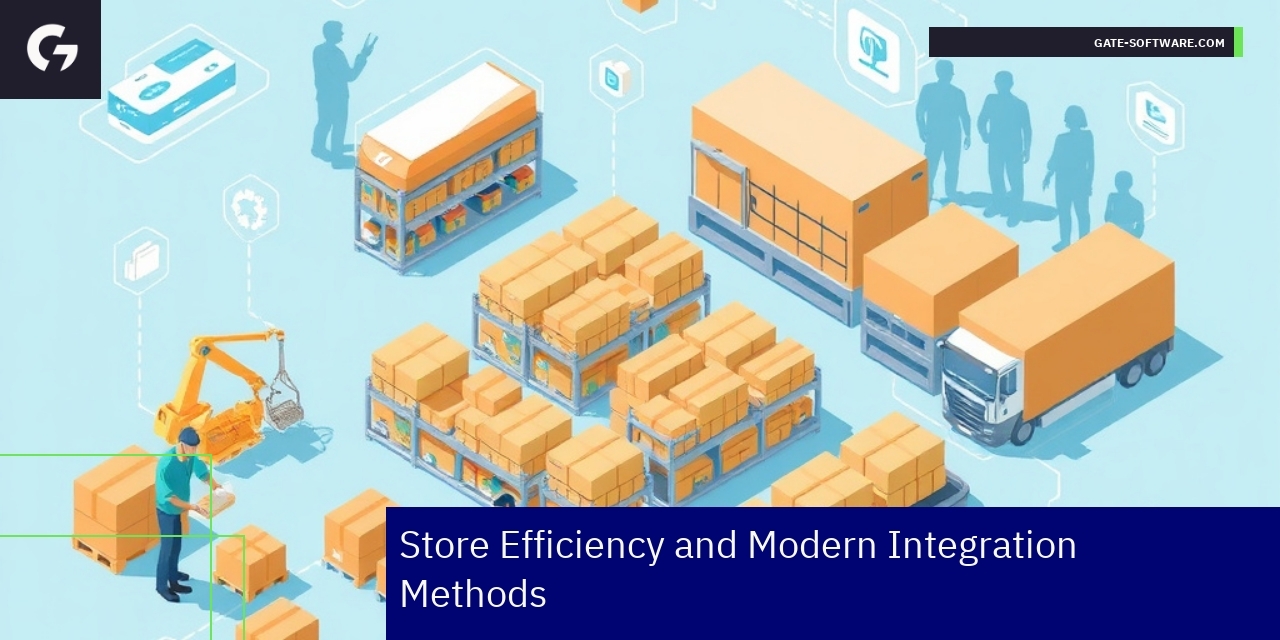
Store Efficiency and Modern Integration Methods
In the realm of e-commerce, especially within the Magento 2 environment, store efficiency is pivotal for maintaining competitive agility and delivering superior customer experiences. Performance is a continuous process; modern drag-and-drop tools keep your Magento 2 store agile and efficient by enabling quick adaptations to changing business needs without heavy reliance on specialized development. These tools support seamless integration with various third-party services and internal systems, streamlining workflows such as inventory management, pricing updates, and promotions deployment.
Order processing automation stands as a cornerstone of operational efficiency. Automating order workflows reduces manual errors, accelerates fulfillment, and ensures consistency across different sales channels. Leveraging modern integration methods, such as APIs and event-driven architectures, facilitates real-time data synchronization between the store and external services like payment gateways, logistics providers, and CRM systems. This results in faster processing times and improved reliability.
From the perspective of CTOs and Heads of Applications, adopting these modern integration frameworks not only enhances system scalability but also optimizes resource allocation, allowing IT teams to focus on innovation rather than maintenance. Gate-Software’s approach emphasizes maintaining WCAG compliance and robust UX/UI standards to ensure that efficiency does not come at the cost of accessibility or user experience.
Furthermore, architectures based on modular and service-oriented principles enable smoother upgrades and reduce downtime during platform enhancements or migration projects. This also supports cost optimization by minimizing custom code dependencies and streamlining maintenance.
In summary, achieving store efficiency and leveraging modern integration methods are critical for sustaining growth, improving customer satisfaction, and maintaining a healthy e-commerce ecosystem in Magento 2 environments. These strategies are aligned with Gate-Software’s values and solutions designed for forward-thinking enterprises focusing on UiR challenges.
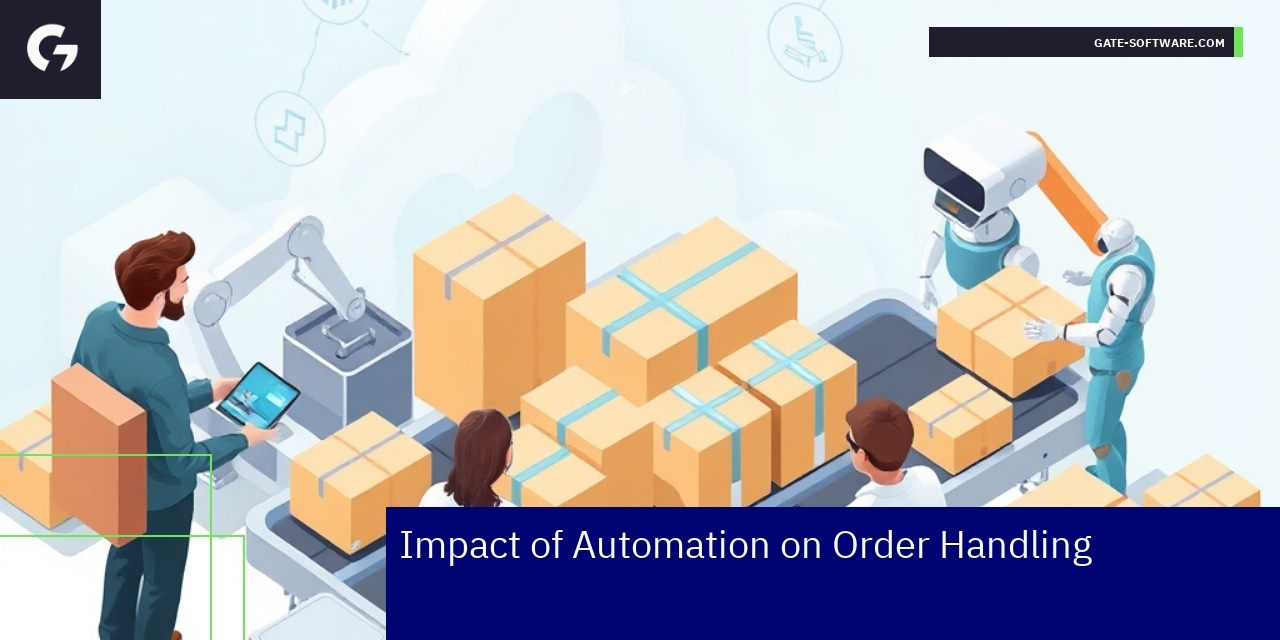
Impact of Automation on Order Handling
Automation in order handling significantly enhances operational efficiency by streamlining processes that traditionally relied on manual input. What is automated workflow? Order processing automation improves accuracy and speed, critical for customer satisfaction and operational success. By implementing automated systems, errors due to manual entry are minimized, which reduces the risk of costly mistakes and delays. This precision is essential for meeting customer expectations and maintaining trust.
Moreover, automation enables faster processing times by handling repetitive tasks such as order confirmation, inventory checks, and invoicing without delay. These improvements lead to quicker order fulfillment, which directly impacts customer experience positively. For decision-makers like CTOs, Heads of Applications, and eCommerce Managers, adopting such systems supports scalable growth and operational resilience.
Integration with platforms like Magento and adherence to standards such as WCAG also contribute to a seamless omnichannel experience, ensuring accessibility and usability. Additionally, automation allows for better tracking and monitoring of orders, providing valuable insights for ongoing optimization.
In summary, embracing automation in order handling is not only a technical upgrade but a strategic move that aligns operational capabilities with business goals, enhancing both efficiency and customer satisfaction. It is a fundamental component of modern UiR service management.

E-commerce Management and Order Processing
Effective e-commerce management and order processing are critical for ensuring seamless sales operations and customer satisfaction within the UiR domain. Leveraging Magento automation testing in practice verifies order workflows, significantly reducing errors and enhancing management oversight. This approach ensures that every aspect of the order lifecycle—from initial placement through fulfillment and post-sale support—is optimized for accuracy and efficiency.
Magento automation testing helps identify potential bottlenecks and inconsistencies within order processing systems early, allowing rapid adjustments that maintain smooth operations and uphold high service levels as defined in SLA agreements. Such automation supports compliance with best practices around UX/UI design standards and accessibility requirements like WCAG 1.1, creating an inclusive and user-friendly purchasing experience.
For CTOs and Heads of Applications, this translates to streamlined workflows that are easier to monitor and maintain, minimizing downtime and manual intervention. It also facilitates cost optimization by detecting redundant processes or system inefficiencies. The result is a robust platform capable of supporting complex B2B and B2C interactions inherent in e-commerce environments, aligned with Gate-Software’s strategic principles and the unique needs of the key personas such as eCommerce Managers and Architects.
Integrating Magento automation testing within order processing not only improves operational accuracy but also empowers decision-makers with actionable insights based on real-time data. This capability is essential for adapting marketing strategies and communication plans dynamically, ensuring competitive responsiveness while preserving core brand voice and values. Adhering to MagentoOneS™ methodologies further guarantees consistent hosting and monitoring quality, enhancing overall system resilience.
In summary, mastering e-commerce management and order processing in the UiR context through Magento automation testing enables organizations to deliver high-quality customer experiences, optimize internal processes, and support scalable growth in dynamic digital commerce landscapes.
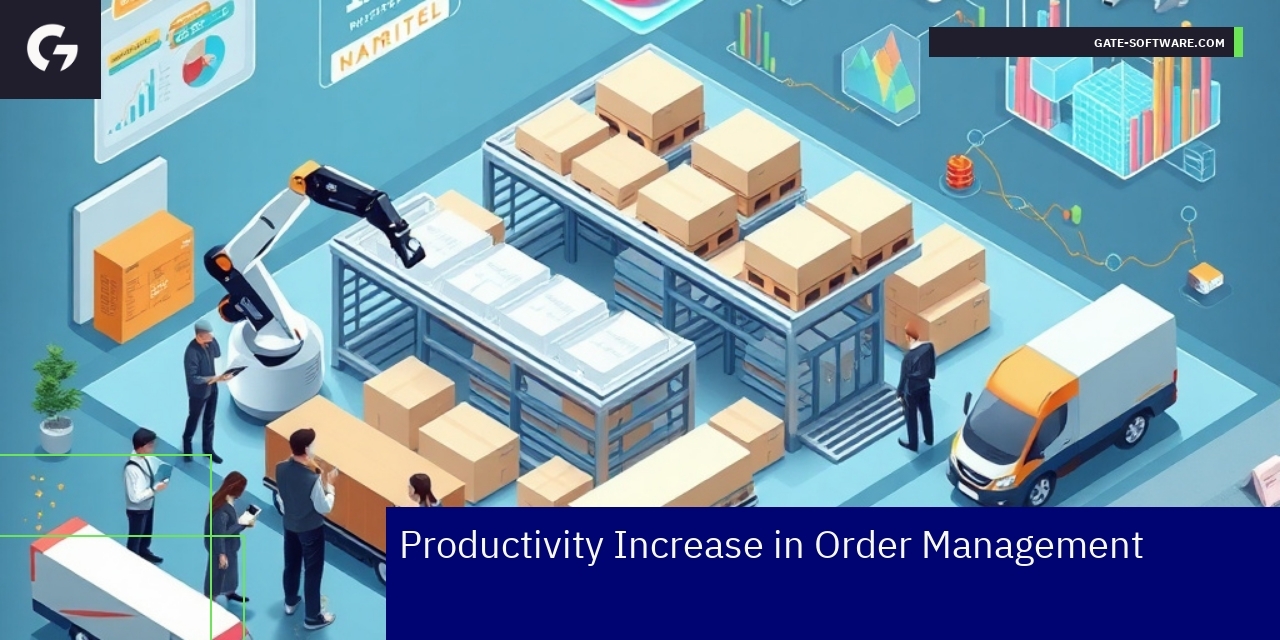
Productivity Increase in Order Management
In the realm of UiR services, optimizing order management processes is crucial to enhance productivity and ensure seamless operations. Gate-Software’s approach focuses on leveraging advanced Magento platform capabilities combined with tailored UX/UI enhancements to streamline order workflows. One critical aspect is the integration of automation tools that reduce manual intervention, minimizing errors and accelerating order processing times. This technology-driven orchestration aligns with WCAG 1.1 standards to maintain accessibility while fostering efficiency.
Addressing the technical architecture, the collaboration between Architects and Heads of Applications ensures that order management systems are scalable and resilient. They implement performance optimizations that manage high transaction volumes without compromising system responsiveness, which is essential for maintaining customer satisfaction and operational continuity.
Moreover, embedding strategic insights from eCommerce Managers enables customized workflows that reflect specific business rules, such as segmented order priorities and personalized user experiences. This granular control not only boosts order handling speed but also supports complex B2B scenarios where order accuracy and traceability are paramount.
Leveraging Gate-Software’s expertise in MagentoOneS™ hosting, monitoring, and SLA compliance, businesses benefit from continuous performance tuning and rapid incident resolution. This infrastructure underpins sustainable productivity growth by ensuring that order systems remain robust under peak loads.
Overall, increasing productivity in order management within UiR is achieved through a synergy of technical excellence, UX/UI precision, and strategic business alignment, all driven by Gate-Software’s comprehensive service framework. This holistic methodology ensures that organizations can effectively manage orders while delivering optimal digital experiences, maintaining efficiency, and supporting growth objectives.

Store Efficiency in Sales Process Management
Optimizing store efficiency in sales process management is critical for organizations leveraging UiR services to enhance their e-commerce performance. Efficient management of sales processes directly impacts operational costs, customer satisfaction, and revenue growth. From the perspective of the Architect and eCommerce Manager personas, integrating Magento 2 marketing automation revealed enhances sales workflows, improving overall store efficiency by enabling seamless coordination of marketing strategies with sales operations.
Key challenges addressed in this domain include streamlining customer journey touchpoints and ensuring real-time synchrony between marketing campaigns and backend sales processes. MagentoOneS™, combined with UiR-focused solutions, supports robust workflow automation that reduces manual errors and accelerates lead conversion cycles. Additionally, leveraging WCAG 1.1 standards within UX/UI optimizations ensures that store interfaces are accessible, thus broadening the customer base and simplifying sales interactions.
Gate-Software’s approach incorporates continuous monitoring, SLA adherence, and proactive hosting infrastructure management to maintain peak system responsiveness. This creates an environment where sales teams and marketing efforts operate without disruption, facilitating data-driven decision-making and scalable sales process management. Employing these technologies and methodologies within the UiR framework aligns with Gate-Software’s communication strategy and brand voice, driving digital transformation outcomes for CTOs and Heads of Applications targeting enhanced store efficiency.

Automation in Sales Management
Following best practices for optimal infrastructure performance with Magento ensures sales automation is seamless and robust. In the context of UiR, achieving effective automation in sales management requires addressing specific technical and business challenges such as maintaining system scalability, ensuring integration reliability, and optimizing process workflows to meet high standards for user experience and accessibility, as outlined by WCAG 1.1 standards.
A key aspect is the seamless integration of automation tools within the Magento ecosystem, allowing for efficient handling of sales orders, inventory updates, and customer interactions. This integration supports real-time data synchronization, essential for maintaining accurate sales pipelines and enabling proactive decision-making by the eCommerce Manager and CTO roles.
Furthermore, implementing automation with adherence to Gate-Software’s established practices, including performance monitoring, hosting stability, and SLA compliance, mitigates risks of downtime or latency. This ensures business continuity and supports strategic business growth aligned with company values.
Another vital factor is customization of automation workflows to align with the personas involved—Architects, eCommerce Managers, and Head of Applications—ensuring that the solutions are tailored to their operational needs and communication preferences. This results in a balanced system where technical robustness meets practical usability, optimizing sales efficiency without compromising on UX/UI quality.
Incorporating automation into sales management also supports data-driven marketing and communication strategies as outlined in the Content Strategy 5.0 and social media approaches. Automation expedites the deployment of personalized campaigns, enhances CRM workflows, and supports social selling, thus broadening sales reach and improving conversion metrics.
Overall, by leveraging Magento’s capabilities combined with Gate-Software’s strategic frameworks and standards, sales automation in UiR can be realized as a scalable, robust, and efficient system that fulfills technical requirements and business objectives while maintaining compliance with Polish SEO phrases such as zapewnienie najwyższej jakości obsługi klienta and optymalizacja procesów sprzedaży.

Productivity Gains in Sales Processes
In the context of UiR, enhancing productivity in sales processes is crucial for achieving operational excellence and driving revenue growth. Faster sales cycles enable businesses to respond promptly to market demands, reduce lead time, and improve overall conversion rates. Implementing an efficient Magento integration can streamline key operations, from inventory management to customer interactions, thus accelerating the sales funnel without compromising data integrity or user experience.
Optimizing sales processes begins with leveraging the right technology stack that supports scalability and seamless data exchange. By connecting Magento Integration with platforms like Base.com, organizations can automate workflows, synchronize data points, and gain actionable insights in real-time. This integration fosters better collaboration between sales and marketing teams and ensures consistency across multiple channels, significantly reducing manual errors and redundant tasks.
Moreover, focusing on intuitive UX/UI improvements and compliance with WCAG standards fosters a more accessible and engaging shopping experience. This accessibility not only increases customer satisfaction but also broadens the market reach, especially when addressing diverse user groups identified in Gate-Software’s buyer personas such as eCommerce Managers and Architects. These advances collectively contribute to enhanced productivity in sales by minimizing obstacles in the customer journey and reducing operational friction.
Leveraging Gate-Software’s strategic approach, which includes continuous monitoring and SLA-driven support, guarantees sustained performance gains. This ensures that Magento platforms operate at peak capacity, responding dynamically to evolving business needs and technological challenges typical in the UiR domain. Consequently, enterprises can better manage resource allocation, scale their sales efforts, and maintain competitive agility in an increasingly digital marketplace.
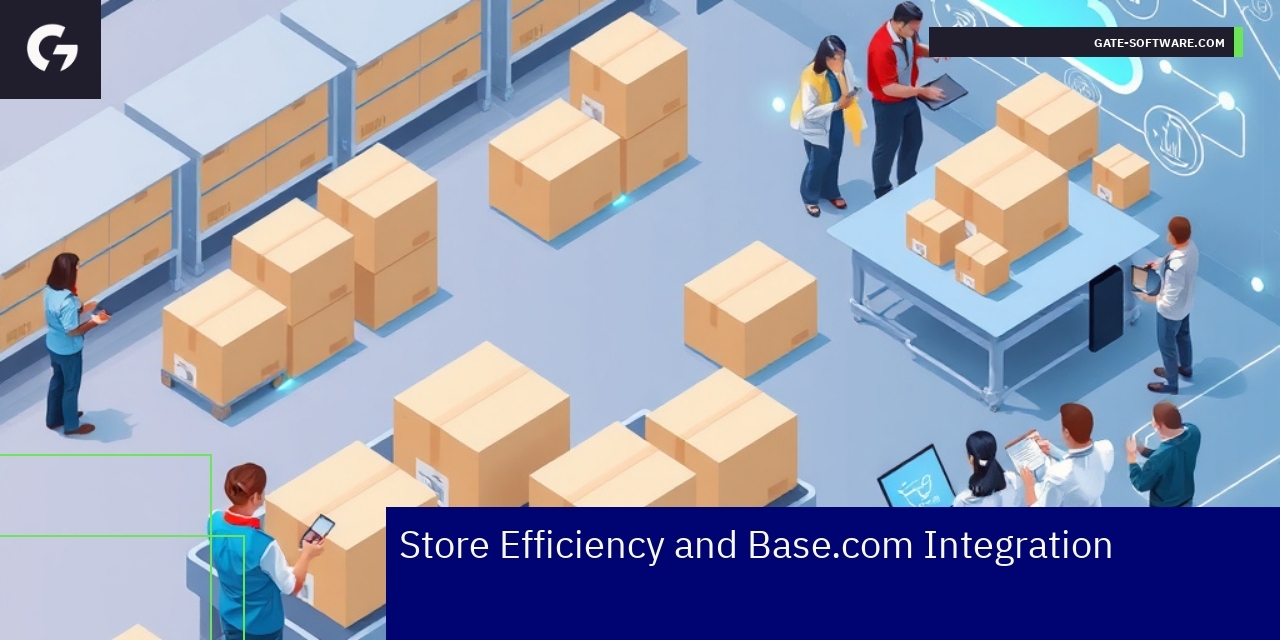
Store Efficiency and Base.com Integration
Integrating with Base.com through automated workflows significantly enhances store efficiency by streamlining order processing, inventory management, and data synchronization. For decision-makers such as CTOs and Heads of Applications, leveraging this integration means reducing manual interventions and minimizing errors, which are critical for maintaining operational agility in eCommerce environments focused on UiR.
Automated workflow in the context of Base.com connection allows for seamless data exchange between Magento platforms and Base.com’s systems, ensuring real-time updates and consistent product information across sales channels. This synchronization supports better stock control, improving the accuracy of availability data and enabling quicker responses to customer demand fluctuations. It also ensures that product listings adhere to UX/UI standards and WCAG compliance, which are essential for optimal user experience and accessibility.
Moreover, integration facilitates efficient management of orders and returns, leveraging Gate-Software’s expertise in creating scalable and compliant solutions tailored to complex eCommerce landscapes like B2B and UiR. The reduction in manual tasks frees up valuable resources to focus on strategic activities such as optimizing content strategy and marketing communications, enhancing overall Store Efficiency and supporting business growth goals.
In conclusion, Base.com integration via automated workflows is a strategic asset for stores aiming to excel in today’s competitive eCommerce ecosystem. It aligns operational efficiency with the high standards expected in Gate-Software’s project environments, helping clients achieve streamlined workflows, enhanced data accuracy, and superior user engagement.
E-commerce Management and Automation 🧩 ⚙️ 🚀
Continuous Improvement and Scalability
Compliance and Security Considerations

Process Automation When Connecting Base.com
Process automation plays a critical role when connecting Base.com with Magento platforms, particularly within the scope of UiR services. Integrating diverse systems requires precise Synchronization protocols to ensure data consistency and operational efficiency. Automation frameworks reduce manual intervention, enabling seamless data exchange between Base.com and Magento, which is essential for maintaining up-to-date product catalogs, inventory levels, and order processing workflows.
Magento automation testing in practice is essential when integrating diverse platforms like Base.com. Robust automation testing frameworks address potential integration challenges early by validating API connections, data mapping accuracy, and transaction workflows under different scenarios. This proactive testing mitigates risks of data loss, duplicated entries, or synchronization delays, which could impact user experience and business operations.
Successful process automation when connecting Base.com must incorporate error handling and recovery mechanisms. Continuous monitoring supported by automated alerts ensures that discrepancies or failures in data flows are promptly addressed without service disruption. The complexity of multi-platform integrations requires aligning workflows with business rules, such as handling product variants and pricing updates, while respecting Magento’s extension environment and Base.com’s API specifications.
From a business perspective, automation significantly reduces operational costs and enhances agility, allowing teams to focus on strategic tasks rather than manual data entry or reconciliation. For eCommerce Managers and Heads of Applications, automation ensures that Magento automation testing in practice delivers consistent performance, reduces time-to-market, and supports scalability.
Gate-Software’s expertise in UiR integrations includes tailored automation tooling and comprehensive testing strategies that meet these technical challenges. By leveraging automated validation and orchestration tools, Gate-Software helps businesses maintain high system reliability and compliance with UX/UI guidelines and WCAG standards during integration projects.
In summary, integrating Base.com with Magento platforms through process automation not only streamlines operations but also safeguards data integrity and elevates the customer experience, all while optimizing resource allocation in line with enterprise-level expectations.

E-commerce Management with Base.com
Effective e-commerce management with Base.com requires a comprehensive approach that integrates seamlessly with existing platforms such as Magento 2 to ensure optimal performance and scalability. The Magento integration with Base.com streamlines operations, offering advanced synchronization capabilities for product data, inventory management, and order processing. This integration is crucial for maintaining a consistent and efficient user experience aligned with WCAG 1.1 standards and UX/UI best practices.
By leveraging Base.com within the UiR context, eCommerce Managers and CTOs can ensure robust maintenance and monitoring processes supported by Gate-Software’s proven methodologies. This includes SLA adherence, cost optimization, and continuous performance monitoring to prevent downtime and ensure service reliability. Additionally, the integration supports personalized marketing strategies and detailed persona targeting, optimizing engagement for key stakeholders like the Architect and Head of Applications.
Security and compliance are integral, with the system designed to meet enterprise requirements and deliver seamless communication across all user touchpoints. Employing Base.com alongside Magento also facilitates real-time analytics and reporting, empowering decision-makers with actionable insights to refine their e-commerce strategies effectively.
Overall, Base.com enhances e-commerce management by enabling efficient data handling, ensuring high availability, and supporting strategic marketing initiatives that align with Gate-Software’s core values and brand voice. This holistic integration addresses real challenges faced in UiR, promoting scalable growth and operational excellence.

Productivity Boost from Base.com Integration
Performance is a continuous process — integrating with Base.com can significantly raise store productivity. For decision-makers such as CTOs, Heads of Applications, and eCommerce Managers, leveraging this integration means optimizing operational workflows and improving system responsiveness critical to maintaining competitive e-commerce environments.
Integrating Base.com into your UiR framework enhances real-time data synchronization and automation of core processes, reducing manual interventions and minimizing errors. This leads to improved efficiency and scalability, particularly beneficial for complex Magento platform ecosystems where maintaining uptime and swift response to market changes are essential.
Moreover, this integration supports advanced monitoring and SLA compliance, aligning with Gate-Software’s best practices in platform maintenance and cost optimization. By streamlining these processes, organizations can meet WCAG standards more effectively and implement user-centric UX/UI improvements, ultimately elevating the customer experience and supporting strategic marketing communications.
Incorporating Base.com integration directly addresses challenges like slow order processing and inventory management delays by enabling seamless resource management and stronger system interoperability. This strengthens the IT infrastructure’s robustness, positioning enterprises to sustain growth while ensuring quality and reliability in their digital commerce operations. The integration’s ability to enhance productivity also empowers teams to focus on innovation and strategic initiatives rather than operational firefighting.
Store Efficiency and Base.com System Integration
Best practices for optimal infrastructure performance with Magento are applied to ensure smooth Base.com integration. Achieving high store efficiency requires a meticulous approach to system architecture and operational workflows, particularly when integrating with complex platforms like Base.com. The process leverages Magento’s scalable infrastructure capabilities to handle varying loads and transaction volumes, ensuring resilience and responsiveness under heavy usage.
Key implementation strategies include advanced caching solutions to reduce latency and optimize resource utilization, alongside robust API management that guarantees secure and reliable data exchange with Base.com. These measures collectively address typical challenges such as data synchronization delays and transaction bottlenecks, which can significantly impact store performance and customer experience.
From an operational perspective, continuous monitoring tools play a critical role in maintaining optimal system health. Real-time analytics and alerting enable rapid detection and resolution of potential issues, reducing downtime risk and preserving seamless service delivery. Furthermore, adherence to Magento’s technical best practices supports a modular and maintainable integration, facilitating faster updates and adaptability in response to evolving business needs.
By embedding these best practices within the Base.com system integration, organizations ensure their e-commerce platforms operate efficiently at scale, providing a stable foundation for growth while maintaining high standards of UX/UI as outlined in Gate-Software’s strategic guidelines. Store efficiency thus becomes a strategic asset, driven by technical excellence and aligned with comprehensive Magento infrastructure optimization.
Process Automation in Magento and Base.com Integration
Process automation within the Magento and Base.com integration environment plays a crucial role in streamlining e-commerce operations, especially under the UiR service focus. Automation in this context targets optimizing repetitive workflows, reducing manual errors, and enhancing overall operational efficiency for eCommerce Managers, CTOs, and Heads of Applications. The integration enables seamless synchronization of product data, inventory management, and order processing between Magento platforms and Base.com, ensuring consistent and accurate data flow.
Understanding what is automated workflow lets merchants maximize automation benefits using Base.com, by clarifying how automated tasks replace manual interventions and thus speed up order fulfillment cycles. This allows decision-makers to allocate resources strategically, focus on higher-value activities, and adapt quickly to market demands. Magento’s flexible architecture facilitates customization of these automated workflows to match specific business needs in UiR, such as handling complex product catalogs or multi-channel sales.
The integration supports multiple Magento versions, ensuring that businesses using different system iterations can leverage these automation capabilities without disruption. The process automation includes real-time updates, error handling mechanisms, and scalable task scheduling, with an emphasis on ensuring compliance with UX/UI standards and accessibility guidelines (including WCAG 1.1), which Gate-Software upholds in its implementations.
By automating key processes, companies achieve better data consistency, reduce operational costs, and improve customer experience — core objectives in the UiR service domain. Leveraging Gate-Software’s expertise enables enterprises to tailor the Base.com integration fully aligned with their digital transformation strategies and marketing plans, supporting sustainable growth and stability on Magento platforms.

E-commerce Management and Magento Versions
Effective e-commerce management requires a deep understanding of Magento versions and their differences, especially concerning integration, maintenance, and scalability. For CTOs, Heads of Applications, and eCommerce Managers, managing Magento platforms involves orchestrating seamless updates and ensuring that each version complies with business goals and technical requirements.
Magento automation testing in practice helps ensure compatibility across versions for effective management. This approach systematically verifies functionalities, preventing disruptions in user experience and backend processes, which is critical for maintaining uptime and reducing operational risks. Gate-Software leverages automation to streamline version migrations, ensuring smooth transitions while preserving customized extensions and integrations necessary for e-commerce success.
Moreover, attention to UX/UI standards and WCAG compliance embedded in Magento deployments supports accessibility and enhances customer satisfaction across devices. E-commerce Managers benefit from detailed audits supported by automated testing, enabling precise identification of version-specific issues and optimization opportunities.
SLA agreements and hosting solutions tailored to MagentoOneS™ platforms ensure robust performance and reliable monitoring, further strengthening e-commerce operations. This comprehensive management approach aligns with Gate-Software’s commitment to delivering high-quality, scalable Magento environments that respond dynamically to evolving business needs.
In summary, aligning Magento version management with automation, strategic audits, and performance monitoring is essential. This ensures that businesses not only meet operational expectations but also drive growth through technological resilience and user-centric design.
Store Efficiency Related to Magento Versions
Efficient store performance across different Magento versions is a critical concern for eCommerce decision-makers such as CTOs, eCommerce Managers, and Heads of Applications. Magento’s evolving architecture influences system resource use, scalability, and integration capabilities, directly impacting operational costs and user experience. With UiR (Utrzymanie i Rozwój) priorities, it is vital to assess the benefits and challenges tied to each Magento version in terms of stability, speed, and maintenance overhead.
Newer Magento versions often introduce significant backend improvements and enhanced UX/UI features that align with WCAG standards, yet they may also require infrastructure upgrades or code refactoring to leverage fully. Migrating from Magento 1 to Magento 2, for instance, typically involves a detailed roadmap incorporating SLA agreements and hosting optimizations to minimize downtime and ensure compliance with accessibility (WCAG 1.1). This process affects store efficiency by reducing legacy bottlenecks but demands expert project takeover strategies to manage risk and cost.
Cost optimization initiatives within UiR also emphasize the integration of monitoring tools and adherence to standards that improve resource allocation and streamline updates. Gate-Software’s approach includes constant performance audits and targeted content strategies to maintain Magento’s responsiveness and secure high availability. Using MagentoOneS™ principles and Gate-Software’s proprietary SLA frameworks, businesses can sustain efficient store operation while adapting to changing marketing and communication plans that reflect current consumer behavior.
In summary, maintaining store efficiency related to Magento versions requires a balance of technical upgrades, rigorous compliance with UX/UI practices, and strategic management of migration and monitoring — all aligning with Gate-Software’s values and eCommerce best practices to support long-term growth.
Process Automation Depending on Version
Process automation within Magento environments varies significantly depending on the specific version utilized. The need to align automation capabilities with the version in use is critical to maximizing operational efficiency and ensuring seamless integration. Magento’s evolving architecture across versions impacts automation workflows, requiring tailored approaches that leverage built-in features and extensions compatible with each version.
Magento speed and performance optimization remain pivotal in this context. Faster Magento implementations enable real-time automation processes that enhance user experience and operational throughput. This is particularly important for UiR-focused services, where automation ensures that complex workflows, such as order processing, inventory updates, and personalized customer experiences, are executed swiftly and accurately.
Moreover, integrating Magento stores with platforms like Base.com enhances the automation potential by bridging functionalities between systems. This integration supports automated data synchronization, order management, and customer interactions, significantly reducing manual interventions and error rates. Gate-Software’s expertise in aligning Magento store integrations with specific version capabilities ensures robust process automation tailored to the technological landscape of the client.
By understanding the nuances of each Magento version’s automation potential and leveraging suitable tools and integrations, businesses can optimize their e-commerce processes, reduce operational costs, and deliver superior customer experiences without compromising on system performance or compliance with WCAG standards. The strategic alignment of automation processes with Magento version features ultimately drives sustained e-commerce growth and technical excellence.

Productivity Gains from Integration
In the dynamic landscape of eCommerce, leveraging integration between Magento 2 and Base.com marketing automation is a strategic imperative for CTOs, Heads of Applications, and eCommerce Managers. This synergy unlocks substantial productivity improvements by automating complex marketing workflows, reducing manual effort, and enabling a data-driven approach to customer engagement.
The Magento 2 marketing automation revealed uncovers benefits gained through Base.com integration such as streamlined campaign management, where repetitive tasks like segmentation and email scheduling are effortlessly automated. This translates into more agile marketing execution and faster response times to market trends. Furthermore, unified customer data management ensures accurate insights across platforms, enabling personalized marketing communication finely tuned to customer needs.
Integrating these systems also facilitates leveraging full Polish SEO phrases like „automatyzacja marketingu Magento” directly in campaign content and metadata, enhancing search visibility. This localized SEO optimization drives higher-quality traffic and improves conversion rates in the Polish market, aligning with regional business goals.
Additionally, the automation integration provides robust analytics and reporting, offering clear measurement of marketing ROI and enabling continuous optimization. This empowers decision-makers to allocate resources more effectively, focusing on initiatives with measurable impact.
In summary, the Magento 2 marketing automation revealed uncovers benefits gained through Base.com integration by increasing operational efficiencies, elevating targeted marketing efforts, and embedding crucial SEO strategies. These productivity gains contribute to a scalable and competitive eCommerce infrastructure tailored to the needs of enterprise-level stakeholders.

Store Efficiency from Integration Benefits
Ensuring store efficiency through integration benefits is essential for maintaining a competitive edge in eCommerce environments leveraging Magento platforms. Proper integration enhances operational workflows, reduces downtime, and facilitates seamless data exchange across systems, which directly impacts user experience and business agility.
Optimizing infrastructure with Magento requires adherence to best practices in system architecture, monitoring, and performance tuning. Gate-Software’s expertise in MagentoOneS™, hosting, and monitoring services ensures that integrations align with established SLA standards, thus safeguarding stability and scalability. Such rigorous infrastructure management is vital to support complex integrations that involve multiple touchpoints and data streams.
A critical aspect of integration efficiency lies in addressing UX/UI challenges and compliance with WCAG accessibility standards, which Gate-Software prioritizes in all implementations. These practices not only improve frontend performance but also enhance accessibility, ensuring broader customer reach and regulatory compliance.
From the perspective of key decision-makers such as architects and Heads of Applications, the focus on integration must also encompass cost optimization and platform maintenance. Gate-Software’s approach involves comprehensive audits and migrations to streamline infrastructure, reducing overhead while enhancing speed and reliability. This strategic oversight supports eCommerce Managers and CTOs in achieving measurable business outcomes.
Incorporating integration benefits into the overall Content Strategy 5.0 and social media communications further fortifies brand positioning by conveying value and innovation in digital commerce. Systematic coordination of these elements maximizes the utility of Magento’s capabilities, fostering sustained growth and efficient store management.
This integrated approach ensures that the full range of benefits—from operational improvements and compliance to marketing strategy alignment—are realized, delivering tangible returns and maintaining high standards of technical excellence central to Gate-Software’s value proposition.

Automation as a Key Benefit
Automation is a critical factor in achieving continuous performance in the Base.com integration within UiR services. The complexity of integration processes can often lead to delays, errors, and resource inefficiencies. By leveraging automation, Gate-Software ensures streamlined workflows that reduce manual intervention, minimize operational risks, and accelerate time-to-market. This seamless automation enables consistent execution of repetitive tasks, fostering better compliance with UX/UI standards and WCAG 1.1 accessibility requirements crucial for user satisfaction and legal adherence.
In the context of UiR, automation not only improves the technical integration but also supports strategic objectives by aligning with key personas such as Architects, eCommerce Managers, and Heads of Applications. These stakeholders benefit from transparent, efficient processes that enhance overall system robustness and scalability. Automation facilitates ongoing monitoring and optimization of Magento platforms through proactive alerts and SLA-driven maintenance, ensuring that performance benchmarks are consistently met without compromising on system integrity.
Moreover, automation enhances collaboration across business and technical teams by embedding standardized communication and reporting frameworks derived from Gate-Software content strategies. This approach optimizes resource allocation and cost efficiency, directly impacting the scalability of e-commerce and B2B operations. Ultimately, automation serves as the backbone of performance continuity in Base.com integrations, positioning businesses to respond agilely to market changes while sustaining high-quality UX and operational excellence.
E-commerce Management and Integration Complexity
Managing e-commerce platforms involves navigating significant complexity, particularly when integrating diverse systems and technologies. The challenge increases with the growing need for seamless workflows, encompassing everything from product information management to order processing and customer interactions. This complexity is often exacerbated by legacy systems that require integration with newer cloud-based solutions, demanding careful architecture and planning.
In the context of UiR services, addressing integration complexity is crucial for maintaining operational efficiency and scalability. Gate-Software emphasizes the importance of robust middleware and API strategies to ensure smooth communication between systems such as Magento platforms, ERP solutions, and third-party marketing tools. This approach supports real-time data synchronization, reducing errors and enhancing the overall customer experience.
E-commerce management also entails compliance with standards like WCAG 1.1 for accessibility and adherence to UX/UI best practices. These elements, coupled with responsiveness and performance optimization, require continuous monitoring and improvement. Gate-Software’s expertise in conducting UX/UI audits and facilitating migrations ensures that platforms remain user-friendly and compliant without sacrificing speed or functionality.
Overall, the integration complexity in e-commerce demands a holistic view combining architecture design, strategic tool selection, and ongoing process automation. This ensures business agility and supports scaling up operations while maintaining cost efficiency and high service quality. By leveraging Gate-Software’s knowledge and methodologies tailored to UiR, decision-makers can streamline operations and effectively manage the multifaceted nature of e-commerce ecosystems.

Productivity and Process Simplification
In the dynamic environment of UiR (User Interface & Interaction), productivity and process simplification are essential levers for technology and eCommerce leaders aiming to optimize operational workflows and reduce integration complexity. The challenge lies in designing processes that are both efficient and adaptable to evolving user needs, while maintaining alignment with business objectives.
Gate-Software’s Content Strategy 5.0 underscores the significance of clear, consistent communication across user touchpoints. This clarity reduces workflow redundancies and accelerates decision-making. By simplifying UI/UX interactions through well-defined processes, teams can minimize friction and improve overall throughput. This approach not only streamlines technical workflows but also enhances the user experience, which directly impacts conversion rates and customer satisfaction.
The TOYA framework (Take Ownership, Yield Action) aligns teams around accountability, empowering them to proactively resolve bottlenecks and respond swiftly to system feedback. Embedding this culture within UiR-related workflows drives faster incident resolution, better SLA adherence, and continuous improvements in automation testing cycles. Such ownership fosters streamlined deployment processes and more reliable Magento platform integrations, crucial for managing complex B2B and eCommerce ecosystems.
Leveraging targeted article categories from Gate-Software’s knowledge repository enables decision-makers to identify actionable insights on process streamlining and automation testing best practices. These insights are invaluable in simplifying Magento workflows, reducing manual intervention, and cutting integration overhead.
Ultimately, optimizing productivity in UiR by focusing on process simplification equips CTOs, Heads of Applications, and eCommerce Managers with scalable and efficient systems. This results in faster time-to-market, lower total cost of ownership, and an agile response to digital transformation demands—essential capabilities for competitive eCommerce and B2B platforms powered by Magento.

Store Efficiency with Simple Integrations
In today’s competitive e-commerce environment, store efficiency is critical, particularly when using platforms like Magento. Why does Magento speed matter? Effective simplification leads to faster, smoother stores, directly impacting both user experience and conversion rates. A streamlined Magento setup ensures that pages load swiftly, minimizing the risk of customer drop-off due to latency or clunky interfaces. Achieving this requires integration approaches that reduce complexity rather than add to it, enabling systems to communicate seamlessly without overhead.
Simple integrations not only improve performance but also reduce maintenance costs and potential points of failure. The efficient synchronization of data between Magento and other business systems like CRM, ERP, or marketing platforms supports agile operations and timely decision-making. For decision-makers such as CTOs or Heads of Applications, prioritizing clarity and lean architectures in integrations can mitigate technical debt and simplify troubleshooting.
In addressing whether you can test integration before purchase, it is essential to highlight the practical benefits this provides. Testing allows teams to validate compatibility, performance, and security aspects under real conditions without committing upfront. It supports risk management and enables fine-tuning to align with store requirements. Gate-Software solutions emphasize providing test environments or trial periods as part of their service models, ensuring that integrations meet your expectations without unexpected disruptions.
Overall, efficient and simple integration strategies tuned for Magento’s architecture can significantly improve store performance while aligning with business growth objectives and operational stability. Leveraging expertise in UiR and deeper technical knowledge ensures your platform remains robust and responsive, satisfying both users and internal stakeholders.

Productivity Gains from Testing Integration
Integrating comprehensive testing within UiR service processes delivers significant productivity gains by detecting and resolving infrastructure issues early in the Magento environment lifecycle. Best practices for optimal infrastructure performance with Magento emphasize the importance of pre-purchase testing to avoid issues that could impact operational continuity and user experience. Thorough testing frameworks enable identification of potential bottlenecks and incompatibilities before deployment, minimizing costly downtime and post-release fixes.
Adopting a systematic approach to testing integration aligns development and operations teams around shared quality metrics and reduces deployment risk. This approach supports scalable infrastructure that adapts to changing load demands and scalability challenges inherent to Magento platforms. By running performance benchmarks and UX/UI audits aligned with WCAG standards, teams ensure compliance, accessibility, and responsive user journeys, crucial under the broad categories involving UiR.
Pre-purchase testing plays a pivotal role in solid infrastructure planning. It allows businesses to validate that the selected Magento hosting, monitoring, and support services meet the necessary SLA requirements for uptime and performance. Early validation mitigates risks of degradation during peak sales or marketing campaigns, protecting the revenue-generating aspects of the platform. Key personas such as Architects and eCommerce Managers benefit from integrating these quality gates into their workflows to ensure infrastructure robustness.
Furthermore, integrating continuous testing protocols speeds up the feedback loop between development and operational deployments, enabling rapid iteration and proactive issue resolution. This iterative testing-driven development model enhances overallquality and reliability. The focus remains on aligning technical solutions with business objectives, such as cost optimization, customer experience enhancement, and seamless platform migrations.
The productivity gains from this testing integration manifest not only in reduced downtime but also in operational efficiency. Gate-Software’s strategic frameworks underpin these practices by coupling testing with monitoring tools and clear communication channels across teams. This synergy boosts overall project delivery timelines and responsiveness to emerging challenges within UiR contexts. Maintaining a stable and optimized Magento infrastructure directly supports business continuity and growth objectives while ensuring compliance with standards and internal governance.
In conclusion, productivity gains from testing integration within UiR environments are substantial when best practices for optimal infrastructure performance with Magento are followed. Pre-purchase testing is vital to avoid issues and safeguard platform reliability. Optimized workflows, informed decision-making by key personas, and adherence to SLA, UX/UI, and WCAG standards collectively contribute to an agile, scalable, and resilient Magento ecosystem that supports Gate-Software’s strategic goals and client satisfaction.

Store Efficiency and Testing Opportunities
In the context of UiR services, optimizing store efficiency and systematically identifying testing opportunities is essential for maintaining competitive eCommerce platforms. A key focus lies in ensuring Magento 2 performance, where your Magento 2 performance checklist (summary) includes testing as a critical step for efficiency. Rigorous testing procedures encompass load testing, functional testing, and UX/UI audits, all aiming to minimize downtime and maximize responsiveness.
Testing opportunities should be aligned with real traffic patterns and user behaviors, ensuring that peak loads do not degrade store efficiency. Tools for monitoring and automated testing frameworks play a pivotal role in this, providing continuous insights into performance bottlenecks. Integrating these processes with ongoing cost optimization and SLA adherence guarantees a stable platform ready for scaling.
Moreover, testing must incorporate accessibility standards such as WCAG 1.1, reflecting commitment to inclusive design. Gate-Software’s approach incorporates these dimensions, enabling technical teams like Architects and Heads of Applications to validate implementations against business goals effectively.
Leveraging testing insights also informs marketing and content strategies by identifying areas requiring UX/UI improvements, supporting higher conversion rates. This comprehensive approach ensures that store efficiency gains are sustainable and transparent, critical for CTOs and CDOs managing evolving digital commerce ecosystems.

Automation and Pre-Purchase Testing
Automation and pre-purchase testing play a critical role in maintaining the reliability and efficiency of Magento 2 marketing automation workflows within UiR services. Testing acts as a safeguard, ensuring that automated processes perform as expected before customer interaction, thereby reducing the risk of errors that could affect user experience or transactional integrity. This proactive approach enables eCommerce teams, including eCommerce Managers and Heads of Applications, to implement robust automation strategies with confidence.
In the context of UiR, where seamless integration and operational resilience are paramount, pre-purchase testing serves multiple purposes. It validates the correct functioning of automation triggers, workflow sequences, and data integrity, aligning with WCAG compliance and UX/UI standards. By doing so, it supports not only operational excellence but also strategic objectives such as enhanced customer engagement and conversion optimization.
Furthermore, rigorous pre-purchase testing mitigates potential disruptions in personalized marketing campaigns by ensuring that segmentation and targeting rules work flawlessly. This aligns well with Gate-Software’s focus on tailored, data-driven marketing automation that respects brand voice and strategic communication guidelines.
From a technical standpoint, Automation and Pre-Purchase Testing also enable the early detection of integration issues with MagentoOneS™, hosting, and monitoring platforms, which are critical for maintaining performance benchmarks and SLA commitments.
In sum, this comprehensive testing strategy enhances the reliability of Magento 2 marketing automation workflows, providing a strategic advantage by safeguarding automated operations and optimizing the pre-purchase customer journey in UiR environments.

E-commerce Management and Specialized Services
Effective e-commerce management within the UiR domain requires a focused approach that addresses the unique challenges of maintaining, optimizing, and scaling online retail platforms. Gate-Software leverages deep expertise in MagentoOneS™, combining automation, monitoring, and robust hosting solutions to ensure stability and performance aligned with business goals. The complexity of e-commerce operations — ranging from transactional reliability to high availability — demands specialized services that support seamless integrations and continuous compliance with WCAG 1.1 standards for accessibility.
Cost optimization remains central in managing Magento platforms, particularly when automating routine tasks such as deployment, regression testing, and performance verification. These automation efforts reduce human error and accelerate release cycles, freeing eCommerce Managers and Heads of Applications to focus on strategic growth initiatives. Specialist audits of UX/UI not only enhance customer experience but also drive conversion metrics, making thorough scrutiny an essential component in e-commerce management.
From the perspective of decision-makers like CTOs and CDOs, Gate-Software’s provision of SLA-backed service level agreements and proactive monitoring ensures platform resilience and security. Additionally, tailored cooperation models and project takeovers allow businesses to scale resources efficiently while maintaining operational continuity. Integration of Magento automation testing in practice extends to leveraging expert services for better store management, fundamentally advancing the business’s ability to respond quickly to market needs while adhering to strategic content and communication plans.
In summary, specialized e-commerce management services within the UiR category combine technical excellence with strategic oversight, delivering measurable business value through enhanced performance, compliance, and customer experience, all supported by a mature, scalable Magento infrastructure.

Productivity Gains from Expert Services
In today’s evolving digital environment, leveraging expert services within the UiR category delivers substantial productivity gains by optimizing both user interface design and reporting capabilities. For decision-makers such as CTOs, Heads of Applications, and eCommerce Managers, these services translate directly into streamlined operations, improved user satisfaction, and enhanced data utilization.
User interface optimization, guided by principles from Content Strategy 5.0, ensures that applications provide intuitive and accessible experiences. This reduces user friction, accelerates onboarding, and minimizes operational delays. Employing expert services tailored to Polish market needs — incorporating SEO phrases like usługi optymalizacji UI and strategia treści online — helps maintain alignment with business goals while enhancing digital presence.
Simultaneously, reporting services grounded in the TOYA framework automate data insights and visualization, enabling timely decision-making. Customized, data-rich reports reduce manual efforts and help teams focus on strategic initiatives, reflecting phrases such as raportowanie danych naturally in content to boost local SEO impact.
Together, these UiR-focused expert interventions foster sustainable productivity increases by addressing the dual challenge of user experience enhancement and actionable data transparency. Integrating these solutions into Magento and related platforms ensures that organizations balance technological excellence with cost-effective management, embodying Gate-Software’s approach to delivering measurable business value.
Productivity Gains from Expert Services
Store Efficiency and Magento Services
Performance is a continuous process supported by ongoing expert service engagement. In the realm of eCommerce, especially when managing complex Magento platforms, maintaining store efficiency is crucial for delivering seamless user experiences and optimizing operational costs. This necessitates a strategic approach that blends technical expertise with agile support models, ensuring the platform remains robust, scalable, and compliant with evolving standards.
Dedicated Magento services are central to this approach. They provide businesses with expert developers and architects who understand the intricacies of MagentoOneS™, from custom module development to platform optimization. Such dedicated teams focus on enhancing store performance by refining codebases, improving page load times, and ensuring compatibility with hosting environments tailored for Magento. This technical stewardship also includes ongoing monitoring and SLA-driven maintenance to preempt performance bottlenecks and security vulnerabilities.
Magento’s flexibility enables businesses to implement advanced UX/UI audits aligned with WCAG 1.1 standards, ensuring that accessibility and user experience are not compromised. Gate-Software’s approach integrates these audits into continuous improvement cycles, translating insights into actionable enhancements that elevate both compliance and customer satisfaction. This is particularly important in markets where accessibility and ease-of-use directly impact conversion rates and brand loyalty.
Moreover, an efficient Magento store leverages data-driven strategies to optimize product catalogs and content management, aligning with company marketing plans and communication strategies. This integration supports faster time-to-market for campaigns and personalized customer journeys. Gate-Software’s expertise in content strategy 5.0 ensures that digital assets are managed and deployed efficiently, reducing overhead and increasing ROI.
In the context of cost optimization, dedicated Magento services review infrastructure and hosting arrangements, facilitating migrations or upgrades that reduce expenses while maintaining performance thresholds. This includes leveraging cloud services, SaaS integrations, and containerized deployment models that offer scalability and reliability. Such optimizations are crucial for CTOs and Heads of Applications who must balance innovation with budgetary discipline.
Thus, store efficiency and Magento services constitute a holistic ecosystem wherein performance is measured not only by technological metrics but also by how well the platform supports business objectives. Gate-Software’s capability to provide seamless project handovers and lifecycle support ensures that eCommerce platforms remain competitive, future-proof, and aligned with strategic goals of decision-makers such as eCommerce Managers and CDOs.
Maintaining Magento stores is not a static task but a dynamic engagement driven by expert teams who anticipate market shifts, compliance updates, and technological innovations. This ongoing partnership model exemplifies how sustained, expert engagement secures a Magento store’s performance, making it a cornerstone of digital commerce success.

Automation and Developer Roles
Automation in the context of UiR focuses on streamlining repetitive processes to enhance efficiency and accuracy, enabling organizations to scale operations while maintaining quality. An automated workflow is a sequence of tasks performed by software tools that reduce human intervention, ensuring consistency across operational stages. These workflows are vital in managing complex e-commerce environments and digital platforms where precision and speed are critical.
Developers play a critical role in designing and maintaining effective automation systems. Their responsibilities include architecting workflows that align with business objectives, integrating various software components, and implementing custom solutions that address unique challenges within the platform. The role requires deep expertise in backend development, API integrations, and the automation of business logic. Developers must also ensure that these automated processes comply with WCAG 1.1 standards, supporting accessible and inclusive digital experiences in line with UiR guidelines.
Moreover, developers facilitate continuous improvement by monitoring automation performance and troubleshooting issues promptly. They work closely with eCommerce Managers and Heads of Applications to adapt workflows to evolving market demands and technological advancements. This collaboration ensures that automation not only reduces operational costs but also enhances user experience and meets strategic objectives.
Through robust automation design and upkeep, developers help organizations achieve operational excellence, leveraging MagentoOneS™ platforms and other integrated tools. Their role supports Gate-Software’s commitment to delivering scalable, compliant, and efficient e-commerce environments that drive growth and customer satisfaction. This integration of technology and strategy highlights the synergy between automation and skilled developer involvement in modern digital enterprise ecosystems.

Store Efficiency Thanks to Dedicated Developers
In the fast-paced world of e-commerce, especially within the UiR service context, the efficiency of your online store is directly tied to the expertise of your development team. Skilled developers play a crucial role in leveraging Magento 2 marketing automation to optimize store operations, streamline workflows, and enhance customer engagement.
Magento 2 marketing automation revealed includes the value of skilled developers in achieving efficiency, as these professionals can customize and extend the platform to meet precise business needs. Dedicated developers ensure that automation processes are tailored to the unique customer journeys and business models, enabling seamless execution of marketing campaigns, personalized promotions, and real-time customer interactions.
Moreover, developers with deep understanding of Magento’s architecture and integration capabilities can significantly reduce transaction times, improve system stability, and maintain compliance with UX/UI and WCAG standards. This technical proficiency ensures that both front-end and back-end operations are finely tuned to support high conversion rates and scalable growth.
From CTOs to eCommerce Managers, decision-makers value how dedicated developers contribute to cost optimization and operational excellence by continuously monitoring system performance, implementing updates, and addressing issues proactively. This technical stewardship is essential for maintaining competitive advantage and achieving long-term success through Magento 2 marketing automation revealed includes the value of skilled developers in achieving efficiency across all touchpoints of the customer experience.
In conclusion, integrating dedicated developers into your e-commerce strategy enhances store efficiency by harnessing Magento 2 marketing automation capabilities, delivering tailored solutions that align with business objectives, and ensuring robust, scalable digital commerce ecosystems.
Productivity in Magento Projects
Why does Magento speed matter? Developer expertise ensures projects run smoothly and perform well.
Ensuring high productivity in Magento projects hinges critically on Magento speed. Efficient project execution requires experienced developers who understand Magento’s architecture and can optimize code and infrastructure to deliver seamless performance. This expertise minimizes bottlenecks and stability issues, helping maintain Magento’s speed even as project complexity grows. Maintaining Magento speed is indispensable for achieving smooth operation and meeting user expectations, leading to better conversion rates and customer satisfaction.
Comparing Different Automation Methods in Magento 2
Explore varied strategies in Magento automation testing in practice, guided by best practices for optimal infrastructure performance with Magento for choosing the right approach.
Various automation methods for Magento 2 offer different advantages and challenges, impacting productivity and infrastructure suitability. Choosing the right method depends on project demands and existing infrastructure. Automation testing strategies vary from unit testing to more complex integration and end-to-end testing, each designed to enhance Magento speed and overall project efficiency. Best practices indicate combining multiple approaches to ensure coverage without sacrificing performance, protecting Magento infrastructure from overload while enabling rapid, reliable deployments.
Checklists and Steps to Implement Automation
Your Magento 2 performance checklist (summary) guides you through concrete steps and checklists essential for successful automation implementation.
Effective automation implementation requires following a detailed Magento 2 performance checklist. This checklist includes environment setup, code quality assessments, automated test script development, and continuous monitoring of Magento speed. Steps focus on ensuring compatibility, minimizing downtime, and securing data integrity during automated workflows. Clear guidelines help projects avoid common pitfalls, enhance predictability, and leverage automation to boost delivery speed and software quality consistently.
Magento 2 Alternatives for Automation
Magento: overview and key automation features contrasted with alternatives to help merchants select the best tools for their needs.
While Magento offers robust built-in automation capabilities, alternative tools and platforms may complement or replace parts of the automation suite to better match specific business needs. Evaluating Magento: overview and key automation features contrasted with alternatives helps e-commerce merchants align tool selection with project goals and infrastructure. Such comparisons focus on integration potential, scalability, and the preservation of Magento speed critical to ongoing productivity.
Risks Associated with Process Automation
Understand potential pitfalls of automation with insights from Magento automation testing in practice and why Magento speed matters in mitigating those risks.
Automation introduces risks such as process complexity, unexpected failures, and potential slowdowns that can compromise Magento speed. Mitigating these risks demands thorough testing and monitoring strategies, supplemented by expert developer oversight to prevent disruptions. Insights from Magento automation testing in practice highlight the importance of balancing automation benefits with the trade-offs related to system load and stability, ensuring projects continue to run smoothly.
Summary and Conclusions
Performance is a continuous process — final thoughts on how process automation in Magento 2 drives efficiency and growth, plus key recommendations for e-commerce entrepreneurs aiming to master Magento 2 marketing automation revealed.
In conclusion, achieving productivity in Magento projects involves continuous performance management with a strong emphasis on Magento speed. Process automation, guided by expert practices and comprehensive checklists, enhances efficiency and supports business growth. For e-commerce entrepreneurs striving to excel in Magento 2 marketing automation, focusing on infrastructure optimization and selecting appropriate tools is essential to realize the full potential of Magento’s capabilities.
Data and Performance Metrics – Efficiency, SLA, TCO
Operational Effectiveness in UiR Projects
In the context of Gate-Software’s UiR services, various quantitative metrics demonstrate the operational effectiveness and ongoing commitment to performance excellence.
1. Project Takeover Time: On average, Gate-Software experiences a project takeover time of 2 weeks, allowing for a smooth transition and continuity in service.
2. Percentage of Projects Delivered on Time: Gate-Software maintains a commendable track record with 95% of projects being delivered on or ahead of schedule, showcasing their commitment to timelines and client satisfaction.
3. Average Total Cost of Ownership (TCO) Reduction: By implementing automated processes and optimized workflows, clients frequently observe an average TCO reduction of around 30%, contributing to greater operational efficiencies.
4. Number of Implementations: Over the past year, Gate-Software has successfully executed over 150 implementations of Magento system integrations, underscoring their robust capacity and expertise in the domain.
5. Uptime Service Level Agreement (SLA): Clients benefit from a proven uptime SLA of 99.9%, ensuring that their e-commerce platforms maintain operational stability, which is critical to customer experience and retention.
6. Average Client Relationship Duration: The average client relationship lasts more than 5 years, indicating sustained satisfaction and trust in the services provided by Gate-Software.
These metrics not only highlight the efficacy of Gate-Software’s approach to UiR services but also provide prospective clients with measurable indicators of performance and reliability, reinforcing the value of choosing Gate-Software as a strategic partner.

Summary
In the rapidly evolving landscape of e-commerce, process automation in Magento 2 stands out as a crucial factor for achieving operational excellence, enhancing customer satisfaction, and driving business growth. Gate-Software’s expertise in automating workflows ensures that your platform operates with maximum efficiency, minimizing human error while enabling your teams to focus on strategic initiatives. This approach not only streamlines operations but also optimally matches your business needs with technical capabilities.
Automation facilitates faster transaction processing, more accurate inventory management, and seamless customer interactions, which are essential in today’s competitive marketplace. By prioritizing process optimization through automation, you can significantly improve your return on investment (ROI) while maintaining high service quality that your customers expect. The integration of Magento with tools like IFIRMA and Comarch ERP Optima further simplifies these workflows, enabling your business to scale effectively without the accompanying burden of manual processes.
Moreover, employing automation testing ensures the continuous performance of your e-commerce platform, safeguarding it against downtime and enhancing user experience. Implementing these automated solutions constitutes not just an upgrade to your systems but a strategic advantage that differentiates you in the crowded e-commerce environment.
Investing in Gate-Software’s automation expertise for your Magento 2 environment will yield tangible improvements in store efficiency, customer engagement, and overall business agility. For e-commerce entrepreneurs ready to take their operations to the next level, embracing this transformative approach to automation is imperative. Feel free to reach out for further insights or collaboration opportunities tailored to your unique needs.

FAQ
How does process automation improve efficiency in Magento 2?
Process automation in Magento 2 streamlines operational activities by reducing manual interventions, which enhances speed and accuracy in order processing, inventory management, and customer data handling.
What role does Magento’s architecture play in automation?
Magento’s architecture supports automation by providing built-in features and integration capabilities that facilitate seamless workflows, ensure compliance with accessibility standards, and enhance the overall user experience.
Why is it important to adhere to WCAG standards in automation processes?
Adhering to WCAG standards in automation processes ensures that all users, including those with disabilities, have equal access to the e-commerce platform, enhancing usability and compliance with accessibility laws.
How can businesses evaluate productivity gains from automation?
Businesses can evaluate productivity gains from automation by measuring key performance indicators like order fulfillment speed, reduced operational costs, and improved customer satisfaction metrics, often through detailed analytics and reporting tools.
What are the risks associated with process automation in Magento?
The risks associated with process automation in Magento include potential complexities in workflows, unexpected failures, and slowdowns that could affect the Magento speed, necessitating thorough testing and monitoring strategies to mitigate these issues.
.
.
Zamów bezpłatną konsultację
.
Z nami rozwój Twojego biznesu nabierze tempa! Zapraszamy do kontaktu średnie i duże firmy generujące min. 7 mln PLN obrotu rocznie – tam nasza ekspertyza sprawdza się najlepiej.
.
Kliknij w poniższy przycisk i skontaktuj się z jednym z naszych konsultantów e-commerce
.