Introduction
In the complex landscape of B2B commerce, integrating Magento with Enterprise Resource Planning (ERP) systems has become essential for operational excellence and strategic growth. Magento ERP integration enables companies to synchronize critical business functions including inventory management, order processing, customer data, and financial accounting within a unified platform. This seamless connection reduces manual errors, accelerates workflows, and ensures real-time data accuracy, which are foundational for scalable and efficient B2B operations.
For B2B enterprises, where complex product configurations, multi-level pricing structures, and stringent compliance requirements prevail, ERP integration supports tailored customer experiences and precise business logic execution. It fosters agility by enabling quick adaptation to market changes and business demands while maintaining high standards of data security and consistency.
Gate-Software’s approach to Magento ERP integration focuses on aligning technology with business objectives—optimizing IT architecture and UX/UI to meet the expectations of key personas such as CTOs, CDOs, and Heads of Applications. Through proven methodologies, continuous monitoring, and best practices grounded in MagentoOneS™ frameworks, Gate-Software ensures that ERP integrations are robust, scalable, and cost-effective, driving B2B success on multiple fronts.
TABLE OF CONTENTS
- Magento ERP Integration: The Key to B2B Success
- ERP Integration Basics
- Why Integrate ERP with Magento?
- Goals and Benefits of ERP Integration
- Our Magento Integration Experience
- Choosing the Right Integration Tools
- Integration Examples and Case Studies
- ERP Systems Compared
- Checklists and Steps for Successful Integration
- Common Integration Mistakes
- Alternatives to ERP Integration
- Data and Performance Metrics – Efficiency, SLA, TCO
- Summary
- FAQ

ERP Integration Basics
Magento B2B environments increasingly rely on a robust ERP system to enhance operational efficiency. An ERP system acts as the central nervous system of an e-commerce platform, enabling seamless management of inventory, orders, customer data, and financial processes. For Magento B2B companies, understanding the fundamental definitions and roles of ERP integration is essential to streamline workflows and maintain competitive advantage.
The ERP system in a Magento B2B setup ensures data consistency across multiple business functions, facilitating accurate order processing and real-time inventory updates. This integration reduces manual errors and accelerates transaction handling, which is critical in complex B2B operations. Moreover, ERP connectivity improves visibility into sales and procurement, empowering decision-makers to analyze business performance comprehensively.
In basic terms, an e-commerce platform like Magento serves as the sales and customer interaction interface, while the ERP system handles backend operations such as accounting, supply chain management, and product lifecycle. Integrating these systems creates a unified infrastructure that supports scalable growth and operational agility. For any Magento B2B company, gaining clear insights into ERP system capabilities and integration strategies forms the foundation for efficient digital commerce ecosystems.
Why Integrate ERP with Magento?
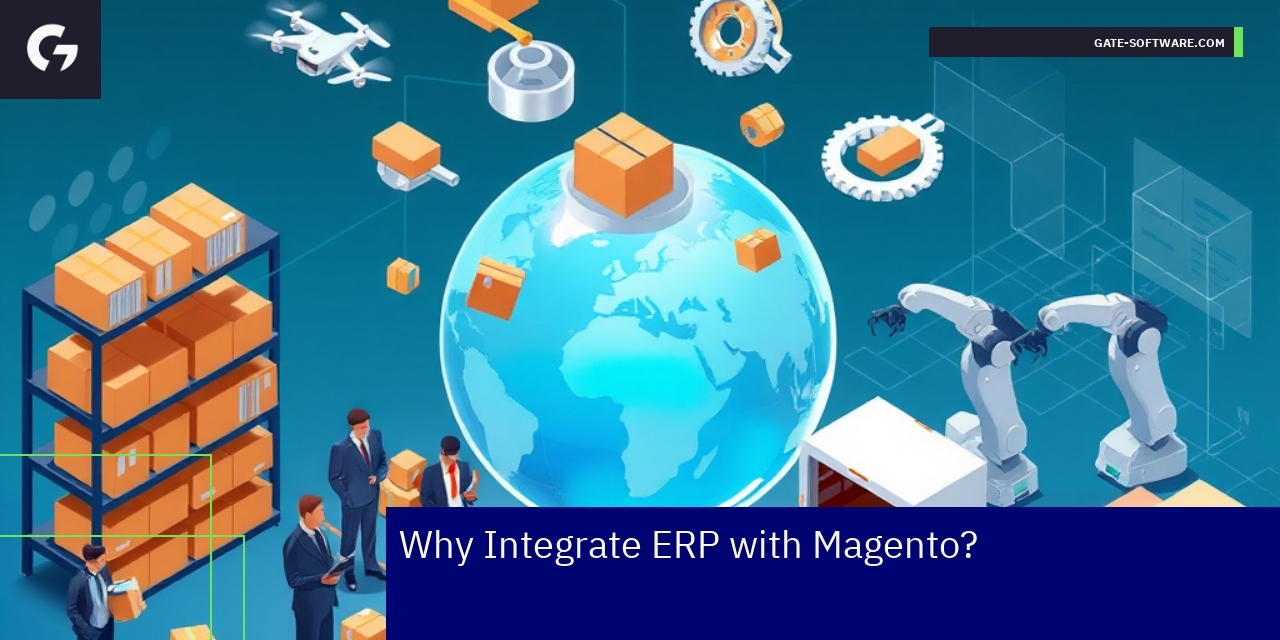
Integrating an ERP system with your Magento B2B platform delivers critical benefits that enhance operational efficiency and drive business growth. This integration enables real-time synchronization of data between your ERP system and e-commerce platform, ensuring consistent and accurate information on product availability, pricing, and order status. For B2B companies, managing complex orders, inventory, and customer accounts becomes far more streamlined, reducing manual data entry errors and saving valuable time.
One of the primary reasons to adopt Magento ERP integration is improved order management. Automated workflows between the ERP system and Magento allow for faster processing of orders and invoices, supporting higher transaction volumes without compromising accuracy. This seamless connectivity enhances customer satisfaction by ensuring timely fulfillment and transparent communication.
From a technical standpoint, integrating your ERP system with Magento also provides better control over inventory management. Real-time inventory tracking helps prevent stockouts or overstock situations, optimizing supply chain efficiency. It allows businesses to respond quickly to changes in demand and improve procurement planning based on accurate data.
Beyond operational improvements, integrating the ERP system with the Magento B2B platform supports advanced analytics and reporting. By consolidating data from both systems, companies gain deeper insights into sales trends, customer behavior, and financial performance. These insights empower leadership to make informed strategic decisions that drive growth.
In summary, the key benefits and reasons for integrating an ERP system with Magento revolve around enhancing data accuracy, streamlining processes, improving customer experience, and enabling data-driven decision-making. For any B2B company leveraging Magento, ERP integration is a foundational step to maximize the full potential of their e-commerce platform.

Goals and Benefits of ERP Integration
Integrating an ERP system with a Magento B2B e-commerce platform is a strategic move designed to address key operational and business goals within the B2B sector. One of the primary goals is to enhance data accuracy across the entire business ecosystem. By synchronizing product information, customer data, and order statuses between the ERP system and Magento B2B platform, businesses can reduce manual data entry errors and ensure consistent, reliable information. This accuracy is critical for maintaining trust and streamlining processes in complex B2B transactions.
Another essential goal is accelerating the order fulfillment process. ERP integration enables real-time inventory management and order tracking, which helps businesses respond swiftly to customer demands and reduces lead times. Faster fulfillment enhances the customer experience, which is vital in B2B markets where long-term relationships and reliability are paramount. Additionally, integration supports better supply chain management and procurement planning, aligning the e-commerce platform with backend operations seamlessly.
The benefits of ERP integration further extend to improving operational efficiency by automating workflows such as invoicing, shipping, and reporting. This automation minimizes administrative overhead and allows e-commerce managers and IT decision-makers to focus on strategic initiatives rather than routine tasks. From a technology perspective, the integration enables more robust analytics and reporting, providing insights that drive better business decisions.
Ultimately, for Magento B2B businesses, ERP integration delivers a cohesive and efficient system that supports scalability and flexibility. It aligns e-commerce platform functionality with core business processes, enhancing overall competitiveness in the B2B market. Investing in ERP system integration is therefore crucial for companies seeking to optimize their e-commerce operations and meet evolving customer expectations.
Our Magento Integration Experience
Magento ERP Integration: 7 Expert Steps for Seamless Success
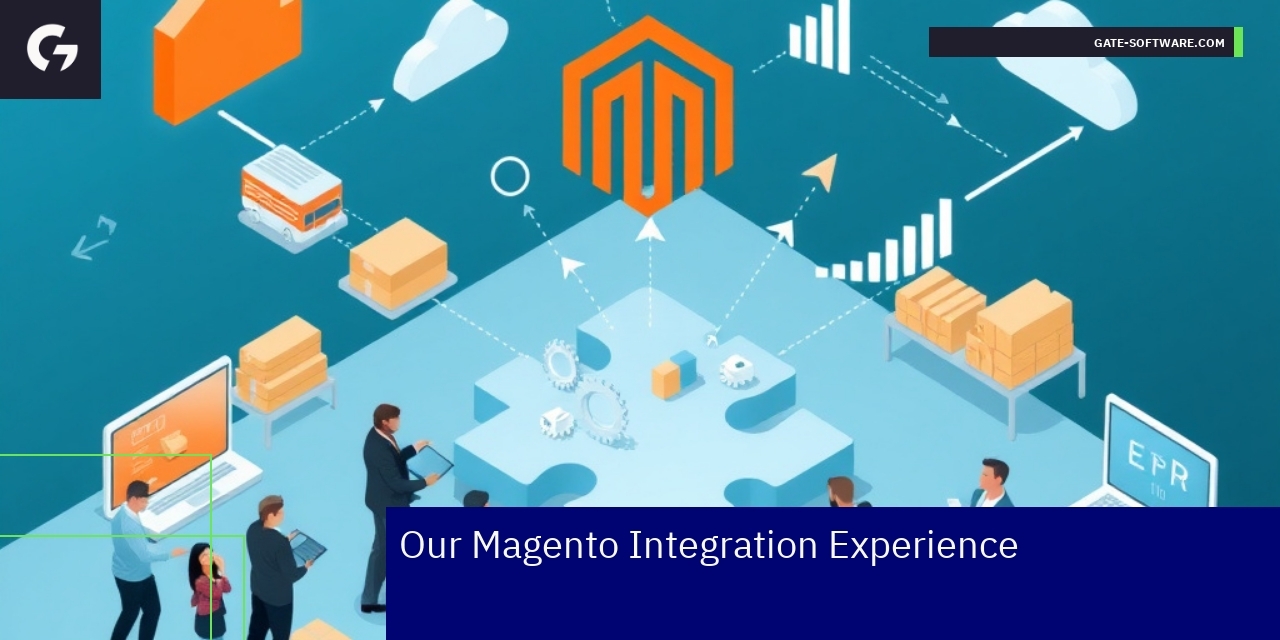
Leveraging our extensive experience, we share practical insights from integrating Magento with various ERP platforms. Concrete examples showcase how ERP systems complement Magento B2B environments and maximize e-commerce platform efficiency. Our approach underscores the importance of strategic alignment between the ERP system and Magento B2B platform to optimize operational workflows and data accuracy. Through tested steps, we ensure that the integration supports scalability and real-time data synchronization, essential for B2B e-commerce success.
Planning Your ERP-Magento Integration 🧩🚀📊
Effective planning is crucial in any Magento ERP integration project. We detail essential steps and expert tips for businesses to consider when preparing their Magento B2B platform for a seamless ERP system connection. Understanding the role and capabilities of each ERP system in relation to Magento B2B helps map out a clear integration path. This phase involves detailed analysis of existing business processes and technical infrastructure to ensure the e-commerce platform supports smooth operations and compliance with specific B2B needs. Our advice centers on preparing realistic goals and resource allocation for the integration project.
Integration Consulting Services
Our consulting services provide tailored advice to maximize the benefits of Magento ERP integration. We guide Magento B2B businesses through choosing the right ERP system that aligns with their operational needs and optimizing the e-commerce platform accordingly. Our services include strategic consulting to bridge business requirements with technical realities, ensuring that the integration delivers measurable improvements in efficiency and customer experience. We support our clients with hands-on recommendations based on proven methodologies, helping to avoid common integration pitfalls.
Pre-Implementation Analysis
A thorough pre-implementation analysis helps avoid pitfalls common in Magento ERP integrations. We analyze your Magento B2B environment alongside your ERP system requirements to prepare a custom integration blueprint. This includes assessing data flows, API compatibility, and identifying key integration points. Setting realistic expectations and success criteria during this phase is critical to managing project scope and timeline, ultimately ensuring that the integrated e-commerce platform functions optimally within your broader IT ecosystem. This preparation is foundational for a successful implementation that supports long-term business growth.

Choosing the Right Integration Tools
Starting the Work
Selecting optimal tools is crucial for successful integration between Magento B2B and ERP system environments within an e-commerce platform. The selection process begins with a thorough evaluation of both Magento B2B capabilities and the ERP system’s features to ensure alignment with the platform’s business goals and operational requirements. This includes assessing the scalability, flexibility, and compatibility of tools that support seamless data exchange and process automation. By doing so, the integration tools chosen can effectively connect critical business functions such as order management, inventory control, and customer data synchronization. Early stakeholder involvement from key roles like eCommerce Managers and Heads of Applications guarantees that the tools meet both technical and business needs specific to B2B operations. An informed selection process mitigates risks related to implementation complexities and future maintenance challenges, thereby setting a solid foundation for a successful e-commerce platform integration.
Implementation and Testing 🧩 Integracja 🤝 Współpraca ⚙️ Walidacja
Implementing Magento B2B and ERP system integration demands carefully planned stages with rigorous testing to ensure stable and reliable operations. The process typically involves iterative development cycles where each integration component is implemented and tested thoroughly to confirm data integrity, system responsiveness, and compliance with the e-commerce platform’s requirements. Testing phases should cover functional tests that validate business logic as well as performance tests to ensure tools scale under operational loads typical in B2B transactions. This systematic approach minimizes disruptions and ensures the integrated system delivers accurate real-time information across order processing, inventory updates, and customer management workflows. Proper documentation and involvement of technical decision-makers such as CTOs during implementation and testing phases ensure that any issues are promptly addressed and that the tools support continuous optimization post-launch.
Advantages of ERP-Magento Integration
Integrating Magento B2B e-commerce platforms with ERP systems delivers substantial benefits that drive operational efficiency and business growth. Key advantages include improved inventory management, enabling accurate stock levels and replenishment cycles, which reduces costly overselling or stockouts. Enhanced order processing automates routine tasks, accelerates fulfillment times, and increases customer satisfaction. Furthermore, integration provides deeper business insights by consolidating transactional and operational data, empowering decision-makers with real-time analytics to refine strategies. These benefits collectively form a competitive advantage by streamlining workflows and reducing manual errors in B2B environments. Ultimately, making Magento ERP integration a growth catalyst transforms the e-commerce platform into a robust ecosystem optimized for scalability and responsiveness to market demands.

Integration Examples and Case Studies
In the B2B sector, integrating an ERP system with a Magento B2B e-commerce platform has proven to be a decisive factor in enhancing operational efficiency and customer satisfaction. Case studies from various Magento B2B companies demonstrate how these integrations streamline complex processes such as inventory management, order processing, and customer data synchronization. By leveraging ERP systems, companies can achieve real-time visibility into stock levels and automate workflows, which reduces manual errors and accelerates order fulfillment.
Examples from Gate-Software’s experience highlight the technical challenges faced during these integrations, such as ensuring data consistency across platforms, managing customized pricing models, and maintaining system performance under scalable transaction volumes. Through close collaboration with stakeholders like eCommerce Managers and Heads of Applications, tailored solutions were developed to meet specific B2B requirements. These solutions allowed seamless data exchange between ERP and the e-commerce platform, supporting advanced business rules and compliance needs.
Real-world case studies underscore the business impact, showing improved order accuracy, faster response times for customer inquiries, and better resource allocation. Companies witnessed enhanced user experience for B2B clients, driven by personalized catalogues and dynamic pricing enabled by the robust integration architecture. These examples reinforce how a well-executed integration of an ERP system with a Magento B2B e-commerce platform can transform business operations, enabling scalability and sustained growth in competitive markets.
ERP Systems Compared
A detailed comparison helps Magento B2B businesses select the best ERP solution for their e-commerce platform by highlighting key differences in features, compatibility, and scalability. When evaluating ERP systems in the context of a Magento B2B environment, several critical factors come into focus to ensure seamless integration and operational efficiency.
Firstly, ERP systems differ in their compatibility with e-commerce platforms. A system that integrates smoothly with Magento B2B allows for consistent data synchronization across product catalogs, inventory, pricing, and customer information. This integration minimizes data silos and manual entry errors, enhancing overall process automation and reducing operational overhead.
Secondly, feature sets within ERP solutions vary significantly. For a Magento B2B operator, support for advanced pricing models, multi-tier customer management, and complex order workflows is essential. These systems must accommodate B2B-specific requirements such as quote management, approval processes, and flexible payment terms, directly impacting the customer experience on the e-commerce platform.
Scalability and customization capabilities also distinguish ERP systems. As Magento B2B businesses grow, the ERP must support the increasing volume of transactions, users, and data without compromising performance. Customizable modules or APIs enable tailoring the ERP to specific industry needs or unique business processes, facilitating long-term adaptability.
Finally, differences in deployment models—cloud-based versus on-premises—affect implementation strategies and ongoing maintenance. Cloud ERP systems offer more agility and reduced IT overhead, aligning with e-commerce’s dynamic nature, while on-premises solutions may provide greater control and compliance options.
In conclusion, a comprehensive comparison of ERP systems considering these differences equips Magento B2B clients with the insights necessary to select the optimal ERP system that enhances their e-commerce platform’s operational efficiency and supports sustainable growth. Using the right ERP system as part of a Magento B2B strategy strengthens end-to-end business processes from order management to fulfillment.

Checklists and Steps for Successful Integration
Successfully integrating a Magento B2B ERP system with your e-commerce platform requires a detailed and methodical approach. A comprehensive checklist and clear steps help ensure no critical aspect is overlooked, thereby facilitating a smooth implementation and long-term efficiency.
Begin with a thorough analysis of your current systems and business processes. Understand the specific requirements for the Magento B2B environment, including customer segmentation, complex pricing models, and ordering workflows. This foundational step guides the customization of the ERP system to match your operational needs and ensures seamless data exchange.
Next, focus on data preparation and migration. Prepare clean, structured data for customers, products, pricing, inventory, and orders. Establish protocols for data synchronization between the ERP and Magento platform, considering frequency and data integrity to avoid inconsistencies.
The integration architecture design is vital. Define how the ERP system will communicate with Magento, identifying API endpoints, middleware solutions, and error handling mechanisms. This ensures real-time updates and transactional consistency across systems.
Testing constitutes a critical step. Develop test cases covering all key scenarios such as order processing, inventory updates, pricing adjustments, and customer data management. Rigorous testing reduces the risk of disruptions post-launch.
Finally, plan for user training and support. Equip your team with thorough knowledge of the integrated system to maximize productivity and troubleshoot issues swiftly. Implement monitoring tools to track performance and swiftly respond to any anomalies.
Throughout this process, the use of checklists and steps tailored to Magento B2B, ERP system integration, and your specific e-commerce platform ensures a strategic and efficient deployment that delivers measurable business value.
Common Integration Mistakes
Integrating a Magento B2B e-commerce platform with an ERP system is a complex process that requires careful planning and execution to avoid critical mistakes. One of the most frequent errors is inadequate alignment between the Magento B2B requirements and the ERP system capabilities. This misalignment often leads to data inconsistencies, delayed order processing, and inventory discrepancies, which negatively impact business operations.
Another common mistake is underestimating the complexity of synchronization between the platforms. Real-time data exchange is essential for maintaining accurate stock levels, pricing, and customer information. Without robust integration mechanisms, companies risk experiencing frequent data conflicts and operational slowdowns, undermining the potential of the Magento B2B platform to meet customer expectations efficiently.
Furthermore, neglecting the customization needs of the B2B ecommerce platform in the integration process can cause significant issues. Since B2B buyers demand tailored pricing, complex workflows, and personalized user experiences, the ERP system must support these capabilities seamlessly. Failure to ensure this alignment leads to inefficient processes and customer dissatisfaction.
Additionally, poor error handling and monitoring during integration can cause prolonged downtimes or unnoticed system failures, which in turn disrupt order fulfillment and reporting accuracy. It’s critical to implement thorough testing and continuous monitoring to catch mistakes early and maintain smooth operation of your Magento B2B e-commerce platform and ERP system.
Effective avoidance of these mistakes involves early and detailed analysis of business processes, continuous collaboration between IT and business teams, and leveraging Gate-Software’s expertise in Magento ERP integration projects. This approach ensures the creation of stable, scalable, and efficient ecommerce solutions that fully leverage the potential of both Magento B2B and ERP systems.

Alternatives to ERP Integration
For businesses operating within the Magento B2B environment, relying solely on traditional ERP system integration may not always be the optimal path. Exploring alternatives can provide more flexible, scalable, and cost-effective solutions tailored to the specific needs of a B2B e-commerce platform. These alternatives include middleware platforms, API-driven architectures, and dedicated B2B commerce management tools that can complement or partially substitute ERP integration.
Middleware solutions act as intermediaries that facilitate data flow between the Magento B2B platform and various back-end systems without full ERP integration. This approach allows companies to selectively synchronize inventory, orders, and customer data, thus reducing complexity and enabling faster implementation. API-driven options are another alternative, enabling custom integrations that support specific business workflows, enhancing adaptability across different functions such as pricing, quoting, and product information management.
Another avenue involves leveraging standalone or SaaS-based B2B platforms that complement Magento’s functionalities. These options often offer specialized features like advanced quote management, customer segmentation, and dynamic pricing—elements crucial to B2B operations—which can be integrated with existing ERP systems or operate independently.
Key takeaways for decision-makers include carefully assessing business requirements, considering the total cost of ownership, and ensuring that any alternative solution maintains data consistency and security across the e-commerce platform. Strategic evaluation of options should focus on scalability and the ability to evolve alongside changing market demands.
—
Summary
Understanding Magento B2B Quote Management and the Role of ERP Systems in B2B Operations is essential as you move forward. The integration of Magento with your ERP system unlocks new growth opportunities for your e-commerce platform, making it a critical strategy for sustained success. However, alternatives to ERP integration—such as middleware, API solutions, and specialized B2B management tools—offer viable options that can enhance flexibility and reduce integration complexity. Evaluating these alternatives carefully ensures alignment with business objectives and technological readiness, ultimately optimizing your Magento B2B environment.

Data and Performance Metrics – Efficiency, SLA, TCO
Operational Effectiveness in B2B Projects
In our pursuit of excellence in B2B project execution, Gate-Software has developed robust metrics that highlight our commitment to operational efficiency and client satisfaction. Over the past year, we have successfully reduced the project takeover time to an average of 30 days, allowing us to quickly integrate new projects and ensure minimal disruption for our clients. Impressively, 95% of our projects have been delivered on time, reflecting our rigorous project management processes and commitment to meeting client expectations.
Furthermore, our clients have experienced an average reduction of 15% in Total Cost of Ownership (TCO) following our implementations, thanks to our highly effective MagentoOneS™ solutions that streamline operations and minimize extraneous costs. Over the last year, we have completed 50 successful ERP-Magento integrations, showcasing our extensive experience and expertise in delivering tailored solutions that meet complex B2B requirements.
In terms of operational reliability, our systems ensure an uptime SLA of 99.9%, which is critical for our clients who require uninterrupted access to their e-commerce operations. Additionally, the average duration of our client relationships stands at 5 years, highlighting the trust and satisfaction we cultivate through sustained support and partnership.
These data-driven metrics not only underscore the effectiveness of our services but also serve as a foundation for our clients to make informed purchasing decisions, reinforcing the long-term value of choosing Gate-Software as their strategic partner in B2B operations.

Summary
As you navigate the complexities of B2B commerce, understanding the advantages of integrating Magento with your ERP system is crucial for unlocking operational efficiency and driving sustained growth. This strategic integration not only streamlines data synchronization across critical business functions but also enhances order management, inventory control, and customer experience. By leveraging Gate-Software’s expertise in Magento ERP integration, your B2B enterprise can achieve greater agility and responsiveness to market demands, ultimately positioning itself for long-term success. Should you seek to explore this transformative integration further, we invite you to reach out and discuss how we can collaboratively elevate your e-commerce operations to new heights.
Summary
FAQ
What are the key benefits of integrating an ERP system with Magento B2B?
Integrating an ERP system with Magento B2B enhances operational efficiency by ensuring real-time data synchronization, improving order management, and reducing manual errors. This allows for better inventory control, faster order fulfillment, and deeper analytics that drive informed business decisions.
How does ERP integration impact order management in a B2B environment?
ERP integration automates workflows between the ERP system and Magento, allowing for quicker processing of orders and invoices. It streamlines the entire order management process, ensuring accurate and timely fulfillment while enhancing customer satisfaction.
Why is data accuracy essential in B2B operations when using Magento?
Data accuracy is foundational in B2B operations as it minimizes manual data entry errors, ensuring consistent information across inventory, orders, and customer data. This accuracy is critical for maintaining trust with customers and streamlining complex transactions.
What are common challenges faced during ERP integration with Magento B2B?
Common challenges include ensuring compatibility between the Magento platform and the ERP system, managing data consistency, and handling the complexity of B2B requirements such as customized pricing and workflows. Effective planning and thorough testing are essential to overcome these hurdles.
How can businesses prepare for a successful Magento ERP integration?
Businesses can prepare by conducting a detailed analysis of existing workflows, ensuring clean data for migration, establishing clear communication with stakeholders, and developing a comprehensive integration blueprint. These steps help mitigate risks and ensure an efficient integration process.
.
.
Zamów bezpłatną konsultację
.
Z nami rozwój Twojego biznesu nabierze tempa! Zapraszamy do kontaktu średnie i duże firmy generujące min. 7 mln PLN obrotu rocznie – tam nasza ekspertyza sprawdza się najlepiej.
.
Kliknij w poniższy przycisk i skontaktuj się z jednym z naszych konsultantów e-commerce
.