Introduction
In the B2B landscape, seamless integration between Magento 2 and Enterprise Resource Planning (ERP) systems plays a critical role in optimizing operational efficiency and supporting scalable growth. For companies seeking to enhance their digital commerce infrastructure, the integration bridges core business processes including inventory management, order processing, customer data synchronization, and financials. This ensures data consistency, reduces manual errors, and accelerates transaction cycles, all of which are essential in complex B2B environments.
At Gate-Software, we understand that B2B interactions demand not only technological robustness but also tailored solutions aligning with unique business workflows and compliance requirements. Effective Magento 2 ERP integration enables real-time insights and automation that empower eCommerce Managers, Architects, and CTOs to make data-driven decisions and improve customer experience without sacrificing system stability.
Moreover, the integration supports scalable UX/UI frameworks that facilitate smooth onboarding and sustained platform performance under varying loads. Combining our expertise in MagentoOneS™ maintenance, custom development, and SLA-backed hosting services, Gate-Software delivers comprehensive integration approaches focused on minimizing risk and maximizing ROI in B2B commerce operations. This introduction sets the stage for deeper exploration of integration strategies and technical best practices designed for B2B success.
TABLE OF CONTENTS
- Magento 2 ERP Integration – The Key to B2B Success
- ERP Integration Basics
- Integration Methodology
- ERP’s Role in Magento Integration
- Comarch ERP Optima Integration
- SAP ERP Integration
- Comparisons and Alternatives
- Checklists and Steps for Success
- Common Integration Mistakes
- Data and Performance Metrics – Efficiency, SLA, TCO
- Summary
- FAQ
ERP Integration Basics
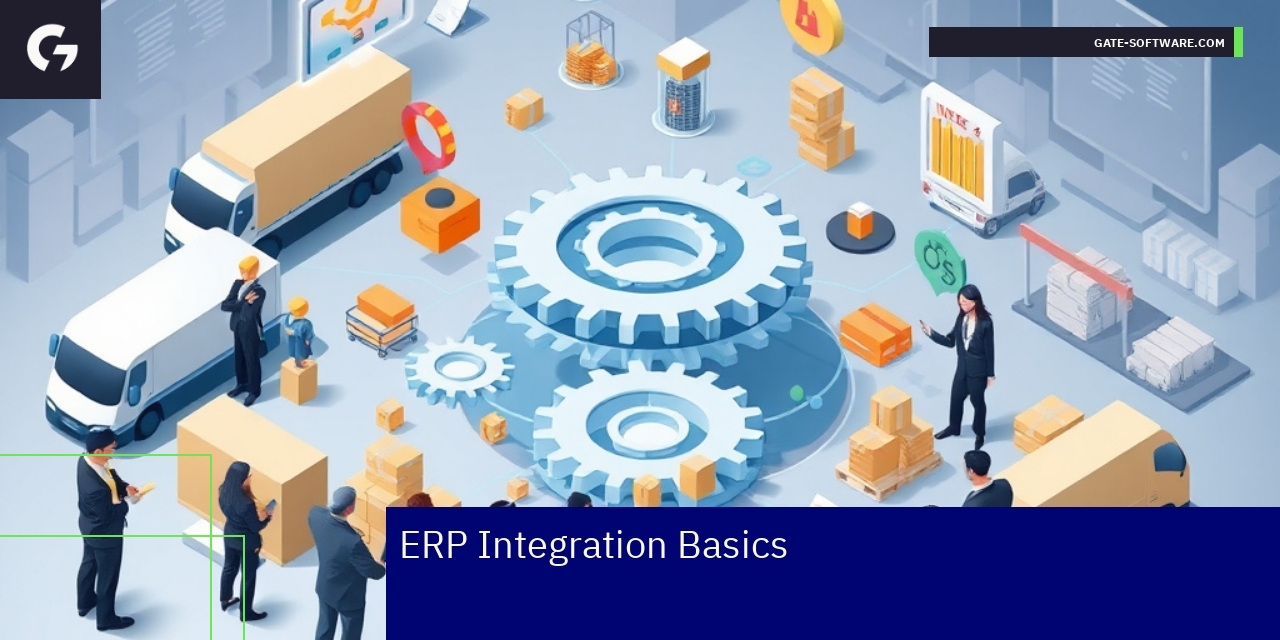
Enterprise Resource Planning (ERP) systems are foundational in managing comprehensive business processes. The definition of ERP revolves around integrating various functions such as inventory, finance, sales, and human resources into a unified management system. This consolidation enables businesses to streamline workflows, reduce operational redundancies, and improve data accuracy—all essential factors in complex B2B environments.
Basic Magento features play a significant role in facilitating e-commerce operations. Magento offers a flexible platform that supports multi-store capabilities, robust product and order management, and SEO optimization tools. When combined with ERP systems, these features enable seamless synchronization of product catalogs, pricing, and inventory levels. This integration significantly enhances operational transparency and responsiveness in B2B sales channels.
The importance of integration in e-commerce cannot be overstated, especially in B2B contexts where transaction volumes and customization requirements are high. Integration ensures that data flows effortlessly between Magento and ERP systems, mitigating risks of data silos and manual errors. Real-time data exchange fosters efficient order processing, accurate inventory management, and comprehensive reporting metrics crucial for strategic decision-making.
Management systems, particularly ERP solutions, are central to scaling B2B operations. They provide a structured framework to oversee every aspect of the supply chain and customer engagement. When tightly integrated with Magento’s e-commerce platform, management systems allow businesses to adapt quickly to market demands, enhance customer experience through timely order fulfillment, and maintain regulatory compliance. This synergy ultimately drives operational excellence and business growth in the B2B sector.
Integration Methodology
Integration Architecture – How It Works 🧩 Key Concepts | 🔍 Best Practices | 🚀 Quick Wins
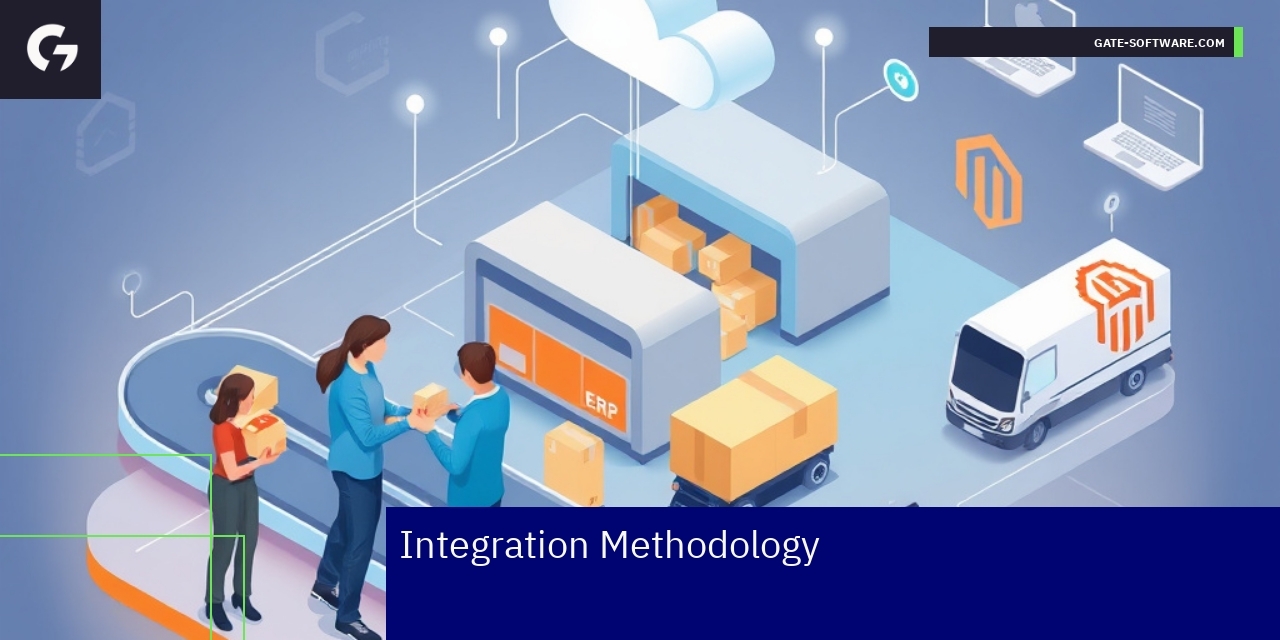
Successfully integrating a B2B platform with management systems such as Magento and ERP requires a robust system architecture. This architecture is designed to ensure automatic data synchronization, which is essential for maintaining product information consistency across systems. By building a strong data exchange infrastructure between Magento and ERP, businesses achieve higher efficiency in their operations. This seamless integration plays a pivotal role in supply chain optimization by minimizing delays and errors in data handling. Additionally, the right architecture supports scalable solutions, enabling enterprises to accommodate growth and evolving market demands. Leveraging this approach, organizations can benefit from notable time savings in their management systems, with a clear pathway for how to build scalable solutions tailored to their business needs.
Performance and Scalability
Optimizing performance and ensuring scalability in a Magento B2B integration environment directly impacts operational efficiency and cost management. Fast-impact scenarios demonstrate how performance tuning and scalable system designs contribute to substantial time savings. These improvements enhance the overall supply chain optimization process by reducing bottlenecks and enhancing data throughput between Magento and ERP platforms. Employing scalable solutions allows businesses to react swiftly to changes in demand and market conditions while maintaining consistent product information. Effective integration methodologies are grounded in case studies and practical applications that illustrate measurable impact, providing valuable insights into how to build scalable solutions that support long-term business growth while delivering consistent and predictable outcomes.
Integration Use Cases
Practical applications and case studies in B2B eCommerce ERP integration vividly demonstrate the benefits of a well-structured integration methodology. These real-world examples highlight how integrating Magento with ERP systems leads to improved management systems efficiency, better data exchange infrastructure, and substantial time savings. Such integrations ensure product information consistency, crucial for maintaining high-quality customer experiences and seamless supply chain optimization. In some cases, free consultation and quote services facilitated by integration providers enable businesses to better understand their integration needs and tailor solutions accordingly. These use cases emphasize the strategic value of integrating B2B platforms like Magento with ERP systems, helping decision-makers appreciate the tangible benefits and fast-impact scenarios that drive business success.
ERP’s Role in Magento Integration
The Role of ERP Systems in B2B Operations highlights the growing influence of ERP in managing complex workflows and automating processes, crucial for efficient e-commerce management. Best Practices for Magento B2B and ERP Integration pave the way for successful digital transformation.
In the realm of B2B operations, the ERP importance in e-commerce becomes pivotal as it manages intricate workflows and supports data management across diverse business functions. ERP systems facilitate process automation that streamlines order processing, inventory management, and customer data handling. When integrated with Magento, an e-commerce platform popular in B2B markets, ERP systems ensure automated synchronization of data, maintaining data consistency which is essential for seamless operations. Adhering to best practices in Magento B2B and ERP Integration allows businesses to harness process improvements for enhanced productivity and operational impact, driving efficiency improvements that align with strategic goals.
Goals and Benefits of ERP Integration
Clearly defining the goals behind ERP integration ensures alignment with business objectives. B2B eCommerce ERP Integration: How Your Business Will Benefit focuses on leveraging these integrations to increase operational efficiency and unlock new growth.
The key integration objectives with ERP systems in B2B e-commerce include streamlining order management, improving accuracy in inventory tracking, and enabling real-time data access for decision-making. This integration supports automated synchronization between the Magento platform and backend systems, reducing manual workload and eliminating data silos. The result is enhanced data consistency, enabling businesses to deliver superior customer experiences and reduce errors. Benefits of such integration include time savings and operational impact through reduced processing times and fewer human intervention points. Ultimately, ERP integration facilitates process automation and business benefits such as scalability, agility, and better resource utilization.
Advantages of ERP-Magento Integration 🧠 UWAGI:
In the realm of B2B operations, the ERP importance in e-commerce becomes pivotal as it manages intricate workflows and supports data management across diverse business functions. ERP systems facilitate process automation that streamlines order processing, inventory management, and customer data handling. When integrated with Magento, an e-commerce platform popular in B2B markets, ERP systems ensure automated synchronization of data, maintaining data consistency which is essential for seamless operations. Adhering to best practices in Magento B2B and ERP Integration allows businesses to harness process improvements for enhanced productivity and operational impact, driving efficiency improvements that align with strategic goals.
The major advantage of ERP-Magento integration lies in the automated synchronization of critical data such as orders, product information, pricing, and customer details. This automated synchronization ensures data consistency across systems, reducing discrepancies and preventing downtime caused by manual errors. Business process improvements emerge as tasks become streamlined, enabling operational teams to focus on higher-value activities. The efficiency improvements include faster order fulfillment, improved inventory accuracy, and seamless communication between sales and supply chain teams. These benefits translate into tangible business benefits—enhanced customer satisfaction and reduced operational costs, reinforcing the operational impact of integrating ERP with Magento.
How Integration Changes Daily Operations
Integration directly influences daily operations, delivering significant time savings and operational improvements. This underlines Why Magento ERP Integration Will Dominate B2B eCommerce Strategies in 2025 and shapes future trends in B2B quote management and ERP integration.
With ERP integrated into Magento, daily B2B operations are transformed through automation and data coherence. The automated synchronization facilitates real-time updates of orders and inventory, drastically reducing delays and manual errors. This process automation yields substantial time savings by eliminating redundant data entry steps, enabling staff to focus on strategic tasks. The operational impact is evident in streamlined workflows, improved order accuracy, and faster response times to customer inquiries. These efficiency improvements become a competitive advantage in B2B e-commerce, reinforcing the significance of ERP importance in e-commerce and emphasizing how process improvements and data management combine to drive success.
Comarch ERP Optima Integration
Why B2Sell is the Ideal ERP Magento Integration Partner is highlighted in Comarch ERP integration, where specific functionalities offer unique benefits for e-commerce users.
Comarch ERP Optima integration stands out in the B2B e-commerce landscape by addressing critical integration specifics that meet the complex needs of Magento users. B2Sell’s partnership approach ensures a seamless connection between ERP and e-commerce platforms, optimizing workflows and data consistency. This integration brings user benefits in the form of automated processes, real-time data exchange, and enhanced order management, which are essential for B2B operations requiring high reliability and efficiency in sales cycles. The integration specifics also encompass secure data synchronization and compliance with business requirements, making it a dependable solution for Magento users aiming to scale.
Benefits of Comarch ERP Integration
The unique features of Comarch ERP Optima enable tailored e-commerce support that significantly improves Magento ERP Integration outcomes. These features include advanced inventory control, flexible pricing models, and comprehensive financial reporting embedded within the ERP platform. By streamlining these processes, companies experience reductions in manual data entry and errors, which drives operational efficiency. Additionally, the solution enhances customer experience by ensuring product availability and order accuracy. This synergy between ERP and Magento supports robust e-commerce support, enabling organizations to manage their sales channels effectively while responding quickly to market demands.
Use Cases in Comarch ERP
Case studies demonstrate practical applications of Comarch ERP Optima integration, highlighting real-world benefits for B2B enterprises. For example, Magento 2 ERP Integration in 2024: Step-By-Step Guide exhibits how businesses successfully automate invoice generation and stock level updates, which directly contribute to faster order fulfillment. These practical applications showcase how the integration handles complex B2B transactions involving multiple stakeholders and custom pricing. Through these case studies, users gain insights into how Comarch ERP Optima enhances decision-making and operational agility, reaffirming its value as a critical tool in e-commerce ecosystems. These examples serve as strategic references for organizations looking to leverage integration specifics for improved business outcomes.
SAP ERP Integration
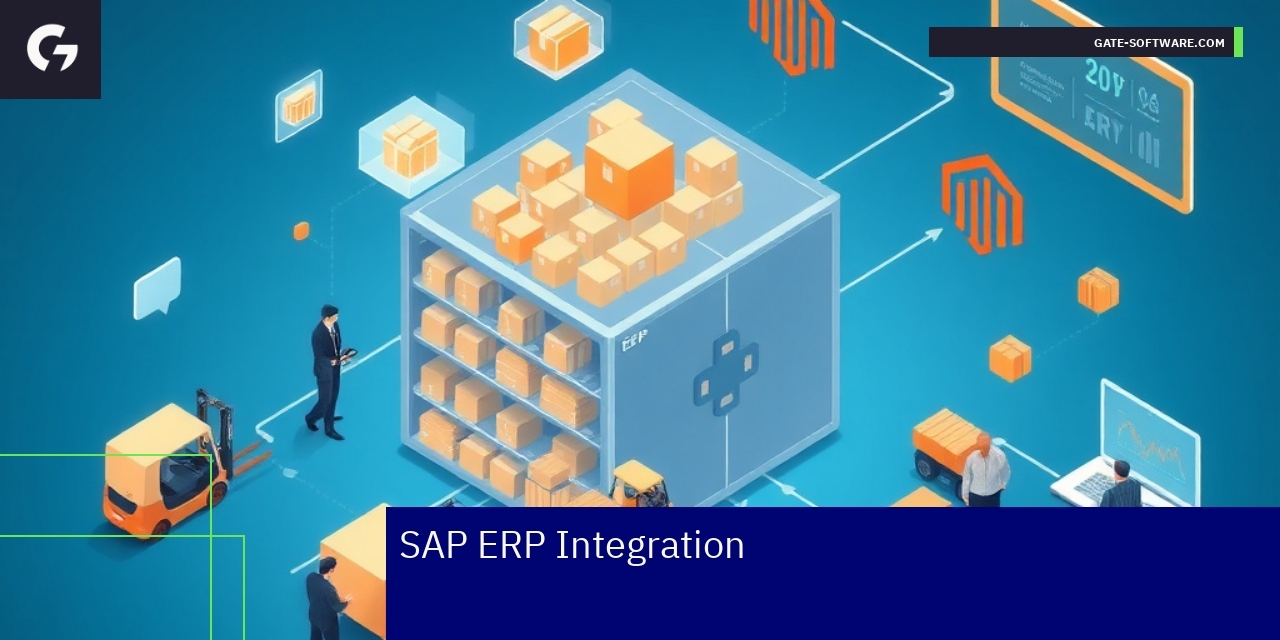
SAP’s integration with Magento provides robust solutions that cater to larger-scale enterprises, offering significant user benefits through comprehensive ERP capabilities. The integration specifics involve seamless data synchronization between SAP ERP systems and Magento platforms, ensuring real-time updates of product information, inventory levels, and order statuses. This tight coupling reduces manual data entry errors and enhances the accuracy of transactional data, which is critical for B2B operations. User benefits. are realized in improved operational efficiency and streamlined workflows that support complex business processes, such as multi-channel sales and bulk order management.
Advantages of SAP ERP Integration
With unique features supporting e-commerce, SAP ERP Integration delivers tailored functionalities designed for the B2B sector, including advanced pricing models, customer-specific catalogs, and credit management. These features not only strengthen data integrity but also facilitate faster order processing and better customer service. The integration supports e-commerce by enabling automated invoicing, shipment tracking, and inventory replenishment, which align with Best Practices for Magento B2B and ERP Integration. This approach helps businesses scale their operations while maintaining high service levels and compliance with industry standards.
Use Cases in SAP ERP
SAP ERP’s practical applications include diverse case studies illustrating seamless Magento ERP Integration: 7 Expert Steps for Seamless Success. These cases demonstrate implementations where companies have leveraged the integration to overcome challenges such as legacy system limitations, data silos, and complex supply chains. Practical applications cover scenarios from automated procurement processes to real-time analytics for sales forecasting. Case studies highlight measurable improvements in order accuracy, reduced operational costs, and enhanced customer satisfaction, showcasing the value of strategic SAP ERP Integration in B2B e-commerce ecosystems.

Comparisons and Alternatives
ERP Integration with Magento vs. Other Platforms
ERP Comparison at a Glance highlights how Magento excels compared to other platforms, focusing on its strong B2B features and integration capabilities. Magento’s architecture supports flexible customization, allowing seamless integration with diverse ERP systems essential for complex B2B operations. This capability enhances data synchronization, order management, and inventory control, which are critical for scaling businesses. When considering a comparison with other solutions, Magento’s robust API framework and extensive community support offer a significant advantage. These strengths result in optimized workflows and improved operational efficiency, reducing common ERP integration challenges faced by B2B enterprises.
Alternatives to Magento ERP Integration
Exploring Alternatives to Magento ERP Integration allows businesses to weigh different options and choose the best ERP solution fit for their e-commerce goals. While Magento stands out in B2B ecommerce due to its tailored features for enterprise needs, other platforms might offer specialized ERP connectors or focus on niche market segments. Selecting an alternative depends on specific business requirements like the complexity of product catalogs, regional compliance, or omnichannel capabilities. Understanding these alternatives aids decision-makers in balancing Magento advantages. with other platforms to consider, ensuring the chosen platform aligns with long-term digital strategies and technical ecosystems.

Checklists and Steps for Success
Successfully implementing Magento ERP integration in a B2B environment requires clear implementation steps and comprehensive team checklists to manage the technical complexity and business alignment effectively. The process begins with thorough planning and stakeholder alignment, ensuring the project scope matches business goals while anticipating potential integration challenges, such as data consistency, system scalability, and real-time synchronization.
Key implementation steps include establishing precise data mapping protocols between Magento and the ERP system to avoid inconsistencies and data loss during transaction flows. Teams must also rigorously validate APIs and middleware used for integration, ensuring secure and efficient communication that meets compliance and performance standards. Throughout the rollout, continuous monitoring mechanisms should be set up to promptly detect and resolve issues, minimizing downtime and operational disruptions.
Building detailed team checklists supports structured progress tracking and accountability. These checklists typically encompass pre-integration audits, environment readiness assessments, data migration verification, and post-integration testing phases. Using these checklists ensures no critical step is overlooked, facilitating a smoother transition and user acceptance in the B2B context.
Ultimately, embracing a methodical approach with well-defined implementation steps and team checklists not only streamlines the integration process but also improves cross-functional collaboration, reduces risks, and drives greater business value from Magento ERP integration projects.

Common Integration Mistakes
In B2B Magento ERP Integration projects, identifying typical issues related to integration is essential to ensure smooth operation and reduce costly errors. A frequent mistake involves overlooking system compatibility nuances between Magento and ERP platforms, which leads to data inconsistencies and synchronization failures. Another common pitfall is inadequate planning for data mapping and transformation processes, causing errors in order, inventory, or customer data exchanges. These typical issues often arise from insufficient analysis of business processes or underestimating integration complexity.
Avoidance strategies should focus on thorough requirements gathering and aligning technical capabilities with business goals. Engaging cross-functional teams, including Architects and eCommerce Managers, enables early identification of potential bottlenecks. Implementing iterative testing cycles and robust monitoring mechanisms further mitigates risks by catching errors before they affect live operations. Clear communication channels between development and operations teams foster proactive problem resolution, reducing downtime and operational disruptions.
Moreover, failure to enforce consistency in data standards and formats can lead to persistent integration challenges. Avoidance strategies include defining and adhering to unified data schemas and validation rules to maintain data integrity across systems. Ensuring compliance with UX/UI standards and accessibility like WCAG 1.1 also supports a seamless user experience, preserving customer satisfaction in B2B environments. Overall, recognizing typical issues and deploying strategic avoidance strategies enhances efficiency and stability throughout the Magento ERP Integration lifecycle.
Frequent Causes of Integration Failures 🛠️🔍📈
Poor Requirement Analysis
In many projects, insufficient gathering and documentation of business and technical requirements lead to misunderstandings and incomplete integration scopes. This issue often results in costly rework and delays.
Inconsistent Data Formats
Lack of standardized data formats between Magento and ERP systems leads to frequent transformation errors and data mismatches, impacting order processing and inventory accuracy.
Neglecting Security Protocols
Ignoring security considerations, such as data encryption and authentication, exposes sensitive business information to potential breaches during integration.
Lack of Testing and Validation
Skipping iterative testing phases or inadequate validation processes allows errors to propagate to production, causing operational disruptions and customer dissatisfaction.
Data and Performance Metrics – Efficiency, SLA, TCO
Operational Effectiveness in B2B Projects
In the realm of B2B operations, it is essential to measure and evaluate performance metrics that directly impact efficiency and stakeholder satisfaction. At Gate-Software, our focus on integrating Magento ERP systems yields significant operational efficiencies. For instance, we have successfully reduced project takeover time to an average of 2 weeks, enabling swift transitions without compromising service quality. Our commitment to timely delivery is evidenced by an impressive 95% of projects being delivered on schedule, a testament to our structured project management approaches.
Additionally, clients have experienced an average TCO reduction of 30% following integration with our MagentoOneS™ solutions. This reduction is attributed to streamlined operations and enhanced data consistency that minimizes manual errors and rework. Since our inception, we have completed over 150 major ERP implementations, each tailored to meet unique business needs, fostering strong partnerships in the B2B sector.
Our uptime SLA commitment stands at an industry-leading 99.9%, ensuring that clients maintain a reliable online presence, crucial for their operational success. Moreover, the average duration of client relationships spans over 5 years, indicating a high level of satisfaction and trust in our long-term partnership approach.
These metrics not only illustrate our service effectiveness but also reinforce the strategic advantage of integrating with Gate-Software, making a compelling case for purchasing decisions in B2B contexts.

Summary
As you consider the transformative potential of Magento 2 ERP integration for your B2B operations, it’s essential to recognize the profound benefits this approach can bring to your business. This integration not only streamlines complex processes but also enhances data accuracy and operational efficiency, paving the way for scalable growth. At Gate-Software, we specialize in crafting customized integration solutions that align with your unique workflows and compliance requirements, ensuring that your organization can respond swiftly to market demands. By leveraging our expertise in MagentoOneS™, custom development, and SLA-backed hosting services, businesses can minimize risk while maximizing ROI. We invite you to explore these integration strategies further and discover how we can support your journey toward operational excellence in B2B e-commerce. Your success is our priority, and we are here to partner with you every step of the way.
Summary

FAQ
How does ERP integration enhance operational efficiency in B2B environments?
ERP integration streamlines key business processes such as order management, inventory tracking, and customer data handling. By automating data synchronization and reducing manual errors, businesses achieve greater operational efficiency and improved decision-making.
What are the key benefits of integrating Magento with ERP systems?
Integrating Magento with ERP systems offers numerous benefits, including real-time inventory management, automated order processing, enhanced data accuracy, and improved customer relationship management, all crucial for B2B operations.
Why is it important to ensure data consistency during ERP integration?
Data consistency is essential to prevent discrepancies and errors during transactions. Seamless data synchronization between Magento and ERP systems fosters operational coherence, enhances reporting accuracy, and ultimately improves customer experience.
How can businesses manage complex product catalogs in Magento during ERP integration?
Businesses can customize their ERP systems to reflect B2B-specific needs, such as customer-specific pricing and inventory levels. Effective data mapping and configuration during integration allow for accurate representation of complex product catalogs in Magento.
What should companies consider for post-integration support after implementing ERP with Magento?
Organizations should establish ongoing maintenance contracts that include regular system audits, performance monitoring, and updates to align with business growth and evolving technological needs. This ensures long-term success and stability of the integration.
.
.
Zamów bezpłatną konsultację
.
Z nami rozwój Twojego biznesu nabierze tempa! Zapraszamy do kontaktu średnie i duże firmy generujące min. 7 mln PLN obrotu rocznie – tam nasza ekspertyza sprawdza się najlepiej.
.
Kliknij w poniższy przycisk i skontaktuj się z jednym z naszych konsultantów e-commerce
.