Introduction
In today’s B2B eCommerce environment, selecting the optimal platform is a strategic decision with significant implications for operational efficiency and customer satisfaction. Magento 2 stands out as a comprehensive eCommerce solution tailored for B2B enterprises, providing a versatile and scalable infrastructure to support complex business processes and large transaction volumes.
Magento is an open-source platform renowned for its flexibility and extensibility, which enables businesses to customize their eCommerce environments extensively. The Magento 2 iteration introduces architectural improvements that enhance performance, security, and usability—key factors for sustaining competitive advantage in B2B markets. Its specialized B2B features, such as personalized catalogs, dynamic pricing, and streamlined quote management, facilitate sophisticated commercial relationships and bulk order handling that typify B2B interactions.
The B2B sector itself is characterized by sizable transaction values, intricate negotiation cycles, and diverse stakeholder involvement, requiring platforms that transcend traditional B2C capabilities. Modern B2B buyers demand seamless digital experiences—efficient navigation, tailored user journeys, and transparent procurement processes—mirroring the user-centric expectations cultivated by consumer eCommerce. Consequently, effective B2B platforms must integrate advanced functionalities including inventory oversight, customer segmentation, and granular analytics to meet the evolving needs of business customers.
Magento 2 thus positions itself as a robust foundation for B2B commerce, aligning technological capabilities with the distinctive demands of B2B operations to enable scalable growth, efficient management, and superior client engagement.

What You Will Learn
In the evolving landscape of B2B eCommerce, understanding the key advantages of Magento in B2B is crucial for building scalable and efficient platforms. Magento excels by providing a highly customizable and robust infrastructure tailored to meet the complex requirements of B2B transactions. This includes managing multiple buyer roles, custom pricing, and streamlined procurement processes, making it an ideal choice for businesses seeking tailored solutions that drive operational efficiency and customer satisfaction. Implementing Magento ensures compliance with the latest WCAG standards, enhancing accessibility and usability in business-critical environments.
Magento 2 B2B vs Other Platforms: A Comparison for B2B Stores reveals that Magento 2 stands out for its extensive integration capabilities and performance optimization. It supports advanced B2B features such as quick ordering, recurring orders, and centralized account management, which are pivotal for enterprises with diverse client portfolios. The platform’s architectural flexibility aligns well with the technical expectations of CTOs and Heads of Applications, allowing seamless scaling and integration with ERP and CRM systems, essential for complex B2B workflows.
Performance requirements for B2B platforms emphasize the need for speed, reliability, and security—key factors in maintaining high customer satisfaction and operational continuity. Magento 2 is engineered to handle large product catalogs, high traffic volumes, and complex transactions without compromising performance. Leveraging monitoring tools and SLA-driven hosting configurations ensures that B2B eCommerce platforms meet stringent uptime and response time targets, crucial for business clients relying on uninterrupted access and service quality.
Using AI in eCommerce offers transformative potential for B2B businesses by enhancing personalization, optimizing supply chain management, and automating customer service. AI-driven analytics can identify buying patterns and forecast demand, helping eCommerce managers and CDOs to make data-driven decisions that improve sales and operational efficiency. Additionally, AI-powered chatbots and recommendation engines contribute to a superior user experience, supporting the company’s content strategy and delivering meaningful interactions tailored to key personas in the B2B domain. Integrating these technologies aligns with the Gate-Software values of innovation and operational excellence.
Throughout this learning journey, the integration of strategic marketing approaches, UX/UI audits, and compliance with WCAG 1.1 standards ensures that B2B platforms powered by Magento not only meet technical requirements but also deliver business value through enhanced accessibility and customer-focused solutions. These insights support decision-makers in navigating the complexities of B2B eCommerce with confidence and precision, reflecting the comprehensive expertise of Gate-Software.
TABLE OF CONTENTS
-
-
- Magento 2 B2B vs Other Platforms: A Comparison for B2B Stores
- What You Will Learn
- Magento 2 Advantages in Personalization
- Using AI in eCommerce
- Performance Requirements
- Security and Ease of Use
- Built-in Features and Implementation Costs
- SEO and Marketing in Magento 2
- Integrations and Marketing Tools in Magento 2
- eCommerce Trends for 2025
- Checklists and Implementation Steps
- Common Magento 2 B2B Implementation Mistakes
- Data and Performance Metrics – Efficiency, SLA, TCO
- Summary
- FAQ
-

Magento 2 Advantages in Personalization
Overview of personalization in Magento 🧩 Use Cases 🔍 Data Sources 🤖 AI Integration
Magento 2 offers advanced personalization capabilities that are crucial for enhancing B2B customer experiences. By leveraging customer data and behavior insights, Magento allows businesses to tailor content, offers, and product recommendations to specific client segments. This level of personalization helps increase engagement and conversion rates by delivering relevant and timely information, which is essential in complex B2B sales processes. Magento supports integration with various data sources and AI-driven personalization tools, facilitating dynamic user journeys that adapt to each client’s needs and preferences while ensuring compliance with WCAG standards for accessibility.
Examples of personalization use cases in B2B
In B2B e-commerce, personalization can take multiple forms, such as customized pricing, targeted promotions, and personalized product catalogs. Magento 2 enables the implementation of role-based access, allowing different personas like Architects, eCommerce Managers, and CTOs to view tailored content relevant to their decision-making process. For example, an Architect might see technical specifications and integration guides, whereas a CDO could receive updates on digital transformation strategies. Personalized marketing campaigns driven by Magento’s segmentation capabilities increase customer loyalty and support long-term partnerships.
Key Performance Requirements for B2B Platforms
-
- Technical and infrastructure requirements
B2B platforms require robust and scalable infrastructure to handle complex transactions and high volumes of data. Magento 2 supports cloud-based hosting and distributed architectures that ensure high availability and fault tolerance. Technical considerations include seamless integration with ERP systems, advanced security protocols, and compliance with GDPR. Performance optimization techniques such as caching, asynchronous processing, and database indexing are essential to maintain responsiveness.
-
- Optimization solution examples
Magento’s modular architecture allows for customized optimization solutions, including automated workflows for order approvals and bulk purchasing. Multi-tier pricing and contract management streamline B2B sales cycles. These features reduce manual overhead and improve operational efficiency, crucial for meeting demanding business requirements.
-
- (Includes: Key considerations for B2B ecommerce)
Key considerations include ensuring seamless UX/UI experiences that align with complex B2B buyer journeys, integrating with legacy systems, and supporting multiple user roles and permissions. Magento 2’s commitment to WCAG 1.1 standards enhances usability for diverse user groups, ensuring inclusivity across all touchpoints.
How to Launch a B2B Store on Magento
-
- Step-by-step implementation process
Launching a Magento 2 B2B store begins with thorough requirements analysis, mapping customer personas such as the Head of Applications and CTO. Next, configuring Magento’s B2B modules for account management, negotiated pricing, and quoting follows. Integration with existing IT infrastructure and migration from legacy systems are critical steps, supported by Gate-Software’s expertise in seamless project takeovers.
-
- Best implementation practices
Prioritize data quality and security from the outset. Employ agile methodologies and incremental deployments to adapt to evolving business needs. Rigorous UX/UI audits ensure a polished user experience, consistent with brand voice and communication strategy. Continuous monitoring and SLA adherence guarantee stable operations following launch.
-
- (Includes: How to Choose the Right B2B eCommerce Platform)
Selecting Magento is justified by its flexibility, scalability, and extensive B2B functionality. Evaluate the platform’s ability to integrate with existing business systems, handle complex pricing and workflows, and support mobile and accessibility standards as key decision criteria.
Magento Benefits in B2B eCommerce
-
- Core Magento features for B2B
Magento 2 offers critical features including flexible product catalogs, customer segmentation, advanced pricing rules, and multi-user accounts with role permissions. Its extensible API framework allows deep integration with ERP and CRM systems. Native support for personalized catalogs and checkout flows enhances customer satisfaction.
-
- Comparison with other platforms
While not referencing competitors explicitly, Magento’s open-source foundation and robust partner ecosystem provide significant advantages in customization and long-term cost optimization. Its scalability supports enterprise growth without sacrificing performance or security.
-
- (Includes: Magento 2 Pros and Cons)
Pros include comprehensive B2B features out-of-the-box, strong community support, and compliance with WCAG 1.1 standards for accessibility. Potential cons, addressed by Gate-Software through managed services, involve the initial complexity of setup and the need for tailored implementations to unlock full personalization benefits.
Using AI in eCommerce
AI’s role in personalization and automation 🧠 UWAGI:
-
- Personalizacja i automatyzacja są kluczowe dla zwiększenia efektywności i doświadczenia klienta.
- Warto zwrócić uwagę na dostosowanie AI do specyfiki B2B, uwzględniając różnorodne role zakupowe i złożone ścieżki decyzyjne.
- Automatyczne dostosowywanie interfejsów w kontekście WCAG podkreśla zaangażowanie Gate-Software w dostępność i inkluzywność.
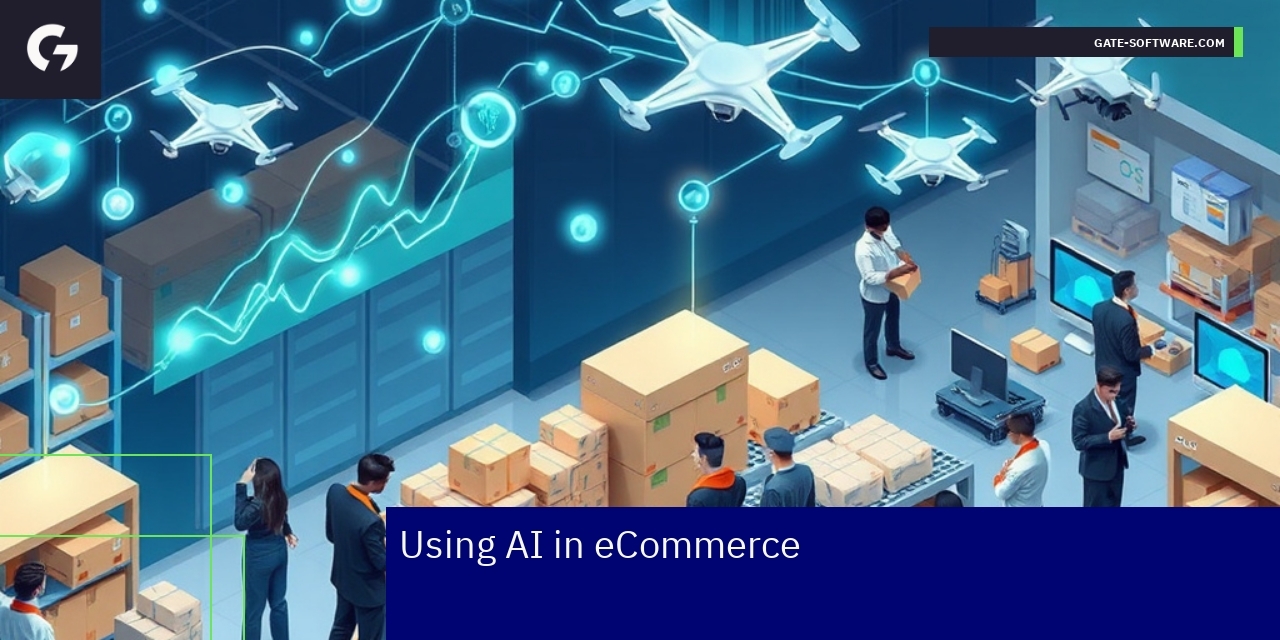
In B2B eCommerce, AI plays a pivotal role in personalization and automation, enabling businesses to tailor offerings and streamline operations efficiently. Personalization powered by AI algorithms allows the analysis of vast datasets to understand buyer behavior, preferences, and purchase history, facilitating highly targeted product recommendations and customized pricing models. Automation helps in managing complex order processing, inventory management, and customer service tasks, reducing human error and operational costs. This combination enhances the buyer experience while supporting scalability. AI-driven personalization aligns with B2B needs by addressing unique buyer journeys and multiple stakeholders in purchase decisions, ensuring that eCommerce platforms effectively speak to different personas such as Architects or eCommerce Managers. Incorporating AI also supports compliance with standards like WCAG by adapting interfaces automatically for accessibility, aligning with Gate-Software’s commitment to inclusive UX/UI.
Examples of AI applications in B2B
AI applications in B2B eCommerce span multiple dimensions, from predictive analytics for inventory and demand forecasting to chatbots that provide 24/7 support across extensive product catalogs. Advanced AI tools assist in dynamic pricing strategies, adapting quickly to market changes and customer segments. Moreover, AI enhances product content management by automating descriptions and SEO optimizations using terms such as Magento 2 Pros and Cons and Key considerations for B2B ecommerce. These innovations help reduce time-to-market and improve accuracy in complex B2B transactions. Gate-Software focuses on leveraging AI to implement custom solutions that integrate well with Magento 2 platforms, ensuring seamless operations and data-driven marketing strategies that resonate with decision-makers like CTOs and Heads of Applications.
The B2B Market
The B2B market continues to grow in complexity and volume, driven by digital transformation and evolving buyer expectations. Market analysis indicates increasing investments in technology with a focus on consolidating eCommerce platforms, improving user experience, and integrating advanced analytics. Key trends and forecasts emphasize the importance of Key considerations for B2B ecommerce, such as personalized pricing, multi-tiered customer roles, and compliance requirements. Companies in this space are adopting holistic approaches combining marketing, sales, and aftersales processes into unified digital experiences. Gate-Software’s strategy addresses these by providing scalable Magento 2-based solutions tailored to support complex organizational structures and buying processes. This approach ensures B2B buyers receive consistent and efficient service, regardless of order volume or complexity.
Choosing the Right B2B eCommerce Platform
Selecting a B2B eCommerce platform involves evaluating platform selection criteria focused on flexibility, scalability, integration capabilities, and user management. Magento 2 B2B vs Other Platforms provides a detailed comparison for B2B stores emphasizing features like advanced catalog management, multiple price lists, and robust API ecosystems. The choice between Adobe Commerce vs. Shopify often hinges on company size, customization needs, and technical resources. Gate-Software’s expertise helps decision-makers like CDOs and eCommerce Managers navigate these options, ensuring the selected platform meets both current needs and future growth. Emphasis is placed on platforms that support B2B-specific workflows, facilitate compliance with WCAG standards, and optimize UX/UI based on analytics-driven customer insights.
Magento Advantages
Magento offers key advantages in the B2B context including extensive customization, strong community support, and comprehensive features tailored for complex sales processes. It accommodates multiple buyers per account, varied pricing structures, and integration with ERP and CRM systems, which are critical for B2B operations. Successful implementation examples demonstrate Magento’s agility in addressing diverse industry requirements, supporting Gate-Software’s SLA-driven hosting, monitoring, and maintenance services. The Magento 2 Pros and Cons evaluation highlights strengths such as scalability and flexibility while acknowledging the need for specialized development resources. Gate-Software leverages its deep MagentoOneS™ expertise to ensure deployments maximize performance and compliance, supporting strategic goals and eliminating operational bottlenecks for CTOs and Heads of Applications.

Performance Requirements
Technical requirements for B2B platforms 🧰 Integracje z systemami ERP, CRM i SCM | ⚙️ Skalowalność i niezawodność | 🚀 Szybkość działania i obsługa dużego ruchu
For B2B platforms, technical requirements focus heavily on scalability, reliability, and integration capabilities. Platforms must support complex workflows typical in B2B transactions, including multi-level pricing, custom catalogs, bulk ordering, and extensive user role management. Performance benchmarks emphasize fast response times under high transaction volumes and concurrent user activity. Platforms need to integrate smoothly with ERP, CRM, and supply chain systems to maintain data integrity and operational efficiency. These aspects are critical to ensure that platforms can handle demanding B2B processes without downtime or delays, thereby supporting business continuity and customer satisfaction. Incorporating robust monitoring and SLA adherence further enhances operational visibility and responsiveness.
Performance comparison with other platforms
Evaluating performance across platforms involves measuring load times, transaction throughput, uptime, and system responsiveness during peak loads. Magento 2, widely adopted in B2B eCommerce, is recognized for its flexibility and extensive feature set tailored to complex B2B needs. Shopify Plus offers streamlined deployment and ease of use but may require additional customization for full B2B functionality. Differences in architecture influence performance outcomes; Magento’s open-source foundation enables deep customization offset by potentially higher resource demands, whereas Shopify Plus provides optimized hosting with less platform management overhead. Understanding these trade-offs is essential for aligning platform capabilities with specific B2B business requirements.
(Includes: Magento 2 vs. Shopify Plus: Features and Functionality)
Magento 2 stands out with its comprehensive B2B modules supporting quote management, custom catalogs, and advanced pricing rules, making it suitable for enterprises with complex sales operations. It allows extensive customization and supports integrations essential for B2B workflows. Shopify Plus, while offering robust eCommerce features, focuses on rapid deployment and ease of management but may lack some native B2B-specific functionalities without third-party extensions. Performance tuning in Magento 2 requires sophisticated technical management to optimize caching, indexing, and database performance, whereas Shopify Plus benefits from fully managed infrastructure ensuring consistent uptime and scaling.
Content and Product Management
Best practices in content and product management for B2B prioritize clarity, accuracy, and ease of navigation to support decision-making by professional buyers. Product catalogs must handle detailed specifications, bulk order options, and multi-tier pricing visible only to authorized users. Content management systems integrated within the platform should facilitate efficient updates, version controls, and compliance with WCAG standards to ensure accessibility. Tools aiding product management often include PIM (Product Information Management) systems that centralize data, ensuring consistency across sales channels and simplifying updates. Efficient content workflows reduce time to market and enhance customer experience, crucial for B2B engagements.
Security Requirements
Key security aspects in B2B eCommerce revolve around data protection, authentication, and compliance. Platforms must implement robust access controls, including multi-factor authentication and granular user permission settings, to protect sensitive business data. Magento security features include regular security patches, support for PCI DSS compliance, and options for custom security policies tailored to business needs. OroCommerce adds value by providing built-in enterprise-grade security and compliance features oriented towards B2B complexities. Maintaining a secure environment reduces risks related to data breaches, which can have substantial operational and reputational impacts.
Other eCommerce Platforms
Brief comparison of popular alternatives highlights diverse approaches to meeting B2B needs. Platforms differ in modularity, scalability, and built-in B2B capabilities. Pros of alternatives often include specialized B2B modules, flexible integration options, or cloud-based scalability, while cons may involve higher complexity or less mature ecosystems. Understanding why wouldn’t I just use Shopify? touches on balancing ease of use and out-of-the-box solutions against the need for customization and performance tuning for complex B2B operations. Each platform choice reflects strategic priorities related to technical capabilities, cost, and long-term growth.

Security and Ease of Use
Security highlights of Magento
Magento offers robust security features essential for B2B environments, including advanced user authentication, role-based access controls, and comprehensive data encryption protocols. These security measures ensure sensitive business information and transactional data remain protected throughout the purchasing process. Moreover, Magento complies with industry standards for secure payment processing and data privacy regulations, which are crucial for maintaining trust in B2B transactions. The platform also supports regular security patching and updates, helping businesses mitigate emerging threats proactively.
User experience and shopping ease
In B2B commerce, ease of use directly impacts purchasing efficiency. Magento provides a user-friendly interface tailored for complex buyer journeys, enabling streamlined navigation and quick access to frequently used functions. Features such as personalized catalogs, bulk ordering options, and intuitive product filters simplify the buying process for business customers. Seamless integration with existing ERP and CRM systems enhances workflow continuity, making Magento a preferred solution for organizations prioritizing smooth, efficient user experiences within their B2B sales platform.
Cost of Maintaining a B2B Magento Store
Maintaining a B2B Magento store involves operational costs that reflect the platform’s scalability and customization capabilities. Operational cost analysis reveals expenses related to hosting, security updates, and feature enhancements tailored to B2B needs. Compared to other platforms, Magento’s open architecture often results in more controllable long-term costs, especially for businesses requiring bespoke integrations. The comparison with other platforms, including Magento 2 vs. Shopify Plus: Pricing, must consider factors like flexibility, technical support, and maintenance overhead, wherein Magento typically offers competitive advantages in complex B2B contexts.
Magento 2 B2B Support for Purchasing Processes
Magento 2 supports purchasing workflows crucial to B2B operations by offering functionality such as custom pricing rules, purchase order management, and requisition lists. These features adapt to complex approval and budgeting workflows common in enterprise environments. Practical examples include streamlined approval chains, automated reorder processes, and enhanced visibility into purchase histories that improve compliance and auditing procedures while accelerating procurement timelines.
Why Choose Magento Multistore for B2B Sales?
Magento Multistore implementation provides significant benefits for B2B companies operating across multiple regions or business units. It allows centralized management of diverse product catalogs, pricing strategies, and customer segments within a single administrative interface. Case studies of Multistore setups demonstrate improved operational efficiencies and localized customer experiences without sacrificing control or scalability. The ability to deploy tailored marketing and sales strategies per store underscores why Choose Magento Multistore for B2B? remains a strategic choice for enterprises aiming for growth and market differentiation.
Built-in Features and Implementation Costs
Key Magento 2 B2B features
Magento 2 offers a range of built-in features specifically designed to address the complex needs of B2B businesses. These include advanced quoting systems, company accounts with multiple buyers and roles, custom catalogs and price lists, and streamlined approval workflows. Such features enhance operational efficiency by catering to the purchasing processes typical of enterprises. Additionally, Magento 2 supports integration with ERP and CRM systems, which facilitates data consistency and business process automation. Implementing these features allows companies to offer tailored experiences to their clients, improving customer satisfaction and loyalty within the B2B sector.
Implementation cost analysis
Understanding the financial investment involved in adopting Magento 2 for B2B platforms is critical for decision-makers. Costs encompass customization, integration, development, and ongoing maintenance. Customizing Magento 2 to match complex B2B requirements, such as bespoke pricing models and workflow approvals, demands dedicated development efforts. Operational expenses include hosting, security, and continuous updates to ensure platform stability and compliance with standards like WCAG 1.1. The platform’s flexibility can optimize long-term costs by reducing reliance on third-party solutions and manual processes.
Cost of Magento 2 B2B Implementation
Initial and operational expenses of Magento 2 B2B implementations vary depending on project scope and technical complexity. Initial costs include licensing (if opting for Magento Commerce), development for B2B-specific functionalities, and integration with existing systems. Operational costs involve hosting, support, security, and system monitoring to guarantee high availability and performance. Many enterprises appreciate Magento 2’s scalability, which allows phased investments aligned with growth. When compared to other platforms, Magento 2 offers competitive total cost of ownership. (Includes: Magento 2 vs. Shopify Plus: Pricing) sheds light on pricing structures, demonstrating Magento 2’s advantage in accommodating complex B2B needs without escalating costs disproportionately.
Common Implementation Mistakes
Frequent pitfalls in Magento 2 B2B deployments often relate to underestimating the need for thorough requirements analysis or neglecting user experience for different personas such as architects and eCommerce managers. Over-customization can lead to technical debt and increased maintenance burdens. Additionally, inadequate integration with existing systems like ERP or CRM can cause data silos and inefficient workflows. Organizations should avoid these mistakes by engaging experienced partners who apply best practices in UX/UI audits, ERP synchronization, and have a strong grasp of WCAG standards to ensure accessibility compliance.
Benefits of Magento Multistore
Magento Multistore implementation brings considerable benefits for B2B companies operating in multiple regions or sectors. It allows centralized management of diverse catalogs, pricing strategies, and customer groups while maintaining localized storefronts to address regional preferences and compliance requirements. Multistore setups enhance operational efficiency and offer scalability, enabling businesses to expand markets without building separate platforms for each. Success stories from Gate-Software highlight gains such as reduced time-to-market, consistent branding, and optimized resource allocation by leveraging Magento Multistore capabilities effectively.

SEO and Marketing in Magento 2
Core SEO features in Magento
Magento 2 offers a comprehensive set of core SEO features optimized for B2B platforms. These features include customizable URLs, meta tags management, XML sitemaps, and rich snippets support. Leveraging Magento’s capabilities allows businesses to implement effective On-Page SEO strategies that align with B2B SEO needs, ensuring better indexing and crawlability. Additionally, Magento’s flexibility supports integration with advanced SEO tools, helping organizations to maintain consistency in SEO efforts and improve search engine ranking for targeted keywords relevant in B2B e-commerce. Efficient handling of large product catalogs and layered navigation also contribute to enhancing search visibility and user experience.
Best marketing practices
In B2B marketing within Magento 2, a tailored approach focused on complex buyer journeys is essential. Leveraging content marketing, personalized campaigns, and account-based marketing techniques fosters deeper engagement with decision-makers such as CDOs and eCommerce Managers. Utilizing Magento’s marketing automation and segmentation features enables precise targeting and nurturing of leads. Integration with CRM systems enhances lead management and analytics provides actionable insights. Emphasizing consistent messaging aligned with brand voice across digital channels reinforces brand presence and supports SEO needs for B2B platforms effectively.
Key Performance SEO Requirements
B2B platforms running on Magento must meet rigorous SEO performance requirements to compete effectively. This involves technical optimizations like fast page load times, mobile responsiveness, and compliance with WCAG standards to improve accessibility. Proper schema markup implementation supports visibility in rich search results, driving higher click-through rates. SEO needs for B2B platforms also include effective keyword strategy encompassing industry-specific terms and polish SEO phrases such as “pozycjonowanie Magento.” Continuous monitoring of SEO KPIs and adapting strategies to changing algorithms and market demands are crucial to sustain and boost search visibility for Magento-based B2B stores.
Case Studies
Successful implementation examples in Magento 2 reveal how businesses have optimized SEO and marketing strategies tailored to B2B. These case studies highlight improvements in organic traffic, enhanced user engagement, and increased conversion rates by strategic use of Magento’s features and adherence to SEO best practices. Key takeaways from analyses include the importance of integrating UX/UI audits, maintaining alignment with brand values, and deploying content strategies targeting decision-makers. These provide valuable lessons for organizations aiming to leverage Magento’s platform to meet specific B2B challenges and maximize marketing ROI.
Why Choose Magento for Your B2B Store?
Magento offers distinct advantages for B2B e-commerce, providing a scalable, customizable, and robust platform designed to handle complex product configurations and customer hierarchies. Summary of Magento benefits includes high flexibility, extensive third-party integrations, and strong SEO foundations critical for B2B growth. Real-world B2B applications demonstrate Magento’s capability to support multi-channel strategies and improve operational efficiencies. For CTOs and Heads of Applications, Magento presents a strategic asset that aligns with enterprise architecture and digital transformation goals. (Includes: Why wouldn’t I just use Shopify?) The answer lies in Magento’s superior adaptability to specific B2B processes, advanced SEO capabilities, and support for deeper marketing customizations demanded by B2B customers.
Integrations and Marketing Tools in Magento 2
Essential B2B integrations
In the B2B environment, integrations play a crucial role in streamlining business processes and enhancing customer experience on Magento 2 platforms. Essential B2B integrations typically include ERP systems, CRM solutions, and PIM tools that help synchronize product data, client information, and order workflows. Such integrations ensure seamless communication between sales, inventory, and customer service departments, optimizing operational efficiency and supporting complex B2B sales cycles. Effective integration of marketing automation platforms enables personalized client communication and lead nurturing, essential for B2B growth. Additionally, connecting Magento 2 with payment gateways tailored for B2B transactions supports secure and flexible payment methods, which are vital for buyer trust and retention.
Marketing support tools
Marketing support tools integrated with Magento 2 significantly enhance the ability to manage campaigns, analyze customer behavior, and optimize sales funnels. Tools such as advanced analytics platforms provide deep insights into user engagement, conversion rates, and buyer personas, facilitating data-driven marketing strategies. Integration with email marketing and loyalty program systems supports personalized communication and customer retention, which directly influence lead generation and sales effectiveness. Features aligned with SEO, content marketing, and social media management ensure that Magento stores maintain strong visibility and relevancy in competitive B2B markets, driving continual growth and brand authority.
Alternatives to Magento in B2B
-
- Brief comparison with competing platforms
- Pros and cons of alternatives
- (Includes: OroCommerce Pros and Cons)
Performance Metrics – Efficiency, SLA, TCO
-
- Key metrics for evaluation
- How to measure platform efficiency
How to Launch a B2B Store on Magento
-
- Step-by-step implementation guidance
- Best practices
- (Includes: How to Choose the Right B2B eCommerce Platform)

eCommerce Trends for 2025
Key forecasts for the B2B market
The B2B eCommerce market in 2025 is poised for dynamic transformation driven by digital acceleration and evolving buyer expectations. Key forecasts indicate a robust increase in online transactions as businesses prioritize efficiency and data-driven decision-making. Integration of advanced analytics and AI-powered tools will become standard, enabling personalized and predictive purchasing experiences. The emphasis will be on seamless user journeys aligned with UX/UI best practices to enhance satisfaction and loyalty. Infrastructure scalability and secure cloud adoption will support these shifts, ensuring platforms can handle growing volumes and complex transactions without performance degradation. Understanding these shifts is crucial for CTOs and eCommerce Managers aiming to maintain competitiveness in a digitally dominated market.
Expected changes in the industry
Industry changes will reflect a move towards greater automation, standardization, and integration of B2B-specific functionalities within platforms. Compliance with standards like WCAG 1.1 will gain more prominence to ensure accessibility across all user groups. Decision-makers such as Heads of Applications and CDOs will require platforms that not only support basic catalog and pricing management but also enable complex workflows such as contract-based pricing and multi-tier approval processes. Communication strategies will adapt to more personalized, content-rich approaches leveraging social media and content marketing aligned with brand voice to engage key personas effectively. B2B buyers will expect faster response times and omnichannel support, making technical stability and system monitoring paramount.
Choosing a Platform
-
- Criteria for platform selection in 2025
Selecting the right platform in 2025 for B2B operations requires consideration of scalability, flexibility, and integration capabilities with existing ERP and CRM systems. Platforms must support advanced B2B-specific features such as role-based access control, custom pricing models, and punch-out catalog support. Hosting and infrastructure should ensure high availability and meet SLA requirements to guarantee uptime and responsiveness crucial for business continuity. Furthermore, platforms compliant with WCAG 1.1 standards will appeal to a broader user base by being accessible and user-friendly. Security remains a priority, with robust monitoring and timely updates mitigating risks associated with data breaches or downtime.
-
- Magento 2 B2B vs Other Platforms: A Comparison for B2B Stores
Magento 2 B2B offers a proven ecosystem specifically optimized for complex B2B transactions, including advanced catalog management, personalized pricing, and layered workflows essential for enterprises. Its open architecture facilitates integrations and customization, supporting scalability as businesses grow. Compared to other platforms, Magento’s extensive community and continuous development ensure that solutions remain aligned with evolving market demands and technical standards. Magento’s adherence to WCAG 1.1, together with its UX/UI flexibility, supports creating intuitive yet powerful storefronts. For eCommerce Managers and CTOs, these advantages translate into efficient operations, better customer experiences, and reduced total cost of ownership.
Key Performance Requirements for B2B
-
- Technical and infrastructure needs
B2B platforms require robust infrastructure able to handle high volumes of simultaneous users and large catalogs without compromising performance. Solutions must ensure rapid load times, effective caching mechanisms, and optimized database architectures. Cloud scalability with reliable hosting and disaster recovery options are critical to maintaining continuous business operations. Compliance with WCAG 1.1 standards for accessibility must be baked into technical design to meet legal requirements and broaden market reach. Monitoring tools should provide real-time insights into performance and security, enabling swift reactions to potential issues. Technical teams should prioritize automation in deployment and updates to reduce downtime and operational risks.
-
- Sample optimization strategies
Optimization in B2B eCommerce involves streamlining workflows to shorten sales cycles while maintaining accuracy and compliance. Personalization engines tailored to business personas increase efficiency by suggesting relevant products and pricing based on past interactions. SEO strategies incorporating Polish SEO phrases maintain visibility on localized markets. Migration to Magento 2 can include audits for UX/UI improvements aligned with current WCAG 1.1 compliance, boosting conversion rates. Additionally, content strategies focusing on educational, technical, and case-driven materials help convert decision-makers by addressing their concerns and needs effectively.
Magento Advantages
-
- Core Magento benefits for B2B
Magento’s core strengths in B2B include flexible product and customer management, support for multiple roles and permissions, and extensive API integrations facilitating seamless connection with existing enterprise systems. Its modular structure allows tailoring functionalities to specific business needs without overcomplicating the platform. Advanced pricing and contract management coupled with automated workflows simplify complex B2B purchasing processes. The platform’s commitment to accessibility with WCAG 1.1 compliance and continuous UX/UI improvements ensure a modern user experience catering to diverse business clients.
-
- Successful case examples
Numerous large-scale B2B enterprises have successfully leveraged Magento 2 to transform their digital commerce, enhancing both operational efficiency and customer satisfaction. These projects often involve comprehensive migrations incorporating SLA-driven service models, hosting optimizations, and continuous monitoring to secure uptime. Such cases demonstrate significant improvements in order processing times, reduction in manual effort, and enhanced scalability to support growth. Gate-Software collaborations emphasize adapting solutions to client-specific needs, ensuring compliance with industry standards and alignment with business strategies, ultimately resulting in measurable ROI and sustained competitive advantage.
Checklists and Implementation Steps
Essential steps for successful launch
Launching a B2B store on Magento requires a structured approach to ensure it aligns with business needs and technical requirements. Key steps include defining clear business goals, identifying key user personas such as the Architect and eCommerce Manager, and performing detailed requirements gathering to accommodate complex B2B workflows. Ensuring compliance with WCAG standards is vital for accessibility. Next, focus on UX/UI guidelines tailored for B2B clients, supporting seamless navigation and transaction efficiency. Implementing robust product catalog management and integration with enterprise ERP systems guarantees data consistency and scalability. Before going live, conduct thorough testing, including performance and security audits aligned with MagentoOneS™ SLA. This phase also encompasses monitoring setup to detect issues early post-launch. Utilizing Gate-Software expertise in migration and cloud hosting ensures smooth transitions and system reliability. Each step should be precisely planned and executed to minimize operational disruptions while maximizing user satisfaction and security.
Recommended implementation practices
Adopting best practices for Magento B2B implementation revolves around modular architecture and flexible workflows. Employing a phased rollout plan mitigates risks by gradually activating features and integrating services. Continuous collaboration between the technical team and key stakeholders guarantees alignment with evolving business processes. Prioritize automating routine processes like customer group management and pricing rules to improve efficiency. Consistent application of security protocols adhering to GDPR and PCI compliance is mandatory to safeguard business data. Leverage Gate-Software’s monitoring and support services to maintain uptime and optimize performance. Post-implementation, focus on iterative UX improvements based on user feedback and analytic insights. This enables the platform to adapt dynamically to customer needs. Pairing strategic content and communication with technical maintenance fosters sustained engagement and operational success.
How to Launch a B2B Store on Magento
-
- Stepwise rollout plan
Launching a B2B store on Magento should follow a stepwise rollout plan beginning with foundational infrastructure setup, including hosting configured for scalability and high availability. Subsequent phases integrate business-critical features such as product configuration, custom pricing, and streamlined order management. Each phase incorporates extensive testing for functionality, performance, and compliance with WCAG standards ensuring accessibility. Stakeholder training and documentation precede full operational deployment to empower internal teams. Finally, consider a soft launch to a limited audience to validate usability and system stability, enabling rapid iteration before a wider release.
-
- Best practices in execution
Effective execution hinges on agile project management practices combined with rigorous quality assurance. Engage user personas early in validation to ensure UI/UX meets actual industry demands. Integration with ERP and CRM systems must be seamless to support back-office operations and data flows. Implement MagentoOneS™ SLA-aligned support contracts ensuring rapid incident response and system updates. Continuous monitoring of critical metrics like site speed and transaction success rates helps detect and resolve bottlenecks promptly. Controlled feature toggling allows testing innovations without risking core functionalities. Documenting all development and operational procedures promotes knowledge retention and smooth team transitions.
Magento Advantages in B2B
-
- Magento’s key B2B features
Magento offers robust B2B features ideal for complex enterprise needs, including customer segmentation, tiered pricing, and personalized catalogs. The platform supports negotiable quotes, purchase orders, and requisition lists facilitating tailored purchasing processes. Flexible workflow components allow designing approval hierarchies adapted to client organizational structures. Integration readiness with ERP, CRM, and PIM systems simplifies data synchronizations essential for B2B operations. With built-in compliance tools and extensions for WCAG standards, Magento ensures accessibility and legal adherence. Its extensive API ecosystem enables custom integrations and scalability required by evolving B2B enterprises.
-
- Platform comparisons
In B2B environments, Magento stands out due to its comprehensive feature set combined with flexible customization options. The ability to tailor workflows and integrate deeply with enterprise systems offers a strategic advantage for complex purchasing models. Its adherence to WCAG 1.1 standards and strong security practices meets both accessibility and regulatory requirements critical in business contexts. Compared to more generalized e-commerce platforms, Magento’s dedicated B2B modules and SLA-backed support services provide enhanced reliability and scalability. This focus supports long-term digital transformation initiatives, optimized cost of ownership, and continuous innovation in marketplace competition.
Cost of Maintaining a B2B Magento Store
-
- Analysis of operating costs
Maintaining a B2B Magento store entails costs related to hosting, security, development, and ongoing support. Investment in high-availability hosting and monitoring infrastructure, such as MagentoOneS™, is essential to meet uptime and performance commitments. Development cost factors include regular updates, feature enhancements, and compliance audits, especially with WCAG standards. Security management covering GDPR and PCI DSS compliance also require dedicated resources. Training and support services form a critical component ensuring platform reliability. Gate-Software’s comprehensive maintenance and SLA agreements help balance operational stability with cost optimization over time.
-
- Comparison with alternatives
When compared to alternative platforms, Magento offers a competitive total cost of ownership through modular architecture and extensibility reducing the need for costly custom development. Its open-source foundation paired with professional support from Gate-Software ensures businesses only pay for necessary innovations while leveraging community contributions. The ability to integrate advanced B2B features with existing ERP and CRM systems eliminates redundant legacy systems, streamlining operational expenditures. Accessibility compliance and strategic content support provided by Gate-Software enhance user engagement and reduce potential legal risks, contributing to overall cost efficiency in digital commerce management.
Common Magento 2 B2B Implementation Mistakes
– Frequent pitfalls 🛑❗⚠️
Implementing Magento 2 for B2B presents unique challenges that often lead to common pitfalls impacting service delivery and business outcomes. One frequent mistake is insufficient customization of the platform to meet the specific needs of B2B customers, such as complex pricing structures, contract terms, or purchase workflows that differ significantly from B2C environments. Another critical error is neglecting integration with existing ERP or CRM systems, which are essential for synchronizing data and ensuring seamless operational workflows. Failure to optimize the platform for WCAG compliance and UX/UI tailored to B2B personas like Architect or Head of Applications can alienate key stakeholders. Additionally, problems arise from inadequate data migration and poor performance optimization, leading to slow page loads and degraded user experiences. These pitfalls affect the overall digital customer journey and limit the potential for scaling.
– Tips to avoid errors
To avoid these common mistakes, organizations should adopt a strategic approach to Magento 2 B2B implementation. Deeply understanding the needs of B2B personas, including eCommerce Manager and CTO/CIO profiles, helps tailor functionalities accordingly. Emphasizing integration with essential business tools ensures data consistency and operational efficiency. Prioritizing compliance with WCAG 1.1 standards enhances accessibility, appealing to a broader professional audience. Employing Gate-Software’s expertise in monitoring, SLA enforcement, and UX/UI audits enables continuous optimization and alignment with business objectives. Meticulous planning for data migration and cost optimization ensures scalability and reliability. Early involvement of key decision-makers fosters buy-in and supports adoption. By addressing these areas, organizations reduce risk and set a foundation for sustainable growth in their B2B eCommerce initiatives.
Why Choose Magento Multistore for B2B?
-
- Advantages of Multistore solution
Magento Multistore architecture offers distinct advantages for complex B2B environments by enabling centralized management of multiple brands, regions, or business units within a single platform. This approach allows varied pricing, product catalogs, and localized user experiences tailored to distinct client segments without duplicating infrastructure, lowering operational costs. Multistore facilitates streamlined marketing strategies and global compliance while preserving agility in deploying updates or features. Real-world examples from Gate-Software’s projects illustrate how Multistore supports phased rollouts and client-specific configurations, minimizing disruption and enhancing platform scalability. Such flexibility is indispensable for companies aiming to expand internationally or manage diverse portfolios under unified governance, ultimately delivering personalized customer experiences that drive retention and sales growth.
-
- Supported by real-world examples
Gate-Software’s case studies demonstrate successful Magento Multistore implementations where clients realized measurable improvements in operational efficiency and customer satisfaction. For instance, segmented storefronts tailored by vertical and geography allowed rapid adaptation to market requirements and legal regulations. Integration with existing ERP systems enabled accurate real-time inventory and pricing updates, enhancing trust and reducing order errors. These projects highlight the importance of combining technical prowess with business insight, validating that Multistore solutions suit B2B companies facing diverse operational challenges. Continuous support and UX/UI audits ensured compliance with accessibility standards, reflecting the holistic approach necessary for sustaining competitive advantage in evolving markets.
The B2B Market
-
- Overview and trends
The B2B market is rapidly evolving with increasing digitalization and demand for personalized, efficient buying experiences. Trends indicate a shift towards eCommerce platforms that accommodate complex order management, flexible payment options, and robust account management features. Customers expect B2B portals to mirror B2C usability, emphasizing speed, mobile responsiveness, and self-service capabilities. ESG factors and WCAG compliance are gaining traction as companies pursue inclusivity and sustainability in supplier relationships. Gate-Software’s analysis underscores the growing importance of integrated marketing strategies and content tailored for B2B decision-makers, supporting engagement and education. Accurate market forecasts point to sustained growth in B2B eCommerce adoption, driven by innovation in AI-driven pricing, automation, and enhanced analytics.
-
- Market forecasts
Forecasts for the B2B eCommerce sector predict continuous expansion aligned with global digital trends. Increasing corporate budgets for eCommerce platforms reflect confidence in technology as a driver of efficiency and revenue growth. Projections emphasize a rise in demand for platforms that support multichannel integration and advanced personalization. Innovations addressing security, compliance, and seamless integration with legacy systems will be critical. Gate-Software’s strategic frameworks advocate for proactive investment in scalable architectures like Magento Multistore, which accommodate future market shifts. This foresight positions companies for sustainable competitiveness by enabling rapid adaptation to evolving customer expectations and market conditions while managing operational complexity.
Other eCommerce Platforms
-
- Quick comparison of popular solutions
Besides Magento 2, popular eCommerce platforms vary in their suitability for B2B contexts. Some focus predominantly on B2C with limited native support for complex B2B features like volume pricing, contract management, or multi-user accounts. Others offer cloud-based turnkey solutions with faster deployment but may lack customization depth or integration flexibility. Gate-Software’s evaluations prioritize platforms based on their ability to scale, integrate with enterprise systems, and comply with accessibility standards. Typically, Magento’s flexibility and extensive ecosystem provide comprehensive solutions for B2B demands, while alternative solutions may serve smaller or less complex operations.
- Benefits and drawbacks of each
Each platform presents benefits and challenges when serving B2B clients. Magento offers unmatched customization and control, supporting complex workflows and advanced UX/UI optimizations, albeit with higher initial setup and maintenance complexity. Platforms emphasizing SaaS models reduce infrastructure burdens but can limit tailoring and integration scope. Gate-Software’s perspective stresses carefully assessing organizational needs, existing IT landscapes, and growth plans. Choosing a platform entails balancing ease of use against functional robustness, ensuring compliance with standards including WCAG and aligning with marketing and content strategies for effective customer engagement.
Data and Performance Metrics – Efficiency, SLA, TCO
Operational Effectiveness in B2B Projects
In analyzing the operational effectiveness of Gate-Software’s B2B projects, several key metrics illustrate the performance and efficiency of their Magento implementations. Among these, project takeover times average approximately 4 weeks, allowing clients to quickly transition to effective eCommerce solutions without significant disruption. Gate-Software boasts an impressive 95% on-time project delivery rate, ensuring that stakeholders can rely on timely operations that align with business objectives.
Furthermore, the company reports an average TCO reduction of 20% for clients after implementing Magento 2 solutions, primarily through streamlined processes and reduced manual intervention. Gate-Software has successfully completed over 150 implementations of Magento 2 across various sectors, underscoring their extensive experience in B2B environments.
When focusing on uptime, the SLA provided by Gate-Software guarantees 99.9% uptime, which is crucial for B2B operations that require continuous access and smooth transaction processes. Clients typically maintain a relationship with Gate-Software for over 5 years, demonstrating the company’s commitment to long-term partnerships and support.
Lastly, customer satisfaction surveys reveal that 87% of clients report improved operational efficiency after deploying Gate-Software solutions, highlighting the tangible benefits of their services in enhancing B2B commerce capabilities. These metrics not only establish credibility but also facilitate informed purchasing decisions for prospective clients seeking reliable B2B solutions.

Summary
In navigating the complexities of B2B eCommerce, implementing a robust platform like Magento 2 offers significant advantages that drive operational efficiency and enhance customer satisfaction. The platform’s extensive customization options, advanced B2B features, and seamless integration capabilities with ERP and CRM systems empower businesses to tailor their eCommerce environments to meet the unique needs of their clients. Magento 2 facilitates personalized experiences through sophisticated catalog management, dynamic pricing, and streamlined approval workflows, which are essential for managing diverse buyer roles and complex purchasing processes typical in the B2B sector.
Gate-Software’s expertise in managing and optimizing Magento solutions ensures that your business leverages the full potential of the platform while adhering to industry standards such as WCAG 1.1 for accessibility. By focusing on the strategic implementation of AI for enhanced personalization and operational automation, we help you deliver a superior customer journey that aligns perfectly with the expectations of modern B2B buyers.
As the digital landscape for B2B continues to evolve, investing in a scalable and flexible platform like Magento 2 enables companies to not only meet but exceed the demands of today’s market. The proven track record of successful implementations highlights the effectiveness of tailored B2B solutions in driving revenue and fostering long-term partnerships. If you’re ready to transform your B2B eCommerce operations, we encourage you to connect with Gate-Software to explore how we can support you in achieving your strategic goals.

FAQ
What are the key advantages of using Magento 2 for B2B eCommerce?
Magento 2 offers a highly customizable and robust infrastructure tailored for B2B enterprises, including features such as advanced pricing rules, personalized catalogs, and streamlined procurement processes. These capabilities enhance operational efficiency and customer satisfaction by supporting complex transaction workflows and managing multiple buyer roles.
How does Magento 2 improve performance for B2B platforms?
Magento 2 is designed to handle large product catalogs and high traffic volumes efficiently. It incorporates architectural improvements that enhance performance, security, and usability, ensuring that B2B platforms can maintain speed and reliability even during peak usage and complex transactions.
Why is WCAG compliance important for B2B eCommerce?
WCAG compliance ensures that B2B platforms are accessible to all users, including those with disabilities. By adhering to these standards, businesses can provide a more inclusive user experience, meet legal requirements, and enhance overall customer satisfaction, aligning with the values of accessibility and usability.
How can AI enhance B2B eCommerce on Magento 2?
AI can improve personalization and automate various aspects of B2B operations, such as inventory management and customer service. By leveraging AI-driven analytics, businesses can identify buying patterns and forecast demand, leading to data-driven decisions that enhance customer engagement and operational efficiency.
What are common mistakes to avoid when implementing Magento 2 for B2B?
Common pitfalls include insufficient customization for B2B-specific requirements, inadequate integration with existing ERP or CRM systems, and neglecting performance optimization. Failing to align UX/UI with the needs of different buyer personas can also impede user experience and operational success.
.
.
Zamów bezpłatną konsultację
.
Z nami rozwój Twojego biznesu nabierze tempa! Zapraszamy do kontaktu średnie i duże firmy generujące min. 7 mln PLN obrotu rocznie – tam nasza ekspertyza sprawdza się najlepiej.
.
Kliknij w poniższy przycisk i skontaktuj się z jednym z naszych konsultantów e-commerce
.