Introduction
In the B2B sector, automating business processes within Magento 2 platforms is crucial for enhancing operational efficiency, reducing manual errors, and accelerating transaction cycles. Automation enables seamless integration of sales, inventory management, and customer relationship workflows, tailored specifically to the complex needs of B2B enterprises. As organizations face growing demands for agility and scalability, leveraging Magento 2 automation tools helps optimize order processing, client onboarding, and post-sales services, ensuring high standards in UX/UI and compliance with WCAG guidelines. Gate-Software’s approach focuses on aligning technology solutions with strategic business objectives, offering robust automation that supports key decision-makers such as CTOs, CDOs, and eCommerce Managers. This ensures that B2B processes are not only streamlined but also scalable and adaptable to evolving market requirements. Ultimately, Magento 2 automation in B2B empowers companies to achieve superior digital transformation outcomes, improving both efficiency and customer satisfaction.
TABLE OF CONTENTS
- Magento 2 Automation in B2B: How to Automate Business Processes
- Magento 2 Basics and Definitions
- Growing Magento 2 with Cost Considerations
- Magento 2 Deployments and Their Efficiency
- Choosing Hosting for Magento 2
- Benefits and Risks of Magento 2
- Magento 2 Integration with ERP Systems
- Implementing a PIM System
- Magento 2 vs Other eCommerce Platforms
- Magento 2 in B2B Use Cases
- Data and Performance Metrics – Efficiency, SLA, TCO
- Summary
- FAQ
Magento 2 Basics and Definitions 🧩 Kluczowe Funkcje | 🚀 Korzyści Biznesowe | 🔒 Bezpieczeństwo | ⚙️ Integracje | 📊 Raportowanie
Magento 2 stands as a robust e-commerce platform tailored for businesses aiming to optimize their online sales processes, especially within the B2B sector. It provides a comprehensive suite of tools enabling seamless catalog management, customer segmentation, and order processing, essential for companies managing complex B2B transactions. Understanding what is Magento 2 involves recognizing its role as a scalable and flexible solution built to handle high demand while ensuring security and customization to meet specific business needs. The platform’s architecture supports advanced integrations and workflows, facilitating efficient B2B operations.
Key Magento 2 features that distinguish it in the B2B marketplace include enhanced performance optimization, streamlined checkout processes, and built-in support for corporate accounts and bulk ordering. These capabilities directly address the technical and operational challenges faced by B2B e-commerce managers and CTOs who require reliable solutions that minimize downtime and maximize customer satisfaction. Features like advanced reporting, customer-specific pricing, and multi-source inventory management empower stakeholders to maintain control over complex supply chains and sales strategies within a secure environment compliant with standards like WCAG 1.1.
Differences between Magento 1 and Magento 2 are significant from both a technical and business perspective. Magento 2 introduces a modernized codebase that improves speed, scalability, and maintainability — crucial for companies aiming to future-proof their e-commerce platforms. The migration to Magento 2 brings enhanced UX/UI possibilities, better security features, and compliance with evolving e-commerce regulations, which CTOs and Head of Applications find essential in optimizing the client experience and operational resilience. This upgrade directly impacts project costs, maintenance demands, and long-term platform sustainability, aligning with Gate-Software’s strategies for efficient migrations and ongoing support in B2B contexts.
Growing Magento 2 with Cost Considerations
How Magento 2 Simplifies Managing B2B Processes and Strategies To Scale Your B2B eCommerce Business Using Magento 2
Magento 2 provides a robust platform tailored for B2B e-commerce that streamlines business processes ensuring greater efficiency and scalability. Its architecture supports complex workflows and integration with ERP systems, allowing businesses to automate and optimize sales cycles and customer management. This capability enables enterprises to maintain consistency within their B2B operations while focusing on growth. The platform’s flexibility in handling product catalogs, pricing rules, and custom quotes supports diverse business models and decision-making strategies, making Magento 2 an essential tool for scaling B2B e-commerce effectively.
Magento 2 Hosting Requirements
Meeting Magento 2 hosting requirements is critical for achieving optimal efficiency in B2B e-commerce environments. Adobe Commerce B2B demands hosting setups that offer high availability, security, and scalability to manage increased loads as businesses expand. Dedicated or cloud hosting solutions that support features such as caching, Content Delivery Networks (CDNs), and robust database management are necessary to ensure smooth performance and uptime. Proper infrastructure minimizes downtime and latency, which directly impacts the efficiency of business processes and customer satisfaction. Compliance with Magento 2 hosting requirements also plays a pivotal role in reducing Magento 2 implementation and maintenance costs by avoiding costly performance issues and downtime.
Magento 2 Implementation and Maintenance Costs [Implementation, Maintenance, Cost Optimization, Scalability]
Cost considerations in Magento expansion involve thorough planning and optimization of both implementation and ongoing maintenance. Effective Magento 2 implementation requires investment in expert development to tailor the platform to specific B2B business processes while ensuring integration with legacy systems for streamlined workflows. Maintenance costs encompass routine updates, security patches, and performance tuning to uphold efficiency in daily operations. By focusing on scalable architecture and proactive monitoring, businesses can control Magento 2 implementation and maintenance costs while supporting growth. Balancing upfront investment with long-term operational costs is essential to a sustainable B2B e-commerce strategy, maximizing returns on Magento expansion efforts.
How to Install a Magento 2 Module?
Installing Magento 2 modules enhances the platform’s capabilities, positively impacting business processes and facilitating Magento expansion. For B2B e-commerce, modules often include features for advanced pricing, custom catalogs, and automated workflow extensions that drive efficiency. The installation process involves selecting compatible modules that align with business needs and ensuring they meet security and performance standards. Proper module management helps maintain system stability, reducing unintended disruptions to critical business operations. Clear documentation and expert implementation mitigate risks, while modular upgrades enable Magento 2 to adapt quickly to evolving B2B e-commerce demands and support ongoing scalability.

Magento 2 Deployments and Their Efficiency
Implementing a Successful B2B Strategy with Magento focused on deployment efficiency and enhancing B2B e-commerce experiences
Effective Magento 2 deployments in B2B e-commerce demand a thorough understanding of the unique business processes that drive these environments. Achieving deployment efficiency entails tailoring the platform to accommodate complex workflows, customer segmentation, and personalized pricing models essential in B2B settings. Integrating with popular payment systems is critical for ensuring seamless transaction flows, reducing friction, and supporting diverse payment terms and methods expected by B2B clients. Enhancing efficiency in Magento 2 deployments also involves continuous optimization of system architecture and deployment pipelines to minimize downtime and accelerate feature delivery. Prioritizing these aspects ensures that B2B e-commerce businesses leverage Magento’s full potential to streamline operations and improve customer satisfaction.
Integration with Popular Payment Systems
Integrating Magento 2 with popular payment systems is a key factor for streamlining business processes in B2B e-commerce. These integrations must support complex invoicing, credit limits, and multi-currency transactions while ensuring security and compliance. Reliable payment system integration enables quicker order processing and reconciliations, which boosts overall deployment efficiency. Moreover, seamless payment workflows help reduce manual interventions and errors, thereby enhancing business processes in demanding B2B environments. Strategic attention to integration also allows Magento 2 stores to meet evolving B2B customer expectations for convenient and flexible payment solutions that contribute directly to operational efficiency.
Deployment Efficiency
Maximizing deployment efficiency in Magento 2 for B2B e-commerce requires a disciplined approach to development and operations. Automating key business processes such as order approvals, customer onboarding, and catalog management reduces cycle times and human error. Custom workflows tailored to B2B needs must be implemented thoughtfully to avoid common Magento 2 deployment mistakes that often arise from misconfigured modules or insufficient testing. Efficient deployments ensure the platform scales effectively with business growth, maintaining reliability and performance under high transaction volumes. By focusing on these elements, organizations can reduce time-to-market and improve the overall effectiveness of their e-commerce ecosystems.
Common Magento 2 Deployment Mistakes
Common Magento 2 deployment mistakes in B2B contexts typically stem from insufficient attention to the specific requirements of complex business processes. Examples include inadequate integration with popular payment systems, leading to transaction failures or delays, and overlooking critical workflow customizations that impact operational efficiency. Another frequent error is underestimating the need for thorough testing of order management workflows, which can cause disruptions in daily B2B operations. These mistakes negatively affect both deployment efficiency and customer experience. Recognizing and addressing such pitfalls is essential for maintaining a robust Magento 2 platform that supports scalable and efficient B2B e-commerce processes.
Choosing Hosting for Magento 2
Magento 2 Hosting Requirements
Choosing the right hosting for Magento 2 is a foundational step for any B2B enterprise aiming for Magento expansion. Hosting must align with Magento 2 hosting requirements, ensuring the infrastructure supports demanding business processes without compromising efficiency. A robust hosting environment facilitates smooth operation of Magento 2 implementation and maintenance costs by reducing downtime risks and technical interventions. Additionally, seamless integration with CRM systems depends heavily on reliable hosting that can handle data synchronization and API interactions. Selecting hosting that caters specifically to Magento 2’s architecture optimizes server resources, accelerates load times, and supports scalability — critical for expanding enterprises.
Implementation & Maintenance Costs
Effective hosting directly impacts Magento 2 implementation and maintenance costs. Opting for scalable hosting solutions tailored to Magento 2 reduces unforeseen expenses by supporting business processes efficiently and preventing resource bottlenecks. Cost efficiency is achieved by minimizing infrastructure overprovisioning while ensuring sufficient resource allocation to maintain optimal speed and reliability. Additionally, hosting services with integrated support for frequent Magento updates and patches simplify module management, lowering the total cost of ownership. Businesses gain further efficiency in managing back-office operations and integration with CRM systems when hosting environments are aligned with Magento 2 hosting requirements and business process demands.
Finding the Right Module on Magento Marketplace
Magento expansion is driven not only by hosting but also by utilizing the right modules from Magento Marketplace. Finding the right module on Magento Marketplace requires careful evaluation based on business processes and compatibility with the chosen hosting environment. Modules that facilitate integration with CRM systems and enhance Magento 2’s functionality can drastically improve operational efficiency. Hosting environments that support seamless module deployment and testing contribute to more efficient Magento 2 implementation and maintenance costs. For B2B companies, specialized modules related to catalog permissions and customer segmentation are essential, making the choice of hosting integral to performance and scalability during expansion.
Benefits and Risks of Magento 2
Implementing a Successful B2B Strategy with Magento highlighting benefits and potential risks related to efficiency and B2B e-commerce.
Implementing Magento 2 in a B2B environment brings notable benefits and risks centered around efficiency and business processes. Magento 2’s architecture supports complex B2B e-commerce requirements by enabling scalable Magento expansion, improving operational workflows and integrating seamlessly with analytics systems. This translates to enhanced efficiency in handling large product catalogs, multiple pricing tiers, and customer segmentation critical in B2B business processes. However, risks include potential complexity during system integration and the learning curve associated with how to install a Magento 2 module for tailored functionalities. Careful planning and expertise are vital to leverage the benefits of Magento 2 effectively while mitigating disruptions in efficiency related to these risks.
B2B eCommerce and Magento 2
How Magento 2 Simplifies Managing B2B Processes by weighing the pros and cons for B2B e-commerce.
Magento 2 offers a robust platform to simplify managing B2B processes by providing tools to streamline order management, customer relationship handling, and contract negotiations. Its modular design allows for customized enhancements to fit specific business processes, and its efficiency shines through automation and integration capabilities. Nevertheless, Magento 2’s complexity can pose challenges — particularly in how to install a Magento 2 module that aligns with unique B2B e-commerce needs, which demands technical proficiency. Balancing these benefits and risks of Magento 2 is key to ensuring that business processes are optimized without sacrificing operational control or introducing inefficiencies.
Analytics Systems
Introduction to Adobe Commerce B2B—leveraging Magento expansion with advanced analytics systems.
Analytics systems embedded in Adobe Commerce B2B leverage Magento expansion to provide deep insights into performance metrics, customer behavior, and sales trends critical for B2B e-commerce decision-making. These systems boost efficiency by enabling data-driven refinements of business processes, supporting dynamic pricing, inventory management, and customer segmentation strategies. The integration of powerful analytics requires understanding how to install a Magento 2 module that facilitates real-time data flow and reporting. Proper deployment of such systems maximizes the benefits and reduces risks of Magento 2 projects by empowering informed strategic decisions that enhance overall business agility.
Magento 2 Modules — What to Know?
How to use Adobe Magento 2 for B2B business? Everything you need to know about modules contributing to system efficiency.
Magento 2 modules are integral to customizing and enhancing the platform for B2B e-commerce efficiency, enabling features such as personalized catalogs, payment options, and shipping arrangements tailored to specific business processes. Knowing how to install a Magento 2 module correctly ensures seamless integration and performance, directly impacting operational efficiency. However, risks include incompatibilities or redundancies among modules that may affect system stability or scalability during Magento expansion initiatives. A thorough understanding of module architecture and careful management mitigates these risks, allowing businesses to reap maximum benefits of Magento 2 while maintaining robust and adaptable e-commerce environments.
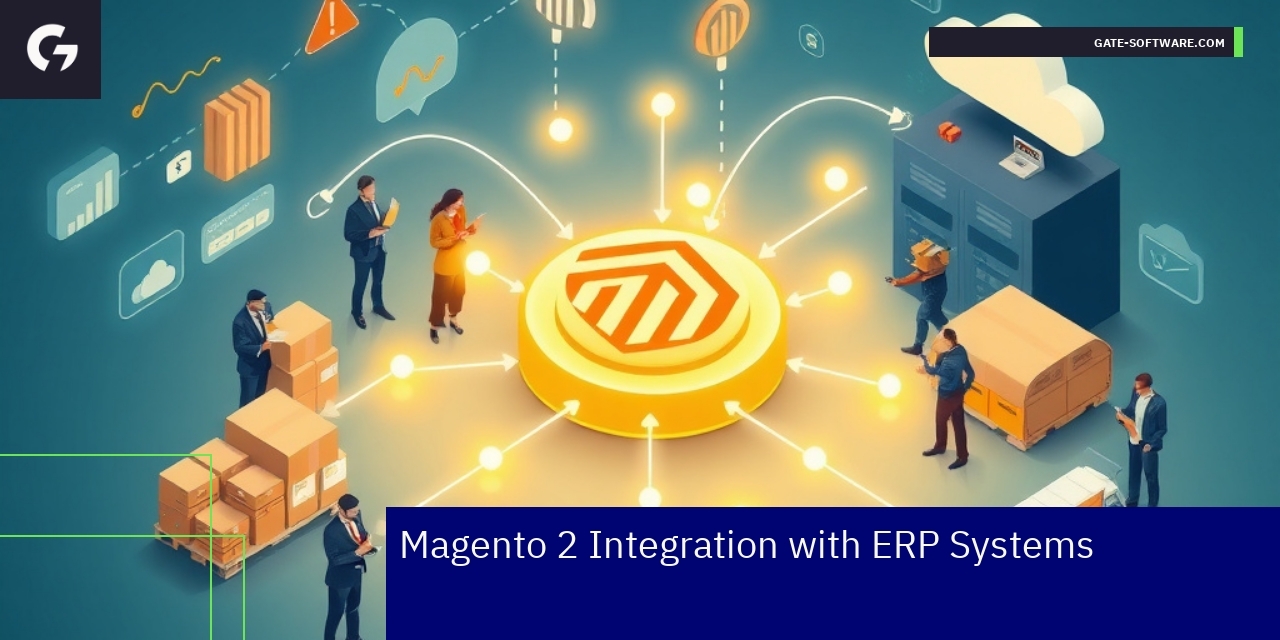
Magento 2 Integration with ERP Systems
Why Integrate Magento 2 with ERP Systems? Benefits for business processes and B2B e-commerce automation.
Integrating Magento 2 with ERP systems is crucial for optimizing business processes within B2B e-commerce. This integration enables seamless data exchange, which supports automating business processes such as order management, inventory tracking, and customer data synchronization. The result is improved business process efficiency, enabling quicker response times and more accurate information flow across platforms. B2B e-commerce benefits significantly from this synergy because it streamlines complex workflows, reduces manual errors, and supports scalable operations, ensuring businesses can maintain competitiveness and meet evolving client expectations.
Automating Business Processes ❯ Benefits for efficiency ❯ Business process performance ❯ Operational automation
B2B & Workflow Automation: maximizing efficiency through automating business processes integrated with Magento 2.
Automating business processes in a B2B environment using Magento 2 integration leads directly to substantial efficiency gains. By linking key systems, companies can automate repetitive tasks such as invoicing, shipment tracking, and procurement workflows, which traditionally require significant manual effort. This automation not only accelerates operational cycles but also ensures greater data accuracy, crucial for effective decision-making. Moreover, efficiency improvements allow teams to focus on strategic initiatives rather than transactional work. Automating business processes within this ecosystem strengthens the foundations for scalable B2B e-commerce platforms and enhances overall business process performance.
Integration with CRM Systems
Strategies to enhance Magento expansion by integrating with CRM systems.
Enhancing Magento expansion necessitates robust integration with CRM systems, which provides an enriched view of customer interactions and history. This integration supports B2B companies in personalizing their offerings and tailoring communications, crucial for managing complex B2B relationships. Combining Magento’s commerce functionalities with customer insights from CRM systems enables more effective marketing and sales strategies. Furthermore, integration with CRM systems helps streamline sales and support processes, enabling businesses to increase efficiency and responsiveness. This coherent system landscape fosters Magento expansion and sustained growth in competitive B2B markets.
Dynamic Price Management
How Magento 2 Simplifies Managing B2B Processes including dynamic price management tailored for B2B needs.
Dynamic price management is a critical component for B2B e-commerce success, and Magento 2, when integrated with ERP and CRM systems, facilitates advanced pricing strategies. This integration allows businesses to adjust prices dynamically based on customer segmentation, volume discounts, or market conditions. Efficient price management ensures companies remain competitive and responsive to client needs while safeguarding margins. By automating pricing updates and synchronization across platforms, businesses achieve greater operational efficiency and reduce the risk of pricing errors. Magento 2’s flexible pricing capabilities empower B2B enterprises to meet complex pricing demands with ease, supporting overall Magento expansion and efficiency goals.

Implementing a PIM System
The Ultimate Guide to Magento 2’s Catalog Permissions for B2B and B2C Stores featuring PIM implementation for SEO efficiency.
Effective implementation of a PIM system within a B2B e-commerce framework significantly enhances efficiency by centralizing product data and streamlining business processes. Magento 2’s catalog permissions allow for granular control suited to diverse B2B buyer segments, balancing access between B2B and B2C stores. By integrating PIM, businesses can automate the creation of meta tags & friendly URLs, ensuring that product information is not only accurate but also SEO-optimized. This auto-generation reduces manual workload and errors, accelerating time-to-market. Compliance with existing business processes ensures seamless data flow, minimizing disruptions. Magento’s capabilities paired with a PIM solution support multi-level access management, boosting efficiency across sales channels and improving the overall digital catalog’s SEO efficiency.
Auto-Generating Meta Tags & Friendly URLs
How to Implement a Custom ‘Order Approval Workflow’ for B2B Stores and optimize meta tags alongside managing couriers and returns.
Auto-generating meta tags & friendly URLs is pivotal in enhancing search performance while maintaining operational efficiency. In B2B environments, where product lines and SKUs are extensive, automating SEO elements reduces complexity and supports scalability. A tailored order approval workflow can further optimize business processes by ensuring accurate order validation, reducing delays. Coupling this with courier integration & return management creates a robust operational backbone: automatic updates of order and return statuses reduce manual interventions and errors. This synergy between SEO automation and logistics management is crucial for B2B e-commerce, where promptness and precision strongly influence buyer satisfaction and repeat business.
Courier Integration & Return Management
Implementing a Successful B2B Strategy with Magento including courier integration and loyalty programs to boost B2B e-commerce.
Courier integration & return management extend the PIM system’s functionality into logistics and customer service, crucial areas for business process optimization. Real-time courier tracking and seamless return workflows minimize resolution times and operational overhead. In B2B e-commerce, these integrations help maintain high standards of service reliability, directly impacting customer retention and loyalty. Moreover, coupling these logistics capabilities with loyalty programs empowers businesses to reward and retain clients effectively. Tailored loyalty programs can automate incentives linked to purchase volumes and return behaviors, driving a more committed B2B customer base. Together, these components elevate the entire commerce ecosystem’s efficiency and responsiveness.
Loyalty Programs
B2B & Workflow Automation of loyalty programs and automated responses boosting overall efficiency.
Loyalty programs are foundational for fostering long-term B2B partnerships and can be effectively incorporated into automated workflows within the PIM system. Automation of responses and loyalty programs decreases manual workload and speeds up communication, ensuring that clients promptly receive incentives, updates, and support information. Efficient loyalty management, combined with automated meta tags & friendly URLs, creates a virtuous cycle boosting both marketing impact and operational efficiency. Automating business processes around loyalty ensures personalized engagement at scale, critical in B2B e-commerce where client relationships are complex. Furthermore, integrating these elements with courier integration & return management rounds out a comprehensive system that addresses both front- and back-end service excellence.

Magento 2 vs Other eCommerce Platforms
In the B2B eCommerce landscape, choosing the right platform is critical to meet complex business needs and ensure scalability, security, and integration capabilities. Magento 2 stands out as a robust solution designed to handle high transaction volumes, complex product catalogs, and extensive customization options, which are essential for B2B companies. The platform supports advanced pricing structures, customer segmentation, and seamless integration with ERP and CRM systems, which are fundamental for B2B operations.
Magento 2’s architecture supports comprehensive UX/UI customization while adhering to WCAG standards, ensuring accessibility and a superior user experience tailored to different decision-makers like Architects, CTOs, and eCommerce Managers. Additionally, Gate-Software provides expert MagentoOneS™ support, ranging from SLA-backed hosting and monitoring to migrations and cost optimization, mitigating technical risks and ensuring continuous platform performance.
Compared to other platforms, Magento 2’s flexibility in managing product data, custom workflows, and sophisticated marketing automation aligns well with the strategic goals of B2B enterprises aiming to enhance their digital sales channels. This flexibility aids in delivering personalized content and offers, supported by Gate-Software’s content strategy and social media integration, which boosts brand voice consistency and market positioning. With comprehensive solutions for UX/UI audits and technical maintenance, Magento 2 backed by Gate-Software ensures that B2B clients achieve measurable business outcomes and stay competitive in evolving markets.
Magento 2 in B2B Use Cases 🧩 Integrations 🚀 Performance Optimization 🔒 Security Enhancements 📈 Analytics & Reporting
In the rapidly evolving landscape of eCommerce, Magento 2 has emerged as a powerful platform for B2B businesses, particularly in markets like Poland. This section explores the application of Magento 2 in addressing specific B2B challenges, leveraging insights from the Gate-Software Knowledge Base, including Content Strategy 5.0 and various article categories. The aim is to provide an informed perspective on how Magento 2 can serve as a robust solution for B2B operations.
One of the most notable advantages of Magento 2 is its flexibility and adaptability for B2B use cases. Businesses often face challenges like handling large volumes of products, managing complex pricing structures, and maintaining efficient inventory systems. Magento 2’s architecture allows businesses to customize their workflows and integrate with existing systems seamlessly. For example, Polish businesses can benefit from enhanced user experience and transactional capabilities tailored to their specific sector, whether they operate in manufacturing, wholesale, or distribution.
A critical aspect of B2B commerce is customer relationship management. Magento 2 enables businesses to create personalized experiences for their clients. This can be executed through features such as customer segmentation, which allows businesses to tailor product offerings and marketing messages based on customers’ purchasing behavior. For example, companies that sell machinery or industrial components can utilize Magento 2’s customer-specific pricing options to set different prices for various clients, thus optimizing profitability while ensuring customer satisfaction.
Additionally, the integration of advanced search functionalities is imperative for B2B environments. Clients often need to find specific products quickly and efficiently. Magento 2 supports advanced search capabilities, which can be enhanced by third-party extensions to include features such as voice search and AI-driven suggestions. This is especially useful for Polish enterprises looking to improve their B2B sales processes while keeping up with international standards of eCommerce.
Another essential feature of Magento 2 is its support for complex catalog management. B2B companies frequently manage extensive product catalogs that require rigorous organization. Magento 2 provides robust tools for product categorization, tagging, and attribute management, allowing businesses to maintain a scalable and organized product database. This is vital for companies in sectors like electronics or construction, where product specifications and compliance data must be easily accessible to both sales teams and end-users.
Magento 2 also addresses a key challenge in the B2B sphere: repetitive billing cycles and invoicing. Traditional methods can be cumbersome and prone to errors. With Magento 2, businesses can automate invoicing processes, leading to faster transaction cycles and better cash flow management. This automation is particularly beneficial for Polish companies dealing with multiple high-value transactions, as it reduces administrative overhead and enhances operational efficiency.
Moreover, the platform’s capabilities for building multi-store setups mean that businesses can manage multiple storefronts across different regions or brands from a single installation. This functionality is crucial for companies that operate in diverse markets or offer specialized products. B2B businesses in Poland can leverage this feature to streamline their operations, improve marketing efforts, and ensure compliance with local regulations across different regions.
Security is another top priority for B2B transactions. Magento 2 has incorporated advanced security features that comply with the latest standards and practices, ensuring that sensitive business data is protected against cyber threats. This is particularly critical for companies that handle personal data or financial transactions, as they must adhere to strict regulatory requirements.
Lastly, the importance of data analytics cannot be overstated. By utilizing Magento 2’s robust reporting and analytics tools, B2B enterprises can gain actionable insights into their business performance. This includes monitoring sales trends, customer behavior, and inventory levels, empowering businesses to make data-driven decisions that enhance growth and profitability.
In conclusion, Magento 2 presents a versatile solution for addressing the diverse challenges faced by B2B businesses in Poland and beyond. By leveraging its advanced capabilities, such as personalized customer experiences, efficient catalog management, and automated invoicing, companies can navigate the complexities of B2B commerce with greater ease and precision. As businesses continue to adapt to changing market demands, Magento 2 stands as a critical ally in fostering competitive advantages and achieving operational excellence.

Data and Performance Metrics – Efficiency, SLA, TCO
Operational Effectiveness in B2B Projects
In the realm of B2B projects, Gate-Software has consistently focused on creating measurable outcomes that enhance operational effectiveness. For instance, the average project takeover time for new Magento 2 implementations stands at approximately 15 days, allowing businesses to transition smoothly to efficient e-commerce solutions. Moreover, Gate-Software boasts an impressive 95% of projects delivered on time, showcasing a strong commitment to time management and client satisfaction.
When it comes to cost efficiency, clients have reported an average Total Cost of Ownership (TCO) reduction of around 20% when migrating from Magento 1 to Magento 2. This statistic exemplifies the significant financial advantage businesses can achieve by embracing newer, more scalable technologies.
In terms of service reliability, Gate-Software guarantees an uptime SLA of 99.9%, ensuring that B2B e-commerce platforms remain operational without interruptions, a critical factor for maintaining customer trust and sales continuity.
The number of successful Magento implementations completed by Gate-Software has reached 250, reflecting their extensive expertise and strong market presence within the B2B sector. This experience is further complemented by an average client relationship duration of 5 years, demonstrating the firm’s ability to foster long-term partnerships based on trust and reliability.
Finally, with regards to user experience, feedback indicates that Gate-Software’s strategies have led to a 30% increase in customer satisfaction scores among clients who have undergone the transition to Magento 2, highlighting the positive impact of enhanced UX/UI and streamlined processes on overall business performance.

Summary
In today’s competitive B2B landscape, leveraging the advanced capabilities of Magento 2 is essential for driving operational efficiency and enhancing customer satisfaction. Gate-Software’s focus on automating business processes not only streamlines workflows but also empowers organizations to adapt swiftly to market demands. By integrating tools that improve order processing, client onboarding, and post-sales support, businesses can ensure a seamless experience for both internal teams and customers. The tailored solutions offered by Gate-Software align with strategic business objectives, making it easier for decision-makers such as CTOs and eCommerce Managers to oversee robust and scalable B2B operations. With a commitment to enhancing digital transformation, Gate-Software positions itself as a trusted partner, ready to assist your organization in achieving measurable success and staying competitive in the ever-evolving B2B marketplace. Don’t hesitate to reach out for more information on how we can collaborate to elevate your business processes.

FAQ
How does Magento 2 enhance operational efficiency in B2B environments?
Magento 2 automates business processes such as order management, inventory tracking, and customer relationship workflows, significantly reducing manual errors and accelerating transaction cycles. This integration optimizes order processing and client onboarding, leading to improved efficiency and customer satisfaction.
What are the key benefits of integrating Magento 2 with ERP systems?
Integrating Magento 2 with ERP systems allows for seamless data exchange, automating critical business processes like invoicing and inventory management. This integration streamlines workflows, reduces manual errors, and supports scalable operations, which is crucial for maintaining competitiveness in B2B markets.
Why is compliance with WCAG guidelines important for B2B eCommerce?
Compliance with WCAG guidelines ensures that Magento 2 platforms are accessible to all users, including those with disabilities. This adherence enhances user experience, broadens market reach, and meets legal requirements, thereby improving overall customer satisfaction and brand reputation.
How can B2B businesses leverage Magento’s extensive catalog management capabilities?
Magento 2 provides robust tools for product categorization and attribute management, enabling B2B companies to handle large and complex catalogs efficiently. This organization is vital for businesses dealing with extensive product lines, ensuring that customers can easily navigate and find relevant products.
What role does automation play in improving B2B invoicing processes?
Automation in B2B invoicing through Magento 2 streamlines the billing cycle, reduces administrative overhead, and minimizes errors. By automating these processes, businesses can ensure faster transaction cycles and better cash flow management, ultimately enhancing operational efficiency.
.
.
Zamów bezpłatną konsultację
.
Z nami rozwój Twojego biznesu nabierze tempa! Zapraszamy do kontaktu średnie i duże firmy generujące min. 7 mln PLN obrotu rocznie – tam nasza ekspertyza sprawdza się najlepiej.
.
Kliknij w poniższy przycisk i skontaktuj się z jednym z naszych konsultantów e-commerce
.