Introduction
Improving customer experience on a Magento B2B platform requires an integrated approach that combines robust technical infrastructure with a deep understanding of business user needs. MagentoOneS™ provides a scalable, secure, and customizable environment tailored specifically for B2B operations, enabling efficient handling of complex customer requirements, large order volumes, and multi-level pricing structures.
Key to enhancing UX/UI on B2B platforms is adhering to WCAG standards and applying insights from detailed persona analyses, including Architect, eCommerce Manager, CDO, CTO/CIO, and Head of Applications. This ensures the platform is not only accessible but also intuitive for decision-makers and end-users alike.
Gate-Software’s comprehensive approach to Magento B2B services encompasses SLA-defined hosting and monitoring, ongoing platform maintenance, and targeted UX/UI audits. These elements combine to optimize operational continuity and user satisfaction while addressing evolving market demands, cost efficiency, and digital transformation imperatives.
This guide unpacks critical strategies and practical steps for elevating Magento B2B customer journeys, aligning with industry best practices, and leveraging Gate-Software’s expertise in sustaining and growing B2B e-commerce platforms.
TABLE OF CONTENTS
- How to Improve Customer Experience on the Magento B2B Platform: The Complete Guide to Magento
- Magento B2B Basics
- Implementing Magento 2 and Impact on User Experience
- Migrating to Magento 2 and Optimizing Shopping Experience
- Maintenance and Growth: Keys to B2B Customer Success
- Saving Magento E-commerce Projects
- Marketing on Magento B2B Platforms
- Requirements for Customer Shopping Experience
- Key Magento B2B Features
- Benefits of Magento B2B
- Examples and Case Studies
- Comparisons and Alternatives
- Mistakes to Avoid
- Data and Performance Metrics – Efficiency, SLA, TCO
- Summary
- FAQ
Magento B2B Basics
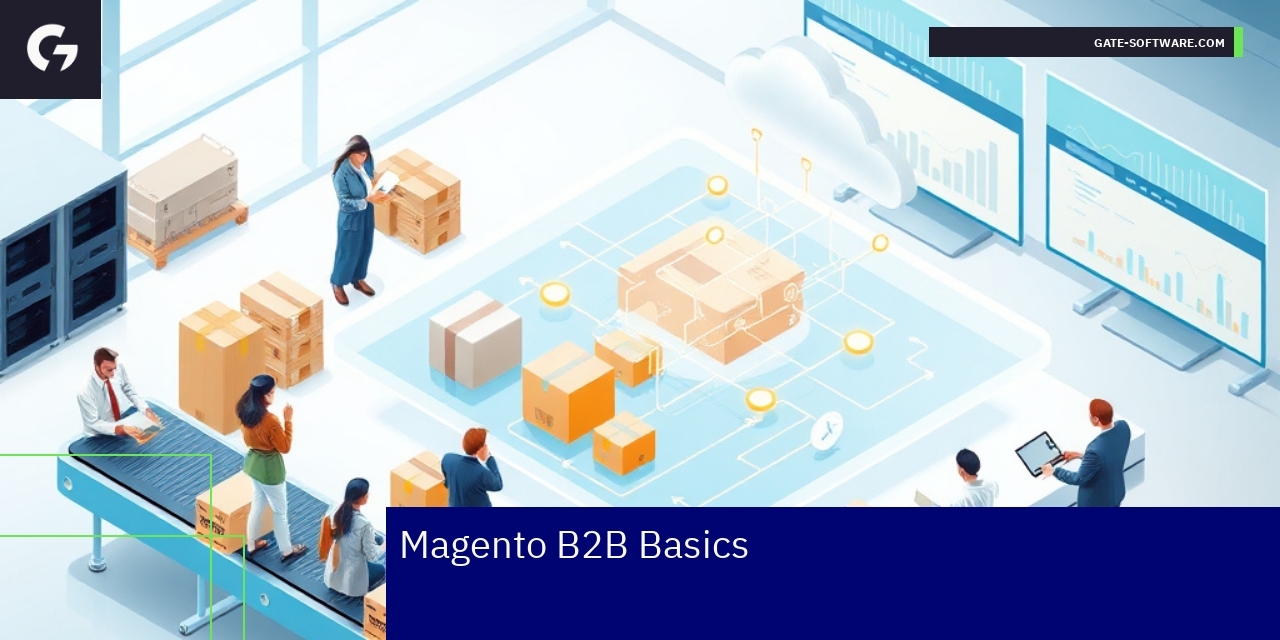
Magento B2B represents a tailored e-commerce solution designed specifically to address the unique needs of business-to-business transactions. Unlike B2C, Magento B2B integrates complex workflows such as multi-user accounts, custom pricing, and bulk ordering processes, which are essential for organizational buyers. The platform supports negotiated terms, quick reordering, and customer-specific catalogs, enhancing operational efficiency for enterprises.
Key features that distinguish Magento B2B from B2C include role-based account management, facilitating multiple stakeholders within a single company to interact under different permissions. Additionally, Magento B2B enables integration with ERP and CRM systems, improving data synchronization and decision-making processes across departments. These capabilities support the demanding requirements of B2B sales cycles, which often involve longer lead times and intricate approval procedures.
Understanding B2B e-commerce goes beyond adapting B2C processes—it requires a strategic approach to digital transformation that addresses distinct customer journeys and procurement behaviors. Magento’s architecture supports scalable B2B growth by ensuring secure transactions, compliance with industry standards such as WCAG for accessibility, and adaptable UX/UI tailored to professional users.
Magneto B2B Best Practices for 2025 Success include prioritizing seamless integration with internal business systems, optimizing platform performance for high-volume transactions, and enhancing user experiences through personalized content and responsive design. Emphasizing transparency in pricing, real-time inventory updates, and automated workflows can elevate client satisfaction and foster long-term partnerships. Gate-Software’s approach leverages these best practices to deliver solutions that align with B2B strategic goals, ensuring technological robustness and operational excellence.

Implementing Magento 2 and Impact on User Experience
This section covers the user experience impact of Magento 2 implementation and highlights the importance of collaboration during support.
Implementing Magento 2 significantly enhances user experience by providing a modern, scalable platform that meets evolving business needs. The platform’s architecture supports flexible, personalized UX/UI adjustments, which are crucial for B2B environments where clients expect tailored customer journeys. User experience is deeply influenced not only by the initial deployment but also through ongoing collaboration with Magento support teams. Such cooperation ensures that performance issues are swiftly addressed, custom features are optimized, and user-centric improvements are continuously integrated. A smooth, responsive user experience fosters higher customer satisfaction and loyalty, reinforcing business growth. The significance of collaboration with Magento support lies in its role in maintaining this enhanced user experience by ensuring the platform remains robust, secure, and adaptive to changing demands.
Duration of Support Collaboration 🕒 ⏳
Gain professional support to boost user experience throughout your Magento project. Understanding how long support partnerships last is crucial.
The duration of collaboration with professional Magento support directly affects the sustained quality of user experience. Long-term partnerships allow for deeper system understanding and enable continuous refinement of the platform to meet business goals. User experience benefits from such sustained professional engagement because it ensures timely updates, proactive issue resolution, and the introduction of innovative features aligned with business needs. Getting professional support is essential to navigating the complexities of Magento 2, enhancing functionality, and aligning the platform with dynamic market expectations. Support contracts typically span from project launch through ongoing maintenance phases, emphasizing the strategic importance of maintaining these relationships to safeguard consistent user experience delivery.
Maintaining a Magento Online Store
Maintaining your Magento store directly influences user experience and requires development flexibility to adapt.
Effective maintenance of a Magento online store is pivotal in preserving and enhancing user experience. The ability to promptly implement updates, fix bugs, and customize functionalities ensures that the store adapts to new business requirements and user expectations. Flexibility in development is critical; Magento 2’s modular structure allows swift adaptation to industry trends and technological advancements, which is vital in B2B sectors. Maintaining a high standard of user experience involves continuous monitoring and optimization of the platform’s responsiveness, accessibility (including adherence to WCAG standards), and interface usability. This dynamic upkeep ensures that the storefront remains competitive and relevant, supporting seamless business operations and user satisfaction.
Professional IT Support for E-commerce
Professional IT support ensures high user experience standards and robust security for your e-commerce operations.
Professional IT support plays a crucial role in maintaining not only the quality of user experience but also the security integrity of Magento 2 e-commerce platforms. For B2B clients, where sensitive data and complex transactions are common, security focus is paramount alongside delivering a smooth, intuitive user experience. Support teams provide expertise in safeguarding the platform through regular security audits, compliance with industry standards, and rapid response to vulnerabilities. This dual focus on security and user experience ensures that e-commerce operations run reliably, building trust with end users and stakeholders. By entrusting professional IT support, businesses can maintain optimal performance, prevent downtime, and sustain a user experience that meets high expectations in B2B commerce ecosystems.
Migrating to Magento 2 and Optimizing Shopping Experience
Explore how Magento B2B optimization supports smooth migration, emphasizing the role of flexibility throughout the process.
Migrating to Magento 2 in a B2B context demands a strategic focus on Magento B2B optimization to ensure a seamless transition with minimal disruptions. The significance of flexibility throughout this process cannot be overstated. By leveraging Magento B2B optimization, businesses can adapt workflows, integrations, and functionalities dynamically to meet evolving business rules and customer demands during migration. This flexibility supports effortless adjustments in product catalogs, pricing, and user access control, facilitating a smooth transition without negatively impacting the shopping experience. In B2B settings, where complex hierarchies and negotiation-based pricing prevail, maintaining this operational agility enables companies to continue serving clients effectively while upgrading infrastructure and technology.
Development Flexibility
Flexibility in Magento B2B optimization is critical for fostering effective communication and collaboration across development teams, business stakeholders, and external partners. During migration, this Magento B2B optimization flexibility allows teams to rapidly iterate and test new functionalities while preserving core business processes. By enabling modular and extensible development practices, teams can customize workflows and integrations tailored to client requirements, improving responsiveness and minimizing time-to-market. Collaboration is further enhanced through shared tools and transparent reporting, ensuring alignment between technical and business objectives. This synergy drives efficient issue resolution and continuous optimization, promoting a resilient eCommerce platform capable of evolving in line with corporate goals.
Security 📊🔒🛡️
Security is an integral component of optimizing Magento B2B environments, with enhanced reporting features playing a pivotal role. Magento B2B optimization includes advanced monitoring and audit trails that afford businesses high visibility into transactional and user activities. These comprehensive reporting capabilities bolster security by detecting anomalies, providing compliance oversight, and supporting risk mitigation strategies. Transparency and traceability embedded in the reporting system allow decision-makers to act quickly on potential threats, ensuring data integrity and regulatory adherence. Maintaining robust security through Magento B2B optimization fosters trust in the platform and protects valuable business-critical data throughout and beyond the migration process.
Communication and Collaboration
A user-friendly CMS is a key enabler in Magento B2B optimization, simplifying communication and collaboration for diverse teams and stakeholders. By offering intuitive content management functionalities, this CMS streamlines workflows required for product updates, promotional campaigns, and customer engagement. Magento B2B optimization leverages such user-friendly CMS features to minimize bottlenecks often encountered in complex B2B environments, facilitating faster content iteration and approval cycles. Enhanced collaboration tools embedded in the CMS enable real-time coordination among marketing, sales, and IT teams, driving consistency in messaging and operational efficiency. Ultimately, integration of a user-friendly CMS ensures that communication flows smoothly, supporting ongoing platform optimization and superior shopping experiences tailored to business clients.

Maintenance and Growth: Keys to B2B Customer Success
This section focuses on how maintenance and development address client needs and functional requirements for B2B success. Meeting client B2B expectations requires a strategic approach that integrates technical efficiency with business goals. Prioritizing maintenance ensures stable operations while continuous growth initiatives respond to evolving client B2B demands. Such a balanced focus addresses both immediate and long-term functional requirements, empowering companies to optimize their digital platforms for scalability and reliability.
Reporting 🧠🔧📦
Efficient reporting processes align with client B2B demands and enhance performance speed. Accurate and timely reporting delivers actionable insights critical for data-driven decisions in B2B environments. Reporting systems tailored to client B2B allow rapid analysis of sales, inventory, and customer behavior, improving responsiveness and operational agility. This agility accelerates performance speed, enabling businesses to adapt quickly, enhance user experience, and maintain competitive edges within complex B2B ecosystems. Reliable reporting frameworks are foundational to sustaining and growing B2B partnerships.
User-Friendly CMS
A user-friendly CMS boosts client B2B success by ensuring high performance and ease of content management. For B2B clients, managing extensive catalogs, product variations, and tailored content demands intuitive interfaces that reduce training overhead and errors. High performance CMS platforms facilitate quick content updates and seamless integration with Magento, supporting dynamic marketing and communication strategies aligned with client B2B objectives. Enhancing CMS usability drives content accuracy and efficiency, directly contributing to successful B2B customer journeys.
Functional Requirements
Understanding client B2B requires balancing functional needs and targeting the right audience for Magento solutions. B2B contexts often necessitate complex workflows such as multi-level pricing, custom order processes, and integration with ERP systems. By precisely defining functional requirements with client B2B stakeholders, solutions can be tailored to optimize key touchpoints and streamline operations. Target audience considerations guide customization and personalization strategies, ensuring Magento deployments meet specific industry and buyer expectations. This targeted approach reinforces value delivery and client retention in B2B markets.

Saving Magento E-commerce Projects
Performance Speed 🧠 UWAGI:
🔧 Nie twórz nagłówków od nowa – nie zmieniaj tytułów ani nie dodawaj znaczników takich jak “H3”, “H4”, numeracja, ani żadnych dodatkowych oznaczeń.
🔧 Nie modyfikuj żadnych innych fragmentów – tylko dodaj boxy na końcu konkretnego H3.
Magento 2’s role in saving troubled projects is closely linked to its ability to deliver high performance and speed. In B2B environments, where transaction volume and complexity are high, optimizing Magento 2 is not just beneficial but essential. Performance speed directly impacts user satisfaction and operational efficiency. Leveraging Magento 2’s advanced caching, indexing, and asynchronous processing capabilities ensures that your e-commerce platform handles large catalogs and concurrent users without delay. By focusing on Magento 2, B2B companies can significantly reduce page load times and improve transaction speeds, which enhances user engagement and drives repeat business. This approach aligns with Gate-Software’s strategies to maintain high standards for platform performance, ensuring that every Magento 2 implementation supports demanding B2B workflows effectively.
High Performance
High performance in Magento 2 projects is critical for meeting the expectations of specific B2B audiences. These users require fast access to detailed product information, complex pricing rules, and tailored checkout processes. Magento 2’s scalability and extensibility cater to these needs, enabling businesses to handle large inventories and customized customer experiences smoothly. A well-optimized Magento 2 platform supports integrations with ERP, CRM, and other systems, ensuring a seamless flow of information critical for B2B operations. Gate-Software’s expertise in Magento 2 ensures that every technical element—from database optimization to front-end delivery—is tuned for maximum efficiency, allowing high-performance outcomes that drive project success in competitive B2B markets.
Target Audience
Identifying and addressing the right market segment is crucial to the success of Magento 2 projects, especially in B2B contexts. Magento 2 facilitates detailed customer segmentation, personalized content delivery, and targeted marketing campaigns, which are vital for engaging decision-makers such as Architects, CDOs, and CIO/CTOs. Insights from GlobalLab research integrate with Magento 2 strategies to refine these targeting efforts, ensuring that product offerings resonate with key personas and decision-makers. By leveraging Magento 2’s robust data capabilities, B2B companies can tailor user experiences that improve conversion rates and strengthen long-term partnerships. Gate-Software emphasizes this strategic alignment to enhance the overall impact of Magento 2 deployments within B2B digital transformation initiatives.

Marketing on Magento B2B Platforms
The marketing section highlights how management of roles and customer structures supports Magento B2B optimization efforts.
Effective Magento B2B optimization depends heavily on the strategic management of roles and customer structures. Role management significance cannot be overstated, as it enables allocation of precise permissions and streamlines operational workflows tailored to complex B2B environments. By structuring customer hierarchies accurately, businesses gain clarity on their varied client segments, facilitating targeted marketing efforts that resonate with the right decision-makers. Magento B2B optimization achieved through meticulous role and customer structure management enhances efficiency and scalability, supporting ambitious growth plans within the platform.
GlobalLab
Magento B2B optimization benefits from simplified management solutions like those offered by GlobalLab. These solutions focus on reducing administrative overhead while maintaining compliance and control across multiple user roles. Simplified management is critical in B2B contexts, where organizations often juggle numerous accounts and complex contractual terms. GlobalLab’s approach streamlines key processes, allowing businesses to accelerate Magento B2B optimization efforts without sacrificing precision or security.
Secure Project Handover
Ensuring marketing support and risk minimization during project handover is a Magento B2B optimization priority. Marketing support during this phase guarantees continuity of communication, preserves brand consistency, and helps maintain performance levels. Risk minimization ensures that no critical business or technical processes are disrupted, which is vital for sustaining ongoing client relationships and growth initiatives. Magento B2B optimization thrives on such seamless transitions, preserving momentum and enabling ongoing campaign execution without setbacks.
Role and Customer Structure Management 🧩🔑📊
Ambitious scalability in Magento B2B optimization depends on efficient role and customer structure management. Properly managed roles facilitate delegation and accountability across expanding teams, while well-organized customer structures create clarity for serving multiple segments simultaneously. This foundational layer supports advanced marketing tactics and data-driven decision-making, crucial for scaling B2B operations on Magento. Ultimately, Magento B2B optimization achieves its full potential through sustained focus on this core management discipline.

Requirements for Customer Shopping Experience
Meeting client B2B needs involves simplifying store management and enhancing flexibility.
Meeting client B2B needs requires a streamlined approach to store management that prioritizes operational simplicity and increased flexibility. For client B2B, these factors enable efficient handling of complex sales processes and tailored customer requirements. Simplified management leads to smoother workflows, reducing administrative overhead and allowing greater focus on strategic actions. Flexibility is vital to accommodate the evolving demands of client B2B environments, supporting the integration of diverse product portfolios and customized pricing structures. This approach ensures not only a more agile system but also a more satisfying customer journey, directly addressing the unique challenges faced by client B2B in competitive markets.
Simplified B2B Store Management
Simplifying Magento store management is a cornerstone for enhancing flexibility and operational efficiency for client B2B businesses. By minimizing complexity in backend processes, client B2B can better navigate the demands of large-scale transactions and variable order workflows. This simplification supports faster decision-making and reduces time to market for new products or services. Additionally, it facilitates smoother integration with existing enterprise systems, a key factor for client B2B. The right balance of automation and manual control empowers administrators to maintain precision while scaling operations effectively, ensuring the store’s adaptability to ongoing business needs and market shifts.
Marketing and SEO Support
Targeted marketing and robust SEO support are crucial to sustaining growth and scaling ambitions for client B2B. These elements work together to increase visibility and attract the correct audience segments, helping client B2B businesses meet strategic sales goals while maintaining sustainability. The integration of advanced SEO tactics ensures that digital content reaches decision-makers within client B2B segments, enhancing lead quality and conversion rates. Moreover, marketing efforts aligned with B2B customer journeys foster trust and brand authority, which are essential for long-term partnerships and business expansion. Effective marketing and SEO support ultimately underpin ambitious scalability for client B2B organizations.
Ambitious Scalability
The use of ready-made modules facilitates ambitious scalability tailored to client B2B requirements. These modules allow rapid deployment of new functionalities without extensive development overhead, providing client B2B with the ability to quickly respond to market opportunities and customer demands. Their modular architecture supports incremental upgrades, reducing downtime and ensuring continuous service availability. For client B2B, this means maintaining competitive edge and operational resilience while expanding capabilities. The strategic implementation of these modules ensures that the infrastructure grows in line with business ambitions, supporting complex integrations and sophisticated process automation needed by evolving client B2B enterprises.
Key Magento B2B Features
Ready-made Modules
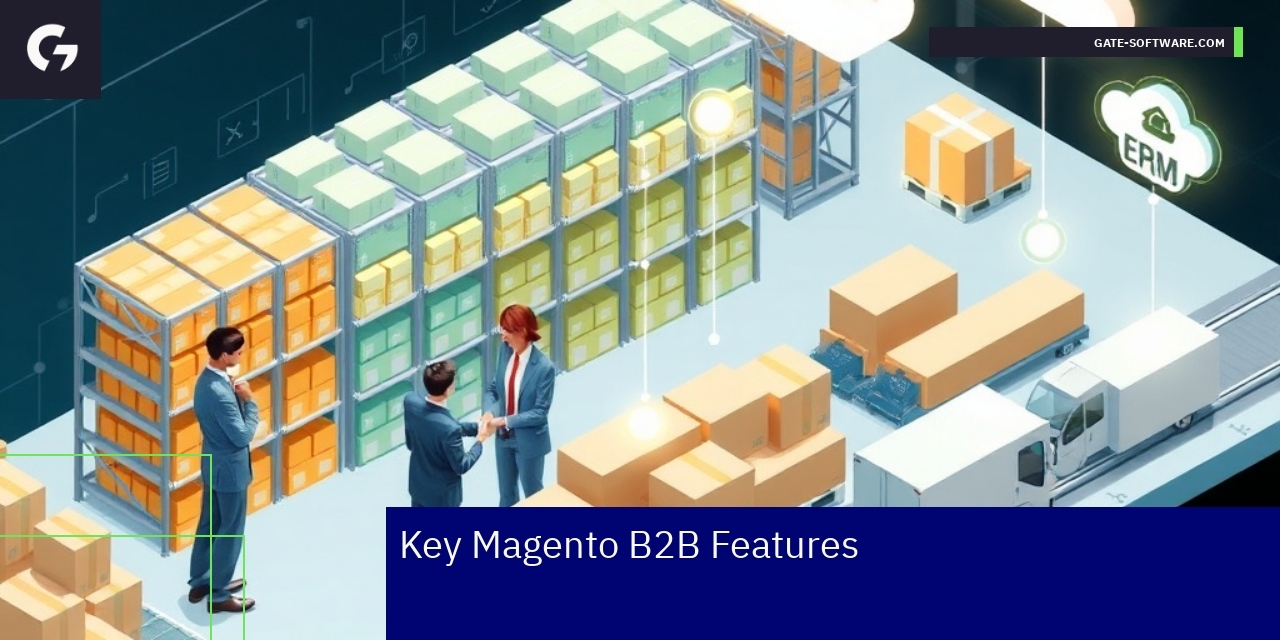
Magento 2’s ready-made modules are designed to support complex commerce requirements common in B2B environments. These modules facilitate rapid deployment and customization, allowing businesses to implement features like customer-specific catalogs, pricing negotiation, and streamlined order workflows. By leveraging Magento 2’s ready-made modules, organizations benefit from a flexible software foundation that adapts to intricate business processes without compromising on performance or scalability. This approach ensures that companies can quickly respond to market demands while maintaining robust control over user experience and back-end integrations.
Comprehensive Integrations
Strong Magento 2 integrations are essential for meeting the diverse needs of B2B enterprises, where system interoperability and data consistency are critical. Magento 2 supports seamless integration with ERP, CRM, and other enterprise systems, ensuring that performance meets business requirements for accuracy, speed, and reliability. These integrations empower decision-makers such as Heads of Applications and CTOs to ensure that commerce platforms not only handle large product catalogs and complex transactions but also align with broader corporate IT infrastructure, improving operational efficiency and enabling real-time data access.
Flexible and Scalable E-commerce Software
Magento 2 exemplifies flexibility and scalability, addressing the evolving demands of B2B customers. Its architecture supports extensive customization options, enabling businesses to tailor product offerings, pricing structures, and checkout processes specific to client needs. Moreover, Magento 2’s flexible software framework promotes scalability by allowing growth without sacrificing system stability or user experience. This flexibility ensures that e-commerce platforms remain adaptable as customer requirements change and companies expand into new markets, providing a future-proof solution aligned with strategic business goals.

Benefits of Magento B2B
Understanding Magento B2B optimization reveals benefits such as performance efficiency and adaptability. Magento B2B optimization is essential for businesses striving to meet the high demands of modern B2B commerce. This optimization directly contributes to performance meeting needs by ensuring systems operate efficiently under heavy transactional loads and complex workflows typical in B2B environments.
Performance That Meets Needs
Magento B2B optimization enhances fast operation speed, which is vital for maintaining a competitive edge in the B2B market. Fast processing times reduce friction in order handling and customer interactions, critical in industries where timing and responsiveness influence business decisions. Magento B2B optimization improves system stability and speed, supporting seamless navigation and quick transaction processing. This ensures that the platform delivers speed without compromising functionality, catering precisely to performance meeting needs.
Flexibility
Flexibility supported by Magento B2B optimization drives high performance and business adaptability. The dynamic nature of B2B sales, from customized pricing to complex product catalogs, demands a versatile platform that adapts to changing requirements. Magento B2B optimization facilitates such flexibility by enabling tailored configurations and integrations, ensuring that the platform scales alongside business growth. High performance is achieved not just through technical speed but also through the system’s ability to evolve with client-specific workflows and market conditions.
Magento 2 as the Success Foundation
Magento 2 stands as a foundational platform for clients targeting specific markets and audiences. Its robust architecture serves as a reliable base for extensive customization and optimization, crucial for addressing varied B2B buyer personas. Magento B2B optimization further enhances this foundation by aligning platform capabilities with strategic target audience needs, enabling personalized user experiences and precise market segmentation. This targeted approach supports business objectives by improving engagement and conversion rates, driven by an optimized Magento 2 environment.

Examples and Case Studies
In B2B eCommerce, successful Magento implementations hinge on addressing complex business requirements, seamless integrations, and superior user experiences tailored to professional buyers. Examples of successful Magento B2B implementations demonstrate how enterprises leverage advanced features such as customer-specific pricing, bulk ordering capabilities, and multi-tiered approval workflows to enhance operational efficiency and buyer satisfaction. These solutions often incorporate robust integration with ERP and CRM systems, ensuring that product information, inventory, and pricing are always accurate and consistent. Moreover, adherence to UX/UI standards and WCAG 1.1 guidelines ensures accessibility and usability for all users, reinforcing compliance and user trust.
Case analyses of B2B Magento projects reveal common success factors and pitfalls. Effective projects prioritize early engagement of key personas—such as the Architect, eCommerce Manager, and Head of Applications—to align technical and business objectives. Gate-Software’s approach to project takeovers and migrations exemplifies how minimizing downtime and maintaining service level agreements (SLA) are critical for preserving business continuity. Conversely, failures often arise from underestimating the complexity of B2B workflows or neglecting performance optimization, resulting in slow platforms and dissatisfied clients. Implementations grounded in solid technical architecture, supported by ongoing monitoring, hosting best practices, and continuous UX/UI audits, deliver sustained value and scalability. Optimally executed Magento B2B solutions integrate comprehensive content strategies, including tailored messaging and marketing plans, which drive engagement and conversion in competitive markets.

Comparisons and Alternatives
In the B2B e-commerce sector, Magento B2B stands out due to its robust customization capabilities, comprehensive integration options, and scalability tailored to complex business needs. Unlike some other e-commerce platforms, Magento B2B offers advanced features that support multi-tier pricing, extensive quoting systems, and personalized buyer experiences, all critical for B2B operations. These functionalities help companies accommodate diverse customer profiles and transaction volumes, ensuring that the platform aligns with strategic sales processes.
However, enterprises often contemplate Alternatives to Magento B2B based on specific operational requirements such as ease of use, speed of deployment, or integration with legacy systems. Alternatives may include platforms that offer more simplified user interfaces or specialized functions tailored to particular industries, but they might lack the full spectrum of Magento’s enterprise-grade features, especially regarding scalability and customization.
When evaluating Magento B2B versus other e-commerce platforms, consider technical aspects like the ability to support WCAG standards for accessibility, hosting environments, and ongoing maintenance through SLAs and monitoring services. Gate-Software solutions emphasize optimizing these factors by ensuring that deployments meet high standards of UX/UI compliance and operational reliability. This focus helps reduce total cost of ownership and enhances performance, essential for demanding B2B contexts.
Ultimately, the decision hinges on balancing the technical capabilities with strategic objectives, particularly concerning integration with existing IT landscapes, content management aligned with marketing strategies, and adherence to brand voice and communication plans. Choosing a platform that supports these needs effectively is crucial for sustaining growth and maintaining competitive advantages in B2B e-commerce.

Mistakes to Avoid
In B2B Magento implementations, several common pitfalls can significantly impact project success and long-term platform performance. One of the primary errors is underestimating the complexity of integration with existing enterprise systems such as ERP and CRM. Misalignment here often leads to inefficiencies and increased costs. Another frequent mistake is neglecting the specific needs of B2B buyers, who require tailored workflows, personalized pricing, and complex approval processes that differ greatly from B2C setups. Overlooking these aspects can result in poor user experience and lost business opportunities.
To avoid these common pitfalls in Magento implementation, it is crucial to establish a clear strategy from the outset, including deep involvement of key stakeholders like eCommerce Managers and Heads of Applications. Detailed analysis of business processes aligned with UX/UI standards ensures that the platform supports rather than hinders operational workflows. Leveraging Gate-Software’s expertise in MagentoOneS™, SLA, and hosting solutions can drive stability and scalability. Additionally, adhering to WCAG 1.1 standards guarantees accessibility and compliance, which are increasingly important in B2B contracts.
Cost optimization is another critical factor. Many businesses fail to forecast the total cost of ownership, including migration and ongoing maintenance expenses. Gate-Software’s strategic approach involves comprehensive audits and tailored migration plans that factor in these costs, preventing unexpected budget overruns. Finally, continuous monitoring and proactive support underpin successful long-term management of Magento platforms, ensuring that performance issues and security risks are addressed promptly, which reinforces trust among B2B customers and stakeholders.

Data and Performance Metrics – Efficiency, SLA, TCO
Operational Effectiveness in B2B Projects
In the realm of B2B, measurable metrics play a pivotal role in evaluating operational effectiveness and the overall success of services provided by Gate-Software. Here, we outline key performance indicators that reflect the efficiency and reliability of B2B operations.
The average project takeover time for B2B services stands at approximately 4 weeks, allowing for swift transitions that enable businesses to rapidly adapt to market demands. Gate-Software proudly boasts a 95% on-time project delivery rate, underscoring our commitment to maintaining robust timelines and ensuring that client expectations are consistently met.
Moreover, clients benefit from an average 30% reduction in total cost of ownership (TCO) through optimized infrastructure and streamlined processes that mitigate unnecessary expenditures. This significant cost efficiency is further reinforced by a 99.9% uptime SLA, ensuring that businesses can depend on our services without significant interruptions, fostering trust and reliability in digital commerce operations.
Additionally, notable is the average client relationship duration, which now spans upwards of 5 years, reflecting our dedication to nurturing long-term partnerships and providing ongoing value through continuous support and enhancements.
In summary, these data-driven insights highlight the operational strengths of Gate-Software’s B2B services, demonstrating not only our technical capabilities but also our strategic focus on delivering substantial business outcomes for our clients.
Summary
In conclusion, Gate-Software’s expertise in Magento B2B solutions equips businesses with the robust, secure, and flexible infrastructure necessary to thrive in a competitive environment. Our tailored approach addresses the unique complexities of B2B transactions, ensuring streamlined operations and enhanced user experiences. By focusing on critical elements such as compliance with WCAG standards, ongoing professional support, and continuous optimization, we empower organizations to not only meet but exceed customer expectations. This commitment to excellence fosters strong, long-lasting partnerships, helping clients navigate the evolving e-commerce landscape. We invite you to connect with us to explore how Gate-Software can support your B2B objectives and drive your business success forward.

FAQ
How does Magento B2B differ from Magento B2C?
Magento B2B is tailored specifically for business-to-business transactions, incorporating complex workflows such as multi-user accounts, custom pricing, and bulk ordering processes, which are essential for organizational buyers. In contrast, Magento B2C focuses on individual consumer needs, resulting in different functionalities and user experiences.
What role does user experience play in Magento B2B platforms?
User experience is crucial in Magento B2B platforms as it directly influences client satisfaction and retention. Enhancements in UX/UI allow for personalized, intuitive interfaces that cater to the specific needs of business users, ensuring they can efficiently navigate complex workflows and manage their accounts.
Why is professional IT support important for Magento B2B?
Professional IT support is vital for maintaining platform stability, performance, and security in Magento B2B environments. It ensures timely updates, rapid response to vulnerabilities, and ongoing optimization that keeps pace with dynamic market demands, ultimately enhancing user experience and operational efficiency.
How can companies optimize their Magento B2B platforms?
Companies can optimize their Magento B2B platforms by focusing on seamless integration with internal systems, enhancing performance for high-volume transactions, and tailoring user experiences with personalized content and responsive design. Regular audits and adherence to best practices are also essential.
What are the benefits of using ready-made modules in Magento B2B?
Ready-made modules in Magento B2B allow for rapid deployment of new functionalities, customization for specific requirements, and support for complex business processes. This flexibility facilitates quick responses to market demands while maintaining performance and scalability, essential for competitive B2B operations.
.
.
Zamów bezpłatną konsultację
.
Z nami rozwój Twojego biznesu nabierze tempa! Zapraszamy do kontaktu średnie i duże firmy generujące min. 7 mln PLN obrotu rocznie – tam nasza ekspertyza sprawdza się najlepiej.
.
Kliknij w poniższy przycisk i skontaktuj się z jednym z naszych konsultantów e-commerce
.