Introduction
In the evolving landscape of B2B e-commerce, selecting the right platform and partner is critical to driving sustainable growth and operational efficiency. Company X embarked on a transformative journey leveraging Magento 2, supported by Gate-Software’s comprehensive expertise in B2B solutions, to streamline its digital commerce operations, enhance user experience, and optimize scalability. This case study explores the technical challenges Company X faced, the strategic interventions applied, and the measurable outcomes achieved through the partnership.
Implementing Magento 2 in a B2B context requires addressing complex requirements such as multi-level pricing, extensive product catalogs, custom workflows, and integration with ERP and CRM systems. Gate-Software’s MagentoOneS™ service, aligned with stringent SLA standards, played a pivotal role in maintaining platform stability and delivering continuous improvements. The collaboration emphasized user-centric UX/UI design principles and adherence to WCAG accessibility standards to ensure inclusivity and high engagement rates among diverse business personas.
This introduction sets the stage for a detailed examination of how Gate-Software’s tailored approach and technical acumen enabled Company X to not only meet but exceed its strategic objectives, reinforcing Magento 2 as a robust foundation for its B2B commerce growth.

What You Will Learn
In this section, you will gain valuable insights into the B2B service landscape, particularly focusing on how innovative technologies can drive business success. You will:
- Understand how Magento 2 B2B implementation impacted Company X’s success: Dive deep into a real-world case study that showcases the transformative effects of leveraging Magento 2 for B2B services.
- Discover key Magento B2B features fueling sales growth: Explore essential features of Magento that are specifically designed to enhance the B2B customer experience and ultimately boost sales figures.
- Learn how ERP integrations boost process efficiency: Understand the benefits of integrating Enterprise Resource Planning (ERP) systems with B2B platforms to streamline operations and improve overall efficiency.
- Explore essential eCommerce B2B performance metrics: Familiarize yourself with the critical metrics that define eCommerce success in the B2B sector, equipping you with the tools to measure and improve performance.
- Case Study: Magento 2 B2B Success Driving Growth for Company X
- What You Will Learn
- Definitions and Basics
- System Integrations
- Speed Optimization
- High Performance
- Logistics Management
- User Permissions
- Custom Pricing
- Additional Integrations for Better Performance
- Security
- Multistore Functionality
- Magento Implementations from Scratch
- Platform Migrations
- Magento Audits
- Magento Success Stories
- Magento Case Studies
- Results of Magento 2 Implementation
- High Performance
- Speed Optimization
- Magento 2 Implementation Results
- Exclusive Features
- Multiple Stores, Single Panel
- Tech Support
- Speed Optimization
- Logistics Management
- User Permissions
- Magento Implementations from Scratch
- Magento Development
- Magento Integrations
- Speed Optimization
- Security
- Additional Integrations for Better Performance
- Magento B2B Implementation Checklists
- Common Implementation Mistakes
- Platform Comparisons
- Pros and Cons
- Data and Performance Metrics – Efficiency, SLA, TCO
- Summary
- FAQ
By the end of this course, you will be equipped with the knowledge and skills to leverage these insights for impactful decision-making in the B2B service arena.

Definitions and Basics
What is Magento 2?
Magento 2 is a powerful open-source eCommerce platform designed to deliver comprehensive solutions for B2B enterprises. It offers high flexibility, scalability, and extensive customization options, enabling businesses to tailor their online stores to complex B2B requirements. Magento 2 supports advanced features such as customer-specific pricing, bulk ordering, and multi-account management, all critical for optimizing the B2B purchasing experience. Its robust architecture allows seamless integration with ERP systems, facilitating operational efficiency and data consistency across business functions. For CTOs and Heads of Applications, Magento 2 is a reliable foundation supporting sustainable growth, digital transformation, and enhanced user experience.
What defines the B2B eCommerce model?
The B2B eCommerce model revolves around transactions between businesses, making its nature fundamentally different from B2C. Key defining characteristics include larger order volumes, negotiated pricing structures, and longer buying cycles involving multiple decision-makers. B2B buyers expect personalized catalogs, pricing tiers, and workflows that align with their procurement processes. Additionally, integration capabilities with existing IT ecosystems such as ERP and CRM are paramount to streamline business operations. This model demands platforms that prioritize security, compliance, and scalability to support evolving business needs, while also delivering seamless purchasing journeys that reduce friction and improve operational efficiency.
Why is choosing the right eCommerce platform crucial for business success?
Selecting the appropriate eCommerce platform underpins the entire digital strategy and impacts every business facet – from user experience to operational effectiveness. The right platform, like Magento 2, ensures scalability to support growth, robust security to protect sensitive B2B transactions, and flexibility to customize the shopping experience for different business personas. Furthermore, it plays a vital role in SEO optimization, ensuring that the company’s offerings gain visibility in a competitive digital landscape through organic search channels. Seamless integration capability reduces manual workload, enhances data accuracy, and accelerates time-to-market for new products or services. In short, the choice of platform directly influences the company’s ability to innovate, maintain competitive advantage, and achieve long-term success in B2B eCommerce.
TABLE OF CONTENTS

System Integrations 🧩🔗🔒
System integrations within a B2B context, especially involving Magento 2, are critical for achieving seamless operational workflows and enhancing the overall efficiency of e-commerce platforms. Successful B2B Magento 2 implementations rely heavily on integrating various systems such as ERP, CRM, payment gateways, and logistics providers to create a unified digital ecosystem. These integrations ensure real-time data flow, reducing manual effort and errors while enabling timely decision-making based on accurate information.
Magento case studies consistently highlight that comprehensive system integrations are a driving factor behind Magento 2 implementation results that deliver measurable business value. For example, integrating inventory management systems with Magento 2 allows for precise stock visibility, which is indispensable for B2B clients managing large product catalogs and complex order volumes. Moreover, security considerations are paramount during integrations, as sensitive business data must remain protected at all integration points. Magento audits play an essential role in assessing integration quality and security compliance, pinpointing risks and improvement areas.
Furthermore, Magento success stories demonstrate that well-executed system integrations not only improve operational processes but also enhance the user experience for B2B buyers. Smooth system interoperability supports advanced features like personalized pricing, bulk ordering, and streamlined contract management, which are often requirements in B2B commerce. Gate-Software’s approach involves thorough pre-integration planning, continuous security monitoring, and post-implementation reviews to maximize integration benefits and maintain platform integrity.
In summary, system integrations form the backbone of a robust B2B Magento 2 environment. They directly influence Magento 2 implementation results by enabling scalable, secure, and efficient e-commerce workflows. Leveraging Magento audits and adopting security best practices ensures that integrations contribute effectively to the success of B2B Magento 2 platforms.

Speed Optimization
Speed Optimization in the B2B context is a critical factor that directly impacts the success of companies serving business customers. When it comes to the Magento 2 platform, effective speed optimization is especially vital, particularly within multistore environments where managing multiple online stores demands not just efficiency but outstanding performance.
Magento 2 implementation results clearly demonstrate that focusing on speed optimization yields significant benefits. Multiple Magento case studies illustrate how businesses have boosted conversion rates and enhanced user experience by reducing page load times. These Magento success stories highlight that success B2B Magento 2 projects hinge not only on robust technological architecture but also on careful tuning of settings related to multistore configurations and user permissions.
For decision-makers aiming at success in B2B, investing in a thorough speed optimization strategy is essential. Beyond standard techniques such as CSS and JavaScript minification or caching, it’s crucial to ensure that every store within a multistore setup is optimized for rapid user interaction. This comprehensive approach enables companies to gain competitive advantage and build customer loyalty.
Real-world examples from Gate-Software’s cooperation models show that speed optimization is far from an optional enhancement; it is foundational to effective B2B sales performance on Magento 2. The implementation of best practices leads not only to superior user experience but also enhances management efficiencies, especially around user permissions and access control.
In summary, speed optimization for B2B on Magento 2 is a fundamental step toward sustainable success. By conducting detailed analysis and applying tailored optimizations, organizations can substantially improve their business results and establish a strong market presence.
Speed Optimization 🧠🔧📦
High Performance
In the demanding B2B landscape, achieving high performance in Magento 2 platforms is essential for tangible business growth and operational excellence. Magento 2 implementation results are often judged by how well the system supports complex processes such as custom pricing, logistics management, and seamless ERP integrations. These elements collectively contribute to a Magento success stories portfolio that truly demonstrates the platform’s potential in B2B scenarios.
Custom pricing is a critical feature in B2B environments where each client may have unique agreements and discount structures. Leveraging Magento 2’s flexibility paired with robust ERP integrations allows businesses to automate pricing updates and maintain accuracy at scale. This precision minimizes errors, reduces manual workload, and enhances client satisfaction—key drivers of success B2B Magento 2 projects.
Logistics management in B2B requires real-time data synchronization across inventory, shipping, and order processing systems. Integrations with ERP and additional third-party tools enable businesses to streamline these operations, ensuring faster delivery times and better resource allocation. The value of extra integrations for better performance is evident here, as they can extend Magento 2’s native functionality without compromising system stability and security.
Security remains paramount, especially when handling sensitive customer data and business transactions. High performance in B2B Magento 2 environments depends on stringent security protocols integrated seamlessly with ERP and other connected systems. Ensuring compliance with industry standards and reinforcing data protection measures fortifies trust and supports long-term partnerships.
Ultimately, successful Magento case studies from B2B companies reflect a holistic approach: combining high performance with strategic ERP integrations, tailor-made custom pricing models, efficient logistics management, and uncompromised security. These factors form the foundation for scalable, resilient Magento 2 implementations that meet evolving business needs and market demands.
Logistics Management
Logistics management is a crucial pillar of success B2B Magento 2 implementations, directly impacting overall operational efficiency and customer satisfaction. Within B2B environments, effective logistics management ensures seamless coordination between inventory, order processing, and delivery workflows, enabling companies to meet complex business requirements and tight timelines. Numerous Magento case studies demonstrate how organizations leveraging Magento 2 benefit from integrated logistics solutions that support scalable and reliable supply chains.
Key to achieving outstanding Magento 2 implementation results is speed optimization across logistics operations. B2B businesses, managing large volume transactions and diverse product portfolios, must reduce lead times and improve shipment accuracy. This is facilitated by Magento’s flexible architecture, which supports real-time inventory tracking, automation of warehouse processes, and smart routing of deliveries. Speed optimization not only heightens customer trust but also drives repeat business from key accounts.
Another significant aspect of logistics management within Magento 2 ecosystems is fine-grained control of user permissions. Properly configured access rights ensure that only authorized personnel can manage critical logistics data like shipment statuses, inventory adjustments, and procurement details. This mitigates risks around data breaches or operational errors, increasing overall system security and compliance—a critical factor for business continuity.
The Magento success stories from Gate-Software’s portfolio emphasize logistics management as a driver for sustained B2B growth. These stories reveal how combining platform capabilities with strategic logistics planning elevates supply chain responsiveness and scalability. By implementing tailored solutions derived from proven case studies, eCommerce managers and CTOs can confidently improve logistics workflows and achieve measurable improvements in Magento 2 implementation results.
In summary, logistics management in B2B Magento 2 environments is not merely operational but strategic. Integrating speed optimization and stringent user permissions within logistics ensures smoother execution, contributing to the broader success B2B Magento 2 projects. Drawing lessons from Magento case studies and success stories equips technical leaders with actionable insights to unlock business potential in competitive markets.

User Permissions
In the realm of B2B e-commerce, managing user permissions is a critical component that directly impacts the success of Magento 2 implementations. Ensuring precise control over access rights and roles supports not only operational efficiency but also security and compliance with internal policies. User permissions enable companies to tailor experiences for different user segments, a common necessity in B2B platforms where stakeholders such as purchasing managers, finance officers, and system administrators require varying levels of access tailored to their responsibilities.
Custom pricing models often rely on robust user permission structures, allowing differentiated price visibility and purchasing options based on user roles. This capability is essential for delivering personalized offers and contract terms, showcasing the importance of user permissions in delivering Magento success stories where complex pricing scenarios are standard.
Moreover, user permissions are a foundational aspect evaluated during Magento audits. These audits assess the integrity of access controls and the effectiveness of security measures put in place. Proper management ensures that documented Magento 2 implementation results can be sustained over time by safeguarding against unauthorized access, which could compromise transactional data and customer information.
Our approach focuses on aligning permissions with the strategic objectives of B2B organizations, ensuring scalability and adaptability in evolving business environments. This alignment facilitates the realisation of Magento case studies demonstrating measurable improvements in operational workflows and customer satisfaction. Ultimately, user permissions form a strategic lever within Magento platforms, enabling companies to harness the full potential of custom pricing and secure digital commerce operations.

Custom Pricing
In B2B e-commerce environments, implementing custom pricing is a critical factor for achieving success B2B Magento 2 projects. Tailoring pricing strategies to accommodate different customer segments, negotiated contracts, and volume-based discounts directly impacts Magento 2 implementation results by enhancing customer satisfaction and retention. Custom pricing also supports Magento development by enabling flexible, dynamic price rules tailored to complex B2B workflows.
A well-configured custom pricing system on a B2B platform on Magento ensures seamless integration with other Magento success stories such as improved page load speed and enhanced security. Fast and secure handling of pricing data is vital for maintaining high performance throughout the platform, avoiding delays that could hinder transaction completion or customer experience.
Magento case studies from Gate-Software highlight how bespoke custom pricing models directly contribute to achieving measurable Magento 2 implementation results. These results include increased conversion rates and streamlined negotiations, benefiting from Magento’s core architecture designed to handle diverse pricing tiers and customer-specific catalogs.
Security remains paramount when personalizing prices for individual businesses. Ensuring secure access control and encrypted pricing data aligns with Gate-Software’s standards for maintaining top-tier security in B2B Magento deployments. This, combined with continuous optimization for page load speed and system responsiveness, supports sustainable high performance.
In summary, custom pricing tailored for B2B platforms on Magento is not only a driver of tailored customer experiences but also a cornerstone for delivering the Magento success stories that impact business growth — from optimized page load speed to secure and scalable Magento development practices.

Additional Integrations for Better Performance
In the fast-evolving landscape of B2B eCommerce, achieving success with B2B Magento 2 requires leveraging additional integrations that can enhance performance and deliver tangible results. The implementation of Magento 2 is not merely a technical upgrade; it’s an opportunity to transform business operations, optimize workflows, and ultimately drive revenue growth.
To illustrate this, numerous Magento case studies showcase businesses that have integrated advanced functionalities into their Magento 2 platforms, leading to remarkable implementation results. These case studies highlight how tailored integrations—ranging from CRM systems to advanced shipping solutions—can significantly streamline processes and improve customer experiences.
Magento success stories often emphasize the strategic importance of coupling Magento 2 with extra integrations for better performance. By incorporating essential tools such as marketing automation, data analytics, and inventory management systems, businesses can gain a comprehensive view of their operations and customer behaviors. This holistic approach not only enhances operational efficiency but also positions companies for sustained growth in a competitive marketplace.
Furthermore, conducting regular Magento audits is crucial in identifying opportunities for system integrations that align with business objectives. An audit can reveal gaps in current technology stacks and point toward additional integrations that can facilitate improved data flows and operational synergy.
In conclusion, investing in the right system integrations alongside Magento 2 implementation is key to unlocking unparalleled performance in B2B eCommerce. Stakeholders like CTOs, Heads of Applications, and eCommerce Managers must recognize the value of these additional capabilities to truly capitalize on the potential of their Magento solutions. By focusing on these integrations, they can ensure their businesses not only meet but exceed the evolving expectations of the B2B landscape.

Security
In B2B Magento 2 implementations, security is paramount to ensuring the success B2B Magento 2 projects and safeguarding sensitive business data. Effective security measures not only protect against unauthorized access and cyber threats but also build trust with clients and partners, critical factors highlighted in Magento case studies and Magento success stories.
A comprehensive security approach in Magento 2 includes rigorous authentication, role-based access controls, encryption of data at rest and in transit, and regular application of security patches. These practices contribute significantly to achieving strong Magento 2 implementation results by minimizing vulnerabilities that could disrupt business operations. Additionally, in multistore environments typical of B2B setups, it is crucial to maintain consistent security policies across all stores to prevent weak points that attackers could exploit.
Security also plays a vital role in speed optimization. Efficient security protocols help avoid performance bottlenecks caused by excessive security checks or misconfigurations. Well-optimized, secure Magento 2 platforms ensure fast response times and scalability, critical for handling large volumes of transactions typical in B2B commerce.
In sum, integrating robust security measures with performance and multistore management lays the foundation for sustainable Magento success stories and maximizes the value and reliability of Magento 2 implementations in B2B contexts.

Multistore Functionality
In the B2B sector, leveraging multistore functionality within Magento 2 is a strategic advantage that enables organizations to manage diverse sales channels and customer segments efficiently from a single platform. This capacity is critical for businesses targeting multiple industries, regions, or brands, ensuring tailored experiences while maintaining centralized control. Effective use of multistore supports success B2B Magento 2 projects by streamlining operations, reducing redundant efforts, and accelerating time-to-market.
Successful Magento case studies consistently highlight that multistore setups facilitate complex user permissions management—a core technical challenge in B2B environments. Organizations can define granular access controls allowing different stakeholder groups and partners appropriate visibility and transaction capabilities. This secures sensitive data and business logic, aligning with compliance requirements and operational governance.
Furthermore, logistics management in a multistore context becomes more manageable within Magento 2’s architecture, as it allows for distinct inventories, shipping rules, and supplier integrations per store. This flexibility is critical in B2B scenarios requiring differentiated delivery terms, localized warehousing, or channel-specific fulfillment strategies. Optimizing these logistics facets results in better resource utilization and service reliability.
The evident conversion increase tied to these capabilities arises from personalized storefronts that meet precise client needs while ensuring operational scalability. Magento implementations from scratch or migrations showcase how tailored Magento development leveraging multistore can accelerate digital transformation journeys, driving measurable Magento 2 implementation results. The platform’s modularity and extensibility make it an ideal choice for companies demanding robust performance and future-proofing.
Gate-Software’s role is to translate such requirements into efficient, scalable Magento solutions. Combining expert insights with proven project management ensures that Magento success stories do not just remain cases but become replicable outcomes for every client seeking to maximize their B2B eCommerce potential through multistore, user permissions, and logistics management.
Magento Implementations from Scratch
Magento implementations from scratch in the B2B sector require a deep understanding of complex business requirements and the technical landscape. Success B2B Magento 2 projects hinge on aligning the platform’s capabilities with enterprise needs such as customized pricing, multi-tier catalogs, bulk ordering, and seamless backend system connectivity. The path from initial concept to a fully operational Magento platform involves multiple stages, each vital to delivering Magento 2 implementation results that meet stringent performance and usability standards.
Starting with a detailed Magento audit is essential. This process assesses existing digital infrastructure, uncovers pain points, and identifies integration touchpoints. These audits work as foundational roadmaps, guiding technical architects and eCommerce managers through critical design decisions. The insights gathered help in tailoring Magento implementations from scratch that incorporate scalable architecture and ensure compliance with industry standards.
Magento case studies within the Gate-Software Knowledge Base consistently highlight that success follows from rigorous requirement analysis involving stakeholders such as CTOs and Heads of Applications. Collaboration ensures solutions accommodate both technical feasibility and business viability. During development, the focus should remain on balancing extensive Magento customizations with system performance optimization. Over-customization risks degrading the user experience — a common challenge that Gate-Software addresses through proven best practices in modular development.
A defining feature of Magento in B2B contexts is its extensive integration capabilities. ERP, CRM, payment gateways, and logistics systems must be connected seamlessly, allowing for automated data exchange and unified workflow management. Effective Magento integrations reduce manual errors and operational delays, contributing directly to better Magento 2 implementation results and elevating the customer experience. Gate-Software’s expertise in bespoke integrations ensures that platforms function cohesively within complex enterprise ecosystems.
The launch phase requires meticulous planning, supported by thorough testing cycles focused on functionality, responsiveness, and security. Feedback loops during this phase enable iterative enhancements, cementing Magento success stories. Post-launch, ongoing Magento audits and timely updates preserve performance, address emerging bugs, and incorporate evolving business needs, establishing a platform’s long-term value.
In summary, Magento implementations from scratch offer B2B enterprises a tailored, scalable solution to meet growing digital commerce demands. Leveraging Gate-Software’s insights from Magento case studies and its methodology around audits, integrations, and optimized development leads to successful implementations and sustainable growth. This holistic approach turns Magento projects into demonstrable Magento success stories that meet strategic objectives and operational challenges effectively.

Platform Migrations
Platform migrations in the B2B sector, especially involving Magento, require a strategic approach to ensure smooth transitions and tangible business results. Success B2B Magento 2 migrations are not merely technical upgrades but involve aligning the new platform’s capabilities with complex B2B buyer journeys, procurement processes, and integration requirements.
Magento case studies frequently highlight the challenges of data migration, customization preservation, and workflow continuity. Realizing Magento 2 implementation results involves meticulous planning—mapping legacy system components to Magento 2 architecture, rigorous testing, and phased rollouts to avoid disruptions in the B2B platform on Magento. This careful orchestration enables businesses to maintain service quality and customer trust through the migration journey.
Magento success stories in B2B emphasize leveraging Magento development strengths such as scalability, API integrations, and enhanced UX/UI features tailored for enterprise buyers. These factors contribute to improved operational efficiency post-migration and quicker time-to-market for new features. Platform migrations thus become opportunities for digital transformation, combining legacy system modernization with advanced e-commerce functionalities tailored to B2B needs.
In summary, executing platform migrations in B2B contexts with a focus on Magento development demands not only technical expertise but also deep understanding of business workflows and buyer personas. This approach is backed by Magento case studies and proven Magento 2 implementation results that validate the value of such investments.

Magento Audits
Conducting thorough Magento audits is essential for achieving success B2B Magento 2 implementations that meet the demanding requirements of business clients. A well-executed Magento audit encompasses not only platform health checks but also assesses security, extra integrations for better performance, and opportunities for speed optimization to ensure a high performance environment.
Magento case studies consistently demonstrate that success in B2B environments depends on understanding the unique workflows and integration needs of business customers. Magento 2 implementation results often highlight measurable improvements in operational efficiency and customer satisfaction when audits reveal bottlenecks or vulnerabilities early.
Security remains a cornerstone of any Magento audit. B2B transactions often involve sensitive data and complex permissions, so auditing for OWASP compliance, patch levels, and access control is critical. Additionally, evaluating extra integrations for better performance—such as ERP systems, custom APIs, or specialized payment gateways—can elevate Magento success stories by extending native capabilities tailored to B2B processes.
Platform comparisons frequently validate Magento’s strengths in scalability and flexibility for B2B, but audits help identify how to optimize these benefits fully. High performance is achievable through targeted audits focusing on backend optimizations, CDN setups, and frontend improvements. Speed optimization not only improves user experience but also impacts conversion rates and SEO rankings—key drivers of long-term success.
In summary, Magento audits tailored for B2B focus on comprehensive analysis of security, integrations, and platform efficiency. Leveraging insights from Magento case studies and implementation results ensures organizations maximize ROI while maintaining robust, scalable, and secure solutions for their enterprise clients.

Magento Success Stories
At Gate-Software, we take pride in our extensive experience in delivering B2B solutions powered by Magento 2. Our Magento success stories highlight how we have transformed businesses through robust system integrations, comprehensive Magento audits, and successful implementation results. Each case study emphasizes our commitment to enhancing our clients’ operational efficiencies and driving growth in their respective markets.
One of our notable Magento case studies involves a leading supplier in the industrial sector. This client faced significant challenges in managing their inventory and order processing, leading to delays and dissatisfied customers. We conducted a thorough Magento audit to identify inefficiencies within their existing system. Based on our findings, we implemented a tailored Magento 2 solution that optimized their inventory management through real-time tracking and automated order processing. As a result of our efforts, the client experienced a remarkable 30% reduction in order processing time and a 25% increase in overall customer satisfaction. These impressive Magento 2 implementation results are a testament to the power of our customized strategies which cater specifically to the unique needs of B2B enterprises.
In another success story reflecting the power of Magento 2, we partnered with a wholesale distributor who was struggling with an outdated e-commerce platform. This challenge hindered their ability to scale and adapt to the fast-paced B2B market. By conducting a detailed Magento audit, we pinpointed several key areas for improvement, including site speed, user experience, and mobile optimization. Our team executed a seamless Magento 2 implementation, complete with advanced features such as multi-store support and personalized customer interfaces. Within three months post-implementation, the client reported an astonishing 40% increase in online sales and a significant boost in operational efficiency, underscoring the effectiveness of our Magento success stories in driving real business value.
System integrations play a crucial role in ensuring the success of B2B operations. One of our clients, a prominent office supplies company, faced integration challenges between their inventory management system and Magento platform. Through our expertise in system integrations, we seamlessly connected their existing systems, providing them with a unified view of their data. This integration allowed for automatic synchronization of stock levels, reducing overselling issues and improving fulfillment times. The positive impact was immediate: the client saw a 50% decrease in fulfillment errors and a sharp increase in repeat customers, demonstrating how strategic system integrations can drive significant operational improvements.
Moreover, we emphasize the importance of continuous improvement in our Magento success stories. After every implementation, we offer ongoing support and conduct regular audits to ensure that our clients are maximizing the potential of their Magento 2 platforms. One particular case involved a B2B manufacturer that required persistent adaptation to market changes. With our routine Magento audits, we implemented iterative enhancements that kept their platform competitive and responsive to customer needs. As a result, they enjoyed a sustained double-digit growth trajectory over multiple quarters, proving that ongoing investment in technology leads to long-lasting success.
In conclusion, the success B2B Magento 2 narratives we’ve built at Gate-Software encapsulate the transformative power of tailored e-commerce solutions. By leveraging thorough Magento audits, effective system integrations, and focused strategies, we empower B2B businesses to optimize operations, enhance customer satisfaction, and achieve remarkable growth. Our Magento case studies are not just testimonials of our work; they are instances of innovation and commitment to driving success in the B2B landscape. Whether you’re looking to optimize your current platform or embark on a new Magento 2 implementation, we are here to support your journey toward success.

Magento Case Studies
In the realm of B2B commerce, Magento 2 stands out as a robust platform enabling businesses to harness scalable solutions tailored to complex market demands. The success B2B Magento 2 implementations consistently reflect a combination of strategic planning, technical precision, and targeted enhancements. Magento case studies illustrate that achieving Magento 2 implementation results that meet enterprise-grade requirements relies heavily on addressing core challenges such as seamless integration with existing systems, optimizing performance through extra integrations for better performance, and reinforcing security frameworks to protect sensitive transactional data.
Magento success stories often highlight scenarios where clients experienced measurable improvements in their eCommerce operations. These improvements include faster response times, higher uptime, and scalable architectures that support growing product catalogs and customer bases. Critical to these successes are customized extensions and APIs that enable interoperability between business systems, leveraging Magento’s flexible architecture for tailored workflows and automation.
Security remains paramount in B2B Magento environments. Case studies underline how implementing rigorous security protocols—including compliance with industry standards, regular penetration testing, and efficient patch management—ensures business continuity and trust. Magento 2 implementation results are enhanced not only by technological upgrades but through continuous monitoring supported by Gate-Software’s SLA and hosting solutions, which provide a foundation for sustained operational excellence.
Collectively, these Magento case studies demonstrate that the convergence of strategic integration, robust security, and platform-specific performance tuning is vital. For decision-makers such as CTOs and Heads of Applications, these insights highlight the tangible business value and operational resilience delivered through successfully executed B2B Magento 2 projects.
Results of Magento 2 Implementation
The success B2B Magento 2 implementations are characterized by significant improvements in platform stability, security, and scalability, ensuring a robust B2B platform on Magento tailored for complex business requirements. One of the most crucial outcomes observed in Magento 2 implementation results is enhanced Magento development efficiency, which directly impacts time-to-market and reduces operational costs. These projects often involve comprehensive Magento audits, which identify potential risks and opportunities for optimization in codebase, infrastructure, and integrations, thereby strengthening security and ensuring compliance with enterprise-grade standards.
Performance and metrics data gathered from B2B Magento 2 implementations consistently show improvements in page load times, transaction speeds, and system uptime, aligned with agreed SLAs. This elevated performance underpins higher conversion rates and customer satisfaction in demanding B2B environments. Magento success stories frequently highlight innovative customization and integration with CRM, ERP, and PIM systems, enabling tailored user experiences and streamlined order processing workflows suited to business clients’ expectations.
Moreover, sustained Magento development after the initial rollout ensures continual enhancement and adaptation to evolving market demands, preserving platform reliability and competitiveness. These collective results and insights from Magento case studies validate the strategic investment in Magento 2 as a future-proof e-commerce backbone for B2B enterprises aiming to drive growth through digital transformation.
Results of Magento 2 Implementation
High Performance
Achieving high performance in B2B eCommerce platforms, particularly with success B2B Magento 2 implementations, requires a strategic approach focused on speed optimization and precise management of user permissions. Magento case studies consistently reveal that performance directly correlates with user experience and operational efficiency, which are critical in B2B environments where complex workflows and large data volumes are common.
Magento 2 implementation results emphasize the importance of tailored configurations that support scalability and responsiveness under high load conditions. Successful Magento success stories often showcase advanced caching methods, database optimization, and asynchronous processing to minimize latency and ensure smooth, fast transaction flows. Additionally, managing user permissions effectively is essential to secure access and streamline user roles, which enhances system performance by reducing unnecessary overhead.
In high-demand B2B contexts, maintaining high performance is not only about faster page loads but also about reliable system behavior during peak activity and complex data operations. The combination of technical optimization and fine-tuned user access controls ultimately enables businesses to leverage the full potential of their Magento 2 platforms, driving measurable success in their digital commerce initiatives.
Speed Optimization
Effective speed optimization is a critical factor for achieving success B2B Magento 2 projects. In demanding multistore environments and complex logistics management setups, performance directly impacts Magento 2 implementation results and overall user satisfaction. Magento success stories repeatedly highlight that fine-tuning system responsiveness not only improves conversion rates but also optimizes operational workflows in B2B commerce.
Technical strategies for speed optimization include advanced caching mechanisms, streamlined backend processes, and optimization of frontend resources such as JavaScript and CSS. Particular attention is paid to integrating logistics management functions smoothly within Magento 2, ensuring that inventory updates and order processing do not degrade platform performance. Real-world Magento case studies demonstrate that well-executed speed enhancements reduce page load times significantly, even across sprawling multistore configurations.
Furthermore, continuous monitoring and performance auditing are essential to sustain gains obtained post-implementation. Proactive maintenance aligned with efficient hosting and robust infrastructure guarantees a seamless experience for B2B customers, reinforcing the Magento success stories portfolio and driving strong Magento 2 implementation results. Focused speed optimization ultimately translates into measurable business benefits and sets the foundation for scalable, resilient B2B eCommerce operations.
Magento Implementations from Scratch 🧩 📈 🔍
Planning and Preparation
…
Execution and Deployment
…
Pros and Cons
Magento 2 Implementation Results
Implementing a B2B platform on Magento requires addressing complex requirements unique to business clients, such as customized pricing and sophisticated integrations. The success B2B Magento 2 implementations hinge on leveraging key Magento B2B features that facilitate streamlined business processes and improved customer experience.
Magento 2 implementation results in the B2B sector often highlight tangible benefits such as enhanced order management, flexible product catalogs, and tailored checkout processes. Custom pricing solutions are integral, enabling businesses to offer client-specific discounts, volume-based pricing, and contract-driven rates, which are crucial for maintaining competitive advantage.
Moreover, extra integrations for better performance, including ERP, CRM, and supply chain systems, support a seamless flow of information and reduce manual overhead. Magento development focused on these integrations ensures that business workflows align perfectly, boosting efficiency and reducing errors.
Case studies of Magento success stories consistently demonstrate how the platform’s scalability and flexibility empower businesses to scale operations while maintaining high service standards. Magento 2 implementation results further underline the platform’s ability to adapt to evolving market demands and regulatory requirements.
In conclusion, Magento 2’s robust functionality tailored for B2B eCommerce, combined with strategic custom pricing models and advanced integrations, form the foundation of successful Magento case studies. Companies investing in this ecosystem benefit from optimized operations, improved client relationships, and sustainable growth trajectories in the digital marketplace.

Exclusive Features
In the realm of success B2B Magento 2 projects, exclusive features play a pivotal role in differentiating a robust eCommerce platform from the competition. These features often stem from comprehensive Magento audits, essential for identifying potential vulnerabilities and optimization opportunities. A thorough audit not only enhances system security but also ensures compliance with best practices tailored to complex B2B requirements.
Security remains a cornerstone throughout Magento 2 implementation results, with specialized controls and protocols designed to protect sensitive business data and transactions. Implementing advanced security measures strengthens trust, a critical element showcased in numerous Magento success stories and Magento case studies. Such stories highlight tangible benefits like reduced downtime, streamlined workflows, and improved user experience for key personas such as CTOs and eCommerce Managers.
Moreover, exclusive features include customized integrations and scalability options that align with evolving B2B market demands. These capabilities enable seamless communication between various enterprise systems while maintaining performance and compliance standards. By leveraging these exclusive features, Gate-Software supports clients in achieving measurable improvements documented in Magento case studies and Magento success stories, proving that strategic Magento audits and security practices are fundamental to any Magento 2 implementation’s success.

Multiple Stores, Single Panel
Managing multiple stores under a single Magento 2 panel presents a strategic advantage for B2B enterprises aiming for streamlined operations and unified oversight. Implementing this approach allows organizations to consolidate management tasks while addressing diverse market segments or product lines efficiently. This setup aligns with core Magento success stories and underpins many Magento 2 implementation results that highlight increased operational agility and reduced administrative overhead.
From a technical perspective, the challenge lies in integrating various system components to support distinct catalogs, pricing models, and customer groups without sacrificing performance or user experience. System integrations become crucial, especially when connecting ERP, CRM, and PIM systems to the single panel management interface. These integrations ensure data consistency and operational flow, which are often highlighted in Magento case studies as drivers of success B2B Magento 2 implementations.
Additional system complexity necessitates extra integrations for better performance, particularly in load balancing, caching, and advanced analytics. These enhancements maintain responsiveness and scalability across multiple stores, securing reliable uptime and a seamless browsing experience for B2B clients.
Moreover, the single panel approach facilitates centralized reporting and analytics, empowering decision-makers such as eCommerce Managers, CTOs, and Heads of Applications to monitor key performance indicators and adjust strategies swiftly. This holistic view supports continuous improvement and aligns with the business goals portrayed in renowned Magento success stories.
In summary, leveraging multiple stores managed from a single panel harnesses Magento 2’s flexibility and robustness. It enables B2B companies to meet diverse customer needs efficiently, improve system integrations, and apply extra integrations for better performance, ultimately driving success in competitive markets documented through Magento case studies and Magento 2 implementation results.

Tech Support
In the B2B sector, tech support plays a pivotal role in ensuring the success of Magento 2 implementations. The complexity of running a B2B platform on Magento demands expert handling of critical technical aspects such as speed optimization, user permissions, and process optimization. These elements directly impact the efficiency, security, and scalability of B2B operations, making professional tech support indispensable for achieving and sustaining success.
Speed optimization is crucial in enhancing the user experience and operational throughput of Magento-based B2B platforms. Slow page loads and lagging back-end processes can lead to reduced productivity and lost sales opportunities. Expert tech support teams analyze system bottlenecks, optimize server configurations, implement caching strategies, and refine database queries to ensure rapid responsiveness of the platform. This technical diligence helps in achieving superior Magento 2 implementation results, contributing to greater customer satisfaction and higher conversion rates.
Managing user permissions efficiently is another core facet of tech support in B2B Magento environments. B2B transactions typically involve multiple stakeholders with different roles and access needs. Fine-grained control over user permissions ensures that sensitive information and administrative capabilities are accessible only to authorized personnel. Professional Magento development teams configure and maintain these permission structures, eliminating risks related to unauthorized access and streamlining operational workflows. Through precise user role management, organizations can enforce compliance and improve internal process efficiency.
Process optimization benefits significantly from dedicated tech support focused on tailoring Magento functionalities to fit complex B2B workflows. Customized order management, integration with ERP systems, and automated approval workflows are examples of Magento success stories driven by such optimization efforts. By closely aligning the platform’s capabilities with business processes, tech support facilitates smoother transactions and better scalability. These improvements underscore the outcomes seen in numerous Magento case studies where B2B clients achieved measurable operational gains.
In conclusion, the value of tech support in a B2B platform on Magento extends across multiple dimensions — from speed optimization and robust user permissions to comprehensive process optimization. Investing in expert Magento development and ongoing tech support enhances the chances of success B2B Magento 2 projects and contributes to notable Magento 2 implementation results. Such support is vital for leveraging Magento’s full potential in complex business environments and delivering sustained competitive advantage.
Speed Optimization
Speed optimization is a critical factor in achieving success B2B Magento 2 deployments. For organizations operating in the B2B sector, platform performance directly influences user experience, operational efficiency, and ultimately, revenue generation. Magento audits are essential tools to assess the current state of a Magento 2 environment, uncovering bottlenecks related to database queries, caching mechanisms, and frontend resource management. Effective audits provide a roadmap for targeted interventions that boost page load times and transactional throughput.
Magento case studies consistently demonstrate that addressing speed optimization correlates with positive Magento 2 implementation results. These implementations often highlight significant reductions in server response times and enhanced scalability during peak demand periods. Security considerations are inherently tied to performance, as well-optimized systems reduce attack surfaces by limiting exposure time and resource consumption, thereby supporting robust Magento success stories.
Leveraging the insights from Magento audits, CTOs and Heads of Applications can prioritize development efforts, aligning the technical team’s focus with business objectives. Moreover, speed optimization facilitates smoother integrations with third-party services and supports advanced features expected in modern B2B platforms, such as personalized pricing and complex catalog management. Consistently improved performance metrics contribute to sustaining competitive advantage in demanding B2B environments.
Logistics Management
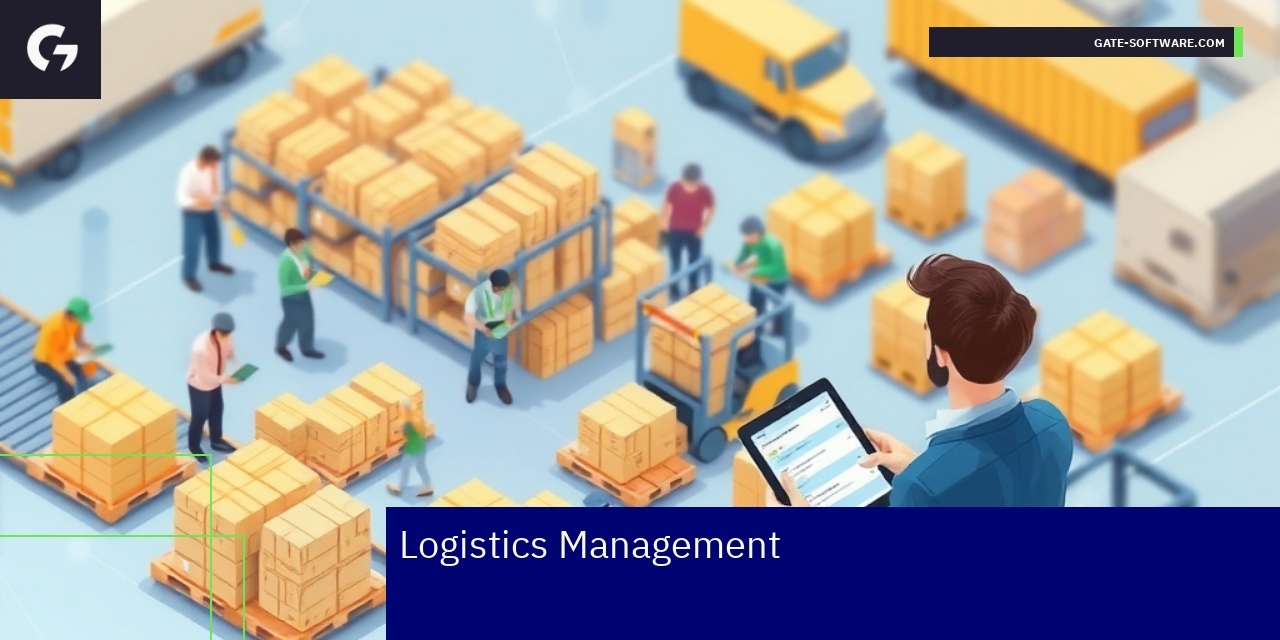
Effective logistics management is a cornerstone of success B2B Magento 2 implementations, directly impacting operational efficiency and customer satisfaction in B2B commerce. Magento case studies consistently demonstrate that optimizing logistics processes—such as inventory control, order fulfillment, and shipping coordination—leads to measurable Magento 2 implementation results, including reduced lead times and improved supply chain visibility.
A vital aspect of logistics management within B2B environments is the granular control enabled by user permissions. By customizing user roles and access rights, companies ensure secure and efficient handling of logistics data across departments, minimizing errors and enhancing compliance. Furthermore, custom pricing mechanisms integrated within Magento 2 facilitate flexible and accurate billing that reflects logistics costs and contract terms, which are essential for complex B2B transactions.
Magento success stories underscore the strategic advantage gained by businesses that harmonize logistics management with personalized user permissions and pricing models. This integration not only simplifies operational workflows but also enhances transparency and scalability, empowering decision-makers like CTOs and Heads of Applications to align logistics with broader business goals seamlessly.

User Permissions
In the context of B2B platforms on Magento, user permissions are a critical component for ensuring secure and efficient access control aligned with organizational roles and workflows. Gate-Software’s approach to Magento development emphasizes finely tuned user permissions systems that underpin success B2B Magento 2 projects.
Properly configured user permissions within a B2B platform on Magento allow companies to delegate responsibilities precisely, ensuring that distinct personas such as architects, eCommerce managers, and CTOs exercise appropriate levels of control. This segregation guarantees that sensitive operational capabilities are safeguarded while enabling productivity and compliance with internal policies and WCAG standards.
Gate-Software’s Magento 2 implementation results frequently highlight the positive impact of role-based permissions on operational transparency and process efficiency. This has been validated by Magento success stories and Magento case studies focused on B2B environments, where tailored access rules support complex approval hierarchies and multi-tier purchasing workflows.
An important facet of Magento implementations from scratch or Magento audits executed by Gate-Software involves assessing and optimizing user permissions to align with client-specific business logic. This reduces security risks, enhances user experience, and supports business continuity. Furthermore, leveraging Gate-Software’s deep expertise in Magento development ensures that user permissions integrate seamlessly with other modules like catalog management, pricing strategies, and communication tools.
Through this comprehensive approach, Gate-Software enables B2B merchants to leverage the full potential of Magento’s user permissions framework, ultimately enhancing platform security while driving measurable success in B2B Magento 2 initiatives.

Magento Implementations from Scratch
Implementing Magento from scratch in the B2B sector requires a comprehensive approach that addresses the unique complexities of business-to-business transactions. Successful B2B Magento 2 projects often begin with a thorough analysis of client needs, integration demands, and scalability objectives. Magento development underpins these projects with robust architecture that supports extensive customizations and advanced functionalities essential for B2B operations, such as multi-tier pricing, custom catalogs, and intricate quote management systems.
Magento implementations from scratch enable businesses to leverage extensive Magento integrations, ensuring seamless connectivity with ERP systems, CRM platforms, and various third-party services indispensable for efficient B2B workflows. Through methodical project management and iterative testing, teams can realize Magento 2 implementation results that emphasize stability, performance, and compliance with business requirements.
Drawing on Magento case studies helps illuminate how strategic planning and tailored development convert into Magento success stories. These narratives often highlight overcoming technical challenges like data migration, compliance with WCAG standards, and optimizing UX/UI for key personas, including Architects and eCommerce Managers. Ultimately, such projects yield a scalable, user-centric platform that delivers measurable business impact, embodying the true essence of success B2B Magento 2 engagements.
Magento Development
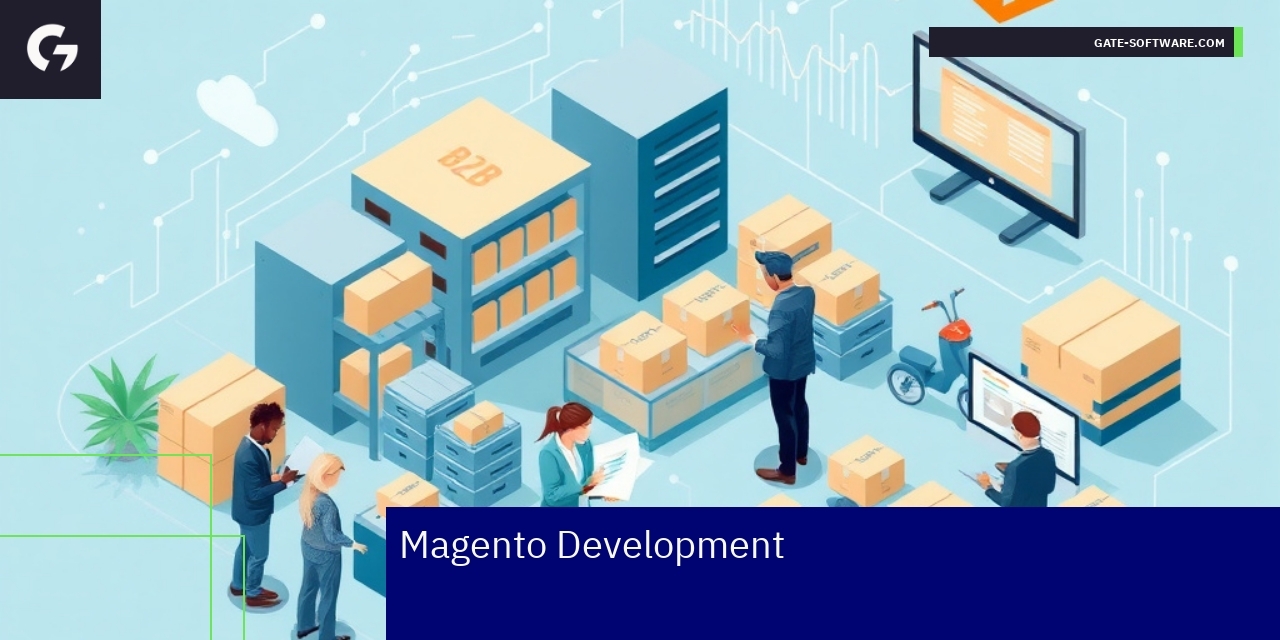
In the rapidly evolving world of eCommerce, businesses need a robust platform that meets the intricate demands of B2B transactions. Enter Magento, a powerhouse that not only supports complex product catalogs but also scales as your business grows. With a proven track record, particularly using Magento 2, companies are witnessing transformative changes in their operations. At Gate-Software, we understand that the success of a B2B Magento 2 implementation hinges on overcoming technical and business challenges while leveraging innovative solutions.
Understanding B2B Challenges with Magento Development
Developing a B2B platform on Magento involves addressing unique challenges distinct from standard eCommerce solutions. Key decision-makers—CTOs, Heads of Applications, and eCommerce Managers—often face issues such as fragmented data, complex pricing structures, and a need for seamless integration with existing systems. These challenges can hinder the user experience, disrupt sales processes, and ultimately affect bottom-line performance.
Magento’s flexibility is a major advantage, allowing businesses to implement tailored solutions that meet specific B2B needs. Success in this domain is illustrated by numerous Magento case studies that showcase how businesses have optimized their operations and enhanced customer engagement. From efficient invoicing in high-volume transactions to integrating customer-specific pricing, Magento offers capabilities that transform how B2B businesses operate.
Successful Implementation and Its Results
The results of a well-executed Magento 2 implementation are often mirrored in success stories from enterprises that have embraced this robust platform. These case studies reveal how businesses tackle their unique challenges and achieve remarkable results. For instance, companies that have deployed customized Magento solutions report significant boosts in efficiency, enhanced customer loyalty, and elevated sales performance.
At Gate-Software, our approach is grounded on delivering tailored Magento development that aligns with your strategic goals. From the initial consultation through to the deployment of your B2B platform on Magento, we emphasize a collaborative approach. Understanding your existing systems and workflow is critical as we develop and deploy necessary custom features to your Magento environment.
Extra Integrations for Enhanced Performance
Magento’s strength lies not only in its core features but also in its capacity for integrations. Many B2B businesses require additional systems—such as Customer Relationship Management (CRM), Enterprise Resource Planning (ERP), and payment gateways— to enhance performance. Through extra integrations, we ensure that the Magento development aligns seamlessly with the tools that drive your business forward.
For example, integrating a powerful ERP system with your Magento platform can streamline running operations while offering advanced forecasting features that help manage inventory more effectively. This connection also provides a holistic view of your business’s performance, enabling strategic decision-making based on comprehensive data analysis.
Moreover, implementing SEO best practices during Magento development is essential for driving traffic and conversion rates. Well-optimized Magento 2 implementations help your site rank higher on search engine results, further reinforcing your business’s online presence. At Gate-Software, we focus on creating a strategic roadmap that incorporates not only technical elements—like ensuring your site speed is optimal and incorporating rich snippets—but also engaging content strategies that improve customer engagement and drive sales.
Conclusion
The future of B2B eCommerce is undeniably linked to the capabilities of the platforms used, and Magento stands out as a leader. By choosing Magento development, businesses are positioning themselves for success. Through successful implementations and real-world case studies highlighted by Gate-Software, organizations can perceive tangible results, from improved operational efficiency to enhanced customer relationships.
If you’re ready to transform your B2B operations, let’s discuss how Magento development can facilitate your business’s growth and success story in the competitive eCommerce landscape.
Magento Integrations
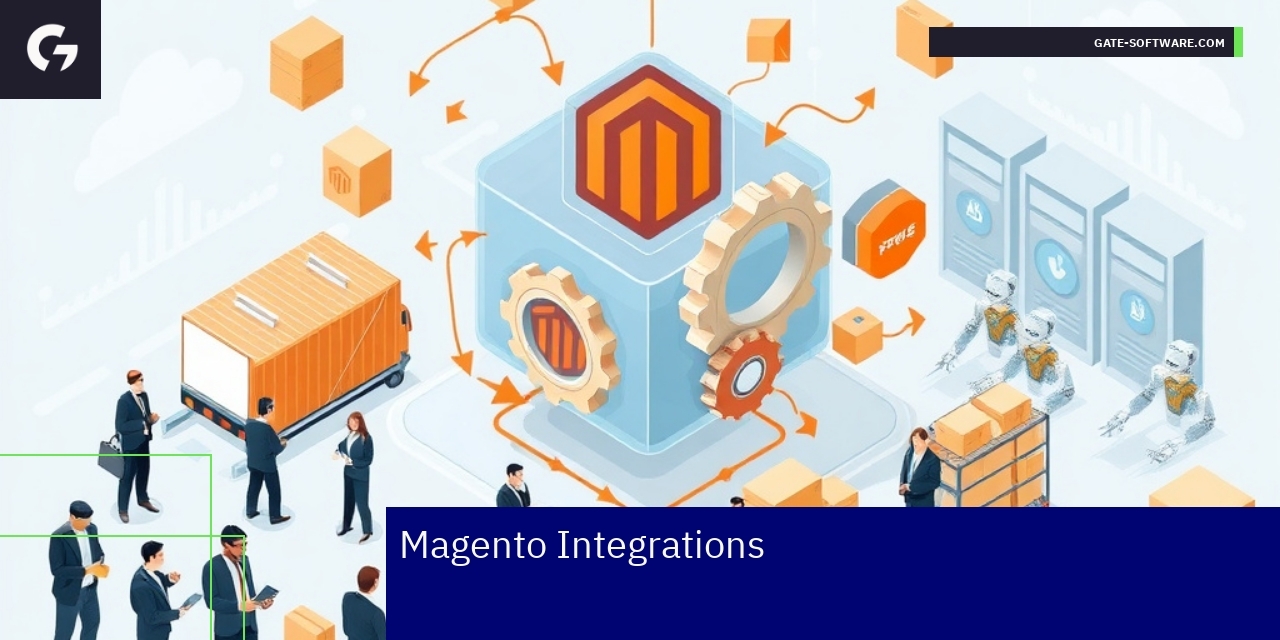
In the B2B sector, effective Magento integrations are critical for building a robust and scalable eCommerce platform that meets the complex requirements of businesses. Integrating Magento with existing ERP systems is one of the most impactful strategies to enhance operational efficiency and data consistency. Benefits of ERP integrations include streamlined order management, accurate real-time inventory updates, and seamless financial and customer data synchronization, all of which are crucial for success B2B Magento 2 projects.
Moreover, Magento integrations extend beyond ERP to include various additional systems such as CRM, logistics providers, and marketing automation tools. These extra integrations for better performance ensure that the B2B platform on Magento operates efficiently, enabling tailored workflows and automation that support business growth.
Security remains a top priority within Magento integrations. Implementing rigorous Magento audits helps identify vulnerabilities and guarantees compliance with industry standards. This proactive approach to security not only protects sensitive business data but also builds trust with clients and partners.
Gate-Software’s expertise in Magento integrations has been demonstrated through multiple Magento success stories and Magento case studies, showcasing tangible Magento 2 implementation results. The emphasis on custom, scalable integration solutions ensures that each B2B platform on Magento is optimized for competitive advantage and sustained growth.
Speed Optimization
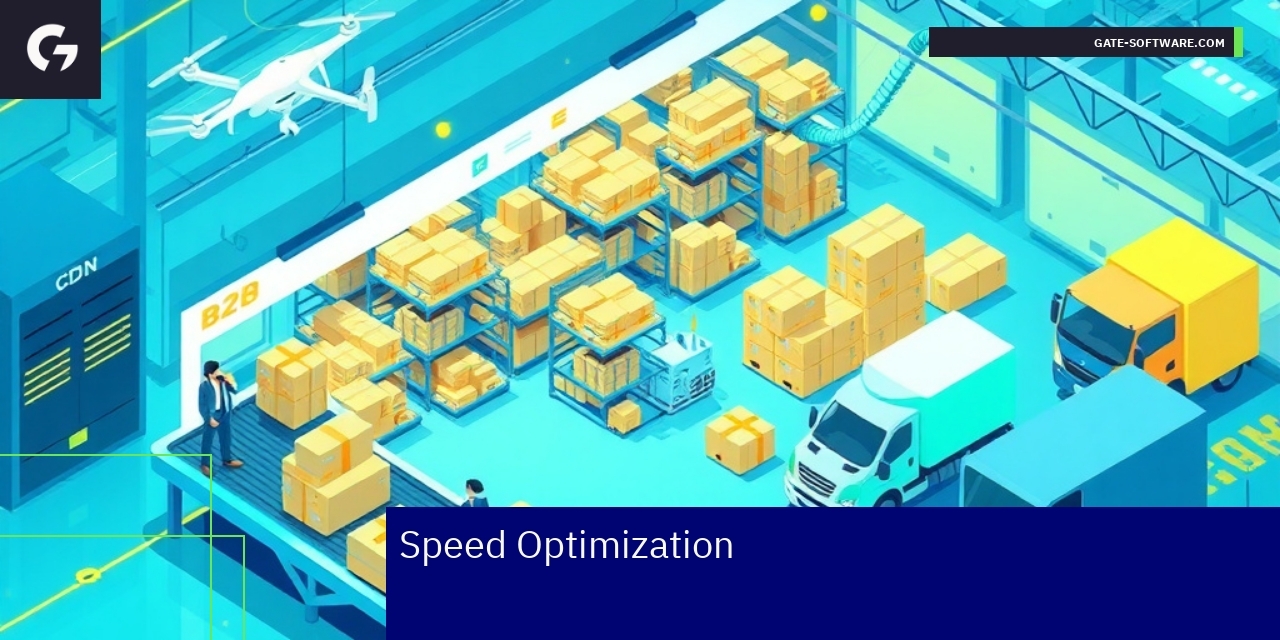
In the context of B2B Magento 2 implementations, speed optimization is a critical factor driving success B2B Magento 2 projects. Efficient loading times and fast response rates are essential to meet the high expectations of enterprise clients and complex business processes. Magento case studies consistently illustrate that optimized speed directly contributes to improved customer experience, higher conversion rates, and robust Magento 2 implementation results.
Achieving speed optimization in B2B environments requires a comprehensive approach involving Magento audits to identify bottlenecks, database queries optimization, and front-end performance tuning. Security must also be integrated seamlessly, ensuring that enhanced speed does not compromise data integrity or compliance standards. Magento success stories frequently highlight how companies balancing speed and security gained competitive advantages in their markets.
The technical challenges often include managing large product catalogs, complex pricing rules, and user roles without sacrificing site speed. A strategic focus on server infrastructure, CDN deployment, and leveraging Magento’s built-in caching mechanisms is necessary for sustained performance improvements. In this regard, Gate-Software’s expertise in speed optimization aligns with business priorities, ensuring Magento 2 implementation results that support long-term growth and operational efficiency.

Security
In B2B Magento 2 implementations, ensuring robust security is crucial for protecting sensitive business data and maintaining trust among partners. Effective management of user permissions is fundamental in this context; it allows enterprises to precisely control access levels for different roles within the organization. This granular control helps mitigate risks associated with unauthorized access and data breaches, which are particularly critical in B2B environments where transactional data and custom pricing structures are involved.
Security measures must be designed to support complex pricing models and user role hierarchies without compromising performance or usability. Successful B2B Magento 2 projects often leverage advanced security frameworks integrated into the platform, combined with configurable user permissions tailored to the customer’s architecture. This approach not only ensures compliance but also enhances operational efficiency by limiting access to sensitive pricing information and administrative functions to authorized personnel only.
Real-world Magento success stories highlight how thorough attention to security protocols, including encryption, secure authentication, and permission management, directly contributes to achieving positive Magento 2 implementation results. Case studies demonstrate that projects prioritizing security achieve smoother operational workflows and reduce risks associated with cyber threats, fostering strong partnerships and long-term success in the B2B sector. Thus, focusing on security, user permissions, and the handling of custom pricing is essential for any enterprise aiming for success B2B Magento 2 implementation.

Additional Integrations for Better Performance
Effective B2B platform on Magento demands more than just a basic setup — achieving success B2B Magento 2 requires integrating additional systems that enhance scalability, efficiency, and user experience. Extra integrations for better performance can include ERP, CRM, and PIM systems, which streamline data synchronization and automate key business processes. These integrations directly impact Magento 2 implementation results by reducing manual errors, accelerating order processing, and improving inventory management.
Magento success stories frequently highlight the importance of seamless integration in driving measurable business growth. For instance, linking Magento with advanced analytics and marketing automation tools enables precise targeting and improved customer engagement, crucial factors in B2B environments where buyer journeys are complex and involve multiple stakeholders. This leads to better insights and more informed strategic decisions.
Moreover, performance optimization through integrations such as caching mechanisms, CDN services, and third-party payment gateways ensures that the B2B platform on Magento runs smoothly under heavy load, providing users with a responsive and reliable experience. These enhancements contribute to demonstrated Magento case studies where businesses have achieved significantly improved uptime and faster transaction workflows.
In Magento development, prioritizing modular integrations tailored to specific business needs is key. This approach not only maximizes operational efficiency but also lays a foundation for future scalability. In summary, leveraging extra integrations for better performance is essential for any B2B entity looking to maximize the impact of their Magento platform while showcasing tangible Magento 2 implementation results and reinforcing success B2B Magento 2 frameworks.
Magento B2B Implementation Checklists
Key steps for successful implementation
Successfully implementing Magento B2B solutions begins with a clear understanding of business requirements and the unique complexities of B2B commerce. The process starts with comprehensive planning that aligns technical capabilities with business goals. Critical steps include defining user roles and permissions tailored for B2B workflows, integrating complex pricing structures such as volume and tiered pricing, and enabling flexible payment and credit management solutions. Additionally, ensuring a seamless customer onboarding experience is essential, which involves integrating company account management features with efficient approval workflows. Every aspect, from product catalogs to order management, must be customized to meet B2B demands, incorporating personalization and scalability considerations. Close collaboration between the eCommerce Manager, Architect, and CTO fosters a unified strategy ensuring that the Magento platform supports evolving business processes without compromising performance or usability.
Technical requirements and resources
The technical foundation for Magento B2B implementations requires a robust architecture that supports scalability, security, and integration with enterprise systems such as ERP and CRM. Key technical requisites include hosting environments that guarantee uptime and performance, adherence to WCAG standards for accessibility, and deployment of monitoring tools for proactive issue detection. A strong focus on API integrations enables seamless data flow between Magento and backend systems, vital for managing complex B2B workflows including inventory synchronization and order fulfillment. Resource allocation should emphasize skilled developers familiar with MagentoOneS™, cloud infrastructure specialists, and DevOps engineers to maintain CI/CD pipelines that support continuous improvements. Gate-Software’s SLA agreements outline essential service levels, providing assurance on system availability and support. Technical teams must also prepare for data migration challenges and implement cost optimization strategies to balance performance and budget constraints.
Best security practices
Security in Magento B2B implementations is paramount due to the sensitivity of corporate client data and complex transaction workflows. Best practices include implementing multi-factor authentication (MFA), role-based access control (RBAC), and encryption of data at rest and in transit. Regular security audits, penetration testing, and compliance with standards such as GDPR and PCI-DSS protect the integrity of the platform and build customer trust. Gate-Software’s experience highlights the importance of continuous vulnerability management and patching, combined with real-time monitoring to detect and respond to threats swiftly. Network segmentation and use of firewalls restrict unauthorized access, while secure API gateways ensure safe integration with external systems. Training for all stakeholders on security policies and incident response protocols complements technological safeguards, creating a comprehensive defense posture tailored to B2B environment complexities.
Common Implementation Mistakes
Configuration errors.
Configuration errors often manifest as misaligned settings between platforms or incorrect parameterizations that do not consider the complexities of B2B environments. Such errors can lead to disrupted workflows, inaccurate pricing models, or failure to comply with industry-specific requirements. In B2B projects, it is crucial to align configurations with business logic and user roles since personas such as Architect, eCommerce Manager, or CTO/CTO influence system requirements. Ignoring these considerations often results in configurations that do not support the intended customer journey or sales processes. Gate-Software stresses the importance of thorough configuration audits and adherence to WCAG 1.1 standards to ensure accessibility and seamless user experience (UX/UI) across Magento platforms, reducing risks of errors that could degrade performance or end-user satisfaction.
Integration problems.
Integration problems represent one of the most frequent implementation mistakes in B2B environments, where multiple systems—ERP, CRM, eCommerce platforms, and marketing tools—must work harmoniously. Failure in data synchronization, incompatible API usage, or insufficient testing phases inevitably lead to operational bottlenecks and broken data flows. For example, improper integration can cause data silos that disturb effective marketing strategies and customer communication plans. Gate-Software’s approach emphasizes robust middleware solutions and well-documented interfaces, along with strategic planning combined with the personas’ insights (such as Head of Applications or CDO) to ensure seamless interoperability. This integration discipline ensures that each tool complements the others, enabling smooth workflows that directly impact business metrics.
Poor data management.
Poor data management is a critical pitfall, especially in B2B landscapes where client data complexity escalates. Faulty data governance impacts both operational efficiency and strategic decision-making. Incomplete or inconsistent data leads to erroneous analytics and ineffective personalization strategies. It also compromises GDPR compliance and can degrade trust with key stakeholders. B2B organizations must follow strict standards and maintain clean, well-structured databases that support marketing strategies and enhance the user experience. Gate-Software recommends implementing ongoing data quality monitoring and leveraging MagentoOneS™ solutions integrated with SLA agreements to guarantee data accuracy and system reliability. This ensures that the company’s CRM and marketing efforts are based on trustworthy insights, fueling growth and customer loyalty.
In summary, avoiding configuration errors, overcoming integration problems, and ensuring excellent data management are foundational to successful B2B implementations. These mistakes directly affect Magento platform stability, UX/UI effectiveness, and the ability to execute agile marketing strategies essential for competitive B2B marketplaces.
Platform Comparisons
In the B2B e-commerce landscape, choosing the right platform is critical for addressing complex business requirements and ensuring scalable, efficient operations. Platforms like Shopify, WooCommerce, BigCommerce, and Magento each offer distinct strengths and challenges. Magento, known for its robust customization and scalability, excels in environments requiring deep integration with legacy systems, multi-store management, and compliance with WCAG standards for accessibility. This aligns well with the strategic goals of B2B enterprises prioritizing flexibility and long-term platform ownership.
Shopify’s approach leans towards simplicity and rapid deployment but can present constraints in customizing workflows essential for B2B processes, such as advanced pricing, tiered customer groups, and complex product catalogs. WooCommerce, as an extension of WordPress, offers cost-effective solutions but may require extensive development to meet enterprise-grade security and performance needs typical in B2B scenarios.
BigCommerce positions itself as a scalable SaaS solution with extensive API capabilities; however, its suitability depends on the specific integration requirements and the need for offline order and multi-channel selling inherent to B2B operations.
Gate-Software emphasizes a thorough UX/UI audit and adherence to strategic content guidelines to ensure platforms deliver optimal user experiences for key personas like the Architect, eCommerce Manager, and CTO. This approach, combined with rigorous SLA management and continuous monitoring, supports ensuring uptime, performance, and compliance.
Selecting the right platform requires balancing technical demands, such as hosting and monitoring, with marketing strategies and communication plans focusing on persona-driven content and brand voice consistency. The integration of MagentoOneS™ solutions within Gate-Software’s service framework exemplifies this balanced approach, enabling effective cost optimization without compromising platform capabilities or accessibility requirements.
By capitalizing on detailed B2B insights and tailored support frameworks, businesses can navigate the complex e-commerce landscape, leveraging platforms that best support their operational needs and growth strategies while embedding Polish SEO phrases naturally in content delivery.

Pros and Cons
Advantages of Magento B2B.
Magento B2B delivers significant flexibility and scalability, critical for complex B2B environments where tailoring the platform to unique business requirements is essential. Its extensive client and relationship management capabilities facilitate segmentation, account hierarchies, and personalized pricing schemes, enabling highly customized business interactions. The platform supports intricate e-commerce functionalities such as bulk ordering, advanced product catalog management, and diverse payment and delivery options, aligning with typical B2B purchasing processes. Integration capabilities with ERP systems streamline operations, automate workflows, and maintain data consistency across business functions. Additionally, Magento’s support for multiple currencies and languages supports international B2B commerce, essential for companies operating globally.
Potential risks.
Despite these advantages, Magento B2B implementations come with notable challenges. High implementation costs—covering licenses, development, and ongoing maintenance—require careful budgeting and justification. The platform’s complexity means that organizations without prior e-commerce expertise may face a steep learning curve, necessitating skilled teams to manage it effectively. Security remains a critical concern; as with any e-commerce platform, it is vulnerable to cyber threats, necessitating robust security measures and continuous monitoring. Regular updates are mandatory to maintain compliance, security, and functionality, imposing operational overhead. Finally, performance management can be challenging, especially with extensive product catalogs and high traffic, requiring focused efforts on optimization to ensure a smooth user experience.
In this context, Gate-Software offers tailored solutions addressing these real technical and business challenges, supporting strategic implementations, SLA-backed services, UX/UI audits aligned with WCAG standards, and hosting optimizations to mitigate risks and maximize the value of Magento B2B platforms. This comprehensive approach ensures that B2B clients can leverage Magento effectively while managing risks inherent to complex digital commerce ecosystems.

Data and Performance Metrics – Efficiency, SLA, TCO
Operational Effectiveness in B2B Projects
In the realm of B2B e-commerce, precise metrics and data play a vital role in evaluating operational effectiveness and guiding strategic decision-making. Here are some key numerical indicators that illustrate the performance of B2B implementations by Gate-Software:
1. Project Takeover Time: Projects generally require an average takeover time of approximately 4 weeks, ensuring a smooth transition without disruptive impacts on ongoing operations.
2. Percentage of Projects Delivered on Time: Gate-Software prides itself on a strong track record, with 95% of projects delivered within the agreed timelines, showcasing effective project management and adherence to SLAs.
3. Average Total Cost of Ownership (TCO) Reduction: Clients have experienced an average reduction in TCO by 30% after implementing Gate-Software solutions, which streamline processes and optimize resource utilization.
4. Number of Magento Implementations: To date, Gate-Software has successfully completed over 150 Magento implementations, empowering diverse businesses to harness the full potential of their platforms for enhanced B2B interactions.
5. Uptime SLA: Gate-Software maintains an impressive uptime SLA of 99.9%, ensuring that client websites function smoothly and continuously, thereby minimizing downtime and loss of business opportunities.
6. Average Client Relationship Duration: The average duration of client relationships is 5 years, reflecting the trust built through consistent delivery of quality services and ongoing support.
7. Client Satisfaction Ratings: Our latest client satisfaction survey indicated an average rating of 4.8 out of 5, demonstrating strong approval of our services and the positive impact on their business operations.
This data underscores Gate-Software’s commitment to enhancing operational efficiency and driving success for B2B partners through strategic Magento implementations.

Summary
In the competitive landscape of B2B eCommerce, leveraging Magento 2 through Gate-Software’s expertise can significantly enhance your operational capabilities and drive growth. Our approach emphasizes the seamless integration of complex systems, ensuring that your platform not only meets but exceeds the expectations of modern B2B buyers. By adopting tailored strategies for speed optimization, user permissions, and logistics management, we empower businesses to streamline their processes and improve customer experiences. The tangible results seen in our Magento success stories reflect the effectiveness of our methodologies, demonstrating improved performance metrics and profitability.
Choosing Gate-Software means investing in a partnership that prioritizes your business needs while ensuring robust support through every phase of implementation. Our commitment to delivering solutions tailored to your unique requirements fosters a dynamic and scalable B2B environment. If you’re ready to transform your digital commerce strategy and realize the full potential of Magento, we encourage you to reach out. Together, we can navigate the complexities of B2B eCommerce and drive your business towards enduring success.

FAQ
What is Magento 2 and how does it support B2B businesses?
Magento 2 is a powerful open-source eCommerce platform that provides comprehensive solutions for B2B enterprises. It offers high flexibility, scalability, and extensive customization options to meet complex B2B requirements such as customer-specific pricing, bulk ordering, and seamless ERP integration.
Why is ERP integration important in B2B eCommerce?
ERP integration is crucial in B2B eCommerce as it allows for real-time data synchronization, streamlined logistics management, and accurate inventory updates. This automation helps enhance operational efficiency and reduces manual errors, ultimately improving overall business performance.
How does Gate-Software ensure the success of Magento B2B implementations?
Gate-Software ensures success through comprehensive Magento implementations tailored to complex B2B workflows. This includes conducting thorough audits, providing expert tech support, and implementing best practices in user permissions and security to maximize platform performance and reliability.
What are the benefits of custom pricing in B2B transactions?
Custom pricing allows businesses to offer personalized discounts, volume-based pricing, and contract-specific rates. This flexibility enhances customer satisfaction and retention while ensuring competitiveness in the B2B market.
How can businesses measure the success of their Magento B2B implementation?
Businesses can measure success through critical performance metrics such as page load speed, transaction processing times, conversion rates, and customer satisfaction scores. Regular audits and adherence to SLA standards help maintain and improve these metrics over time.
.
.
Zamów bezpłatną konsultację
.
Z nami rozwój Twojego biznesu nabierze tempa! Zapraszamy do kontaktu średnie i duże firmy generujące min. 7 mln PLN obrotu rocznie – tam nasza ekspertyza sprawdza się najlepiej.
.
Kliknij w poniższy przycisk i skontaktuj się z jednym z naszych konsultantów e-commerce
.