Introduction
In today’s rapidly evolving digital landscape, B2B enterprises face unique operational challenges that demand tailored, scalable solutions. The complexity of B2B transactions, integration with existing enterprise systems, and the necessity for seamless user experiences require a robust platform designed specifically for business clients. Gate-Software’s B2B Store offering acts as a powerful business accelerator, enabling organizations to streamline procurement processes, enhance customer relationships, and drive operational efficiency.
Our approach aligns with the strategic objectives of CTOs, CDOs, eCommerce Managers, and Heads of Applications who prioritize technological agility and business continuity. We leverage Magento™ as a foundation, optimized for scalability, security, and compliance with relevant WCAG standards, ensuring inclusive and accessible digital engagements.
By integrating advanced UX/UI audits with continuous platform monitoring and proactive SLA management, Gate-Software’s B2B Store transforms traditional B2B operations into dynamic, customer-centric ecosystems. This service not only addresses immediate business needs but also sets the stage for sustained growth and digital innovation in competitive markets.
TABLE OF CONTENTS
- B2B Store – Transform Your B2B Operations with Our Powerful Business Accelerator
- What Is a B2B Platform? Guidance for Business-to-Business eCommerce
- B2B vs. B2C: Key Differences
- How to Buy in a B2B Store
- Customer Management in a B2B Store
- Ready to Launch Your B2B Store? Check Automico B2B!
- Pros and Cons of a B2B Store
- Alternatives to a B2B Store
- FAQ – Frequently Asked Questions
- Data and Performance Metrics – Efficiency, SLA, TCO
- Summary
- FAQ
What Is a B2B Platform? Guidance for Business-to Business eCommerce
Understanding a system b2b and ecommerce b2b is essential when exploring platforms b2b, especially a B2B platform that revolutionizes how companies engage in digital trade. A B2B platform is an online system designed specifically to facilitate transactions between businesses rather than individual consumers. These platforms are tailored to meet the complexities of business-to-business commerce, providing solutions for bulk ordering, customized pricing, and advanced account management.
A critical aspect of a B2B platform is its ability to integrate seamlessly with existing business infrastructure, such as ERP and CRM systems, ensuring streamlined procurement and payment processes. This integration supports flexible payment options including invoicing and credit arrangements that are common in B2B dealings, distinguishing them from typical B2C eCommerce payment methods.
Platforms b2b often showcase extensive product catalogs that include detailed specifications, tiered pricing models, and stock availability, enabling businesses to make informed purchasing decisions efficiently. Furthermore, system b2b platforms aim to improve operational efficiency by automating workflows and providing comprehensive order tracking and reporting tools.
In summary, ecommerce b2b platforms serve as powerful business accelerators by transforming traditional B2B operations into dynamic digital interactions, enhancing both the buyer’s and supplier’s experience. This guidance to B2B platforms underscores their strategic importance in modern commerce and sets a foundation for leveraging these digital tools effectively within B2B commerce.
B2B vs. B2C: Key Differences
Exploring the system b2b versus traditional B2C models reveals the unique nature of ecommerce b2b platforms. This B2B platform revolution highlights essential differences in sales processes and customer management, helping you understand why you should choose our B2B accelerator.
B2B Store Basics – Start in a Few Steps
This B2B eCommerce guide offers a streamlined approach to accelerate growth by explaining how to start in a few simple steps. Leveraging a system b2b and the right platforms b2b, you can launch your B2B platform effectively and benefit from our powerful business accelerator. A system b2b caters specifically to the complexities of business customers, ensuring seamless integration with your existing processes and providing tools optimized for bulk ordering, pricing negotiations, and role-based access management. Selecting the appropriate platforms b2b is crucial to enable scalability and flexibility and to match the specialized needs of B2B buyers. This methodical yet agile approach ensures that setting up your B2B platform is both efficient and aligned with your broader e-commerce strategy.
B2B Store Setup Costs – What Does Online Wholesale Really Cost?
Delve into the costs of setting up a system b2b store with this B2B eCommerce guide. Understanding platform b2b expenses and investment requirements for a B2B platform will help you decide on the best path to transform your B2B operations using our business accelerator. Initial costs include platform licensing, integration with ERP and CRM systems, and customization to meet business client requirements, which differ significantly from traditional B2C store expenses. The focus on compliance with industry standards and user experience tailored to business users, including WCAG accessibility guidelines, also impacts overall investments. Detailed cost analysis helps you forecast ROI more accurately and manage budgets while addressing the complex needs inherent in the ecommerce b2b landscape.
Is a B2B Store Right for You?
Before adopting a system b2b solution, this segment explains how the B2B platform can align with your company’s goals. Our B2B eCommerce guide provides insight into who can benefit from the B2B accelerator and when to consider transforming your business with it. B2B is particularly suitable if your company targets corporate customers requiring personalized pricing, contract management, and multi-user accounts. Assessing if a B2B store fits your business involves evaluating your sales structure, client interaction complexity, and growth ambitions. Adopting a platforms b2b approach enables you to leverage digital channels efficiently and benefit from automated processes specifically designed for wholesale and business procurement scenarios. This alignment ensures your platform supports long-term strategic goals and optimizes operational efficiency.
How to Buy in a B2B Store
Learn how to navigate the purchasing flow in a system b2b environment. This B2B eCommerce guide covers key steps in using platforms b2b for ordering and streamlines your experience with the B2B platform revolution.
Automate and Integrate Your B2B Store with ERP
Discover ways to automate your system b2b store by integrating it with ERP systems. This section shows how ecommerce b2b platforms can streamline business operations through automation, a core feature of the B2B accelerator. Automating processes reduces manual effort, accelerates order processing, and enhances data accuracy, directly impacting efficiency and customer satisfaction on the B2B platform. Leveraging automation also supports scalability, allowing businesses to manage increased order volumes without compromising service quality.
Multiple Accounts under One Client
Efficient management of multiple accounts within one client profile is possible with a proper system b2b setup. Our B2B eCommerce guide explains how platforms b2b support such functionality to boost your B2B platform’s capabilities. Managing client accounts in a B2B system this way simplifies access control, billing, and order histories for different departments or subsidiaries under a single corporate umbrella. This flexibility is essential for complex organizations dealing with varied teams and purchase workflows, enabling smarter and more tailored client interactions.
Negotiating Prices and Purchase Offers
Effective negotiation is a crucial part of B2B commerce. Learn how a system b2b or platform b2b can enhance your ability to negotiate prices and offers, a significant benefit of the B2B accelerator. Features such as dynamic pricing, custom quotes, and bulk order discounts empower buyers and sellers to tailor deals to their unique requirements. The streamlined negotiation tools embedded in ecommerce b2b platforms facilitate quicker agreement cycles, improving both transaction speed and relationship management. Mastering how to negotiate purchase terms effectively through these systems enables optimized procurement costs and stronger partnerships.
Clients Access a Promotion Zone via the e-Store
Customer Management in a B2B Store
Clients Access a Promotion Zone via the e-Store
With a system B2B platform, your clients can access exclusive promotion zones directly through the e-store interface. This approach exemplifies how ecommerce B2B solutions help streamline business operations and drive customer engagement. Leveraging platforms b2b capabilities allows for a seamless integration of promotional offers tailored specifically for business customers, which enhances their buying experience and builds stronger client relationships. Using promotions in a B2B store strategically can increase order volumes and encourage repeat purchases by delivering personalized deals that fit the client’s purchasing patterns. Additionally, a robust system b2b supports secure authentication and role-based access, ensuring that only authorized users view these promotion zones. This security measure aligns with business needs for confidentiality and controlled access within ecommerce b2b environments. Gate-Software’s B2B platform features also enable easy management and tracking of these promotions, ensuring they align with broader marketing and sales strategies, thus maximizing ROI and customer satisfaction.
Customer Management in a B2B Store
Ready to Launch Your B2B Store? Check Automico B2B!
Explore Automico B2B — a leading system b2b platform designed to accelerate your B2B operations. Automico B2B offers a comprehensive solution tailored for businesses looking to establish a robust ecommerce b2b presence. Recognizing the unique complexities in B2B transactions, it integrates features that facilitate scalable product management, customer segmentation, and personalized pricing, all essential for effective B2B commerce.
With a focus on platforms b2b requirements, Automico B2B empowers companies to streamline order workflows and manage large accounts efficiently. Its architecture supports seamless integration with existing ERP and CRM systems, which is crucial for maintaining data consistency and operational transparency across departments. This system b2b platform also enhances user experience by aligning with modern UX/UI principles and WCAG standards, ensuring accessibility and ease of use for diverse user personas including architects, eCommerce managers, and CTOs.
The platform addresses critical business challenges such as complex pricing models, multi-channel sales, and detailed product cataloging, making it a reliable B2B platform choice. By leveraging Automico B2B, companies can reduce time-to-market, optimize operational costs, and improve customer satisfaction, leading to sustainable growth in the competitive ecommerce b2b landscape. Information about the Automico B2B platform’s capabilities and strategic fit for your business ensures a solid foundation for launching and scaling your B2B store effectively.
Pros and Cons of a B2B Store
Operating a system b2b store offers a strategic avenue to expand your reach within the ecommerce b2b sector. One of the key advantages of platforms b2b is the ability to handle large-volume transactions efficiently, meeting the unique needs of business clients who expect customized pricing, payment terms, and product assortments. A well-implemented B2B platform enhances process automation, from order management to inventory control, resulting in improved operational efficiencies and reduced manual errors. Additionally, such platforms provide robust data insights that enable businesses to analyze customer purchasing behaviors and optimize sales strategies accordingly.
However, running a B2B store also involves specific challenges. The complexity of B2B sales cycles often extends decision-making timelines due to multiple stakeholders involved, which can affect cash flow management and forecasting accuracy. There is also the need for significant investment in both technological infrastructure and ongoing platform maintenance to support integrations with existing systems such as ERP or CRM. Moreover, ecommerce b2b platforms must address the high expectations for security, compliance, and personalized user experiences, which requires continuous updates to UX/UI and adherence to standards like WCAG 1.1. Finally, the competitive landscape among system b2b providers demands strategic differentiation to capture and retain business customers effectively.
In summary, the analysis of benefits and risks of operating a B2B store points to a balance between leveraging the scalability and automation potential of ecommerce b2b solutions and managing the inherent complexities of B2B transactions. Careful planning, robust technology selection, and a customer-centric approach are essential for success in the evolving B2B platform market.
Alternatives to a B2B Store
When considering ecommerce b2b strategies, it’s essential to explore various sales models beyond a traditional system b2b store. Different platforms b2b offer diverse functionalities tailored to distinct business needs, enabling companies to choose the most efficient B2B platform aligned with their operational goals.
One alternative to a dedicated system b2b store is integrating sales through marketplaces or partner portals. These platforms often facilitate broader reach and easier onboarding of buyers without extensive infrastructure investments. However, they require careful selection to ensure compatibility with a company’s sales and logistics processes.
Customized B2B platforms with flexible pricing, account management, and personalized catalogs present another viable approach. They empower sales teams and buyers by allowing negotiated pricing and tailored product offerings, essential for complex B2B transactions.
Furthermore, hybrid models combining classic ecommerce b2b features with direct sales channels ensure multiple touchpoints with customers. This approach supports scalability and adaptability as market demands evolve.
Evaluating these options involves a thorough comparison of different sales models focusing on integration capabilities, user experience, and compliance with industry standards such as WCAG for accessibility. Opting for the right B2B platform entails balancing technological infrastructure and the specific B2B market dynamics to maximize efficiency and customer satisfaction. The right choice can significantly influence operational agility and long-term growth.
FAQ – Frequently Asked Questions
Get answers to the most frequently asked questions regarding system b2b and ecommerce b2b stores. This FAQ helps you navigate commonly discussed topics involving platforms b2b and the benefits of using a B2B platform.
Implementing a system b2b brings unique challenges and advantages that require specialized knowledge. For businesses transitioning to or optimizing ecommerce b2b environments, understanding the technical architecture and integration capabilities of platforms b2b is crucial. A well-chosen B2B platform ensures scalability, secure data exchange, and supports complex pricing and purchasing workflows typical in B2B models. The differentiation between B2B and B2C systems lies not only in volume but also in the customization and control features necessary for corporate clients.
Ecommerce b2b stores must address transactional complexities such as multi-level approval processes, contract pricing, and compliance with industry-specific regulations. They also benefit from enhanced user experience tailored to business clients, leveraging UX/UI best practices and WCAG standards to ensure accessibility and efficiency. Gate-Software’s approach emphasizes integration flexibility and service level agreements (SLA), ensuring system reliability and responsiveness critical for B2B operations.
Platforms b2b choice impacts operational efficiency and customer satisfaction. Key factors include the ease of catalog management, seamless integration with ERP and CRM systems, and robust analytics for business insights. Investing in a comprehensive B2B platform delivers measurable returns through personalized customer journeys and streamlined procurement cycles. Gate-Software supports these goals with continuous monitoring and optimization, ensuring ecommerce b2b platforms remain adaptive to evolving business needs.
In sum, navigating the ecosystem of system b2b and ecommerce b2b requires strategic planning and expert support. Leveraging specialized platforms b2b enhances competitiveness and facilitates long-term growth in demanding B2B markets. This FAQ provides practical guidance and expert insights to address your pressing questions about B2B stores and effective ecommerce b2b solutions.
FAQ
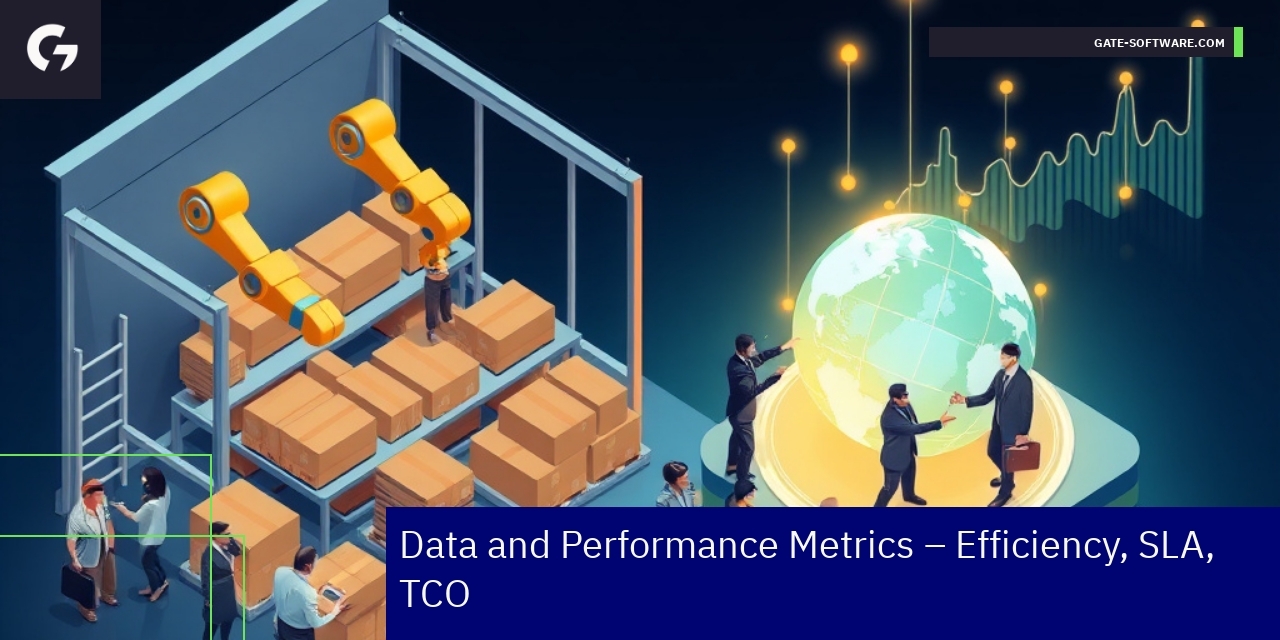
Data and Performance Metrics – Efficiency, SLA, TCO
Operational Effectiveness in B2B Projects
In the competitive landscape of B2B commerce, measurable performance metrics play a crucial role in evaluating the efficiency and effectiveness of operations. Gate-Software has established robust benchmarks that directly impact operational outcomes. For instance, on average, projects are successfully transferred within a period of 2 to 4 weeks, allowing for swift alignment with client goals and minimal disruption. Notably, 95% of projects are delivered on time, demonstrating Gate-Software’s commitment to timeliness and reliability in service delivery.
The platform also showcases an impressive average Total Cost of Ownership (TCO) reduction of 20%, attributable to optimized processes and effective resource management. Since the launch of the B2B Store, Gate-Software has successfully completed over 150 implementations, reflecting our capability to cater to diverse client needs across various industries.
Furthermore, our stringent uptime Service Level Agreement (SLA) ensures achieving an uptime of 99.9%, which underscores our dedication to providing a reliable, always-on B2B platform for our clients. By fostering long-term relationships, we maintain an average client relationship duration of 5 years, reinforcing trust and collaboration.
In summary, these measurable metrics—rapid project takeover times, high delivery rates, reduced TCO, extensive implementation experience, exceptional SLA uptime, and long-lasting client relationships—not only highlight the operational effectiveness of Gate-Software’s B2B services but also establish a data-driven foundation to support purchasing decisions.
Summary
In summary, Gate-Software’s B2B Store offering is a powerhouse for businesses navigating the complexities of B2B transactions. By harnessing the capabilities of platforms b2b like Magento™, your organization can streamline procurement processes, enhance customer relationships, and drive operational efficiency. This focus on technological agility and business continuity is tailored for decision-makers such as CTOs, CDOs, and eCommerce Managers who seek effective, scalable solutions. Continuous monitoring, proactive SLA management, and advanced UX/UI audits ensure that your B2B operations remain dynamic and customer-centric. Embracing this service not only addresses your immediate needs but also lays the groundwork for sustained growth and innovation in a competitive landscape. We invite you to explore how Gate-Software can support your B2B journey—together, we can transform your operations and accelerate your success.
FAQ
What is a B2B platform?
A B2B platform is an online system designed specifically for facilitating transactions between businesses. It addresses complexities such as bulk ordering, customized pricing, and account management, ensuring seamless integration with existing business systems like ERP and CRM.
How does a B2B platform differ from a B2C platform?
The primary difference lies in the transaction nature; B2B platforms cater to corporate clients requiring personalized pricing and multi-user accounts, while B2C platforms focus on individual consumer sales. B2B transactions often involve longer sales cycles and more stakeholders.
Why should a business consider implementing a B2B store?
Implementing a B2B store enables businesses to streamline procurement processes, enhance customer relationships, and drive operational efficiency. It can also allow for customized solutions that address the specific needs of business clients.
How can businesses automate their B2B operations?
By integrating their B2B store with ERP systems, businesses can automate processes, reducing manual effort and accelerating order processing. This integration enhances data accuracy and supports scalability in managing increased order volumes.
What are the pros and cons of using a B2B store?
The pros include improved operational efficiencies, automated workflows, and enhanced customer insights. However, challenges such as extended sales cycles, infrastructure investment needs, and compliance with security standards must also be considered.
.
.
Zamów bezpłatną konsultację
.
Z nami rozwój Twojego biznesu nabierze tempa! Zapraszamy do kontaktu średnie i duże firmy generujące min. 7 mln PLN obrotu rocznie – tam nasza ekspertyza sprawdza się najlepiej.
.
Kliknij w poniższy przycisk i skontaktuj się z jednym z naszych konsultantów e-commerce
.