Introduction
The distinction between B2B (Business-to-Business) and B2C (Business-to-Consumer) ecommerce lies primarily in the nature of the customer and the complexity of the transaction processes. B2B ecommerce involves transactions between companies, typically featuring higher order volumes, negotiated pricing, and longer sales cycles. In contrast, B2C ecommerce targets individual consumers, with simpler buying processes, fixed pricing, and generally lower transaction values.
For B2B platforms, key elements include advanced features like bulk ordering, personalized pricing tiers, and deep integration with internal systems such as ERP or CRM, which facilitate efficient order management and compliance. This supports complex workflows and multi-stakeholder decision-making, which are common in the B2B environment. Moreover, B2B ecommerce must accommodate specific UX/UI considerations to align with user roles such as the Architect, Head of Applications, or eCommerce Manager, ensuring the platform meets both functional and strategic business requirements while maintaining usability.
On the other hand, B2C platforms prioritize consumer experience with streamlined interfaces, branding consistency, and promotions aimed at driving quick purchasing decisions. While B2C emphasizes marketing-driven engagement, B2B ecommerce often revolves around relationship management and long-term value through SLAs, technical support, and tailored communication strategies.
Gate-Software’s expertise in maintaining platforms like Magento™, combined with adherence to WCAG accessibility standards and robust hosting and monitoring solutions, ensures that B2B ecommerce systems are optimized for reliability, performance, and compliance. This foundation empowers businesses to innovate their B2B commerce approach confidently, addressing both technical and marketing challenges inherent in today’s digital landscape.
TABLE OF CONTENTS
- B2B Store – What Is the Difference Between B2B and B2C Ecommerce?
- What Is the Difference Between B2B and B2C Ecommerce?
- Definitions and Basics
- Implementing a B2B Store – Is It Right for Me?
- Integrating Your Online Store with Wholesalers
- Examples and Case Studies
- Comparisons: B2B vs B2C
- Checklists and Steps to Launch a B2B Store
- Mistakes to Avoid in a B2B Store
- FAQ – Frequently Asked Questions
- Alternatives to B2B Stores
- Benefits and Risks of B2B Ecommerce
- Data and Performance Metrics – Efficiency, SLA, TCO
- Summary
- FAQ
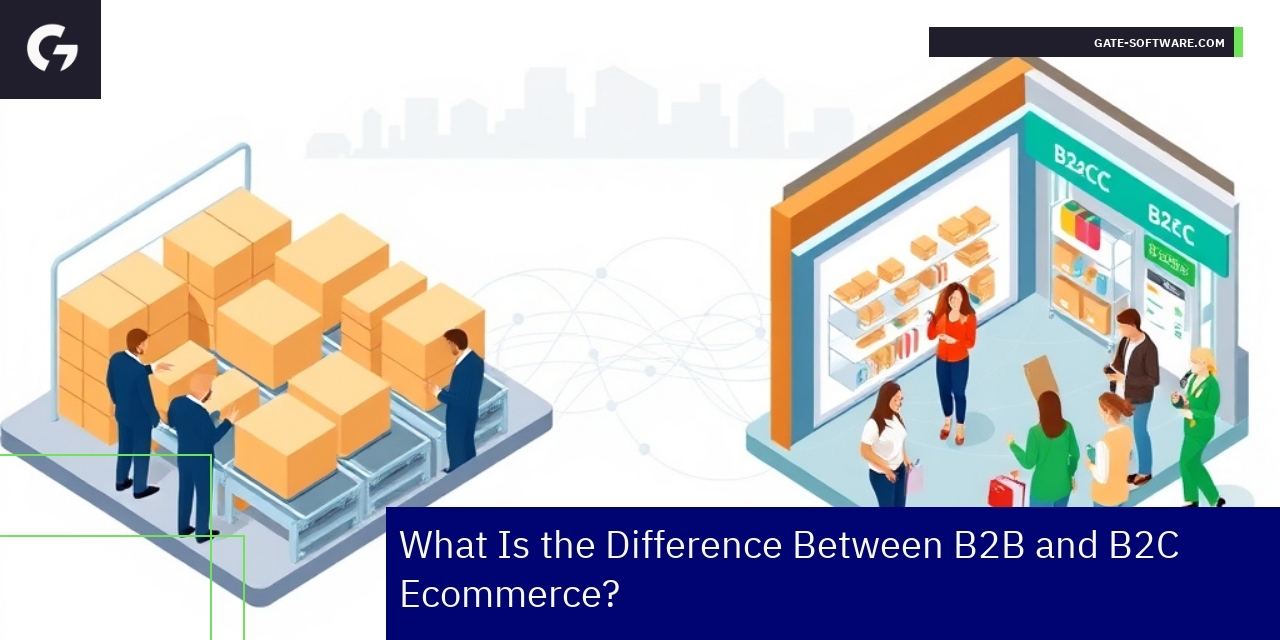
What Is the Difference Between B2B and B2C Ecommerce?
Understanding the difference between B2B ecommerce and B2C ecommerce is essential for businesses aiming to succeed online. The system b2b is specifically designed to meet the unique needs of wholesale trading, which differs significantly from standard retail models. Unlike B2C, where transactions focus on individual consumers, ecommerce b2b emphasizes business clients, often involving larger order volumes and negotiated pricing structures.
A core characteristic of B2B ecommerce platforms is their ability to provide separate offers for retail and wholesale customers. This segmentation ensures that business clients receive tailored pricing, discounts, and product assortments suited to their purchasing power and needs. For example, many B2B platforms, including those based on Magento, allow wholesale stores to rate their clients and customize their experience accordingly. See how B2B wholesale stores using Magento rate their clients to optimize their sales strategies and client relationships.
The sales process in B2B tends to be more complex and involves longer decision cycles, multiple stakeholders, and detailed contract terms. Payment terms are often negotiated and can include credit options, contrasting with B2C’s immediate payment expectations. B2B ecommerce systems need to support these transactional complexities through robust backend integrations and flexible pricing mechanisms.
Furthermore, the communication and marketing approaches differ notably. B2B ecommerce platforms focus on cultivating long-term partnerships by addressing business-specific challenges, providing extensive product information, and ensuring compliance with corporate standards. In contrast, B2C marketing tends to prioritize emotional appeal and impulse buying.
In summary, the difference between B2B and B2C ecommerce lies in their target customers, transaction complexity, pricing flexibility, and relationship management. Successful B2B ecommerce platforms leverage these distinctions by offering tailored experiences, such as separate offers for retail and wholesale customers and advanced client rating systems, as seen in leading B2B platforms like Magento. This strategic differentiation enables businesses to meet the distinct demands of B2B commerce effectively.
Integrating Your Online Store with Wholesalers
Definitions and Basics
To fully grasp the B2B vs. B2C ecommerce FAQ, you need to start with the definitions and basics. The system b2b supports business-to-business sales, while B2C focuses on selling directly to consumers. Ecommerce b2b platforms usually provide more complex features, such as quotation management, bulk discounts, and tailored sales funnels, reflecting the underlying differences in business models. Understanding these core differences can help businesses decide the best platform and approach for their ecommerce strategy. The ability to add dedicated options is crucial for meeting diverse customer expectations, especially when considering unified or separate panels for retail and wholesale. This ensures that businesses can effectively launch a professional wholesale store online that aligns with their operational needs and customer preferences.
B2B Store Specifics – Start in a Few Steps
When launching a B2B store, the system b2b and ecommerce b2b platforms allow you to start effectively by enabling dedicated features. You can implement one panel or separate portals for retail and wholesale clients, which is key in differentiating your offer. This flexibility supports B2B ecommerce platform users in customizing their store’s functionality appropriately, enhancing buyer experience. Offering a specialized Customer Service Office within the platform can greatly improve support quality and client satisfaction. Seamless processes answering how to buy queries ensure smoother transactions. Furthermore, providing clients the option do you want to receive notifications about news and promotions? enhances engagement and retention.
Cost of Setting Up a B2B Store – What Does Wholesale Ecommerce Really Cost?
Launching a professional wholesale store through a system b2b or ecommerce b2b platform involves costs that go beyond retail ecommerce. These platforms provide full support for wholesale operations, including robust inventory management and integrated customer service options for B2B clients. Particular attention is given to differences in business models, which justify the complexity and costs inherent in system b2b environments as opposed to more straightforward B2C settings. Understanding these expenses and benefits is vital as it clarifies why B2B ecommerce is generally more complex than B2C ecommerce, requiring a tailored approach for cost management and customer relations.
Setting Up a B2B Store – Easier Than You Think!
Setting up a B2B store with a dedicated system b2b or ecommerce b2b platform is easier than most expect. These platforms streamline how companies buy and sell online, offering features like personalized offers and automatic notifications for news and promotions. This can significantly simplify the B2B ecommerce process and improve sales efficiency, addressing why B2B ecommerce is more complex than B2C ecommerce and yet manageable with the right tools. Practical functionalities such as unified or separate panels for retail and wholesale clients and the ability to add dedicated options empower businesses to launch a professional wholesale store online with confidence and scalability.
Implementing a B2B Store – Is It Right for Me?
Whether implementing a system b2b or ecommerce b2b platform, it’s important to ask if this solution fits your business needs. Many B2B ecommerce platforms offer promotional packages, like the GOLDWELL Bond Pro holiday set with cosmetics pouch or KERASILK Repair set with cosmetics pouch., catering to niche markets. Evaluating such offers can help companies decide if investing in a full B2B store setup will align with their business model and marketing strategy.
LinkedIn B2B – Building Communication and Marketing on This Platform
LinkedIn is a leading platform for B2B ecommerce marketing and communication. Using a system b2b or ecommerce b2b platform effectively means integrating these marketing efforts with product offers, such as the KERASILK Smoothing set with cosmetics pouch or KERASILK Volume set with cosmetics pouch.. This strategy enhances brand awareness and strengthens client relationships by addressing the unique engagement and sales funnel requirements that distinguish B2B websites from B2C ones. By tailoring communication and promotional content to wholesale clients, businesses can maximize their reach and conversion rates in the B2B marketplace.
Omnibus Directive in B2B – What You Need to Know
The Omnibus Directive imposes specific regulatory and compliance requirements on B2B ecommerce activities. Employing a system b2b or ecommerce b2b platform enables businesses to stay compliant with evolving legal standards, such as the proper handling of shipping of non-standard orders. This facet is critical because B2B ecommerce involves greater complexity than standard B2C operations, including the need for clear policies on how to buy, shipping logistics, and managing special purchase conditions. A well-implemented B2B ecommerce platform supports these necessities by offering mechanisms to handle these complexities efficiently.
B2B Digital Marketing – Choosing the Right Strategy for Your Business
B2B digital marketing necessitates distinct approaches compared to B2C. Platforms designed as system b2b or ecommerce b2b are commonly equipped to support separate offers for retail and wholesale customers, as well as the ability to add dedicated options tailored to different client segments. Selecting an appropriate marketing strategy involves recognizing these fundamental differences to effectively target business clients and nurture long-term sales relationships. Understanding how to leverage B2B platforms in digital marketing campaigns ensures that the messaging and offers resonate with decision-makers, ultimately optimizing the sales funnel specific to B2B ecommerce environments.
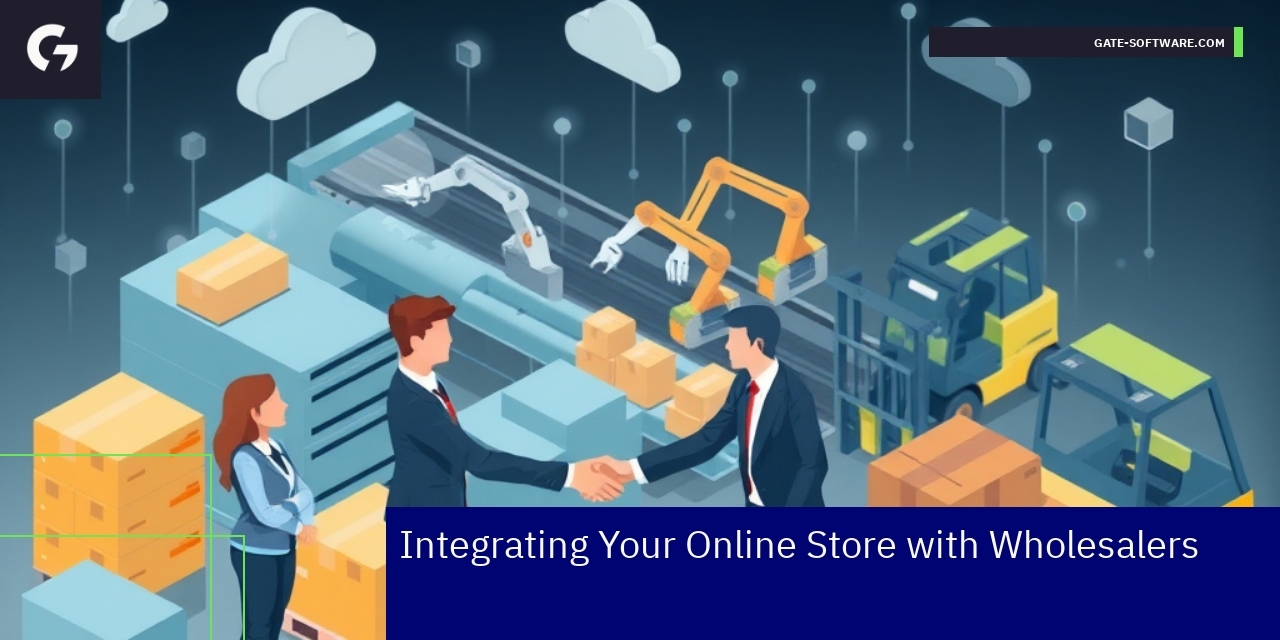
Integrating Your Online Store with Wholesalers
Integration between your ecommerce B2B platform and wholesalers is crucial for streamlined B2B sales. Using a system b2b can help automate inventory and order processing, supporting an efficient wholesale operation and customer service infrastructure. These factors explain why ecommerce b2b requires more complex systems than B2C ecommerce and how integration improves overall business performance.
In a B2B ecommerce platform, seamless integration with wholesalers ensures real-time data exchange, reducing manual errors and speeding up the fulfilment process. A professional wholesale store online launch depends heavily on such integrations to provide accurate product availability, pricing, and order statuses. This accuracy directly impacts Customer Service Office efficiency, as customer inquiries can be addressed promptly with reliable information.
Additionally, system b2b integration enables scalable operations by automating repetitive tasks such as order validation, stock updates, and invoicing. This capability is essential for handling the higher volume and complexity typical of B2B transactions compared to standard retail. By leveraging integration, businesses can optimize workflows, reduce operational costs, and enhance customer satisfaction, creating a robust foundation for growth in B2B ecommerce.
Overall, B2B platforms benefit greatly from a tightly integrated ecosystem connecting the online store with wholesalers. Such integration supports not only sales but also inventory management and after-sales support, aligning with the strategic goals of modern B2B ecommerce platform deployments.
Benefits and Risks of B2B Ecommerce
Examples and Case Studies
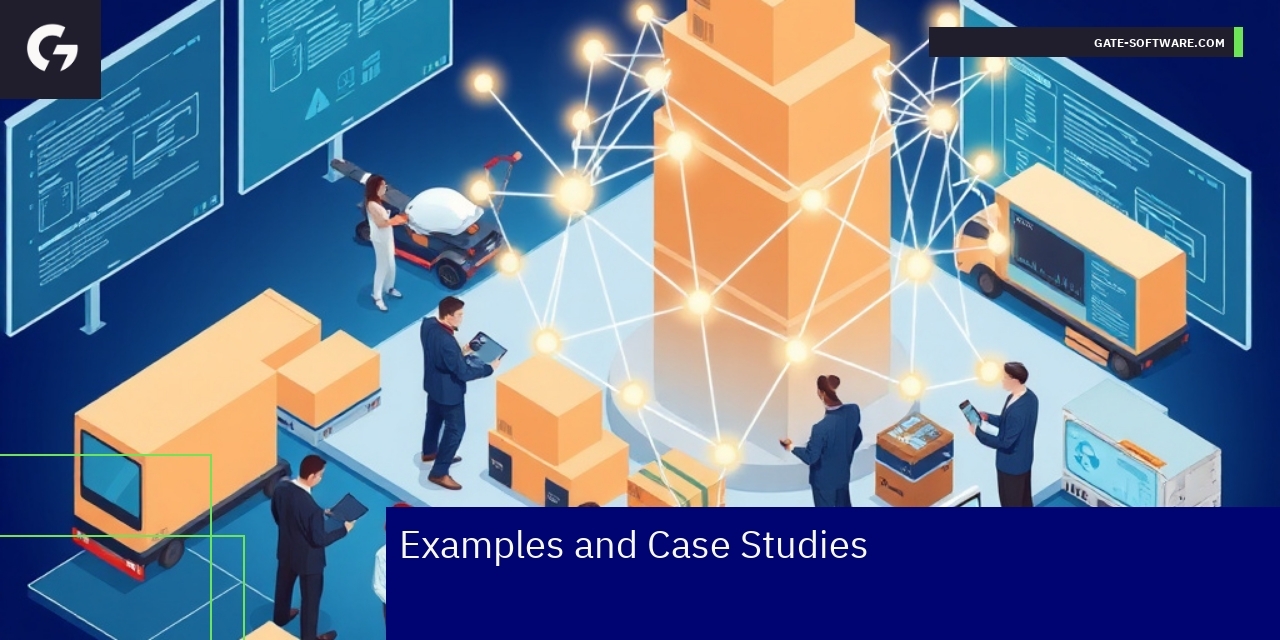
Examining success stories and case studies showcases the practical side of B2B ecommerce platforms. These examples reveal how different businesses have navigated the complexities of B2B online sales and marketing, illustrating essential tips to improve your B2B e-commerce platform and provide a B2C-level experience in a B2B context.
Achieving B2B store success often requires a deep understanding of the unique buyer journeys and operational needs specific to B2B environments. Case analysis of successful implementations demonstrates how aligning technical architecture, UX/UI design, and personalized user experiences can lead to substantial improvements in customer satisfaction and sales efficiency. Best practices from these case studies highlight the importance of integrating seamless backend systems, ensuring compliance with industry standards, and adopting agile development methodologies to quickly respond to evolving market demands.
Moreover, the transition from traditional sales models to digital platforms demands a strategic approach that encompasses both marketing and technological aspects. Successful B2B e-commerce solutions utilize data-driven insights to tailor product offerings, streamline procurement processes, and provide comprehensive support throughout the sales cycle. By focusing on these areas, organizations can replicate proven strategies from case analyses, enhancing their competitive edge and achieving measurable success in the B2B online marketplace.
Leveraging these insights from B2B store success stories and best practices enables decision-makers, such as CTOs and Heads of Applications, to implement robust platforms that bridge the gap between complex B2B requirements and the high expectations of modern digital buyers.
Comparisons: B2B vs B2C
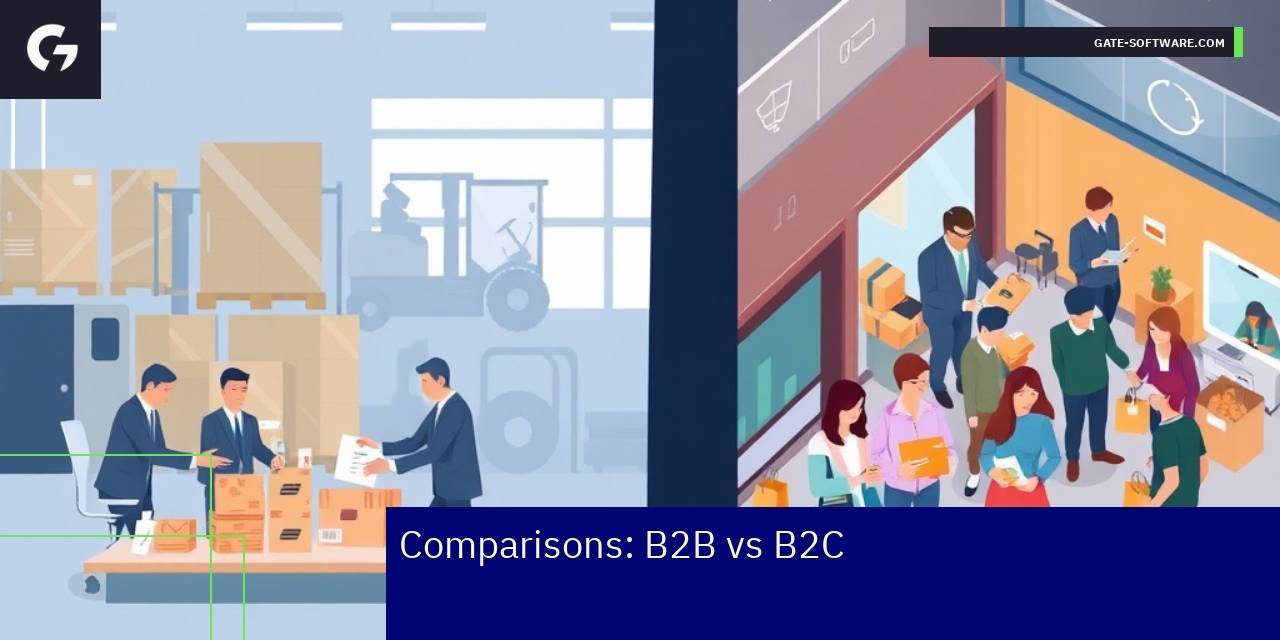
A direct comparison between B2B and B2C ecommerce clarifies their distinct strategies. While B2C focuses on individual consumers, B2B ecommerce emphasizes relationships, customized pricing, and larger volumes. Understanding these differences in client approach, pricing, and margins is key to mastering B2B vs B2C sales techniques and ensuring your ecommerce platform matches those needs.
In terms of strategies, B2B ecommerce prioritizes building long-term partnerships and tailoring offerings to specific business requirements. The purchasing process is often more complex, involving multiple negotiation phases and formalities. This contrasts sharply with B2C strategies, which tend to focus on delivering a fast, seamless shopping experience combined with emotional marketing and promotions designed to capture consumer attention quickly. Tactics such as up-selling and cross-selling are more common in B2C environments, where the goal is to maximize individual transaction value.
Regarding client approach, B2B treats customers as partners, emphasizing personalized service and advisory roles to fully understand and meet their needs. This collaborative relationship supports customized solutions and enhances business outcomes. On the other hand, B2C clients are individual buyers for whom convenience and speed define the shopping experience. The focus here is on intuitive interfaces, swift transactions, and satisfying emotional triggers that drive purchasing decisions.
Pricing in B2B scenarios is typically negotiable and flexible, influenced by factors such as order volume, contract length, and product specifications. Long-term agreements often result in customized pricing structures that reflect the strategic nature of the relationship. Conversely, B2C pricing tends to be fixed or retail-based, with occasional adjustments for promotions or seasonal sales. The transparent pricing model caters to individual consumers who expect straightforward price points.
Margins further distinguish the two models. B2B margins can be lower per unit due to the scale of orders and competitive dynamics but benefit from stability through ongoing contracts and large transaction values. In contrast, B2C margins are generally higher, especially for premium products, although they can fluctuate significantly in response to promotional campaigns and pricing strategies aimed at consumer segments.
Overall, differences in strategies, client approach, pricing and margins define the unique challenges and opportunities in B2B versus B2C ecommerce. A deep understanding of these factors enables decision-makers to craft tailored sales techniques and optimize their ecommerce platforms to meet the specific needs of their target markets effectively.
Checklists and Steps to Launch a B2B Store
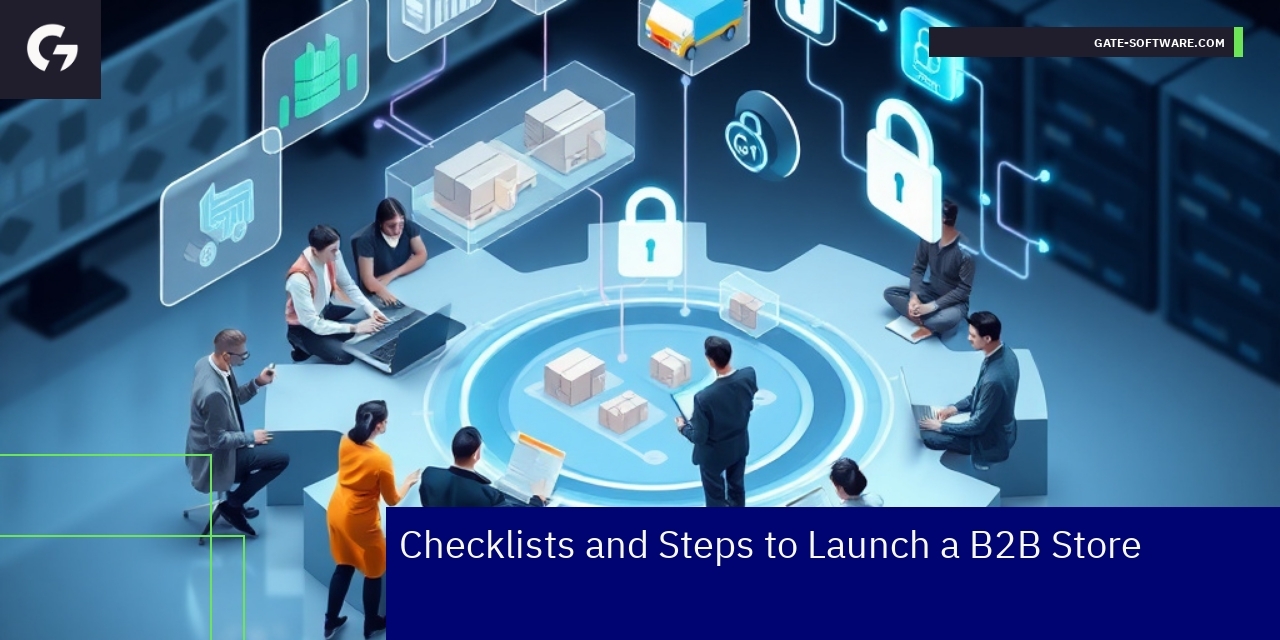
Before launching a B2B online store, following a detailed checklist and clear steps is essential. These guidelines ensure your system B2B or ecommerce B2B platform is properly configured and ready for the complex demands of wholesale ecommerce, helping avoid common pitfalls and achieve faster success.
Launching a B2B store requires a strategic approach that addresses key steps, including technical setup, UX/UI optimization, compliance, and business process integration. A comprehensive pre-launch checklist should cover system architecture verification, integration with ERP and CRM, data accuracy for product catalogs, and user role configurations aligned with buyer personas. Ensuring compliance with WCAG standards for accessibility alongside UX audits helps create a seamless and inclusive user experience. Additionally, preparations for performance monitoring, security measures, and hosting environment readiness are vital control list elements that support stable operation post-launch.
Clear steps in the launch process begin with gathering business and technical requirements specific to B2B scenarios, followed by a detailed project plan incorporating milestones for development, testing, and deployment. Throughout, ongoing communication between architects, eCommerce managers, and CIO/CTO stakeholders maintains alignment with strategic goals. Employing Gate-Software’s proven methodology for Magento platform maintenance and cost optimization can mitigate risks associated with scalability and complex business logic.
In summary, a meticulous focus on the key steps, backed by a thorough pre-launch checklist and control list, ensures the B2B online store is robust, compliant, and ready to meet the specialized needs of wholesale customers, driving faster time to market and sustained operational success.
Mistakes to Avoid in a B2B Store
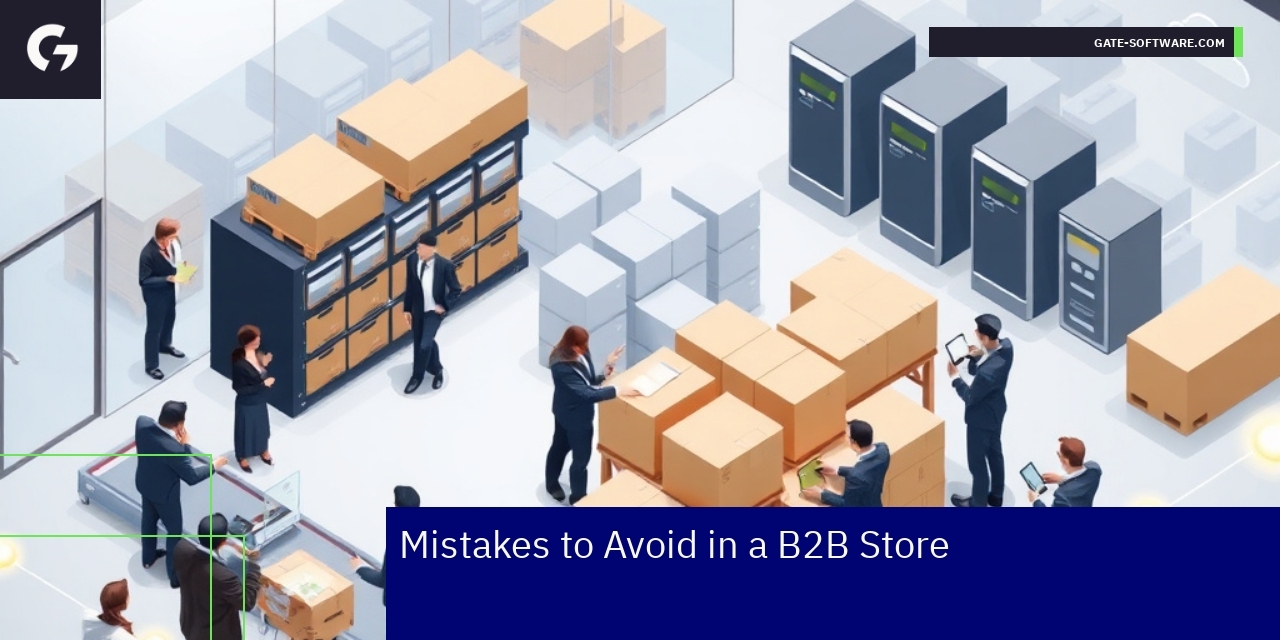
Avoiding mistakes is crucial in running a successful B2B store. Many common pitfalls arise from a lack of understanding of the distinct requirements between B2B and B2C ecommerce or from inadequate platform configuration. One key attention point is ensuring the ecommerce system supports complex pricing models, such as customer-specific pricing, volume discounts, and contract-based agreements, which are typical in B2B environments. Without these, error examples include lost sales opportunities and client dissatisfaction due to pricing inconsistencies.
Another area prone to common pitfalls is the user experience tailored to business buyers rather than consumers. The UX/UI must facilitate efficient order processes, including bulk ordering capabilities, streamlined approval workflows, and integration with existing ERP or CRM systems. Failure to address these attention points can lead to increased friction in the buying process and lower customer retention.
Additionally, insufficient attention to security and compliance can create vulnerabilities, especially when handling large volumes of sensitive client data. Common error examples include inadequate authentication methods or poor data encryption practices, which undermines trust and could result in regulatory penalties. Ensuring adherence to industry standards and applying Gate-Software’s expertise in hosting and monitoring can mitigate these risks effectively.
Lastly, integration and scalability are critical attention points. Many B2B stores err by building solutions that cannot scale with their client base or integrate seamlessly with their IT landscape. This leads to technical debt and hampers innovation. Leveraging flexible platforms like Magento™, complemented by thorough SLA agreements and continuous performance monitoring, helps avoid these common pitfalls, securing long-term operational success for B2B ecommerce platforms.
FAQ – Frequently Asked Questions
This B2B vs. B2C ecommerce FAQ provides answers to popular questions about operating B2B stores. Covering technical, marketing, and sales issues, it helps clarify doubts and supports better decision-making in choosing and using B2B ecommerce platforms. The answers to common questions and clarifications offered here address key challenges faced by decision-makers like CTOs, Heads of Applications, and eCommerce Managers. Emphasizing the distinct nature of B2B ecommerce, this FAQ guides on platform selection, integration complexities, user experience tailored for business clients, compliance with standards such as WCAG, and effective marketing strategies specific to B2B environments. Understanding these elements is crucial to optimizing digital sales channels and enhancing operational efficiency. This collection of clarifications aids in streamlining processes, reducing cost inefficiencies, and elevating client satisfaction, supporting growth and innovation in B2B ecommerce ventures.
FAQ
Alternatives to B2B Stores
There are several alternatives to launching a full B2B store that can provide flexibility and better alignment with specific business goals. One key option is adopting different sales models, such as hybrid approaches that combine direct B2B sales with elements of B2C or marketplace functionalities. This allows companies to tailor their sales strategy without the need for a fully dedicated ecommerce B2B platform.
Another viable alternative is leveraging other platforms that support multi-channel sales. Platforms capable of integrating various sales touchpoints help entrepreneurs diversify their reach and better manage customer interactions, inventory, and orders across channels. This approach often provides better scalability and adaptability compared to traditional system B2B solutions.
For entrepreneurs, choosing the right combination of sales models and platforms is crucial. Such entrepreneur options enable businesses to optimize resource allocation, meet customer expectations, and innovate their commercial strategies. Exploring these alternatives offers practical pathways for companies looking to complement or replace their existing ecommerce B2B systems efficiently, ensuring agility in rapidly changing markets.
Benefits and Risks of B2B Ecommerce
Starting a B2B ecommerce operation comes with both benefits and risks. Understanding these factors, including why B2B ecommerce is more complex than B2C ecommerce, prepares businesses for what lies ahead and informs better strategy formulation before launching their wholesale platforms.
B2B ecommerce offers significant benefits that can enhance operational efficiency and market reach. Automating transactions and processes streamlines operations, which reduces costs and minimizes manual errors. This efficiency gain is critical in complex B2B environments where transactions often involve bulk orders and custom pricing. Additionally, B2B platforms enable businesses to access broader markets beyond local or national boundaries, amplifying growth potential. The cost savings achieved through reduced physical store dependence and optimized sales cycles further enhance profitability. Notably, sophisticated B2B ecommerce solutions provide robust data insights into customer behavior and sales trends, which are essential for strategic decision-making. Scalability is another advantage, allowing businesses to expand their operations without proportional increases in overhead. Alongside these benefits, improved customer experience through intuitive interfaces and streamlined purchasing fosters stronger business relationships and customer retention.
However, the pros and cons of B2B ecommerce also include notable risks that must be managed diligently. Cybersecurity threats pose significant challenges due to increased online transactions, necessitating stringent security measures to protect sensitive data and transactions. Integration complexity with legacy ERP and supply chain systems can disrupt operations if not carefully planned and executed. Reliance on technology also entails vulnerability to system outages, which can halt business processes. Moreover, supply chain errors may arise from miscommunication or order inaccuracies, influencing delivery and customer satisfaction. The digital landscape can intensify competition, pressuring profit margins as more players enter the market with ease. Importantly, maintaining strong customer relationships in a digital setting requires ongoing efforts to bridge the gap created by reduced personal interactions. These insights before starting an ecommerce platform emphasize the importance of a well-rounded strategy that addresses not only technical implementation but also customer management and risk mitigation.
In summary, understanding the pros and cons of B2B ecommerce and gaining insights before starting are critical for developing a resilient, efficient, and customer-focused wholesale platform that aligns with business goals and market demands.
Data and Performance Metrics – Efficiency, SLA, TCO
Operational Effectiveness in B2B Projects
In the realm of B2B ecommerce, the effectiveness of operations can be quantified through various critical metrics that reflect both efficiency and reliability. Gate-Software emphasizes a number of these key performance indicators to provide a clear picture of operational success.
For instance, the average project takeover time for new implementations is approximately 3 weeks, allowing clients to rapidly transition to fully functional platforms. Furthermore, Gate-Software boasts an impressive 95% of projects delivered on time, showcasing their commitment to adhering to established timelines.
When it comes to the financial aspect, clients often experience an average total cost of ownership (TCO) reduction of around 20% through optimized processes and solutions provided by Gate-Software. This significant saving underscores the value of investing in a robust B2B ecommerce platform.
In terms of service reliability, Gate-Software maintains an uptime SLA of 99.9%, ensuring that business operations remain uninterrupted and that clients can depend on their ecommerce systems for continuous service delivery. This level of uptime is crucial for maintaining trust and satisfaction among business partners.
Additionally, the number of successful B2B implementations continues to grow, with over 150 completed projects across various sectors, reflecting the company’s expertise and adaptability in serving diverse client needs.
Lastly, the average duration of client relationships tends to exceed 5 years, highlighting the company’s dedication to fostering long-term partnerships built on trust and performance excellence.
These metrics not only demonstrate Gate-Software’s operational capabilities but also serve as compelling evidence for decision-makers assessing the potential return on investment in establishing a B2B ecommerce platform.
Summary
In conclusion, understanding the complexities and unique demands of B2B ecommerce is essential for businesses looking to optimize their operations and enhance their customer relationships. Gate-Software equips you with the tools to navigate the intricate landscape of B2B online sales, from the implementation of robust platforms like Magento™ to compliance with standards such as WCAG. Our expertise ensures that your ecommerce solutions are not only efficient but also tailored to meet the strategic objectives of your business. By focusing on integration, customer experience, and compliance, we help you build a solid foundation for long-term success in the B2B sector. If you’re looking to innovate and strengthen your B2B commerce approach, we invite you to reach out for a collaborative discussion on how we can support your journey towards enhanced operational efficiency and customer satisfaction.
FAQ
What is the difference between B2B and B2C ecommerce?
B2B ecommerce focuses on transactions between businesses, involving larger order volumes, negotiated pricing, and complex sales cycles, while B2C ecommerce targets individual consumers with simpler buying processes and fixed pricing.
How does integrating a B2B online store with wholesalers improve efficiency?
Seamless integration allows for real-time data exchange, ensuring accurate inventory and pricing, which enhances customer service and automates repetitive tasks like order validation and invoicing.
What are the key considerations when setting up a B2B store?
Key considerations include establishing complex pricing models, tailoring the user experience for business buyers, ensuring compliance with standards like WCAG, and integrating the platform with existing ERP or CRM systems.
Why is B2B ecommerce typically more complex than B2C ecommerce?
B2B ecommerce involves longer decision cycles, the need for customer-specific pricing, multiple stakeholders in the purchasing process, and tailored communications, making it inherently more complex.
What mistakes should be avoided when launching a B2B store?
Common mistakes include neglecting to support complex pricing structures, failing to customize the user experience for business buyers, and insufficient attention to security and compliance, which can jeopardize client trust and satisfaction.
.
.
Zamów bezpłatną konsultację
.
Z nami rozwój Twojego biznesu nabierze tempa! Zapraszamy do kontaktu średnie i duże firmy generujące min. 7 mln PLN obrotu rocznie – tam nasza ekspertyza sprawdza się najlepiej.
.
Kliknij w poniższy przycisk i skontaktuj się z jednym z naszych konsultantów e-commerce
.